Home / Articles / LGBTQ+ Weddings
LGBTQ+ Wedding Planning Guide: UK Edition

Key Takeaways
- Give notice at least 28 days before your ceremony date (up to 70 days if additional immigration checks apply)
- Ask venues directly about their experience with LGBTQ+ weddings before booking
- Quakers, Unitarians and Liberal Judaism actively welcome same-sex religious ceremonies
- Average UK wedding cost is around £20,000 but LGBTQ+ couples often save by skipping gendered traditions
- Book key suppliers 12-18 months ahead as the best inclusive vendors fill up quickly
LGBTQ+ wedding planning follows the same broad steps as any wedding, but there are moments where the experience diverges in ways that matter. From finding a venue that genuinely welcomes you to deciding what traditions to keep, skip or reinvent, this guide covers the practical details UK couples need.
Same-sex marriage has been legal in England and Wales since March 2014 and in Scotland since December 2014. Northern Ireland followed in January 2020. Civil partnerships have been available to same-sex couples since 2005 and to opposite-sex couples since 2019. You have full legal equality. Now it is about building a celebration that feels like yours.
Planning an LGBTQ+ wedding is joyful, creative and occasionally complicated. Family dynamics, supplier attitudes and the simple question of “who stands where?” all come with considerations that straight couples rarely face. This guide addresses them honestly.
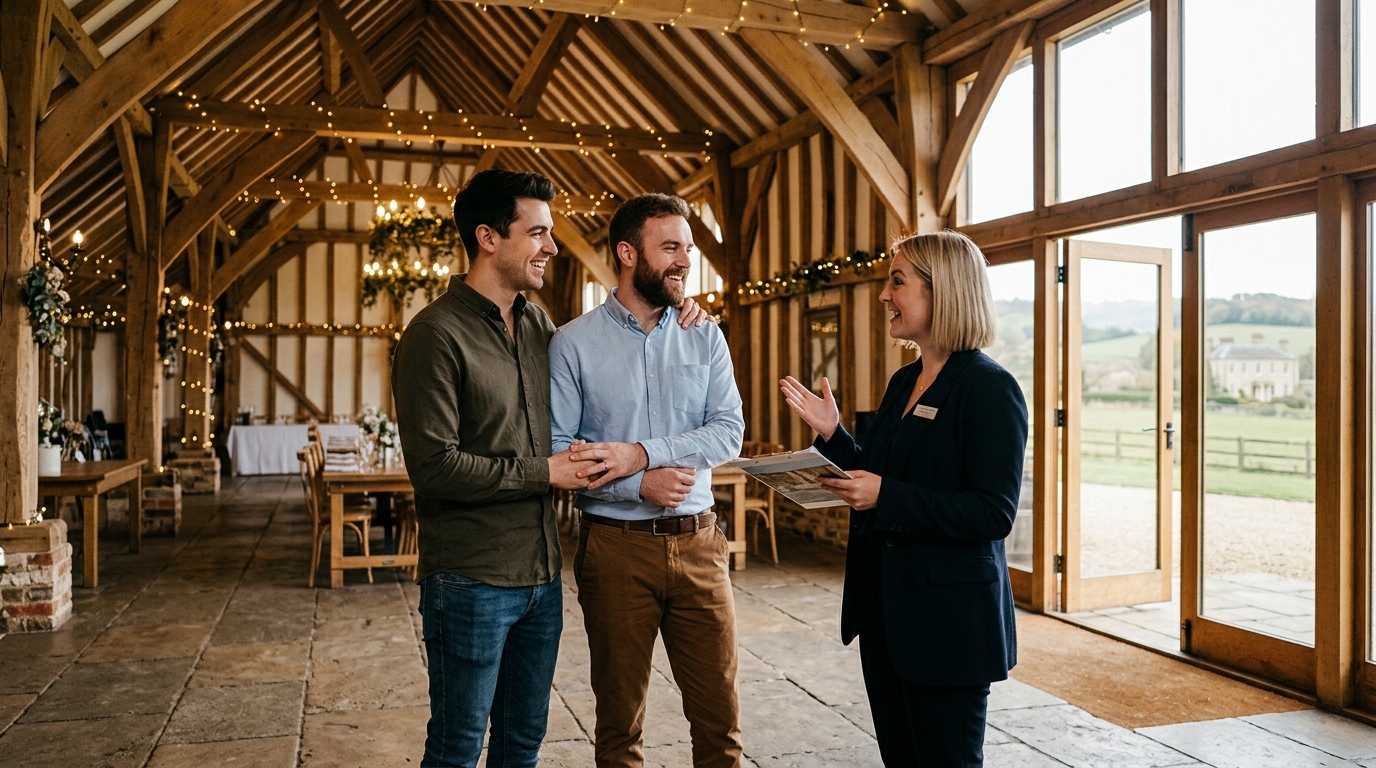
LGBTQ+ wedding planning timeline: 18 months to the day
Timelines keep everything manageable. This one is adapted for LGBTQ+ couples, with extra steps around supplier vetting and family conversations that other guides tend to skip.
| Timeframe | Task | LGBTQ+ specific notes |
|---|---|---|
| 18 months | Set your budget | Factor in travel costs if guests are coming from found-family networks across the country |
| 15-18 months | Choose and book venue | Ask about LGBTQ+ experience directly (see venue questions below) |
| 12-15 months | Book photographer, videographer, caterer | Check portfolios for same-sex couples. Ask to see real weddings, not just styled shoots |
| 12 months | Choose ceremony type | Civil, religious (opted-in faiths), humanist or outdoor. Understand legal requirements for each |
| 10-12 months | Send save-the-dates | Word these neutrally if not all recipients know about your relationship yet |
| 9-10 months | Plan ceremony content | Write your own vows, choose readings. No gendered templates to follow, which is freeing |
| 8-9 months | Book music and entertainment | See our wedding music guide for ideas |
| 6-8 months | Choose outfits | No rules on who wears what. Coordinate without matching if you prefer |
| 6 months | Give notice at register office | 28 days minimum, up to 70 days with immigration checks |
| 4-6 months | Send invitations | Consider wording carefully. See our invitation wording guide |
| 3-4 months | Finalise seating plan | Navigate family dynamics thoughtfully. Our seating plan guide helps |
| 2-3 months | Confirm all suppliers | Final walkthroughs with venue and caterer |
| 1 month | Final fittings and rehearsal | Run through ceremony, especially if you have written your own format |
| 1 week | Delegate and breathe | Hand your timeline to your best person or coordinator |
For a broader checklist, our wedding checklist covers the full task list.
How to find a genuinely LGBTQ+ inclusive wedding venue
Not every venue that says “all welcome” on its website has actually hosted a same-sex wedding. The difference between tolerance and genuine enthusiasm shows up in small details that matter on your day.
Questions to ask before booking
Start with direct questions during your venue visit. How many same-sex weddings have you hosted in the past two years? Can we see photos or testimonials from LGBTQ+ couples? Are your standard contracts and forms gender-neutral, or will we need to correct “bride and groom” language throughout? Is your staff trained on LGBTQ+ etiquette?
Ask about their celebrant or registrar relationships too. Some venues have preferred registrars who are particularly warm and experienced with same-sex ceremonies. That can make a real difference to how your ceremony feels.
Red flags to watch for
Hesitation when you mention your partner’s gender. Forms and brochures that only reference “bride and groom.” Staff who say “we treat everyone the same” without being able to name specific LGBTQ+ weddings they have hosted. A lack of any same-sex imagery on their website or social media. These are not necessarily signs of hostility, but they suggest a venue that has not done the work to make LGBTQ+ couples feel truly welcome.
Venue types that tend to be inclusive
Boutique hotels, converted barns, and independent venues with younger management teams are often the most welcoming. Larger hotel chains have corporate diversity policies but the experience can vary by individual property. Country houses and stately homes run by the National Trust or English Heritage generally have strong equality policies.
For a curated list, our gay-friendly wedding venues UK guide covers venues across England, Wales and Scotland that actively celebrate LGBTQ+ couples.
Our guide on questions to ask your wedding venue has the full list of what to cover during visits.
Ceremony options for LGBTQ+ couples
You have more choices than you might think. The legal framework supports several ceremony types, and the creative possibilities are genuinely open.
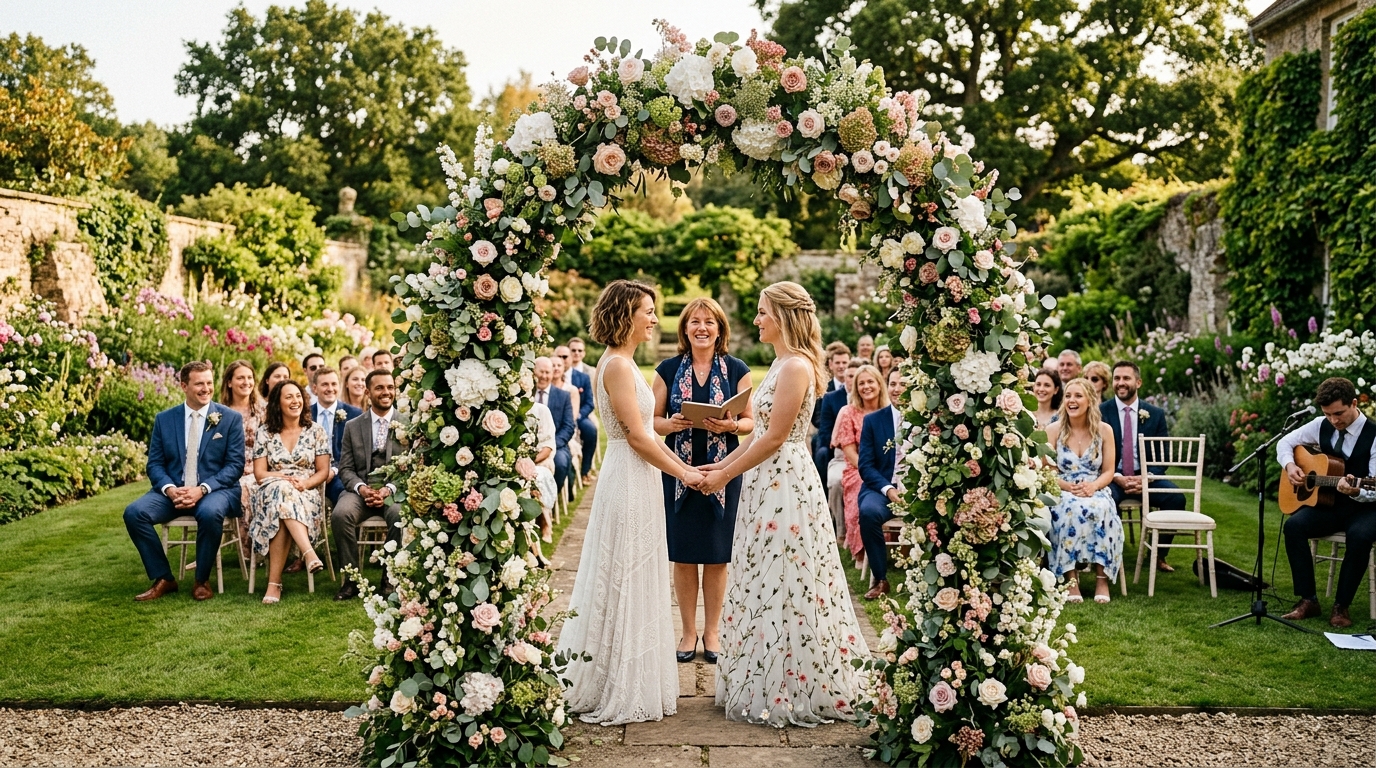
Civil ceremonies
A civil ceremony at a register office or approved venue is the most popular choice for LGBTQ+ couples. You exchange contracting words (spoken vows that make the marriage legally binding), sign the register, and you are married. The rest of the ceremony is up to you: readings, music, personal vows, ring exchanges, hand-tying, sand ceremonies or anything else that feels meaningful.
Civil ceremonies cannot include religious content, but they can include spiritual, philosophical or poetic elements. Many registrars are experienced at helping couples shape a ceremony that is personal without being religious.
Religious ceremonies
Some religious bodies have formally opted in to conducting same-sex marriages:
- Quakers (Religious Society of Friends): Were among the first to support same-sex marriage. Quaker meetings handle ceremonies with warmth and simplicity.
- Unitarians: Have a long history of welcoming LGBTQ+ people and conduct same-sex marriages across the UK.
- Liberal Judaism: Supports same-sex marriage and civil partnerships within synagogues.
- United Reformed Church: Individual congregations can decide to host same-sex marriages.
- Some Church of Scotland congregations: The Church of Scotland voted in 2023 to allow ministers to conduct same-sex marriages.
The Church of England and the Catholic Church do not conduct same-sex marriages, though some individual Church of England clergy offer prayers and blessings for same-sex couples.
Humanist ceremonies
Humanist ceremonies are legally recognised as marriages in Scotland. In England and Wales, a humanist ceremony serves as your personal celebration but does not have legal standing on its own. You would need a brief legal registration at a register office (which can be done before or after) to formalise the marriage.
Humanist ceremonies are entirely personalised. A humanist celebrant works with you to create a ceremony from scratch. There are no set words, no required elements and no restrictions on content. For many LGBTQ+ couples, this freedom is exactly what they want.
Writing your own ceremony
Without the weight of gendered tradition, LGBTQ+ couples often craft ceremonies that are more personal and more honest than conventional wedding formats. You might include readings from authors who matter to you, vows that reference your actual relationship rather than generic promises, or rituals that reflect your shared history.
Our wedding vows and wedding readings guides include gender-neutral options, and our LGBTQ+ readings and vows collection is specifically curated for same-sex and queer couples.
Navigating family dynamics and your guest list
This is often the most emotionally charged part of LGBTQ+ wedding planning. Some families are unreservedly supportive. Others are complicated. A few are hostile. Most fall somewhere in between: well-meaning but occasionally clumsy.
Having early conversations
If you have family members who might struggle with your wedding, consider having direct conversations early in the planning process. Frame it simply: “We are getting married. We would love you to be there.” Give people time to process rather than surprising them with an invitation.
Some couples find it helpful to involve an ally within the family, someone who can answer questions and smooth the way with relatives who need time to adjust. This is not your job to manage, but it can reduce the emotional burden on you during an already busy period.
Setting boundaries
You are not obligated to invite anyone who cannot celebrate your relationship with genuine happiness. If certain family members make your partner uncomfortable, if someone has a history of making hurtful comments, if their presence would create tension that overshadows your day, it is acceptable to leave them off the guest list.
This is your wedding. The guest list should be filled with people who are genuinely glad to be there.
Managing the day itself
If you have invited family members who are supportive but might say the wrong thing, consider briefing your wedding party. A trusted friend or coordinator who can redirect awkward conversations, steer great-aunts away from inappropriate questions, and generally keep the atmosphere warm makes a real difference.
Traditions: what to keep, skip or reinvent
LGBTQ+ weddings are not bound by the traditional wedding script. That is one of the best things about them. You get to choose every element based on whether it means something to you, not because “that is how it is done.”
Walking down the aisle
There are no rules here. Options that LGBTQ+ couples choose include:
- Both partners walking down separate aisles and meeting in the middle
- One partner waiting at the front while the other walks down
- Both walking down together
- Entering from a side door and standing together from the start
- Having each partner escorted by a parent, friend or group of friends
- Skipping the aisle entirely
The choice depends on your venue layout, your relationship dynamic and what feels natural. Rehearse it. Walk the space. You will know what works.
Wedding parties
Forget “bridesmaids” and “groomsmen” unless those terms feel right. Many LGBTQ+ couples use gender-neutral terms: attendants, honour attendants, wedding party, our people. Others mix traditional and non-traditional titles. A bride might have a “best man.” A groom might have a “person of honour.” There are no wrong answers.
For speech inspiration, our guides to best man speeches, maid of honour speeches and how to write a wedding speech all include advice that applies regardless of gender.
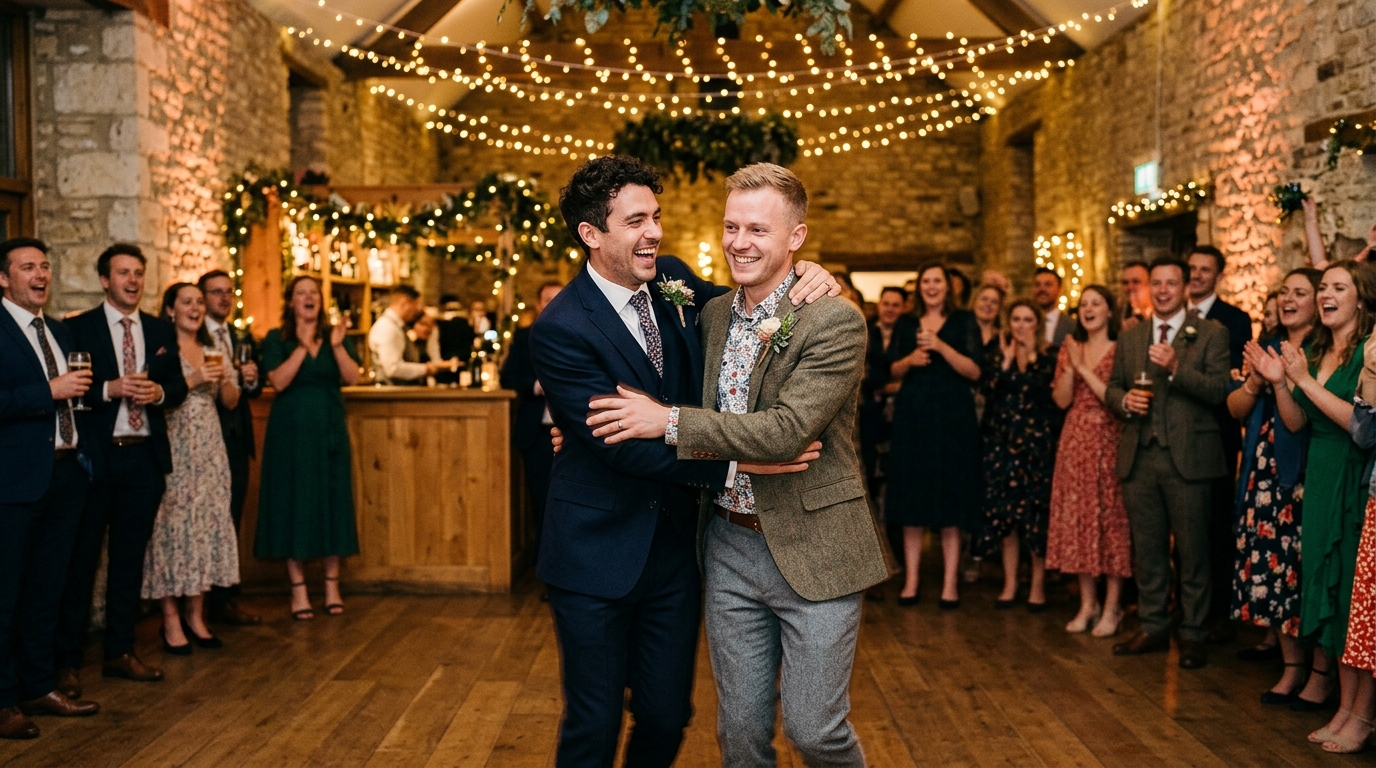
First dance
Pick a song you both love. It does not need to be a heteronormative love ballad. Our first dance songs guide includes picks that work for any couple. If neither of you wants to dance in front of everyone, skip it entirely or invite everyone onto the floor from the start.
Outfits
Two suits. Two dresses. One of each. Something entirely different. Matching, coordinating or deliberately contrasting. LGBTQ+ couples have no template to follow, which is liberating but can also feel overwhelming.
Practical advice: decide early whether you want to see each other’s outfits before the day. Coordinate on colour palette and formality level even if you want the specific outfits to be a surprise. If you are both wearing suits, consider going to the same tailor for a cohesive look with individual personality.
Our wedding dress styles and groom suit guide cover the options in detail.
Legal requirements and giving notice
The legal process for an LGBTQ+ wedding is identical to any other wedding in England and Wales. There are no additional requirements based on the gender of the couple.
What you need
Both partners must give notice at their local register office at least 28 days before the ceremony. You each need: a valid passport or birth certificate, proof of address (utility bill or bank statement from the past three months), and your £35 notice fee per person.
If either partner has been previously married or in a civil partnership, bring the decree absolute or final order from the divorce/dissolution, or a death certificate if widowed.
If either partner is not a British, Irish or EU citizen with settled status, the notice period may be extended to 70 days while additional immigration checks are carried out.
Marriage vs civil partnership
You will need to decide whether you want a marriage or a civil partnership before giving notice. Both offer virtually identical legal rights. The main differences are around ceremony content (marriages can include religious elements), adultery grounds (only applicable to marriage) and international recognition (marriage is more widely recognised abroad).
For a detailed comparison, see our civil partnership vs marriage guide.
Budgeting for an LGBTQ+ wedding
The average UK wedding costs around £20,000, though this varies enormously depending on your priorities. LGBTQ+ weddings tend to fall in a similar range, with some specific differences in where the money goes.
Where LGBTQ+ couples often save
Gendered traditions carry costs. A traditional “bride side” and “groom side” setup doubles up on hair and makeup teams, getting-ready suites and pre-wedding events. Many LGBTQ+ couples naturally streamline these by sharing a getting-ready space, having one combined wedding party, or skipping hen and stag dos in favour of a single joint celebration.
Smaller guest lists are also common, particularly if family situations mean the invite list is weighted towards friends rather than extended relatives. Fewer guests means lower catering, venue and stationery costs.
Where LGBTQ+ couples often spend more
Personalisation tends to be a priority. Without a standard template to follow, LGBTQ+ couples often invest more in bespoke ceremony content (a humanist celebrant costs £400 to £800), custom stationery that reflects their relationship, and unique venue styling that sets their day apart.
Photography matters more when your wedding breaks the mould. An experienced LGBTQ+ wedding photographer who knows how to capture two grooms or two brides with equal skill is worth the investment. Expect to pay £1,500 to £3,000 for a photographer who genuinely understands your day.
For a full breakdown, see our guide on how to budget for a wedding and the average wedding cost UK data.
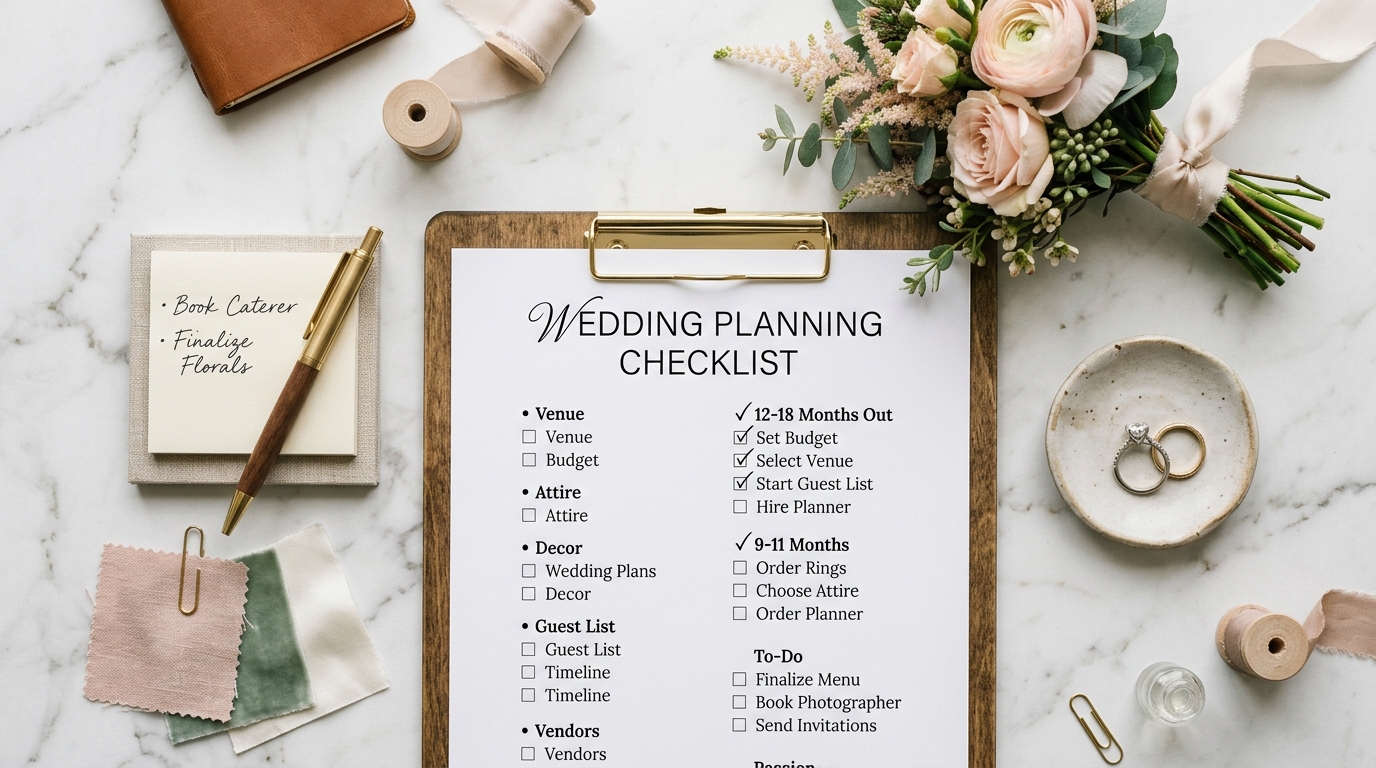
Choosing inclusive wedding suppliers
Your suppliers set the tone for your entire planning experience. Working with people who are actively enthusiastic about your wedding, rather than merely tolerant, makes the process more enjoyable and the results better.
How to vet suppliers
Check their portfolio for real LGBTQ+ weddings (not just styled shoots). Read reviews from same-sex couples specifically. Ask them directly: “Have you worked with same-sex couples before? Can you share examples?” Look at their social media for rainbow-washing versus genuine engagement with the LGBTQ+ community throughout the year, not just during Pride month.
Key suppliers to vet carefully
Photographer: This is the most important supplier to get right. A photographer who has only ever shot heterosexual weddings may unconsciously frame shots in gendered ways or miss the moments that matter to you. Ask to see full galleries from LGBTQ+ weddings they have photographed. Our how to choose a wedding photographer guide covers what to look for, and our wedding photography styles guide helps you find the right aesthetic.
Caterer and venue coordinator: These are the people your guests will interact with most on the day. They need to use correct language, respect your relationship and handle any awkward moments from guests with grace. See our questions to ask your wedding caterer for a full checklist.
Florist and stylist: Less directly personal, but still important. A florist who understands your aesthetic vision without defaulting to gendered assumptions (pink for brides, buttonholes for grooms) will produce better results. Browse our wedding flowers seasonal guide for inspiration.
DJ or band: Your music choices set the mood. Find someone who will not default to a heteronormative playlist or make assumptions about who leads the first dance.
For a curated list, our LGBTQ+ wedding suppliers UK directory covers verified inclusive suppliers across the country.
Creating your own traditions
One of the genuine privileges of planning an LGBTQ+ wedding is that nobody hands you a script. You build it from scratch, keeping elements that resonate and inventing new ones.
Ideas from real LGBTQ+ weddings
The memory walk: Instead of a traditional aisle walk, one couple lined the path with framed photos from their relationship, walking past their shared history on the way to their future.
Combined wedding parties: Rather than splitting friends by gender, many couples have a single mixed wedding party standing together behind them at the ceremony.
Handfasting: A Celtic tradition where the couple’s hands are bound together with ribbon or cord. Popular with LGBTQ+ couples because it is ancient, beautiful and entirely gender-neutral.
Tree planting: Instead of unity candles, some couples plant a tree together during the ceremony. Practical, symbolic and lasting.
First look instead of the aisle reveal: Both partners get ready separately, then have a private “first look” moment before the ceremony. A photographer captures the reaction. Many couples say this was their favourite moment of the entire day.
For more ceremony and celebration ideas, browse our same-sex wedding traditions and ideas guide and our wedding themes collection for styling inspiration.
On the day: practical tips
A few things that experienced LGBTQ+ wedding planners consistently recommend.
Brief your registrar on names and pronouns. Even the best registrars can slip up if they are not briefed. Send them a note a week before with how you want to be addressed during the ceremony.
Have a designated ally. Someone who is not in the wedding party but who can handle any awkward situations with guests, redirect conversations and generally keep the atmosphere positive.
Plan your exits. If you are worried about any public-facing moments (leaving the venue, walking through a hotel lobby), think about the route in advance. Most venues are entirely safe and welcoming, but it helps to feel prepared.
Enjoy it. LGBTQ+ couples fought for the right to marry. Your wedding day is a celebration of that freedom. Take a quiet moment together during the reception to step back and take it in.
Further reading
- Civil partnership vs marriage UK for the legal comparison
- Two brides wedding guide for bride-specific planning
- Two grooms wedding guide for groom-specific planning
- Wedding day timeline for structuring the day itself
- Wedding colour schemes for styling your celebration
Frequently asked questions
Can same-sex couples have a religious wedding in the UK?
Yes, but only with religious bodies that have opted in. Quakers, Unitarians and Liberal Judaism actively conduct same-sex marriages. The Church of England and Catholic Church do not perform same-sex marriages, though some individual clergy offer blessings.
How far in advance should LGBTQ+ couples book their wedding?
Start planning 12 to 18 months ahead. Popular inclusive venues and experienced LGBTQ+ wedding photographers book up quickly, especially for summer Saturdays. Giving notice at the register office must happen at least 28 days before the ceremony.
Do both partners walk down the aisle at an LGBTQ+ wedding?
There are no rules. Some couples walk down together, some walk down separate aisles and meet in the middle, some have one partner waiting at the front. Others skip the aisle entirely and begin the ceremony standing together. Do whatever feels right for your relationship.
How much does an LGBTQ+ wedding cost in the UK?
The average UK wedding costs around £20,000, and LGBTQ+ weddings fall in a similar range. Many same-sex couples save money by rethinking traditional elements like gendered wedding parties, but spend more on personalised details that reflect their relationship.
What legal documents do we need for a same-sex wedding?
You need the same documents as any couple: valid ID (passport or birth certificate), proof of address dated within the last three months, and if applicable, a decree absolute or death certificate from a previous marriage or civil partnership. Both partners must give notice in person at their local register office.
How do we handle unsupportive family members at our wedding?
This is deeply personal and there is no single right answer. Some couples have honest conversations early, some assign a trusted friend to manage difficult relatives on the day, and some choose to celebrate with only their most supportive people. A good wedding planner experienced with LGBTQ+ celebrations can help you navigate this.
Can we have a humanist wedding ceremony in the UK?
Humanist ceremonies are legally recognised in Scotland. In England and Wales, a humanist ceremony can serve as your personal celebration, but you will also need a brief legal registration at a register office or approved venue to be legally married or in a civil partnership.