Home / Articles / LGBTQ+ Weddings
Two Brides: Your Wedding Planning Guide
Key Takeaways
- Budget around £2,600 for two wedding dresses at the UK average of £1,300 each
- Book two separate getting-ready rooms at your venue to keep outfit reveals a surprise
- Coordinating outfits works better than matching them exactly since contrast photographs well
- A first look before the ceremony lets the photographer capture genuine reactions
- Most UK venues now cater for two brides but always confirm changing facilities and storage
A two brides wedding comes with a unique set of decisions that other wedding guides simply do not cover. When both partners are choosing dresses, carrying bouquets and walking down an aisle that was historically designed for one bride, the standard planning advice falls short. This guide fills in those gaps with practical UK-specific details.
The good news is that having two brides means twice the excitement around outfit choices, beauty planning and ceremony entrances. It also means navigating some logistics that one-bride weddings never have to think about, from booking two changing rooms to coordinating dress silhouettes that look brilliant together without turning into matching costumes.
Whether you are both wearing gowns, mixing a dress with a suit, or doing something nobody has seen before, the planning principles stay the same. Start early, communicate openly about your vision, and remember that every single tradition is optional.
How should two brides coordinate their outfits?
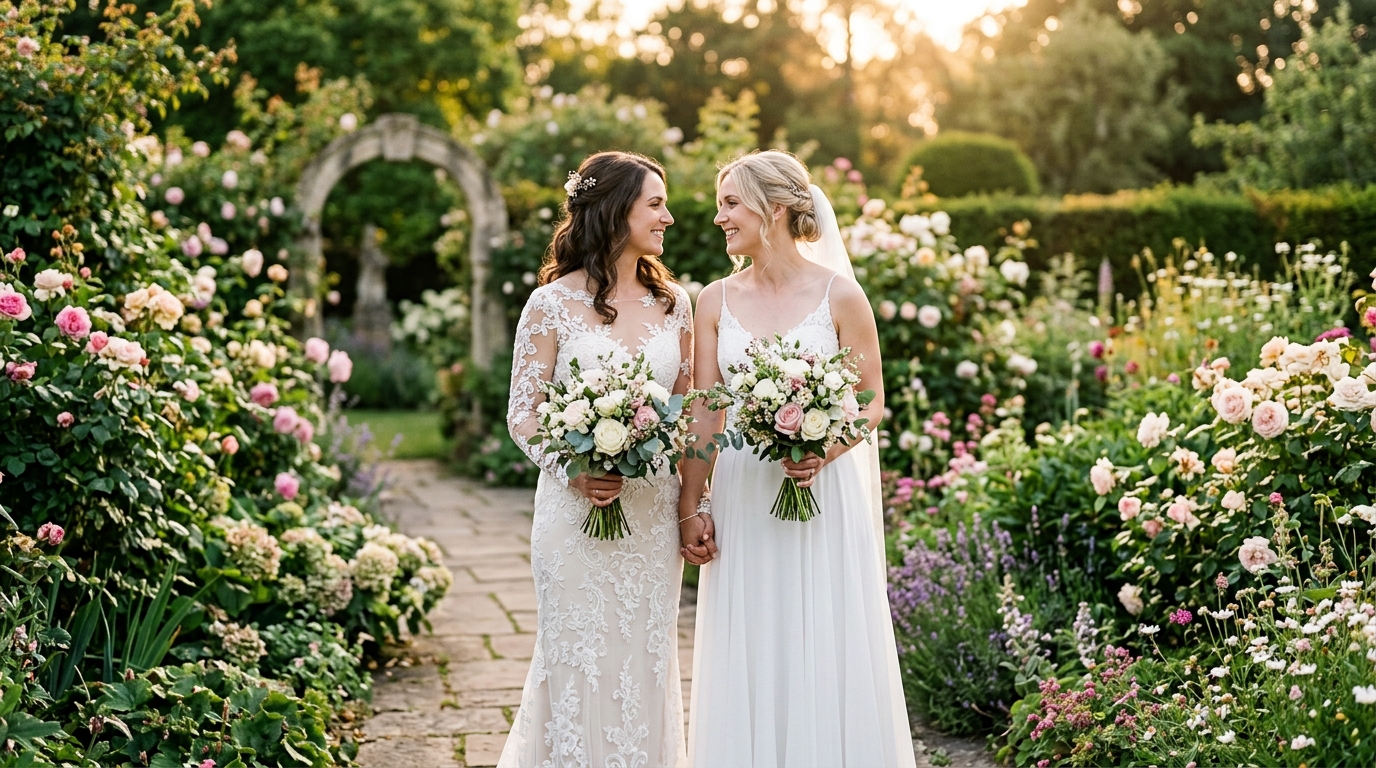
The most common question for two-bride couples is whether to match. The honest answer: do not match exactly. Identical dresses make you look like you are wearing a uniform. Complementary outfits that share a thread of connection photograph far better and let each bride express her own style.
Both in dresses
This is the most popular choice. The key is coordinating formality and colour tone rather than specific designs. If one bride wears a structured ball gown, the other might choose a flowing A-line. If one goes for ivory, the other could pick champagne or blush. The dresses should feel like they belong in the same wedding without looking like a buy-one-get-one deal.
Fabric choice matters too. Two heavy satin gowns can feel overpowering in photographs. Mixing textures, say lace with crepe, or tulle with silk, creates visual interest and helps each bride stand out individually.
One dress, one suit
Around 30% of two-bride couples choose different outfit categories. One bride in a traditional gown and one in a tailored suit creates striking contrast. British brands like The Fold and Reiss offer structured suits in cream, powder blue and dusty pink that work beautifully alongside a wedding dress. Bespoke suit tailoring for women in the UK starts around £800.
Colour coordination
White and ivory are not your only options. Some couples use their wedding colour scheme as a guide and incorporate accent colours through sashes, shoes or accessories. Metallics, soft pastels and even bold jewel tones work when both partners commit to the same palette.
Dress shopping: together or separately?
This decision is one of the first you will make and it shapes the entire outfit experience.
Shopping separately
About half of two-bride couples keep their dresses a secret. This preserves the reveal moment and lets each bride have her own shopping experience. If you go this route, share a broad mood board with your partner covering formality level, colour family and general vibe. Your bridal stylist can help ensure the dresses do not clash.
Most UK bridal boutiques are experienced with two-bride appointments. Book at shops listed in our LGBTQ+ wedding suppliers guide for the most welcoming experience. Ask the boutique directly if they have dressed two-bride couples before.
Shopping together
Shopping together removes the guesswork. You can try dresses side by side, see how silhouettes and fabrics look together, and make decisions as a team. Some couples find this more relaxed and more fun. It does mean sacrificing the “first look” surprise, but many couples feel the practical benefits outweigh that.
What two dresses cost in the UK
| Budget level | Price per dress | Total for two | Where to look |
|---|---|---|---|
| Budget | £150 to £500 | £300 to £1,000 | ASOS, Monsoon, Ghost, high street |
| Mid-range | £800 to £1,500 | £1,600 to £3,000 | Independent boutiques, Pronovias, Jenny Packham diffusion |
| Designer | £2,000 to £5,000 | £4,000 to £10,000 | UK designers like Suzanne Neville, Halfpenny London |
| Bespoke | £3,000 to £8,000+ | £6,000 to £16,000+ | Couture ateliers, made-to-measure studios |
The UK average wedding dress costs about £1,300. For two dresses, most couples spend between £2,000 and £4,000 total. Some save by choosing one statement dress and one simpler design. Others split the budget evenly. There is no rule here.
For more on managing the dress portion of your budget, see our guide on wedding dress costs in the UK. General dress shopping tips apply regardless of whether you are shopping alone or as a couple.
Hair and beauty for two brides
Two brides means two full hair and makeup sessions. This has a bigger impact on your morning timeline than you might expect.
Book two stylists
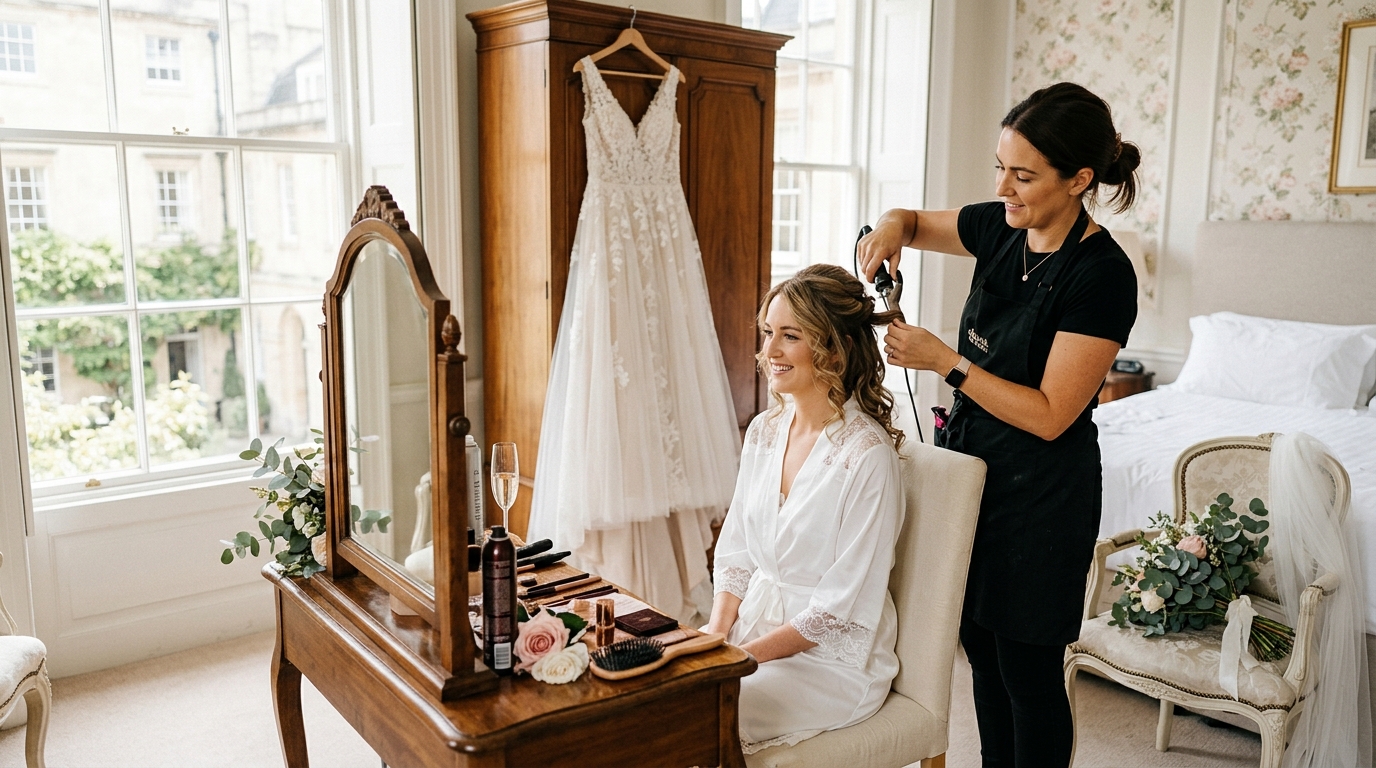
A single hair and makeup artist takes 60 to 90 minutes per bride. Add bridesmaids and you are looking at a morning that starts uncomfortably early. Book two stylists working in parallel. This keeps the atmosphere relaxed and means both brides finish at roughly the same time.
Budget around £300 to £500 per bride for professional bridal hair and makeup in the UK. That is £600 to £1,000 total, compared to £300 to £500 for a single bride. Factor this into your overall budget early. For hairstyle inspiration, our wedding hairstyles and bridal hair guides cover current UK trends.
Coordinating your looks
You do not need matching hairstyles. In fact, different styles photograph better. If one bride wears her hair in a structured updo, the other might choose loose waves. What ties the looks together is the overall polish level: both relaxed, both glamorous, or both bohemian.
Wedding makeup works the same way. Coordinate the intensity rather than the specific look. Two bold red lips can be striking. A subtle dewy look paired with a dramatic smokey eye creates contrast. Two completely different makeup styles with no thread of connection can look odd in close-up portraits.
The getting-ready timeline
| Time | Activity | Notes |
|---|---|---|
| 7:00 am | Stylists arrive, set up | Two stations needed |
| 7:30 am | Bridesmaids hair and makeup begins | Divide between both stylists |
| 9:30 am | Bride 1 hair and makeup | 60-90 minutes |
| 10:00 am | Bride 2 hair and makeup (second stylist) | Running in parallel |
| 11:30 am | Both brides dressed | Help from attendants |
| 12:00 pm | First look or final preparations | Photographer present |
| 12:30 pm | Leave for venue or begin ceremony |
This timeline assumes a 1:00 pm ceremony. Adjust backwards for earlier start times.
Bouquets and flowers for two brides
Flowers are one of the most visible ways to express individual style within a coordinated look.
Both carrying bouquets
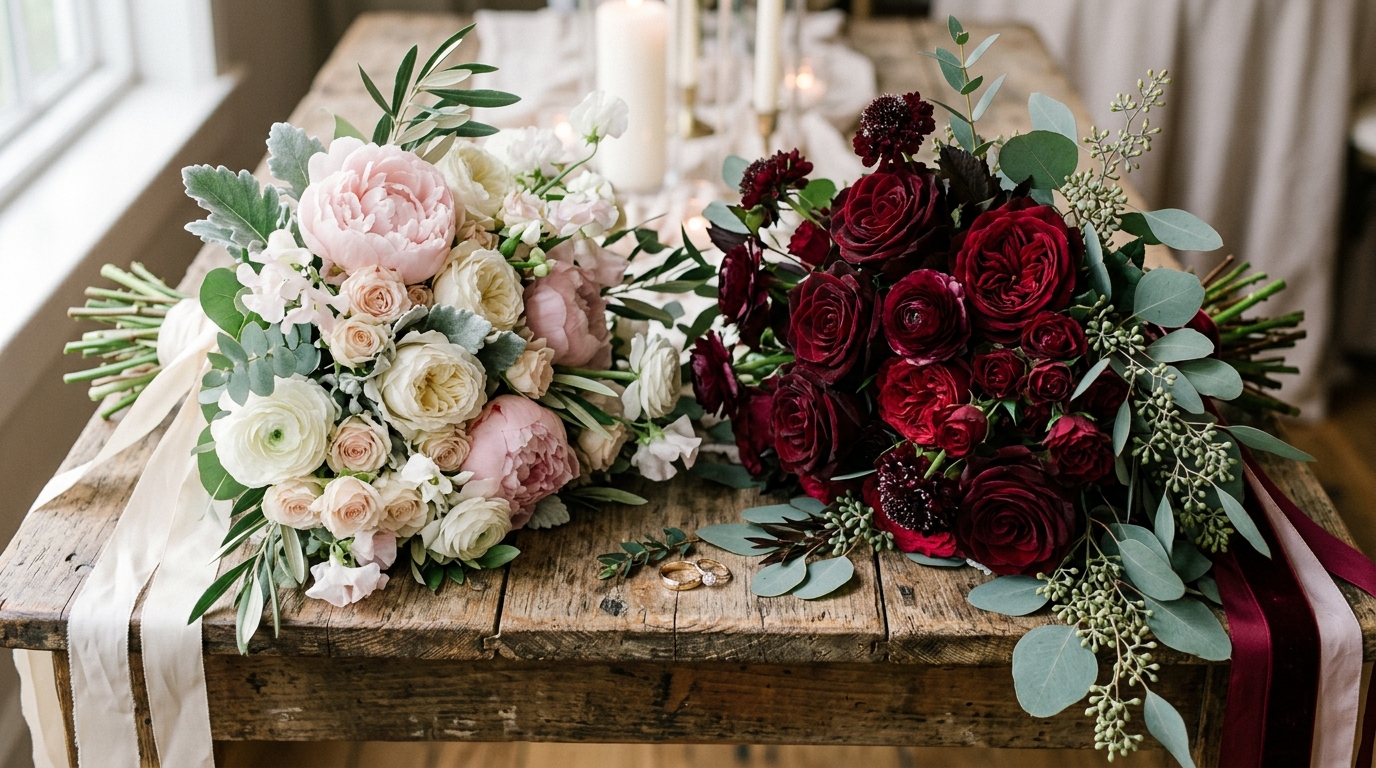
This is the most popular choice and looks wonderful in photographs. Your florist can create two bouquets that complement each other through shared colours or flower varieties without being identical. A larger, more structured bouquet for one bride and a looser, more organic arrangement for the other creates beautiful contrast.
UK bridal bouquets cost between £80 and £250 each depending on flower choice and size. For seasonal options that keep costs down, see our seasonal wedding flowers guide. For a full budget breakdown, our wedding flowers cost guide covers everything.
Alternatives to two bouquets
Some couples prefer one bouquet and one buttonhole or corsage. This works especially well when one bride wears a suit. Wrist corsages, flower crowns and single-stem flowers are all options. The only consideration is symmetry in photographs. If one bride is holding a large bouquet and the other has nothing, the visual weight shifts. A smaller posy or a statement buttonhole helps balance the frame.
Walking down the aisle as two brides
This is the moment guests talk about long afterwards. Two brides means genuine choices about who walks, when, and with whom.
Walking together
The most popular option. Both brides walk down the aisle side by side, either alone or escorted by parents. This feels egalitarian and creates a powerful visual moment. It removes any question about who “waits” and who “arrives.”
Meeting in the middle
Each bride starts at a different entrance and walks towards the centre. This works brilliantly in venues with two aisles or a central space. It builds anticipation and gives each bride her own entrance moment. Timing matters here: practise during the rehearsal so you arrive at the front together.
One walks, one waits
This follows the traditional format with one bride at the front and the other walking down the aisle. Some couples choose this because they love the drama of the aisle walk. If you go this route, decide together who walks and who waits. The decision should feel mutual, not assumed.
The first look alternative
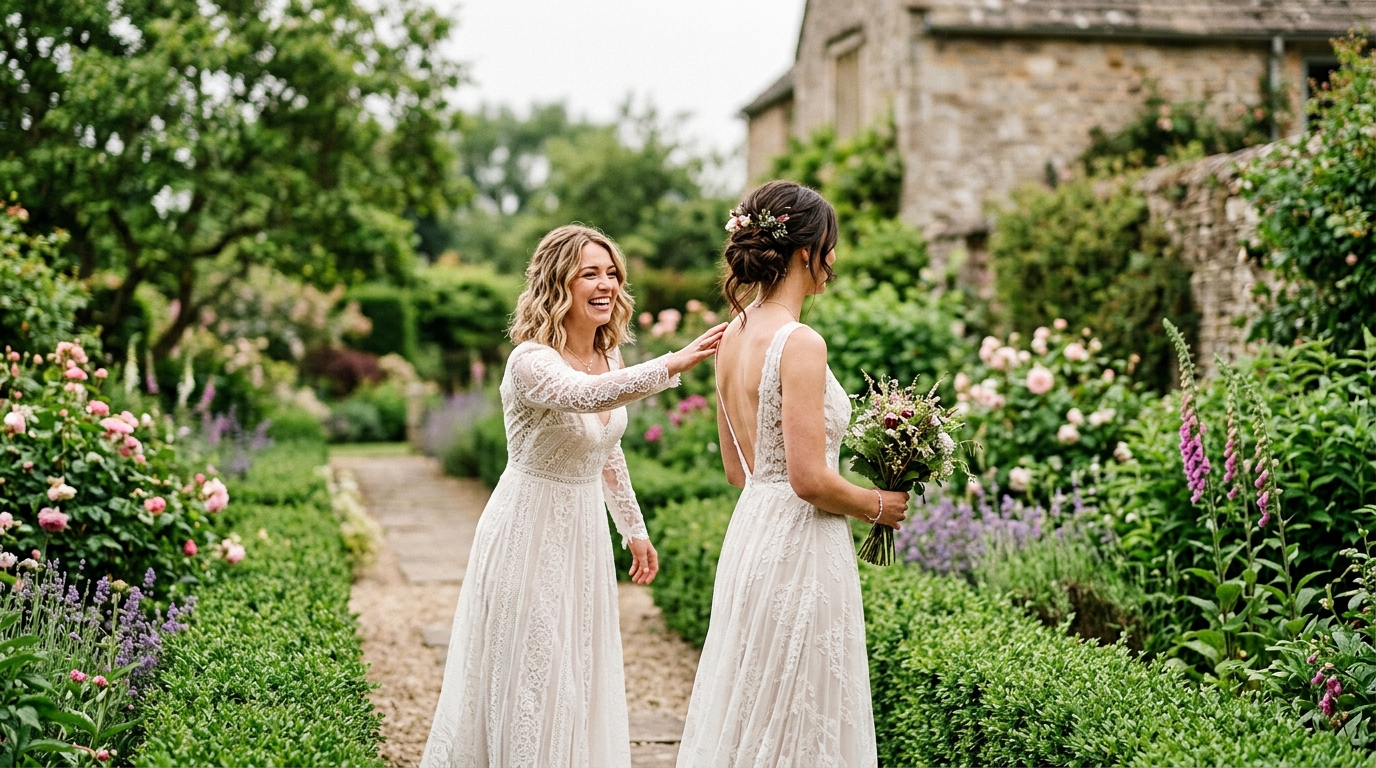
A growing number of two-bride couples do a private first look before the ceremony instead of relying on the aisle for the big reveal. This is a planned moment, usually 30 to 60 minutes before the ceremony, where you see each other’s outfits for the first time. Your photographer captures the reaction. It takes the pressure off the ceremony entrance and gives you a private emotional moment before the public celebration begins.
Our same-sex wedding traditions guide covers aisle options in more detail, along with other ceremony decisions.
Who stands where at the altar?
There is no rule. In a traditional wedding, the bride stands on the left and the groom on the right. That convention has no relevance to a two-bride ceremony.
Stand on whichever side feels comfortable. Some couples choose based on which side their family is sitting on. Others pick based on which is their “better side” for photographs. If you are having a religious ceremony, your officiant may have a preference based on their own convention. Ask during the rehearsal.
The most important thing is that you can both see each other clearly and that your officiant can address you both without turning awkwardly.
Hen do planning: joint or separate?
The hen do question for two brides comes down to your social circles and your preferences.
Joint hen do
A single celebration with both friend groups works well when you share a lot of mutual friends. It is also simpler to organise and usually cheaper. Weekend trips, spa days, activity weekends and dinner parties all lend themselves to a joint format. Our hen do ideas guide has dozens of options.
Separate hen dos
If you have distinct friend groups or want a night that is specifically about you and your mates, separate hen dos make perfect sense. Some couples set a budget cap to keep things fair. Others do separate evenings out and a joint day activity like a cooking class or a wine tasting.
The “hen and hen” format
Some couples throw one combined celebration but split it into two halves. Saturday afternoon is planned by Bride A’s friends, Saturday evening by Bride B’s friends. Everyone attends both. This gives each bride her moment without the cost of two separate events.
Navigating gendered traditions
A two-bride wedding frees you from gendered assumptions, but you may still want to honour some traditional elements. Here is how to adapt them.
Father-daughter dance
Both brides can dance with their fathers, either at the same time to the same song or consecutively. If one bride does not have a relationship with her father, a mother-daughter dance, a dance with a sibling, or skipping the parent dance entirely are all perfectly normal choices.
Speeches
Traditional speech order assumes a father of the bride, a best man and a groom. None of that applies. Invite whoever you want to speak. Best persons, parents, siblings and close friends all work. Many two-bride couples give a joint speech themselves, which tends to be the highlight of the evening. For structure and inspiration, see our wedding speech writing guide.
Garter toss
Most two-bride couples skip this. If you want to include it as a fun moment, make it your own. Some couples toss two garters. Others replace it with a bouquet toss, a group dance, or a completely different game.
Cutting the cake
This one is straightforward. You both hold the knife, you cut together, you eat cake. No adaptation needed.
Cost comparison: traditional wedding vs two-bride wedding
Some budget lines increase when there are two brides. Others stay the same or decrease. This table shows where to expect differences.
| Budget item | Traditional (one bride) | Two brides | Difference |
|---|---|---|---|
| Wedding dresses | £1,300 | £2,600 | +£1,300 |
| Alterations | £200 | £400 | +£200 |
| Hair and makeup | £350 | £700 | +£350 |
| Bouquets | £150 (1 bridal + buttonhole) | £300 (2 bridal) | +£150 |
| Accessories (shoes, jewellery) | £200 | £400 | +£200 |
| Hen do | £300 | £300 to £600 | +£0 to £300 |
| Venue | £5,000 | £5,000 | No change |
| Catering | £4,500 | £4,500 | No change |
| Photography | £1,500 | £1,500 | No change |
| Music/DJ | £500 | £500 | No change |
| Estimated total difference | +£2,200 to £2,500 |
The overall increase is roughly 10 to 15% on the typical UK average of £20,000. Most of the extra cost comes from having two outfits, two beauty sessions and two bouquets. Everything else, from the venue to the food to the entertainment, stays the same. Our wedding budgeting guide helps you build a realistic spending plan.
Photography tips for two brides
A good wedding photographer will never need to be told how to photograph two brides. But a conversation before the day helps ensure you get every shot you want.
What to discuss with your photographer
Tell them about your outfit choices (dress and dress, dress and suit, or something else) so they can plan for lighting and contrast. Mention whether you are doing a first look. Share your ceremony entrance plan so they know where to position themselves. Ask to see their portfolio of same-sex weddings. If they do not have any, that is worth knowing.
Posing
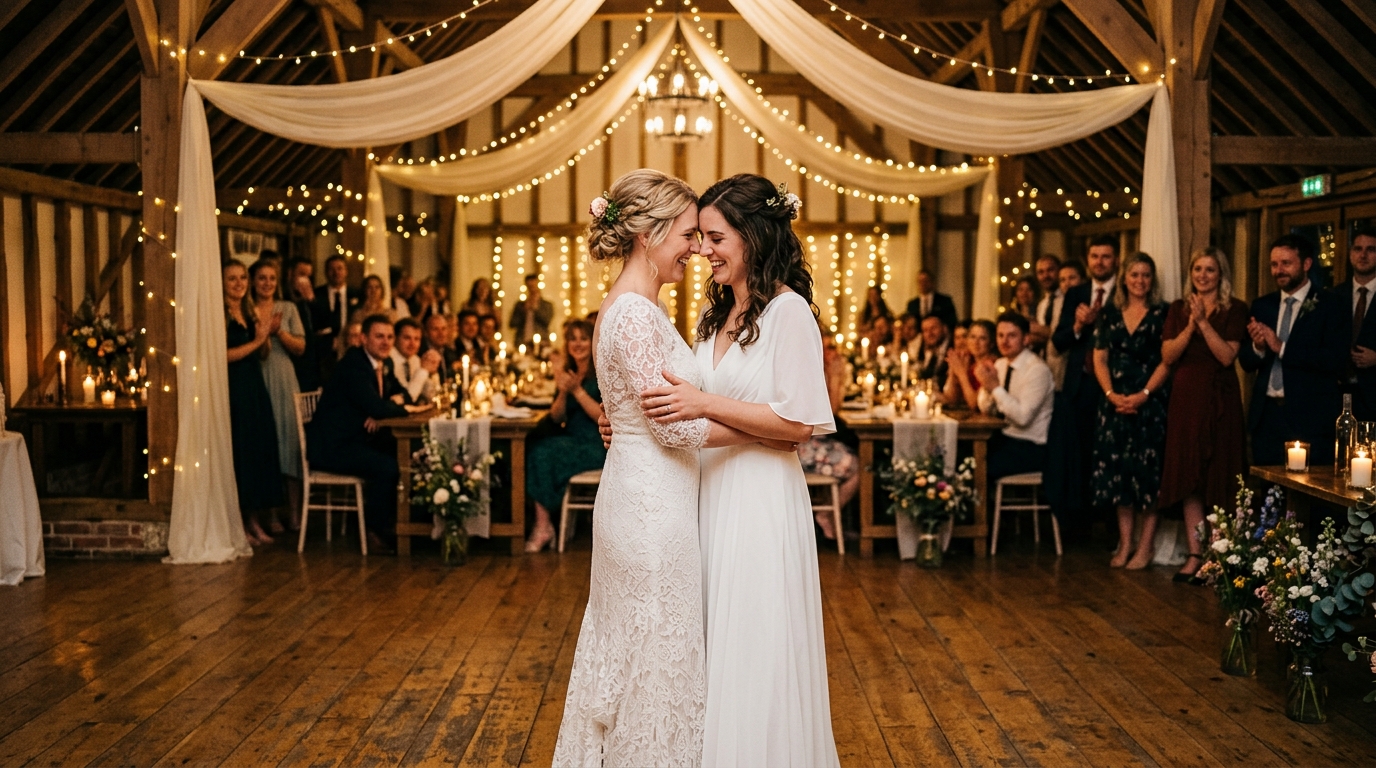
The best photographers guide you into natural, relaxed positions rather than defaulting to “tall person stands behind.” Ask for a mix of side-by-side, facing each other, and candid moments. Forehead touches, hand-holding and walking shots all work beautifully. Our wedding photography styles guide explains different approaches.
Practical logistics most guides forget
These are the small details that make a two-bride wedding day run smoothly.
Two changing rooms. If you are keeping outfits a surprise, you need separate getting-ready spaces. Confirm this with your venue at booking. Not every venue has two bridal suites, but most can provide an additional room.
Dress storage. Two wedding dresses take up more hanging space than one dress and one suit. Bring two garment bags and designate someone from each side to handle dress duties during the reception.
Emergency kits. Pack two of everything: sewing kits, safety pins, stain remover, paracetamol, deodorant, phone chargers and tissues. Give one kit to each maid of honour or best person.
Name changes. If one or both of you plan to change your surname, start the process within a few weeks of the wedding. You will need your marriage certificate. The process is the same as for any married couple. Consider double-barrelling, one partner taking the other’s name, or both choosing an entirely new surname.
Guest assumptions. Some guests, even well-meaning ones, may default to asking “who is the bride?” Gentle corrections early in the day set the tone. Your MC or best person can help by using your names rather than “the bride.”
What real two-bride couples wish they had known
Couples who have done this consistently share a few pieces of advice.
Start dress shopping earlier than you think. Two bridal appointments are harder to coordinate than one, and alterations take 8 to 12 weeks per dress. Beginning at least 10 months before the wedding gives you breathing room.
Communicate about formality level before anything else. The biggest outfit clashes happen when one bride envisions a country garden wedding and the other is thinking black-tie ballroom. Agree on the overall feel before you start shopping individually.
Do not let anyone else’s expectations dictate your decisions. Well-meaning family members may assume one of you is “the real bride” or push for traditions that do not suit your relationship. Smile, thank them, and do what works for you both.
Book your wedding photographer based on their experience with two-bride weddings specifically. The angles, the timing and the approach are different, and experience shows.
Consider writing your own wedding vows. Personal vows at a two-bride wedding are often the most emotional part of the day. Without a prescribed script, you have complete freedom to say exactly what you mean.
Further reading
- LGBTQ+ Wedding Planning Guide for the full planning timeline and legal steps
- Same-Sex Wedding Traditions and Ideas for ceremony and reception inspiration
- Civil Partnership vs Marriage UK if you are still deciding between the two
- LGBTQ+ Wedding Readings and Vows for ceremony wording that fits
- Two Grooms Wedding Guide for our companion guide
- Gay-Friendly Wedding Venues UK for venue ideas across the country
Frequently asked questions
Should two brides buy their wedding dresses together?
That is entirely personal. About half of two-bride couples shop separately to keep the surprise. The other half shop together to coordinate fabric, colour and formality. If you shop separately, share a mood board with your stylist so both dresses sit well together in photographs.
How much do two wedding dresses cost in the UK?
The average UK wedding dress costs around £1,300, so budget roughly £2,600 for two. Off-the-rack dresses from high street brands like ASOS and Monsoon start at £150. Bespoke designs from independent UK designers typically range from £2,000 to £5,000 per dress.
Who walks down the aisle when there are two brides?
There are no rules. Walking together is the most popular choice. Meeting in the middle from separate aisles is a close second. One bride waiting while the other walks works well too. Some couples enter from the same side with a short gap between them. Do whatever feels natural.
Do two brides both carry bouquets?
Most two-bride couples both carry bouquets. Some choose matching arrangements, others go for complementary colours or different flower varieties. One bride carrying a bouquet while the other wears a corsage or buttonhole is another option. There is no expectation either way.
Do two brides need two stylists for hair and makeup?
Booking two stylists is strongly recommended. Bridal hair and makeup takes 60 to 90 minutes per person, and two brides plus bridesmaids on a single stylist creates a stressful morning. Two stylists working in parallel keep the timeline relaxed.
Who dances with their father at a two-bride wedding?
Both brides can dance with their fathers, either simultaneously to the same song or one after the other. Some couples skip the parent dance entirely. Others replace it with a group family dance. There is no tradition to follow here, only whatever feels right for your family dynamics.
Can two brides see each other before the ceremony?
A planned first look before the ceremony is increasingly popular. It gives you a private emotional moment, takes pressure off the ceremony entrance, and gives your photographer time for relaxed couple portraits. Many two-bride couples say the first look was their favourite moment of the day.