Wedding Themes: 20 Ideas for Every Style
Key Takeaways
- A theme is a starting point, not a costume — it should guide your choices without dictating every detail
- The venue often suggests the theme: a barn = rustic, a ballroom = glamour, a garden = romantic
- Choose a theme that reflects you as a couple, not what looks best on Pinterest
- You don't need to name your theme — a consistent colour palette and style creates the same effect
- The best-themed weddings feel natural, not forced — guests shouldn't feel like they're at a themed party
A wedding theme gives your day a cohesive visual identity. It’s the thread that connects the venue, the flowers, the table settings, the stationery, and the outfits. Done well, it makes everything feel intentional. Done badly, it makes a wedding feel like a costume party.
This guide covers 20 themes with specific guidance on how each one shapes your choices.
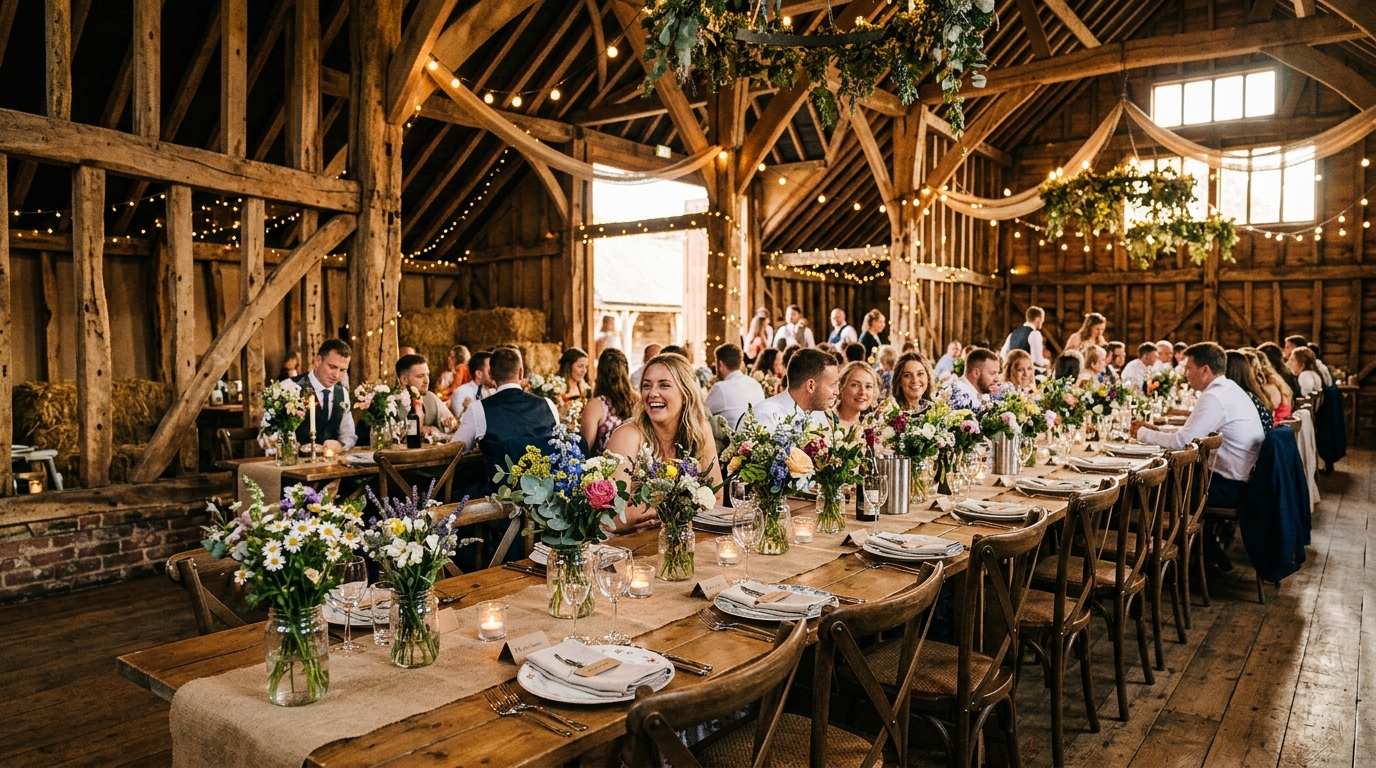
Rustic / country
The look: Natural materials (wood, hessian, linen), wildflowers, candles in jars, exposed beams, greenery.
Best venues: Barns, farms, country pubs, village halls, marquees on farmland. Colours: Cream, sage green, dusty pink, natural wood tones. Flowers: Wildflower meadow bouquets, herbs (rosemary, lavender), gypsophila, sunflowers. Stationery: Kraft paper, botanical prints, hand-lettered or rustic fonts. Attire: Relaxed suits (tweed optional), lace or flowing dresses, flower crowns. Food: BBQ, family-style sharing, local produce, craft beer, cider. Cost impact: Low — natural materials and wildflowers are budget-friendly.
Glamour / black-tie
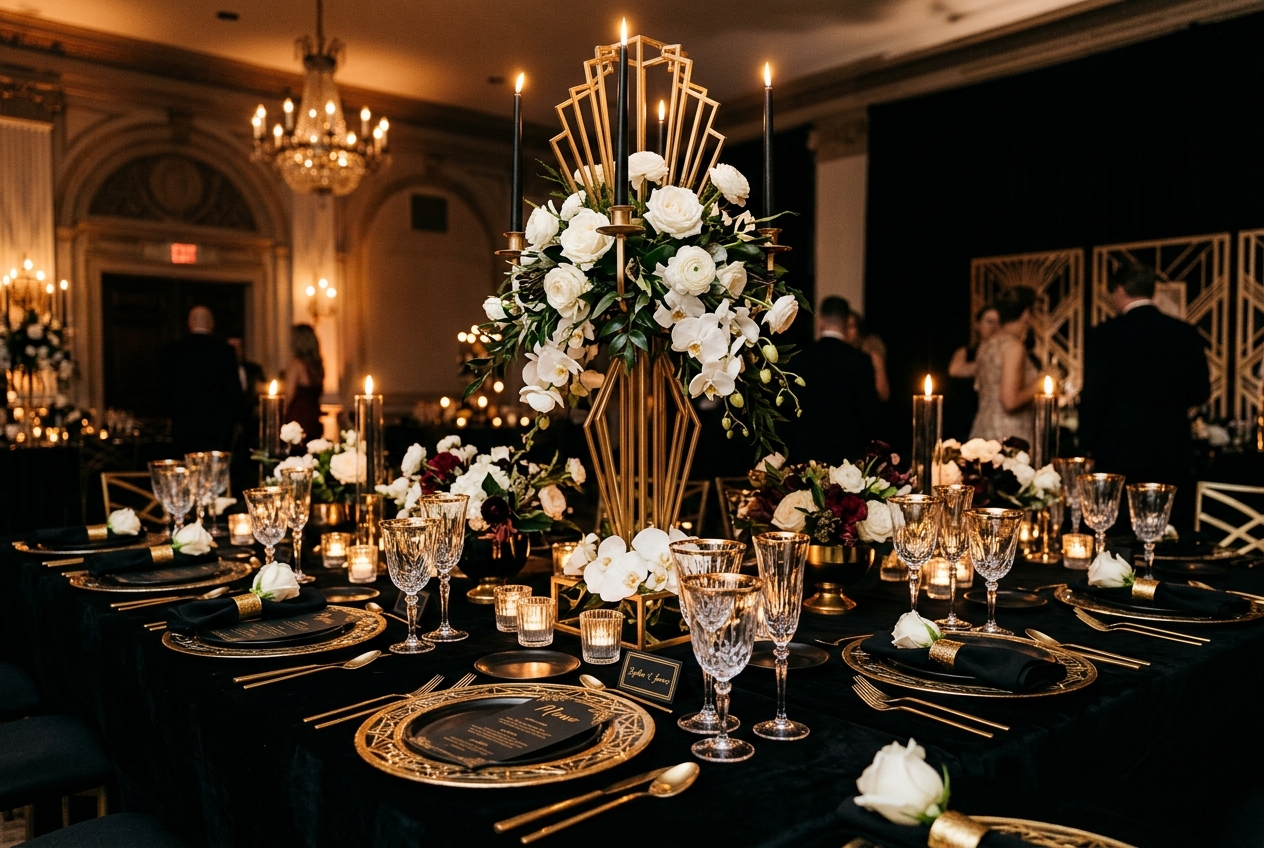
The look: Opulent, dramatic, and elegant. Think: old Hollywood, Great Gatsby, champagne towers.
Best venues: Grand hotels, stately homes, ballrooms, city venues with chandeliers. Colours: Black and gold, navy and silver, deep burgundy and gold, emerald green. Flowers: Roses, orchids, calla lilies — structured and architectural. Stationery: Foil-pressed, thick card stock, calligraphy, wax seals. Attire: Dinner jackets and bow ties, floor-length gowns, statement jewellery. Food: Plated 4-5 course dinner, champagne tower, late-night cocktail bar. Cost impact: High — luxury materials, premium venues, formal catering.
Bohemian / boho
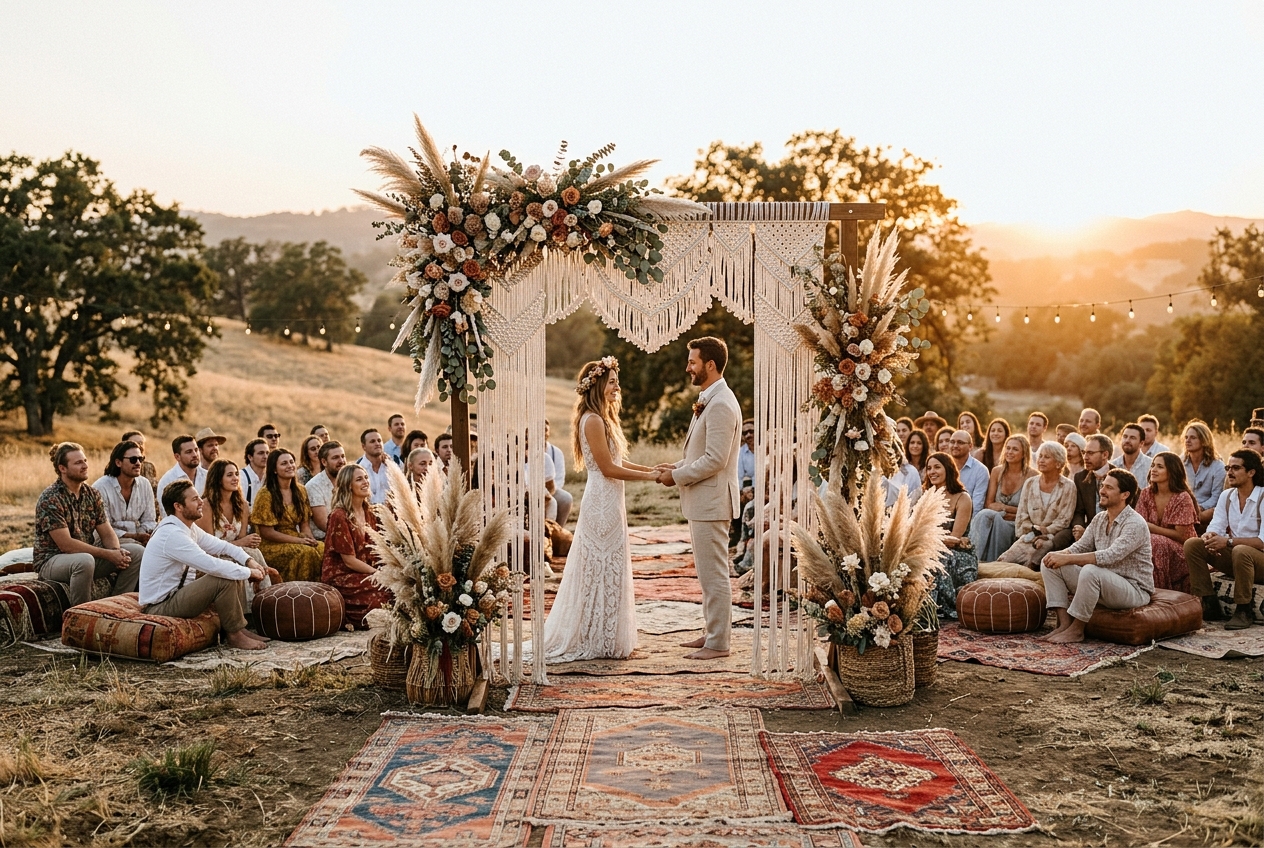
The look: Free-spirited, eclectic, and layered. Textures, patterns, and natural elements combined in a relaxed, undone way.
Best venues: Outdoor fields, tipi/bell tent weddings, woodland clearings, beach. Colours: Terracotta, burnt orange, dusty rose, cream, sage, dried flower tones. Flowers: Pampas grass, dried flowers, loose and unstructured bouquets, wildflowers. Stationery: Watercolour designs, pressed flowers, earthy tones. Attire: Flowing lace dresses, flower crowns, barefoot or sandals, linen suits. Food: Grazing tables, food trucks, shared platters, natural wines. Cost impact: Low-medium — the aesthetic is intentionally relaxed and unpolished.
English garden party
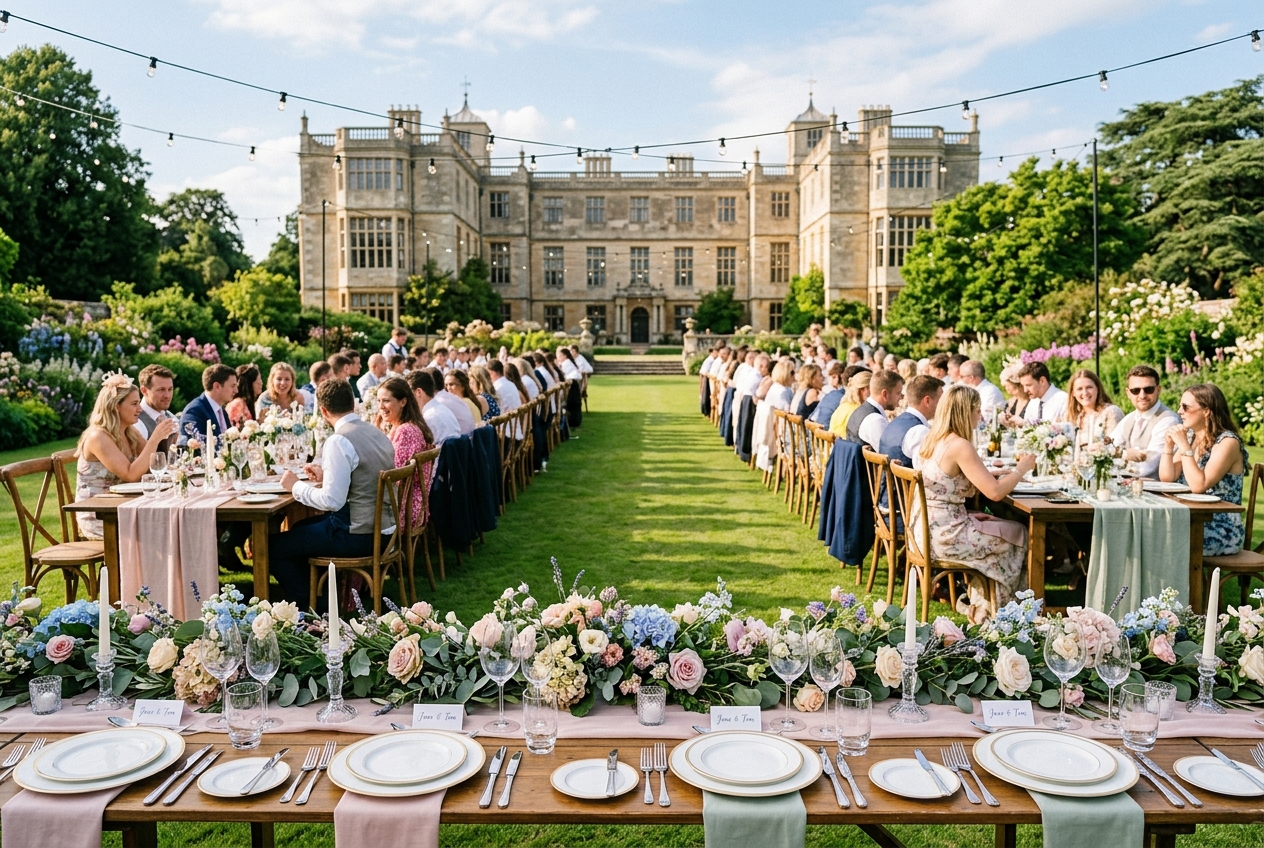
The look: Quintessentially British. Manicured lawns, afternoon tea, croquet, florals everywhere.
Best venues: Country house gardens, orangeries, estate grounds, marquees on a lawn. Colours: Soft pastels — blush pink, powder blue, lavender, cream, soft green. Flowers: Garden roses, peonies, sweet peas, hydrangeas — the fuller and lusher, the better. Stationery: Floral watercolour, elegant typography, botanical illustrations. Attire: Morning suits, floaty dresses, hats and fascinators, pastels. Food: Afternoon tea, Pimm’s, croquet, strawberries and cream. Cost impact: Medium — garden flowers and a marquee on family land can be affordable, but estate venues are premium.
Modern minimalist
The look: Clean lines, neutral tones, understated elegance. Less is more — every element is intentional.
Best venues: Art galleries, modern restaurants, converted warehouses, architectural spaces. Colours: White, cream, grey, black accents. Monochrome with one warm accent. Flowers: Single-stem arrangements, structural greenery, orchids, minimal and sculptural. Stationery: Sans-serif typography, clean layouts, thick white card. Attire: Sleek column dresses, tailored slim-fit suits, minimal accessories. Food: Tasting menus, molecular gastronomy, beautifully plated but simple courses. Cost impact: Medium — simplicity requires quality. Cheap minimalism looks empty.
More themes at a glance
| Theme | Key Elements | Best Venue | Colour Palette |
|---|---|---|---|
| Vintage | Antique china, old photographs, lace, classic cars | Country house, vintage barn | Ivory, dusty blue, gold |
| Industrial | Exposed brick, Edison bulbs, copper, concrete | Warehouse, brewery, converted factory | Black, grey, copper, greenery |
| Tropical | Palm leaves, bright flowers, exotic fruits | Outdoor, glasshouse, botanical garden | Hot pink, orange, green, gold |
| Coastal / nautical | Driftwood, shells, rope, blue tones | Beach, harbour, lighthouse, boat | Navy, white, sand, pale blue |
| Woodland / forest | Moss, ferns, logs, mushrooms, candles | Forest clearing, treehouse, woodland cabin | Forest green, brown, cream |
| Festival | Bunting, tipis, street food, live music, hay bales | Field with tipis, outdoor space | Bright multicolour or jewel tones |
| Classic / traditional | Church ceremony, formal dinner, speeches, morning suits | Church + country house / hotel | White, ivory, navy, silver |
| Moroccan | Lanterns, rich textiles, spiced food, vibrant tiles | Riad-style venue, marquee with draping | Jewel tones: teal, gold, crimson |
| Regency / period | Inspired by Bridgerton — pastel elegance, string quartet | Georgian house, Assembly Rooms | Pastel purple, blue, cream, gold |
| Whimsical / fairytale | Fairy lights everywhere, dreamy, magical | Castle, garden, woodland | Blush, gold, silver, candlelight |
| Sustainable / eco | Locally sourced everything, zero waste, natural | Outdoor, eco-lodge, farm | Earth tones, green, natural |
| Art deco / 1920s | Geometric patterns, gold, jazz, feathers | Art deco hotel, museum, grand ballroom | Black, gold, cream |
| Highland / Scottish | Tartan, whisky, ceilidh, thistles | Castle, loch-side, Highland estate | Tartan, purple, green, heather |
| Celestial | Stars, moon, constellations, midnight blue | Evening ceremony, planetarium, dark venue | Navy, gold, silver, white |
| Foodie | Menu-driven, local produce, wine pairings, chef’s table | Restaurant, vineyard, food hall | Neutral with food as the colour |
How to apply a theme without overdoing it
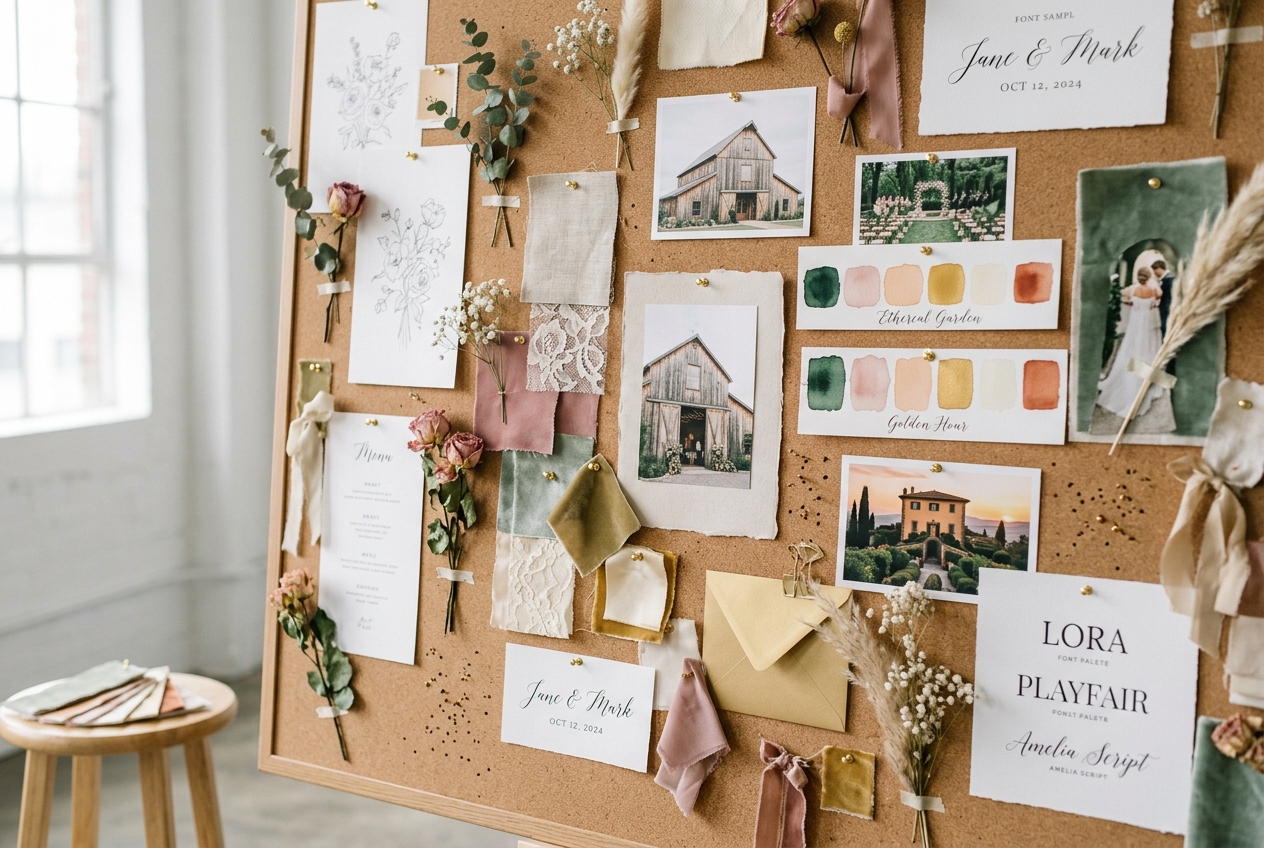
Pick 3 elements. A theme comes through in the colour palette, the flowers, and one signature detail (the stationery, the favours, or the table settings). You don’t need themed everything — that’s how weddings start looking like an event planner’s mood board instead of a celebration.
Let the venue do the work. A barn doesn’t need a “rustic theme” — it IS rustic. Add candles, greenery, and fairy lights. Done. Don’t fight the venue’s natural character.
Skip the props. Themed props (wagon wheels, life rings, vintage suitcases) look great in photos but dated within 2-3 years. Invest in flowers, lighting, and food instead — these have timeless impact.
Tell your suppliers, not your guests. Your suppliers need the brief (“relaxed garden party with soft pastels and lots of greenery”). Your guests don’t need to know the theme name — they’ll experience it naturally.
Further reading
- Wedding Colour Schemes — choosing your palette
- Wedding Trends 2026 — what’s popular this year
- Table Decoration Ideas — bringing the theme to the table
- Wedding Flowers: Seasonal Guide — flowers by season
- DIY Wedding Decorations — budget decor ideas
- Wedding Centrepiece Ideas — centrepieces at every budget
Frequently asked questions
Do you need a wedding theme?
No. Many beautiful weddings have no named theme — just a consistent colour palette and a general vibe (formal, relaxed, fun). A theme is a useful shorthand for communicating your vision to suppliers, but it's not a requirement. 'Elegant and warm with lots of candles' is a perfectly good brief without being a named theme.
What is the most popular wedding theme in the UK?
Rustic/country is the most popular UK wedding theme, driven by the popularity of barn and farm venues. Classic/traditional (church + country house) is second. Bohemian, modern minimalist, and garden party round out the top five. The trend is towards personalised, 'no-theme' weddings that reflect the couple rather than a Pinterest board.
How do I choose a wedding theme?
Start with your venue — it naturally suggests a style. Then consider: what do you both enjoy? (Nature, travel, food, music, art.) What colours are you drawn to? What season is your wedding? The answers converge into a theme organically. Don't force a theme that doesn't match your venue or personality.
How much does a wedding theme add to the cost?
A theme itself costs nothing — it's a design direction. But themed elements (custom decor, specific flowers, colour-matched stationery) can add £200-2,000 depending on how far you take it. The cheapest approach: choose a colour palette and let the venue do most of the work.