Home / Articles / LGBTQ+ Weddings
Civil Partnership vs Marriage in the UK

Key Takeaways
- Civil partnerships and marriages grant virtually identical legal rights in England, Wales and Scotland
- Same-sex couples can marry (since 2014) or form a civil partnership (since 2005)
- Opposite-sex civil partnerships became available across England and Wales in December 2019
- Adultery is only a legal ground for divorce in marriage, not for dissolving a civil partnership
- You can convert an existing civil partnership to a marriage without a new ceremony
Civil partnership vs marriage is a question thousands of UK couples face each year, whether same-sex or opposite-sex. Both legal arrangements offer almost identical rights, yet there are meaningful differences in how they work, what they symbolise and how they are dissolved.
Since the law changed to allow same-sex marriage in 2014 and opposite-sex civil partnerships in 2019, every couple in England and Wales now has a genuine choice. Scotland and Northern Ireland followed with their own timelines. This guide breaks down the legal, financial and practical differences so you can make a clear decision.
Understanding both options matters more than you might expect. The choice affects your ceremony wording, the legal process if you later separate, and how your relationship is recognised abroad. Here is everything you need to know.
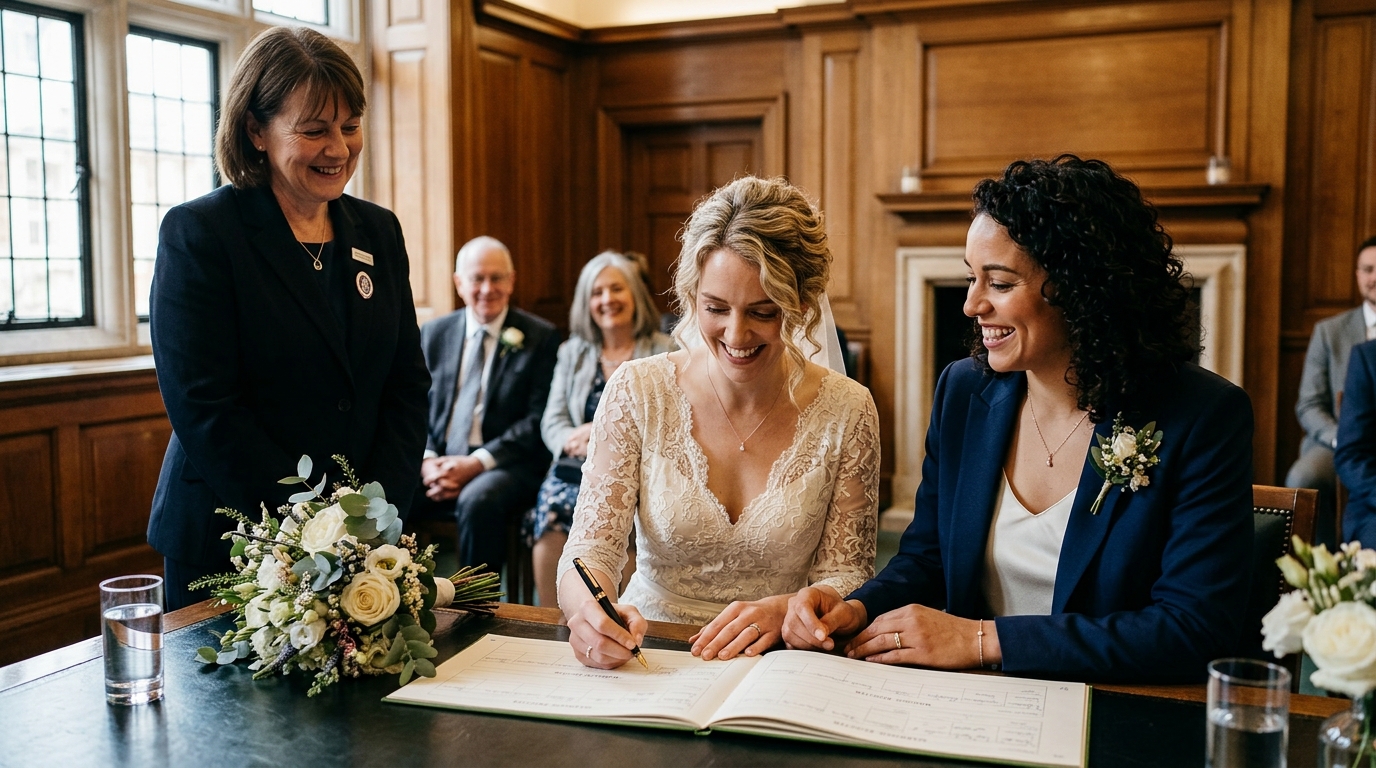
How did civil partnerships and marriage become available to all UK couples?
The Civil Partnership Act 2004 came into force on 5 December 2005, giving same-sex couples a legal framework for the first time in the UK. Before this, same-sex partners had no automatic inheritance rights, no next-of-kin status and no pension entitlements from a partner’s workplace scheme.
The Marriage (Same Sex Couples) Act 2013 legalised same-sex marriage in England and Wales from 29 March 2014. Scotland passed its own legislation separately, with the first same-sex marriages taking place on 31 December 2014. Northern Ireland was the last UK nation to permit same-sex marriage, beginning on 13 January 2020.
The Civil Partnerships, Marriages and Deaths (Registration etc) Act 2019 extended civil partnerships to opposite-sex couples in England and Wales from 31 December 2019. This followed the landmark Supreme Court ruling in Steinfeld and Keidan v Secretary of State (2018), which found that restricting civil partnerships to same-sex couples was incompatible with human rights law.
Scotland extended opposite-sex civil partnerships in June 2021. Northern Ireland made them available from 2020 as part of broader legislative changes.
What this means in practice
Every adult couple in England, Wales and Scotland now has four options: marry in a civil ceremony, marry in a religious ceremony (where the religious body permits it), form a civil partnership, or live together without a legal arrangement. The choice is yours.
What are the legal differences between civil partnership and marriage?
The rights granted by both arrangements are almost identical, but the differences that remain are worth understanding before you decide. Some are symbolic, some practical, and one directly affects how you can end the relationship.
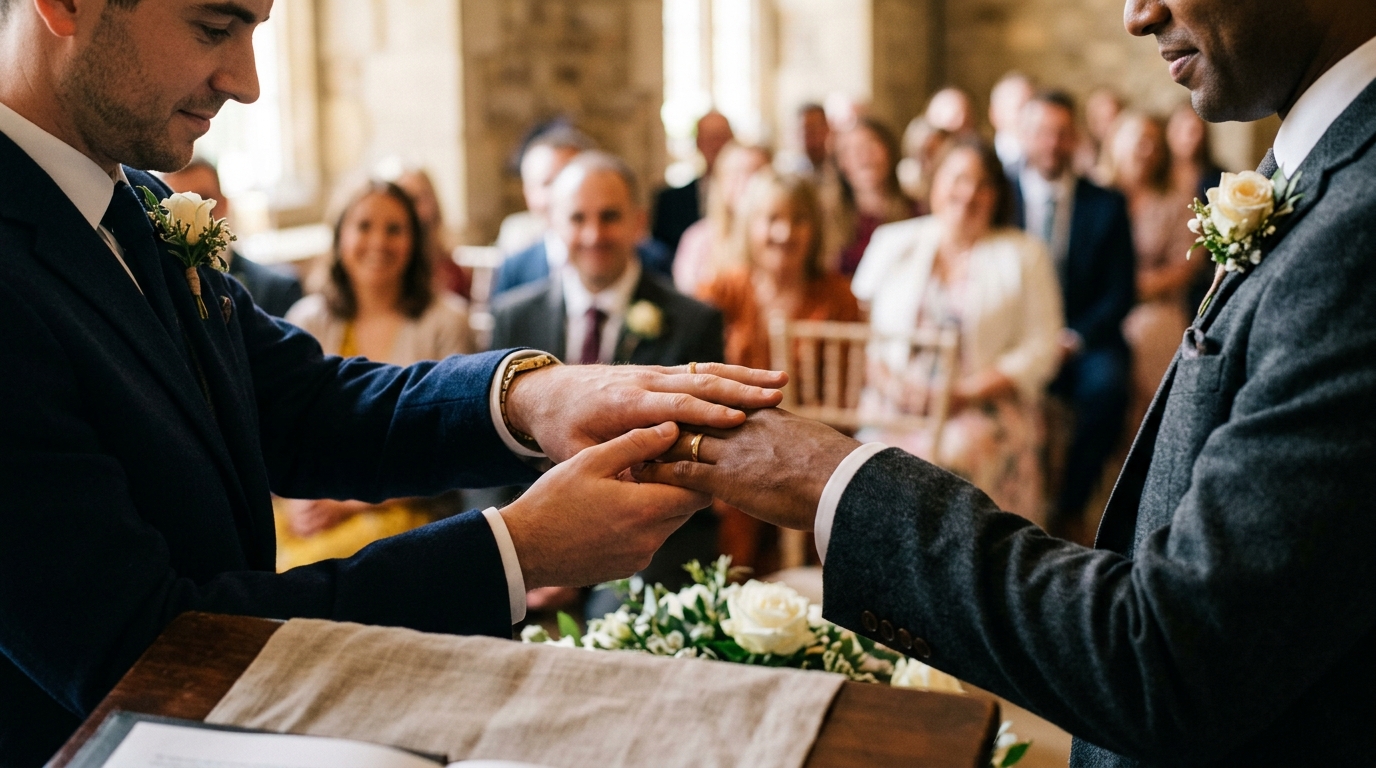
Adultery as grounds for dissolution
This is the single biggest legal difference. Adultery is a ground for divorce in marriage, but it is not a ground for dissolving a civil partnership. If your civil partner is unfaithful, you would need to cite unreasonable behaviour instead.
In practice, this distinction has become less significant since April 2022, when no-fault divorce was introduced in England and Wales. Most couples now end their marriage or civil partnership by stating the relationship has broken down irretrievably, without needing to prove fault.
Religious content in the ceremony
A marriage can include religious readings, hymns and blessings as part of the legal ceremony itself. Civil partnership registrations were originally entirely secular, with no religious content permitted in the signing.
The law has since been relaxed to allow religious organisations to opt in to hosting civil partnerships on their premises, but uptake has been limited. If a religious ceremony matters to you, marriage remains the more straightforward route.
The language of the law
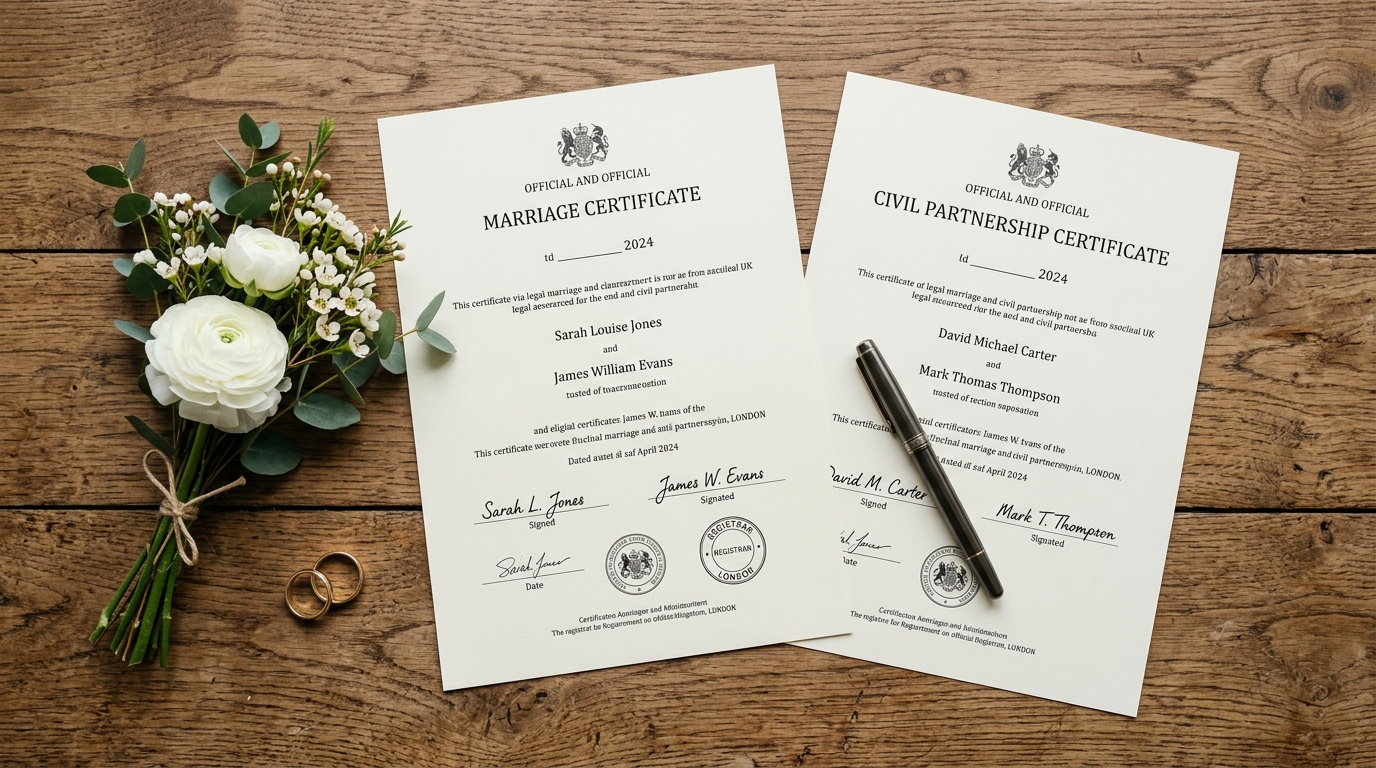
Marriages produce a marriage certificate. Civil partnerships produce a civil partnership certificate. In a marriage, you are legally husband, wife or spouse. In a civil partnership, you are civil partners. You sign a marriage register or a civil partnership document. These differences sound small, but they shape how the ceremony feels and how your relationship is described in legal documents for years to come.
| Feature | Marriage | Civil Partnership |
|---|---|---|
| Available to | All couples | All couples (opposite-sex from Dec 2019) |
| Ceremony type | Civil or religious | Primarily civil (limited religious opt-in) |
| Formed by | Exchanging spoken vows | Signing a civil partnership document |
| Adultery grounds | Yes (though less relevant since no-fault divorce) | No |
| Religious content | Permitted in ceremony | Limited (religious body must opt in) |
| Legal terminology | Husband/wife/spouse | Civil partner |
| Pension rights | Full entitlement | Full entitlement |
| Inheritance tax | Exempt between spouses | Exempt between civil partners |
| Parental rights | Automatic for birth mother’s spouse | Automatic for birth mother’s civil partner |
| International recognition | Widely recognised | Varies by country |
| Ending the arrangement | Divorce | Dissolution |
| No-fault ending | Yes (since April 2022) | Yes (since April 2022) |
How much does a civil partnership cost compared to a marriage?
The good news: the legal costs are virtually identical. Where your money goes depends on how you choose to celebrate, not which legal arrangement you pick.
Registry office fees (England and Wales, 2026)
Giving notice costs £35 per person at your local register office. Both partners must give notice, so that is £70 total. You must give notice at least 28 days before your ceremony or registration date.
A basic register office ceremony or registration starts at £57, though this varies by council. Some register offices charge more for larger ceremony rooms. A Saturday slot typically costs more than a weekday booking.
If you want to hold your ceremony at an approved venue (a hotel, country house or other licensed location), the registrar attendance fee ranges from £300 to £600 depending on the day and local authority. The venue itself will charge separately.
Where the costs diverge
The legal paperwork costs the same either way. The difference comes in the celebration. Marriage ceremonies at religious venues often involve additional costs such as church fees (around £500 to £600 for a Church of England wedding), choir fees, bell-ringing fees and flower arrangements specific to the building.
Civil partnerships, being primarily secular, do not carry these religious venue costs. However, couples choosing either arrangement spend similar amounts on receptions, outfits, photography and everything else that makes a wedding day memorable.
For a detailed breakdown of ceremony and reception costs, see our wedding budget breakdown guide.
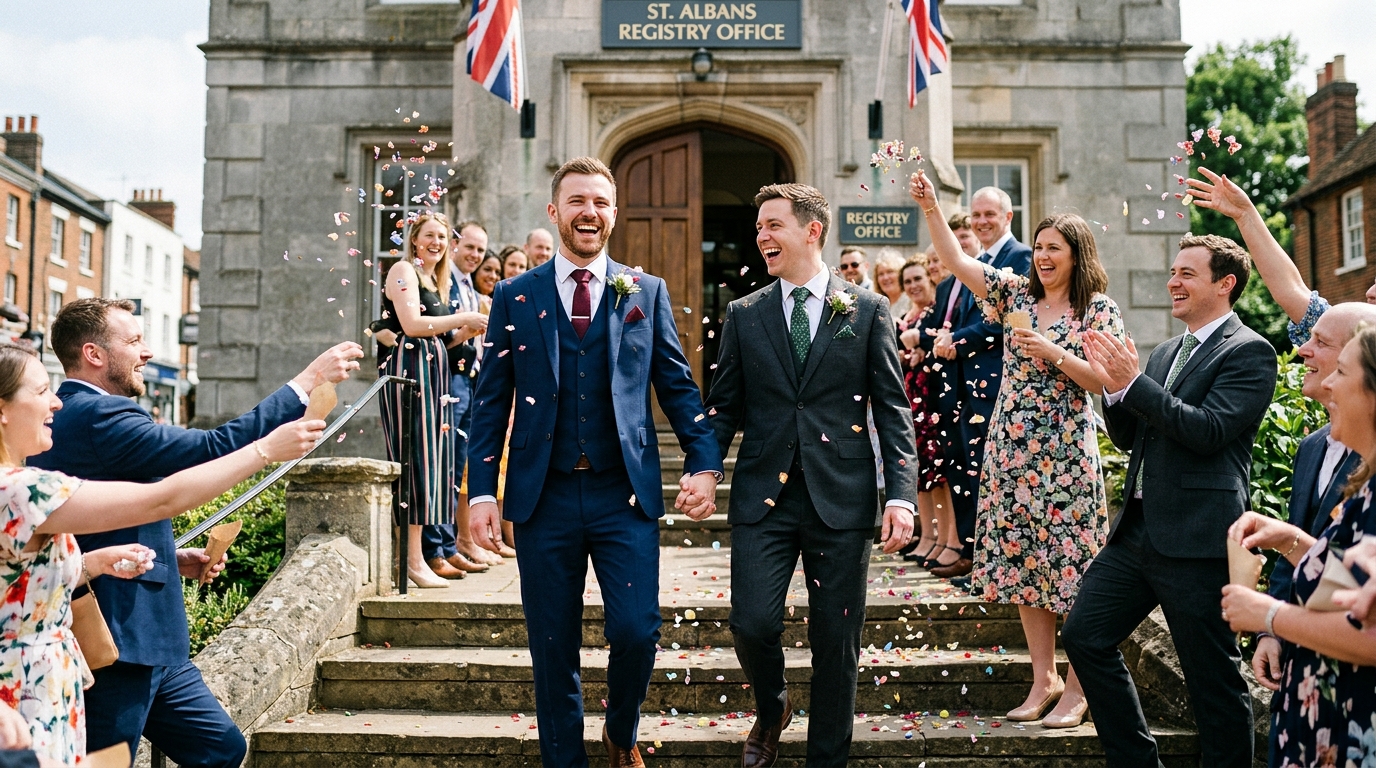
Can you convert a civil partnership to a marriage?
Yes. Same-sex couples who formed a civil partnership before same-sex marriage became legal can convert to a marriage. The process is straightforward and does not require a new ceremony.
The administrative route
You can convert by completing a standard declaration at any register office in England or Wales. The fee is approximately £45. You will receive a marriage certificate, and your civil partnership will be treated as having been a marriage from the original date it was formed. No witnesses are needed for the administrative conversion.
The ceremonial route
If you would prefer to mark the occasion, you can hold an optional ceremony as part of the conversion. This can take place at any register office or approved venue. The ceremony is not legally required, but many couples find it meaningful, especially if their original civil partnership was a low-key registration.
Converting marriage to civil partnership
This is not currently possible. If you are married, you cannot convert your marriage to a civil partnership. The conversion only works in one direction.
Practical reasons to convert
Some couples convert for symbolic reasons, wanting to call their relationship a marriage. Others have practical motivations. Marriage is more widely recognised internationally, which can simplify visa applications, property purchases abroad and legal matters in countries that do not recognise civil partnerships.
Which should you choose? Practical considerations
There is no wrong answer here. Both arrangements give you the same financial protections, the same parental rights and the same legal standing in the eyes of UK law. The decision comes down to what matters to you personally.
Choose marriage if…
You want a religious ceremony as part of the legal process. You plan to live abroad in a country where civil partnerships are not recognised. You feel strongly about using the word “married” to describe your relationship. You want to exchange spoken vows as the legally binding element of your ceremony.
Choose a civil partnership if…
You want a legal commitment without the cultural or historical associations of marriage. You prefer a quieter, more private registration process. You want to make a deliberate choice that reflects your values about what a modern partnership looks like. You are an opposite-sex couple who campaigned for the right to civil partnerships and want to exercise that choice.
Questions to ask yourselves
Think about how you will describe your relationship to others. Consider how your families will react and whether that matters to you. Look at your travel plans and whether international recognition is important. Talk about whether spoken vows or signing a document feels more meaningful. Neither option is better or worse. The right choice is the one that fits your relationship.
What are the tax and financial implications?
Married couples and civil partners are treated identically for tax purposes by HMRC. There is no financial advantage to choosing one over the other.
Income tax
Both married couples and civil partners can transfer up to £1,260 of their personal allowance to their partner through the Marriage Allowance. This saves the recipient up to £252 per year. The lower earner must earn less than the personal allowance (£12,570 in 2025/26), and the higher earner must be a basic-rate taxpayer.
Inheritance tax
Assets passed between spouses or civil partners are completely exempt from inheritance tax, regardless of value. This includes property, savings and investments. The nil-rate band (£325,000 in 2025/26) can also be transferred to the surviving partner if it is unused at death.
Pensions
Civil partners and spouses have identical rights to workplace pensions, state pensions and bereavement benefits. If your partner dies, you can inherit their state pension entitlement and claim bereavement support payments of up to £3,500.
For more on managing wedding finances, our guide on how to budget for a wedding covers everything from venue deposits to contingency funds.
How do you give notice for a civil partnership?
The notice process is identical to marriage. Both partners must visit their local register office in person, even if the ceremony or registration will take place elsewhere.
You will each need to bring your passport or birth certificate, proof of address (a utility bill or bank statement dated within the last three months), and if applicable, a decree absolute or death certificate from a previous marriage or civil partnership.
The notice is displayed publicly for 28 days. If no objections are raised, you can proceed with your ceremony or registration after the waiting period. The notice is valid for 12 months, giving you flexibility on your date.
If either partner is not a British, Irish or EU citizen with settled status, additional immigration checks may apply, extending the notice period to up to 70 days. Plan ahead if this affects you.
For a step-by-step planning guide, see our wedding planning timeline to keep everything on track.
Ceremony options: what to expect on the day
Whether you choose marriage or a civil partnership, the day itself can look however you want it to. The legal requirements take only a few minutes. Everything else is up to you.
Civil partnership registration
The minimum legal requirement is signing the civil partnership document in front of a registrar and two witnesses. There are no required spoken words, no mandatory vows and no obligation to exchange rings. Many couples add personal touches: readings, music and ring exchanges that are meaningful but not legally necessary.
For ideas on what to include, browse our collection of wedding readings and wedding vows that work beautifully for civil partnerships too.
Marriage ceremony
A civil marriage requires you to speak specific words (the “contracting words”) in front of a registrar and two witnesses. You can personalise the rest of the ceremony with readings, music and your own vows, but the contracting words are legally required. A religious marriage follows the customs of the particular faith.
Venue options
Both civil partnerships and marriages can be held at register offices, approved venues (hotels, stately homes, barns) or, in the case of marriage, religious buildings. Our guide to how to choose a wedding venue includes a checklist of what to look for.
If you are planning on a tight budget, a registry office wedding can cost as little as £127 for the legal minimum.
LGBTQ+ couples: specific considerations
If you are a same-sex couple, you have full access to both marriage and civil partnerships. The choice is genuinely personal, and there is no expectation either way.
Some same-sex couples who formed civil partnerships in the years before marriage became available feel a strong attachment to their civil partnership. It was the first time their relationship had legal recognition, and that carries weight. Others have always wanted to be married and converted as soon as the law changed.
For same-sex couples planning their celebration, our LGBTQ+ wedding planning guide covers everything from finding inclusive venues to adapting traditions. You might also find inspiration in our guides for two brides and two grooms.
If you are looking for ceremony ideas that reflect your relationship, our LGBTQ+ wedding readings and vows collection includes options that are personal, moving and entirely free of gendered assumptions.
Finding the right suppliers matters. Our directory of LGBTQ+ wedding suppliers lists photographers, florists, planners and venues that actively welcome all couples.
Ending a civil partnership or marriage
No one enters a partnership planning to leave it, but understanding the exit process is part of making an informed choice.
Divorce (marriage)
Since April 2022, no-fault divorce has simplified the process. Either spouse can apply by stating the marriage has broken down irretrievably. There is a 20-week reflection period after the initial application, then a 6-week period before the final order is granted. The court fee is £593.
Dissolution (civil partnership)
The process mirrors divorce almost exactly. You apply for a dissolution order (previously called a conditional order), wait 20 weeks, then apply for the final order. The court fee is the same £593. The only difference is terminology. You dissolve a civil partnership rather than divorce.
Financial settlements
Whether you are married or in a civil partnership, the court has the same powers to divide assets, order maintenance payments and handle pension sharing. There is no advantage to either arrangement when it comes to a financial settlement.
Further reading
- How to plan a wedding for a full planning overview
- Wedding checklist for a printable task list
- Gay-friendly wedding venues UK for inclusive venue options
- Same-sex wedding traditions and ideas for creative inspiration
- Wedding venue cost UK for a breakdown of what venues charge
Frequently asked questions
What is the legal difference between a civil partnership and marriage?
The main legal differences are that marriage can include religious content and adultery is only grounds for ending a marriage, not a civil partnership. Financial rights, inheritance, pension entitlements and parental responsibilities are the same under both arrangements.
Can opposite-sex couples get a civil partnership in the UK?
Yes. Since 31 December 2019, opposite-sex couples in England and Wales can form a civil partnership. Scotland extended the same right in June 2021. Northern Ireland followed in 2020.
How much does a civil partnership cost compared to a marriage?
Registry office fees are identical for both. In England and Wales, giving notice costs £35 per person and a basic ceremony at the register office starts at £57. Venue, reception and celebration costs depend on your choices, not on whether you choose marriage or civil partnership.
Can you convert a civil partnership to a marriage?
Yes. Same-sex couples in England and Wales can convert a civil partnership to a marriage by completing a simple administrative process at the register office, costing around £45. You can also hold an optional ceremony, but it is not required.
Is a civil partnership recognised abroad?
Recognition varies by country. Most EU nations and many Commonwealth countries recognise UK civil partnerships, often treating them as equivalent to their own registered partnership schemes. Some countries only recognise marriage. Check specific country rules before travelling.
Do civil partners get the same pension rights as married couples?
Yes. Civil partners and married couples have the same state pension and bereavement benefit rights. Workplace pension schemes must also treat civil partners and spouses equally under the Equality Act 2010.
Can you have a religious civil partnership ceremony?
Civil partnerships were originally entirely secular. The Marriage (Same Sex Couples) Act 2013 allowed religious organisations to opt in to hosting civil partnership registrations on their premises, though uptake remains limited. Quakers, Unitarians and Liberal Judaism are among the groups that welcome same-sex couples.