How to Choose a Wedding Photographer
Key Takeaways
- Look at full wedding galleries, not just highlight reels — the consistency matters more than the best 20 shots
- Meet the actual photographer who'll shoot your wedding, not just the studio owner
- Personality fit is as important as skill — this person spends 10+ hours with you on the most emotional day of your life
- Check backup equipment, insurance, and illness cover before booking
- Read the contract line by line: image rights, turnaround time, cancellation terms, and what happens if they fail to deliver
Your wedding photographer is the one supplier whose work lasts forever. The food is eaten, the flowers wilt, the music stops. The photographs are what remain. Choosing the right photographer is arguably the most important supplier decision you’ll make.
This guide takes you through the process from searching to signing.
Step 1: Define what you want
Before you search, answer these questions:
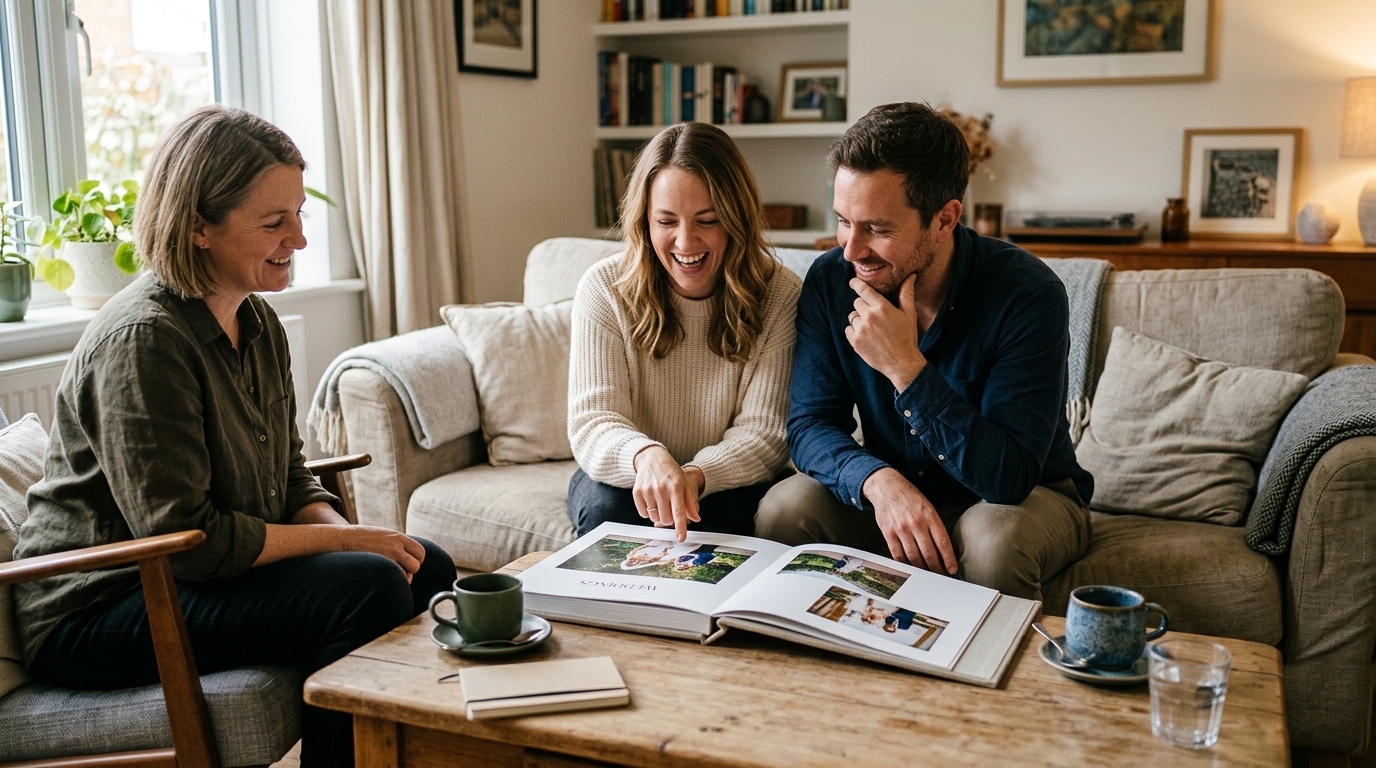
Style: Do you want candid/documentary, traditional/posed, editorial/fashion, or fine art? Read our photography styles guide if you’re unsure.
Coverage: How many hours? Getting-ready through to first dances (8-10 hours) or just ceremony and portraits (4-6 hours)?
Budget: The average UK wedding photographer costs £1,500-2,500 for full-day coverage. See our photographer cost guide for full pricing.
Deliverables: Do you want just digital files? Or an album, prints, or an engagement shoot too?
Step 2: Build a shortlist
Where to search:
- Recommendations from recently married friends — the most trusted source
- Your venue’s preferred list — photographers who know the venue have an advantage
- Weddings Hub — browse photographers by region
- Instagram — search hashtags like #[yourcity]weddingphotographer
- Wedding fairs — meet photographers in person
Shortlist 5-8 photographers whose portfolio style you love. Then check:
- Are they available on your date?
- Is their pricing within your budget?
- Do they cover your area (or will travel fees apply)?
Narrow to 3 photographers to contact.
Step 3: Review their work properly

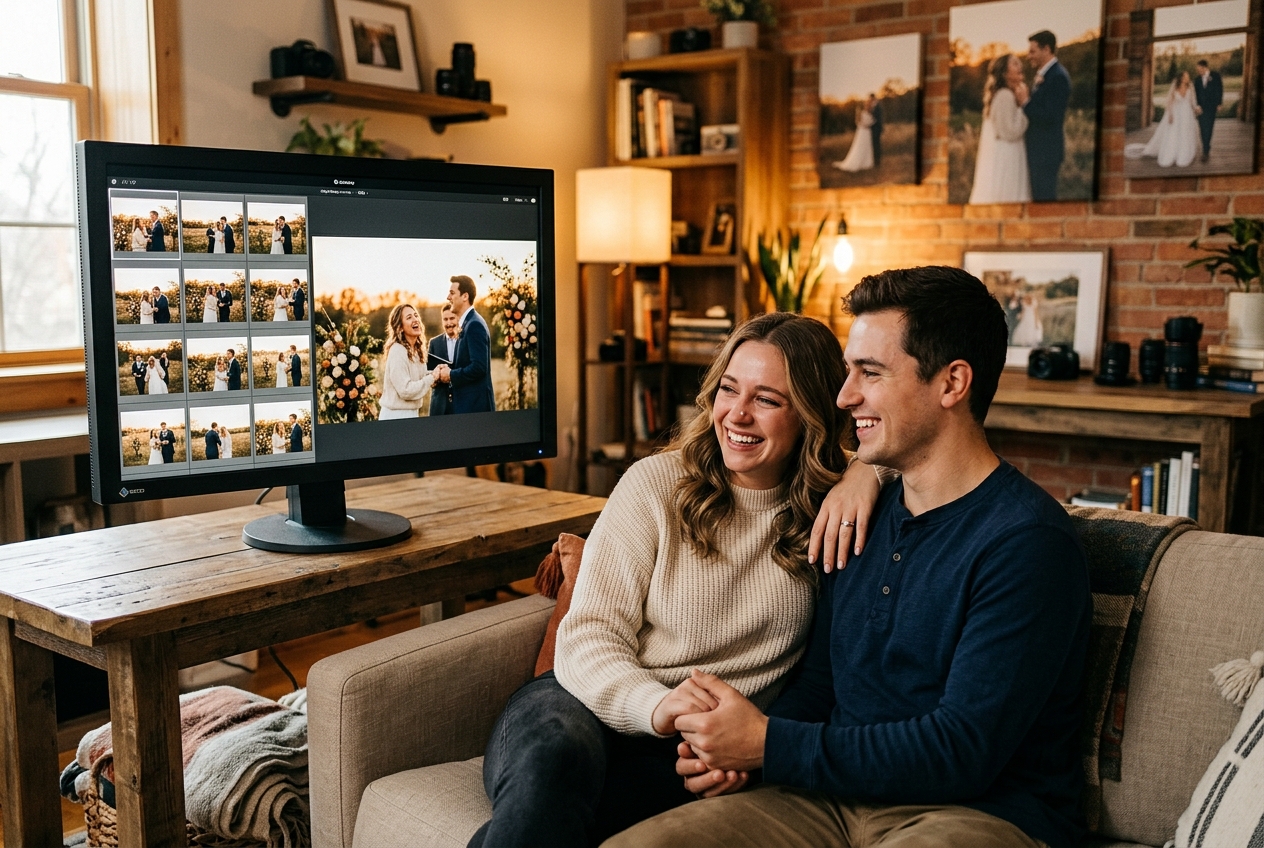
Ask to see 2-3 full wedding galleries. Not highlights, not “best of” — full galleries from start to finish. This tells you:
- How they handle getting-ready shots (detail, light, composition)
- How they perform in low light (receptions, dark churches, evening parties)
- How group photos look (efficient? Well-organised? Everyone visible?)
- How consistent the editing is across 400+ images
- Whether the candid moments are genuinely candid or subtly staged
What to look for:
| Good Signs | Red Flags |
|---|---|
| Consistent editing across all light conditions | Only shows outdoor/bright images |
| Natural skin tones | Over-filtered, orange, or washed-out skin |
| Genuine candid moments (real laughter, real tears) | Every “candid” looks subtly posed |
| Creative use of the venue (not just the obvious spots) | Same compositions at every wedding |
| Group shots are well-organised and well-lit | Group shots are messy, dark, or unflattering |
| A mix of wide, medium, and close-up shots | Only one type of composition |
Step 4: Meet your top choices
A meeting (in person or video call) tells you more than any portfolio. You’re assessing:
Personality: Are they warm, enthusiastic, and easy to talk to? This person will be with you for 10+ hours on your most emotional day. If they’re awkward in a cafe, they’ll be awkward at your wedding.
Communication: Do they listen to what you want, or do they talk about themselves? A good photographer asks more questions than they answer in the first meeting.
Experience at your venue: Have they shot there before? Do they know the best photo spots, the light at different times, and the venue’s quirks?
The plan: How do they approach the day? What’s their timeline? How do they handle group photos efficiently?
Questions to ask in the meeting:
- Can I see 2-3 full wedding galleries from recent weddings?
- Who exactly will photograph our wedding? (If it’s a studio, confirm the individual)
- What’s your approach to the day — mostly candid, mostly directed, or a blend?
- How many weddings have you shot at our venue?
- What equipment do you use, and do you bring backup gear?
- What’s your backup plan if you’re ill on the day?
- How many edited images will we receive, and what’s the turnaround?
- Do we receive full-resolution files without watermarks?
- Who owns the copyright?
- Do you have public liability insurance?
Full checklist: Questions to Ask Your Photographer
Step 5: Check the contract
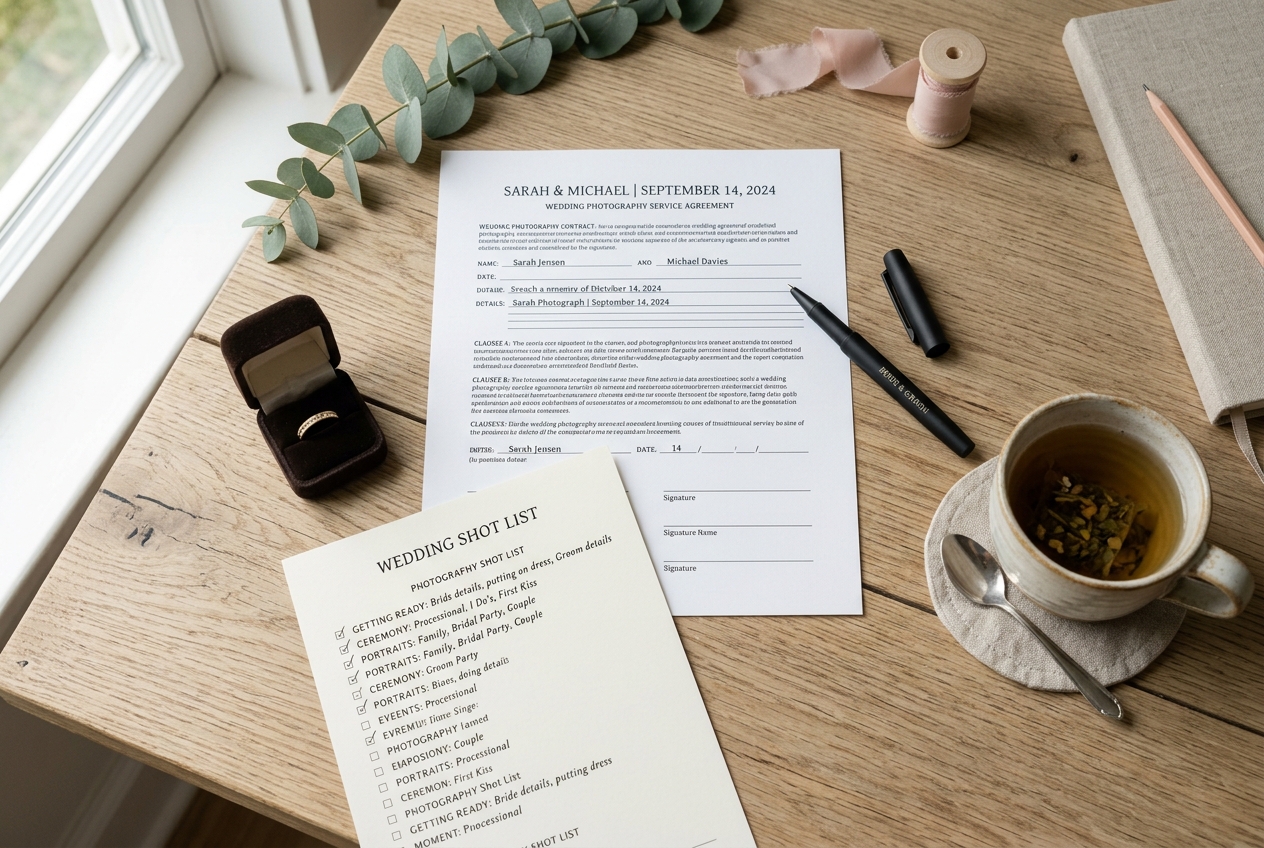
Before paying a deposit, read the contract. Every clause. Key things to check:
| Contract Element | What to Look For |
|---|---|
| Deliverables | Number of edited images, file format, delivery method |
| Turnaround time | In writing — “4-8 weeks” not “a few weeks” |
| Image rights | You get a personal use licence? Commercial use? |
| Watermarks | Final images should be watermark-free |
| Cancellation | What you lose at different stages |
| Illness/backup | Named replacement photographer |
| Payment schedule | Deposit amount and balance due date |
| Overtime | Hourly rate if the day runs long |
| Travel | Included or charged separately? |
Step 6: Book and collaborate
Once you’ve chosen, pay the deposit and start building the relationship:
- Share your vision. Send Pinterest boards, venue photos, and examples of shots you love (and shots you don’t want).
- Create a shot list. Use our wedding photo checklist as a starting point.
- Plan the timeline. Work with your photographer to build a realistic schedule. Read our photography timeline guide.
- Book an engagement shoot (if offered). It’s a great way to get comfortable in front of the camera before the wedding, and you’ll get professional photos for save-the-dates.
- Communicate changes. If the timeline, venue, or guest list changes significantly, let your photographer know.
Further reading
- Wedding Photography Styles — find your style
- Wedding Photography Timeline — planning the day
- Wedding Photo Checklist — must-have shots
- Wedding Photographer Cost UK — pricing guide
- Questions to Ask Your Photographer — full checklist
- Photographers on Weddings Hub
Frequently asked questions
How do I find a good wedding photographer?
Start with recommendations from recently married friends, your venue's preferred supplier list, and online directories like Weddings Hub. Shortlist 5-8 based on portfolio style, then narrow to 3 by checking pricing, availability, and reviews. Meet your top 2-3 in person or on video call before booking.
How many wedding photographers should I meet?
Meet 2-3 in person or on video call. More than 3 leads to decision paralysis. Fewer than 2 means you have no comparison. The meeting is as much about personality and communication as it is about photography — you need to feel comfortable with this person.
What should I look for in a wedding photographer's portfolio?
Consistency across different lighting conditions (bright outdoor, dim reception, mixed church light). Genuine candid moments, not just posed shots. Variety of compositions. Good skin tones (not overly filtered). At least 2-3 full wedding galleries, not just curated highlights. Photos from venues similar to yours.
When should I book a wedding photographer?
9-12 months before the wedding for your preferred photographer. Popular photographers on peak-season Saturdays book 12-18 months ahead. If you're flexible on date or booking in off-peak, 6 months is usually fine. Don't wait too long — the best photographers fill their calendar early.
What are the red flags when choosing a photographer?
No full wedding galleries (only highlights). No written contract. No backup equipment. No insurance. Very long turnaround times (12+ weeks). Full payment required upfront. Won't meet before booking. Won't confirm who will actually photograph your wedding. Uses excessive filters that will date quickly.