Home / Articles / LGBTQ+ Weddings
Same-Sex Wedding Traditions and Ideas
Key Takeaways
- Same-sex marriage has been legal in England and Wales since March 2014 and in Scotland since December 2014
- Every wedding tradition can be kept as-is, adapted or skipped entirely based on what feels right for you
- Walking down the aisle together, from separate sides, or meeting in the middle are all popular choices
- Gender-neutral wedding party titles like best person and person of honour are increasingly common
- New rituals such as handfasting, sand ceremonies and unity candles are meaningful alternatives to gendered traditions
A same-sex wedding in the UK is, legally speaking, identical to any other marriage. You exchange vows, sign the register, and you are married. But the traditions that surround a wedding were built around a man and a woman standing at opposite ends of an aisle, and when that framework does not apply, you get to decide what takes its place.
That is not a limitation. It is one of the best things about planning a same-sex wedding. Every tradition is a choice rather than an assumption. You keep what resonates, adapt what almost works, and invent new rituals that mean something specific to your relationship. The result is often a wedding that feels more personal and more honest than a ceremony that follows the standard script.
Since same-sex marriage became legal in England and Wales on 29 March 2014 and in Scotland on 31 December 2014, tens of thousands of LGBTQ+ couples have married across the UK. Northern Ireland followed on 13 January 2020. These couples have collectively built a rich set of new traditions, practical solutions and creative ideas that this guide draws on.
A brief history of same-sex marriage in the UK
Understanding the legal timeline helps put today’s choices in context. The right to marry is recent, hard-won, and worth knowing about.
The Civil Partnership Act 2004 gave same-sex couples legal recognition for the first time, with the first civil partnerships formed on 5 December 2005. Civil partnerships granted nearly identical legal rights to marriage, but they were not marriage. The distinction mattered to many couples.
The Marriage (Same Sex Couples) Act 2013 changed that. Same-sex marriages began in England and Wales on 29 March 2014. Scotland passed separate legislation, with marriages starting on 31 December 2014. Northern Ireland was the last UK nation, with same-sex marriages beginning on 13 January 2020 after Westminster intervened.
Since 2019, opposite-sex couples have also been able to form civil partnerships, meaning all couples now have a genuine choice between marriage and civil partnership. Our civil partnership vs marriage UK guide explains the practical differences.
The takeaway: same-sex couples have full legal equality. Your wedding is not a “gay wedding.” It is a wedding. The traditions you choose are yours to shape.
Which traditions to keep, adapt or skip
The table below maps out the most common wedding traditions and how same-sex couples typically handle them. Use it as a starting point, not a rulebook.
| Traditional element | Keep as-is | Adapt | Skip | Notes |
|---|---|---|---|---|
| Walking down the aisle | One partner walks, one waits | Both walk, meet in middle | Enter together from side | Most popular: meeting in the middle |
| Giving away | Parent walks partner down | Both partners escorted | No escort needed | Some couples have friends escort them |
| Wedding party | Use traditional titles | Gender-neutral titles | No formal party | Mixed-gender parties are common |
| Speeches | Best person, parents, couple | Flexible speaker order | No formal speeches | Often more speakers, shorter each |
| First dance | One song, couple dances | Both choose a song | Skip or group dance | No “lead and follow” pressure |
| Bouquet toss | One bouquet tossed | Two bouquets tossed | Replace with alternative | Group dance is a popular swap |
| Garter toss | Rarely relevant | Skip or reinvent | Usually skipped | Most couples find an alternative |
| Cake cutting | Both cut together | Feed each other | Just serve the cake | Identical to any couple’s approach |
| Seating sides | Keep two sides | Open seating | Circular arrangement | Open seating is most popular |
| Vows | Standard wording | Write your own | Mix of both | Personal vows are very common |
The pattern is clear. Same-sex couples tend to keep the emotional core of traditions (the ceremony, the dancing, the cake, the celebration) while adapting or dropping the gendered mechanics.
Walking down the aisle: every option explained
This is the question same-sex couples get asked most often, and there is no single right answer. Here are the options that work.
Meeting in the middle
Both partners walk down from opposite sides of the venue and meet at the front. This is the most popular choice for same-sex couples because it is symbolic (two people coming together as equals) and practical (neither partner is positioned as the one being “given away”).
You can walk alone, with a parent, with a friend, or with your entire wedding party flanking you. The key is synchronising your timing. Rehearse this at the venue.
One waits, one walks
This mirrors the traditional setup. One partner stands at the front with the officiant while the other walks down the aisle. Some couples choose this because one partner genuinely wants the “walking down the aisle” moment while the other is happy to wait. It is not about assigning roles. It is about personal preference.
Walking down together
Both partners enter together from the back and walk the aisle side by side. This sends a clear message: you are in this together from the start. It is simple, elegant and requires no coordination beyond holding hands.
Entering from the side
Skip the aisle entirely. Both partners enter through a side door and stand together as guests settle. This works well for couples who find the aisle walk performative or anxiety-inducing. It puts the focus immediately on the ceremony rather than the entrance.
Being escorted
Each partner is walked down by a parent, a group of friends, children, or anyone meaningful. Two grooms might each have their mother on their arm. Two brides might walk with their best friends. There is no formula. The escort is whoever you want beside you in that moment.
Wedding party roles: beyond bridesmaids and groomsmen
Traditional wedding party titles assume a bride and a groom. When your wedding has two brides, two grooms, or a non-binary couple, the language needs to flex.
Gender-neutral titles
Best person works for anyone standing beside you regardless of gender. Person of honour replaces maid of honour and works equally well for a male, female or non-binary attendant. Wedding attendant is the simplest option if titles feel unnecessary.
Some couples use the traditional terms deliberately. A bride might choose to have a best man. A groom might have a maid of honour. Using a “mismatched” title can be playful and personal.
Mixed-gender wedding parties
Most same-sex weddings have mixed-gender wedding parties. A groom might have three women and two men standing with him. A bride might have her brother as person of honour and three female attendants. Nobody blinks at this anymore.
The practical considerations are outfits and logistics, not gender. Decide on a colour palette and let attendants choose their own clothing within it. This avoids the headache of finding one suit or dress that works for everyone.
Shared wedding parties
Some couples have one combined wedding party rather than two separate ones. All attendants stand together on one side, or split across both sides of the ceremony space. This works well when you have mutual friends who would feel awkward choosing a side.
For speech writing help for any role, our guides to best man speeches, maid of honour speeches and how to write a wedding speech all include advice that applies regardless of gender or title.
Speeches: who gives them and when
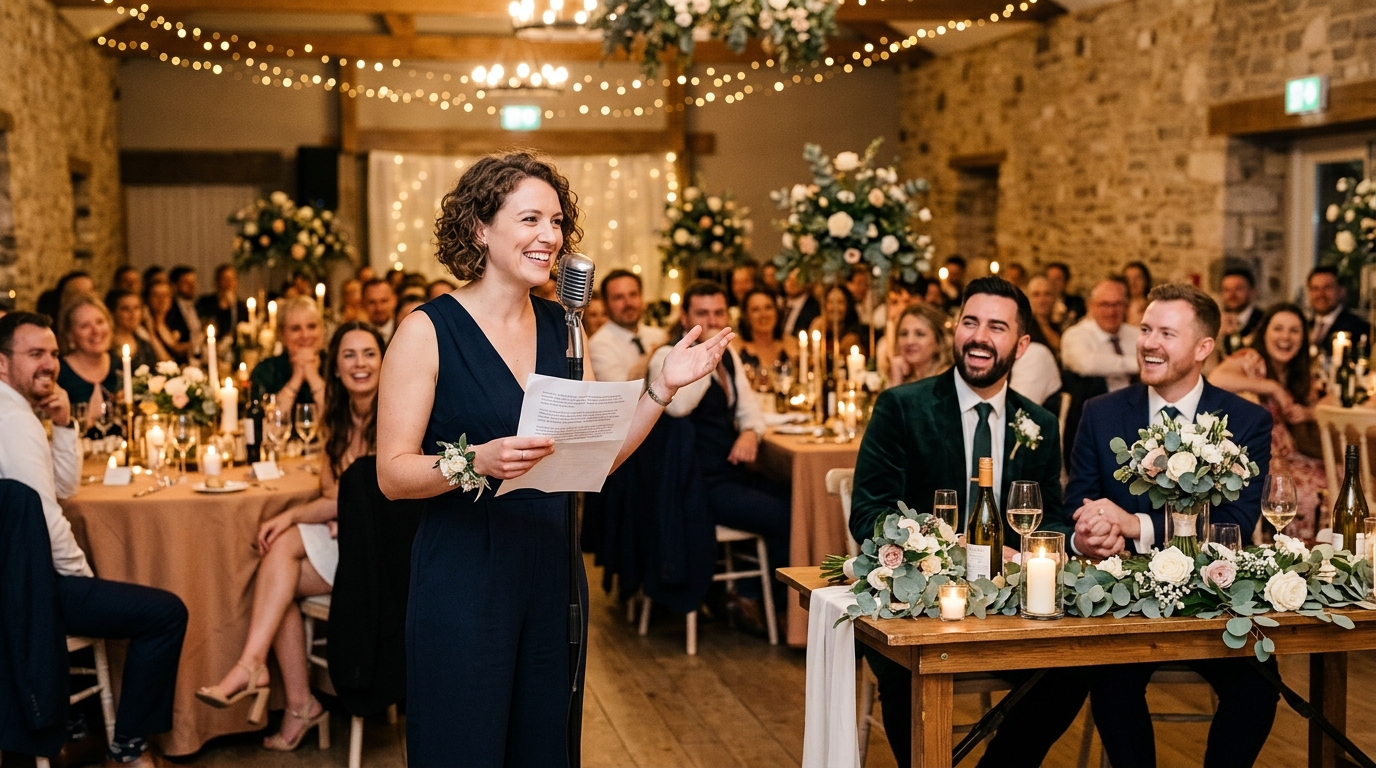
The traditional speech order at a British wedding is: father of the bride, the groom, the best man. This formula breaks down immediately at a same-sex wedding, which is freeing. You get to build a speech lineup that reflects your actual relationships rather than following a Victorian convention.
Common speech orders for same-sex weddings
Option 1: Mirror the traditional format. One parent from each side speaks, followed by the couple (jointly or individually), followed by the best person or people.
Option 2: Open it up. Invite anyone who wants to speak. Set a time limit (three minutes works well) and let people sign up. This often produces the most heartfelt and surprising moments.
Option 3: The couple speaks, and that is it. Some same-sex couples give a joint speech thanking guests and telling their story. No one else speaks formally, though the floor may be opened for toasts later in the evening.
Option 4: No speeches at all. Replace them with a video montage, a table quiz about the couple, or letters that guests write during dinner and the couple reads later. Speeches are a convention, not an obligation.
Tips for speech-givers at same-sex weddings
If you have been asked to speak at a same-sex wedding, the advice is largely the same as for any wedding speech: be warm, be specific, be brief. Avoid making the entire speech about sexuality or the couple’s “journey to acceptance.” They are getting married. Focus on why they are great together.
Our detailed wedding music guide can help with choosing ceremony and reception music that fits your celebration.
The first dance: making it yours
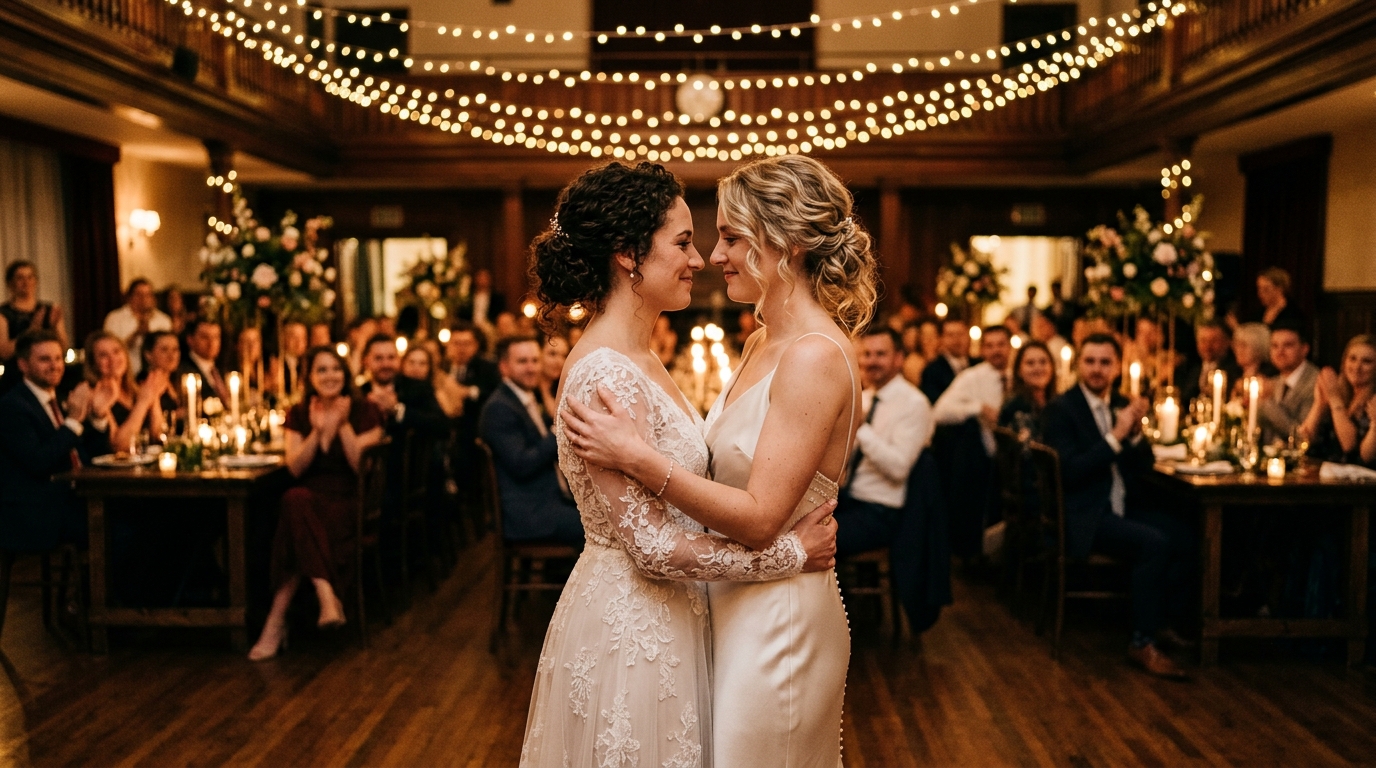
The first dance at a traditional wedding often has one partner leading and the other following. At a same-sex wedding, you have choices.
Dance as equals. Many couples take a few lessons together and learn a style where both partners share the lead. Swing dancing, salsa and contemporary dance all work well without a fixed lead-follow dynamic.
Take turns leading. Start with one partner leading, switch halfway through the song. This is a visual metaphor for your relationship and always gets a cheer from guests.
Skip the solo dance. If neither of you wants to dance alone in front of 100 people, invite everyone onto the floor from the start. First song, everyone dances. No spotlight, no pressure.
Surprise choreography. Some couples learn a choreographed routine to a fun song. This is entertaining but requires genuine commitment to rehearsals. Only do this if you both actually enjoy dancing.
Our first dance songs guide includes gender-neutral picks that work for any couple.
Cake cutting and feeding traditions
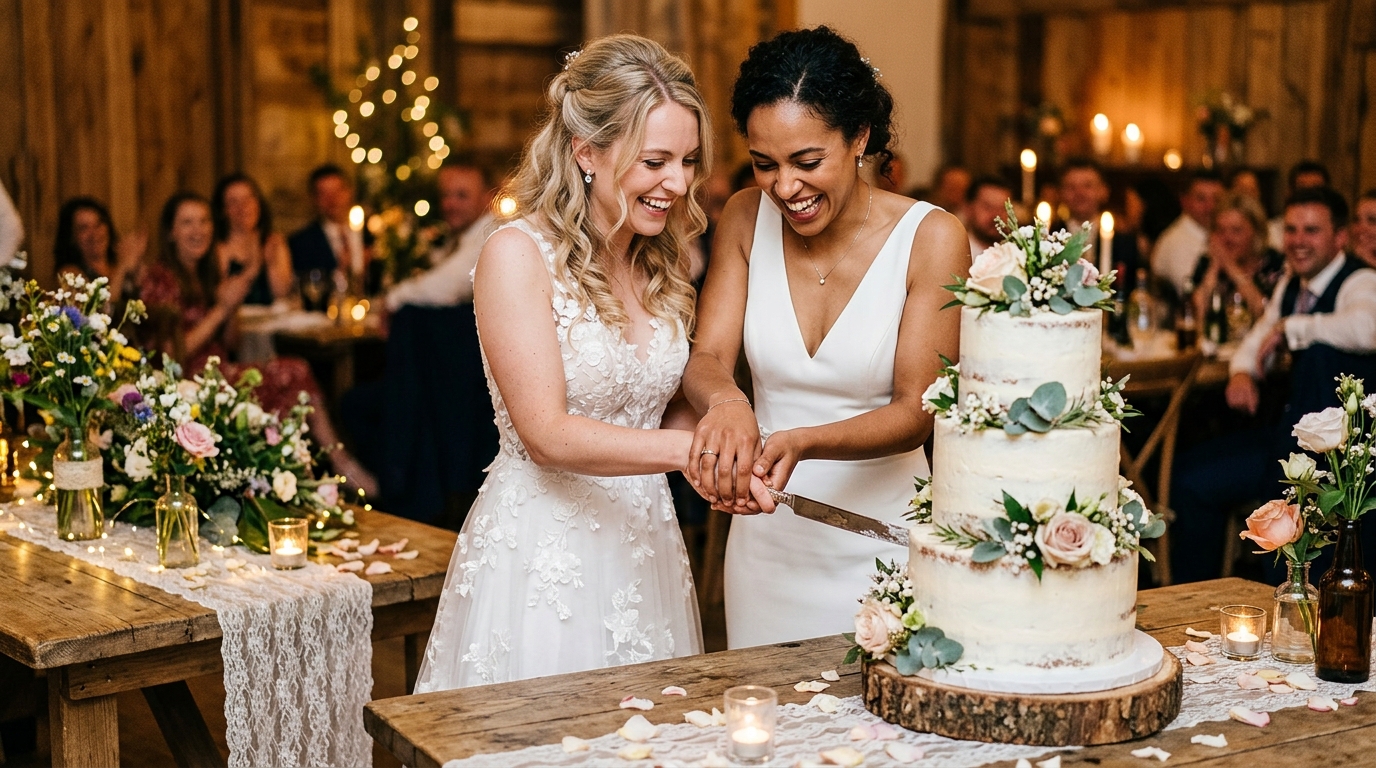
The cake cutting is one of the least gendered wedding traditions. Two people hold a knife and cut a cake. It works identically regardless of who is holding the handle.
Feeding each other
The tradition of feeding each other the first slice translates directly. Some couples do it sweetly. Others go for the comedy smash. The dynamic is yours.
Cake design
Same-sex couples have driven some of the most creative wedding cake trends. Two groom or two bride toppers are widely available. Many couples skip toppers entirely in favour of floral arrangements, personalised messages, or minimalist designs. Naked cakes, drip cakes and tiered cupcake towers are all popular.
For current pricing, our wedding cake prices UK guide has costs from bakers across the country.
Seating arrangements without bride and groom sides
The tradition of splitting ceremony seating into “bride’s side” and “groom’s side” does not apply when both partners share a gender, and many same-sex couples find it does not suit them regardless.
Open seating
The simplest approach. Guests sit wherever they choose. A sign at the entrance reads “Pick a seat, not a side” or “We’re all family today, sit wherever you like.” This mixes friend groups and encourages people to meet each other.
Circular or semi-circular seating
Arranging chairs in a circle or horseshoe around the ceremony space creates intimacy. Everyone can see everyone. There is no “front” or “back.” This layout works especially well for smaller weddings of 50 guests or fewer.
Theatre-style with no dividing aisle
Standard rows of chairs facing forward, but with no centre aisle and no designation of sides. Partners can enter from opposite sides of the front, from the back, or from wherever suits the ceremony.
For reception seating logistics, our wedding seating plan guide covers table arrangements, difficult guests and top-table alternatives.
New traditions and rituals worth considering
Without a gendered template to follow, many same-sex couples create new rituals that carry genuine emotional weight. These have become traditions in their own right.
Handfasting
An ancient Celtic ritual where the couple’s hands are bound together with ribbons or cords, each colour representing a different quality: red for passion, blue for devotion, green for growth. The binding is symbolic, but the visual impact is powerful and photographs beautifully. The phrase “tying the knot” comes from this tradition.
Sand ceremony
Each partner pours a different colour of sand into a single vessel, creating layered patterns that cannot be separated. The finished vessel becomes a keepsake. This works well for couples blending families or friendship groups.
Unity candle
Two individual candles light a single central flame together. This is a traditional ceremony element in many cultures and translates perfectly to same-sex weddings. It is simple, visual and works in any setting with minimal setup.
Tree planting
Both partners add soil to a pot containing a sapling. You take the tree home and watch it grow alongside your marriage. Practical, symbolic and better for the planet than releasing butterflies or sky lanterns.
Wine box ceremony
Place a bottle of wine and handwritten letters to each other in a wooden box. Seal it during the ceremony. Open it on your first anniversary (or fifth, or tenth) and read the letters together over a glass of wine. The letters capture how you felt on the day and become more meaningful with time.
Ring warming
Before the ceremony, your rings are passed around the guests. Each person holds them for a moment and silently makes a wish or says a prayer for your marriage. By the time the rings reach you, they carry the goodwill of everyone in the room.
Processional and recessional ideas
The ceremony bookends, walking in and walking out, set the emotional tone. Here are approaches that work.
Processional (walking in)
Choose music that means something to you rather than defaulting to Pachelbel’s Canon or the Bridal Chorus. Instrumental versions of your favourite songs work well. Some couples choose two different songs, one for each partner’s entrance. Others enter in silence and let the ceremony itself open with music.
Recessional (walking out)
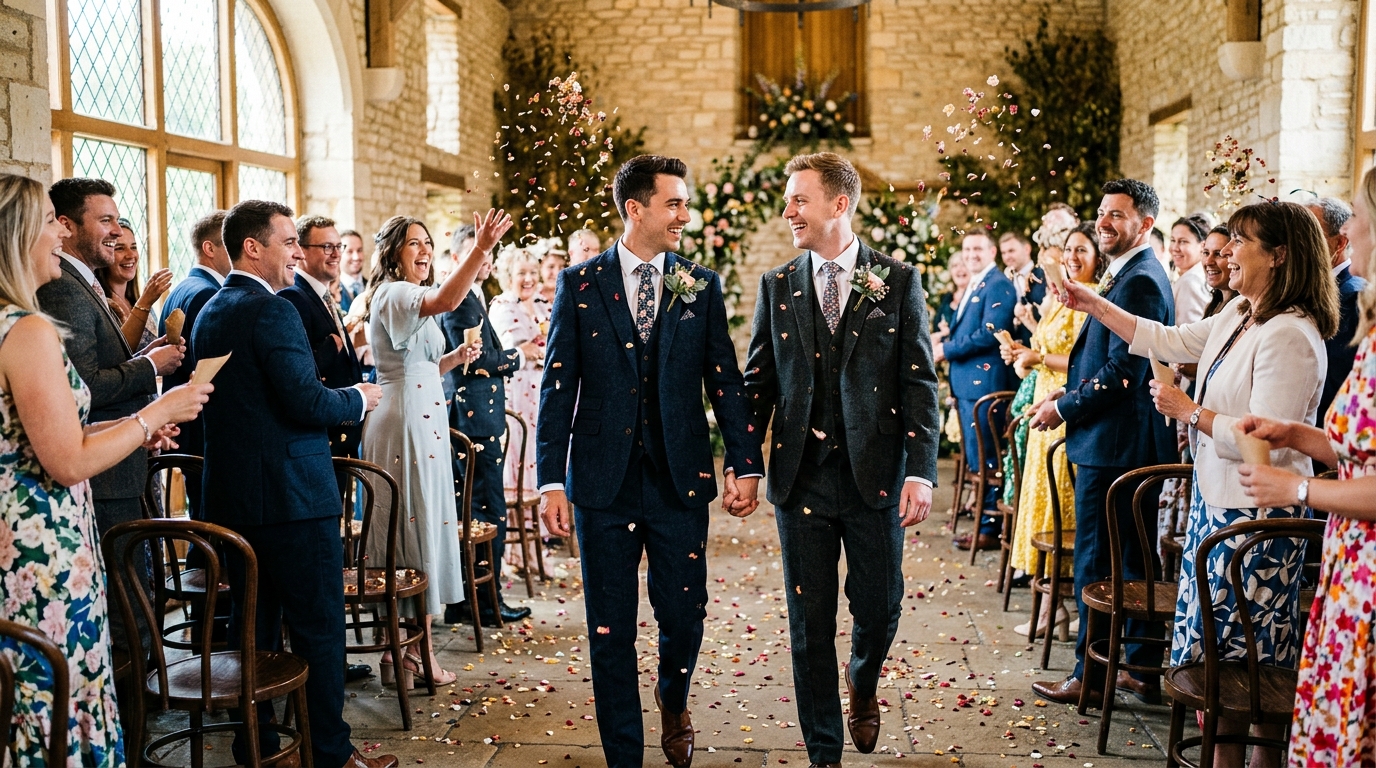
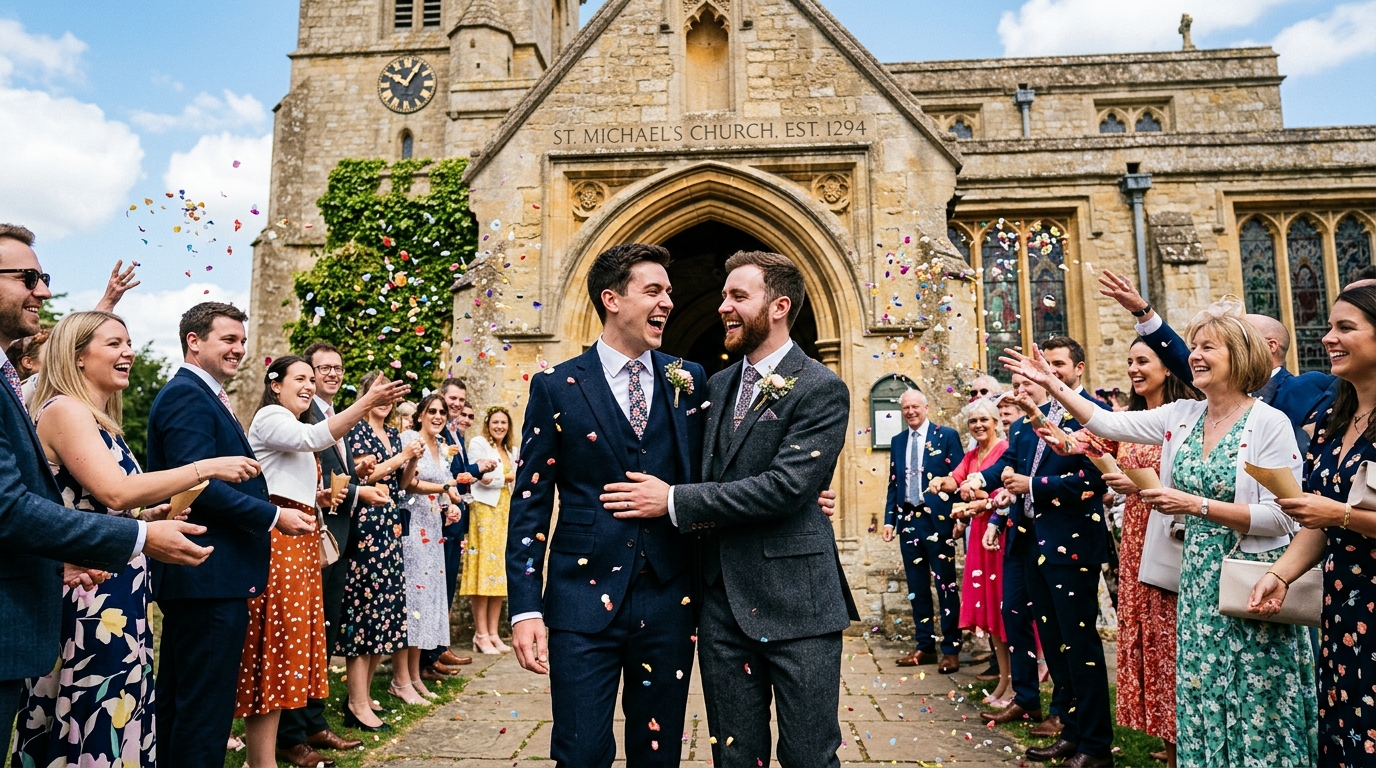
This is the celebration moment. Upbeat, joyful music as you walk back down the aisle as a married couple. Confetti, bubbles, sparklers (check venue rules) and cheering guests. This is the same at every wedding, regardless of the couple. Pick a song that makes you both grin and walk out fast before you start crying again.
Making your wedding personal: where to start
The freedom to build your ceremony from scratch can feel overwhelming. If you are staring at a blank page, start with three questions.
What moments from other weddings have made you cry? Keep those. Whether it is hearing personal vows, a parent’s speech, or the first dance, the moments that move you are the ones to prioritise.
What moments from other weddings have bored you? Skip those. If neither of you cares about the garter toss, the bouquet throw, or the formal receiving line, leave them out. Your wedding does not need filler.
What is specific to your relationship? The song that was playing when you met. The city where you got engaged. The hobby you share. The food you ate on your first date. Weave these details into the ceremony and reception. They are what make your wedding yours rather than a generic celebration.
For ceremony content, our wedding vows and wedding readings guides have options for every tone and style. For LGBTQ+ specific readings, including poetry, literature and personal vow frameworks, see our LGBTQ+ wedding readings and vows collection.
Planning the practical details
A same-sex wedding needs the same logistics as any other: a venue, a caterer, a photographer, flowers, music, and a legal officiant. The difference is in making sure your suppliers have genuine LGBTQ+ experience.
For venue guidance, our gay-friendly wedding venues UK guide covers what to ask, red flags to watch for, and venue recommendations across every region. For finding inclusive suppliers from photographers to florists, see our LGBTQ+ wedding suppliers UK directory.
If you are planning everything from scratch, our LGBTQ+ wedding planning guide walks through every step from engagement to the big day, and our general how to plan a wedding guide covers the universal logistics.
For outfit planning, explore our wedding dress styles and groom suit guide for detailed options and current UK pricing.
Further reading
Frequently asked questions
Who walks down the aisle at a same-sex wedding?
There are no rules. Many couples walk down together, walk from separate sides and meet in the middle, or have one partner waiting while the other walks. Some skip the aisle entirely and begin standing together. Choose whatever feels natural for your relationship.
Do same-sex couples have a best man or maid of honour?
They can, but many use gender-neutral alternatives like best person, person of honour, or simply attendant. Mixed-gender wedding parties are common. The roles and responsibilities are the same regardless of the title you choose.
Who gives speeches at a same-sex wedding?
Anyone you want. Without the traditional bride's father and best man formula, you have total freedom. Many couples have their best person or person of honour speak, plus a parent or close friend from each side. Some couples give a joint speech themselves.
Do same-sex couples do a bouquet toss?
Some do, some skip it entirely, and some create alternatives. Two bouquets tossed simultaneously is one popular option. Others replace it with a group dance, a raffle, or simply skip the ritual. There is no expectation either way.
How do same-sex couples handle seating at the ceremony?
Most skip the traditional bride's side and groom's side arrangement. Open seating where guests sit wherever they like is the most common choice. Circular or semi-circular layouts also work well and create a more intimate atmosphere.
What new wedding traditions work well for same-sex couples?
Handfasting (binding hands with ribbons), sand ceremonies (blending coloured sands), unity candle lighting, tree planting, and wine box ceremonies are all popular. These rituals are gender-neutral by nature and create visual, emotional moments in your ceremony.
Can same-sex couples have a traditional white wedding?
Absolutely. A same-sex wedding can be as traditional or non-traditional as you want. Many couples keep the white colour scheme, formal dress code, sit-down dinner, speeches and first dance. The only difference is that both partners happen to be the same gender.