How to Plan a Wedding UK: Step by Step
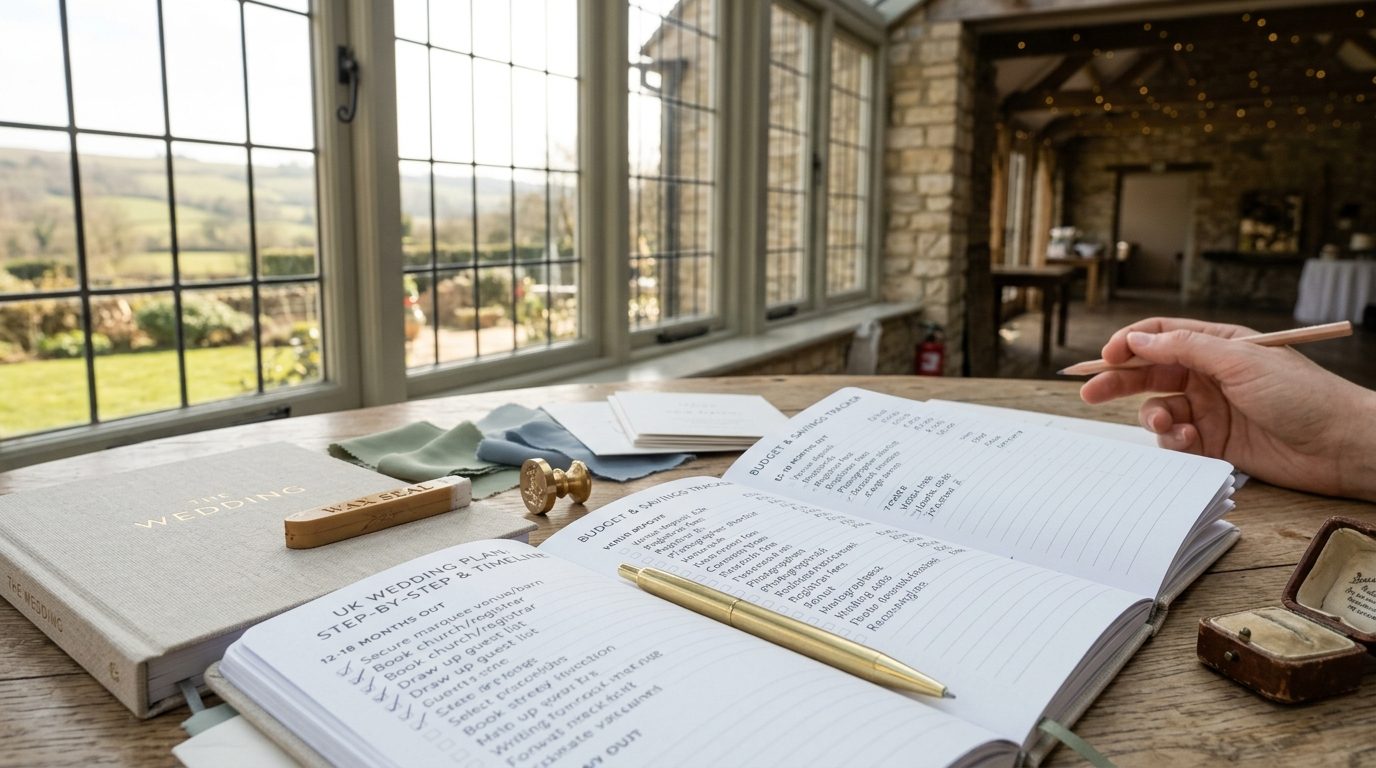
Key Takeaways
- Start with the budget and guest list — everything else follows from these two decisions
- Book the venue 12-18 months ahead, then build your supplier team around it
- The three most important bookings (in order): venue, photographer, caterer
- Don't try to plan everything at once — follow the month-by-month timeline
- Delegate tasks to your partner, family, and wedding party — you can't do everything yourself
Planning a wedding can feel overwhelming — there are hundreds of decisions, dozens of suppliers, and a budget that somehow needs to stretch across all of them. But when you break it down into steps, it’s just a project with a deadline.
This guide takes you from “we’re engaged” to “we’re married” in a logical, practical order. No fluff, no overwhelm — just the decisions you need to make and when to make them.
The 10-step plan
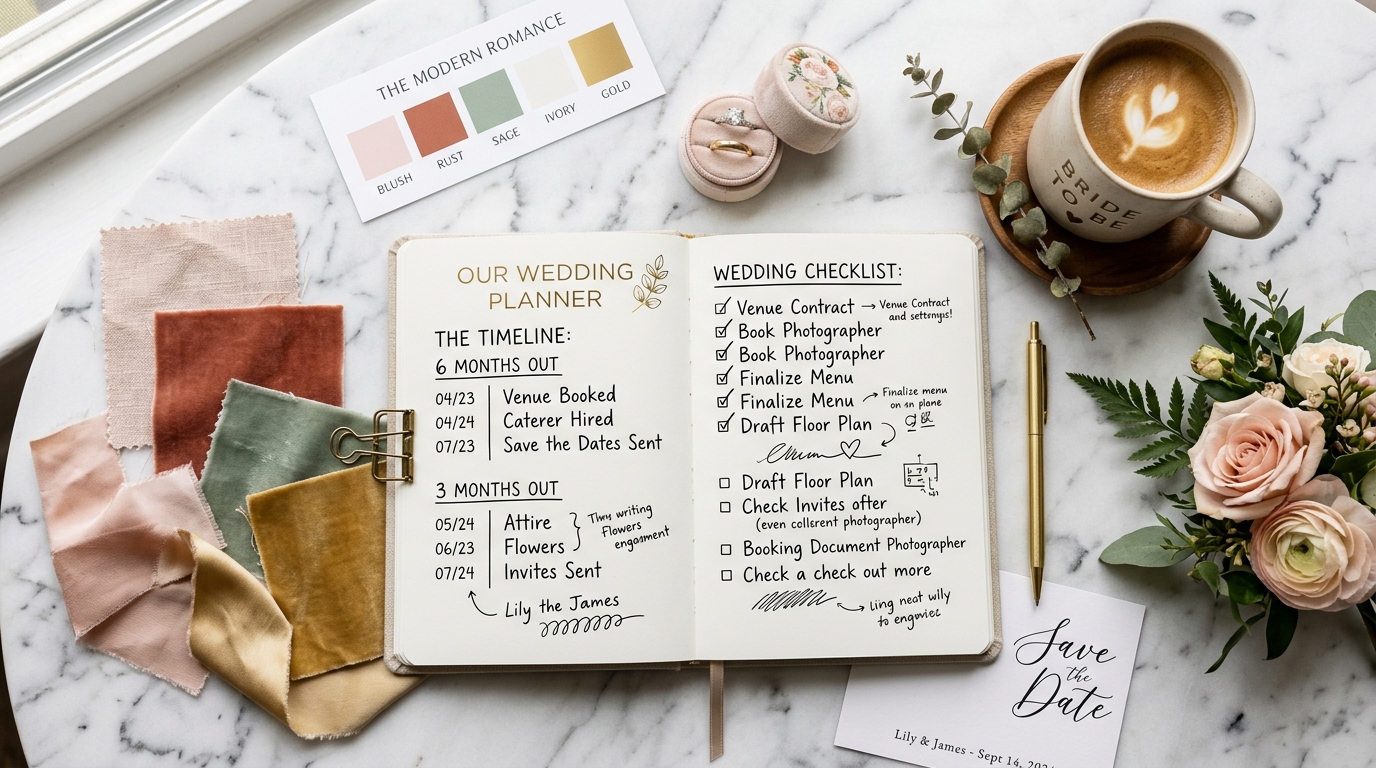
Step 1: Set your budget (Week 1)
Before you look at anything — venues, dresses, photographers — agree on a number. Read our complete budgeting guide for the full process.
Quick version:
- Add up all available money (savings, monthly savings over the engagement, family contributions)
- Subtract 10% as contingency
- The remaining number is your working budget
Have the money conversation with contributing parents now — not after you’ve booked a venue assuming a contribution that never comes.
Step 2: Set your guest list (Weeks 1-2)
Your guest count determines your venue options, catering costs, and overall budget allocation. A rough list is enough at this stage — you’ll refine it later.
Rules of thumb:
- Start with “must invite” (immediate family, closest friends) — typically 30-50 people
- Add “should invite” (extended family, good friends) — takes you to 60-100
- Add “would like to invite” (wider circle) — takes you to 100-150
- Evening-only guests are a separate list (cheaper per head)
Step 3: Choose and book the venue (Months 1-3)
The venue is the foundation. It determines your date, capacity, catering options, accommodation, and overall style. Book it first — everything else follows.
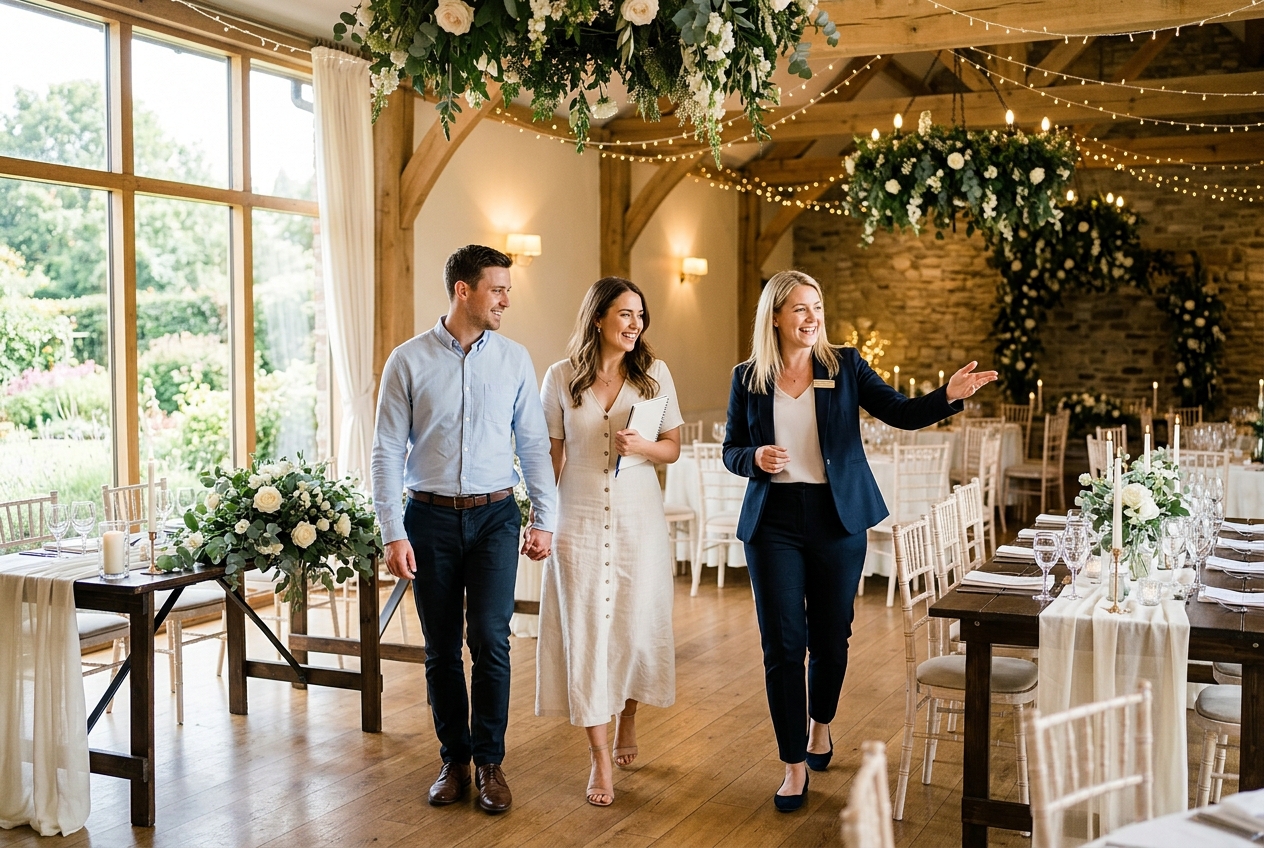
What to do:
- Create a shortlist of 5-8 venues that fit your budget, guest count, and style
- Visit your top 3-4 (ideally at the same time of day and season as your wedding)
- Ask the 30 essential venue questions
- Compare total costs (not just hire fees) and book your favourite
Venue guides: Wedding Venue Cost UK | How to Choose a Venue
Step 4: Book core suppliers (Months 2-6)
Once you have a venue and date, book the three suppliers that sell out fastest:
- Photographer — Book 9-12 months ahead. See our photographer cost guide and questions to ask.
- Caterer (if not included with venue) — Book 6-12 months ahead. See our catering cost guide.
- Entertainment (DJ or band) — Book 6-9 months ahead. See our DJ cost guide.
Step 5: Legal requirements (3-6 months before)
Give notice of marriage. Both partners must attend their local register office in person, at least 29 days before the wedding. You’ll need: passport or birth certificate, proof of address, and details of the ceremony venue and date.
Cost: £35 per person (£70 total). The notice is valid for 12 months.
For full details: Registry Office Wedding Cost
Step 6: Book remaining suppliers (Months 4-8)
Now fill in the rest:
| Supplier | When to Book | Guide |
|---|---|---|
| Florist | 6-9 months | Flowers Cost UK |
| Videographer | 6-9 months | Do You Need One? |
| Cake maker | 4-6 months | Cake Prices UK |
| Stationery | 4-6 months | Invitation Wording |
| Transport | 3-6 months | |
| Hair & beauty | 3-6 months | |
| Wedding planner (if using) | ASAP | Questions to Ask |
Step 7: Send invitations (8-12 weeks before)
Send save-the-dates 6-12 months before (if you haven’t already). Send full invitations 8-12 weeks before with an RSVP deadline 4-6 weeks before the wedding.
Guides: Invitation Wording | RSVP Wording | How to Address Invitations | Evening Invitation Wording
Step 8: Finesse the details (4-8 weeks before)
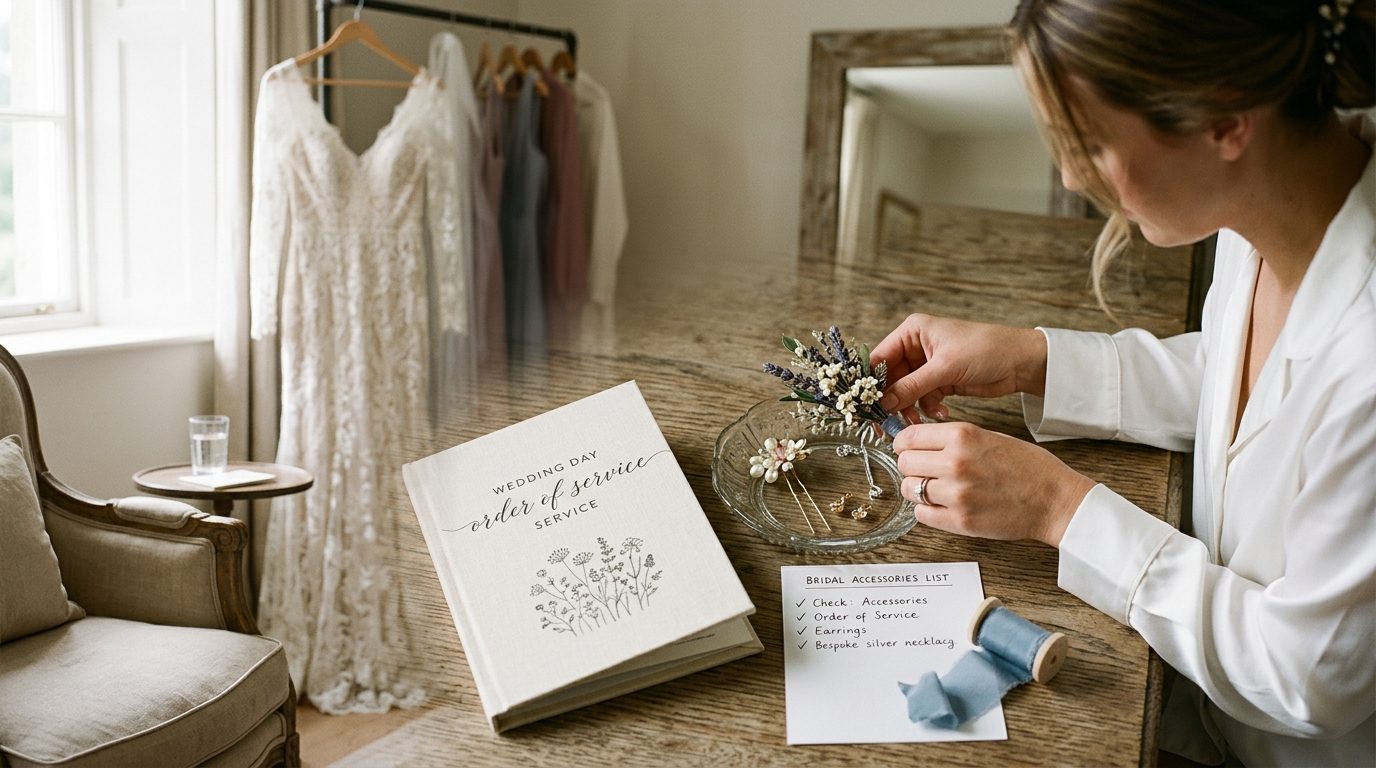
- Finalise the seating plan (Seating Plan Guide)
- Confirm all supplier timings and share the day timeline
- Chase RSVP non-responders
- Attend cake and food tastings
- Final dress fitting
- Write your vows (if personal)
- Brief the best man, maid of honour, and speech-givers
Step 9: The final week
- Confirm all suppliers (email each one with the timeline, arrival time, and contact details)
- Prepare cash tips/thank-you cards for suppliers
- Pack an emergency kit (safety pins, plasters, paracetamol, sewing kit, phone charger)
- Steam or press the dress
- Break in new shoes
- Lay out everything you need for the morning
Step 10: The wedding day
- Follow the timeline
- Trust your suppliers — they do this every week
- Eat breakfast (you’ll forget otherwise)
- Delegate problems to your coordinator, best man, or maid of honour
- Be present — the day goes faster than you think
The month-by-month timeline
For a complete month-by-month breakdown, read our 12-month wedding planning timeline and wedding checklist.
| Months Before | Key Tasks |
|---|---|
| 12-18 | Set budget, draft guest list, book venue |
| 9-12 | Book photographer, caterer, entertainment |
| 6-9 | Book florist, videographer, cake, buy dress |
| 4-6 | Send invitations, book hair & beauty, give notice |
| 2-4 | Seating plan, final fittings, confirm suppliers |
| 1 | Final confirmations, pack, rehearsal |
| The day | Trust the plan, enjoy every moment |
Further reading
- Wedding Checklist — the full tick-list
- 12-Month Planning Timeline — month by month
- How to Budget for a Wedding — the money guide
- How to Choose a Venue — the biggest decision
- Wedding Day Timeline — hour by hour on the day
- Wedding Insurance UK — protect your investment
Frequently asked questions
How long does it take to plan a wedding UK?
Most UK couples plan their wedding in 12-18 months. A well-organised couple can do it in 6-9 months if key suppliers are available. Micro weddings and register office ceremonies can be planned in as little as 6-8 weeks. The legal minimum is 29 days (the notice period in England and Wales).
What is the first thing to do when planning a wedding?
Set a budget. Before you look at a single venue or try on a single dress, agree on a total number with your partner (and any contributing parents). The budget determines your guest count, venue options, and every other decision. Without it, you'll fall in love with things you can't afford.
What order should you book wedding suppliers?
Book in this order: (1) Venue — it sets the date, capacity, and style. (2) Registrar or celebrant. (3) Photographer. (4) Caterer (if not included with venue). (5) Entertainment (DJ or band). (6) Florist. (7) Videographer. (8) Everything else (cake, stationery, transport, hair & beauty).
Do I need a wedding planner?
Not necessarily. Most UK couples plan without a professional planner. A planner is worth considering if: your budget exceeds £30,000, you're both working demanding jobs, you're planning from a distance, or you're having a complex multi-day or destination wedding. On-the-day coordination (£800-1,500) is valuable even for simpler weddings.