How to Address Wedding Invitations UK
Key Takeaways
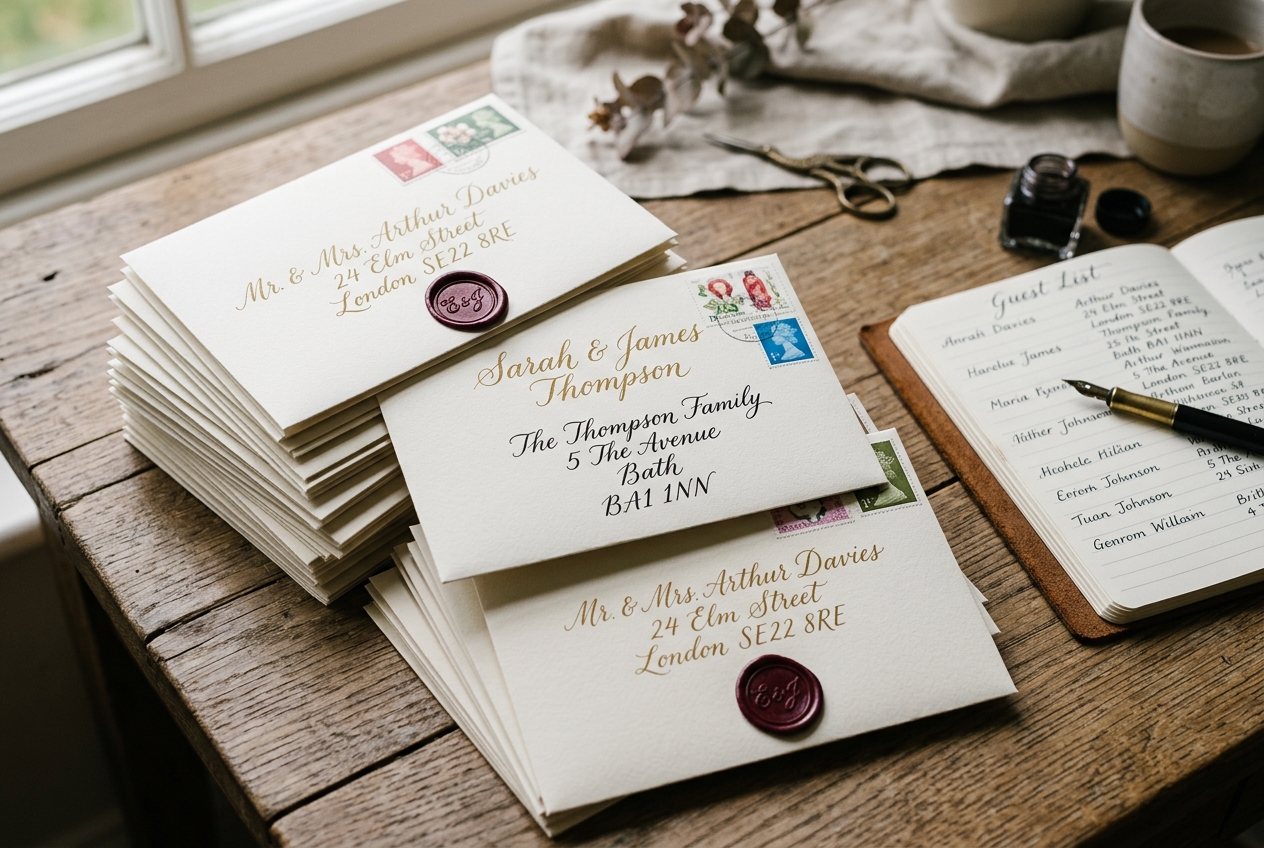
- Use formal titles (Mr & Mrs) for outer envelopes and first names for inner envelopes or casual weddings
- Address married couples as 'Mr & Mrs John Smith' (traditional) or 'Mr John & Mrs Jane Smith' (modern)
- Same-sex couples: list both names in alphabetical order or the person you know better first
- Always name invited children specifically — 'and family' is vague and leads to confusion
- If someone gets a plus one, write 'Ms Jane Smith & Guest' on the envelope
Addressing wedding invitations is one of those tasks that seems simple until you start. What do you write for a couple where she kept her maiden name? How do you address a same-sex couple? What about families where only the children over 12 are invited?
This guide covers every scenario with UK-specific etiquette. American guides dominate Google on this topic, but UK conventions are different — we don’t use “and family” the same way, and our title conventions differ.
The basics
Outer envelope: Formal names and titles. This is what the postman (and the recipient) sees first.
Inner envelope (if using one): More informal. First names or just the names of everyone invited. Inner envelopes are traditional but optional — many couples skip them.
Single envelope (most common): Match the formality of your wedding. Formal wedding = titles. Casual wedding = first names.
Married couples
Traditional
Mr & Mrs John Smith
Modern (both names)
Mr John & Mrs Jane Smith
She uses her maiden name
Mr John Smith & Ms Jane Brown
Both are doctors
Drs John & Jane Smith or Dr John Smith & Dr Jane Brown
One is a doctor
Dr Jane & Mr John Smith The higher title comes first in traditional etiquette
Unmarried couples living together
Mr John Smith & Ms Jane Brown Both full names, connected by ’&’
John Smith & Jane Brown First names for casual weddings
Same-sex couples
Married
Mr David Jones & Mr James Taylor or Mrs Sarah Williams & Mrs Rebecca Hall Alphabetical order, or the person you know better first
Civil partners or unmarried
Mr David Jones & Mr James Taylor Same format — there’s no different convention
Single guests
With a plus one
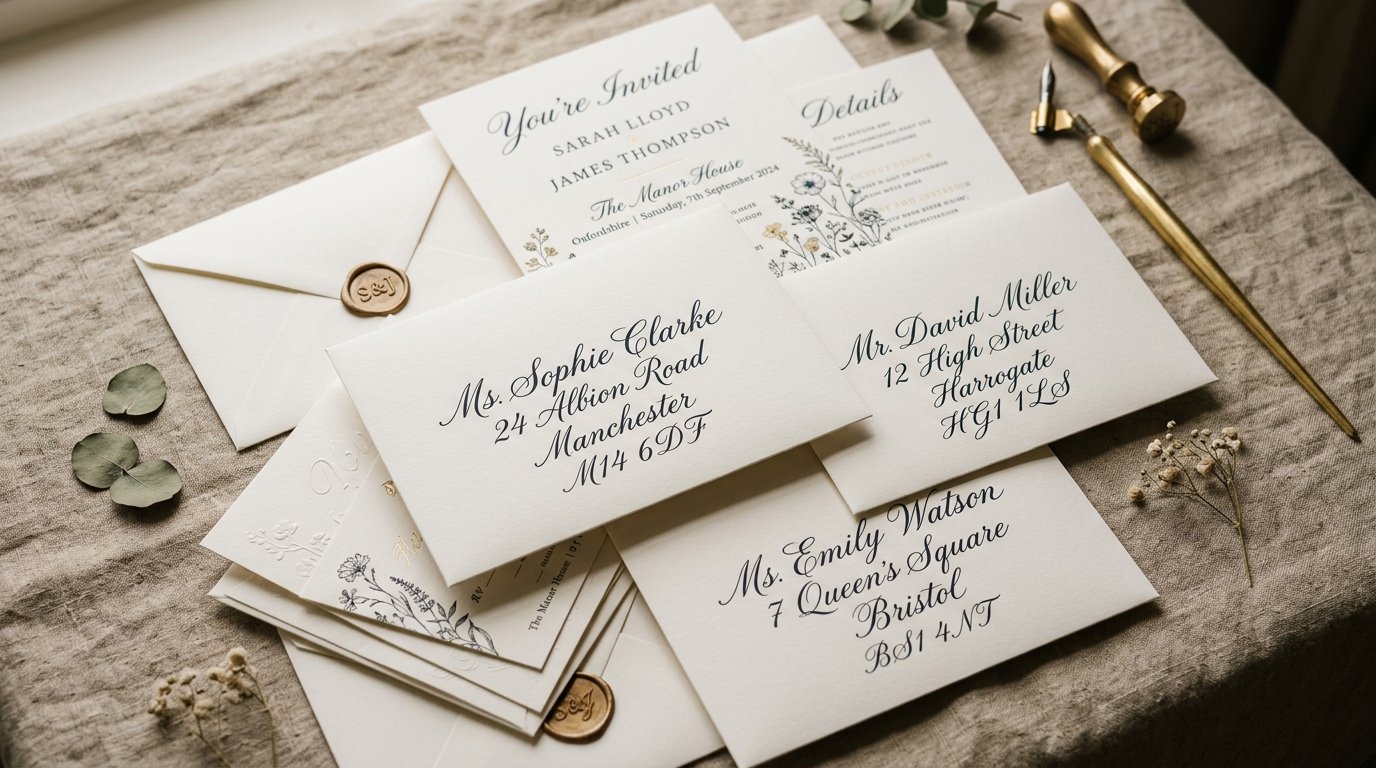
Ms Jane Smith & Guest
Without a plus one
Ms Jane Smith No ”& Guest” means they’re invited alone
Families
With named children
Mr & Mrs John Smith Oliver, Emily & George
Only adults invited (no children)
Mr & Mrs John Smith Don’t add “and family” — the absence of children’s names signals adults only
Only some children invited
Mr & Mrs John Smith Oliver & Emily Only name the children who are invited
Adult children at the same address
Send separate invitations. An adult child (18+) should receive their own invitation, even if they live at home.
Titles and honours
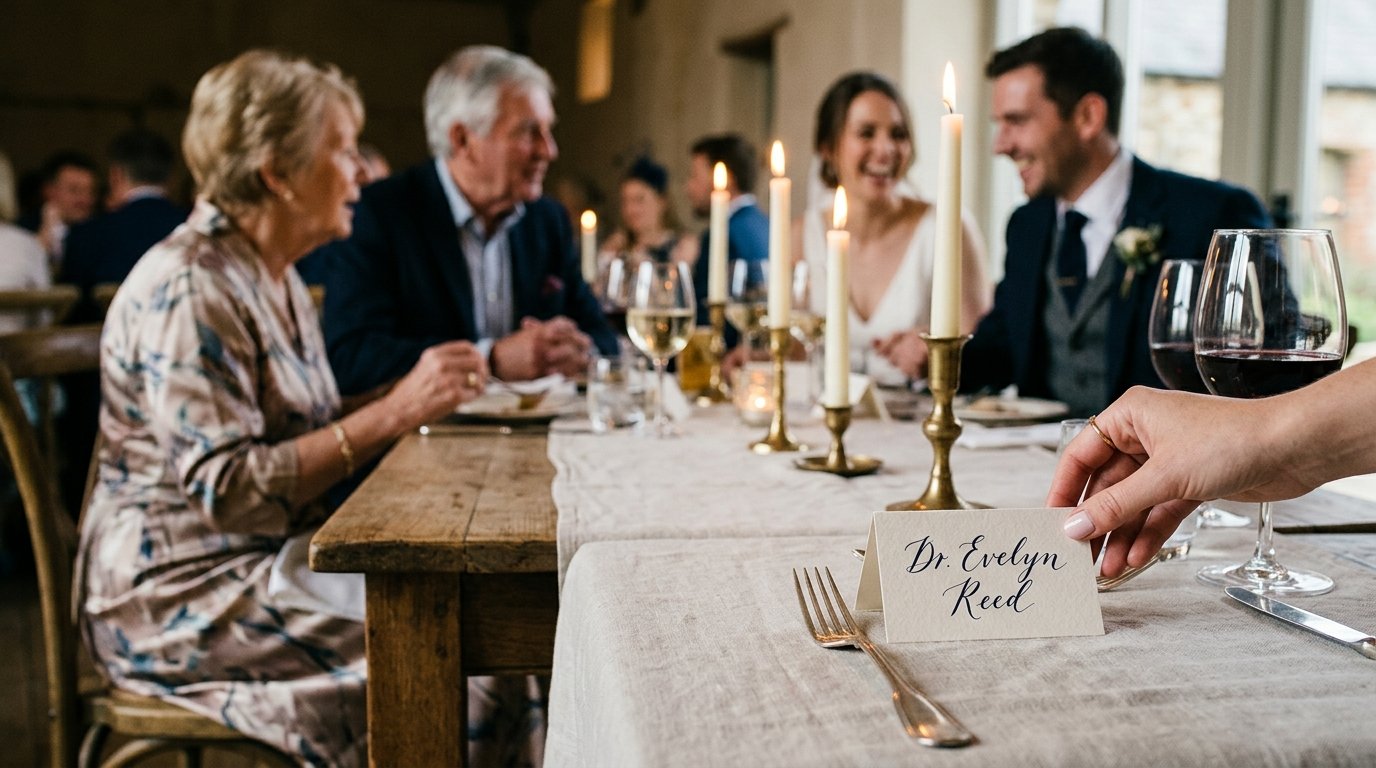
| Title | How to Address |
|---|---|
| Doctor | Dr Jane Smith |
| Professor | Professor John Smith |
| Reverend | The Reverend John Smith |
| Military officer | Captain John Smith |
| Knight/Dame | Sir John Smith / Dame Jane Smith |
| Lord/Lady | The Lord Smith / The Lady Smith |
| Judge | His/Her Honour Judge Smith |
When in doubt, check. Getting someone’s title wrong is more offensive than using a simpler form of address.
Practical tips
Start early. Addressing 100+ envelopes takes longer than you think. Allow a full weekend.
Use consistent formatting. Pick a style (traditional or modern) and use it for every invitation. Mixing styles looks careless.
Check spellings. Double-check every name. People notice when their name is misspelt on a wedding invitation, and they remember.
Black or dark ink only. Even if your stationery is colourful, address envelopes in black, dark blue, or dark grey ink for readability.
Handwriting vs printing. Handwritten addresses feel more personal. Printed labels are acceptable for large guest lists. Calligraphy is beautiful but expensive (£1-3 per envelope).
Return address on the back flap. Include your return address so Royal Mail can return undelivered invitations.
Further reading
- Evening Wedding Invitation Wording — templates and etiquette
- Wedding Stationery — find stationers on Weddings Hub
Frequently asked questions
How do you address a wedding invitation to a married couple?
Traditional: 'Mr & Mrs John Smith'. Modern: 'Mr John & Mrs Jane Smith' or 'John & Jane Smith'. If the wife uses her maiden name: 'Mr John Smith & Ms Jane Brown'. Use whichever style matches the formality of your wedding — traditional for formal, first names for casual.
How do you address a wedding invitation to a family?
Name the parents on the first line, then name each invited child on the second line. For example: 'Mr & Mrs John Smith, Oliver, Emily & George'. Avoid 'and family' — it's unclear whether children, teenagers, or adult children living at home are included.
How do you address a wedding invitation when you don't know the partner's name?
Write the guest's name followed by '& Guest'. For example: 'Ms Jane Smith & Guest'. This tells them they're welcome to bring someone without assuming who it will be.
Do you use first names or titles on wedding invitations?
Titles (Mr, Mrs, Ms, Dr) on the outer envelope for formal weddings. First names only for casual weddings. If in doubt, match the formality of your invitation design — a letterpress invitation on thick card calls for titles; a printed postcard with a fun design can use first names.