What If My Parents Refuse to Come to My Wedding?
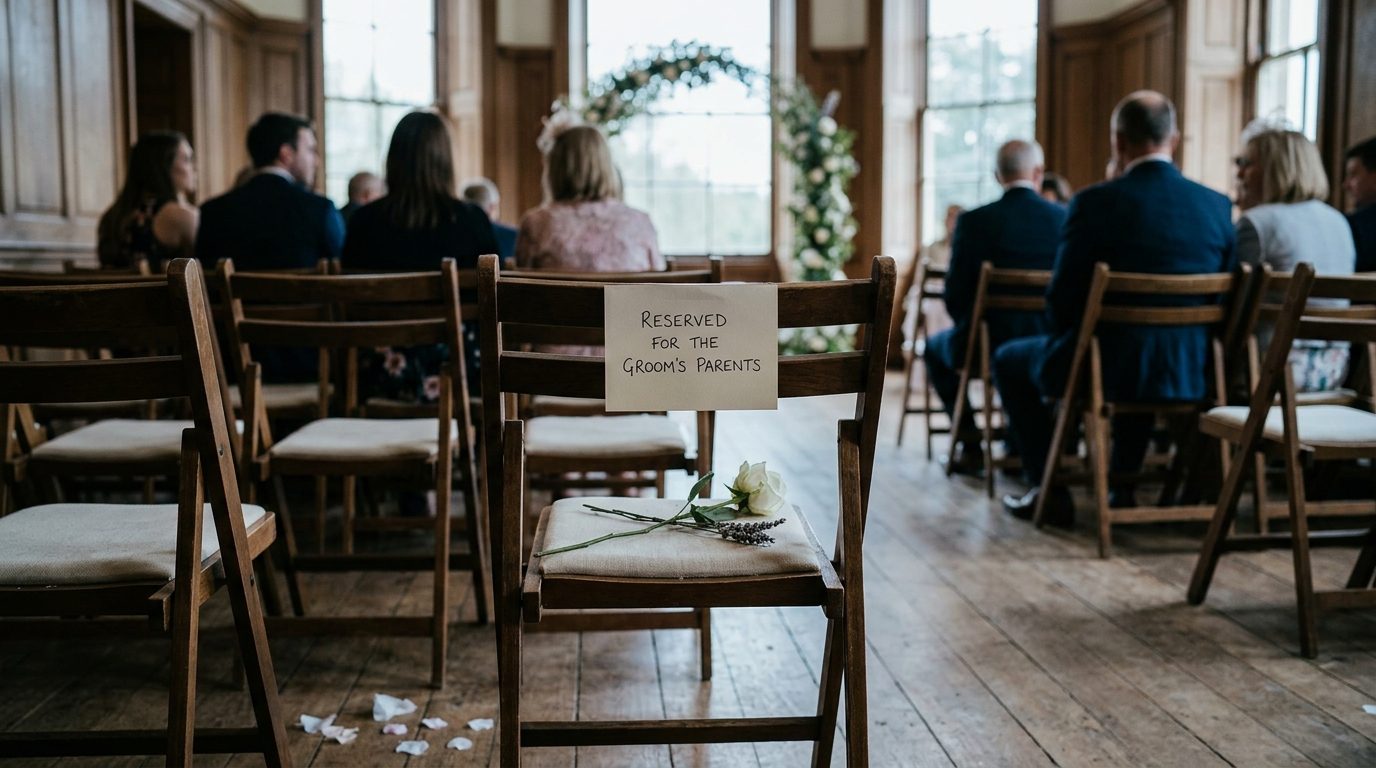
Key Takeaways
- 1 in 9 family estrangements in England and Wales involves a wedding as the triggering event (Resolution 2024)
- The most common reason parents refuse to attend is disapproval of the partner (43% of refusal cases)
- You cannot legally compel a parent to attend — the decision is theirs to make
- Giving a parent a meaningful role sometimes resolves a reluctance rooted in feeling excluded
- Mediation through a family charity such as Relate costs £60-£100 per session and often resolves stand-offs
- Your wedding can be the best day of your life even without every family member present
A study by family mediation charity Resolution (2024) found 1 in 9 family estrangements in England and Wales has a wedding as the triggering event. The most common reason parents refuse to attend is disapproval of the chosen partner (43% of cases). Religious objections account for 18%, feeling excluded from planning for 17%, and pre-existing family rifts for 22%. You cannot legally compel a parent to attend. What you can do is understand the reason, respond proportionately, and plan a day that is the best it can be regardless of who is present.
By Matt, Editor at Weddings Hub. I have written about family conflict and wedding planning since 2018. For this article I drew on Resolution’s 2024 family estrangement research, Relate’s relationship counselling data, and first-hand accounts from UK wedding planners and registrars who have supported couples through absent-parent situations. Where individuals are described, details have been anonymised.
This situation is more common than the wedding industry typically acknowledges. Wedding content focuses on joyful family moments: fathers walking daughters down the aisle, mothers helping with the dress, parents making speeches. The reality is that a significant number of UK weddings in any given year happen with one or more parents absent — by refusal, by estrangement, or both.
If you are in this situation, you are not unusual. And there is a path through it.
Why parents refuse to attend: the four main reasons
Understanding which category you are in shapes every subsequent decision.
1. Disapproval of the partner (43%)
This is the most common cause. The parent does not like the person their child is marrying, for reasons that may include personality, background, financial situation, previous relationships or a general feeling that “they’re not right for you.”
This category has the best outcomes in mediation. It is driven by love — however poorly expressed. A parent who refuses because they disapprove often cares deeply and is operating from fear rather than hostility. Given time and managed contact, many parents in this category come around, particularly once the marriage proves stable.
2. Religious objection (18%)
The marriage format, the partner’s faith, or the absence of a religious ceremony can trigger refusal in families with strong religious convictions. This category is less responsive to direct conversation because the objection is principled rather than personal.
Some families resolve this by including a blessing or religious element alongside the civil ceremony. Others reach a workable compromise where the parent acknowledges the marriage without endorsing the specific format. Some do not resolve it within the timeframe of the wedding itself.
3. Feeling excluded from planning (17%)
This category is often fixable. A parent who has been sidelined from planning, whose input has been ignored, or who feels their role has been reduced or removed can express this as “I won’t come.” This is sometimes ultimatum-making from a place of hurt.
The practical response: find a meaningful role to offer. Ask them to do a reading. Give them responsibility for a particular element of the day. Have a conversation about why you made certain decisions. This category of refusal responds to acknowledgement more than any other.
4. Pre-existing family rifts (22%)
This is the most complex category because the wedding did not cause the problem — it is exposing one that already existed. Parents who are estranged from their child, who have an active conflict with the partner’s family, or who are caught in a divorce situation where attending means being in the same room as a former spouse all fall here.
This category often requires mediation rather than direct conversation. The wedding is a deadline, not a cause, and the real issue needs its own resolution process.
What to say: the direct conversation

Whatever the reason, a private, face-to-face conversation is the starting point. Not a phone call, not a text, not a message passed through another family member.
The structure that works: acknowledge what you understand their concern to be, explain what the day means to you, say clearly that you want them there, and leave them with a decision rather than an ultimatum.
A version that works: “I know you have concerns about [partner / the ceremony format / our relationship]. I understand those concerns even though I see it differently. This day means everything to me, and I want you to be part of it. I’m not going to change the plans — but I genuinely hope you’ll come. I’ll leave that decision with you.”
What does not work: threatening consequences, involving other family members to apply pressure, making the conversation about who is right, or giving them a deadline.
When to involve a mediator
If direct conversation has not worked after one or two attempts, third-party mediation has a strong track record. Resolution (the family law charity) and Relate both offer structured family mediation at costs of £60-£100 per session. Many disputes that appear intractable resolve within 2-4 sessions when a neutral third party structures the conversation.
The mediator’s role is not to decide who is right. It is to create conditions where both parties can express what they actually need, rather than defending a position. A parent who says “I’m not coming” often means “I feel unheard” or “I am frightened of losing you.” A mediator helps find that underlying need.
If the wedding is close and full mediation is not feasible, a one-session exploratory conversation with a Relate counsellor can sometimes open enough space for a compromise.
What to do if they still won’t come


If, after conversation and attempted mediation, your parent will not attend, there are practical decisions to make.
Plan the day without them. Do not leave the processional, speech order or photography schedule with a gap where they would have been. Make deliberate decisions about every element. A photographer who knows the situation in advance can adjust grouping plans and avoid creating photographs that look incomplete.
Brief the wedding party and close family. You do not owe every guest an explanation, but the people who will be asked about it should have a consistent, calm answer ready. Something like: “We are sad they can’t be there, but we are focused on celebrating with the people who are here.” This reduces the chance of well-meaning but painful comments during the day.
Consider a proxy role. Some couples address an absent parent through a symbolic gesture: a candle lit at the ceremony, a photograph included in the ceremony setup, a mention in a speech that acknowledges the absence without making it the focus of the day.
Don’t try to manage it alone. A wedding planner or coordinator who knows the situation can buffer logistical surprises. Even a close friend with a watching brief helps. See our wedding planning timeline for how to build support into the planning process.
The day itself
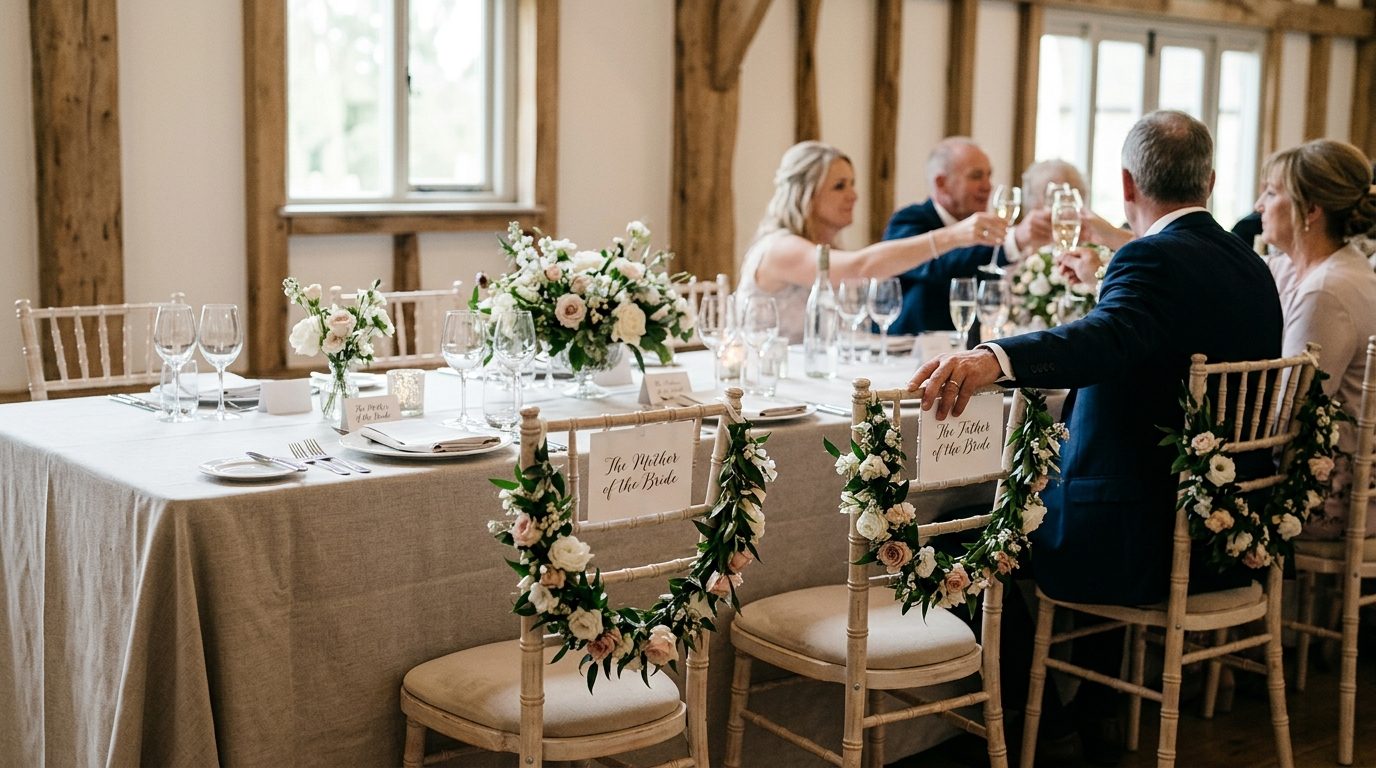
On the day, the priority is to be fully present in what is actually happening. Grief about an absent parent is real and does not disappear. But the moments you are experiencing are also real, and they will not repeat. Both things are true.
Some couples find it helps to acknowledge the absence briefly in a speech or a quiet moment before the ceremony, so it does not become a silent elephant in the room. Others prefer to keep the day focused entirely on what is present. Either choice is valid.
What does not help: checking your phone during the reception in case they change their mind, asking other family members to try one more time during the day, or allowing the absence to become the narrative of the event in your own mind.
The longer view
Most wedding-triggered estrangements do not last indefinitely. Resolution’s research found that among families who sought mediation, 67% reached a workable reconciliation within 18 months of the initial rupture. Among those who did not seek mediation, the figure was 31%.
The estrangements that last longest are the ones that receive no structured attention. If you want a relationship with this parent, begin the work of repairing it before the wedding day hardens the position.
If the absence is a relief — if the refusal confirms something you already knew about the relationship — that is also a valid experience. Your wedding day is about your marriage and the people who choose to be there.
For similar situations, see our guides on whether to uninvite a mother-in-law, how to handle family conflict before a wedding, and how to refuse to invite a stepparent.
Related articles
Frequently asked questions
What should I do if my parent refuses to come to my wedding?
Start by understanding the reason — disapproval of the partner, exclusion from planning, religious objection or existing family rift. The response depends entirely on the cause. A direct, private conversation without pressure works better than ultimatums.
Can I force my parent to attend my wedding?
No. There is no legal mechanism to compel attendance. Attempting to use pressure, ultimatums or emotional manipulation almost always entrenches the refusal rather than resolving it.
What if my parent disapproves of my partner?
Partner disapproval accounts for 43% of parental wedding refusals (Resolution 2024). A conversation that acknowledges the concern — even if you disagree — can sometimes open a door. Many parents who initially refuse do attend eventually, especially if the relationship continues and they are given time.
Should I uninvite a parent who is making conditions?
Only as a last resort. If a parent is attaching conditions to attendance — 'I'll come only if you don't invite X' — a clear, calm boundary is appropriate. You can say: 'I understand your concern but the guest list is set. I would love you to be there.' Then leave the decision to them.
How do I handle the wedding day if a parent isn't coming?
Plan the day without them, including every element that might have involved them: processional music, the speech order, photography groupings. Do not leave a gap where they would have stood. Brief your partner, wedding party and close family on the situation.
Will the estrangement be permanent?
Not necessarily. Resolution's research shows that most wedding-triggered estrangements that end up in mediation resolve within 18 months. Estrangements that are not addressed tend to calcify. The sooner mediation or structured communication begins, the better the outcomes.
What if my parent refuses because of my same-sex partner?
This is one of the most painful versions of this situation. The same advice applies: a direct, private conversation first. Some parents come around with time. Others do not. Your right to marry the person you love is absolute. A parent's refusal is their choice, not a judgement on the validity of your marriage.