Can I Refuse to Invite My Stepmother to My Wedding?
Key Takeaways
- You have no legal or social obligation to invite anyone to your wedding, including a stepparent
- The most common reason for excluding a stepmother is a difficult relationship, not a logistical one — own that reason clearly
- The decision to exclude a stepparent often comes with a secondary decision about the biological parent
- Tell the person directly and early — before save-the-dates go out wherever possible
- Expect your father or father-figure to face pressure to choose sides; prepare him for that conversation
Your legal and etiquette position
You have the absolute right to invite or exclude anyone from your wedding. There is no legal mechanism that requires you to invite a family member, step-family member or anyone else. The only legal requirements for a UK civil marriage are the presence of two witnesses, a licensed registrar and the two people marrying.
The etiquette position is similarly clear. Your wedding is a private event. Etiquette creates obligations around how you communicate decisions, not about which decisions you make. You are obliged to be honest, direct and timely. You are not obliged to include someone whose presence would harm your experience of the day.
Where etiquette becomes relevant is in the execution: telling a stepparent they are not invited requires the same directness as any other difficult conversation about guest lists. Using a third party, sending a text or saying nothing until the day creates additional damage. The decision may be yours to make; the obligation to communicate it properly is real.
The most common reasons for excluding a stepmother
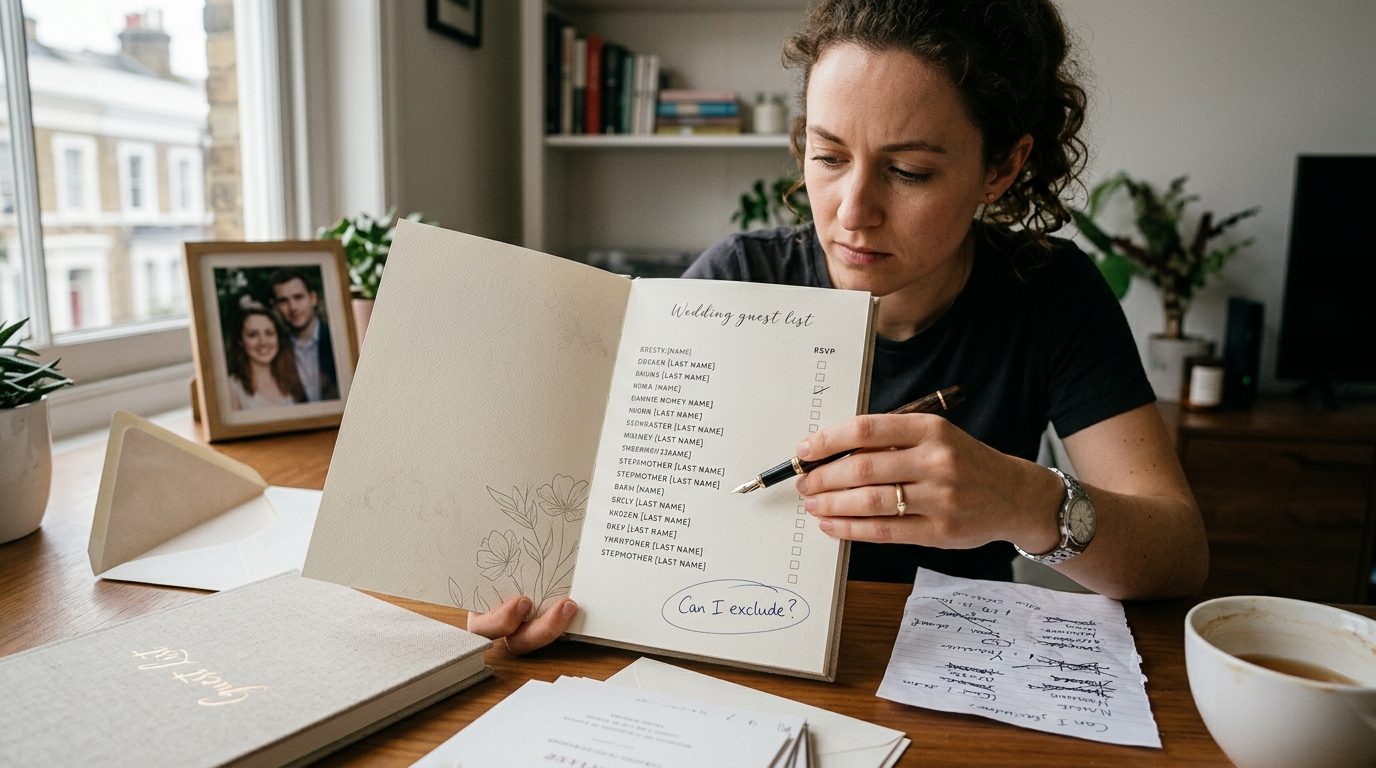
Understanding why couples exclude stepmothers helps clarify which scenarios warrant the decision and which might benefit from a different approach.
1. A relationship that was never formed. Your parents divorced when you were an adult. Your father remarried. You do not have a meaningful relationship with his partner. She is not someone whose absence from your wedding day would register as a loss. This is a logistical exclusion and the easiest to communicate.
2. An actively difficult relationship. The stepmother was involved in the family breakdown, has been a source of conflict, or has created ongoing difficulty with your mother, siblings or you. Inviting her creates a day defined by managing that tension. This is the most common reason.
3. A conflict with your mother. Your biological mother and stepmother cannot be in the same room, or their shared presence would require elaborate management. The couple decides to exclude the stepmother to make the day workable for the mother whose relationship came first.
4. A parent’s conditions. In some cases, the biological parent — the mother — has either directly or indirectly communicated that the stepmother’s presence would make attendance impossible. The couple faces a choice between the two.
5. A history of poor behaviour. A prior incident — at a family event, a birthday, Christmas — has made the stepmother someone the couple genuinely does not want at their wedding. This is a behaviour-based exclusion and among the most defensible.
The decision about your father
The most significant consequence of excluding a stepmother is what happens with your father. He faces pressure from two directions: loyalty to his partner, and love for his child. Most fathers in this position feel caught, regardless of which relationship came first.
Before you make the decision, have an honest internal conversation about four things:
Does your father know how you feel about his partner? If this exclusion will come as a surprise to him, the conversation will be harder. If he already knows there is tension, he may have been anticipating it.
What do you want from your father on the day? Do you want him to walk you down the aisle, give a speech, be present at the top table? Each of those desires matters in terms of what his absence would cost. Be honest about the relative weight of his presence versus his partner’s absence.
Is your father likely to attend without her? Some fathers will. Many will face enormous pressure from their partner not to. You cannot predict his decision, but you can make your position — that you want him there — unambiguous.
What happens to your relationship with your father after the wedding? If he attends and she does not, the wedding is over but the family dynamic continues. If he does not attend, the relationship takes a long-term hit. Neither outcome is certain, but both are possible.
A couple who married at Brinsop Court in Herefordshire in June 2025 excluded the groom’s stepmother after a series of conflicts at family events. The groom told his father directly: “I love you and I want you there. I have decided not to invite [name]. I know that puts you in a difficult position and I am sorry for that. But this is a decision I’ve made.” His father attended. The relationship with the stepmother remained strained but the wedding itself went without incident.
How to have the conversation
The conversation should happen with the stepmother directly. Not via your father. Not via a sibling. Not indirectly through a save-the-date that simply does not arrive.
When to have it: as early as possible. Ideally before save-the-dates go out. Certainly before formal invitations. The later the conversation happens, the more plans may have been made, the more the exclusion reads as a last-minute slight.
Script:
“I want to speak with you directly before anything else happens. I have decided that I am not going to include you on the guest list for the wedding. I know that is difficult to hear and I am sorry to tell you this. This is a decision I have made and it is not something I am going to change.”
Two or three sentences. No extended justification. Extended justification invites counter-argument. “But you said at Christmas we were close” is a legitimate challenge. “But we’ve been getting on so much better” is an appeal for reconsideration. Both are harder to dismiss if you have spent five minutes explaining yourself.
What she may say:
“Can you tell me why?” — You can give a brief reason if you choose. You are not obliged to. “Because of the relationship we have had over the years” is enough. You do not need to list incidents.
“Your father will be devastated.” — “I understand. I have spoken to him / I am going to speak to him directly.”
“I won’t accept this.” — “I understand you’re upset. The decision is made.”
“I will come anyway.” — “If you arrive at the venue, the venue’s staff will handle the situation.” (This is rare but not unknown. Briefing the venue in advance is sensible if you consider it a possibility.)
Handling the wider family
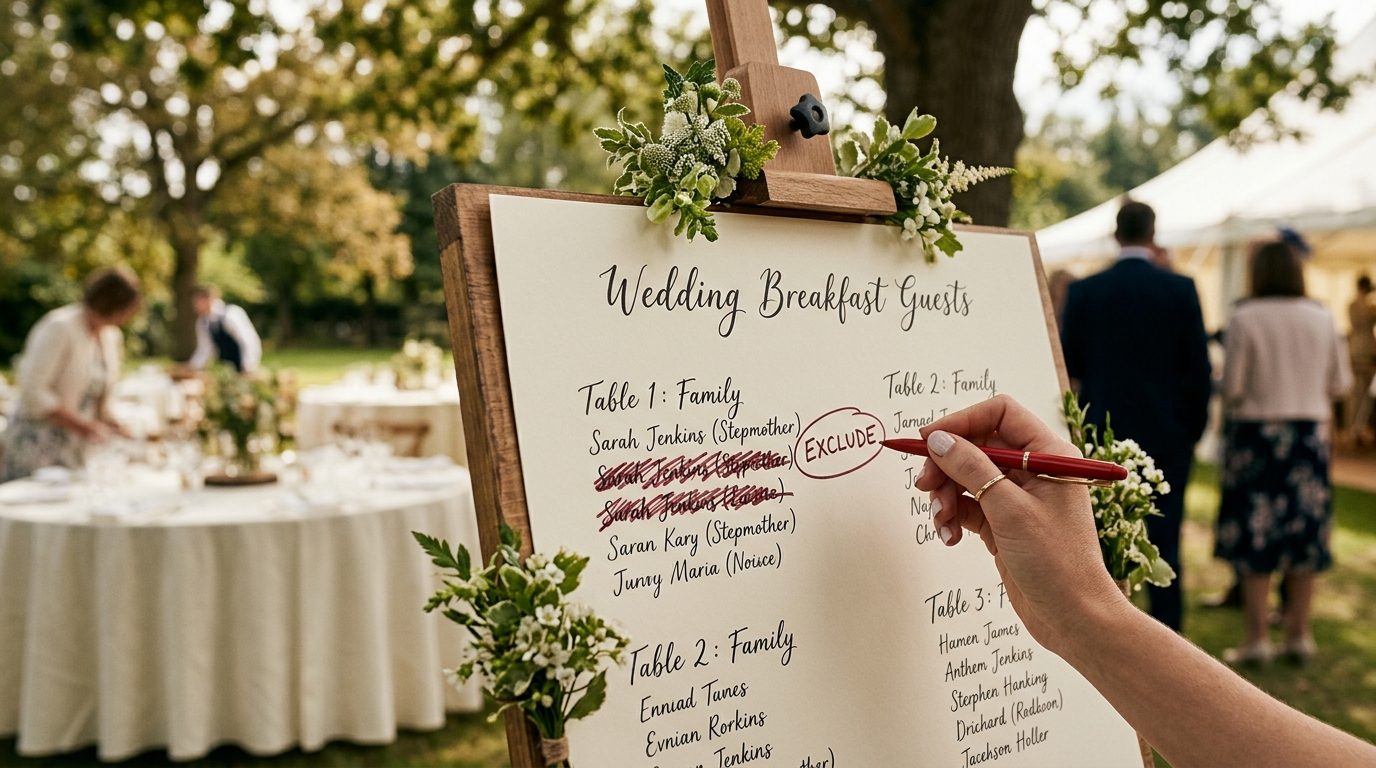
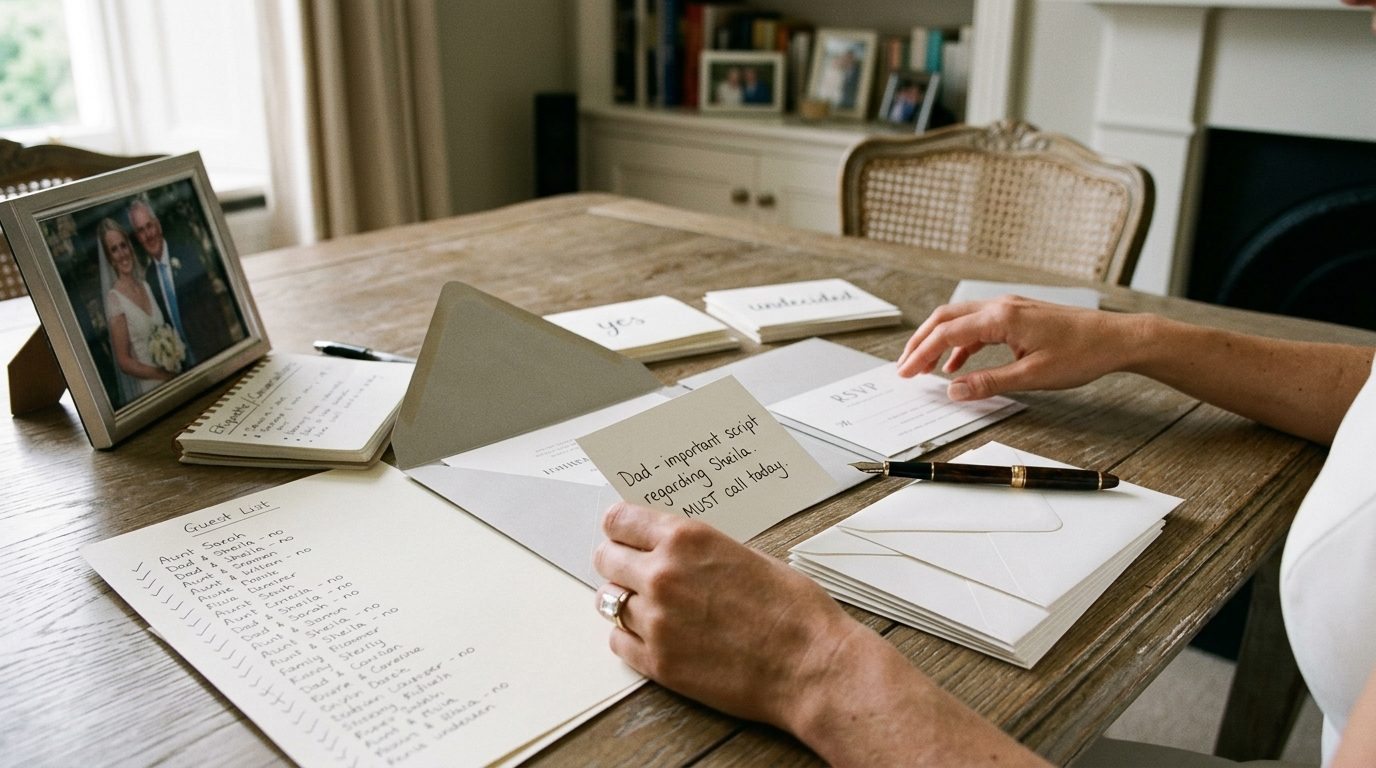
Extended family will find out. Cousins will ask at other events. Aunts and uncles will have opinions. The correct response from you and your partner to any third-party enquiry: “We had to make some difficult decisions about the guest list. We aren’t going to discuss the specifics.” That is all.
Brief your wedding party. Tell them that this is a private decision, that they should not discuss it beyond saying you had to make hard choices, and that they should come to you with any direct questions rather than answering on your behalf.
Consider telling your immediate wedding party — particularly a best man or maid of honour — the full situation. They will manage questions on the day with more confidence if they understand the background.
For help managing other difficult guest list decisions, see our guide to uninviting someone from your wedding, which covers the full range of scenarios from budget cuts to relationship breakdowns.
When reconsideration is worth it
Excluding a stepparent is appropriate when the relationship is genuinely harmful, when her presence would require managing the day around her, or when your core experience of the wedding would be damaged by her being there.
It is worth reconsidering if:
- You have never had a direct conversation with her about the problems in the relationship, and the exclusion is based on accumulated resentment rather than specific events.
- Your father will almost certainly not attend without her and his absence would significantly harm your day.
- The relationship problems are relatively minor compared to the long-term family consequences.
- You are operating under pressure from your biological mother rather than from your own conviction.
The test: if you imagine the wedding happening and she is not there, does the feeling of relief outweigh the feeling of guilt? If yes, proceed. If the balance is unclear, give it two weeks before making the decision final.
See our wedding planning timeline for when to finalise guest list decisions relative to invitations, caterer deposits and venue final headcounts.
Frequently asked questions
Can I legally refuse to invite my stepmother to my wedding?
Yes. You have no legal obligation to invite anyone to your wedding. Your guest list is entirely your decision, including the decision to exclude a stepparent.
Is it wrong to not invite your stepmother to your wedding?
Whether it is wrong depends on your specific relationship and circumstances. If the relationship is damaging, abusive or deeply strained, excluding her is a reasonable choice. If the relationship is merely uncomfortable, the question is whether the discomfort is worth the fallout.
What do you say when excluding a stepmother from a wedding?
Tell her directly and early. A brief explanation is better than silence: 'I have decided not to include you on the guest list. I know that is hard to hear and I am sorry.' You do not owe a lengthy justification.
What happens if my father refuses to come without my stepmother?
This is the most common consequence of excluding a stepparent. Your father has to make his own choice. You can tell him clearly that you love him and want him there, but the decision about the guest list is made. Whether he chooses to attend is his decision.
Do I have to invite my stepmother if my father is paying for the wedding?
No. Financial contributions do not automatically convert to guest list rights. If your father is attaching guest list conditions to financial support, you face a choice about whether to accept those conditions. That is a separate negotiation from the guest list itself.
How do I stop my dad being put in the middle when I exclude my stepmother?
You cannot fully prevent it, but you can prepare him. Tell him directly that you are not inviting his partner, explain your reason briefly, and make clear that you want him there. Give him time to process before the wedding. Do not ask him to keep it secret from her.
Is it okay to invite my biological mother and not my stepmother?
Yes. Biological and step relationships carry different histories and obligations. Inviting your mother and not your father's partner is not inherently contradictory. It may create tension, but that tension is the consequence of the family structure, not a mistake in your guest list logic.