I Uninvited My Dad From My Wedding And Don't Regret It

Key Takeaways
- Uninviting a biological parent is one of the rarest and most consequential guest list decisions
- The trigger is usually a pattern — not a single incident but repeated behaviour that crosses a clear line
- The decision is yours to make, but it should survive scrutiny: if someone outside the situation understood the reason, would they say it was justified?
- Tell him directly, early, and without extended justification that invites negotiation
- Expect a reaction from wider family — prepare your partner and your wedding party before it happens
- The absence on the day tends to feel easier than anticipated; what comes after requires more preparation
The following account was contributed by a reader in April 2026. Details have been anonymised at her request. It is published here as part of Weddings Hub’s ongoing editorial coverage of real wedding decisions — the ones that do not appear in the planning checklists.
My dad left when I was seven. Not a dramatic leaving — no shouting, no scene, just a gradual disappearance over six months that ended with him moving to Scotland with a woman I had never met. I saw him perhaps fifteen times between the ages of eight and twenty-two. Birthday cards arrived sporadically. Christmases were always going to happen “next year.”
When I got engaged in late 2024, my first instinct was to include him. I called him. He cried. He said he had been waiting for a chance to make things right. I believed him.
Over the next eight months, he came to the engagement party, commented loudly at the dinner table about not being at the “top table” at the wedding, texted my partner three times about wedding budget decisions, called my mother (they have not been on speaking terms since 2003) to complain that he was not being “properly involved,” and told my aunt that he planned to give a speech whether or not he was asked.
I am a fairly patient person. I waited to see if any of it was a one-off. None of it was.
The decision
Four months before the wedding, I made the decision. I did not make it in anger. I made it on a Sunday morning when I sat down with my partner, went through everything that had happened since the engagement, and asked myself honestly: if he is in the room on that day, will I be able to enjoy it? The answer was no. Not because I hate him. Because I knew I would spend the day watching him.
My partner was fully behind it. He had been the one fielding the texts. He said something I have thought about since: “You’ve been managing him your whole life. You don’t have to do it on this day.”
The conversation
I called my dad two days later, in the morning, when I was calm.
I said: “Dad, I need to tell you something difficult. I’ve decided not to include you on the guest list for the wedding. I know that’s very hard to hear. This is a decision I’ve made.”
He went quiet for a moment and then said “Why?” I said: “Because of the way things have gone since the engagement. I’m not going to go through it all on this call.” He said he didn’t know what he’d done. I said: “I think you do.” He got angry. He said I was punishing him for the past. I said: “This isn’t about the past. It’s about the last eight months. This decision is made.”
He rang off. He did not call back for three weeks.
What happened next
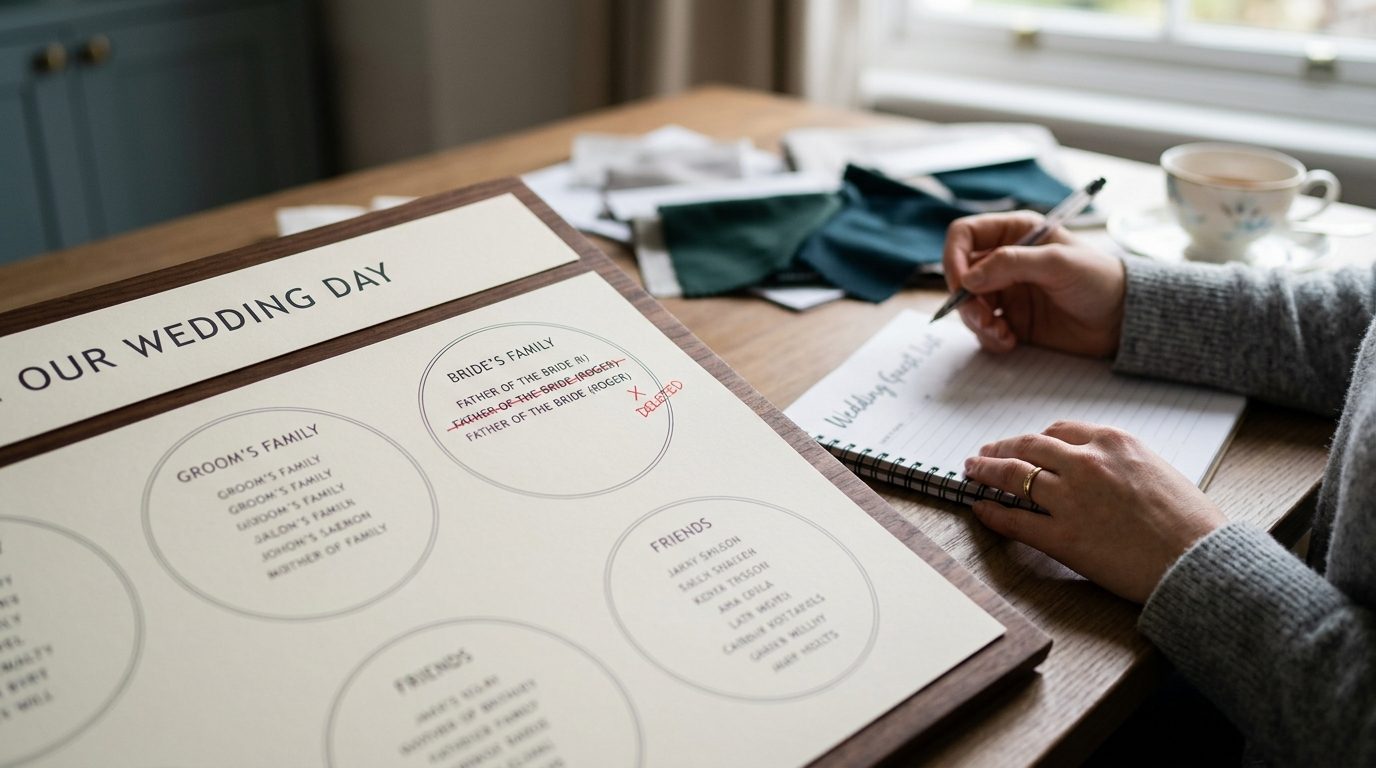
My aunt called within two days. She was upset on his behalf. I told her: “I’ve had to make a very difficult decision about the guest list. I’m not going to go through it with people who weren’t in the middle of it.” She was not happy, but she stopped pushing.
My mother was the more complicated call. She was nervous — not because she disagreed with the decision, but because she was worried about what it meant for me. She said “are you sure?” about four times. I said yes four times. She came around.
Two cousins sent messages expressing support. One cousin — his nephew — went quiet at family events for a few months.
The wedding was on a Saturday in October 2025, in a hotel in the Cotswolds. It was the best day of my life. My uncle walked me down the aisle. Nobody mentioned my father’s absence to me on the day. My partner tells me one of his cousins asked where “Sarah’s dad” was and my best man said “He couldn’t make it” and moved on.
Six months later
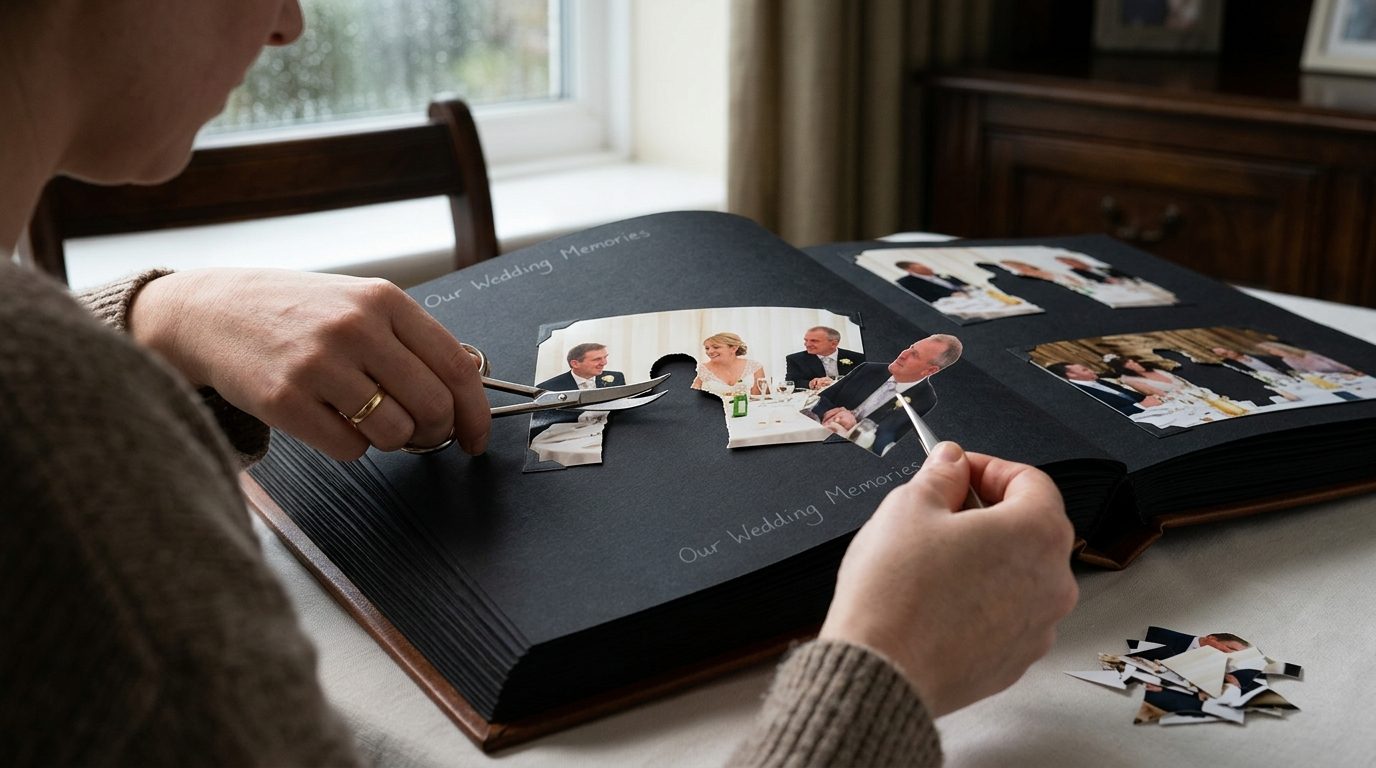
My dad sent a letter in January 2026. It was apologetic in parts, defensive in others. It said he hoped I could “find it in my heart” to let him back in. I have not responded yet. I am still working out whether I want to.
I do not regret the decision. I am not certain about what comes next. Those are two separate things and I think it is important to name that — you can be clear that a decision was right while still having feelings about the relationship it reflects.
If you are facing a similar decision, the only thing I would say is this: make sure it is your decision, not your partner’s, not your mother’s, not your therapist’s. You are the one who has to live with the afterwards.
The patterns that lead here: what UK couples say

Editorial note from Matt
Reappearance after absence. A parent who was largely absent resurfaces when an engagement is announced, often with emotional language about “making things right.” The engagement creates a high-stakes moment that some parents exploit rather than earn.
Escalating demands during planning. The pattern described above — comments about seating, contact with the partner, interference with budget decisions — appears repeatedly. Each incident can be read as minor. The cumulative pattern is clear.
A bid for a public role. The announcement of intent to give an uninvited speech, to be visibly present at the top table, or to be introduced in a particular way. These are claims on the narrative of the day rather than expressions of care for the couple.
The decision to exclude a parent is not taken lightly in any account we have encountered. In every case, it follows a sustained period of behaviour that left the couple feeling unheard, managed, or threatened.
If you are in this situation: practical guidance
Make the decision with your partner, not for them. If your partner has reservations, have the conversation fully before acting. The decision needs to be joint and fully owned.
Tell him directly. Not via a third party, not by omitting the invitation and waiting. A direct phone call or in-person conversation is the correct route.
Keep the conversation short. You do not owe him a full account of every grievance. “I’ve made this decision. It is not something I’m going to reverse” is sufficient.
Brief your wedding party before anyone else finds out. Your best man, maid of honour, and key family members should know the situation — and a single consistent response — before the wider family does.
Prepare for the reaction. It will come. The question is whether you are ready to hold your position calmly rather than defend it in detail.
Do not expect resolution before the wedding. Some fathers make a genuine effort to understand. Most do not, within the timeframe available. The wedding happens regardless.
For related guidance, see our article on how to uninvite someone from your wedding and our guide on parents refusing to attend.
Frequently asked questions
Can I uninvite my dad from my wedding?
Yes. You have no legal obligation to invite anyone to your wedding, including a parent. The practical question is whether the relationship and behaviour justify the decision, and whether you have genuinely prepared for the aftermath.
What is a justified reason to uninvite a father from a wedding?
A sustained pattern of harmful behaviour — abuse, repeated breach of agreed boundaries, active attempts to undermine the marriage, or behaviour that has been serious enough that other family members witnessed it or acknowledged it. A single disagreement is not a sufficient reason.
How do I tell my dad he is not invited to my wedding?
Tell him directly, by phone or in person. Do not use a third party. Keep it brief: 'I've decided not to include you on the guest list. I know that is hard to hear. This is a decision I have made.' Do not provide an extended list of grievances.
What happens to my relationship with my dad after I uninvite him?
It depends on both parties. Some fathers respond with anger initially, then quietly accept the situation. Others disengage permanently. A minority seek genuine reconciliation after the wedding. None of these outcomes is predictable, but all are more manageable if the decision was made clearly and owned fully.
What do I say to family members who are upset I uninvited my dad?
'I made a difficult decision about my guest list. I'm not going to go through the details with people who weren't directly involved.' That is a complete answer.
Is it normal to feel guilty about uninviting a parent from your wedding?
Yes. Guilt is not evidence that the decision was wrong. It is evidence that you still have feelings about the relationship, which is entirely normal. Most people who make this decision report that the guilt reduces significantly after the wedding.
Should I invite my dad back if he apologises before the wedding?
Not automatically. An apology is welcome; it does not automatically reverse a decision made for serious reasons. Assess whether the apology reflects genuine change or is an attempt to regain access. A single apology close to the wedding date is not usually sufficient evidence of the former.