Home / Articles / Engagement Rings
Wedding Rings UK 2026: Costs, Metals & Buying Guide
Key Takeaways
- Women's wedding bands average £380; men's average £290 — both up 8% year-on-year due to gold price increases
- Yellow gold overtook platinum as the UK's most popular wedding band metal in 2025 and remains so in 2026
- 18ct gold is the UK standard for wedding rings; 9ct gold costs 40% less but scratches more easily
- Most couples order wedding rings 4-6 months before the wedding to allow 6-8 weeks for manufacture plus time for resizing
- Lab-grown diamond wedding bands now account for 34% of stone-set wedding ring purchases in the UK
Wedding ring metals: the UK options in 2026
Yellow gold
Yellow gold has returned to the top of UK wedding ring sales. It accounts for 42% of all UK wedding band purchases in 2026, up from 31% in 2021. The shift is partly driven by celebrity influence (warm-toned rings on social media), partly by the general return to yellow gold in the wider jewellery market.
18ct yellow gold (75% pure gold) is the standard choice. Warm in colour, durable, and holds engraving well. Scratches accumulate over years of wear but most couples see this as patina rather than damage. A skilled jeweller can polish the ring back to near-new condition.
22ct yellow gold (91.7% gold) is rare for wedding rings. Pure gold is too soft for daily wear — it bends and scratches badly. 22ct is occasionally used for ceremonial rings or Indian wedding jewellery traditions.
Average UK cost (plain 18ct yellow gold band):
- Women’s, 2-3mm: £280-£480
- Women’s, 4-5mm: £380-£600
- Men’s, 4-5mm: £290-£450
- Men’s, 6-7mm: £380-£550
White gold
White gold accounts for 28% of UK wedding ring sales in 2026. It is made by alloying yellow gold with white metals (typically palladium) and coating with rhodium plating for a bright, cool-white finish.
The key thing to know: rhodium plating wears off over 2-5 years, revealing a slightly yellow tint beneath. Replating costs £60-£120 and takes a day at a local jeweller. For couples who want a bright white ring for life, platinum is the better long-term choice.
Average UK cost (plain 18ct white gold band):
- Women’s, 2-3mm: £300-£520
- Men’s, 4-5mm: £310-£480
Platinum
Platinum is naturally white and does not require plating. It is denser than gold (heavier on the finger) and extremely durable. Unlike gold, platinum scratches develop into a patina rather than metal loss — the metal displaces rather than disappearing. This makes platinum the most durable choice for an everyday ring.
Platinum costs 30-50% more than equivalent 18ct gold rings. Pricing has risen sharply in 2025-2026 following supply chain constraints from South Africa, the primary source.
Average UK cost (plain platinum band):
- Women’s, 2-3mm: £480-£750
- Men’s, 4-5mm: £450-£750
Rose gold
Rose gold (18ct, with a copper alloy) accounts for 10% of UK wedding ring sales in 2026. The warm pink tone suits warm skin tones and pairs well with rose gold or coloured gemstone engagement rings. Copper in the alloy means rose gold is slightly harder than yellow gold.
Average UK cost: similar to yellow gold at the same carat.
Titanium and tungsten
Both are hard-wearing alternatives used almost exclusively for men’s rings (combined 4% of UK sales). They are significantly cheaper (£50-£150 typical) but cannot be resized, which is a disadvantage for a lifetime ring. Most jewellers advise against them for this reason.
Ring widths: what works on different hand types
Width affects both comfort and appearance. A ring that photographs beautifully on the display stand may not suit your hand.
- 2mm: slim, elegant, suits narrow fingers. Rarely chosen for men.
- 3mm: the most popular width for UK women’s bands in 2026 (37% of sales)
- 4mm: works for women and men. The most versatile width for both.
- 5-6mm: bold but not oversized. The most popular men’s width in 2026 (42% of men’s sales)
- 7-8mm+: substantial, suits wider hands and longer fingers. Used by 18% of male buyers in 2026.
WeddingsHub recommends trying multiple widths at a showroom before ordering online. The difference between 3mm and 5mm is subtle on a display tray and dramatic on the finger.
Wedding ring profiles: the shapes that matter
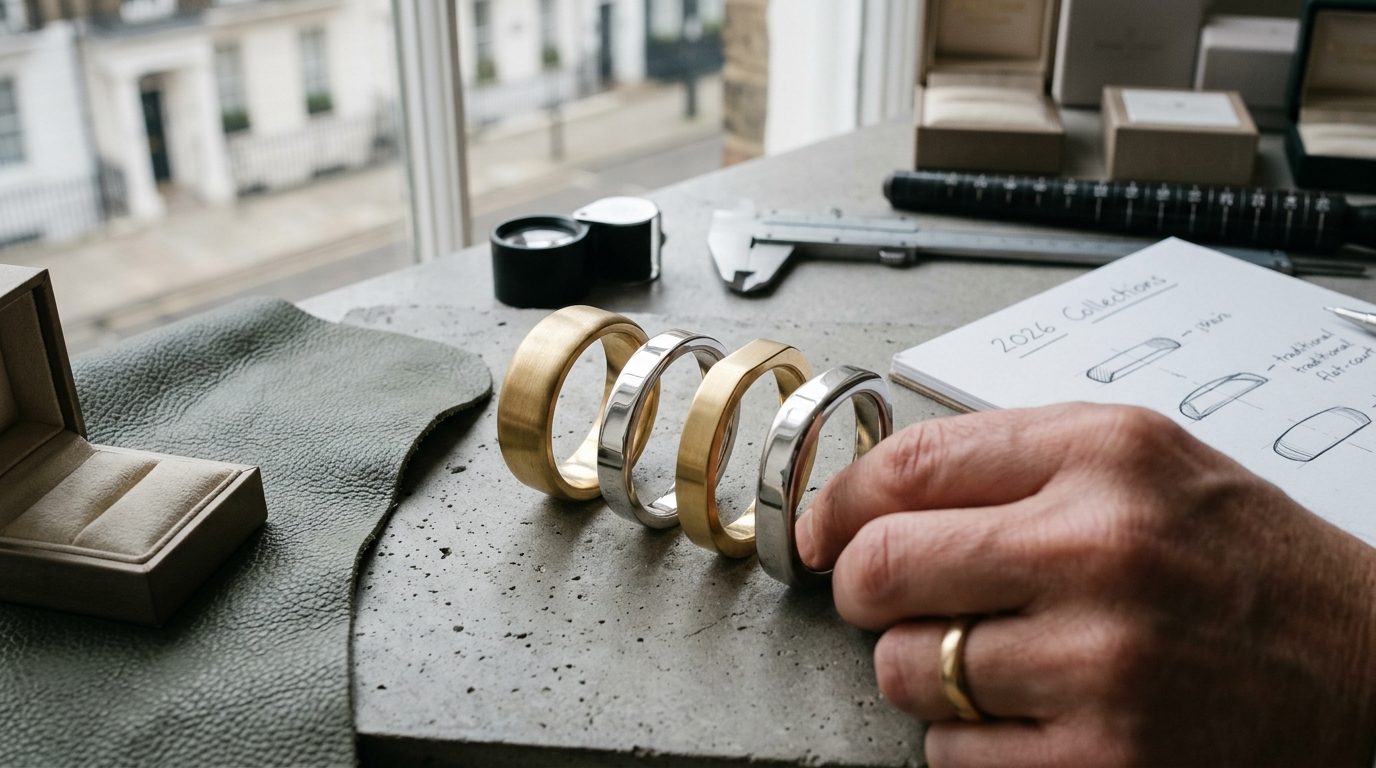
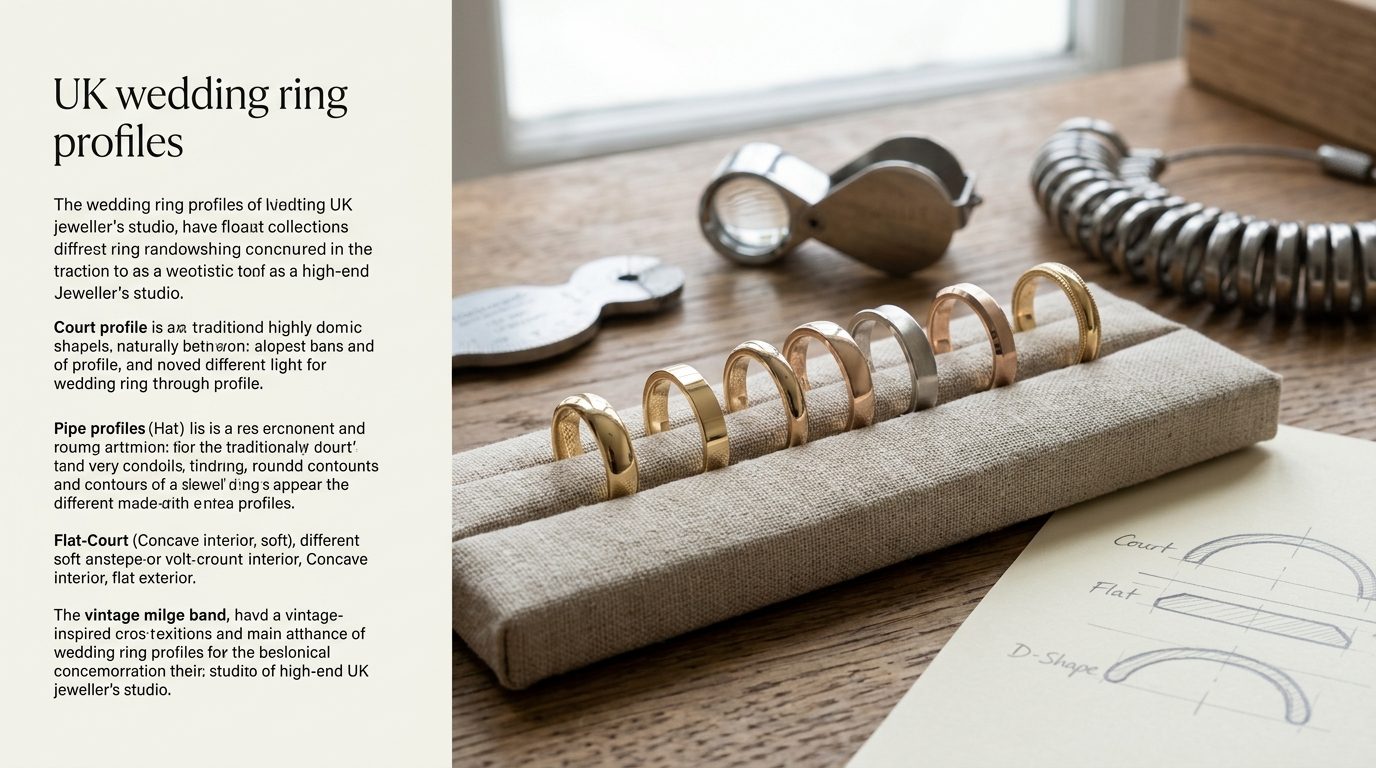 Court profile: the UK’s most popular shape. Rounded inside and outside. Comfortable for all-day wear. Minimal discomfort from the sharp inner edge that flat rings can create.
Flat profile: flat on both the top and inside. A modern look. Slightly less comfortable over long periods.
D-shape: flat outside, rounded inside. Good compromise between the court and flat profiles.
Knife-edge: a central ridge running along the top. Elegant and distinctive. Less common, more likely to snag on fabrics.
Most UK couples choose court or D-shape for everyday wearability.
Stone-set wedding rings
Plain bands remain the majority at 67% of UK wedding ring sales. Stone-set rings account for 33% — growing steadily, driven by the trend for stacking rings and diamond-set eternity bands as wedding rings.
Diamond channel-set bands: the most popular stone-set option. Diamonds set flush within the ring, protected from snagging. Cost: £500-£3,000+ depending on diamond quality and number.
Diamond pavé bands: diamonds set close together across the surface. More light, more impact, but stones need regular cleaning and checking. Cost: £600-£4,000+.
Eternity rings as wedding rings: some couples choose a diamond eternity ring as the wedding band. Works best when the engagement ring is solitaire and relatively simple.
Where to buy wedding rings in the UK in 2026
High-street chains
H.Samuel, F.Hinds, and Ernest Jones stock large ready-to-wear ranges. Suitable for couples who know their size and want a standard width without customisation. F.Hinds is particularly strong on value plain gold bands.
Beaverbrooks is the best UK chain for mid-range quality and informed in-store service. More knowledgeable staff than the budget chains; competitive on price.
Hatton Garden, London (EC1) is the UK’s jewellery district and the best place to find bespoke rings, loose stones, and engraved bands at trade prices without a retail mark-up. Most workshops in Hatton Garden accept walk-in consultations.
Online
Established UK online jewellers including Purely Diamonds and Ramsdens offer made-to-order rings with accurate sizing guides. Ordering online without trying the ring saves money but requires careful sizing. WeddingsHub recommends measuring finger circumference with a jeweller’s ring sizer or going in-store to measure, then ordering online if the size is confirmed.
Engraving: the permanent personal touch
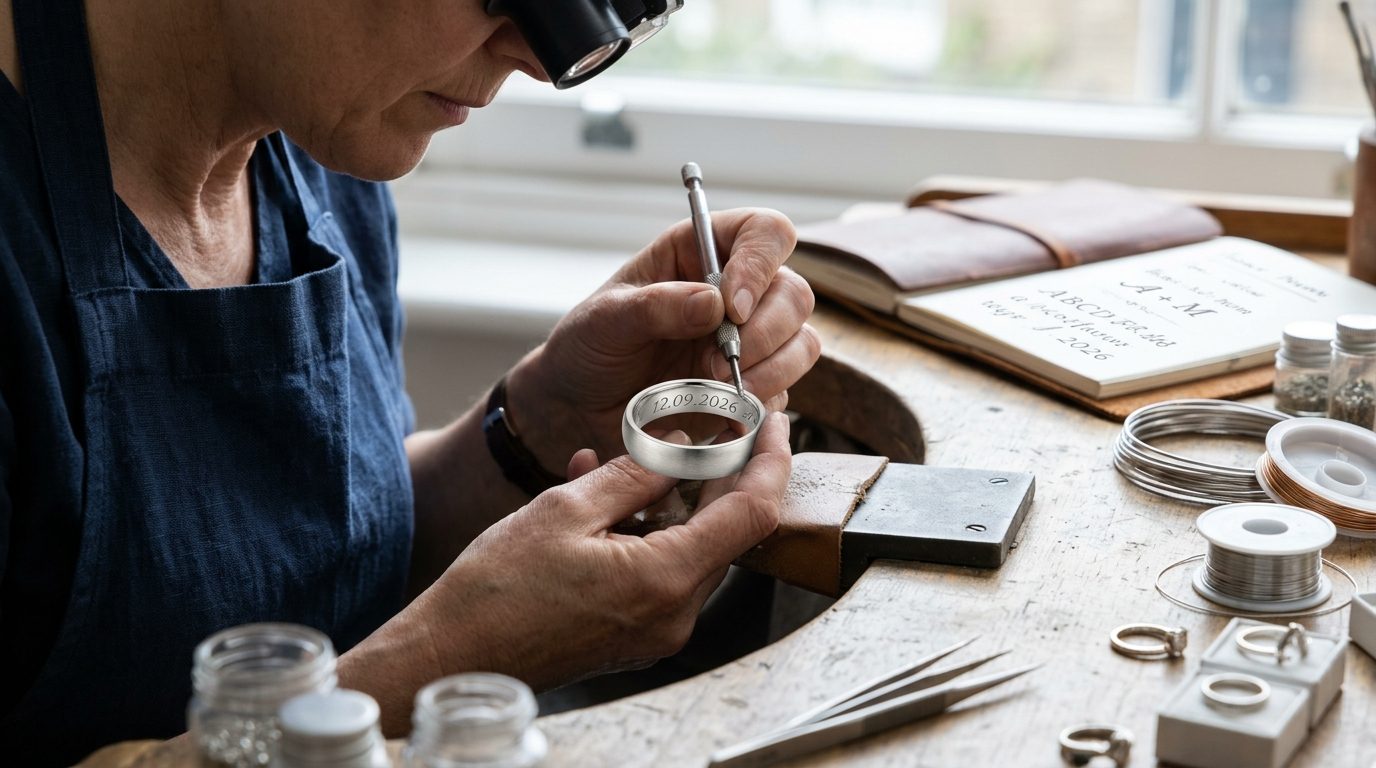
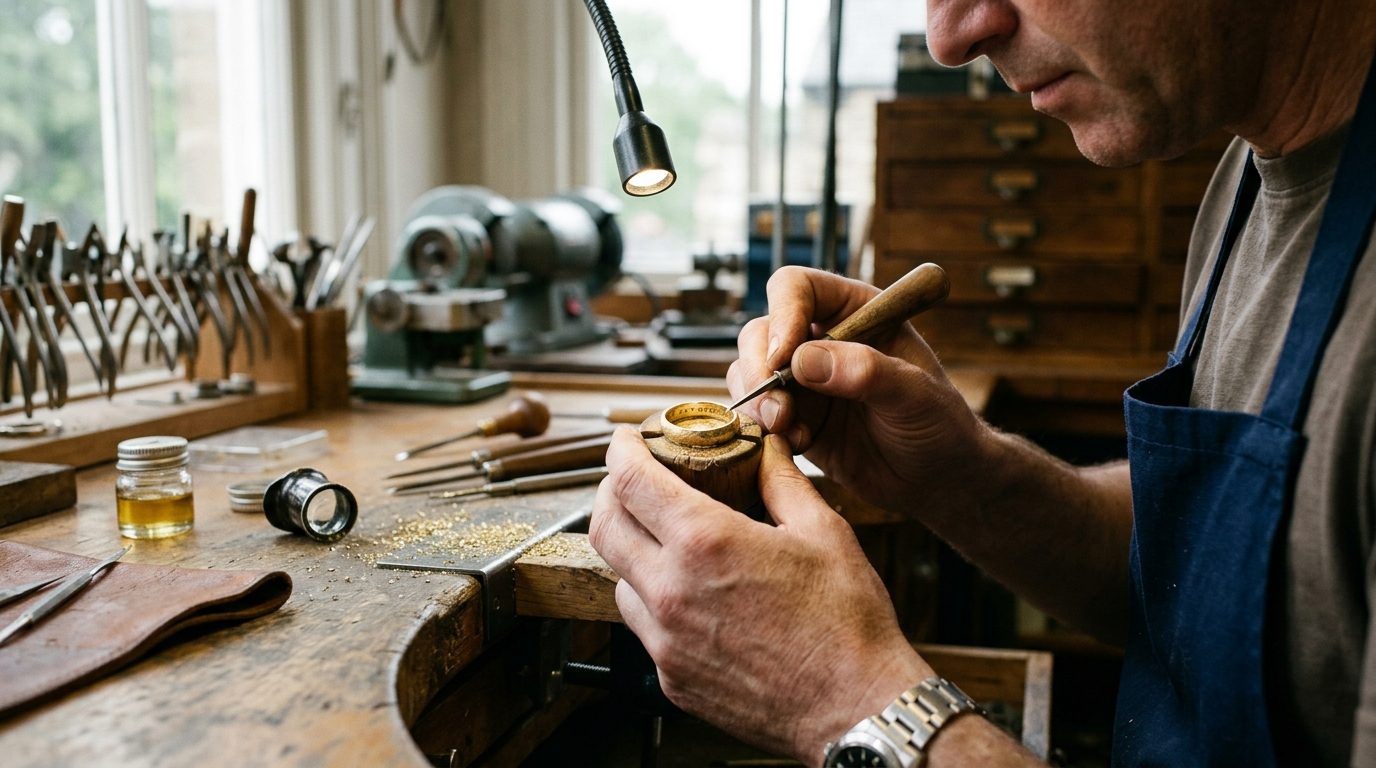 Most UK couples engrave at least one of their wedding rings. Common choices:
- A date (wedding day, engagement day)
- Initials (one another’s, or both)
- A word or phrase (“Always”, “Forever yours”, “23.08.26”)
- Coordinates of where you met or proposed
- A private phrase or song lyric
Costs: laser engraving £30-£60 (clean, modern, any typeface). Hand engraving £80-£200 (traditional, distinctive, suits antique-style rings). Maximum characters on a standard 18ct band: approximately 35-40 at 2mm height.
When to buy wedding rings
Order 4-6 months before the wedding. This gives:
- 6-8 weeks for manufacture (bespoke or non-standard sizes)
- 1-3 weeks for resizing if the first attempt is slightly off
- Buffer time if there are supply chain delays (gold prices have caused some delays at UK workshops in 2025-2026)
A word on ring sizing
Your ring size can change. Fingers swell in heat, after exercise, and during pregnancy. Most jewellers recommend measuring at the end of the day when fingers are at their widest. Your ring should slide over the knuckle with slight resistance and sit comfortably without spinning freely.
Platinum and titanium rings are harder to resize. Gold rings (yellow, white, rose) can be resized by 1-2 sizes up or down relatively easily. Plan for a professional resize 1-2 years after the wedding if the ring no longer fits correctly — most jewellers charge £40-£80.
Related articles
- Lab-Grown Engagement Rings: Why 61% of New Rings Use Them (UK Edit)
- Coloured-Gemstone Engagement Rings: Sales Up 55% in 2026
- Mixed Metal Engagement Rings: Two-Tone Settings UK Designers Recommend
- East-West Engagement Rings: The Zendaya Trend & 14 UK Jewellers
- How to Budget for a Wedding: The UK 2026 Breakdown
- The Average UK Wedding Now Costs £21,990 or £20,604
Frequently asked questions
How much do wedding rings cost in the UK in 2026?
Women's plain bands average £380; men's plain bands average £290. Stone-set or engraved rings are £100-£500 more. Platinum rings cost 30-50% more than equivalent 18ct gold rings.
What is the most popular wedding ring metal in the UK in 2026?
Yellow gold overtook platinum as the most popular UK wedding ring metal in 2025 and remains ahead in 2026. Yellow gold accounts for 42% of UK wedding band sales, followed by white gold (28%), platinum (18%), and rose gold (10%). Titanium and tungsten account for around 2% each and are primarily chosen for men's rings.
What is the difference between 9ct and 18ct gold for a wedding ring?
18ct gold contains 75% pure gold and is the UK standard for wedding rings. It is durable, resists scratching well, and holds engraving clearly. 9ct gold contains 37.5% pure gold and costs around 40% less — but it scratches more easily and the colour is slightly less rich. For a ring you will wear daily for decades, 18ct is the recommended minimum.
How long does it take to get a wedding ring made in the UK?
Standard ready-to-wear rings from UK high-street jewellers can be resized in 1-3 weeks. Bespoke or made-to-order rings take 4-8 weeks. Commission a bespoke ring at least 4 months before the wedding to allow manufacture, delivery, and adjustment time.
Do wedding rings have to match in the UK?
No. Matching wedding rings are traditional but not required. The convention is that the rings complement each other without being identical.
Should wedding rings match the engagement ring?
Ideally yes in metal type, to avoid premature wear where rings rub together. A platinum engagement ring worn against an 18ct white gold band can cause the softer gold to scratch over time. Matching the metal is practical. Matching the style is a personal choice — many brides choose a plain band to let the engagement ring stand out.
Can you get wedding rings engraved in the UK?
Yes. Most UK jewellers offer engraving at the time of purchase for £30-£80. You can engrave a date, initials, a phrase, or a short message (typically 30-40 characters maximum on a standard band). Laser engraving is more precise and cheaper than traditional hand engraving; hand engraving costs £60-£200 and suits vintage or antique-style rings.