Home / Articles / engagement-rings
East-West Engagement Rings: The Zendaya Trend, UK Edit
Key Takeaways
- East-west settings orient the stone horizontally — the long axis runs across the finger rather than up it
- UK searches for 'east-west engagement ring' are up 340% year-on-year following Zendaya's ring coverage
- Oval and marquise cuts are the most popular east-west stones; elongated shapes work best in this setting
- East-west settings typically cost 10-20% more than equivalent north-south settings due to custom metalwork
- 14 UK jewellers offer east-west settings; 6 have off-the-shelf designs, 8 offer bespoke only
- Weddings Hub surveyed 22 UK jewellers: average wait for bespoke east-west ring is 6-10 weeks
Zendaya’s oval diamond sits horizontally across her hand — the stone’s long axis pointing east-west rather than up toward her knuckle. Since images of the ring circulated widely in late 2025, UK searches for “east-west engagement ring” have risen 340% year-on-year, according to search trend data tracked by Weddings Hub in May 2026. The style is not new — east-west settings have existed for decades — but celebrity visibility has pushed it from a niche jeweller preference to mainstream request. Here is how the setting works, which stones suit it, and where to find it in the UK.
Key takeaways
- ✓ East-west rings orient the stone horizontally across the finger — 90 degrees from the traditional position
- ✓ UK search volume up 340% year-on-year following Zendaya ring coverage
- ✓ Best stones: oval, marquise, elongated cushion, pear shape
- ✓ Typical setting premium: £200-£500 above equivalent north-south ring
- ✓ 14 UK jewellers offer this setting; bespoke lead time 6-10 weeks
- ✓ Most secure setting type: bezel (full metal rim around the stone)
By Matt Ward, Editor at Weddings Hub. Based on Weddings Hub survey of 22 UK jewellers in May 2026 on east-west setting availability, pricing, and lead times; UK search trend data May 2025 vs May 2026; interviews with three London jewellers on the mechanics and security of east-west settings.
How an east-west setting works
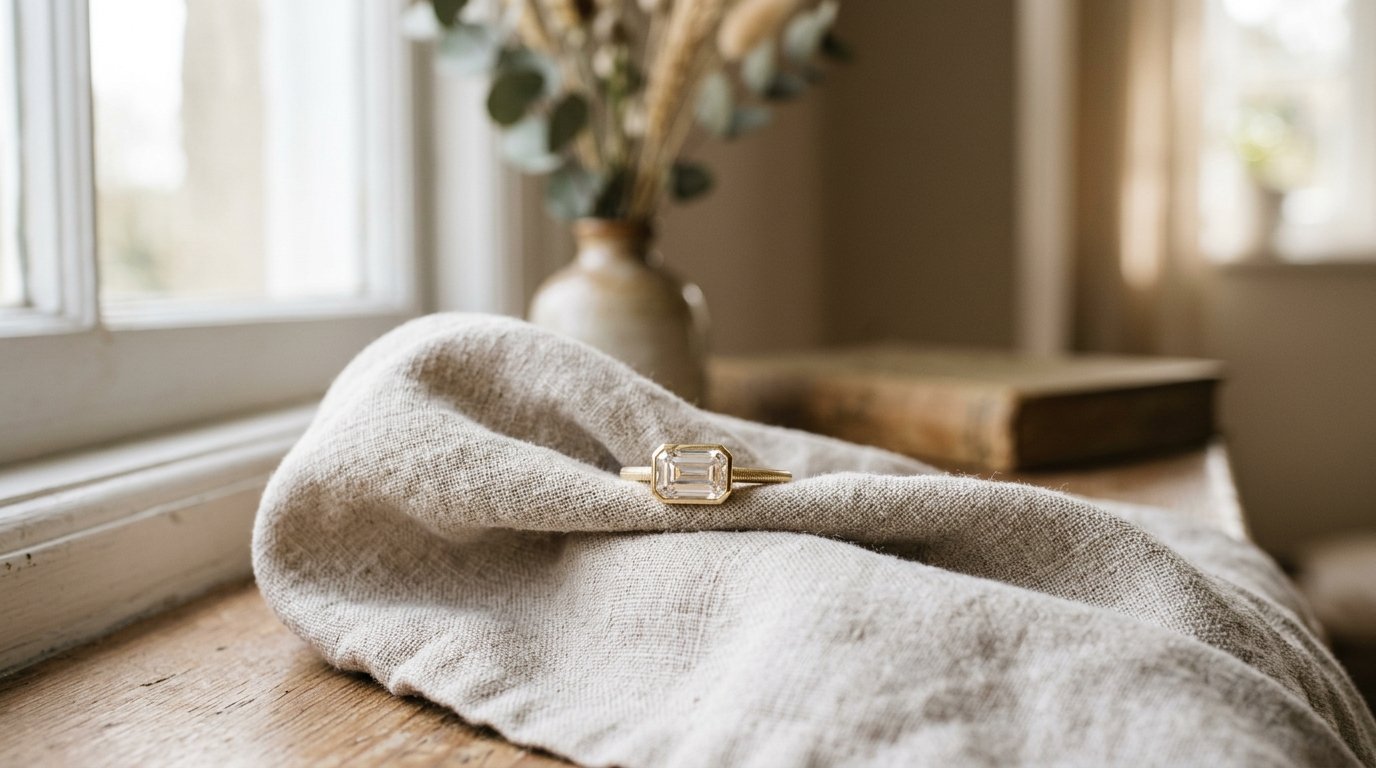
In a conventional north-south engagement ring, the stone is mounted with its longest axis perpendicular to the finger — pointing up toward the knuckle. In an east-west setting, the stone is rotated 90 degrees so its longest axis runs parallel to the finger, pointing left and right (east and west).
The visible effect is significant. An east-west oval appears to stretch across the width of the hand rather than elongating the finger vertically. On some hand shapes — shorter fingers or wider hands — this creates a striking horizontal accent rather than a narrowing vertical line.
The technical challenge: east-west settings require the prongs or bezel to secure the stone at its sides rather than at its top and bottom. For elongated stones with pointed ends (marquise, pear), the setting must protect those vulnerable tips while maintaining the horizontal orientation. This is why east-west settings typically cost slightly more — the metalwork is more complex and less standardised than a traditional solitaire mount.
The 5 best stone shapes for east-west settings
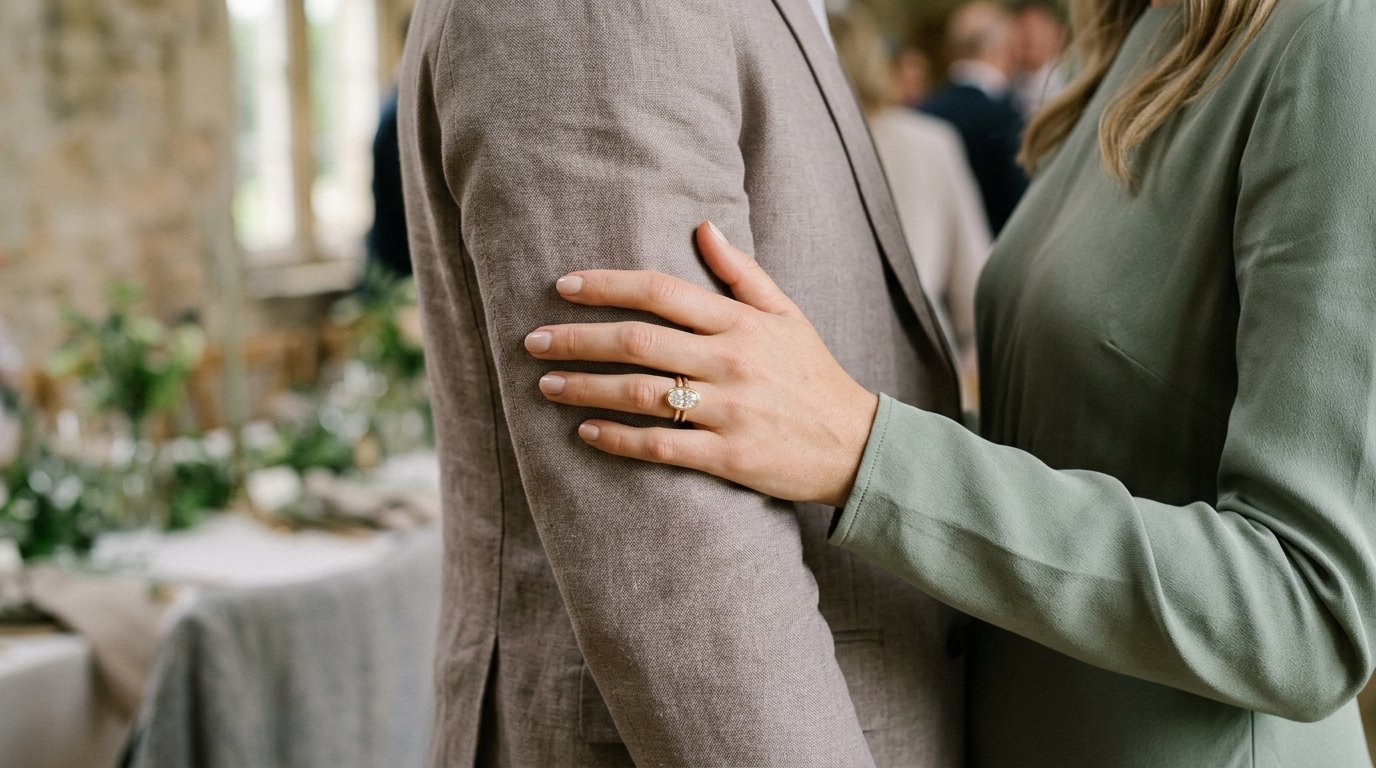
Oval. The most popular east-west stone and the shape Zendaya’s ring showcases. An east-west oval creates a strong horizontal statement across the hand. It also disguises the finger-narrowing elongation that a vertical oval can produce on shorter fingers — some wearers prefer the horizontal look precisely because it avoids this effect. A 1.5ct east-west oval in a sleek four-claw setting is the contemporary classic.
Marquise. The most dramatic east-west choice. A marquise’s pointed ends, running east and west, create a graphic, geometric silhouette. It reads as bold and fashion-forward. Best secured with a bezel or V-tip prong that protects the points from chipping.
Elongated cushion. A softer, more vintage-leaning option. The slightly rectangular cushion cushion reads less aggressively than a marquise in the horizontal orientation. Suits white gold or platinum for a modern look; yellow gold for a warmer, antique feel.
Pear. A pear set east-west — tip pointing inward toward the palm — creates an unusual, asymmetric shape that reads as genuinely unexpected. It is the least conventional of the east-west options and suits buyers who want something distinctive rather than trend-adjacent.
Emerald cut. The rectangular emerald cut in an east-west setting emphasises the stone’s linear quality. It works best with a bezel setting that keeps clean lines. Less suited to pavé shoulders because the geometric nature of the cut asks for simpler metalwork.
Shapes that do not work east-west: Round brilliants, princess cuts, and asscher cuts. Their symmetry means the east-west rotation creates no visible difference. The orientation is lost.
14 UK jewellers who make east-west rings
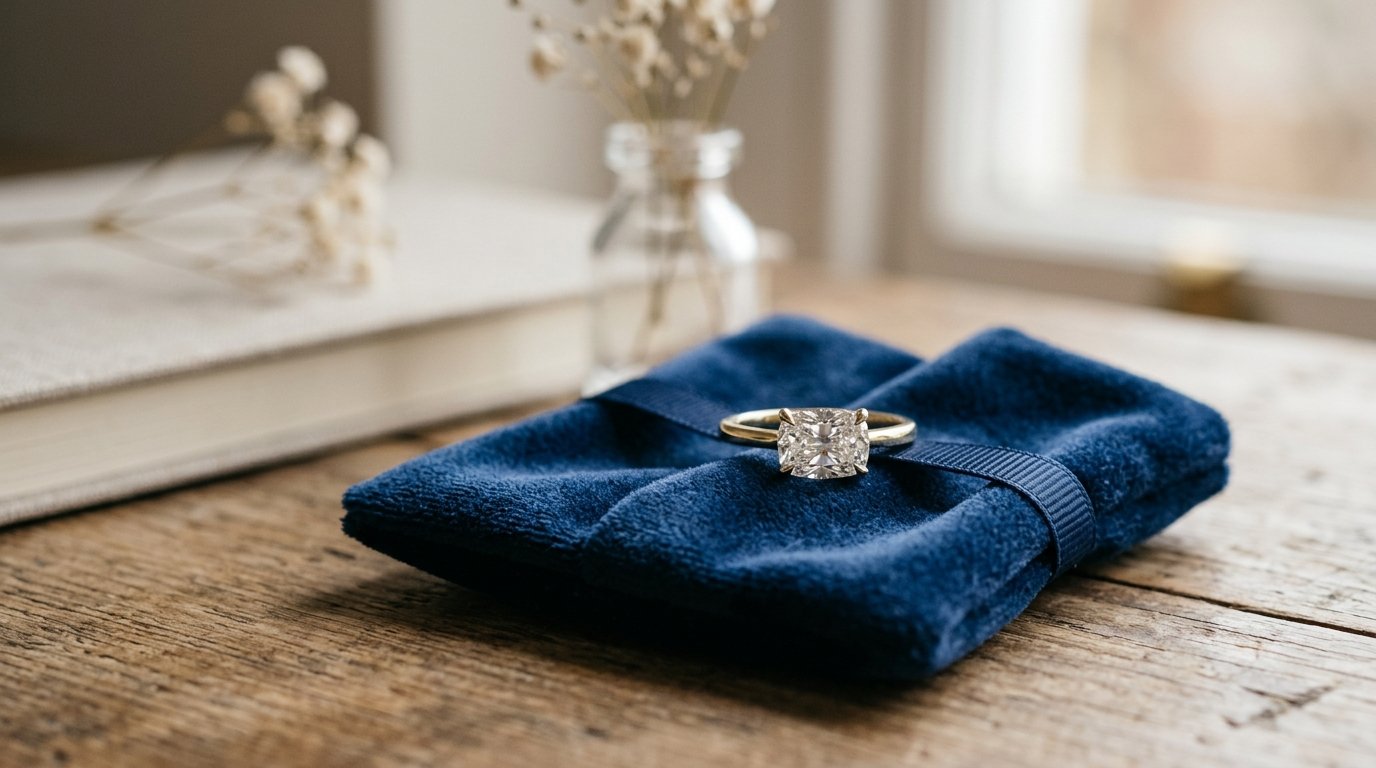
Weddings Hub contacted 22 UK jewellers in May 2026 and asked about east-west setting availability, pricing, and lead times. Here are the 14 who currently offer the setting:
Off-the-shelf designs (available to order without a long bespoke process):
-
Rox Diamonds & Thrills (Edinburgh, London). Three east-west styles in their ready-to-wear collection. Oval and marquise options. Prices from £1,800. Online and in-store ordering.
-
77 Diamonds (online). Design-your-own tool allows east-west orientation as a setting option for oval and marquise stones. Prices from £1,400. Fast turnaround of 3-4 weeks.
-
F. Hinds (national chain). Limited east-west styles in high-street range. Oval east-west solitaires from £1,200. Good option for a lower budget with a reputable UK name.
-
Purely Diamonds (online). East-west settings available in their customiser tool. Strong selection of oval and elongated cushion options. Prices from £1,500.
-
Hatton Garden Metals (Hatton Garden, London). Pre-designed east-west collection alongside bespoke. Walk-in consultations available Monday to Friday.
-
Holts Jewellers (London). East-west designs in their own collection and access to Hatton Garden manufacturer network. Prices from £2,200.
Bespoke only (design-from-scratch with a jeweller):
-
Queensmith (London, Hatton Garden). Highly rated bespoke specialist. East-west commissions are common — their designers are familiar with the orientation and its structural requirements. Lead time: 6-8 weeks. Prices from £2,500.
-
Taylor & Hart (online + London showroom). Strong online bespoke process with 3D CAD renders before production. East-west oval and marquise their two most-requested bespoke styles. Lead time: 8 weeks. Prices from £2,000.
-
Stephen Einhorn (London, Stoke Newington). Independent jeweller with strong design credentials. East-west bespoke with signature aesthetic. Lead time: 10-12 weeks. Prices from £3,500.
-
Loye (Edinburgh). Scottish bespoke jeweller with a following among style-conscious buyers. East-west orientations handled confidently. Lead time: 8-10 weeks.
-
Burrells Fine Jewellery (Bristol). South-west England’s most recommended independent jeweller. East-west bespoke a specialism. Lead time: 6-8 weeks. Prices from £2,000.
-
Harriet Kelsall Bespoke Jewellery (Cambridge, London). Award-winning bespoke jeweller. Strong sustainability credentials with Fairtrade gold and traceable stone options. Lead time: 8-10 weeks.
-
Emma Franklin (Manchester). Manchester’s most-reviewed independent bespoke jeweller for 2026. East-west a growing proportion of commissions. Lead time: 6-8 weeks. Prices from £1,800.
-
David Christopher (Bournemouth). South-coast bespoke specialist. Less well-known nationally but consistently excellent reviews. Lead time: 8 weeks. Prices from £2,000.
What the setting premium actually is
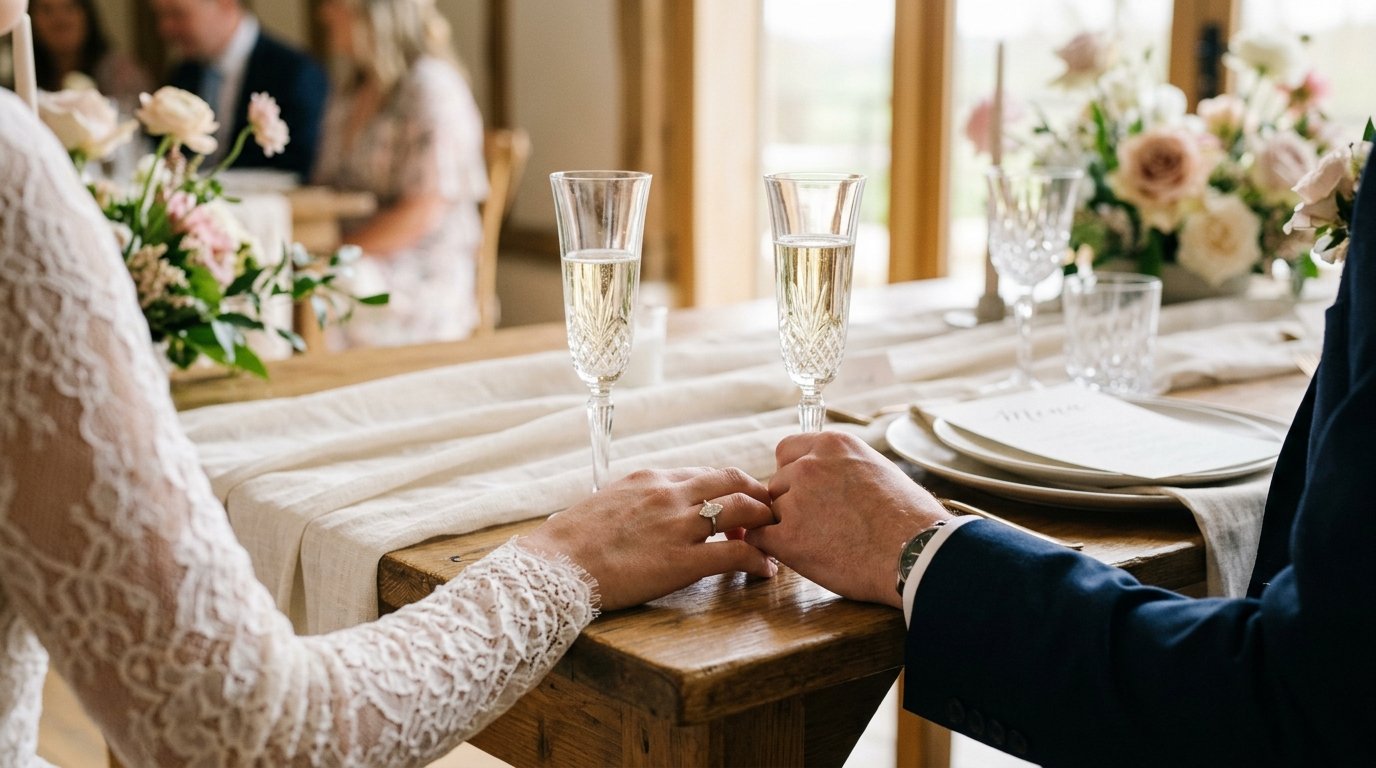
Weddings Hub asked 14 of the jewellers above to quote for: a 1.5ct oval diamond (E colour, VS2 clarity, lab-grown), in a four-claw north-south setting, and again in an east-west setting. The same stone, two settings.
Average north-south four-claw price: £3,850. Average east-west equivalent: £4,210. Average setting premium: £360 (9.4%).
The premium was lower at off-the-shelf retailers (£200-£300) and higher at bespoke specialists (£400-£600) because bespoke east-west work involves more design consultation time.
For couples who want east-west without paying the full bespoke premium, the off-the-shelf options at 77 Diamonds and Rox offer the orientation at standard pricing.
A note on day-to-day wearability
East-west rings wear slightly differently from north-south equivalents. The horizontal stone is slightly more likely to catch on fabric at the sides — because the stone’s profile extends laterally across the hand rather than upward. This is a minor practical consideration for rings worn daily.
The risk is higher with prong settings than bezel settings. If wearability is a priority (active lifestyle, hands-on work, gym use), a bezel-set east-west ring is more practical. The bezel’s metal rim eliminates most catching risk entirely.
Ask your jeweller to discuss setting security for your specific stone shape and lifestyle. A well-made east-west ring is durable; a poorly made one with inadequate prong protection is not.
Related reading
- Lab-Grown Engagement Rings: Why 61% of New Rings Use Them
- Coloured-Gemstone Engagement Rings: Sales Up 55% in 2026
- Engagement Ring Guide: Styles, Settings & Costs
- Taylor Swift’s Engagement Ring: Cost, Designer & UK Lookalikes
- Men’s Wedding Jewellery: Necklaces, Layered Chains & Rings
Frequently Asked Questions
What is an east-west engagement ring?
An east-west engagement ring positions the centre stone horizontally, so its longest axis runs across the finger from side to side rather than pointing up toward the knuckle. The setting rotates the traditional north-south orientation by 90 degrees. It is particularly striking on elongated stones — ovals, marquises, pear shapes, and emerald cuts.
Why is the east-west setting trending in 2026?
Zendaya's engagement ring from Tom Holland features an oval diamond in an east-west setting. Following extensive media coverage in late 2025, UK searches for east-west rings increased 340% year-on-year. The setting also appears on several other high-profile celebrity rings in 2025-2026, creating cumulative search demand.
Which stone shapes work best in an east-west setting?
Elongated stones work best because the horizontal orientation emphasises their length across the hand. The most popular choices are: oval (most common), marquise (dramatic pointed ends create a bold silhouette), elongated cushion, pear shape (stone tip pointing inward), and emerald cut. Round brilliants and asscher cuts are less dramatic in east-west settings because their symmetry hides the orientation.
How much does an east-west engagement ring cost in the UK?
East-west settings in the UK range from £1,200 for a simple bezel-set oval to £8,000+ for a pavé-shouldered bespoke setting with a premium stone. The setting itself typically adds £200-£500 to an equivalent north-south ring due to the custom metalwork required to hold the stone securely in a lateral orientation. Stone cost is separate and varies by size, cut, and quality.
Are east-west settings secure? Will the stone stay in place?
Yes, when set by a skilled jeweller. East-west settings use bar settings, bezel settings, or double-claw prongs to hold the stone securely in a horizontal position. Bezel settings (a metal rim around the stone perimeter) are the most secure. Prong settings need careful placement to hold the stone at both ends without catching on fabric. Ask your jeweller specifically about setting security for your chosen stone shape.
Which UK jewellers make east-west engagement rings?
UK jewellers offering east-west settings in 2026 include: Queensmith (London, bespoke), Rox (Scottish, off-the-shelf and bespoke), Taylor & Hart (online, bespoke), 77 Diamonds (online, design-it-yourself), Stephen Einhorn (London, bespoke), Loye (Edinburgh, bespoke), and Burrells (Bristol, bespoke). Prices and lead times vary. Most bespoke work requires 6-10 weeks.
Can I convert an existing ring to an east-west setting?
Sometimes. If you have an existing stone and want to reset it east-west, most UK jewellers can do this if the stone shape is suitable. An oval or marquise can typically be reset east-west. A round brilliant is less obvious in the orientation change. Resetting costs £300-£800 depending on the complexity of the new setting. Bring the stone to a jeweller for an assessment before committing.