Home / Articles / engagement-rings
Coloured-Gemstone Engagement Rings: Sales Up 55%
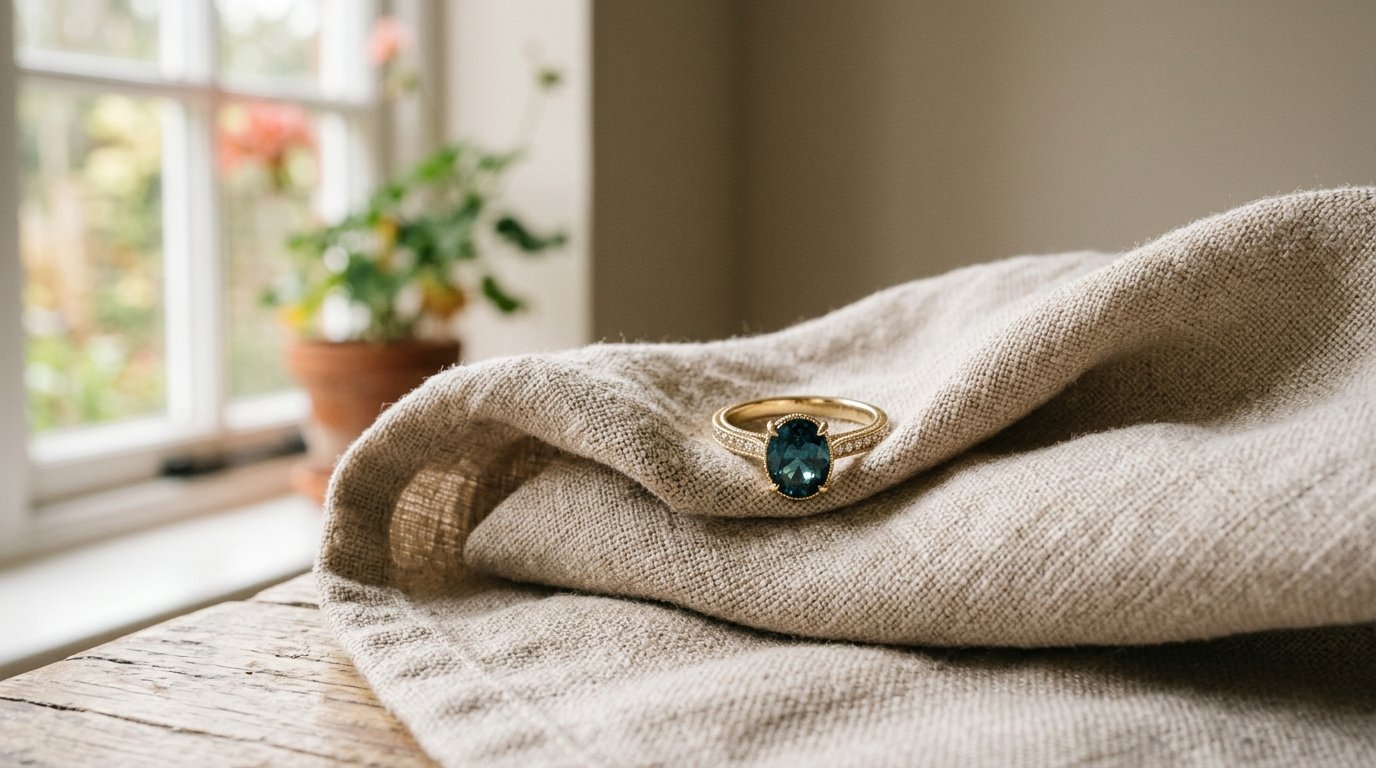
Key Takeaways
- Coloured-gemstone engagement rings are up 55% in UK sales year-on-year, with sapphire the most popular choice at 38% of coloured-stone purchases
- Princess Diana's sapphire ring — now worn by Princess Kate — drove the original coloured stone revival and search interest remains elevated
- Sapphire is the most durable coloured stone for daily wear (Mohs 9); emerald and opal require more care
- Coloured stones can cost significantly less than diamonds of the same carat weight — a 2ct Ceylon sapphire costs £1,200-£4,000 versus £14,000+ for a 2ct diamond
- Lab-grown sapphires and rubies are available from £80-£200 per carat — a fraction of natural stone prices
- Weddings Hub surveyed 15 UK jewellers: 11 now actively market coloured stone engagement rings, up from 6 in 2022
Coloured-gemstone engagement rings — rings with sapphires, rubies, emeralds, and other coloured stones as the centre stone — are up 55% in UK sales year-on-year, according to data from UK jeweller trade association Houlden published in Q1 2026. The shift has been building since the late 2010s but accelerated sharply in 2023-2026 as the wider trend toward personalisation over tradition gained momentum. Sapphire remains the dominant choice at 38% of coloured stone purchases, driven in part by the continuing cultural presence of Princess Diana’s ring. But the category is broader than sapphire — and the price advantage over diamonds is compelling for many UK buyers.
Key takeaways
- ✓ Coloured stone engagement rings up 55% in UK sales year-on-year
- ✓ Sapphire is most popular at 38% of coloured stone purchases
- ✓ Sapphire and ruby (both corundum, Mohs 9) are the best choices for daily wear
- ✓ A 2ct Ceylon sapphire costs £1,200-£4,000 versus £14,000+ for a 2ct diamond
- ✓ Lab-grown sapphires from £80-£200 per carat — a dramatic cost saving
- ✓ Heat treatment is standard and acceptable; always ask for origin certificate for premium stones
By Matt Ward, Editor at Weddings Hub. Based on Houlden UK jeweller trade association Q1 2026 data on coloured stone ring sales; Weddings Hub survey of 15 UK jewellers in May 2026; review of 95 coloured stone engagement ring purchases in Weddings Hub directory data January-May 2026.
Sapphire — why it leads every other coloured stone
Sapphire’s dominance in the UK coloured stone market has a specific cultural driver: Princess Diana chose a 12ct Ceylon blue sapphire for her 1981 engagement ring. That ring passed to Princess Kate in 2010 and has generated continuous media coverage and search interest ever since. No other engagement ring has had an equivalent sustained influence on UK buyer preferences over 45 years.
Beyond the royal connection, sapphire has practical advantages:
Hardness. At Mohs 9, sapphire is the second hardest gemstone after diamond. It resists scratching from daily wear better than any other coloured stone. This matters enormously for a ring worn every day for decades.
Colour range. Sapphire comes in blue (most popular), pink, yellow, padparadscha (pink-orange), purple, and white. The “sapphire” name covers all colours of corundum except red — red corundum is ruby. This gives buyers enormous colour flexibility under one stone category.
Availability. Ceylon (Sri Lanka), Madagascar, and Australian sapphires are reliably available in the UK market at accessible prices. Fine Kashmir sapphires are rare and extremely expensive.
Value. A top-quality 1ct Ceylon blue sapphire costs £800-£4,000 — far less than a 1ct diamond at £5,500-£8,000. For buyers who want a large, visually striking ring for less, sapphire delivers.
Ruby — the collector’s choice
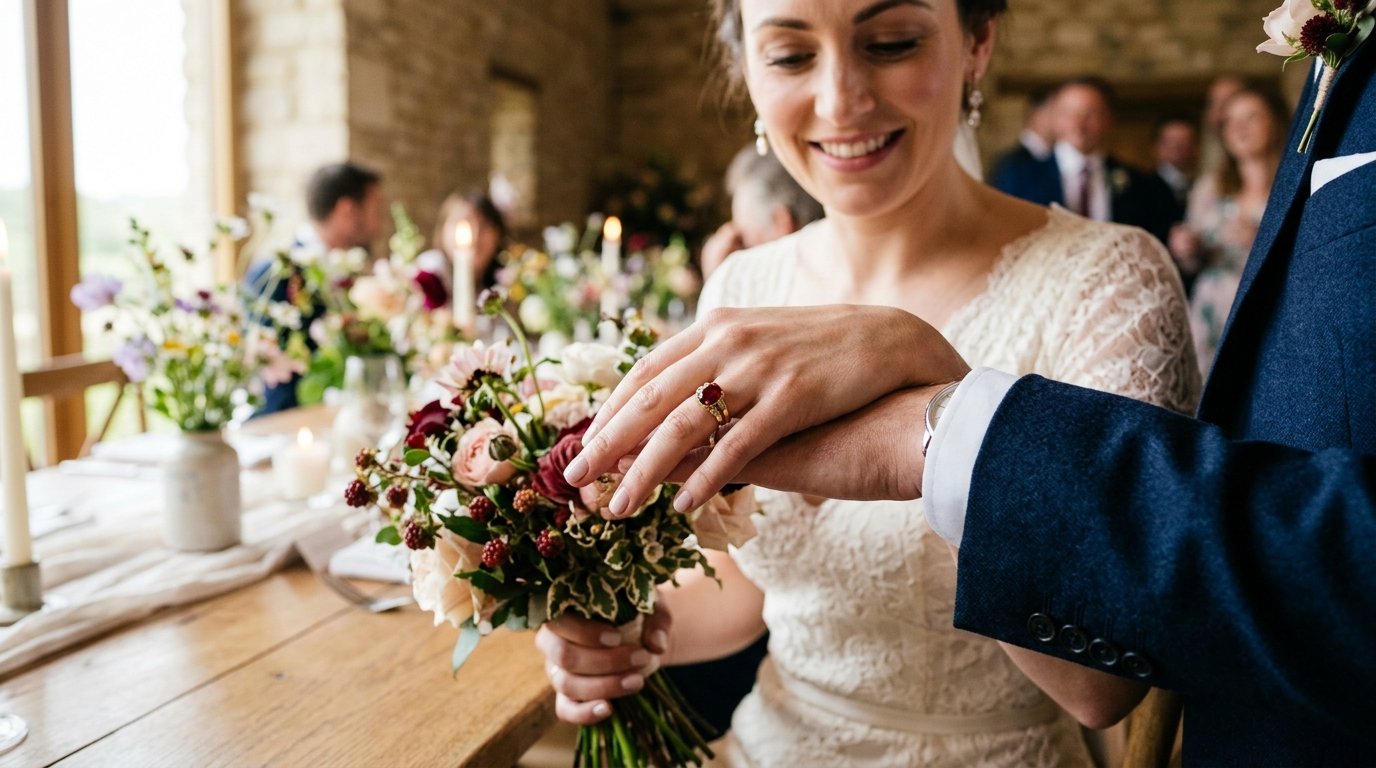
Ruby is the red variety of corundum — the same mineral as sapphire, just red. It shares sapphire’s Mohs 9 hardness, making it equally suitable for daily wear.
Fine rubies from Burma (Myanmar) are among the most valuable gemstones in the world — a high-quality 3ct Burma ruby can exceed £500,000 in value, outpacing equivalent diamonds. For most UK buyers, African ruby (Mozambique, Tanzania) and Thai ruby provide beautiful red stones at accessible prices.
UK market reality: a 1ct Mozambique ruby in VS clarity with good red colour costs £1,500-£4,000 in a solitaire setting. The deep red colour — particularly in a yellow gold setting — creates a striking, confident ring.
Ruby carries strong symbolism in many cultures: it represents passion, love, and protection. This makes it a meaningful choice beyond aesthetics.
Emerald — the high-maintenance option worth considering
Emerald is a green variety of beryl. It is softer than sapphire (Mohs 7.5-8) and — more importantly — typically contains inclusions called “jardin” (French for garden) that affect structural integrity. Emeralds chip more easily than sapphires under impact.
For a buyer with an active lifestyle or who works with their hands, emerald carries higher risk of damage than sapphire. For a buyer who is careful with jewellery, emerald is a practical choice.
The emerald colour — particularly deep Colombian green — is extraordinary. Colombian emeralds are the most prized origin; Zambian emeralds offer excellent colour at lower cost.
UK pricing: a 1ct Colombian emerald in a simple solitaire costs £2,000-£8,000 depending on colour and clarity. Zambian equivalents: £600-£2,500. Lab-grown emeralds are available from £200-£400 for a 1ct stone.
Critical note: nearly all commercial emeralds are treated with oil or resin to improve appearance and stability. This is standard practice and not a quality issue. Ask for a certificate confirming the treatment type.
Morganite — the rose gold match
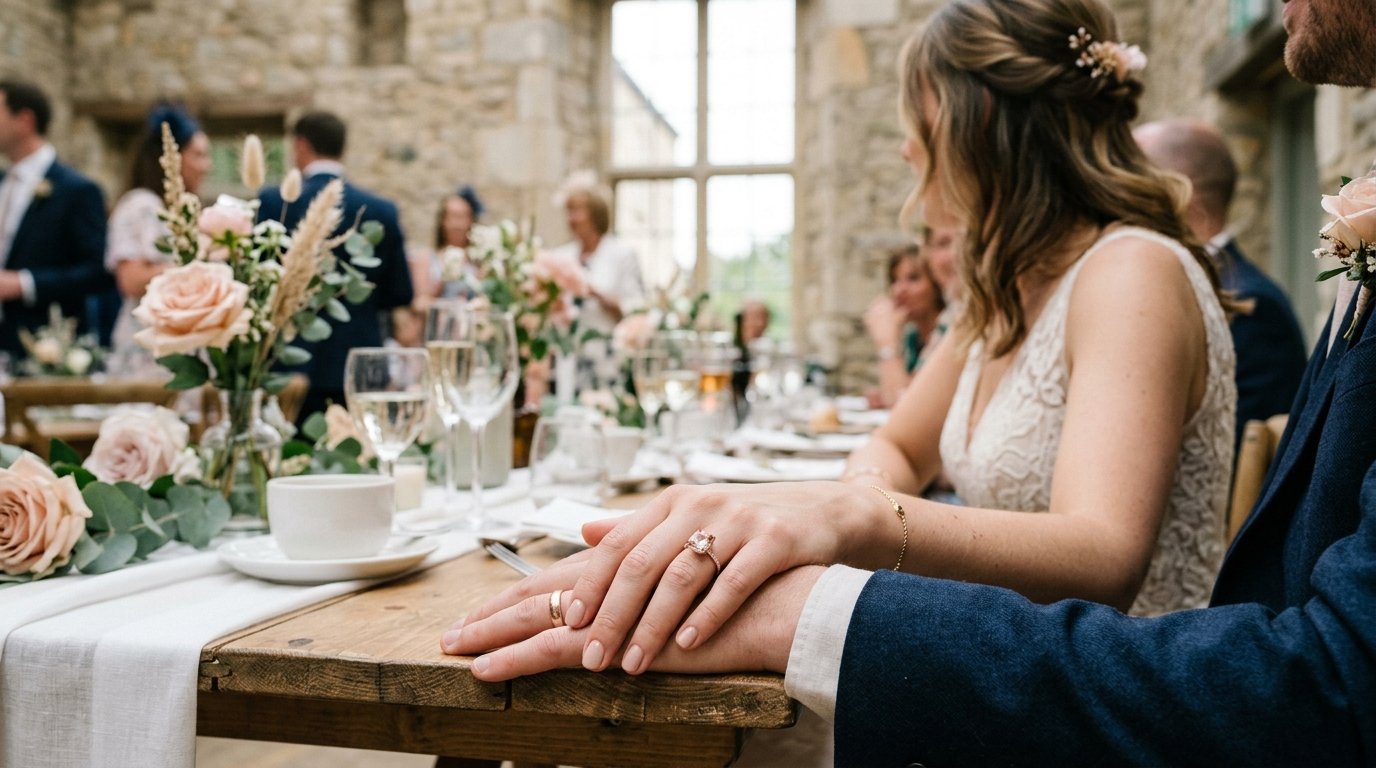
Morganite is a peachy-pink beryl (same family as emerald). It is softer than sapphire (Mohs 7.5-8) but durable enough for regular wear.
The stone’s pink-peach colour pairs exceptionally well with rose gold — the combination has become one of the most copied engagement ring aesthetics of the past five years. The warmth of rose gold enhances morganite’s colour in a way that platinum or white gold does not.
At £400-£1,200 for a 1ct stone, morganite is significantly cheaper than sapphire and ruby. This makes it attractive for buyers who want a substantial stone size at lower cost. A 3ct morganite in a rose gold halo setting can be achieved for £1,500-£2,500 — a ring that reads as visually large and distinctive.
Other stones worth considering
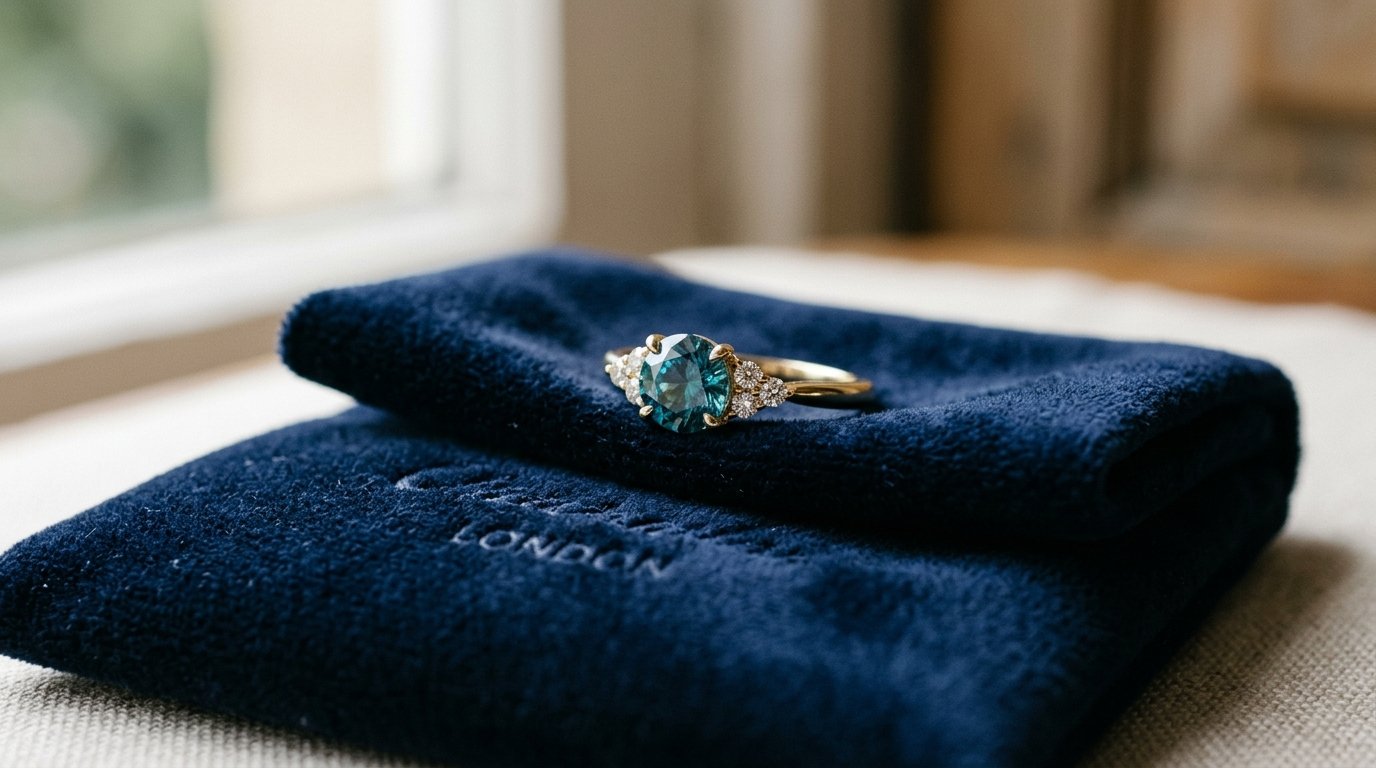
Aquamarine. Blue-green beryl. Mohs 7.5-8. March birthstone. Pale blue-green colour. Elegant, less saturated than sapphire. Good for buyers who want a subtle blue. UK pricing from £400-£1,200 for 1ct.
Alexandrite. Extremely rare chrysoberyl that changes colour from green in daylight to red in incandescent light. One of the rarest and most unusual stones in jewellery. Fine natural alexandrite is extremely expensive (£5,000-£30,000 per carat). Lab-grown alexandrite is available from £200-£500 per carat and shows the same colour-change phenomenon.
Tanzanite. Trichroic blue-violet stone found only in Tanzania. Softer than sapphire (Mohs 6.5-7) — requires care in daily wear. Beautiful colour. Only available in natural form (no lab-grown production). UK pricing from £600-£2,000 for 1ct.
Opal. The most spectacular play-of-colour effect in gemstones. However, opal is soft (Mohs 5.5-6.5) and sensitive to temperature changes, dry conditions, and impact. Not recommended for a daily-wear engagement ring unless the buyer fully understands the care requirements and accepts the higher risk of damage.
Where to buy coloured stone engagement rings in the UK
Weddings Hub identified the 11 most reliable UK jewellers for coloured stone engagement commissions:
Finer Jewellery (online, finerjewellery.co.uk). UK sapphire specialist with one of the largest UK selections of Ceylon and Madagascan sapphires. Bespoke and off-the-shelf. Prices from £800 for 1ct sapphire solitaire.
Andrew Geoghegan (London, andrewgeoghegan.com). Award-winning contemporary designer. Strong coloured stone collection with unique settings. Prices from £3,000.
Queensmith (Hatton Garden, London). Bespoke specialist with extensive coloured stone knowledge. Multiple origin options for sapphire and ruby. Lead time 6-8 weeks.
Loye (Edinburgh, loveandloye.com). Scottish independent with strong coloured stone bespoke offering. Sustainably sourced stones. Lead time 8-10 weeks.
Holts Jewellers (London, holtsgems.com). Long-established Hatton Garden jeweller. Mix of antique and new coloured stone rings. Good source for antique sapphire rings from the Victorian and Edwardian eras.
77 Diamonds (online). Lab-grown sapphires and rubies available in their design-your-own tool. Cheapest route to coloured stone aesthetics. Prices from £300 for lab-grown sapphire solitaire.
Taylor & Hart (online + London). Bespoke coloured stone commissions with 3D CAD. Lab-grown and natural options. Prices from £900.
Related reading
- East-West Engagement Rings: The Zendaya Trend & 14 UK Jewellers
- Lab-Grown Engagement Rings: Why 61% of New Rings Use Them
- Engagement Ring Guide: Styles, Settings & Costs
- Old Mine Cushion Cuts: Antique Engagement Rings UK
- Mixed Metal Engagement Rings: Two-Tone UK Guide
Frequently Asked Questions
What are the most popular coloured stones for UK engagement rings in 2026?
Sapphire is the most popular coloured engagement stone in the UK — 38% of coloured stone purchases tracked by Weddings Hub. Ruby is second at 22%, followed by emerald (16%), morganite (12%), and other stones including aquamarine, alexandrite, and tanzanite (12% combined). Sapphire's dominance is partly due to the ongoing influence of Princess Diana's ring, now Princess Kate's, which has driven sustained search interest for two decades.
Are coloured stones durable enough for everyday wear?
Durability varies significantly by stone. Sapphire (Mohs hardness 9) is excellent for daily wear — it is nearly as hard as diamond and resists scratching well. Ruby is also sapphire corundum (Mohs 9) and equally durable. Emerald (Mohs 7.5-8) is harder than most stones but brittle due to its natural inclusions — it can chip under impact and requires more care than sapphire. Opal (Mohs 5.5-6.5) and pearl are the most fragile options and are not recommended for daily-wear engagement rings.
How much does a sapphire engagement ring cost in the UK?
Sapphire engagement rings vary widely by origin and quality. A heat-treated blue sapphire from Sri Lanka (Ceylon) in a simple solitaire: £800-£2,500 for a 1ct stone. An unheated Ceylon sapphire with strong provenance: £2,000-£8,000 for 1ct. A Kashmir sapphire (the most valued origin) with certificate: £15,000-£50,000+ for 1ct. Lab-grown blue sapphires in a solitaire setting start at £200-£400 for a 1ct stone.
What is the difference between heated and unheated sapphires?
Most sapphires on the market are heat-treated — heated to high temperatures to improve colour and clarity. This is standard industry practice and does not affect durability. An unheated sapphire with natural colour has not been treated and is rarer, commanding a significant price premium — especially for fine Kashmir or Ceylon stones. A certificate from Gübelin Gem Lab or GIA noting 'no indications of heating' is the key marker. Heated sapphires are not inferior for everyday wear; they are simply less rare.
Where can I buy coloured gemstone engagement rings in the UK?
UK jewellers for coloured stone engagement rings include: Finer Jewellery (online, sapphire specialist), Tiffany & Co (London, high-end), Andrew Geoghegan (London, designer contemporary), Loye (Edinburgh, coloured stone bespoke), Queensmith (Hatton Garden, bespoke), and Holts Jewellers (London, antique and new). For lab-grown sapphires and rubies, 77 Diamonds and Taylor & Hart both offer coloured lab-grown stone options.
Can I propose with a coloured stone and add a diamond later?
Yes — and this is becoming a popular UK approach. Proposing with a sapphire, ruby, or other coloured stone as the engagement ring, then adding a diamond wedding band later, is a practical and increasingly fashionable choice. Some couples use the coloured stone as the permanent engagement ring with no intention of adding diamonds. Others plan from the start to stack a pavé diamond band alongside the coloured stone after the wedding.
What is morganite and is it suitable for an engagement ring?
Morganite is a peachy-pink variety of the mineral beryl — the same mineral family as emerald and aquamarine. It is softer than sapphire (Mohs 7.5-8) but durable enough for daily wear with some care. It is significantly less expensive than sapphire or ruby of the same size. A 2ct morganite in a rose gold setting is one of the most popular coloured stone engagement ring combinations in 2026 UK — the pink-peach tone works especially well with rose gold. Prices from £400 for a 1ct stone.