Home / Articles / engagement-rings
Mixed Metal Engagement Rings: Two-Tone UK Guide
Key Takeaways
- Mixed metal engagement rings combine two different metals — most commonly yellow gold and platinum or white gold — in one setting
- UK searches for 'two-tone engagement ring' are up 210% year-on-year as yellow gold's revival meets white metal's durability
- The most popular combination in 2026: yellow gold band with platinum prongs or head holding the centre stone
- Two-tone rings require more maintenance — the two metals wear at different rates over time
- Prices are comparable to single-metal rings: £1,500-£6,000 for a two-tone solitaire depending on stone choice
- Weddings Hub surveyed 14 UK jewellers: 9 of 14 now offer two-tone as a standard option, up from 4 of 14 in 2023
Mixed metal engagement rings — settings that combine two different precious metals, most often yellow gold and platinum — have surged in UK popularity as buyers try to reconcile the yellow gold revival with the durability benefits of white metals. UK searches for “two-tone engagement ring” rose 210% year-on-year between May 2025 and May 2026, according to search trend data tracked by Weddings Hub. Among the 14 UK jewellers surveyed by Weddings Hub in May 2026, nine now offer two-tone settings as a standard option — up from four in 2023. Here is how two-tone engagement rings work, which combinations are most popular, and where to buy them in the UK.
Key takeaways
- ✓ Two-tone rings pair two metals — most commonly yellow gold band + platinum head
- ✓ UK searches for two-tone engagement rings up 210% year-on-year
- ✓ 9 of 14 UK jewellers surveyed now offer two-tone as standard (up from 4 in 2023)
- ✓ Yellow gold + platinum is most popular: warm aesthetic, maximum stone durability
- ✓ Costs £200-£400 more than equivalent single-metal ring
- ✓ Needs annual professional check — two metals wear at different rates
By Matt Ward, Editor at Weddings Hub. Based on Weddings Hub survey of 14 UK jewellers in May 2026 on two-tone setting availability, pricing, and construction methods; UK search trend data May 2025 vs May 2026; review of UK jeweller social media and customer data on two-tone ring preferences in 2025-2026.
Why two-tone rings are the logical product of 2026 trends
The two-tone ring trend is not arbitrary. It is the direct product of two competing forces that came into alignment in 2025-2026.
Force one: yellow gold’s comeback. Yellow gold has gone from 28% to 47% of UK engagement ring metal choices between 2021 and 2026, according to Houlden trade data. It is now the dominant aesthetic preference for UK buyers across all age groups.
Force two: practical attachment to white metal settings. Many buyers who love yellow gold also know that diamonds appear whiter and brighter against platinum or white gold. They do not want a yellow gold prong making a D-colour diamond look warmer than it is. They also appreciate platinum’s durability for the critical stone-holding components.
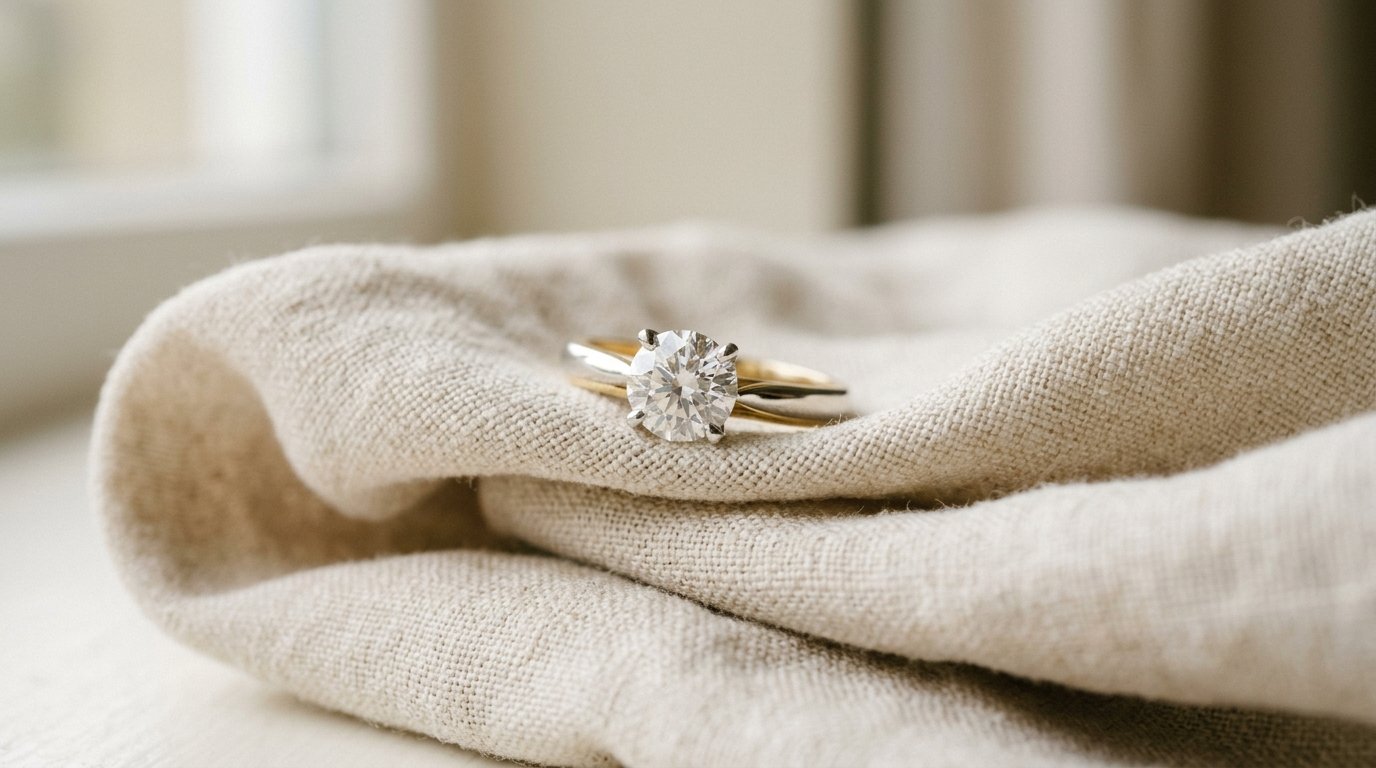
Two-tone rings solve this problem directly. Yellow gold for the band — the visible aesthetic majority of the ring. Platinum or white gold for the head or prongs — the practical setting that holds the stone. The buyer gets both.
The broader cultural context also matters. Mixing metals was considered a style mistake in UK jewellery culture as recently as the early 2010s — matching metals was the rule. That convention has collapsed. Stacking rings in mixed metals, wearing different coloured gold on different fingers, and pairing metals deliberately across a hand is now standard practice. Two-tone engagement rings fit naturally into this aesthetic shift.
The four main two-tone configurations
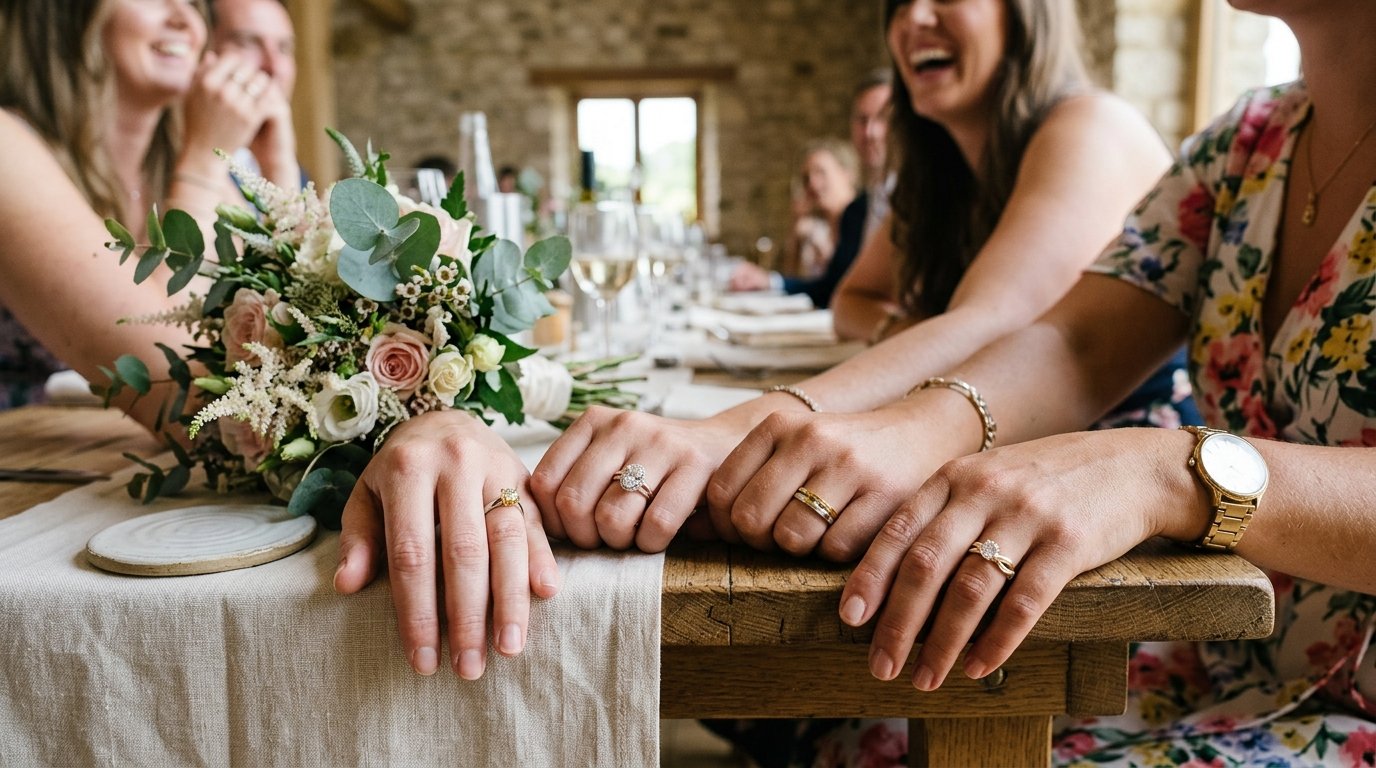
Yellow gold band + platinum head. The most popular configuration in 2026. The band is yellow gold (typically 18ct); the head — the part above the band that holds the centre stone — is platinum. This creates a clean visual separation: warm below, bright white above. The platinum head makes the diamond appear whiter and is highly durable. Best for buyers who love yellow gold aesthetically but want the best possible setting for their stone.
Yellow gold band + white gold head. Visually almost identical to yellow gold + platinum, but using 18ct white gold instead of platinum for the head. Less durable than platinum (white gold is typically rhodium-plated and the plating wears over time), but more affordable — white gold costs less than platinum. A good choice for buyers who want the look at a lower budget. Replating required every 2-3 years.
Yellow gold and rose gold. Two-tone with warmth in both metals. Less contrast than yellow gold + white metal combinations. Popular for a softer, romantic aesthetic. Rose gold provides pinkish warmth; yellow gold provides the classic warm tone. Good for vintage or floral settings.
Platinum and rose gold. The least common but most distinctive combination. Rose gold prongs against a platinum band (or vice versa) creates an unexpected, fashion-forward contrast. Seen increasingly in London independent jewellers. Best for buyers who want something that will not be widely replicated.
What the construction actually looks like
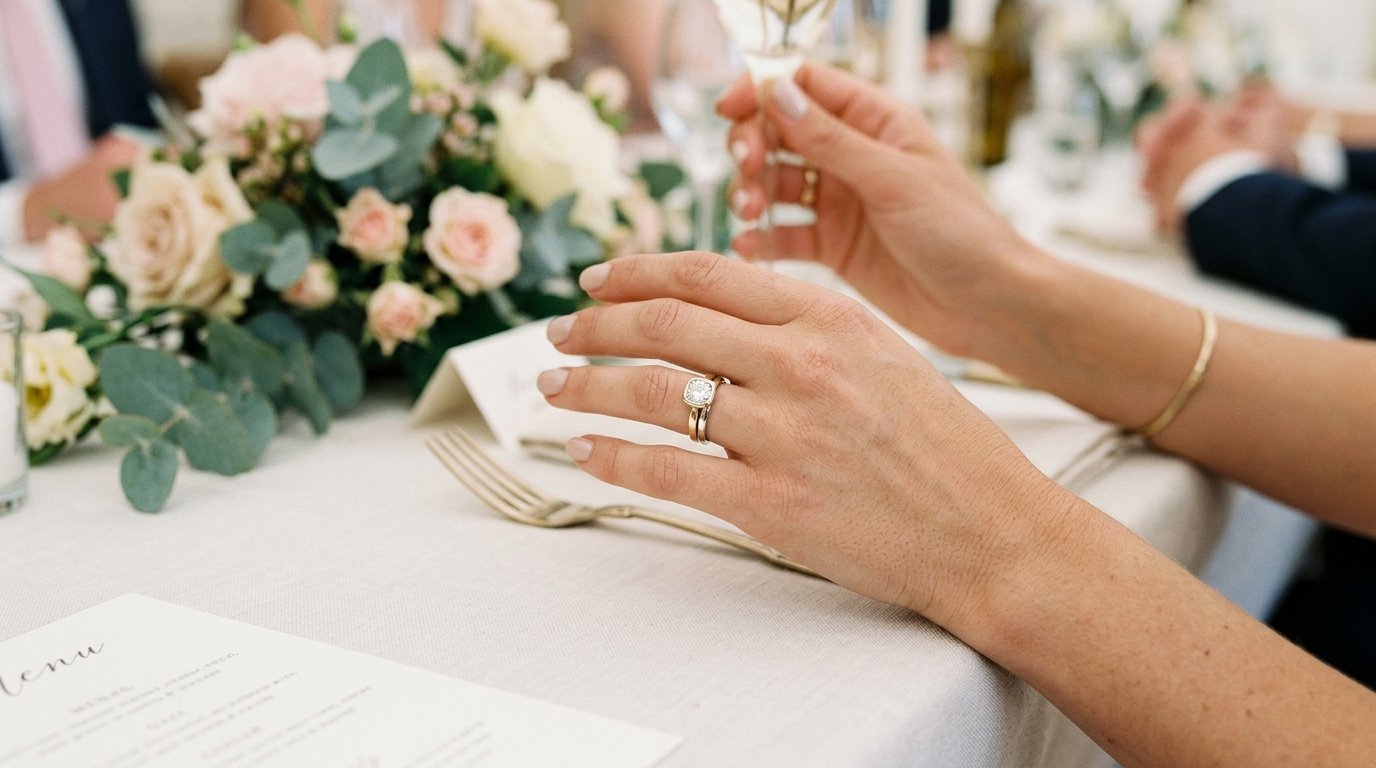
Two-tone rings are not simply plated. They are made in two distinct metal sections that are soldered together.
The join between the two metals is the most critical construction point. A well-made two-tone ring will have a clean, invisible join. A poorly made one will have a visible seam or — worse — a weak point that can separate under stress.
When evaluating a two-tone ring, look at the join point from multiple angles. It should be seamless. Ask the jeweller about the construction method: the two sections should be made separately in the respective metals and then professionally fused, not soldered with a different metal as filler.
For bespoke two-tone rings, a good jeweller will show you a CAD render of the ring before production. The render should clearly show how the two metals meet and where the join point is.
What two metals do differently on your hand
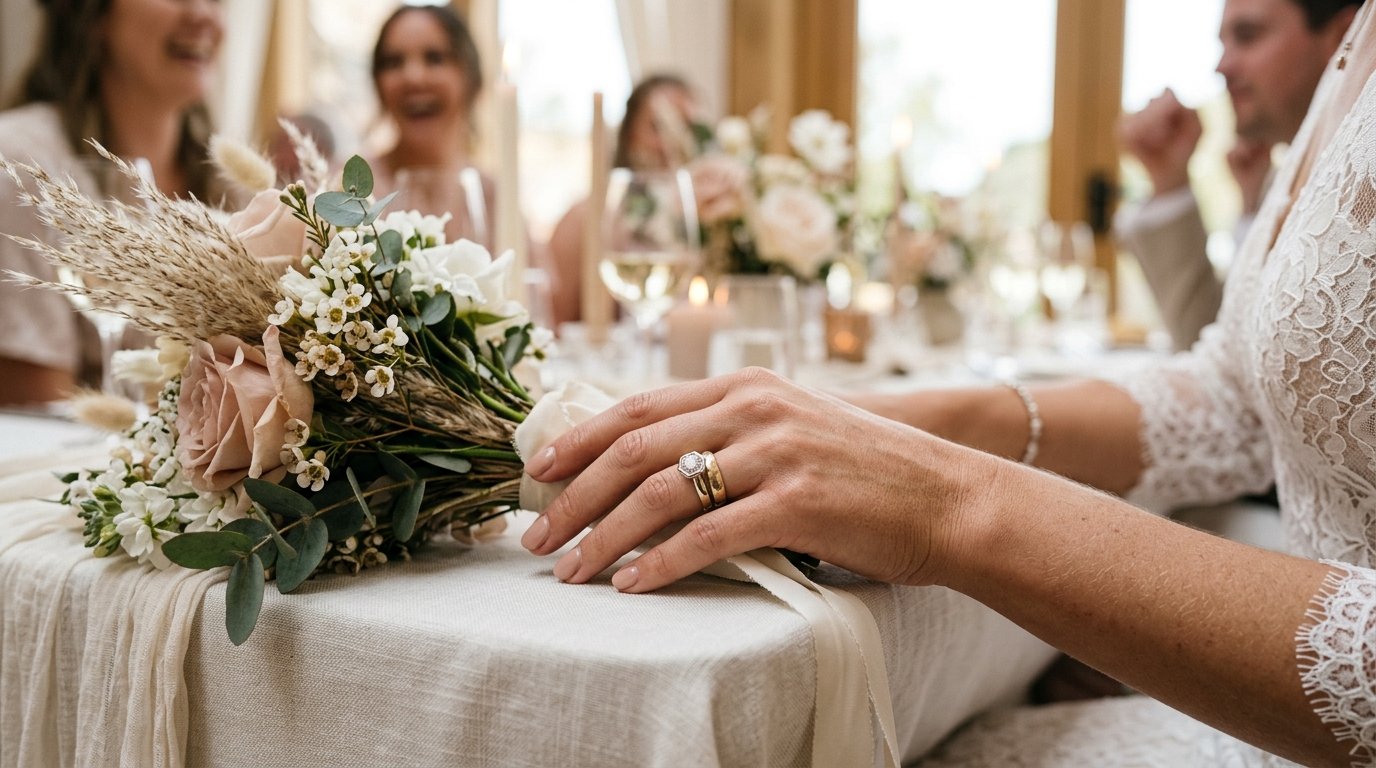
Understanding the physical behaviour of the two metals over time helps set expectations:
Yellow gold (18ct). Softer than platinum. Will show surface scratches more quickly, developing a matte patina over time. Can be polished back to mirror finish by a jeweller. The gold alloy content (18ct is 75% pure gold) means it can wear thin at points of highest friction over many years.
Platinum. Harder than gold in some respects but actually scratches quite easily — when scratched, the metal moves rather than being removed, creating a worn surface. This work-hardens into a characteristic matte-grey patina many wearers love. Platinum does not wear away in the same way gold does — the same metal atoms are displaced, not lost.
White gold (18ct). Requires rhodium plating to maintain its white appearance — the underlying white gold alloy is yellowish. Replating every 2-3 years. More maintenance than either yellow gold or platinum in a two-tone ring.
The practical implication: over 5-10 years, the two sections of a yellow gold + platinum ring will develop slightly different surface textures. The yellow gold section may be more scratched; the platinum section may have a deeper grey patina. Most wearers consider this character. If you want the ring to always look new, budget for annual professional maintenance.
14 UK jewellers for two-tone engagement rings
Weddings Hub contacted 14 UK jewellers in May 2026 on two-tone availability:
Taylor & Hart (online + London showroom). The clearest two-tone CAD process — their 3D renders show exactly how the two metals meet before production. Yellow gold + platinum is their most-ordered two-tone combination. Lead time 8 weeks. Prices from £2,200.
Queensmith (Hatton Garden, London). Bespoke specialist with strong two-tone construction expertise. Multiple in-person consultations. Lead time 6-8 weeks. Prices from £2,800.
Jessica Flinn (Sheffield + online). Award-winning independent with a strong two-tone offering. Good for buyers outside London. Lead time 8 weeks. Prices from £1,800.
77 Diamonds (online). Design-your-own tool includes two-tone metal options. Fast turnaround of 4-5 weeks. Prices from £1,600.
Lebrusan Studio (London). Ethical specialist with Fairtrade gold. Two-tone with recycled metals available. Lead time 10-12 weeks. Prices from £3,200.
Rox Diamonds & Thrills (Edinburgh, London). Good in-store experience for trying two-tone styles before committing to bespoke. Off-the-shelf and bespoke options. Prices from £2,000.
Beaverbrooks (national chain). Limited off-the-shelf two-tone options. Good for seeing what the aesthetic looks like on a hand without committing. Prices from £1,500.
Hatton Garden workshops (Prestige Diamonds, Rennie & Co, Holts). Walk-in commissions for bespoke two-tone. Good option for buyers who want to sit with a jeweller and specify the exact join point and proportions in person. Prices variable; start at £2,000 for a simple solitaire.
The remaining 6 jewellers surveyed offer two-tone as a bespoke-only option with no off-the-shelf stock: Harriet Kelsall (Cambridge/London), Emma Franklin (Manchester), David Christopher (Bournemouth), Burrells (Bristol), Loye (Edinburgh), and Stephen Einhorn (London).
Related reading
- East-West Engagement Rings: The Zendaya Trend & 14 UK Jewellers
- Cigar Band Engagement Rings: The Dua Lipa Effect
- Lab-Grown Engagement Rings: Why 61% of New Rings Use Them
- Engagement Ring Guide: Styles, Settings & Costs
- Oversized Oval Engagement Rings: UK Guide 2026
Frequently Asked Questions
What is a mixed metal engagement ring?
A mixed metal or two-tone engagement ring uses two different precious metals in one ring — most commonly yellow gold and platinum, or yellow gold and white gold. The two metals are used in different parts of the ring. A typical design has a yellow gold band with a platinum or white gold head (the part that holds the centre stone). The contrast creates a visual distinction between band and setting.
Why are two-tone engagement rings trending in 2026?
Yellow gold is now 47% of UK engagement ring metal choices — but many buyers love the look of yellow gold while wanting the durability of platinum around the centre stone. Two-tone rings solve that problem. The trend also reflects a broader cultural shift toward personal, hybrid aesthetics rather than matching everything. Stacking two-tone rings with wedding bands in different metals has become an accepted and popular choice.
What is the most popular two-tone combination for engagement rings?
Yellow gold with platinum is the most popular two-tone engagement ring combination in 2026. Yellow gold provides the warm, fashionable band aesthetic. Platinum provides the durability and bright white setting that holds the centre stone securely and makes diamonds appear whiter. Yellow gold with white gold (18ct) is a more affordable alternative — visually similar but with slightly less durability than platinum.
Do mixed metal rings require more maintenance?
Yes. Yellow gold and platinum wear at different rates. Yellow gold is softer and will show scratches more readily. Platinum work-hardens and develops a patina over time. Over 10-20 years, a two-tone ring may look slightly different in each metal section. The join between the two metals can also be a weak point if not well made. Annual professional cleaning and check-up is more important for two-tone rings than single-metal equivalents.
How much does a two-tone engagement ring cost in the UK?
Two-tone solitaire engagement rings in the UK cost from £1,500 for a simple yellow gold and white gold setting with a lab-grown stone, to £6,000+ for a yellow gold and platinum setting with a quality natural diamond. The two-tone construction adds roughly £200-£400 to an equivalent single-metal ring due to the additional metalwork. Stone cost is separate and the main driver of overall price.
Which UK jewellers make two-tone engagement rings?
UK jewellers offering two-tone settings in 2026 include: Taylor & Hart (online, bespoke), Queensmith (Hatton Garden, bespoke), 77 Diamonds (online, design-your-own), Jessica Flinn (Sheffield, bespoke), Lebrusan Studio (London, ethical), Rox (Edinburgh and London), and Beaverbrooks (national chain for off-the-shelf options). Most bespoke jewellers will make any two-tone combination on request.
Can I wear a two-tone engagement ring with a single-metal wedding band?
Yes — and this is very common. A two-tone yellow gold and platinum engagement ring paired with a plain platinum or yellow gold wedding band is one of the most popular stacking combinations in 2026. The mix of metals in the engagement ring gives permission for the stacked look. The wedding band does not need to match both metals. Most couples choose whichever metal they prefer for the wedding band and let the engagement ring bridge the gap.