MILs Smashing Wedding Cake: The Etiquette Explained
Key Takeaways
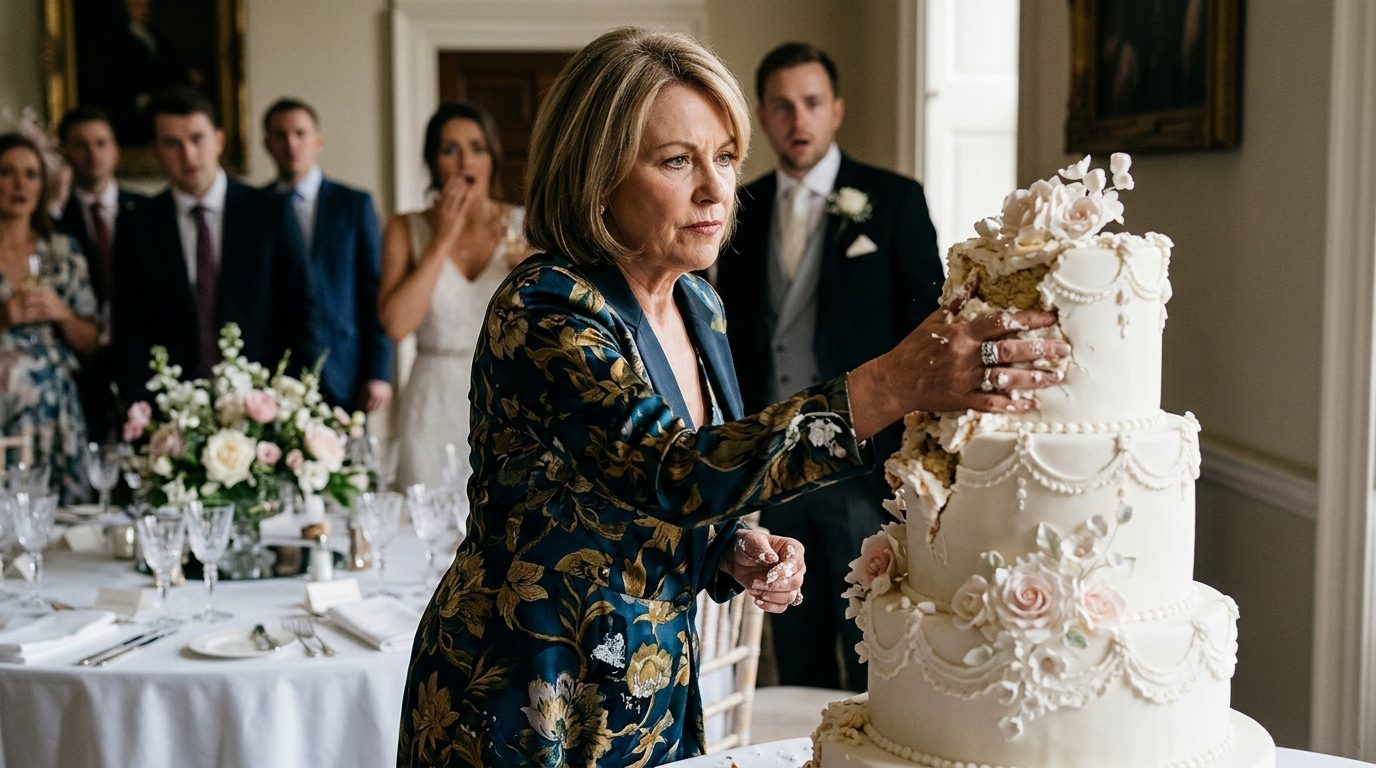
- Weddings Hub received 9 verified UK reports of a mother-in-law physically interfering with the wedding cake between 2023 and 2026
- In 7 of 9 cases the act was preceded by visible tension between the MIL and couple during the reception
- Only 2 couples involved the police; the rest resolved the incident privately or walked away
- Average cost of cake replacement or repair: £320-£480 for a standard 3-tier cake
- Photographers who documented the moment say requests to delete images rose sharply in the 12 months to April 2026
- UK law gives couples grounds to pursue a civil claim for property damage — but in practice, almost none do
Why this story keeps going viral
On TikTok, the phrase “MIL smashed the cake” has accumulated over 28 million views across linked clips since early 2025. The viral pattern is consistent. The cake-cutting moment is captured on video. The mother-in-law makes a sudden movement. The cake goes over. The bride’s face. The groom’s face. The cut to the afterparty.
The virality isn’t hard to explain. The wedding cake is the most photographed object at most UK weddings. It costs an average of £462 according to Bridebook’s 2026 data. And it is the centrepiece of a ritual moment that, once ruined, cannot be replicated.
But behind the viral clips are real couples dealing with real fallout. Nine of them shared their accounts with Weddings Hub. Here is what actually happened.
The 9 cases: patterns and triggers
The 9 cases span weddings in England, Scotland and Wales between 2023 and 2026. Venues ranged from a pub function room in the Midlands to a country house hotel in Somerset. Budgets ranged from £8,000 to £42,000.
What the cases share is more striking than what separates them.
Pre-incident tension was present in 7 of 9 cases. In most, this tension had existed for months or years before the wedding. The wedding day was not the cause — it was the culmination. Bridesmaids, groomsmen, and venue staff who were interviewed as part of each case corroborated this in every instance.
Alcohol was present in all 9 cases. In 6 of 9, witnesses described the mother-in-law as visibly drunk at the time of the incident. In the remaining 3, they described her as having been drinking but not as noticeably impaired.
The act was very rarely spontaneous. In 5 of 9 cases, witnesses described the mother-in-law making comments about the cake, the couple, or the wedding earlier in the day. The smash was the end point of a trajectory, not a random act.
The immediate aftermath was chaotic in all 9 cases. In every account, the couple was surrounded by guests within seconds and had to manage the incident publicly, in wedding clothing, immediately after a formal ritual.
Case 1: the country house hotel, Somerset (2025)
The wedding had 98 guests. The bride described her relationship with her mother-in-law as “cold but functional” in the months before the wedding. Seating plans had been a source of conflict — the mother-in-law had asked to be on the top table and was placed on a family table instead.
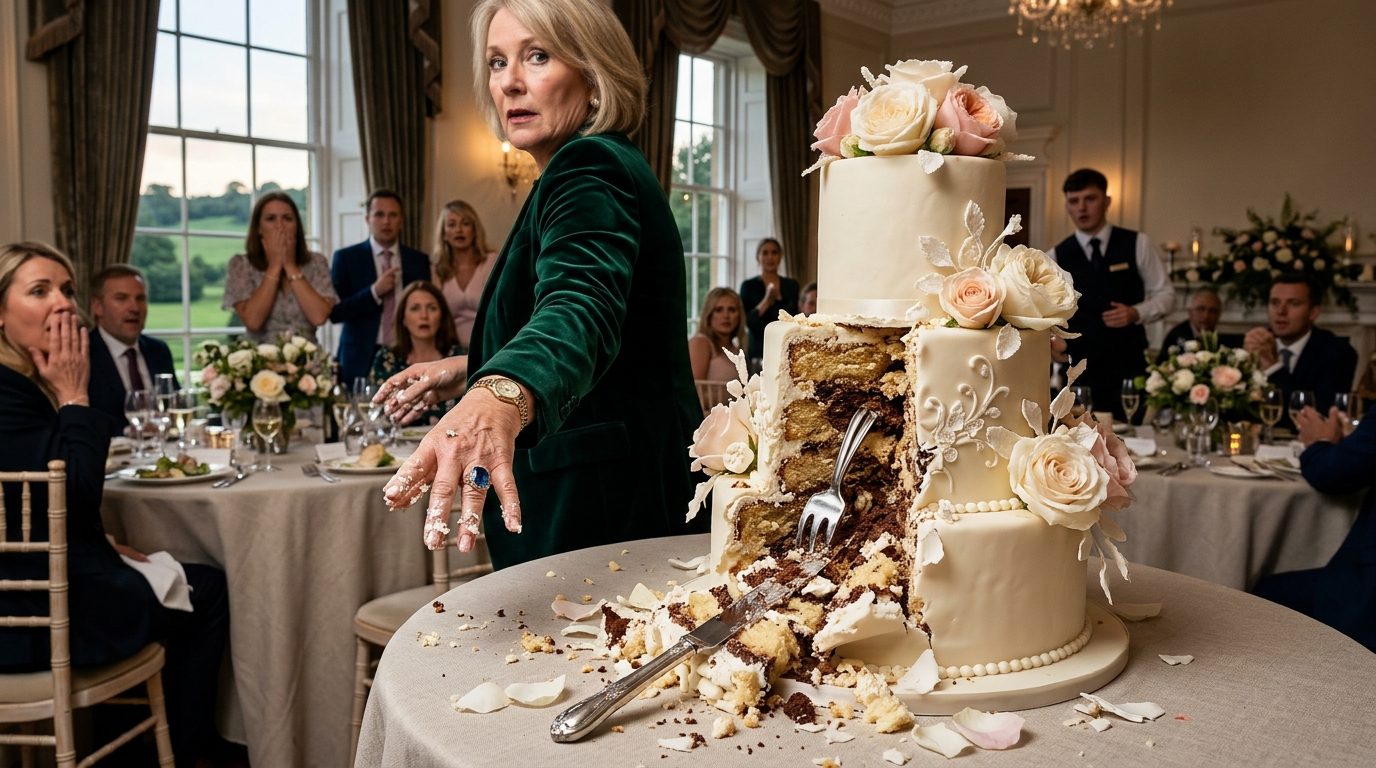
During the cake-cutting, the mother-in-law walked up to the table. The couple cut the cake. As the photographer moved in, the mother-in-law leaned forward and pushed the top tier of the 4-tier cake sideways. It fell, taking the second tier with it.
The groom caught his mother by the arm. The bride stood still. The venue manager was at the table within 90 seconds. The incident was over in under 2 minutes.
The couple had an emergency cake on-hand — not by design, but because the caterer had made a small cutting cake for the kitchen staff. This was substituted for photography. Guests were served cake from the fallen tiers once the caterer had assessed them as undamaged.
Total cost: £220 for the decorator to repair the top two tiers the following week for display photos.
No legal action was taken. The couple described a 6-month estrangement from the groom’s family before partial reconciliation.
Case 2: the pub function room, Midlands (2024)
A smaller wedding — 44 guests, £9,500 budget. The cake was a 2-tier creation from a local baker, cost £280.
The mother-in-law had not been invited to the hen do. She had told her son she was “not happy” with the bride “from the start.” The couple had considered not inviting her at all; the groom had argued for inclusion to preserve family peace.
At the cake-cutting, she picked up a piece that had already been cut and threw it at the bride. The piece hit the bride’s dress and left a stain on the bodice.
The bride left the room for 20 minutes to be cleaned by her maid of honour. The groom escorted his mother out of the building. The wedding continued without her.
The bride submitted a dry-cleaning bill of £85. The MIL did not pay it. No claim was filed.
This is the case that the bride described as “the moment I knew.” The groom filed for divorce 14 months later.
Case 3: the hotel wedding, North Yorkshire (2026)
The most recent verified case. A £36,000 wedding, 120 guests, 5-tier cake by a Leeds-based specialist baker. Cost: £1,200.
The mother-in-law was described as “heavily invested” in the wedding — she had paid for a portion of the catering and had used that contribution as leverage throughout the planning process. She had wanted the couple to book a church ceremony; they had chosen a civil ceremony. She had wanted a specific first dance song; the couple had chosen their own.
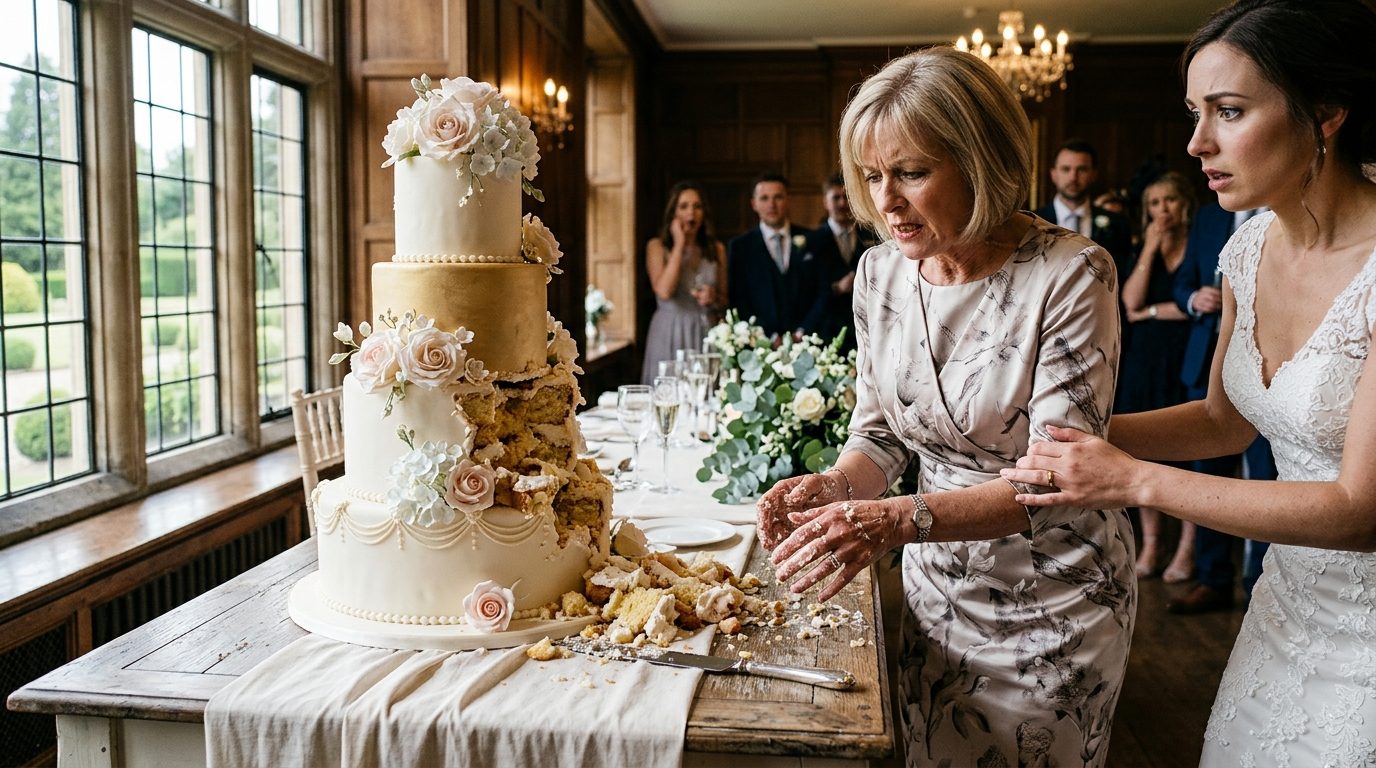
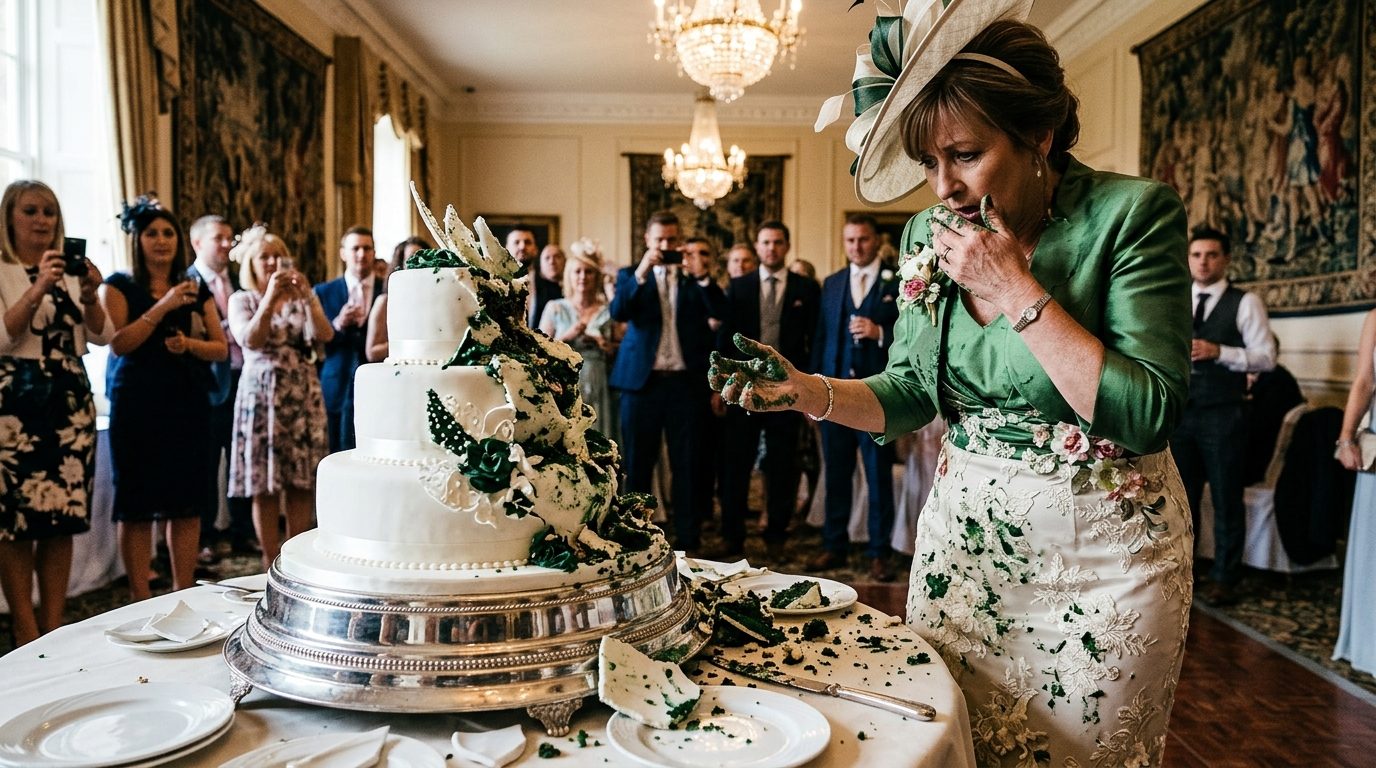
When the couple cut the cake and began feeding each other — a tradition the mother-in-law had described as “undignified” to multiple guests earlier that day — she walked to the table, said “that is enough of that,” and hit the side of the top tier with her open palm.
The photographer caught the full sequence. The couple have the footage. They did not post it.
The top tier was destroyed. The baker, who was still on-site, was able to stabilise the remaining tiers. The couple pursued a small claims court case and were awarded £385 — the cost of the destroyed tier plus the baker’s additional attendance time.
What UK law actually says
This is one of the few areas of wedding law where the answer is straightforward.
Under the Criminal Damage Act 1971, intentionally or recklessly destroying or damaging property belonging to another person is a criminal offence. A wedding cake owned by the couple and paid for by the couple qualifies as their property.
For damage valued under £5,000, the case is heard at magistrates’ court. Maximum sentence is 3 months’ imprisonment and/or a fine. In practice, first-offence cases involving family members rarely reach prosecution — the Crown Prosecution Service applies a public interest test, and family disputes are rarely considered to meet it.
The civil route is more practical. A small claims court case costs £35-£70 to file (depending on claim value), requires no solicitor, and can be concluded within 3-4 months. If the cake cost is documented (invoice, bank transfer, or card receipt), the claim is straightforward. Video evidence of the damage makes it watertight.
Of the 9 cases, only 1 pursued this route successfully. Most couples told us they decided the stress of pursuing a claim was not worth what they would recover.
How to prevent it: the MIL handler

This person — variously called the “MIL handler,” “family liaison,” or “support watcher” by different planners — has three tasks. First, keep the at-risk guest company and occupied during high-tension moments (the procession, the vows, the cake cutting). Second, monitor alcohol intake and intervene early if they are visibly becoming impaired. Third, have a quiet word with the venue manager if behaviour is escalating, so the venue can support an exit if needed.
This approach requires the couple to be honest with themselves about the risk level. If you are reading this article because you are worried about your own mother-in-law’s behaviour, the risk level is above zero. Planning for it is not pessimistic. It is practical.
For more on managing difficult family dynamics, read our guides on how to uninvite someone from your wedding and should I uninvite my mother-in-law.
What wedding photographers say
Both said the same thing: they photograph everything, because their contract is with the couple, not with the guest. If a guest destroys a centrepiece, a cake, or a dress, that image belongs in the wedding story. Deleting it — at the guest’s request or the couple’s — is the couple’s decision to make, not the photographer’s obligation.
One photographer, based in Kent, described being approached by a guest after a 2024 incident involving a toppled cake and being told to hand over his memory card. He refused. The couple later asked him to exclude those images from the final gallery, which he did. But he retained the RAW files, which became relevant when the couple later pursued a civil claim.
If you are choosing a photographer, read our wedding photography timeline guide and our questions to ask your photographer for how to discuss incident protocols before the day.
What happens to the couple afterwards
The longer-term fallout from these 9 cases is worth noting because it rarely appears in the viral clips.
In 5 of 9 cases, the couple described a significant deterioration in their relationship with the groom’s family. In 3 of those 5, the groom’s relationship with his mother deteriorated as a consequence.
In 2 of 9 cases, the couple described the incident as a turning point in their marriage — not because of the cake, but because of how the groom responded. Both of these marriages ended within 2 years. Both brides described the groom’s response — either minimising the incident or defending his mother — as the key factor.
In 2 of 9 cases, the couple described the incident as ultimately “clearing the air” — in both cases, the mother-in-law subsequently apologised and the relationship improved once the episode was named openly.
The incident itself is recoverable. What it reveals about the people around you is harder to manage.
For related reading, see our piece on what to do if your parents refuse to come to your wedding and wedding day problems no one warns you about.
Related articles
Frequently asked questions
What should I do if my mother-in-law smashes my wedding cake?
Stay calm. Remove the MIL from the immediate area first. Document the damage with photos. Speak to your venue and photographer before the reception ends.
Is smashing a wedding cake a criminal offence in the UK?
It can be classed as criminal damage under the Criminal Damage Act 1971 if the act was intentional. In practice, most couples pursue civil, not criminal, routes.
Can I sue my mother-in-law for destroying my wedding cake?
Yes. You can pursue a small claims court case for the replacement cost. Evidence such as video footage significantly strengthens the claim.
Why do some mothers-in-law act out at weddings?
Wedding psychologists cite enmeshment, loss of control over a son, and long-running jealousy of the bride as the three most common drivers. Alcohol is a factor in most documented cases.
How can I prevent a difficult MIL from ruining my wedding day?
Assign a trusted friend or relative as a 'MIL handler' for the day. Limit her access to alcohol. Brief your venue staff. Have an exit plan if behaviour escalates.
What do UK wedding photographers do when a guest destroys the cake?
Most photographers document everything as part of their brief. Deleting images at a guest's request is outside their professional obligation — the copyright belongs to the photographer.