Wedding Trends 2026: What's In & Out
Key Takeaways
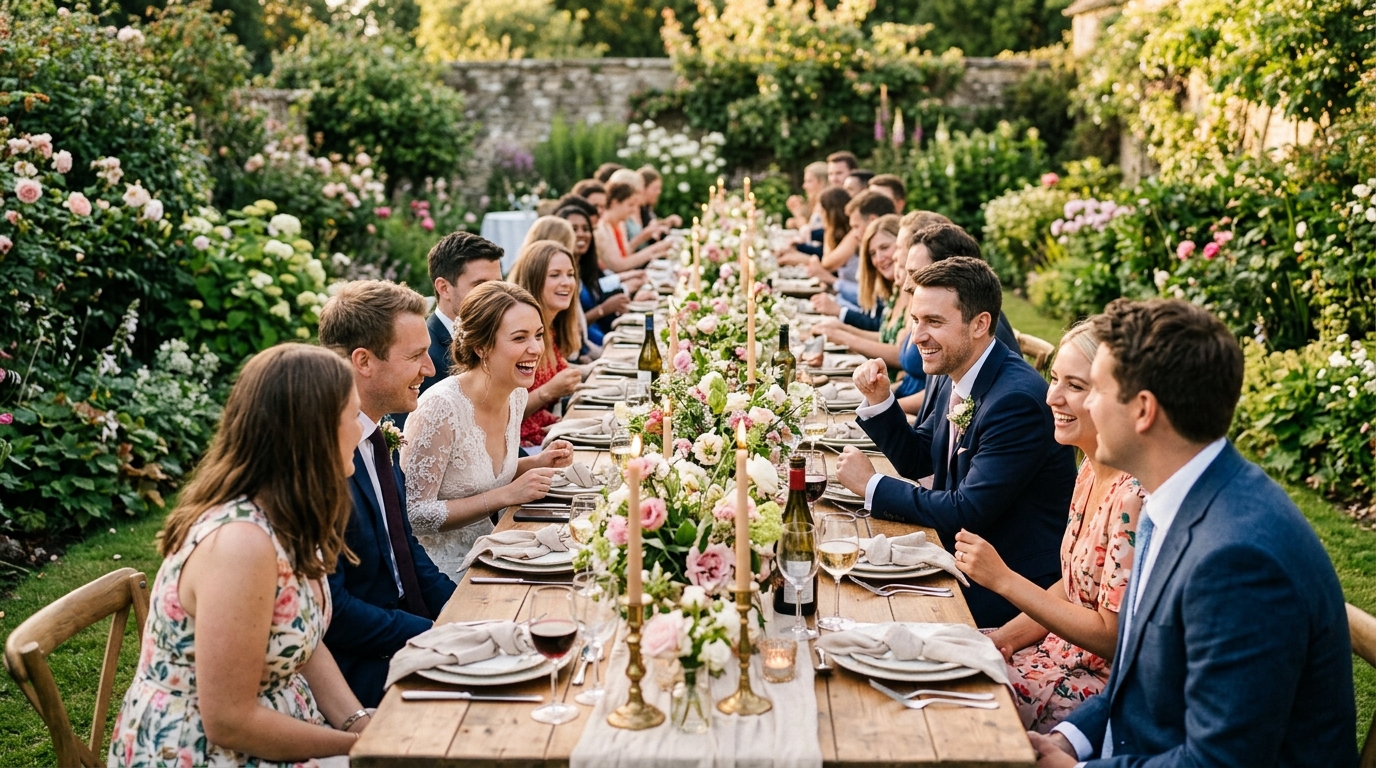
- Micro weddings (under 30 guests) and intimate celebrations continue to grow post-pandemic
- Sustainability is expected, not exceptional — couples are choosing local, seasonal, and low-waste by default
- Interactive food experiences (grazing tables, food stations, chef's counters) are replacing traditional buffets
- Personal over performative — couples are prioritising meaningful moments over Instagram-worthy spectacles
- Bold colour palettes (terracotta, emerald, burgundy) are replacing the all-white minimalism of 2020-2023
Wedding trends shift every year, but the underlying direction in 2026 is clear: personal over perfect, experience over appearance, and meaning over spectacle. Couples are spending less time recreating Pinterest boards and more time asking “what actually matters to us?”
Here’s what’s shaping UK weddings this year.
What’s in
1. Micro and intimate weddings
The post-pandemic shift toward smaller weddings isn’t reversing — it’s deepening. Around 25% of UK weddings in 2026 have fewer than 50 day guests.
Why it’s growing: Better food per head, more meaningful guest interactions, access to unique venues (restaurants, private homes, galleries), and significantly lower cost. A wedding for 30 at £15,000 feels more luxurious than a wedding for 120 at £30,000.
How to embrace it: Cut the guest list to people you’d genuinely miss. Use the savings to upgrade the food, the venue, or the honeymoon.
2. Sustainability as standard
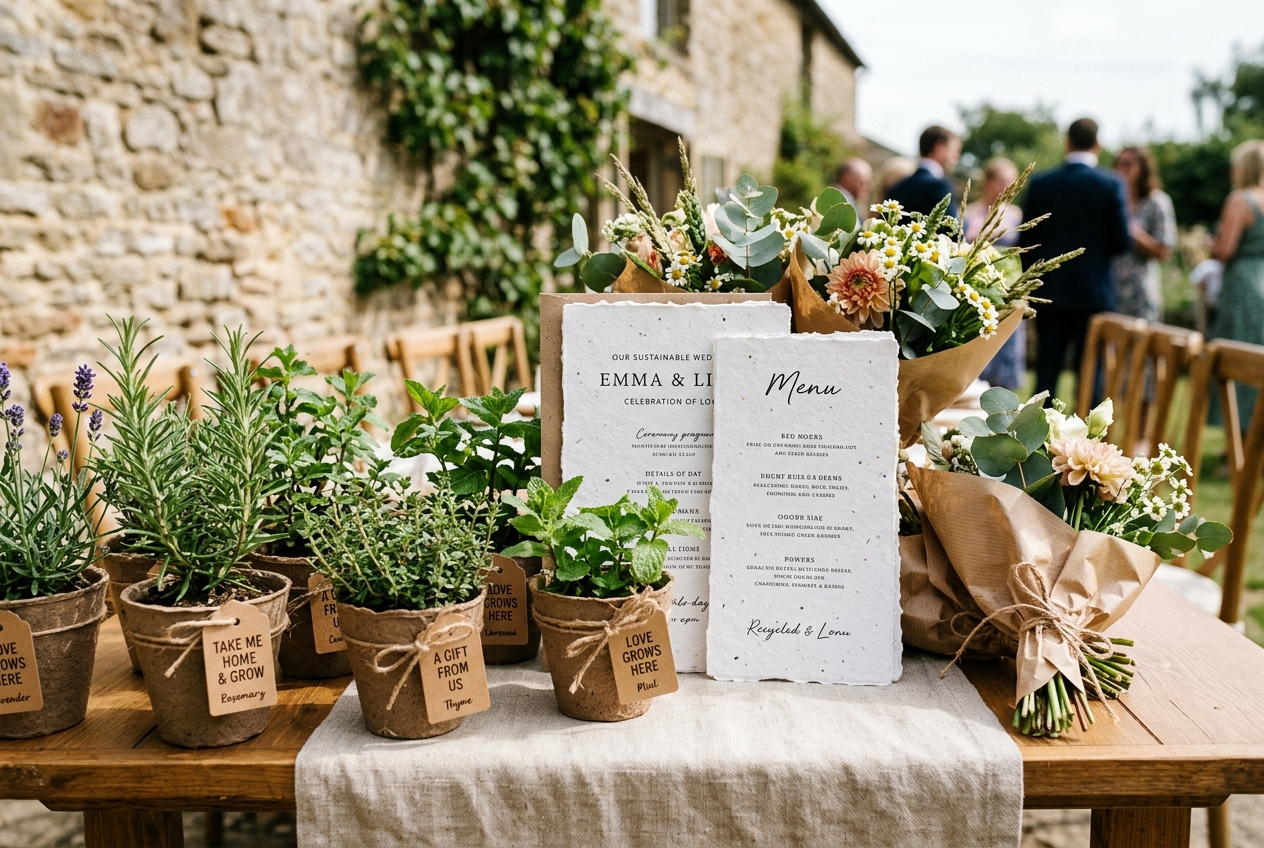
Eco-conscious choices are no longer a “theme” — they’re an expectation, particularly among couples under 35.
What this looks like in practice:
- Seasonal, locally sourced flowers (not flown-in orchids)
- Digital invitations or recycled-paper stationery
- Potted plants or seed packet favours (not plastic trinkets)
- Charity donations instead of gift lists
- Vintage or second-hand dresses
- Local caterers using seasonal ingredients
- Venues with green credentials
The shift: Couples aren’t making sustainability their wedding theme. They’re making sustainable choices quietly, as part of the normal planning process.
3. Interactive food experiences
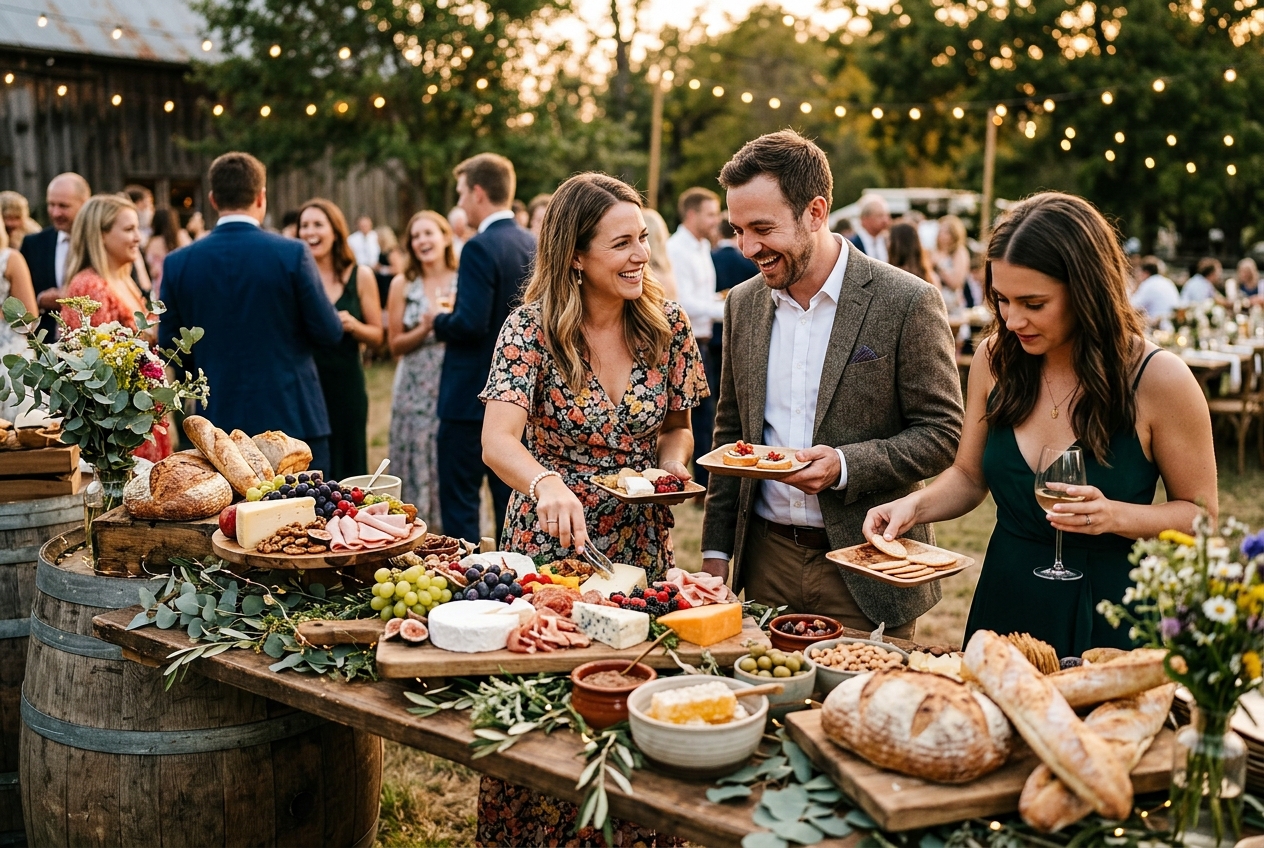
The static three-course plated meal is being challenged by interactive, choose-your-own food formats.
Growing formats:
- Grazing tables — enormous sharing displays that guests browse throughout the evening
- Food stations — themed stations (taco bar, pasta bar, seafood counter) where chefs cook to order
- Live cooking — wood-fired pizza, teppanyaki, crêpe stations where guests watch the preparation
- Wine and cheese pairing — guided tastings as part of the reception
Why: They create conversation, accommodate dietary needs naturally, and feel more generous than a single plated option.
4. Bold, saturated colours
The all-white wedding peaked in 2020-2022. 2026 weddings are embracing rich, saturated palettes.
Trending palettes:
- Terracotta + burnt orange + cream
- Emerald green + gold
- Deep burgundy + blush
- Rich navy + copper
- Mustard + sage + cream
White is still present — but as a canvas for bolder accents, not the entire palette.
5. Personalisation over performance
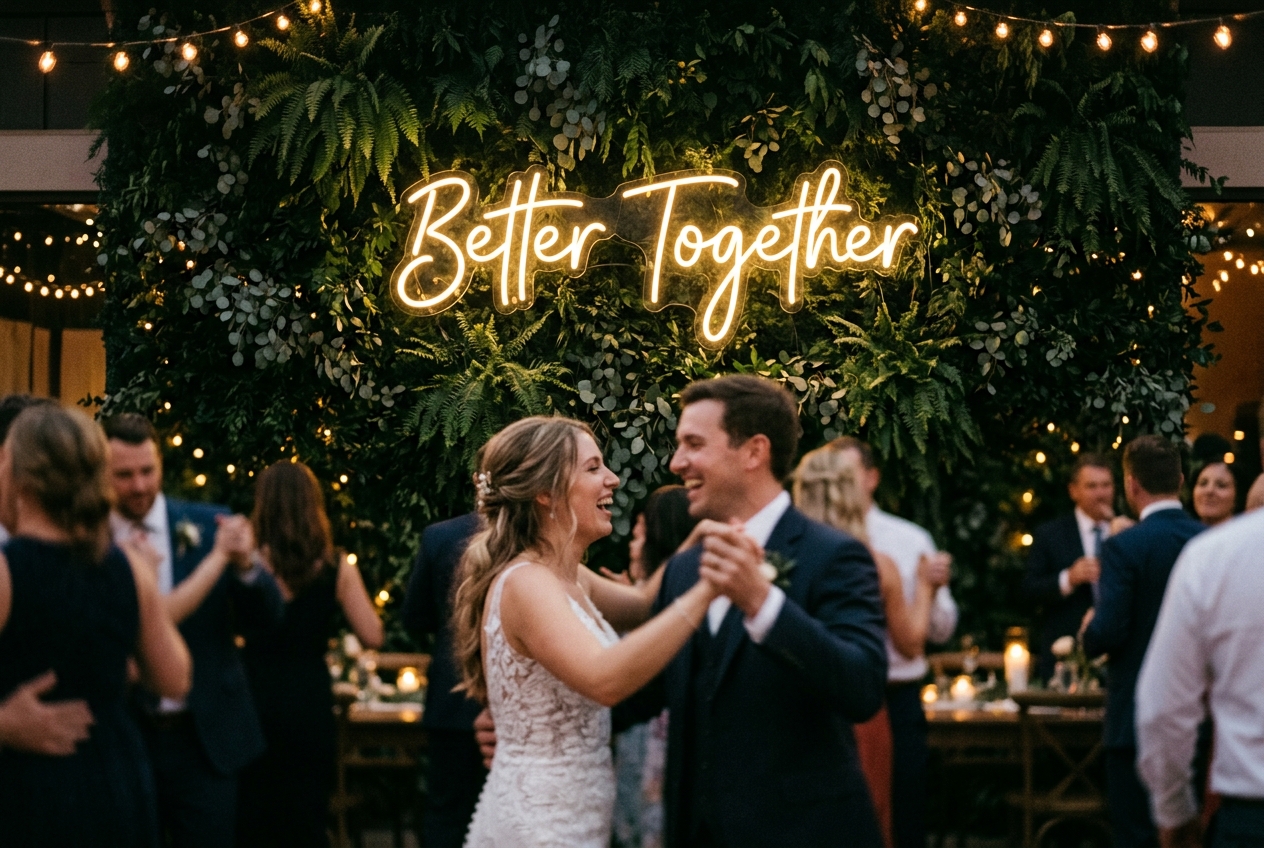
The biggest meta-trend: couples are making choices based on what they actually enjoy, not what generates the best content.
Examples:
- A playlist of songs from their relationship (not a generic “wedding hits” playlist)
- A cocktail named after their first date location
- Readings chosen by the couple, not from a “top 10 wedding readings” list
- A venue they love visiting, not the one with the best photo opportunities
- Speeches that are genuinely personal, not performed for the crowd
6. Experience-focused spending
Couples are shifting budget from things (decor, favours, stationery) to experiences (food quality, live music, activities, honeymoon).
| Spending More On | Spending Less On |
|---|---|
| Food and drink quality | Elaborate floral installations |
| Live entertainment (band, DJ) | Printed stationery (digital instead) |
| Photographer (higher budget) | Favours (simpler or none) |
| Honeymoon | Car hire (Uber instead) |
| Guest experience (activities, comfort) | Table decor (simpler centrepieces) |
7. Non-traditional ceremonies
More couples are choosing humanist celebrants, outdoor ceremonies, and non-religious readings. The rigid church-registrar binary is breaking down.
In Scotland: Humanist ceremonies are legally recognised and now outnumber religious ceremonies. In England/Wales: Humanist ceremonies aren’t legally recognised yet, but many couples have a humanist ceremony alongside the legal paperwork (done separately at a register office).
What’s out (or fading)
| Fading Trend | What’s Replacing It |
|---|---|
| Pinterest-perfect pressure | ”Does this reflect US?” |
| All-matching bridesmaids | Mix-and-match (same colour, different styles) |
| Over-the-top proposals (flash mobs, stadium screens) | Private, meaningful proposals |
| Fondant wedding cakes | Buttercream, naked, and alternative desserts |
| Disposable decor (plastic confetti, cheap props) | Sustainable, reusable, or natural |
| Gift registries at department stores | Honeymoon funds and charity donations |
| Assigned gender roles (“bride’s side / groom’s side”) | Mixed seating, inclusive language |
| Novelty photo booths | Polaroid cameras and natural photo moments |
| Single-use bridesmaid dresses | Dresses they’ll actually wear again |
| Late-night kebab vans | Quality evening food (pizza, sliders, tacos) |
Trends that are timeless (not going anywhere)
- Good food and generous portions
- Live music or a great DJ
- Fairy lights and candles (always atmospheric)
- Greenery in the decor (eucalyptus, ferns, olive)
- Personal speeches that make people laugh and cry
- A photographer who captures real moments
- Dancing until the venue kicks you out
These aren’t trends — they’re the foundations of a great wedding. They were true in 2016 and they’ll be true in 2036.
Further reading
- Wedding Themes — 20 theme ideas
- Wedding Colour Schemes — popular palettes
- Budget Wedding Ideas — the budget-conscious way to be trendy
- Table Decoration Ideas — bringing trends to the table
- Seasonal Wedding Ideas — trends by season
Frequently asked questions
What are the biggest wedding trends for 2026?
The top trends for 2026 UK weddings: (1) Micro and intimate weddings (under 50 guests). (2) Sustainability as a default, not an add-on. (3) Interactive food experiences. (4) Bold, saturated colour palettes. (5) Personalisation over Pinterest perfection. (6) Experience-focused spending (food, music, activities over decor). (7) Non-traditional ceremonies.
What wedding themes are trending in 2026?
Trending themes: modern rustic (refined barn), garden party (English country), bohemian luxe (boho with premium touches), Italian-inspired (terracotta, olive, linen), and 'no theme' weddings where the couple's personality IS the theme. Themed weddings based on a specific aesthetic (e.g. Great Gatsby) are declining.
What colours are trending for weddings in 2026?
Trending colours: sage green + blush (still #1), terracotta + rust, emerald + gold, dusty blue + cream, and rich jewel tones (burgundy, navy, forest green). All-white is still popular but increasingly combined with bold accents rather than used alone. Pastels are softer and dustier than previous years.
What wedding trends are going out of fashion?
Declining trends: Instagram-first planning (choosing things for the photo, not the experience), over-the-top proposals and reveals, gender reveal-style elements, disposable decor (plastic confetti, single-use props), overly coordinated matching (identical bridesmaid everything), and the 'Pinterest-perfect' pressure.