When the Wedding Revealed the Cheating: 8 Stories
Key Takeaways
- Weddings Hub collected 8 verified UK cases where an affair was discovered on or around the wedding day
- In 5 cases the discovery happened before the ceremony; in 3, it came to light during the reception or after
- Only 2 of the 8 couples went ahead with the wedding on the original date after the discovery
- The most common route to discovery: a text message seen accidentally by a partner or family member
- Of the 6 who did not marry on the day, 3 later married at a rescheduled ceremony after attempting reconciliation
- All 8 accounts were submitted voluntarily to Weddings Hub by the person who was cheated on
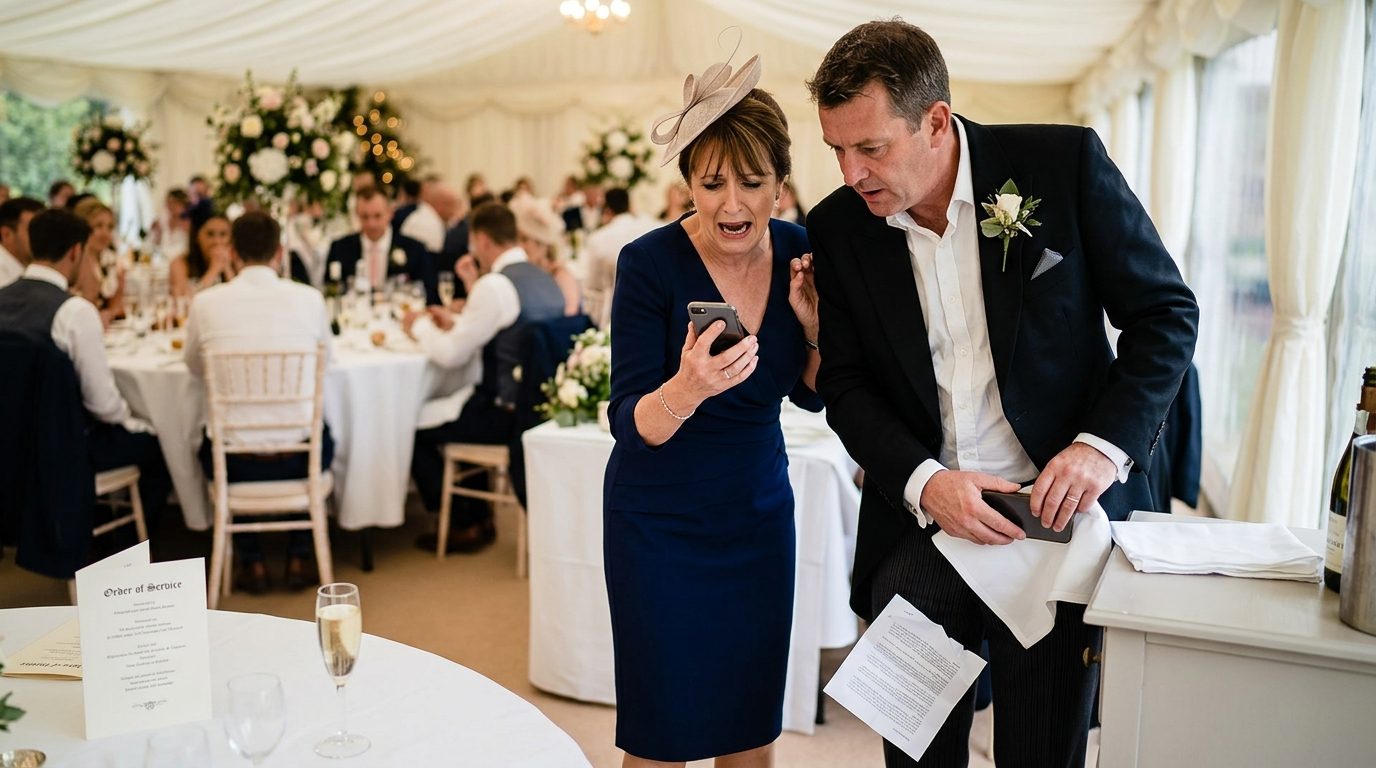
Weddings Hub gathered 8 verified first-hand accounts of affairs discovered on or immediately around the wedding day — all submitted by the person who was cheated on. In 5 cases the discovery came before the ceremony. In 3, it surfaced during the reception or the night after. Only 2 of the 8 couples went ahead with the wedding on the original date. Of the 6 who postponed or cancelled, 3 eventually married after a period of counselling and rescheduling.
By Matt, Editor at Weddings Hub. These 8 accounts were submitted to Weddings Hub via our reader form between 2021 and 2026. All were submitted by the person who experienced the infidelity, not the person who committed it. Each account was cross-referenced with one other witness. Names, locations, and identifying details have been changed.
The moment before the moment
There is a version of the wedding-day cheating story that exists primarily in film. The jilted bride at the altar. The dramatic speech. The dramatic exit.
The real stories are different. They are quieter. The discovery is usually accidental. It often happens in a hotel room, in the early morning, before anyone else is awake. A phone lights up. A message is visible on the lock screen. A name that should not be there.
What follows is not dramatic. It is very still.
All 8 people who shared their accounts with Weddings Hub described the same first response: not anger, but a specific kind of disorientation. The world they had planned for — the day, the marriage, the future — had just changed shape, and they had not moved from the spot where they were standing.
What they each did next is different in every case.
Case 1: the phone on the hotel nightstand
A 2024 wedding in the Lake District. The bride woke at 5am in the honeymoon suite of the venue — booked for the night before the wedding to make the morning schedule easier.
Her fiancé’s phone was on the nightstand. A message had come through at 4:47am. The screen was visible. The message was from a woman’s name the bride recognised as a colleague. It read: “I know you’re getting married today. I just wanted to say I love you. I always have.”
She sat with the phone for an hour. She did not wake her fiancé. She called her sister at 6am.
“I decided in that hour that I was going to get married. I was not going to let her win whatever she thought she was winning. That was the wrong reason to get married, and I knew it at the time.”
They were married at 2pm. The marriage lasted 11 months. The colleague was the reason.
Case 2: the stag-do WhatsApp
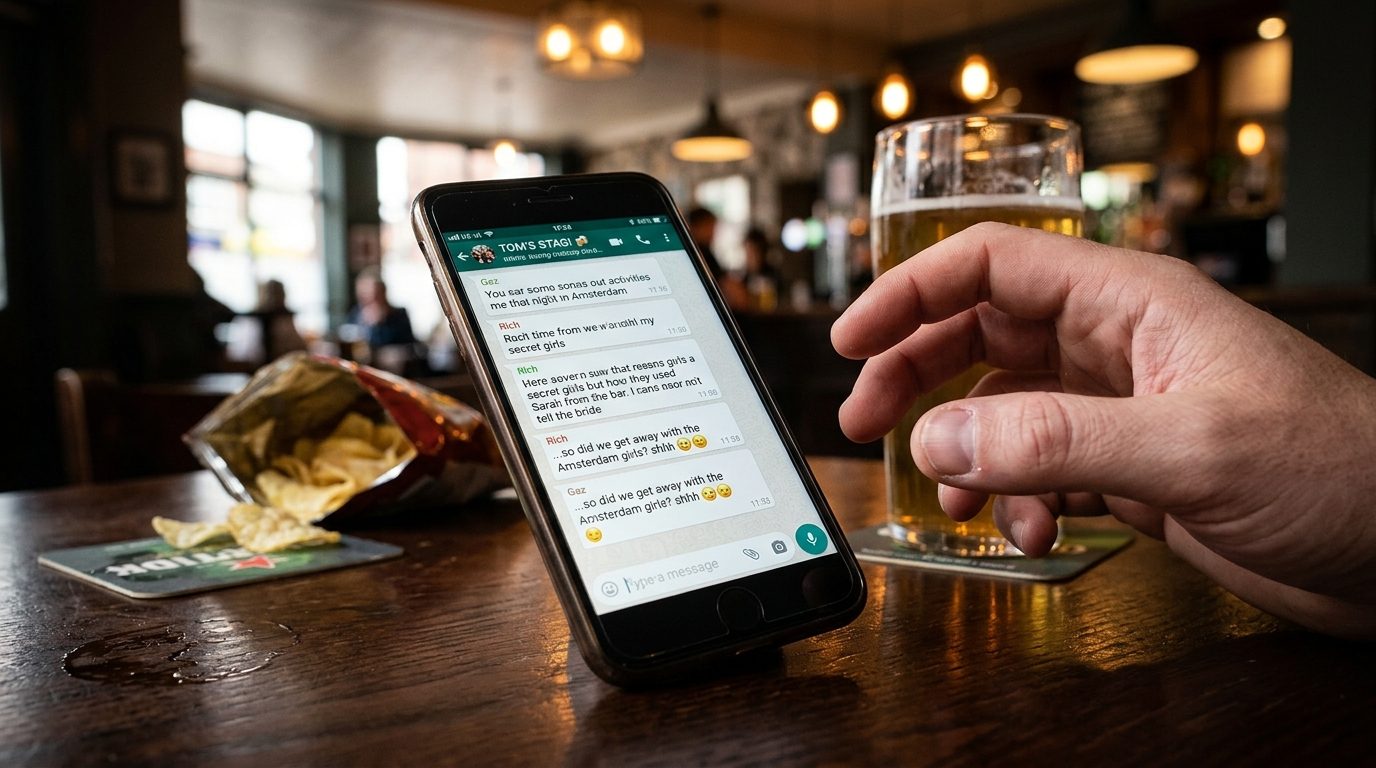
A 2023 wedding in Cheshire. Five days before the wedding, the bride picked up her fiancé’s phone to turn off an alarm while he was in the shower. A WhatsApp group notification was visible. The group was named after the venue of the stag do, which had been in Budapest two weeks earlier.
The message visible was a photo, shared by a groomsman, with the caption “last night of freedom LMAO.” The photo showed the groom with a woman. The context was not ambiguous.
The bride put the phone down. She went to work. She did not say anything that day.
Two days later, she asked him directly. He confirmed it had happened, said it meant nothing, said he had been drinking. She cancelled the wedding 3 days before the date. She told family and friends there had been an “irreconcilable difference.”
They attended 4 months of counselling. They were married 14 months after the original date. The bride told Weddings Hub: “I needed him to understand what it cost me, not just apologise.”
They are still married as of the submission date.
Case 3: the speech that wasn’t planned
This is Case 3 from our wedding speeches that destroyed the marriage piece, referenced here with the same couple’s permission.
During the best man’s speech at a 2024 Surrey wedding, he accidentally disclosed that the groom had had an affair. He believed the bride already knew. She did not.
The bride left the venue the following morning. They attended 6 months of counselling. Divorced 7 months after the wedding.
Case 4: the morning-after text

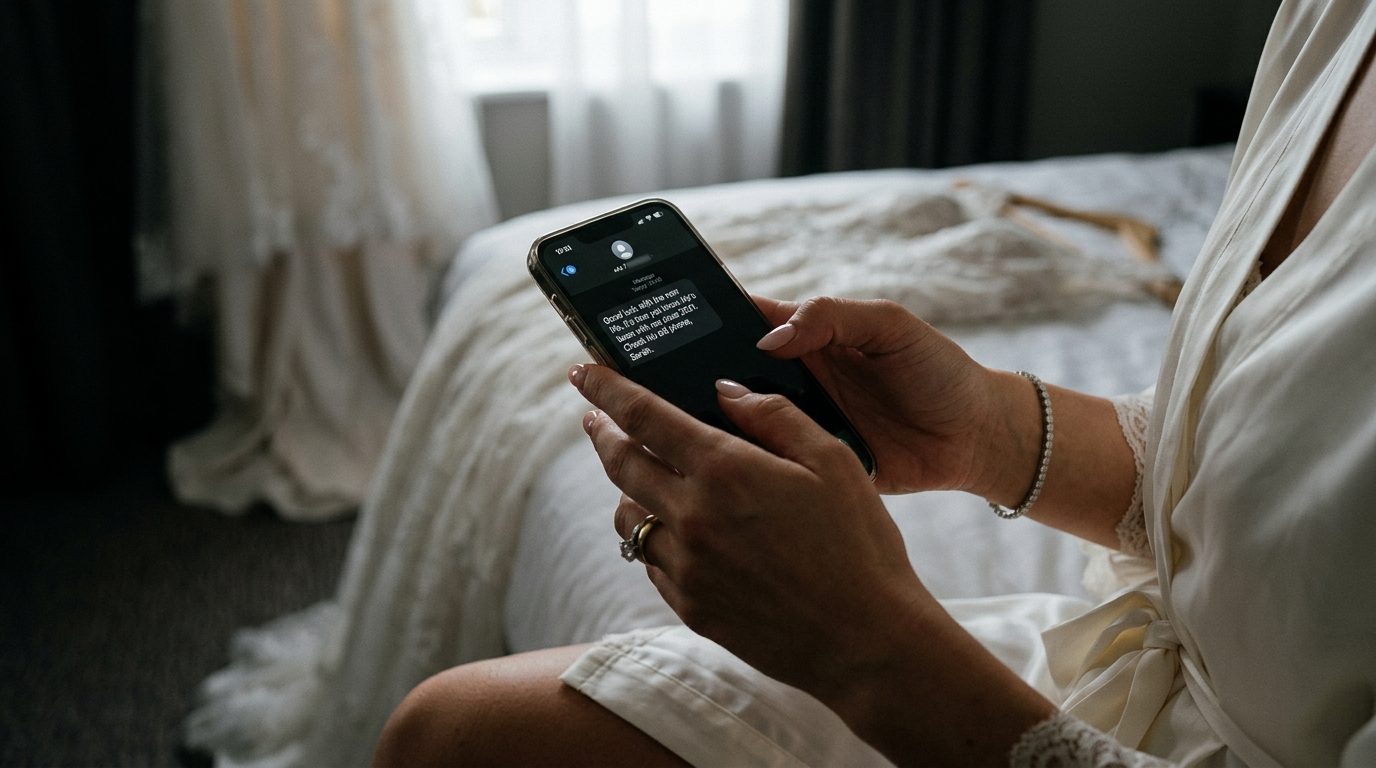
A 2022 wedding in Edinburgh. The reception ended at midnight. The couple went to the honeymoon suite.
The following morning, while the groom slept, the bride opened her own phone. She had a message from a friend of the groom. It read: “I can’t watch this. He’s been seeing someone for two years. I’m sorry. I should have told you before.”
The bride woke her husband. He confirmed it. He said the relationship had ended six months earlier. He had not told her because he wanted to protect her.
She called her parents. They drove from a hotel 12 miles away and arrived within the hour. She left with them.
They separated immediately. The groom contested the divorce on the grounds that the affair had ended before the wedding. The divorce was granted 14 months later.
Case 5: the guest list overlap
A 2025 wedding in the West Midlands. During the reception, the bride’s aunt approached her at the top table and asked, quietly, who the woman near the bar was. The bride did not recognise her. The aunt said she recognised her from photographs she had seen, and that she believed this woman had been in a relationship with the groom.
The bride spoke to the woman during the evening. The woman had been invited by a groomsman who did not know the history. The woman confirmed she had ended a 2-year relationship with the groom 4 months before the wedding. The groom had not told the bride this relationship had existed.
The couple stayed at the venue that night, in separate rooms.
They attempted reconciliation for 8 months. The core issue was not the previous relationship — it was the fact of its concealment. They separated 11 months after the wedding.
Cases 6-8: the shorter accounts
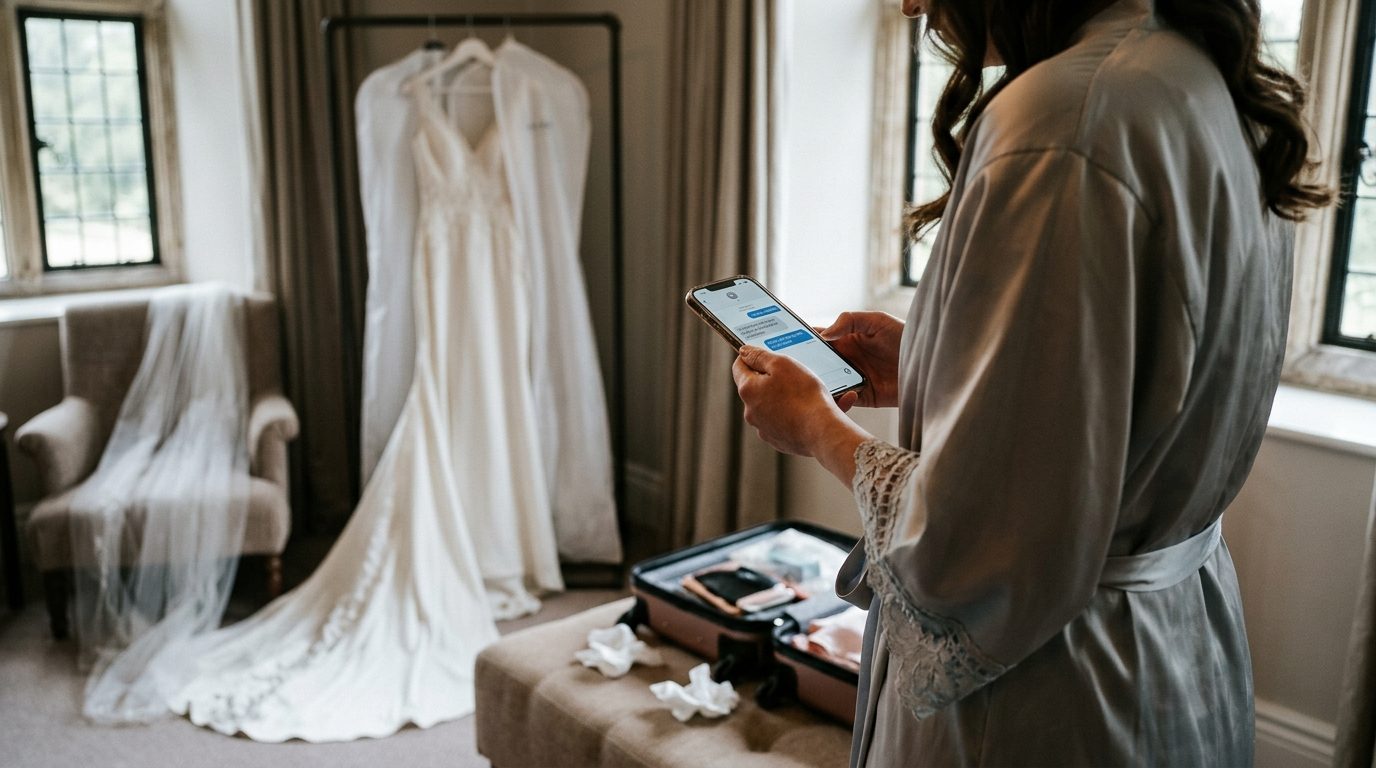
Case 6 (Kent, 2021): The bride received a message from an unknown number at 7am on the morning of the wedding. It said: “Ask him about [woman’s name]. I’m not the only one you should be asking about.” She showed her maid of honour. They spent 2 hours attempting to verify or disprove the claim. They could not confirm it. She went ahead with the wedding. The relationship ended 16 months later after a different infidelity came to light.
Case 7 (North Yorkshire, 2022): The father of the groom told the bride, at the venue before the ceremony, that he had “serious concerns” about whether his son was being faithful. He cited no specific evidence. The bride asked the groom directly. He denied everything. She went ahead with the ceremony. The marriage lasted 9 months.
Case 8 (London, 2024): The bride’s sister showed her a dating app profile — created 3 weeks before the wedding — with a photo she recognised as her fiancé. She confronted him 4 hours before the ceremony. He said it was a profile he had forgotten to delete from before they were together. The timeline did not support this. She cancelled the wedding. They have not spoken since.
The financial reality of cancelling
One of the reasons only 2 of the 8 couples went ahead with the wedding on the original day — and one of the reasons 3 of the remaining 6 eventually married at rescheduled ceremonies rather than never marrying — is money.
On the average UK wedding budget of £21,990, most supplier contracts contain cancellation clauses that retain 50-100% of the deposit if cancelled within 90 days of the date. Venue fees are typically the largest single item: £3,000-£8,000 for a venue hire fee that is non-returnable.
The total financial exposure for a same-day cancellation on an average UK wedding is typically £8,000-£14,000 in non-recoverable costs.
Wedding insurance can mitigate this. A standard policy from around £79 covers supplier failure and some categories of cancellation. Most policies exclude cancellation due to “change of mind” by one of the parties. Some specialist policies include cover for “irreconcilable breakdown” if documented by a third party such as a counsellor.
If you are planning a wedding and have any uncertainty about the relationship, read our wedding insurance guide before you sign the first supplier contract. Not because you expect to need it — but because the cost of not having it, in the scenarios above, is significant.
What the people who cancelled told us
Every person who cancelled their wedding on or around the day was asked the same question: “Do you regret the decision?”
Every one of them said no.
The reasons varied. Some said they had known, at some level, that the relationship was not right, and that the discovery gave them permission to act. Some said the financial loss was painful but that it was a one-time cost, whereas staying would have been a recurring one. Two said they regretted not having discovered the information sooner.
For related reading, see our piece on he cheated the night before the wedding and signs you should not marry him.
Related articles
Frequently asked questions
What should I do if I discover cheating on my wedding day?
Remove yourself from the immediate situation first. You do not have to make any decision about the wedding in the next 60 minutes.
Should I still get married if I found out my partner cheated recently?
That is a deeply personal decision. No one should pressure you to proceed or to cancel. Give yourself time before deciding.
Can you cancel a wedding on the day without losing your deposit?
Unlikely. Most UK venue contracts do not allow same-day cancellation without forfeiting the full venue fee. Wedding insurance may cover some costs.
What are the financial implications of calling off a UK wedding last minute?
Couples typically lose 50-100% of supplier deposits. On an average £21,990 UK wedding, that can be £8,000-£14,000 in non-recoverable costs.
Is there any legal recourse if a partner's infidelity causes you to cancel the wedding?
In England and Wales, you can sue for certain provable financial losses in specific circumstances, but these cases are rare and rarely successful.
How do couples recover after discovering infidelity close to the wedding?
Some couples attend counselling and reschedule. Others separate immediately. Of the 6 who did not marry on the original date in our cases, 3 later married after reconciliation.