9 Things UK Brides Have Banned Guests From Doing
Key Takeaways
- The most common ban: phones during the ceremony — requested by 52% of couples in the survey
- The most controversial ban: outfit colour restrictions beyond white and ivory — now requested by 31% of couples
- 14% of couples said they had removed a guest from the final list after refusing to comply with a stated rule
- Guest bans that are communicated clearly and early almost always generate compliance — bans that emerge as surprises on the day create conflict
Ban 1: No phones during the ceremony
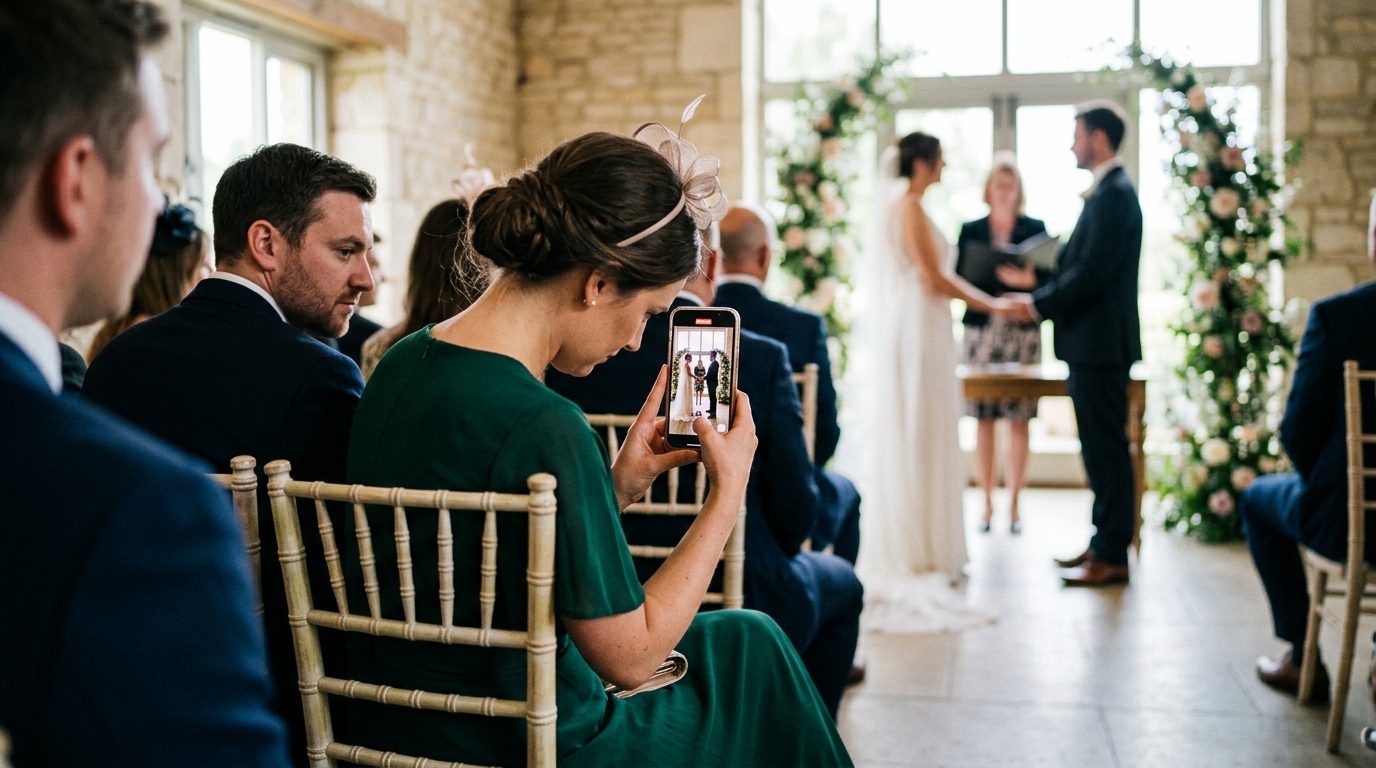
The reason: Guests who hold up phones during a ceremony appear in the background of the couple’s professional photographs. They also create a psychological barrier — the couple is watching their guests experience the wedding through screens rather than being present.
Is it justified? Almost universally, yes. The professional photographer is capturing everything. A guest’s phone photograph of the ceremony will not be as good as the professional image, will almost certainly duplicate what the photographer is taking, and will create a visual distraction in the backgrounds of the photographs the couple will keep for life.
How to enforce it: State the request on the invitation, on the wedding website, and have the officiant repeat it at the start of the ceremony. A polite, positive framing — “we invite you to be fully present with us” — works better than a prohibition framing.
Ban 2: No posting on social media before the couple does
The reason: Couples want to control the first announcement of their own wedding. Many have arranged to share their first photographs through a specific channel — a personal Instagram, a family WhatsApp, a wedding website — and want the images to be from their professional photographer rather than guest snapshots.
Is it justified? For the ceremony and couple portraits, yes. For general reception photographs, many couples are relaxed. The most reasonable version of this ban is: do not post any photographs of the ceremony, the dress, or the couple until the couple posts first.
Ban 3: No white, ivory, cream, or near-white outfits
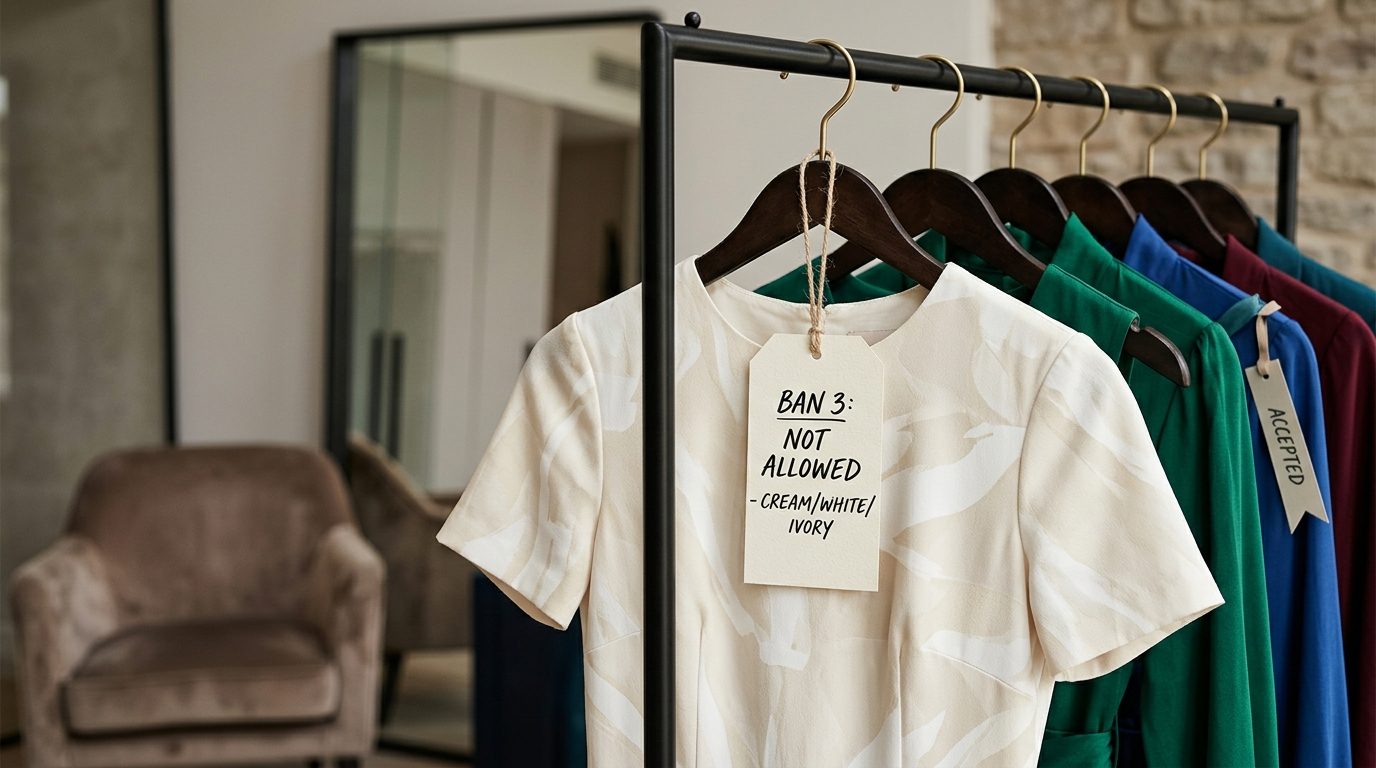
The rule against white as a wedding guest colour is not new. But the application of that rule has expanded in recent years. Thirty-one per cent of couples now explicitly extend the colour restriction to ivory, champagne, cream, ecru, pale blush, and some shades of silver.
The reason: The bride typically wears one of these shades. A guest in a similar shade creates visual competition in photographs and is widely perceived as a breach of the convention that the bride should stand out.
Is it justified? The core rule — no white — is universally accepted. Extensions into champagne, pale gold, and blush are increasingly common but remain somewhat contested. The safest approach as a guest is to avoid any shade that could appear to be trying to blend with or match the bride.
What about men’s guests? Cream suits and off-white linen have become popular choices for male wedding guests in summer. Some couples are now explicitly addressing this — a cream or ivory suit on a male guest is subject to the same reasoning as on a female guest.
Ban 4: No plus-ones who weren’t explicitly invited
The reason: Budget, seating capacity, and catering numbers. At £272 per head average in 2026, an unexpected guest at a fully-seated reception is a significant cost. More practically, an unexpected guest often has no seat, no place card, and no catered meal.
Is it justified? Yes. A guest who arrives with an uninvited companion is imposing a cost and a logistical problem on the couple. If you want to bring someone who was not named in your invitation, ask the couple directly and in advance. Do not assume.
Ban 5: No children unless named on the invitation
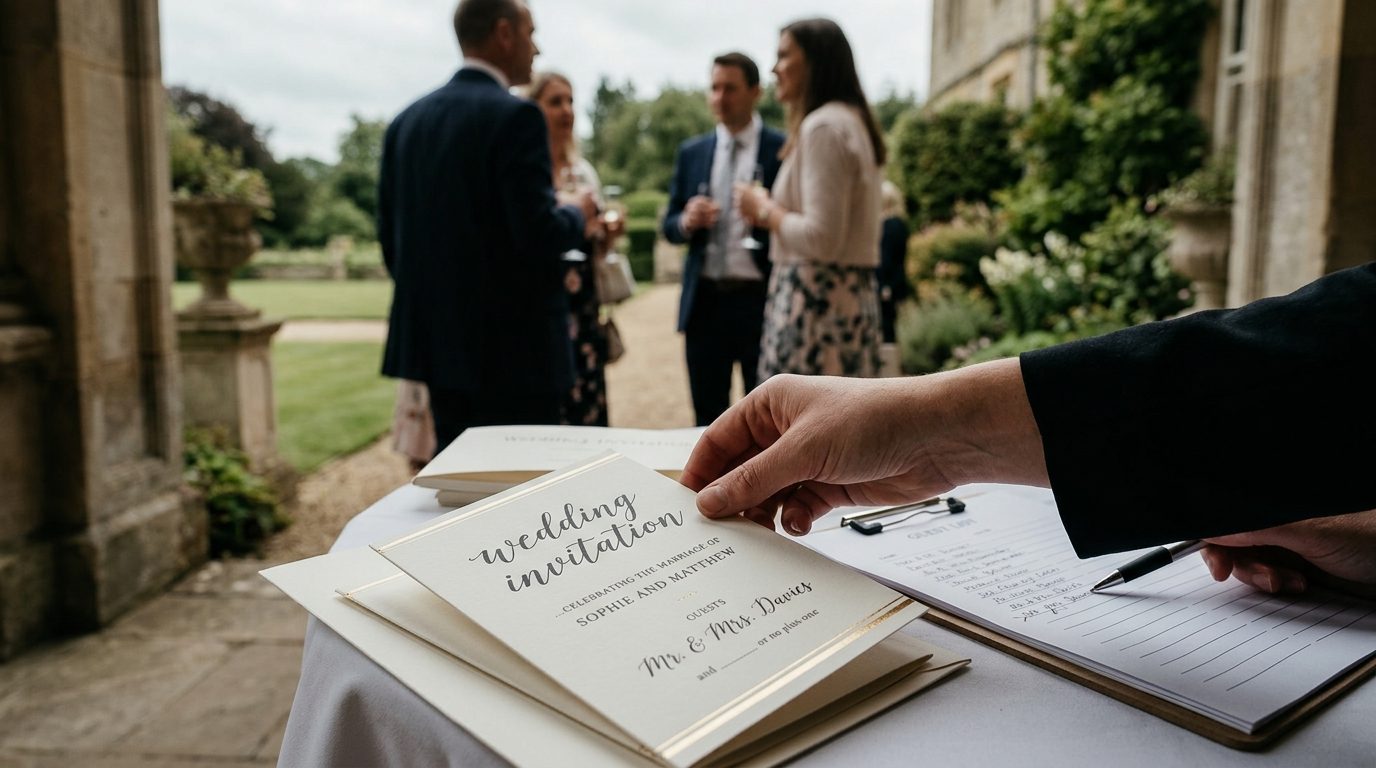
The reason: Noise, catering numbers, liability, and personal preference. Many couples want an adult atmosphere. Many venues have noise and capacity rules that are affected by the presence of children.
Is it justified? Yes, completely. A child-free wedding is the couple’s right. As our child-free weddings UK etiquette guide covers in detail, 87% of UK adults now consider a child-free wedding a legitimate choice. The correct response from guests is compliance or a gracious decline.
Ban 6: No cash gifts outside the gift list or fund
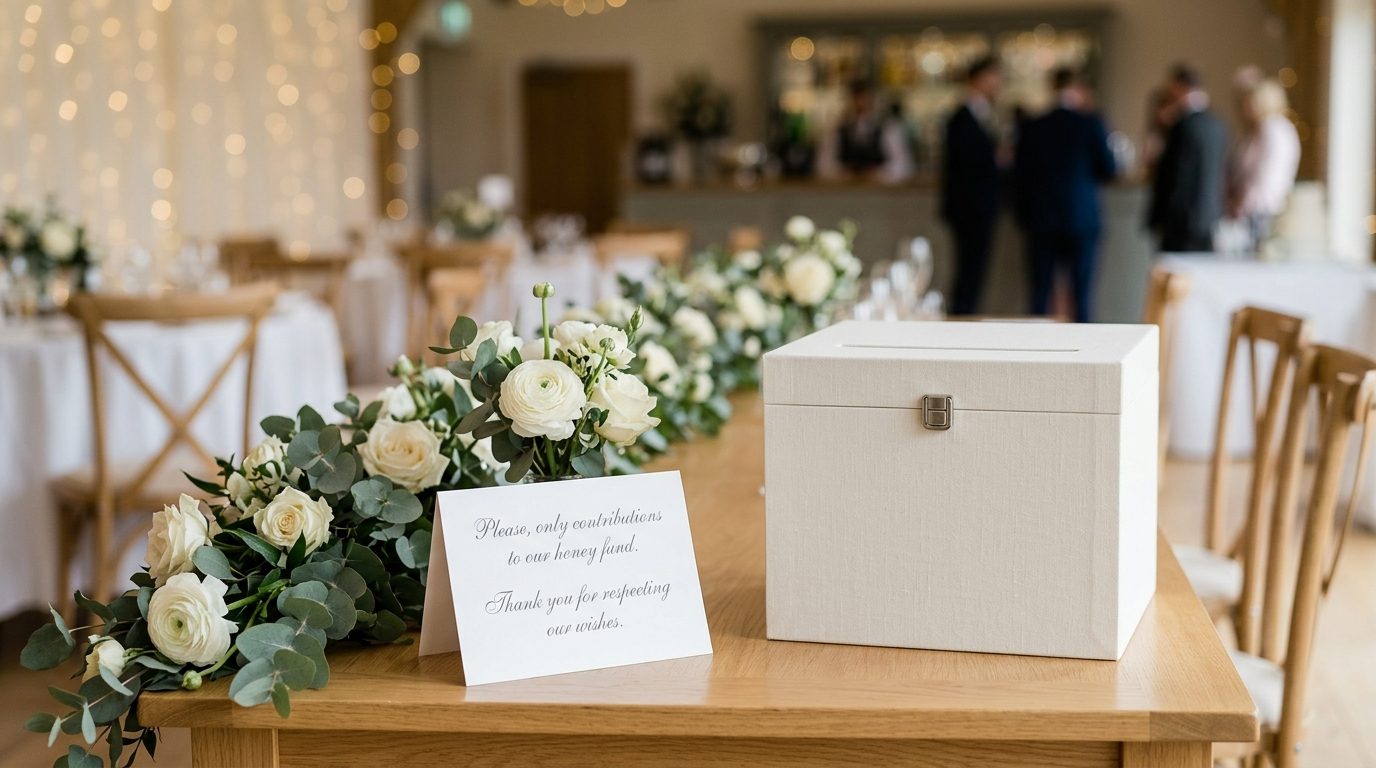
The reason: A £50 cash envelope handed at the reception is harder to track than a contribution to a fund. It requires the couple to manage cash on the busiest day of their lives. It also bypasses the gift list, which exists specifically to allow the couple to receive things they actually need.
Is it justified? Reasonable, if communicated clearly. Most guests who bring cash envelopes do so from good intentions — they want to give something flexible. Directing them to a fund in advance is a practical solution that avoids the problem entirely. See our guide on wedding gift etiquette for UK guests for the current norms.
Ban 7: No asking about pregnancy or family plans during the wedding
This is one of the newer informal bans that some couples have started making explicit — particularly in cases where they are navigating fertility treatment, a recent loss, or simply a persistent family member.
The reason: Weddings generate a specific kind of family pressure around reproduction. For couples who have been trying, who have experienced a loss, or who simply do not want children and are tired of explaining that, the wedding day is the wrong time for this conversation.
Is it justified? Yes, without reservation. A couple who asks that a specific topic not be raised on their wedding day is making a reasonable request. Guests who ignore it are prioritising their own curiosity over the couple’s comfort.
Ban 8: No speeches from people not on the programme
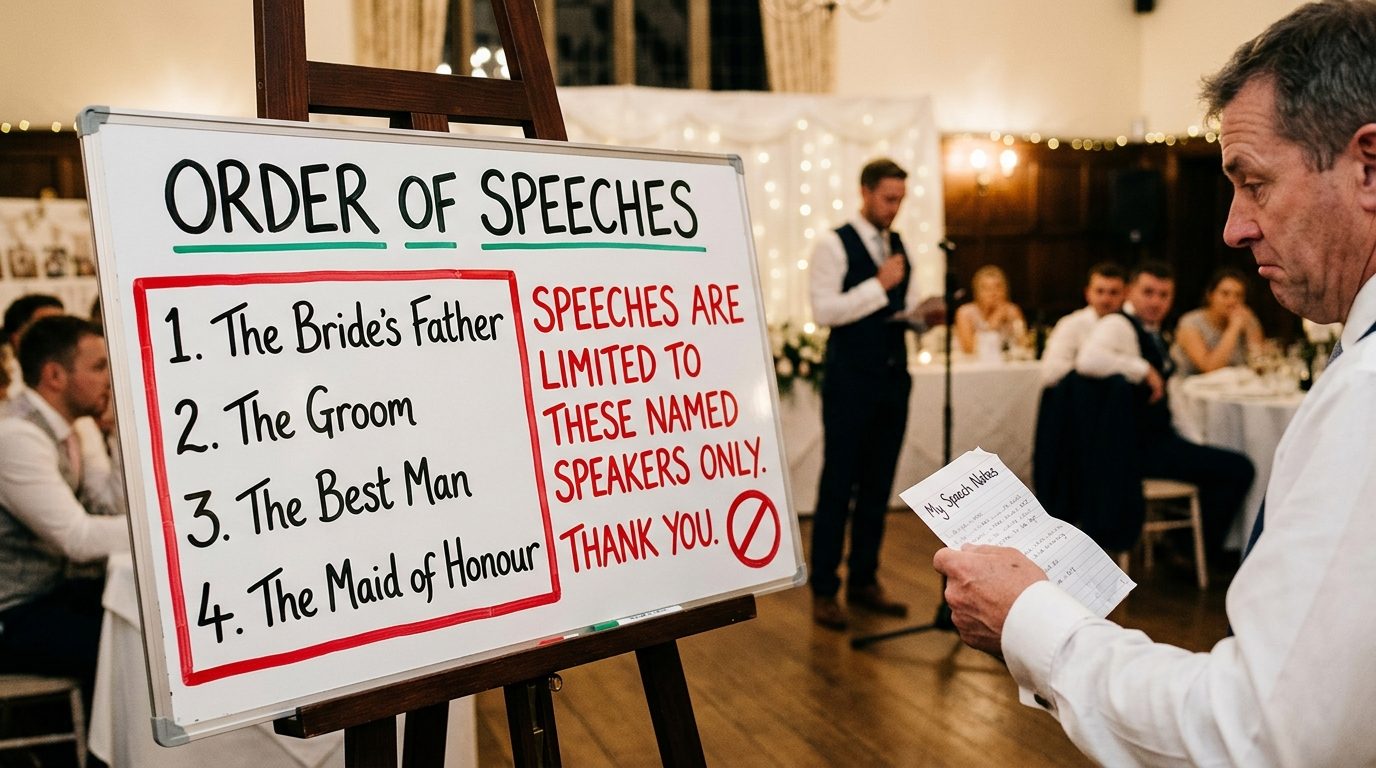
Eleven per cent of couples said they had specifically told family members in advance — most often a parent — that only the programme speeches would be permitted, and that additional speakers would not be called.
The reason: Unsolicited speeches are one of the most common wedding day problems. A parent who feels they should have been given a speech slot, a friend who decides on the day to add to the programme, or an uncle who stands up after too much champagne all create the same problem: the couple loses control of their own event.
Is it justified? Yes. If the couple has not asked you to speak, you are not speaking. This is not negotiable.
Ban 9: No dietary requests beyond those submitted before the deadline
Six per cent of couples had addressed this in their invitation materials: dietary requirements needed to be confirmed by a specific date, and late requests could not be accommodated.
The reason: Catering at large weddings is planned weeks in advance. A guest who presents a dietary requirement at the table — or, worse, declares an allergy after the meal has been served — creates a serious problem for the kitchen and potentially a safety issue.
Is it justified? Yes, with appropriate advance notice for genuine needs. Dietary requirements that are medically necessary should always be communicated early and will always be accommodated by a professional caterer. Preferences submitted after the deadline, however, are a logistical imposition on the catering team.
The pattern across all 9 bans
Looking at the list, the bans that generate the most conflict share one characteristic: they were not communicated early or clearly. Every ban that was stated on the invitation, repeated on the wedding website, and reinforced at the point of contact by the couple or their coordinator produced high compliance. Bans that emerged as surprises — enforced at the door, or in the ceremony itself — produced conflict.
If you are planning a wedding and considering any of the restrictions above, the advice is simple: communicate them early, explain the reason briefly, and make them feel like a request rather than an ultimatum. Almost all guests will comply.
If you are a guest and you have received a wedding invitation with rules you disagree with, you have two options: comply, or decline. Neither option involves negotiating the rule, ignoring it, or arriving and expecting an exception.
Frequently asked questions
Are brides allowed to ban guests from wearing certain colours?
Yes. A couple can request any dress code they choose on a private invitation. Guests can comply, decline the invitation, or discuss exceptions with the couple in advance. There is no etiquette rule that prevents specific colour requests.
Can a couple ban phones at their wedding?
Yes, and it is increasingly common. An unplugged ceremony is a reasonable request that most guests respect. The request is most effective when stated on the invitation, the wedding website, and by the officiant before the ceremony begins.
Is it rude to ban children from a wedding?
No.
Can couples stop guests from posting to social media?
They can request it. They cannot enforce it legally. A clear request — in the invitation, on the wedding website, and verbally on the day — produces the highest compliance. Most guests will respect a specific and polite request.
Can a bride ban a specific guest from attending?
Yes. A private wedding invitation is not a public event. The couple can invite whoever they choose and disinvite whoever they choose, subject to no legal obligation to include specific people.
What happens if a guest breaks a rule the couple has set?
The couple's pre-designated point of contact — a coordinator, usher, or trusted friend — should handle it calmly and privately. Confronting a guest yourself on the wedding day creates a scene that becomes the story.
Are wedding bans becoming more common in the UK?
Yes. Our 2026 survey found that 67% of UK couples enforce at least one formal ban, up from 51% in 2023. The increase is driven by the unplugged ceremony trend and heightened awareness of social media's impact on wedding days.