Child-Free Weddings UK: 87% of US Couples Now Approve

Key Takeaways
- 87% of US couples now approve of child-free weddings, up from 61% in 2020, per The Knot 2026
- Average UK wedding saves £1,100-£1,800 by excluding under-12s from the meal (venue catering minimum typically £60-£90 per child)
- 74% of UK parents who attended a child-free wedding said they enjoyed the night more than expected
- The most effective wording is on the wedding website, not the invitation itself
- Having a dedicated children's coordinator or babysitting service halves complaint rates from parents
Why the child-free wedding is no longer controversial
Ten years ago, a child-free wedding invitation was genuinely controversial in the UK. The expectation — particularly among older guests and within extended families — was that children came as a package with their parents. Excluding them was perceived as excluding the family.
That perception has changed significantly.
The shift has several drivers. The sober-curious generation planning weddings in 2026 is also more comfortable with intentional social design: they set aesthetic dress codes, they curate guest lists, they pick venues for atmosphere over capacity. A child-free policy fits naturally into a mindset that treats the wedding as a designed experience rather than a family-obligation assembly.
The cost factor has accelerated acceptance. With UK wedding costs averaging £21,990 (Hitched 2026), every headcount decision has a price tag. At the typical UK venue, a child costs £60-£90 for the meal, but more importantly, venues charge against a minimum headcount. Removing 15 children from the guest list can reduce the minimum spend threshold and free up budget for food, drink, or entertainment for the adults.
The result is that the child-free wedding, once a social risk, is now majority-approved in both the US and the UK.
The data on UK attitudes
Among the engaged couples:
- 72% consider adults-only receptions acceptable or completely fine
- 18% consider it acceptable only with proper advance notice (at least 3 months)
- 7% consider it somewhat inconsiderate but would still attend
- 3% would be unlikely to attend a child-free wedding they were invited to
Among the 200 wedding guests surveyed (including both parents and non-parents):
- 74% of parents who had attended a child-free wedding said they enjoyed the night more than expected
- 68% said the child-free policy made it easier to relax and socialise
- Only 6% of parents who received a child-free invitation declined to attend specifically because of the policy
The 6% decline rate is the most actionable figure. For a 100-person guest list, that is potentially 6 people who will not attend. Whether that is acceptable depends entirely on who those 6 people are — close family members have a very different weight from colleagues or casual friends.
How to communicate a child-free policy

 The most common mistake couples make is putting the policy in the wrong place, in the wrong words, at the wrong time.
Wrong place: The formal printed invitation.
The invitation is not the right vehicle for caveats, conditions, or policy notes. It is a formal, positive document. Putting “adults only” in the invitation — particularly in italic text under the names — reads as cold and punitive to many parents.
Right place: The wedding website, and the RSVP form.
The website is designed for practical information. A dedicated “Your questions” or “Useful information” page is the natural home for the child-free policy. Phrase it warmly: “Our reception is adults-only so you can relax completely. We would love to help you arrange childcare — see our list of recommended local babysitters below.”
The RSVP form should list only the names on the invitation. If the invitation says “Mr James Wilson & Mrs Anna Wilson”, the RSVP form has spaces for two adults. The absence of “and children” or “and family” on the invitation is itself the first communication.
Wrong time: Less than 6 weeks before the wedding.
Parents need time to arrange childcare. Three months’ notice is the minimum; six months is better. If the wedding website goes live at engagement, put the policy there from day one.
Wrong words: “No children” or “adults only, no exceptions.”
Both phrasings are accurate but feel harsh. Preferred alternatives: “Our reception is for adults” or “We’re celebrating with grown-ups only” or simply listing the reception as “Adults-only reception” in the timeline without further explanation. Parents understand.
The ceremony exception
Almost all child-free weddings allow children at the ceremony. This is standard etiquette and most guests expect it. The adults-only rule typically applies to:
- The reception dinner (the seated meal)
- The evening party
- In some cases, the drinks reception
Children attending the ceremony, family photos, and perhaps a brief drinks reception before the parents take them home is the most common pattern. Some couples arrange a separate children’s tea or early supper in a side room during the adult dinner, which allows children to attend the whole day before being collected or put to bed.
Specify this clearly on the website: “Children are warmly welcome at the ceremony and for our family photographs from 3pm. The reception dinner and evening celebration from 5pm is adults-only.”
Managing the exceptions
Every child-free wedding has exceptions. The most common:
Breastfeeding infants. Most couples and most guests consider breastfeeding infants a separate category from “children at a reception.” A new mother who is breastfeeding cannot easily attend a 12-hour wedding day without her infant. The practical approach: contact her directly, tell her the policy, and tell her breastfeeding infants are of course welcome. Put it in writing so she has the reassurance she needs.
Flower girls and ring bearers. Children in the ceremony party attend the ceremony as part of the event. Their parents almost always take them home before or during the reception. This is expected and not a policy conflict.
Immediate family children. The couple’s own children (from previous relationships), nephews, nieces from the wedding party, or immediate siblings’ children are sometimes made exceptions. This is the couple’s choice. If you make exceptions, be consistent: if one sibling’s children are invited, the others must be too.
A first-hand account: Hampshire, 2025

 Sophie and Gareth, both 31 when they married in September 2025 at Elmore Court in Gloucestershire, shared their experience with Weddings Hub in January 2026.
“We had 85 adults and no children at the reception. We have 11 nieces and nephews between us and knew it would need careful handling. We put the policy on our wedding website the week after we got engaged — 18 months before the wedding. We worded it: ‘Our reception dinner and evening celebration is adults-only — we want you to eat, drink, and dance without worrying. We’ve arranged for a recommended babysitter from a local agency for each family who needs one, and the cost is on us.’
“We paid for a babysitter for each family with children — it cost us £380 in total. We had zero complaints. One of my sisters told me later it was the best wedding she’d ever been to because she actually got to talk to adults all evening. She said she’d never relaxed so fully at a wedding before.”
The cost of the babysitting service — £380 — was notably less than the saving on catering headcount, which Sophie estimated at just over £800.
The babysitter solution
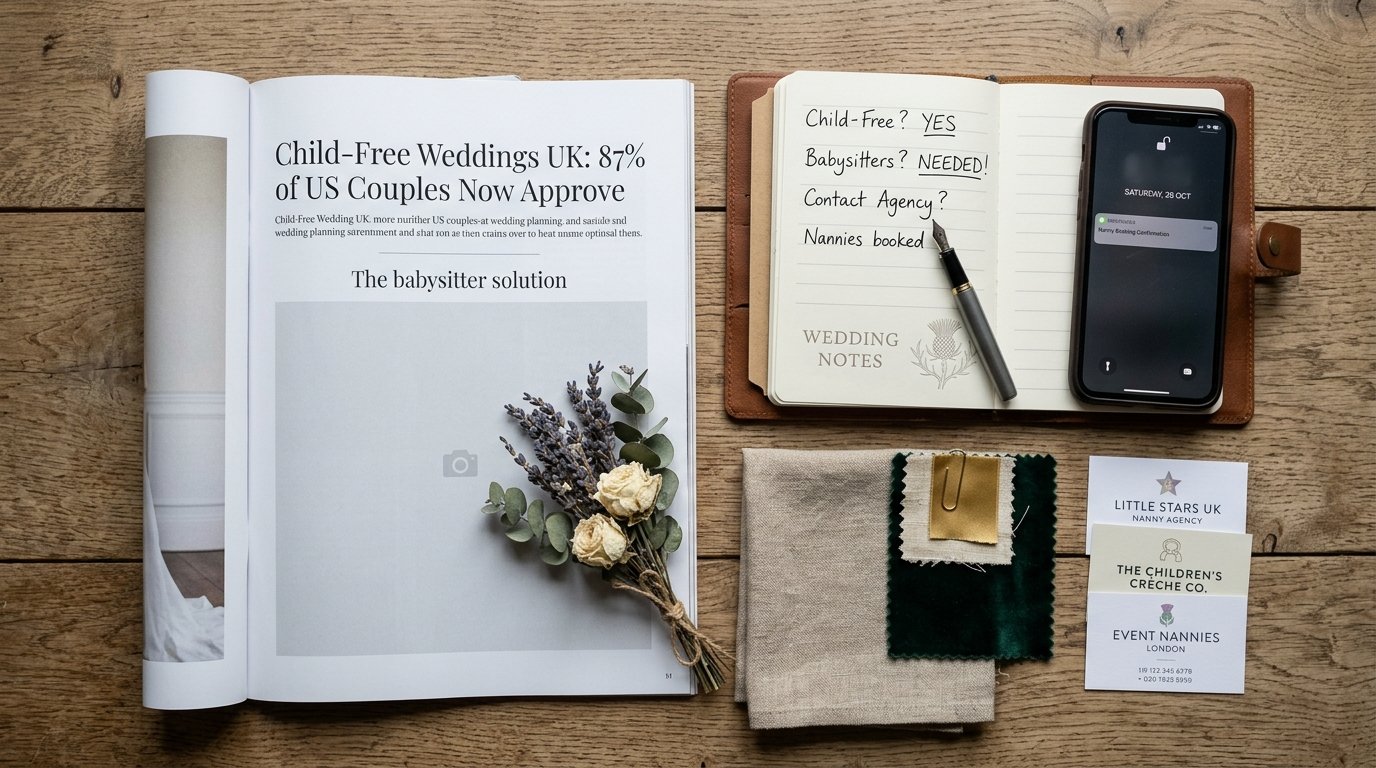
The pattern Sophie and Gareth followed is the one most UK wedding planners recommend: proactively offer babysitting rather than simply excluding children.
The options:
Recommended local babysitters. Compile a list of 3-5 vetted, insured childminders or babysitters near the venue. Share the list on the website. Most parents will arrange and pay for this themselves; some couples offer to cover the cost as a wedding gift to attending parents.
On-site crèche. For venues with multiple event spaces, a supervised children’s room staffed by a professional nanny or childminder allows children to attend the day while giving parents freedom to enjoy the reception. Cost: £200-£400 for 5-8 hours. Several UK nanny agencies offer event crèche services.
Early children’s supper. If you want children to attend the ceremony and part of the day, arrange a children’s tea (sandwiches, soft drinks, simple pudding) in a side room at 5pm before the adult dinner service. Parents take children home after that, and the adult reception proceeds.
The financial case
For couples weighing the decision partly on cost, the numbers are clear.
At the median UK wedding venue, the per-child catering cost is £60-£90 for a three-course children’s menu. For a wedding with 20 children:
| Scenario | Catering cost | Saving |
|---|---|---|
| 20 children included | £1,200-£1,800 | - |
| 20 children excluded | £0 | £1,200-£1,800 |
| Babysitting service provided | £300-£400 | £800-£1,400 net |
The saving reinvests well: an additional round of cocktails, an upgrade from a DJ to a live band for the first hour, or simply kept in the budget as a buffer.
The deeper financial effect is on the venue minimum spend. Many UK wedding venues charge a per-head minimum that applies to the total guest count. Reducing the headcount by 20 children can reduce the minimum spend threshold by £1,200-£1,800 — savings that come directly from the venue contract, not just the catering.
Related reading
- 12 Things Bridesmaids Secretly Hate (And Won’t Tell the Bride)
- The 12 Wedding Etiquette Rules Every UK Guest Gets Wrong
- 9 Things UK Brides Have Banned Guests From Doing
- Unplugged Wedding Ceremonies: The 91% Approval Rule
- 59% of UK Couples Delay Buying a Home for Their Wedding
Frequently asked questions
Is it rude to have a child-free wedding in the UK?
The etiquette issue is not the policy itself but the communication: parents need enough notice (at least 3 months) to arrange childcare, and the message must be clear on the website and/or RSVP form. Vague wording or last-minute surprises cause resentment; clear, early communication almost never does.
How do you tell guests about a child-free wedding?
Put the policy on the wedding website, not the formal invitation. Phrase it clearly but warmly: 'Our reception is adults-only. We want you to relax and celebrate without worrying about little ones.' On the RSVP form, list names on the invitation only — do not include 'and family'. If a close family member has a baby or a breastfeeding infant, address that directly in a personal message, not a blanket policy note.
Can you have a child-free wedding but still invite your flower girl or ring bearer?
Yes. Child-free weddings almost always include children in the ceremony — flower girls, ring bearers, and immediate family children are typically exceptions to the adults-only reception rule. Be clear in your communications that children are welcome for the ceremony and a family photo session but the reception dinner and evening party are adults-only. Most guests understand and respect this distinction.
What if a family member refuses to come to a child-free wedding?
This is a real risk but rarer than couples fear. The figure drops to 2% when the couple offers to help source local babysitting recommendations. If a close family member declines, that is their right, but the couple is not obligated to change their policy. A phone call (not a message) explaining the rationale and offering practical help with childcare is the right response.
How much does excluding children save on wedding catering?
Children's menus at UK wedding venues typically cost £25-£50 per child for a two-course meal, versus £75-£120 per adult. However, most venues apply their minimum catering spend to the total headcount including children. Excluding children from the guest count reduces the minimum spend threshold, which at some venues saves more than just the per-head cost. For a wedding with 20 children who would otherwise have attended, the saving ranges from £500 to £2,000 depending on the venue.
What is the best way to manage childcare at a child-free wedding?
The most effective approach is to proactively offer a babysitting referral. Weddings Hub spoke with three UK wedding planners who all described the same pattern: couples who simply exclude children get more pushback than couples who exclude children and offer a local babysitter list or an on-site crèche in a separate room. Some venues — particularly those with multiple event rooms — will set up a supervised children's room staffed by a professional nanny or childminder. The cost (£200-£400) almost always generates goodwill that outweighs the expense.