Is £50 Enough for a UK Wedding Gift in 2026?
Yes, £50 can be enough for a UK wedding gift. Hitched places £50 to £75 within its suggested range for a friend attending all day, while Prezola reports a higher overall average of about £94. Neither figure is a rule. Your relationship, invitation and budget matter more than matching a national average.
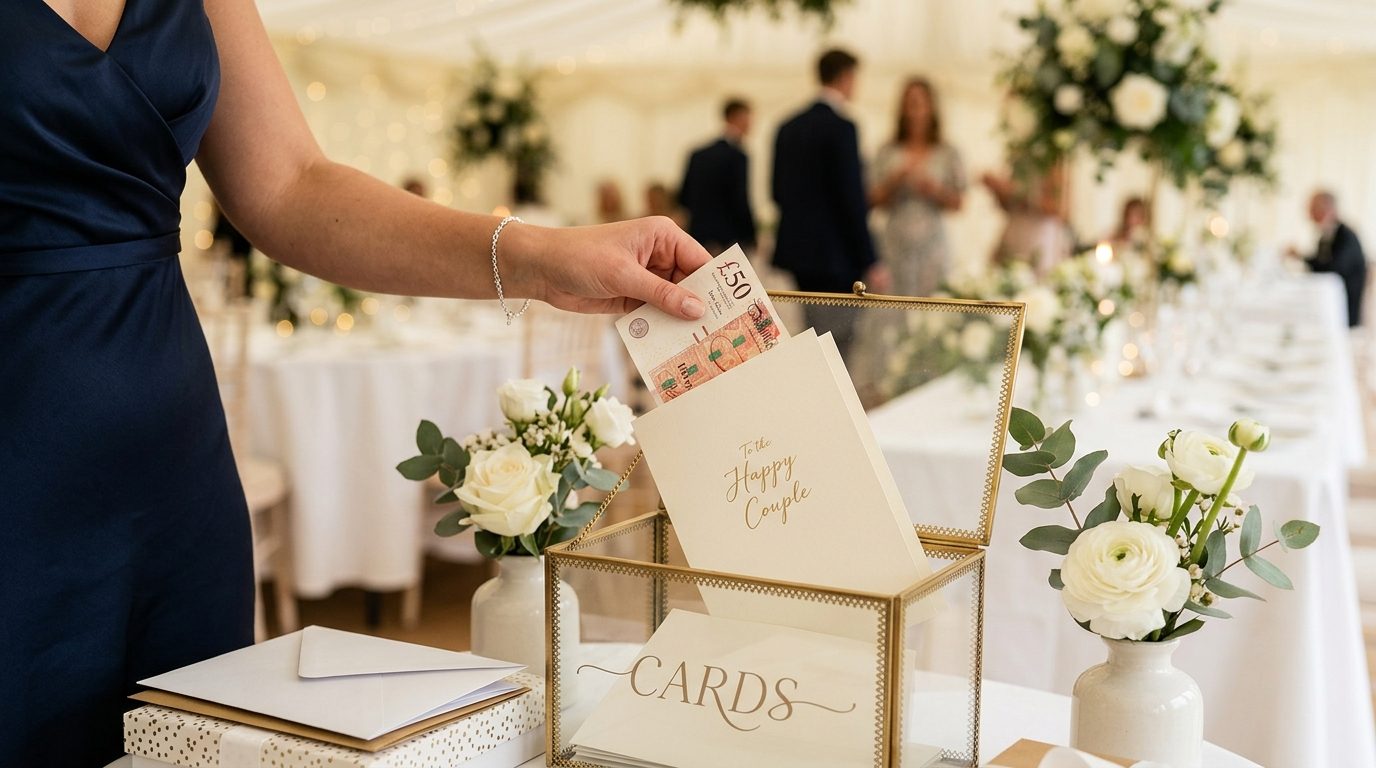
Key Takeaways
- £50 sits within published guidance for some UK wedding guests
- Prezola reports an overall average of about £94, but an average is not a required amount
- Your relationship with the couple, invitation and finances all affect the decision
- You do not need to match the couple's cost per guest
- A personal card is appropriate even when you cannot afford a gift
Yes, £50 can be enough for a UK wedding gift. It is a meaningful sum, and no guest should borrow money or miss a household bill to match an etiquette article.
Published guidance is useful for context, not as a price list. Hitched suggests £50 to £75 for a friend attending the full day. Prezola reports an average wedding gift of about £94 and an average cash gift of £102. Those figures describe different audiences and methods, so they should not be combined into a made-up national rule.
What the published figures tell us
| Source | Published figure | How to use it |
|---|---|---|
| Hitched | £50 to £75 for a friend attending all day | A broad etiquette guide, not a required payment |
| Prezola | About £94 average wedding gift | Platform evidence from people using its gift service |
| Prezola | About £102 average cash gift | Useful context for cash funds, not every UK guest |
The important distinction is between an average and an obligation. An average can be pulled upward by close relatives or guests with more disposable income. It says nothing about what one person can safely afford.
When £50 is a straightforward choice
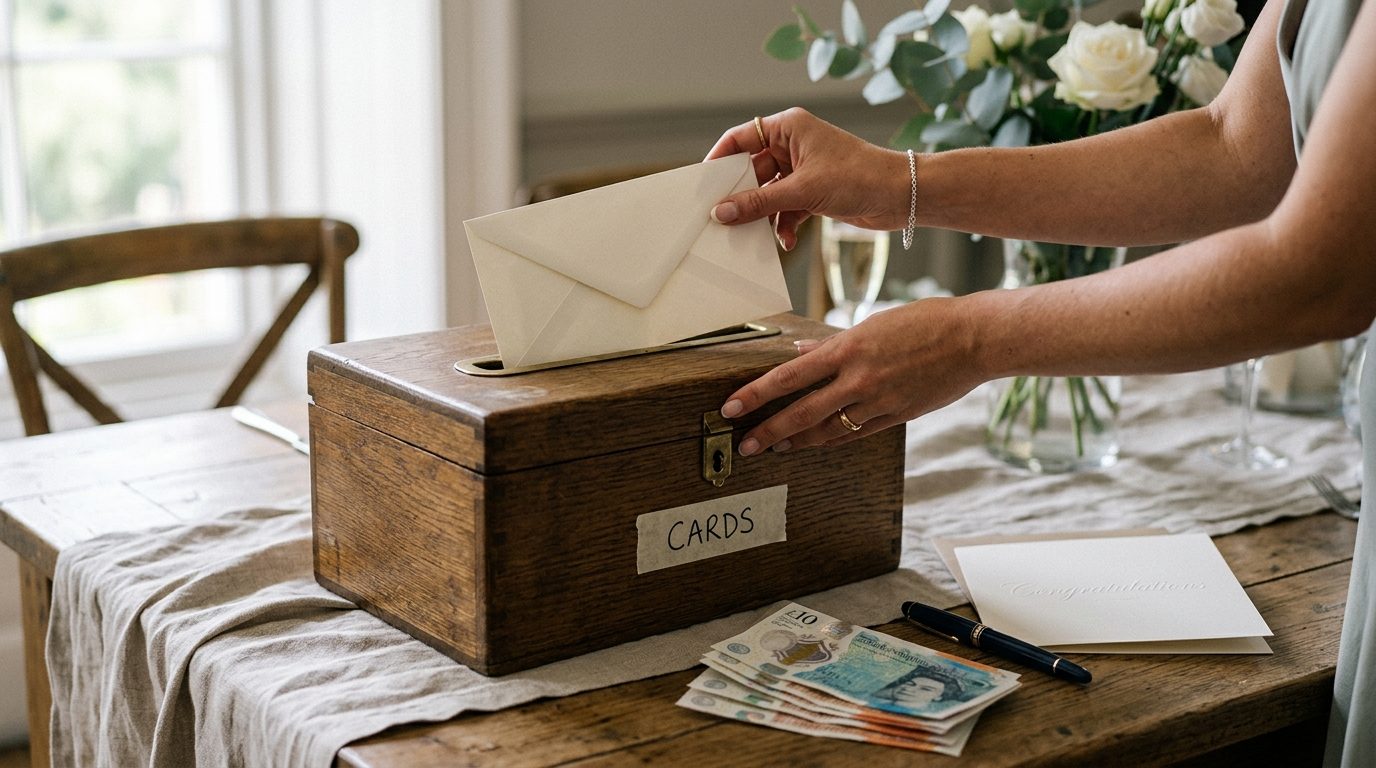
£50 is easy to justify when you are a friend, colleague or evening guest. It is also perfectly reasonable when travel, accommodation, childcare or wedding-party costs have already stretched your budget.
The couple chose to invite you. They did not sell you a place at dinner. You are not responsible for reimbursing their catering cost, and the price of your meal is a poor way to value a friendship.
You might also choose £50 because it buys a specific item on the couple’s list or makes a useful contribution to a honeymoon fund. That is enough reason on its own.
What if you are a close relative or attending as a couple?
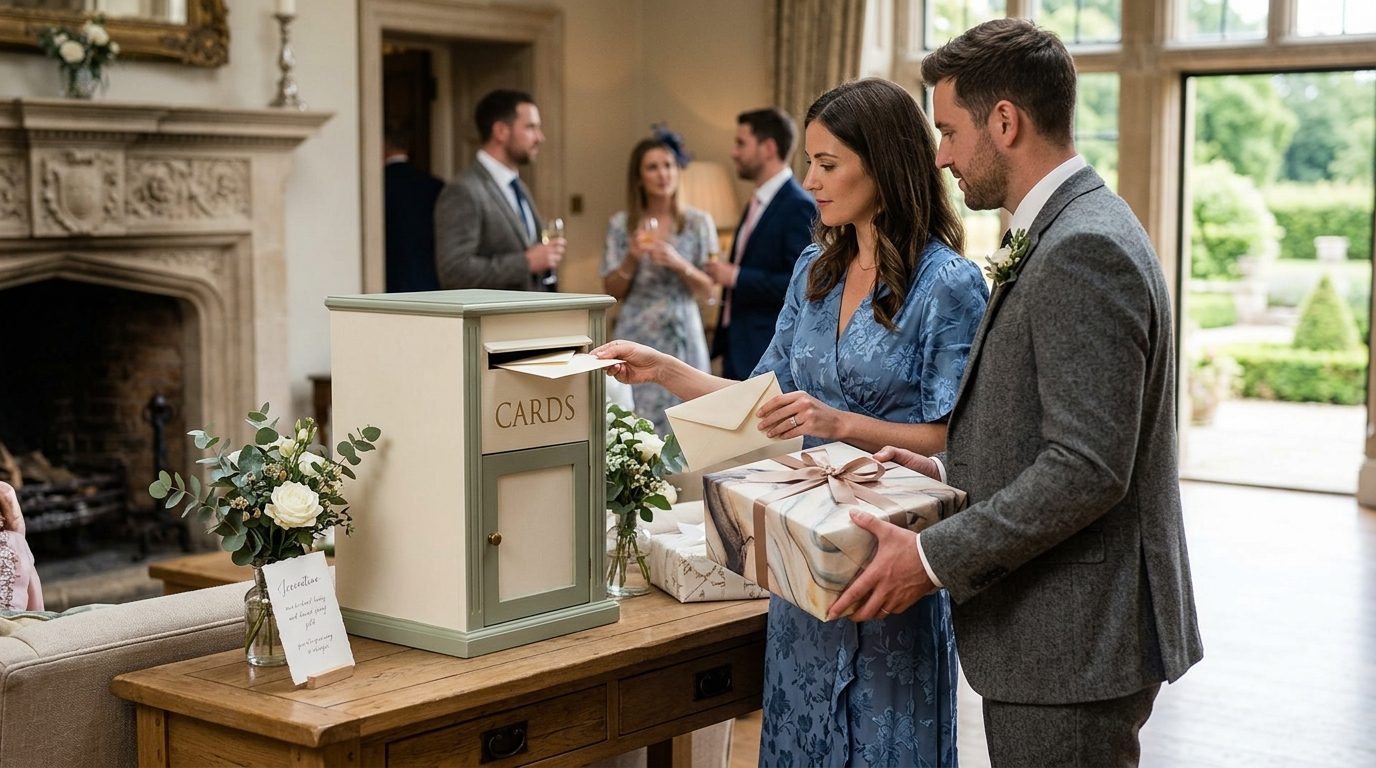
Close relatives often choose to give more, but family position does not create a minimum payment. The same applies to two guests attending together. A couple may decide on one joint gift, two smaller gifts or a sum that reflects a shared budget.
Ask three practical questions:
- What can we give without using credit or cutting essential spending?
- Is there something on the gift list within that amount?
- Have we already paid significant travel, accommodation or wedding-party costs?
If £50 remains the comfortable answer, give £50. There is no need to attach an apology or disclose your finances.
Making a cash gift feel personal
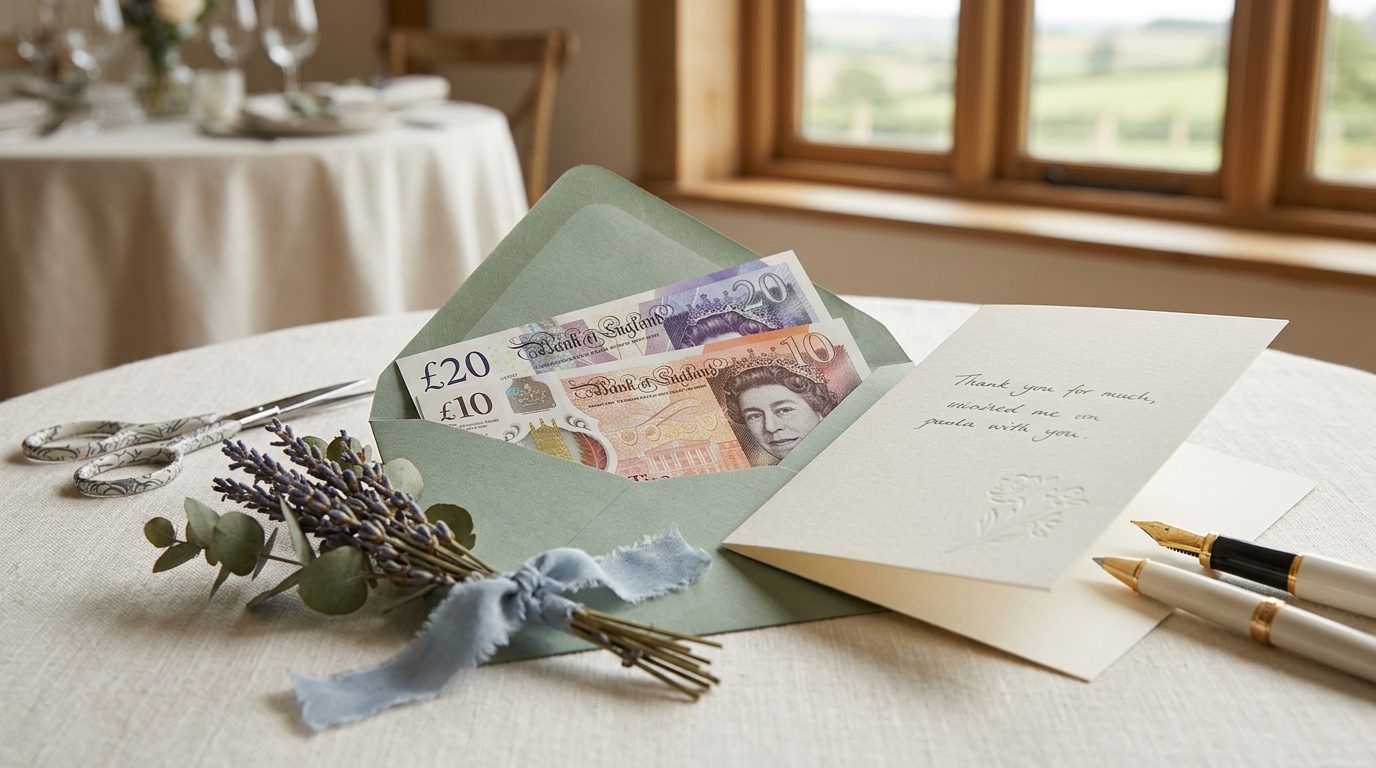
A short handwritten message does more than elaborate packaging. Mention a memory, say what you are looking forward to about their marriage, or wish them well for a plan they have discussed with you.
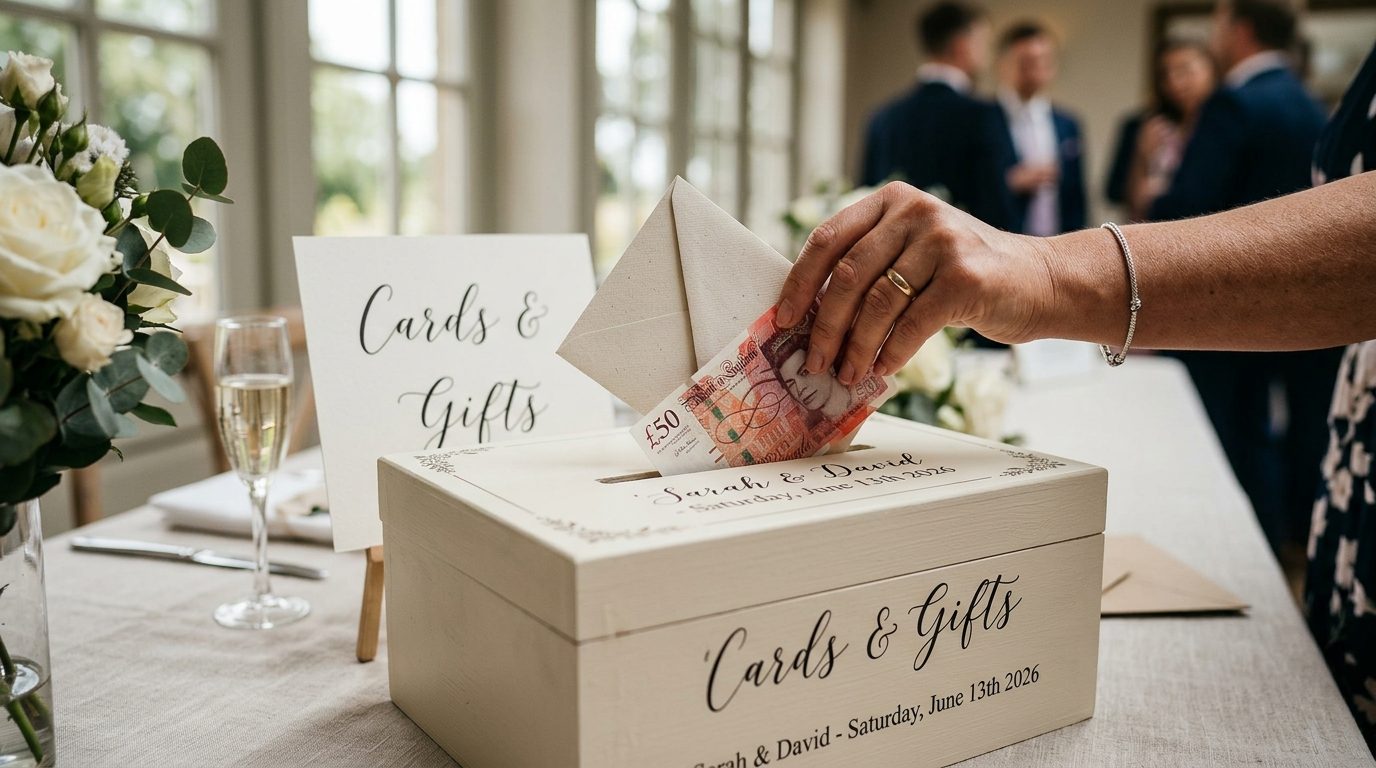
If the couple has a gift list, use the wording and payment route they provide. For cash, follow their instructions rather than bringing a large loose envelope to a busy reception. Some couples prefer a secure card box; others use a managed online fund.
Do not describe a contribution as paying for a named experience unless the couple’s own list uses that format. A plain £50 contribution is still a proper gift.
When you cannot afford £50
Give less, or give a card without money. The honest limit might be £20, a small present from the list or no financial gift at all.
Avoid instalment services, overdrafts and credit cards for wedding gifts. The couple would not reasonably expect a celebration to create debt for a guest. You can also offer practical help if it is genuinely useful, but do not promise unpaid work that the couple has not requested.
The simplest answer is the right one: £50 is enough when it is a comfortable and willing gift. Published averages can provide context, but they do not set the terms of your invitation.
For related advice, read our guide to asking for money as a wedding gift and UK wedding gift etiquette guide.
Frequently asked questions
Is £50 a good amount for a UK wedding gift in 2026?
Yes, it can be. Hitched includes £50 to £75 in its guidance for a friend attending all day, but your budget comes first.
What is the average UK wedding gift amount?
Prezola reports an average gift of about £94 and an average cash gift of £102. These are platform figures, not compulsory amounts.
Is £50 enough from a couple attending together?
It can be. Give an amount you can comfortably afford rather than doubling it automatically.
Should an evening guest give less?
There is no required amount. A smaller gift or a card can be entirely reasonable for an evening invitation.
Is it rude to attend without a gift?
No. A wedding invitation is not an invoice, and a thoughtful card is enough when money is tight.