Second-Marriage Church Weddings UK: A Full Guide
Key Takeaways
- Church of England vicars have had discretion to marry divorced people since the 2002 General Synod ruling under Canon B30
- Both the vicar and, in some dioceses, the Bishop must agree before the service can proceed
- The process typically takes 4-12 weeks from first approach to confirmed booking
- Peter Phillips and Harriet Sperling both divorced required this permission for their 6 June 2026 Kemble wedding
- Around 42% of all UK marriages now involve at least one previously-divorced person
- Roman Catholic, Jewish and some non-conformist denominations have different and often stricter rules
A second-marriage church wedding in the UK is possible, but not automatic. The Church of England gave vicars discretion to conduct these services in 2002. Around 42% of all UK marriages now involve at least one previously-divorced person. Getting the service you want takes an early approach to the vicar, an honest conversation about your circumstances, and typically 4-12 weeks of administrative process.
By Matt, Editor at Weddings Hub. I’ve covered UK wedding law and ceremony requirements since 2018, including the 2022 outdoor-ceremony rule change and the evolving Church of England position on remarriage. Sources include the Church of England’s own Faculty Office guidance, the Diocese of Gloucester’s published policy, and the General Synod report GS 1449.
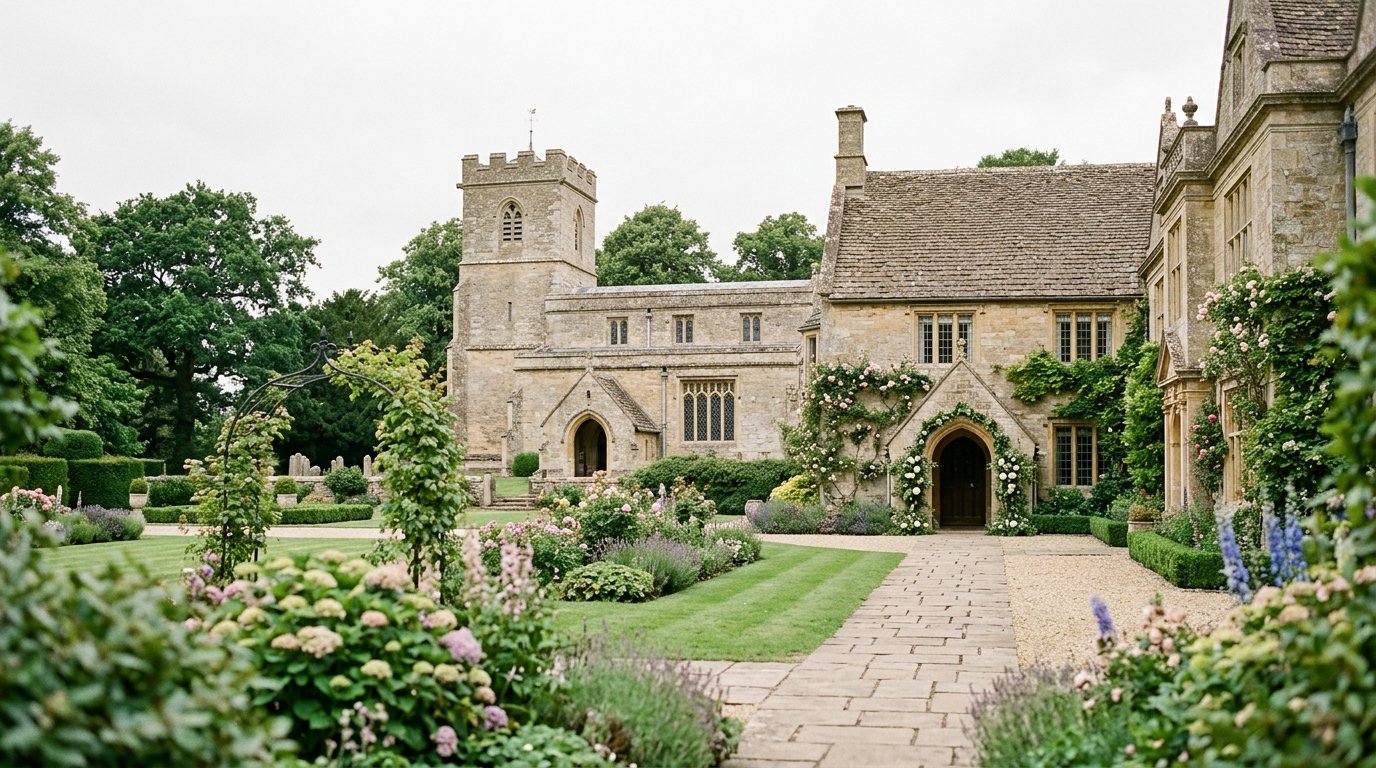
The Peter Phillips and Harriet Sperling wedding on 6 June 2026 has put a spotlight on a rule most couples don’t encounter until they start planning: the Church of England’s position on marrying two divorced people in a parish church. Both Peter and Harriet had been previously married. Their wedding at All Saints Church, Kemble required the incumbent vicar’s agreement and the Diocese of Gloucester’s approval. That process is not unique to royals. It applies to every couple in England who wants a second-marriage church ceremony.
The rule: what Canon B30 actually says
Canon B30 is the Church of England’s governing text on marriage. Before 2002, the Canon contained an absolute prohibition on vicars conducting services for divorced people whose former spouse was still living. Charles and Camilla famously worked around this by having a civil ceremony at Windsor Guildhall in 2005, followed by a Service of Prayer and Dedication at St George’s Chapel.
In 2002, General Synod passed a resolution under the report GS 1449. The resolution allowed vicars to exercise pastoral discretion on a case-by-case basis. It did not compel any vicar to conduct a remarriage. It did not remove the right of refusal. It gave each incumbent the authority to decide, taking into account the circumstances of the couple, the pastoral needs of the parish, and the vicar’s own theological conscience.
The result is a patchwork. A vicar in one parish may happily agree. The vicar in the neighbouring parish may decline on principle. The Diocese sets a framework, not a mandate.
How to approach your vicar
The first contact should be a private conversation, not a booking enquiry. Most vicars will want to meet the couple before agreeing. This meeting is not a formal interview, but it covers three things:
- Circumstances of the previous marriage. The vicar will want to understand that the previous marriage was legally ended. Decree absolute documentation is standard. Some vicars also want to understand, in broad terms, why the previous marriage ended.
- Your connection to the church. Many vicars prefer to marry couples with some existing connection to the parish, either as regular attendees, local residents, or through family links. This is not a legal requirement, but it is a common pastoral preference.
- Your understanding of the ceremony. Second-marriage church weddings are full Anglican ceremonies, not services of blessing. The vicar will explain what the service involves and confirm both parties are willing to make the vows.
If the vicar agrees in principle, they will begin the formal process.
The formal permission process
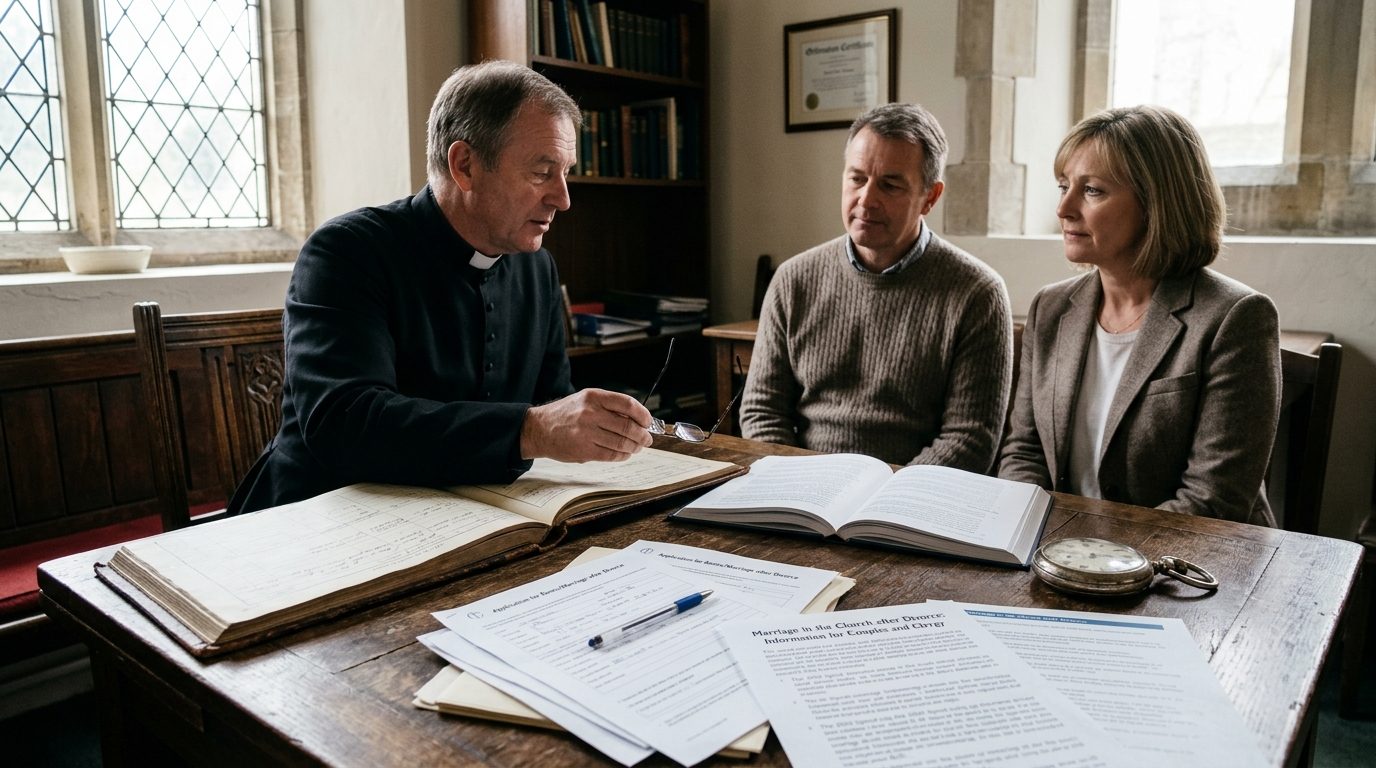
After the initial conversation, the process breaks into four steps.
Step 1: The vicar’s agreement in writing. The incumbent confirms, in a brief note to the Diocese, that they are willing to conduct the service. Some dioceses ask for a standard form. Others simply ask for a letter.
Step 2: Diocesan notification. The Diocese does not have a veto in most cases. Its role is administrative: recording the decision and providing guidance. A small number of dioceses ask the Bishop to be informed of all second-marriage agreements. Fewer still require the Bishop’s explicit written approval. Check with your local Diocese early to understand the exact requirement.
Step 3: Banns of marriage. Banns must be called on three successive Sundays in both the church where the wedding will take place and the church in the parish where each party lives. If you want to marry in a church outside your home parish, you will also need a Common Licence. The Faculty Office issues Common Licences and can advise on the process.
Step 4: Scheduling. Once the formalities are in place, the wedding can be booked into the church calendar. Many popular village churches book up 12-18 months in advance.
The full process, from first contact to confirmed date, typically takes 4-12 weeks. If a Diocese requires Bishop-level approval, allow the longer end of that range.
Why some vicars refuse
Refusal is not a personal judgement on the couple. Some vicars hold a theological position that the marriage vows are permanent and that conducting a ceremony for a divorced person would contradict the Church’s teaching. The 2002 Synod resolution was explicitly designed to protect this right of refusal.
If your first vicar declines, you have clear options. You can approach a different vicar in a different parish. If that vicar agrees, you can apply to call your banns in that new parish. You are not limited to your own parish church, as long as you have a legal connection to the church you choose or hold a Common Licence.
Some couples, after a refusal, choose a civil ceremony followed by a Service of Prayer and Dedication. This was the route Charles and Camilla took in 2005. A dedication service is not legally a marriage, but it allows the couple to make promises in a religious context with a church setting. Many couples find this equally meaningful.
How Peter Phillips and Harriet Sperling’s situation applies to ordinary couples
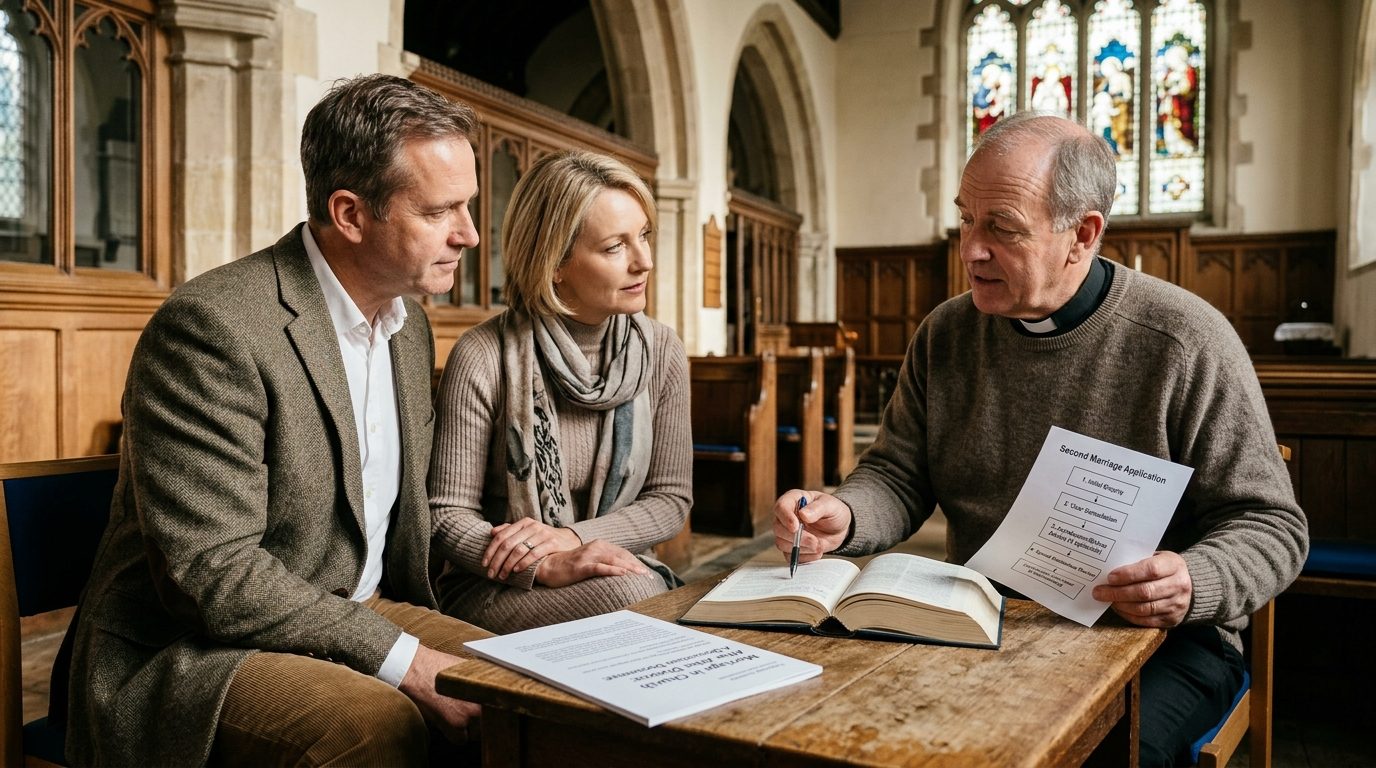
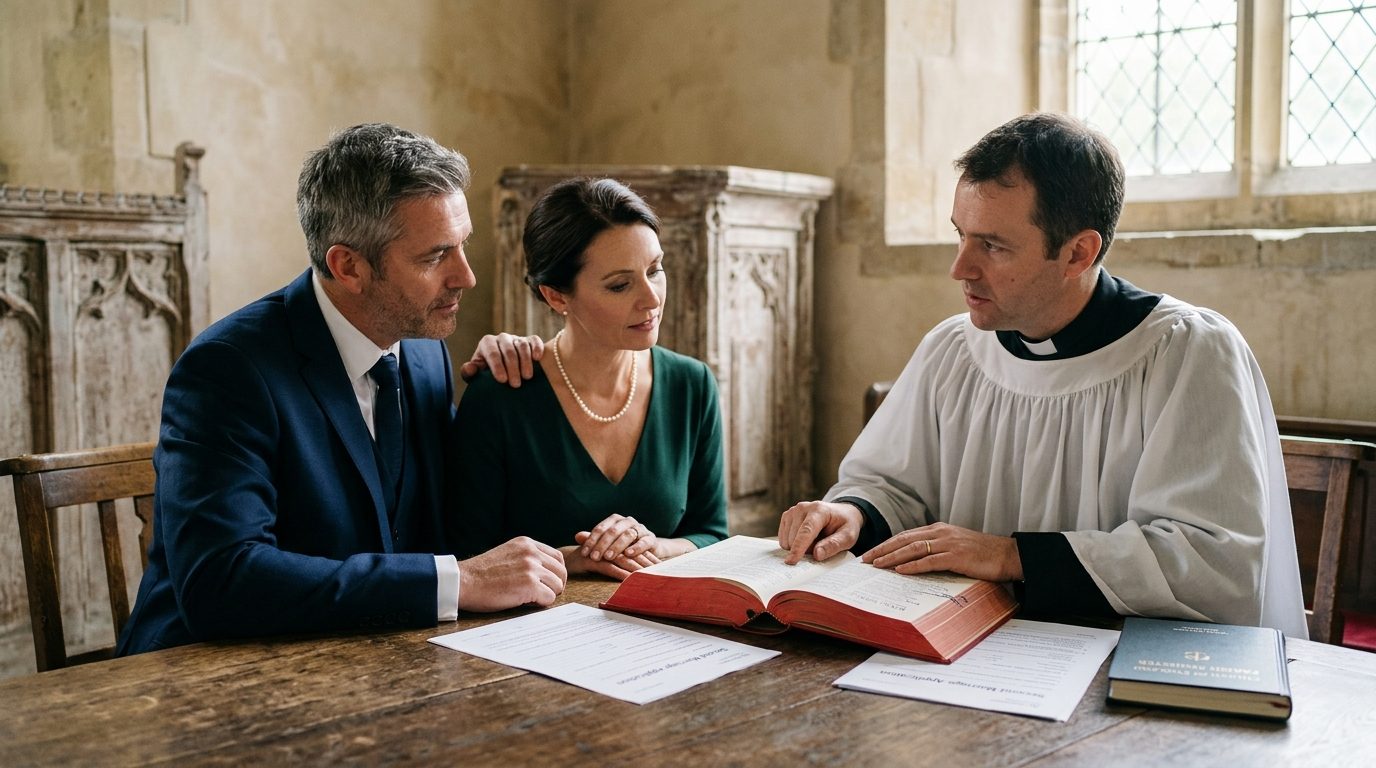
The Phillips-Sperling wedding is the first high-profile royal-adjacent case since Charles and Camilla. Unlike Charles and Camilla, Peter and Harriet are having a full Anglican ceremony, not a civil ceremony followed by a blessing. Both were previously divorced. Both needed the Canon B30 process.
The vicar at All Saints, Kemble agreed to conduct the service. The Diocese of Gloucester confirmed approval. This sets no new legal precedent; vicars have been agreeing to these ceremonies since 2002. But the visibility of the case has prompted many couples to ask whether they can follow the same route.
The answer is: yes, if your vicar agrees. The process is the same whether you are 19th in line to the throne or planning a wedding for 60 guests in a rural church.
Second marriages in other UK denominations
The Church of England is the most permissive of the major UK Christian traditions on this question.
Roman Catholic. Divorce is not recognised as ending a sacramental marriage. A second marriage in a Catholic church requires a formal Declaration of Nullity (annulment) granted by a Catholic Tribunal. The process typically takes 1-3 years. Without an annulment, a divorced Catholic who remarries is considered to have entered an invalid marriage under Canon Law.
Methodist. Methodist ministers may conduct second-marriage services. The Methodist Church has no equivalent of Canon B30; ministers exercise pastoral discretion in a similar way to Church of England incumbents since 2002. Methodist second-marriage services are generally easier to arrange than CoE ones, since there is no diocesan layer.
Church of Scotland. Ministers in the Church of Scotland have conducted second-marriage services for many years. The Church of Scotland’s position is broadly welcoming of divorced people who seek to remarry.
Jewish. A Jewish divorce (get) is required in addition to a civil divorce before a second Jewish marriage can take place. The get is a document given by the husband to the wife and is distinct from the civil decree. Without a get, a second Jewish marriage is not recognised within Orthodox and many Conservative communities.
Humanist. Humanist ceremonies in England and Wales remain legally unrecognised. A humanist second-marriage “ceremony” requires a separate civil registration. See our guide to humanist weddings for full details.
What the legal certificate looks like
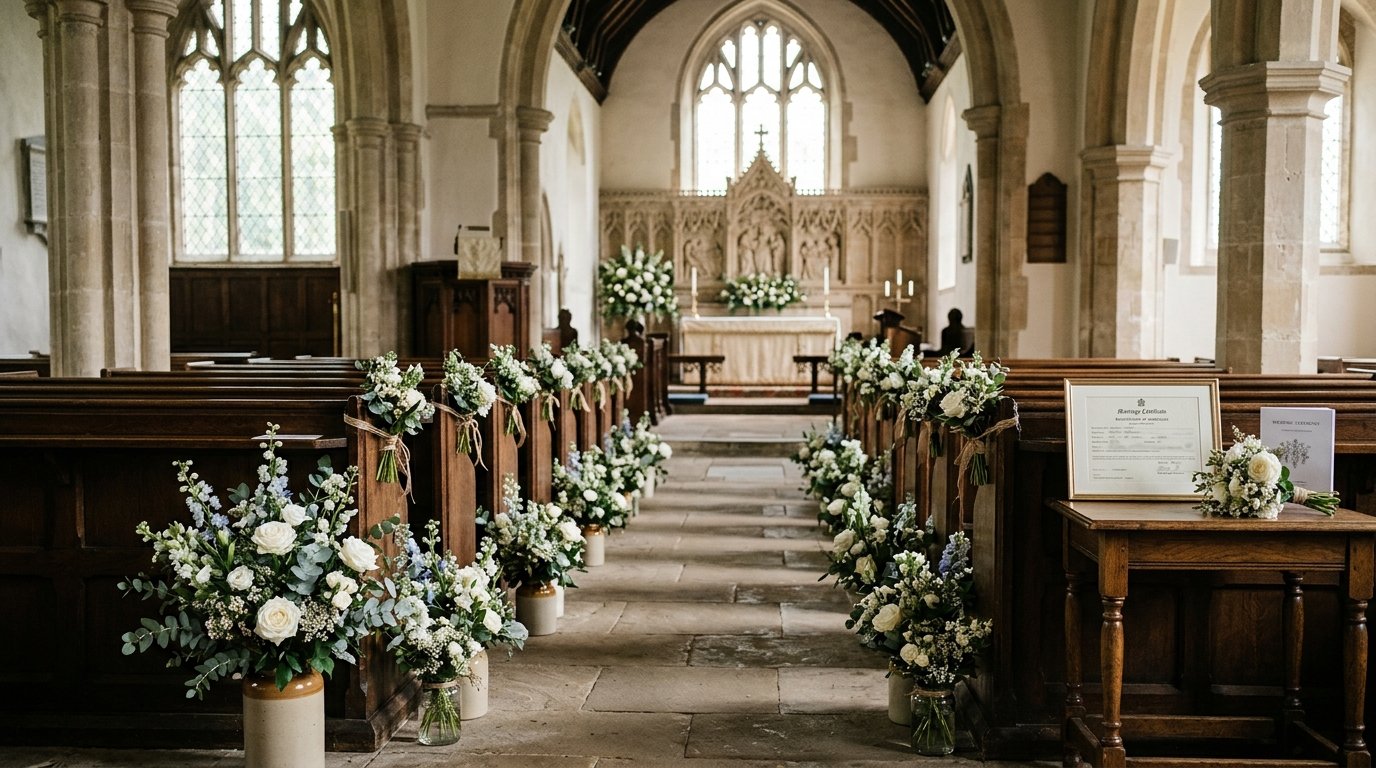
For legal purposes, a second-marriage Church of England ceremony produces exactly the same documentation as a first marriage. The Register of Marriages records the wedding. The couple receives a marriage certificate. The civil law does not distinguish between a first and second church marriage.
The only difference arises in personal documents. If either party was previously married, the registrar will note the previous marital status on the notice of marriage. This is recorded internally but does not appear on the marriage certificate itself.
Practical checklist for second-marriage church couples
- Contact the vicar at least 6 months before your desired date, 12 months for popular village churches
- Have your decree absolute ready at the first meeting
- Confirm with the vicar which diocesan steps apply in your parish
- Allow 4-12 weeks for the formal process after initial agreement
- If you also want a specific church outside your home parish, apply early for a Common Licence through the Faculty Office
- Consider a backup civil ceremony booking in case the church permission falls through
Related articles
Frequently asked questions
Can you have a Church of England wedding if you are divorced?
Yes, since the 2002 General Synod ruling. The vicar decides on a case-by-case basis and can refuse on conscience grounds.
What is Canon B30 of the Church of England?
Canon B30 governs marriage in church. It permits vicars to marry divorced people whose former spouse is still living, provided the vicar agrees and the Diocese supports the decision.
How long does it take to get permission for a second-marriage church wedding?
Typically 4-12 weeks from first approach to the vicar. Dioceses vary. Some require a Bishop's letter; others leave it entirely with the incumbent.
What happens if the vicar refuses to marry a divorced couple?
The couple can approach another vicar in a different parish. If that vicar agrees, the couple can transfer their banns publication. Neither diocese can compel a vicar to conduct a remarriage.
Did Peter Phillips need special permission to marry Harriet Sperling in church?
Yes. Both Peter Phillips and Harriet Sperling had been previously married. The vicar at All Saints, Kemble, agreed to conduct the service under Canon B30, with the Diocese of Gloucester's approval.
Are second marriages recognised legally in the UK?
Yes, provided the previous marriage was legally ended by divorce or annulment, or the former spouse has died. The legal status of the ceremony is the same as a first marriage.
Is a Catholic second marriage in church possible in the UK?
Only after a formal annulment by the Catholic Church, which is a separate ecclesiastical process from civil divorce and can take one to three years to complete.