Home / Articles / Royal Weddings
All Saints Kemble: The Royal Wedding Venue Guide
Key Takeaways
- All Saints Church, Kemble is a Norman parish church in Gloucestershire, four miles south-west of Cirencester
- The building dates to the 12th century, with later additions including the 13th-century tower and 15th-century nave
- It seats around 250 people — making the Phillips-Sperling wedding intentionally intimate by royal standards
- Kemble has its own railway station with direct trains to London Paddington in around 75 minutes
- The village sits inside the Cotswolds AONB, near Tetbury, Cirencester and Highgrove (King Charles III's private estate)
- The church is open for regular Sunday services and the village welcomes ~30,000 visitors annually
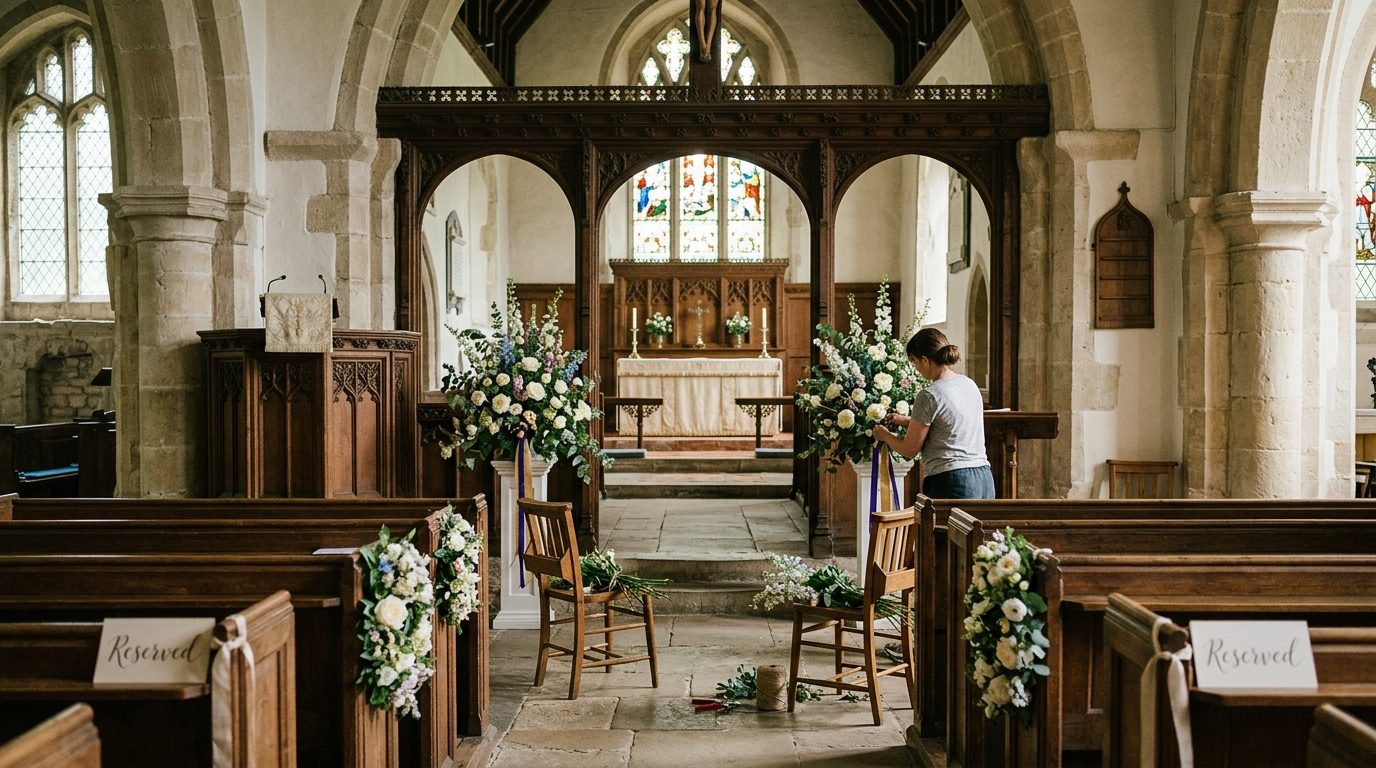
All Saints Church, Kemble is a 12th-century Norman parish church in the Cotswolds, four miles south-west of Cirencester. The building combines original Norman fabric with a 13th-century west tower and a 15th-century spire. It seats around 250 people. On 6 June 2026 it hosts the wedding of Peter Phillips and Harriet Sperling, making it one of the smallest venues to stage a royal wedding in modern times.
Editor's note — Matt
I have walked the Cotswold lanes around Kemble and Ewen many times. This guide pulls together the architectural record, the train timetable, and the practical knowledge a visitor or wedding-watcher actually needs. No filler.
Why a small Cotswolds church matters now
Most royal weddings of the past forty years have happened inside grand Anglican spaces. St Paul’s Cathedral. Westminster Abbey. St George’s Chapel at Windsor. Each holds hundreds, often thousands, of guests. The choice of All Saints Church, Kemble breaks that pattern.
Peter Phillips is the eldest grandchild of the late Queen Elizabeth II. He is 19th in line to the throne. Harriet Sperling is a senior NHS paediatric nurse from Gloucestershire. They have chosen a parish church the size of a village hall.
This guide explains the church itself, the village around it, the architectural detail behind the stone, and the practical realities of getting there. It also sets the venue against the other royal wedding churches of the modern era so the choice can be read for what it is: a private wedding inside a working country parish, not a state occasion.
Where Kemble sits in the Cotswolds
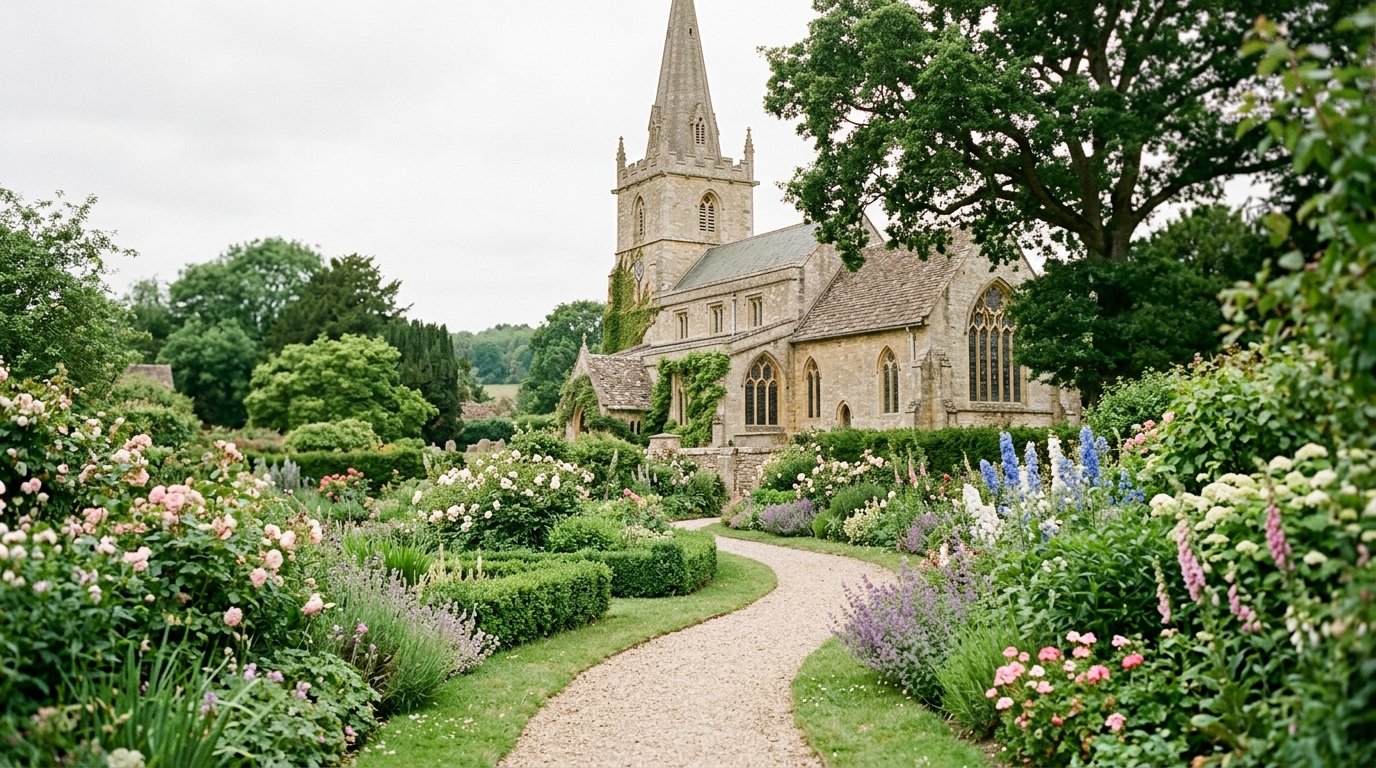
Kemble is a small Gloucestershire village inside the Cotswolds Area of Outstanding Natural Beauty. The civil parish is named Kemble and Ewen. The 2020 estimated population was 940 residents.
Distances from the village centre:
- Cirencester — 4 miles north-east. The Roman town of Corinium and the closest market town.
- Tetbury — 8 miles south-west. The market town next to Highgrove House.
- Highgrove — around 7 miles south. The private country home of King Charles III and Queen Camilla.
- Cotswold Water Park — 5 miles south-east. 180 lakes across the old gravel pits.
- Bath — 14 miles north of the city via the A46 corridor; the village sits north of the city on the Cotswold ridge.
- Gatcombe Park — around 12 miles west. Princess Anne’s estate, where Peter Phillips lives.
The land here is the upper Thames headwater. Thames Head, the recognised spring source of the River Thames, is in fields immediately west of the village. The Thames Path national trail begins at a stone marker a short walk from the church.
The history of All Saints Church
The site has been a place of worship since at least the seventh century. In 682 AD, King Cedwalla of Wessex granted land at Kemble to Aldhelm, Abbot of Malmesbury. A church almost certainly stood here from that date onward.
The current stone building grew up in stages between roughly 1100 and 1480.
- 12th century: The earliest surviving Norman fabric, including masonry incorporated into the later walls.
- 13th century: The west tower was raised. The south porch followed around 1280, built under William de Collerne, Abbot of Malmesbury.
- 14th century: The octagonal stone font, still in use, dates from around 1350.
- 15th century: The nave was extended and the slim broach spire added around 1480.
- 1823: A lightning strike caused severe damage to the church and the spire.
- 1872-73: A large-scale restoration by Medland and Son rebuilt much of the church, reusing most of the original stone and replacing features in their original positions.
- 1964: The spire was restored after weathering damage.
The building is listed at Grade II* by Historic England as the Anglican Church of All Saints, Kemble and Ewen, recognising its national architectural and historical importance. Notable interior features include a Norman chevron arch above the south doorway, an unusually large 13th-century porch, three Perpendicular windows in the south chapel, a triple lancet and rose window in the north chapel, six bells, and an 18th-century organ. Two medieval mass dials are still visible on the corners of the tower. An ancient yew stands in the churchyard.
The church is part of the Thameshead Benefice and remains a working parish church. It holds regular Sunday services and is normally open to visitors during the day.
How the church compares to other royal wedding venues
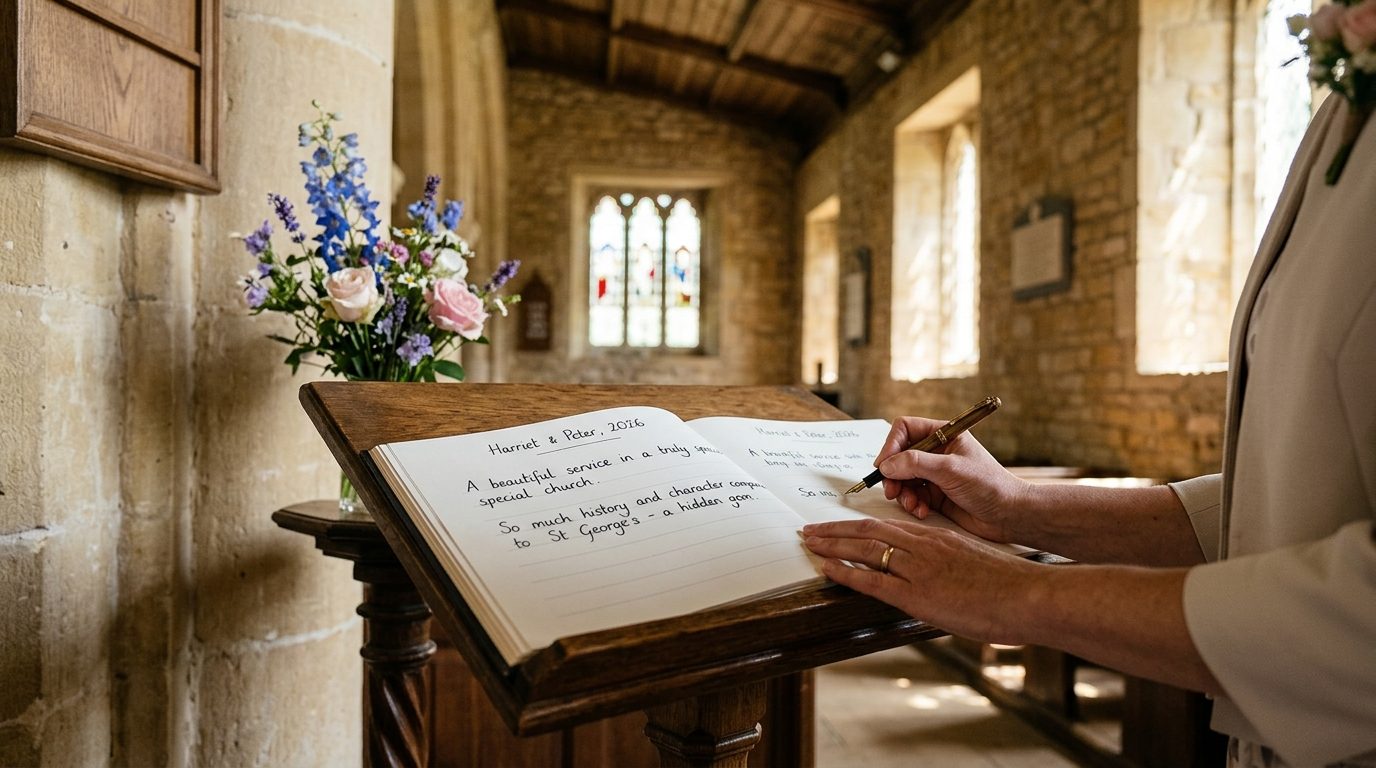
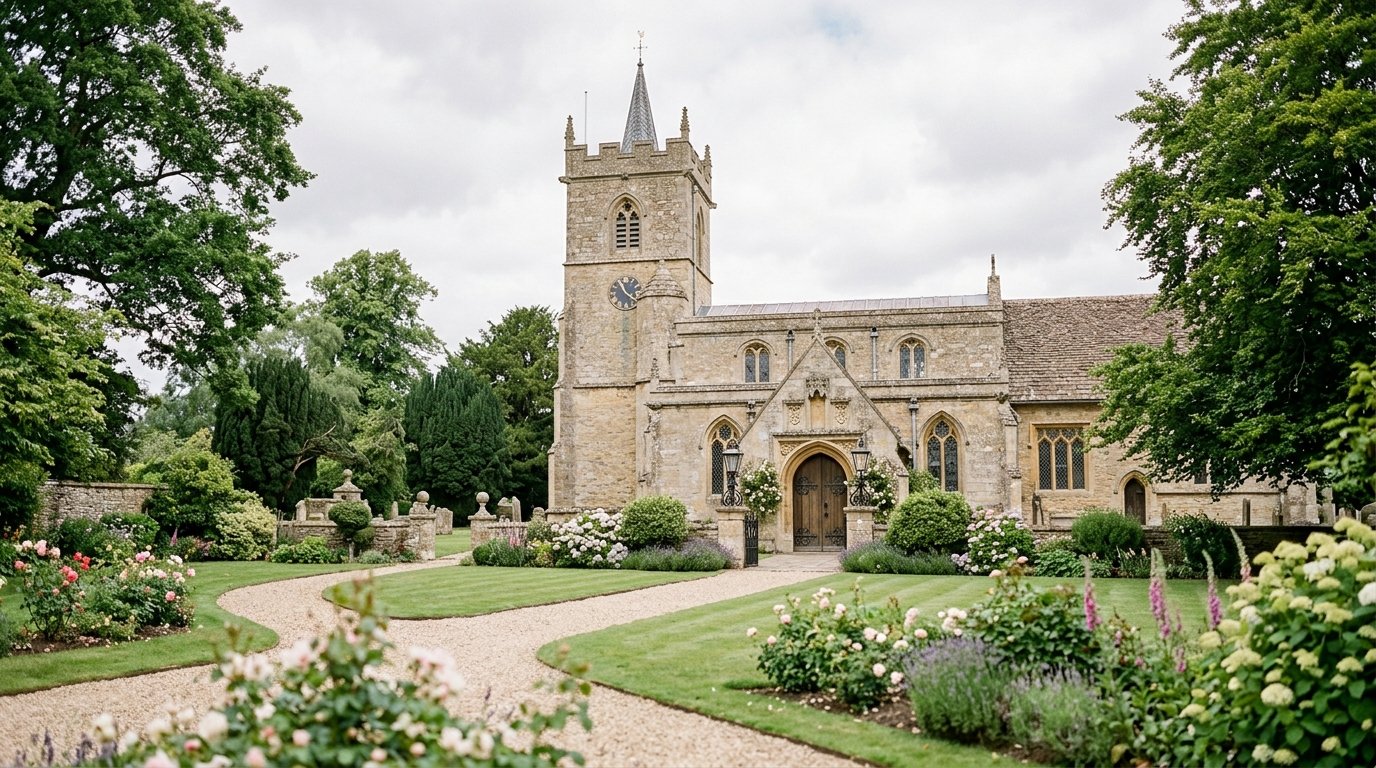
Capacity is the single number that puts the Phillips-Sperling choice in perspective. Most modern royal weddings have been staged inside venues built for crowds. All Saints Kemble is not.
| Venue | Approx. capacity | Royal wedding | Year | Public access |
|---|---|---|---|---|
| All Saints, Kemble | ~250 | Peter Phillips & Harriet Sperling | 2026 | Open daily, free |
| All Saints Chapel, Royal Lodge | ~70 | Princess Beatrice & Edoardo Mapelli Mozzi | 2020 | Private (Crown Estate) |
| St George's Chapel, Windsor | ~800 | Princess Eugenie & Jack Brooksbank; Prince Harry & Meghan Markle | 2018 | Ticketed entry |
| Westminster Abbey | ~2,200 | Prince William & Catherine Middleton | 2011 | Ticketed entry |
| St Paul's Cathedral | ~3,500 | Prince Charles & Lady Diana Spencer | 1981 | Ticketed entry |
Princess Beatrice’s wedding at the Royal Lodge chapel was the closest precedent in scale, but it was held inside private royal land. All Saints Kemble is a public parish church on a village street. That is unusual.
The choice signals two things. First, the wedding is intentionally private and family-led, not a state ceremony. Second, the couple has chosen the village over the palace. Harriet Sperling grew up in nearby South Cerney, fifteen minutes away. Peter Phillips lives on the Gatcombe Park estate. Kemble is local to both.
How to get to Kemble for the day (or just to visit)
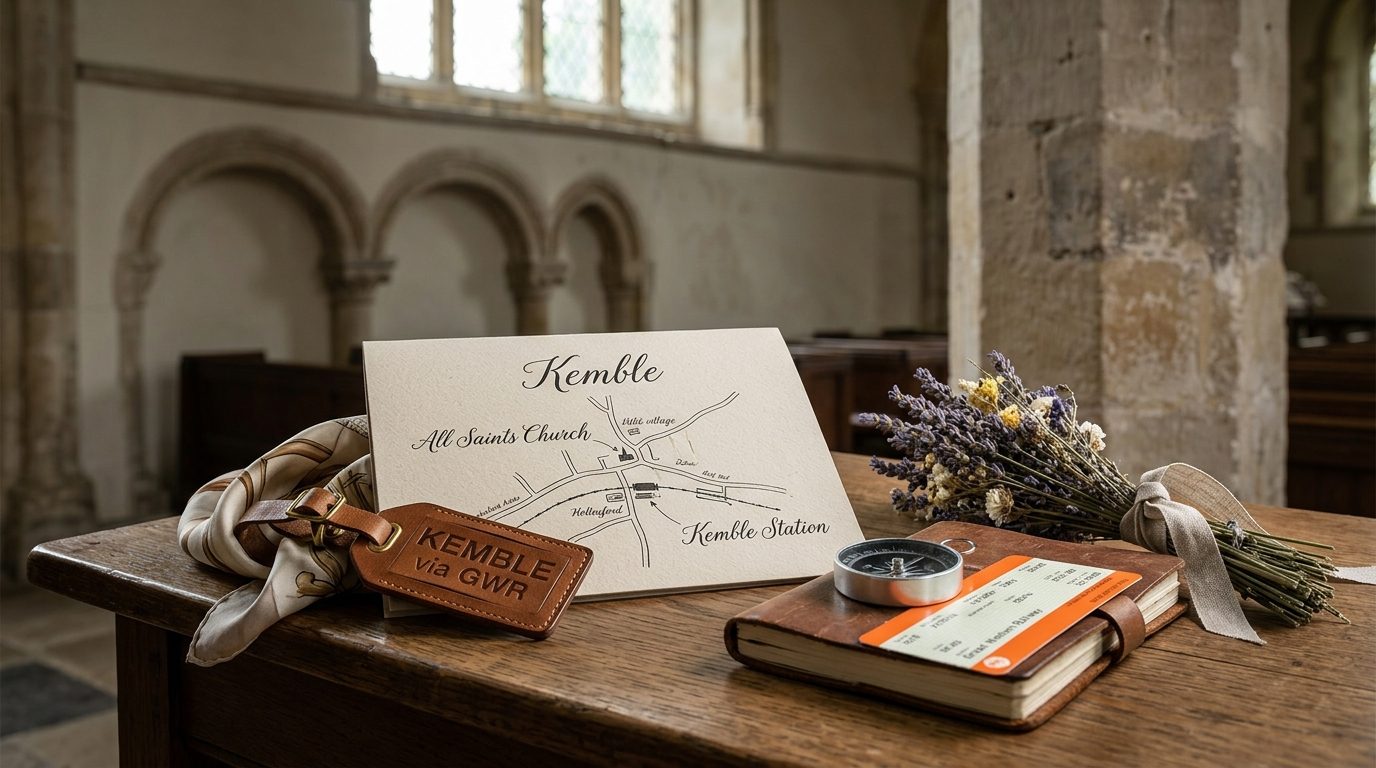
Kemble is easier to reach than most Cotswolds villages, which is part of its appeal.
By train. Kemble railway station sits on the Golden Valley line between Swindon and Gloucester. It is 90 miles 79 chains down the line from London Paddington. Great Western Railway runs the service, mainly using Class 800 bi-mode trains. There is one direct train per hour to London Paddington off-peak. Journey time is around 75 to 80 minutes. Westbound, the same line connects Gloucester and Cheltenham Spa in around 30 minutes, with occasional services through to Cardiff and Swansea.
By road. Junction 17 of the M4 sits 11 miles south of the village. From the junction, the A429 north reaches Kemble in around 20 minutes. From the M5 at Stroud, the A419 brings you across the ridge in around 30 minutes.
Parking. Kemble railway station has a public car park used by commuters. The village itself has very limited parking around the church. On the wedding day, the small lanes around All Saints will be closed or restricted. If you are visiting on any other day, park at the station and walk in.
Where to eat and drink locally.
- The Tavern Inn, Kemble — village pub on the main street, walking distance from the church.
- The Thames Head Inn — coaching inn on the A433 just outside the village, within sight of the river’s source.
- Made by Bob, Cirencester — open kitchen restaurant in the Corn Hall, four miles away.
- The Wild Duck, Ewen — 17th-century inn in the neighbouring village within the same parish.
What’s around Kemble worth seeing
Kemble works well as a base for the southern Cotswolds. Within a half-hour drive you have one of the richest concentrations of Roman remains, market towns and water landscapes in the country.
- Cirencester (4 miles). The Roman Corinium was the second-largest town in Roman Britain. The Corinium Museum holds an outstanding mosaic collection. The market square trades on Mondays and Fridays. The Parish Church of St John the Baptist is one of the largest in England.
- Tetbury (8 miles). Home to Highgrove House and the Highgrove Gardens, open seasonally on guided tours by Royal Oak Foundation booking. The Royal Arms hangs on Tetbury’s antique shops.
- Highgrove Gardens. King Charles III’s organic gardens, designed over four decades. Tours run from April to October and book months ahead.
- Cotswold Water Park (5 miles). 180 lakes across 40 square miles. Walking trails, watersports and the Lower Mill estate.
- Thames Head. The recognised source of the River Thames sits in a field a mile west of Kemble. A stone marker beside an ash tree marks the spot. The Thames Path begins here and runs 184 miles to the Thames Barrier in London.
- Malmesbury (10 miles). England’s oldest borough, with the ruined abbey where King Aethelstan is buried.
Related articles
Frequently asked questions
How big is All Saints Church, Kemble?
The Norman church seats around 250 people. It is one of the smallest venues to host a royal wedding in the modern era.
Where exactly is Kemble?
Kemble is a Cotswolds village in Gloucestershire, four miles south-west of Cirencester and 14 miles north of Bath. It sits inside the Cotswolds AONB.
Can the public visit All Saints Church, Kemble?
Yes. The church is open for Sunday services and visitors during the day. After the royal wedding, expect tighter access on the day itself.
How old is All Saints Church, Kemble?
The earliest fabric is 12th-century Norman. The tower was added in the 13th century and the nave extended in the 15th. It is a Grade II* listed building.
Why did Peter Phillips and Harriet Sperling choose Kemble?
Both have local Cotswolds connections, and the parish is close to Highgrove, King Charles III's home. The intimate scale matches their preference for a private wedding.
How do I get to Kemble?
Direct trains from London Paddington reach Kemble in around 75 minutes. The village is also a 20-minute drive from junction 17 of the M4.