Micro Weddings: Why Less Really Is More
Key Takeaways
- A micro wedding has fewer than 15-20 guests — sometimes just two people and a witness
- Total cost is typically £1,000-£5,000, including venue, food, photography, and dress — compared to £20,700 for the average UK wedding
- Restaurants, boutique hotels, registry offices, and private dining rooms are the most popular micro wedding venues
- The saved budget means you can spend more per head on food, wine, and experiences — or put thousands towards a house deposit or honeymoon
- Micro weddings grew 40% between 2020 and 2025 and remain one of the fastest-growing wedding trends in the UK
A micro wedding strips the day back to what matters: the two of you, the people you love most, and a celebration that actually feels like yours. No seating plans for 120 strangers. No arguments about the B-list. No second mortgage on a marquee.
This guide explains what a micro wedding is, what it costs, where to hold one, and how to make 12 guests feel more memorable than 120.
What counts as a micro wedding?
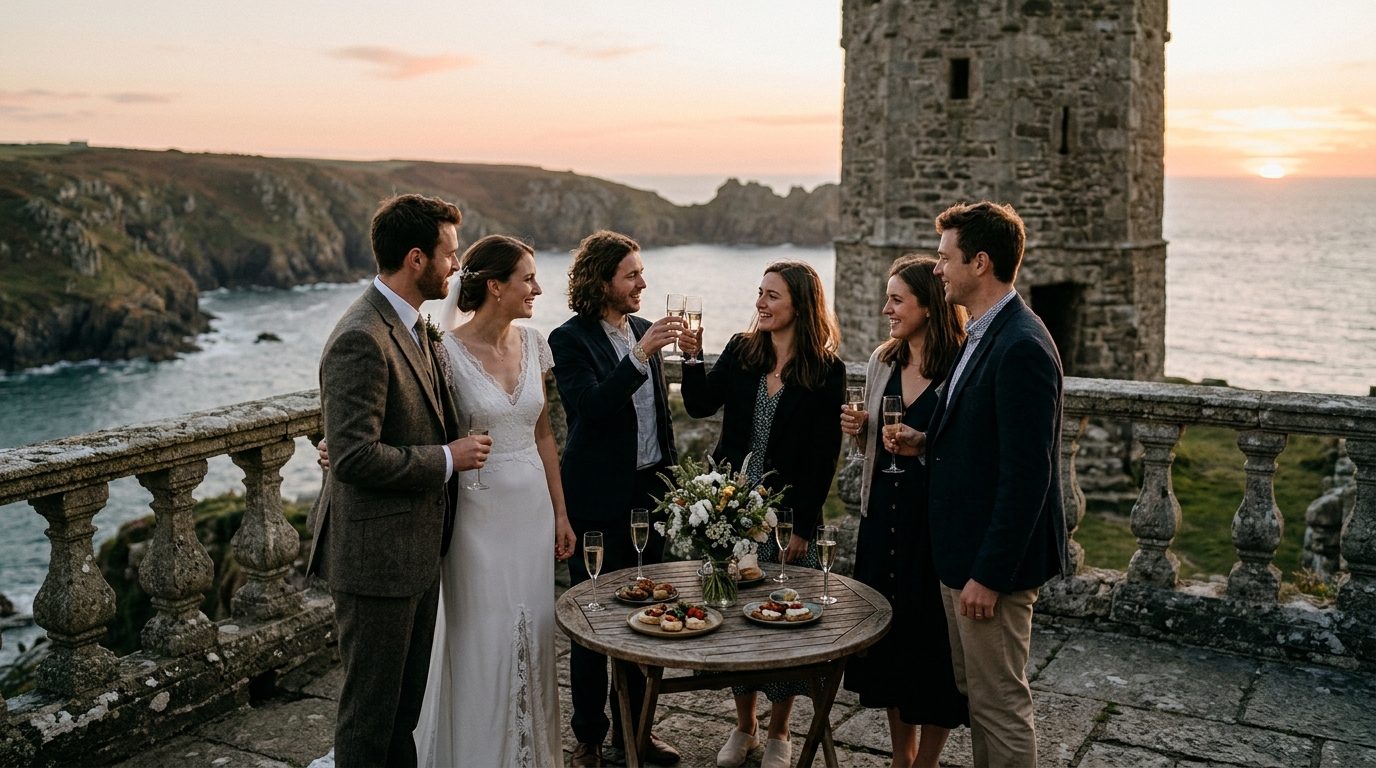
There’s no official definition, but a micro wedding generally means fewer than 15-20 day guests. Some have as few as 4-6. The common thread is intention: you’re choosing a small wedding, not settling for one.
Micro wedding vs elopement
| Micro Wedding | Elopement | |
|---|---|---|
| Guest count | 5-20 | 0-4 (couple + witnesses) |
| Reception | Yes — meal, drinks, sometimes speeches | Optional — often just the ceremony |
| Planning time | 2-6 months | Days to weeks |
| Formality | Your choice — casual to black tie | Usually relaxed |
| Family involvement | Close family and friends invited | Often just the couple |
| Average cost | £1,000-£5,000 | £500-£2,000 |
The line between them is blurred. A modern elopement might include parents and a dinner. A micro wedding might be just eight people in a pub. Labels matter less than what feels right for you.
Why micro weddings are growing
Micro weddings grew 40% between 2020 and 2025 in the UK. The pandemic started the trend, but couples keep choosing them for reasons that have nothing to do with restrictions:
- Cost. Published average UK wedding costs range from £20,604 to £21,990. A micro wedding costs £1,000-£5,000. The savings go towards a house deposit, honeymoon, or simply not starting married life in debt.
- Intimacy. At a 120-person wedding, the couple spends 3-5 minutes with each guest. At a 12-person wedding, everyone shares every moment.
- Less stress. Fewer guests means fewer decisions, fewer compromises, and fewer arguments about the seating plan.
- Better food and wine. A tasting menu with paired wines for 12 people costs less than a standard buffet for 100. You can eat spectacularly well for a fraction of a traditional wedding budget.
- Freedom. No venue coordinator, no DJ schedule, no first-dance anxiety. The day moves at your pace.
How much does a micro wedding cost?
The biggest financial advantage is obvious: fewer guests means lower costs on everything priced per head.
| Category | Micro Wedding (12 guests) | Average UK Wedding (80 guests) |
|---|---|---|
| Venue/ceremony | £57-£1,500 | £5,900 |
| Food and drink | £600-£2,000 | £4,200 |
| Photography | £500-£1,200 | £1,800 |
| Dress/outfit | £200-£1,500 | £1,500 |
| Flowers | £100-£400 | £1,100 |
| Rings | £400-£800 | £800 |
| Hair and beauty | £100-£300 | £400 |
| Total | £1,957-£7,700 | £15,700-£20,700 |
You save money on the total — and you can spend more per person. A £150-per-head tasting menu at a Michelin-starred restaurant for 12 people costs £1,800. The same budget at a traditional wedding buys a £22-per-head buffet for 80.
For more on budgeting, read our how to budget for a wedding guide.
Best venue types for micro weddings
Not every venue suits a small wedding. A banqueting hall for 200 feels empty with 12 people. The trick is finding spaces designed for intimacy.
Registry offices
- Cost: £57-£200 for the ceremony room
- Guest capacity: 2-30 depending on the room
- What’s included: Registrar, ceremony, legal paperwork
- Best for: Couples who want a quick, affordable legal ceremony — often paired with a restaurant meal afterwards
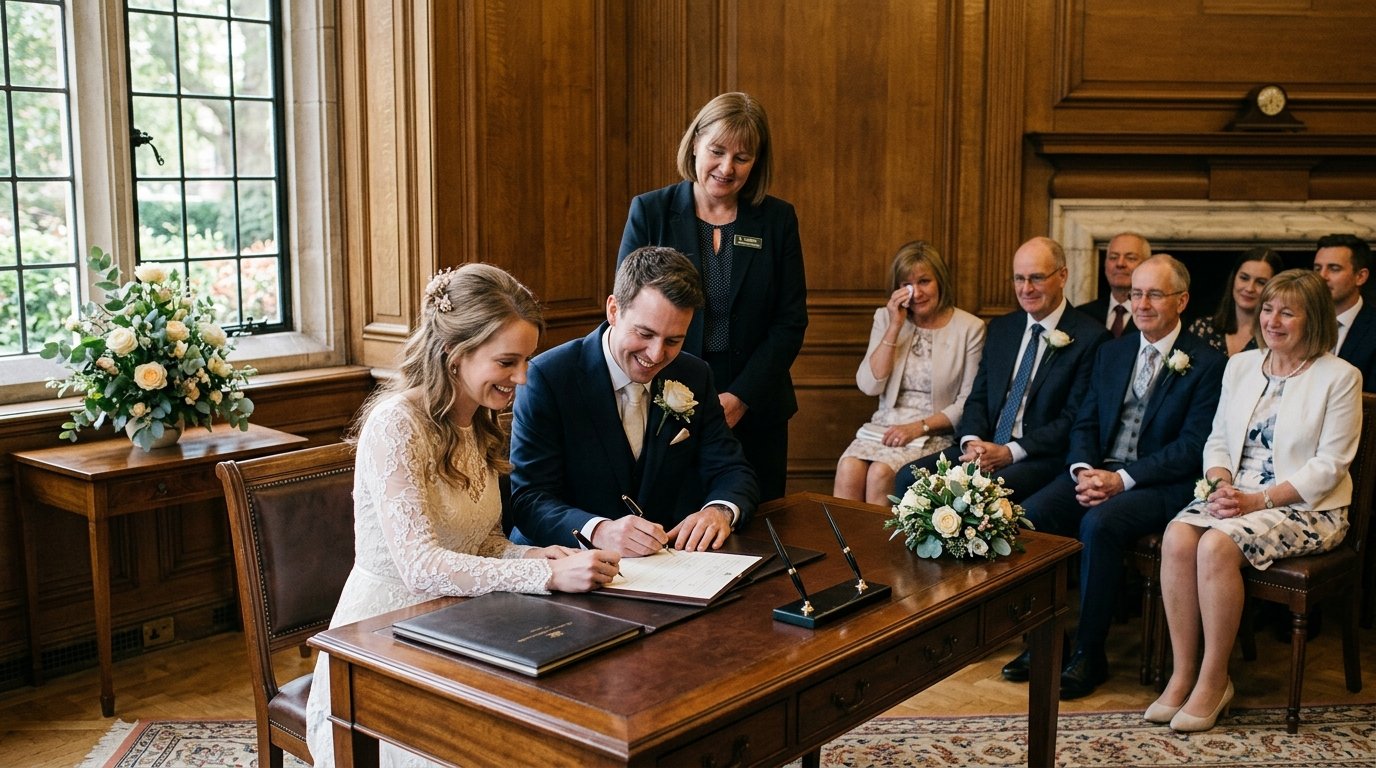
Registry offices are the simplest option. Book a ceremony slot (usually 30-45 minutes), bring your witnesses, and you’re married. The rooms range from plain council chambers to beautifully restored Georgian rooms. Ask to see the room before booking.
Restaurants with private dining
- Cost: £0-£1,000 hire (some waive hire with a minimum spend) + £40-£150 per head for food
- Guest capacity: 6-30 in a private room
- What’s included: Tables, chairs, linen, glassware, staff, food
- Best for: Couples who love food and want the reception to revolve around a great meal
This is the most popular micro wedding venue type. A private dining room gives you your own space, a set menu, and a team that handles everything. No decorating, no suppliers to coordinate, no clearing up.
What to ask: Is the room genuinely private (door, walls) or just a partitioned area? Can you control the music? Is there a minimum spend? Can you bring your own cake?
Boutique hotels
- Cost: £500-£3,000 for ceremony + reception + bridal suite
- Guest capacity: 10-40
- What’s included: Ceremony room, reception space, accommodation, catering
- Best for: Couples who want a small wedding with overnight accommodation in one place
Boutique hotels combine ceremony, reception, and accommodation without the scale (or price) of a country house. Many offer micro wedding packages that include the ceremony room, a private dining room, the bridal suite, and a champagne toast for a fixed price.
Pubs with function rooms
- Cost: £0-£500 hire + minimum spend (typically £500-£1,500)
- Guest capacity: 10-40
- What’s included: Room, tables, bar access, sometimes food
- Best for: Relaxed couples who want a celebration that feels like a party, not a performance
A good gastropub with a private room is one of the best-value micro wedding venues. The food is often excellent, the atmosphere is natural, and nobody has to pretend to be anywhere other than a pub. Choose one with a garden for outdoor photos.
Your own home or garden
- Cost: Variable — celebrant (£300-£600), catering (£30-£80 per head), flowers, photographer
- Guest capacity: Depends on your space
- What’s included: Nothing — you organise everything
- Best for: Couples who want complete control and a deeply personal setting
A home wedding requires a separate legal ceremony at a registry office (non-religious ceremonies must take place in licensed venues in England and Wales). The home celebration can be as formal or casual as you like. Hire a celebrant for a personalised ceremony, a caterer for the food, and enjoy the freedom of your own space.
How to make a micro wedding feel special
Small doesn’t mean boring. The intimacy is an advantage — use it.
Spend more per head
With 12 guests instead of 80, your per-person budget is 5-7 times higher for the same total spend. Use it:
| Element | Traditional (80 guests) | Micro (12 guests) | Same Total Budget |
|---|---|---|---|
| Food | £50/head buffet = £4,000 | £150/head tasting menu = £1,800 | You spend less AND eat better |
| Wine | £20/head house wine = £1,600 | £60/head sommelier selection = £720 | Half the cost, triple the quality |
| Flowers | Bulk arrangements, £1,100 | Single stunning centrepiece, £250 | One-fifth the cost, more impact |
Write personal vows
With only your closest people watching, personal vows feel natural rather than exposed. This is the one setting where they work perfectly.
Hire a great photographer
Photography is the one area where a micro wedding should spend the same as a traditional wedding. The images are your lasting record. Budget £800-£1,500 for a professional photographer for 4-6 hours.
Read our guide on how to choose a wedding photographer for advice on finding the right one.
Choose a venue with character
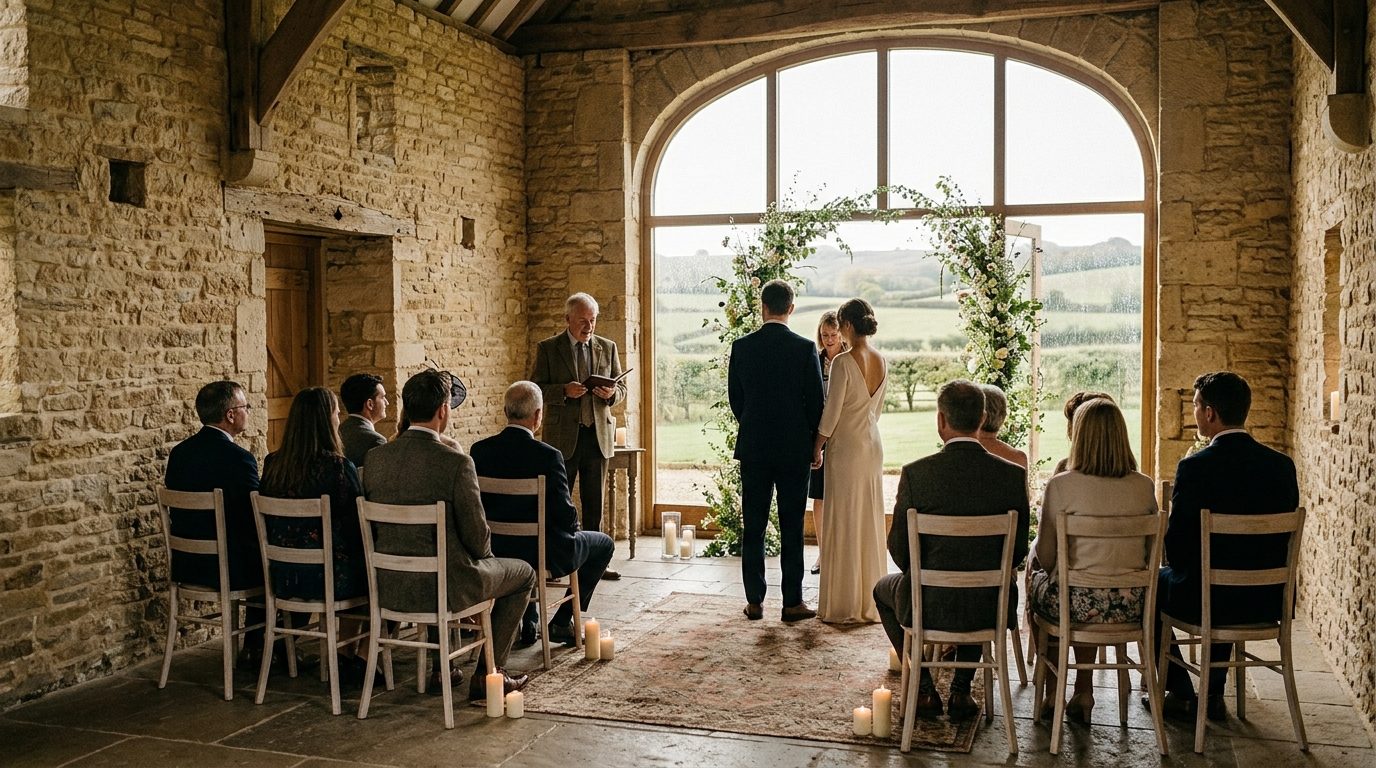
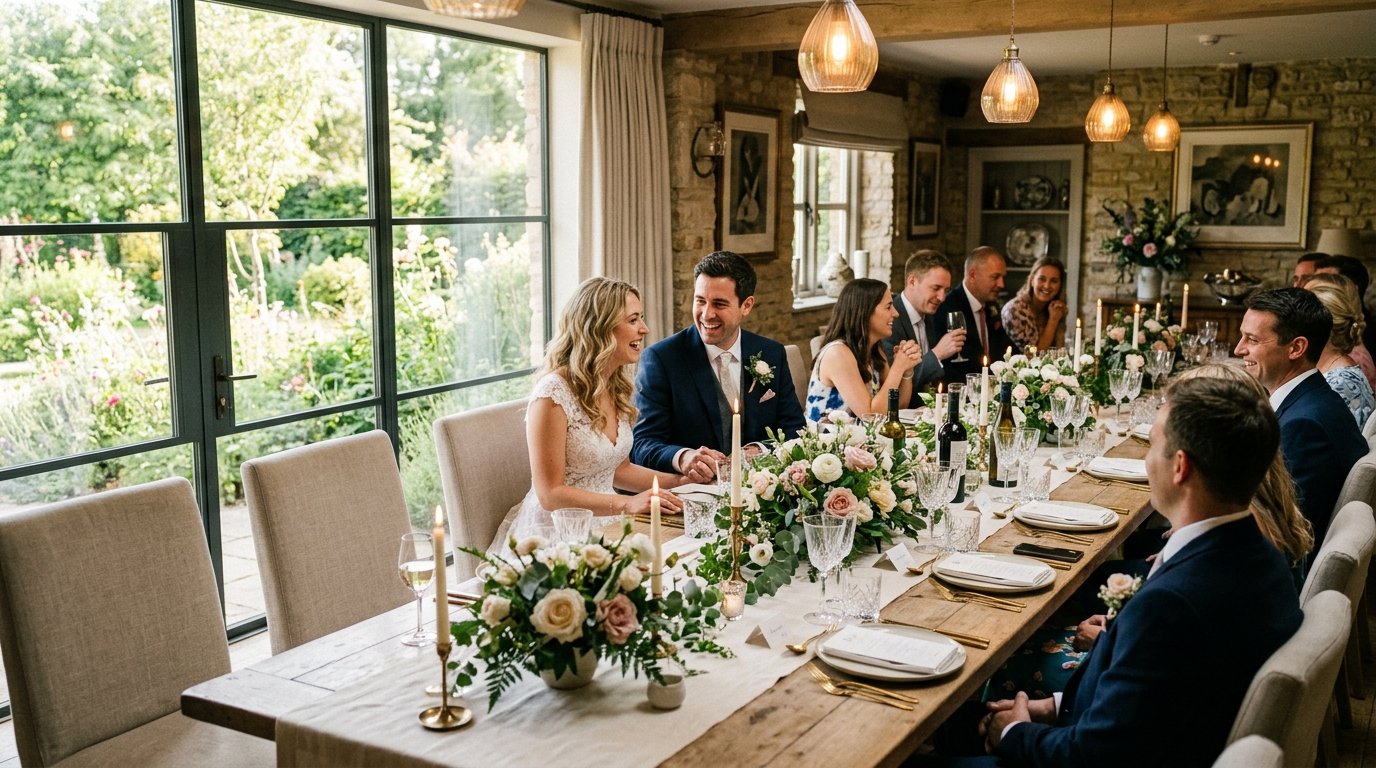
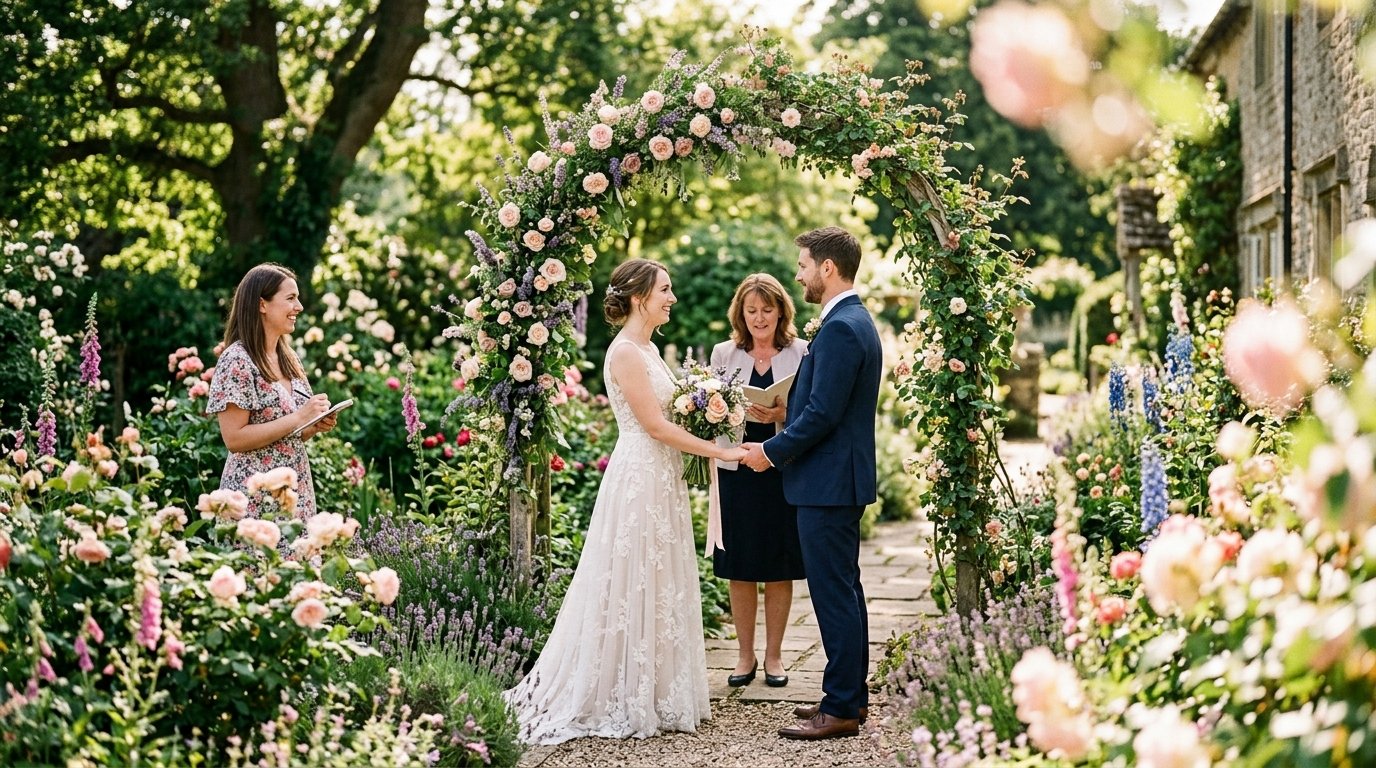
A private dining room with exposed brick and candlelight. A walled garden with climbing roses. A Georgian registry office with floor-to-ceiling windows. When you have 12 guests, every detail of the venue is visible and appreciated. Choose somewhere with atmosphere.
Plan the unexpected
Use the money you’ve saved for something memorable:
- A vintage car to the ceremony
- Live music during dinner (a string duo, a jazz guitarist)
- A surprise speech or slideshow
- Late-night cocktails at a bar
- A weekend away together immediately afterwards
What to spend the saved budget on
Most micro wedding couples save £10,000-£18,000 compared to a traditional wedding. Here’s where that money typically goes:
| Use | Percentage of Couples |
|---|---|
| House deposit | 35% |
| Honeymoon upgrade | 28% |
| Savings / investments | 18% |
| Home renovations | 12% |
| Debt repayment | 7% |
Some couples split it: a longer honeymoon AND a contribution to a house deposit. Others put the full saving into one big goal. Either way, you start married life with money in the bank rather than debt on the credit card.
For honeymoon inspiration, see our best honeymoon destinations guide.
The logistics
Legal requirements
The legal requirements are the same regardless of wedding size:
- Notice of marriage: Give notice at your local register office at least 28 days before the ceremony (29 days in Northern Ireland)
- Witnesses: You need at least two witnesses (England and Wales) or one (Scotland)
- Licensed venue: The ceremony must take place in a registered building or approved premises (unless you’re in Scotland, where you can marry almost anywhere)
Guest list decisions
This is the hardest part of a micro wedding. When you’re inviting 12 people, every inclusion feels like an exclusion.
Approaches that work:
- Immediate family only: Parents, siblings, their partners. No friends, no extended family. Everyone understands the rule because it’s applied equally.
- Inner circle: The people you’d call at 3am. If you wouldn’t tell them your worst news first, they’re not on this list.
- Couple only + celebration later: Get married with just witnesses, then throw a party for everyone weeks later. Two events, neither one pressured.
Telling people they’re not invited
Be honest and direct. “We’re having a very small ceremony with just immediate family. We’d love to celebrate with you at [a dinner/drinks/party] afterwards.” Most people understand. Those who don’t were going to find something to be upset about regardless.
Planning timeline
A micro wedding needs less planning time than a traditional wedding, but don’t leave it too late — popular restaurants and photographers book up months ahead.
| When | Task |
|---|---|
| 6-9 months before | Decide on guest list, book ceremony venue, book restaurant/reception venue |
| 4-6 months before | Book photographer, buy or order outfits |
| 3-4 months before | Give notice of marriage, arrange rings, book any extras (music, flowers, transport) |
| 2 months before | Send invitations (a phone call or personal message is fine for 12 people) |
| 1 month before | Confirm all bookings, plan the day timeline, write vows if using them |
| 1 week before | Confirm numbers with restaurant, pick up rings, finalise details |
For a full planning timeline, see our wedding planning timeline guide, and use our wedding checklist to stay on track.
Frequently asked questions
What is a micro wedding?
A micro wedding is a wedding with fewer than 15-20 guests, typically close family and best friends only. It includes a legal ceremony, a celebratory meal, and often a photographer, but strips away the larger-scale elements like DJs, evening receptions, and elaborate decorations. Some micro weddings have as few as 4-6 guests.
How much does a micro wedding cost UK?
A micro wedding costs £1,000-£5,000 in the UK, depending on the venue and catering choices. A registry office ceremony costs £57-200. A restaurant private dining room for 12 costs £600-£2,000 for food and drinks. Photography for 3-4 hours costs £500-£1,200. The total is 75-95% less than the average UK wedding of £20,700.
What is the difference between a micro wedding and an elopement?
An elopement traditionally means just the couple and the legal minimum of witnesses (two in England and Wales). A micro wedding includes a small guest list of 5-20 people. In practice, the line is blurred — many modern elopements include 4-6 guests, and some micro weddings are as small as 4 people. The key difference is intent: elopements prioritise the couple, micro weddings prioritise intimacy.
Where can you have a micro wedding UK?
Registry offices, restaurants with private dining rooms, boutique hotels, pubs with function rooms, country house hotels, licensed gardens, and even your own home (with a celebrant for a non-legal ceremony, plus a separate legal ceremony at a registry office). Any venue licensed for weddings can host a micro wedding.
How do you make a micro wedding feel special?
Spend more per head on food and wine (a tasting menu with paired wines is affordable at 12 guests). Hire a photographer for the full day. Write personal vows. Choose a venue with character — a private dining room with a view, a walled garden, a boutique hotel suite. The intimacy itself makes it special: every guest matters, every moment is shared.