Home / Articles / Wedding Trends
Juliet Cap Veils: The Old Hollywood Bridal Revival
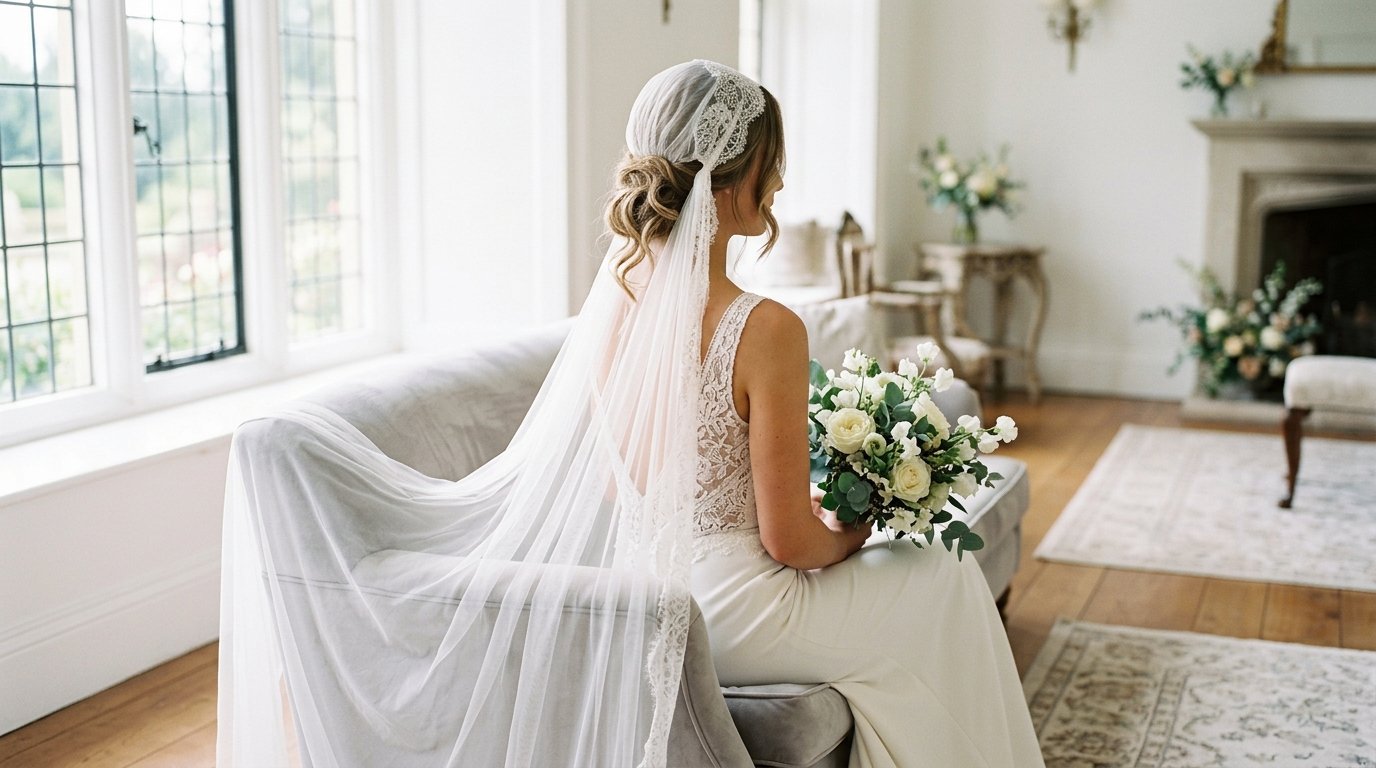
Key Takeaways
- Pinterest UK searches for 'Juliet cap veil' increased 640% in the 12 months to April 2026
- The Juliet cap originated in 1920s-1930s Hollywood — worn by stars including Jean Harlow and Grace Kelly's bridesmaids
- UK bespoke veil makers report Juliet cap requests now representing roughly 1 in 10 enquiries in 2026
- Juliet caps range from £85 for a simple pearl-pinned base to £450+ for hand-beaded lace versions
- The style works best with low or pulled-back hair — the cap sits on the crown and needs the crown visible
- Contemporary designers including Halfpenny London and Jenny Yoo have brought the style back to the mainstream
Pinterest UK searches for “Juliet cap veil” increased 640% in the 12 months to April 2026. The style — a fitted cap worn on the crown of the head with a veil attached at the back — originated in 1920s-1930s Hollywood and was a staple of the Old Hollywood bride. Contemporary designers including Halfpenny London and Jenny Yoo have brought it back into their current collections. UK bespoke veil makers report Juliet cap requests now representing roughly 1 in 10 enquiries in early 2026.
The history behind the Juliet cap
The Juliet cap takes its name from the cap worn by Juliet in Shakespearean imagery and paintings, but its modern bridal form was shaped entirely by 1920s-1930s Hollywood. Jean Harlow wore a version. Grace Kelly’s bridesmaids wore them at her 1956 Monaco wedding. It was the dominant bridal head piece for much of the interwar period.
The style disappeared almost entirely during the 1960s-1980s, when cathedral-length veils, puffed sleeves, and volume-heavy silhouettes took over. When minimalism returned to bridal in the late 1990s and 2000s, the Juliet cap was too associated with vintage styling to be repositioned as modern.
The current revival has been building since approximately 2022. The mechanism is the same as most 2026 bridal revivals: influencer and editorial uptake of 1920s and 1930s aesthetics via the “Old Hollywood glamour” aesthetic on TikTok and Instagram, combined with the enduring success of television productions like Downton Abbey and Peaky Blinders that put 1920s-1930s aesthetics in front of millions of UK viewers.
The design itself is well-suited to the 2026 bridal mood. It is distinctly non-standard. It signals a knowledge of bridal history. It pairs with a category of dress silhouette — bias-cut, column, low back — that is also in strong revival territory in 2026. Each element reinforces the other.
What a Juliet cap actually is
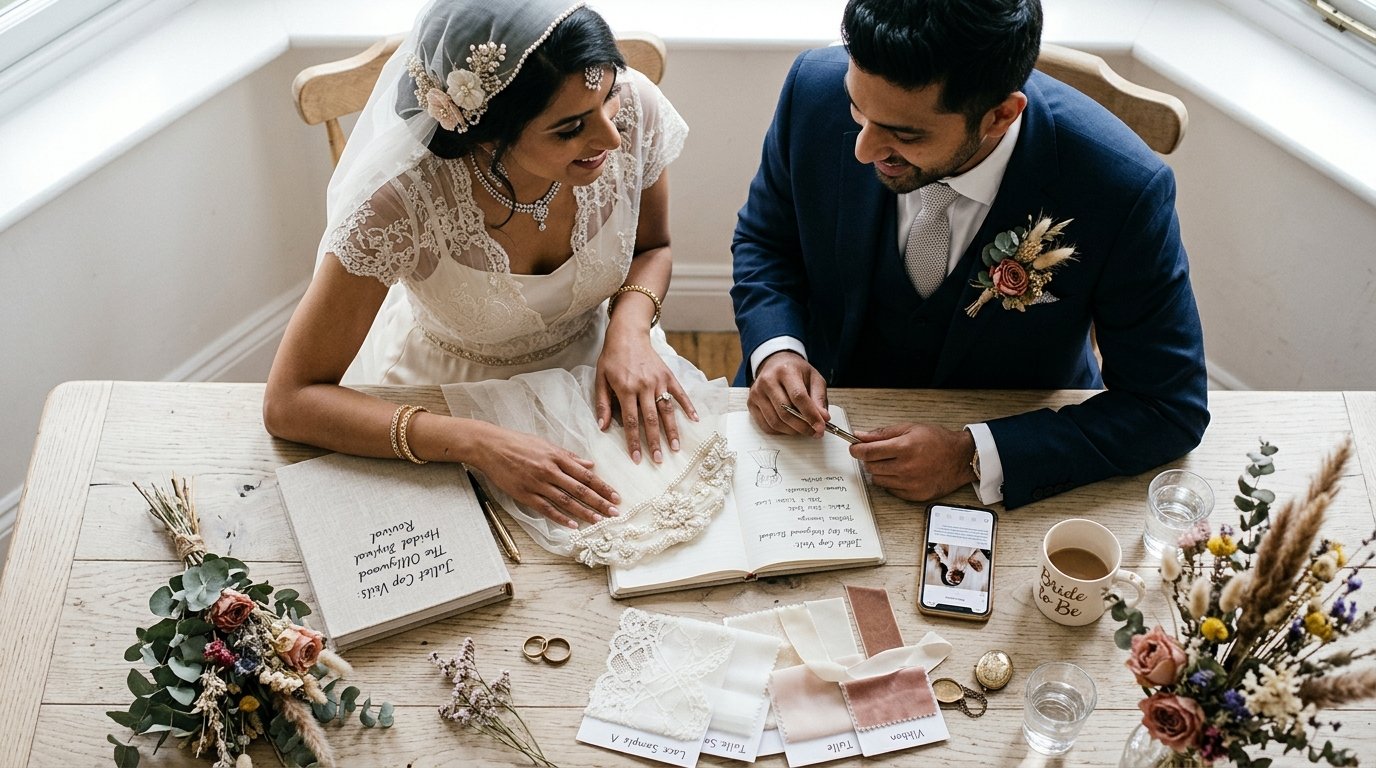
The essential structure of a Juliet cap is a fitted skull piece that sits on the crown and back of the head, with a veil attached at the rear. Everything else — material, decoration, veil length, veil style — varies.
The cap itself: Most commonly constructed from a base of crinoline or net stiffened with millinery wire, then covered with lace, satin, or sheer fabric. The surface is decorated with pearls, crystals, beads, or embroidery depending on the maker and the budget.
Attachment: The cap is held in place with a combination of internal combs (usually one or two, positioned at the front and back of the cap) and hairpins inserted through the base into the hair. A properly fitted cap should feel secure through a ceremony and a reception without additional fixative, though most veil makers recommend a light mist of hairspray on the hair beneath the cap.
The veil: The veil is attached at the back of the cap, typically with a loop of ribbon or a small gathered section of the veil fabric sewn to the cap. The veil length choice is separate from the cap choice — the same cap can carry a fingertip veil or a cathedral-length train. Most Juliet cap wearers choose either elbow length (90-100cm) or cathedral length (270-300cm). Short veils with a Juliet cap can look proportionally odd; the cap needs a veil with some presence.
The decoration spectrum
The decoration of the cap is the most significant variable in the overall look.
Pearl pins and minimal beading: The most understated version of the Juliet cap. A plain lace or satin base with a scatter of seed pearls or pearl-tipped pins. The effect is delicate and vintage without being heavily ornamental. Suits brides who want the shape without strong decoration. Price range: £85-£200 from UK makers or Etsy UK.
Lace and embroidery: Caps made entirely from lace, or with embroidery on a sheer or tulle base, have a lighter and more romantic effect than pearl-heavy versions. Work particularly well with lace gowns where the cap can mirror the fabric. Price range: £150-£400.
Crystal and rhinestone: The most formal and most photographically dramatic version. Crystals catch light at every angle. Less period-appropriate — the Old Hollywood aesthetic is warmer and more golden than rhinestones suggest — but photographically very effective. Price range: £200-£500.
Custom embroidery: Several UK makers offer custom embroidery on the cap itself — monograms, florals, botanicals, or personalised motifs. Adds 4-8 weeks to lead time. Price range: £300-£500+ depending on complexity.
Styling: how to wear it
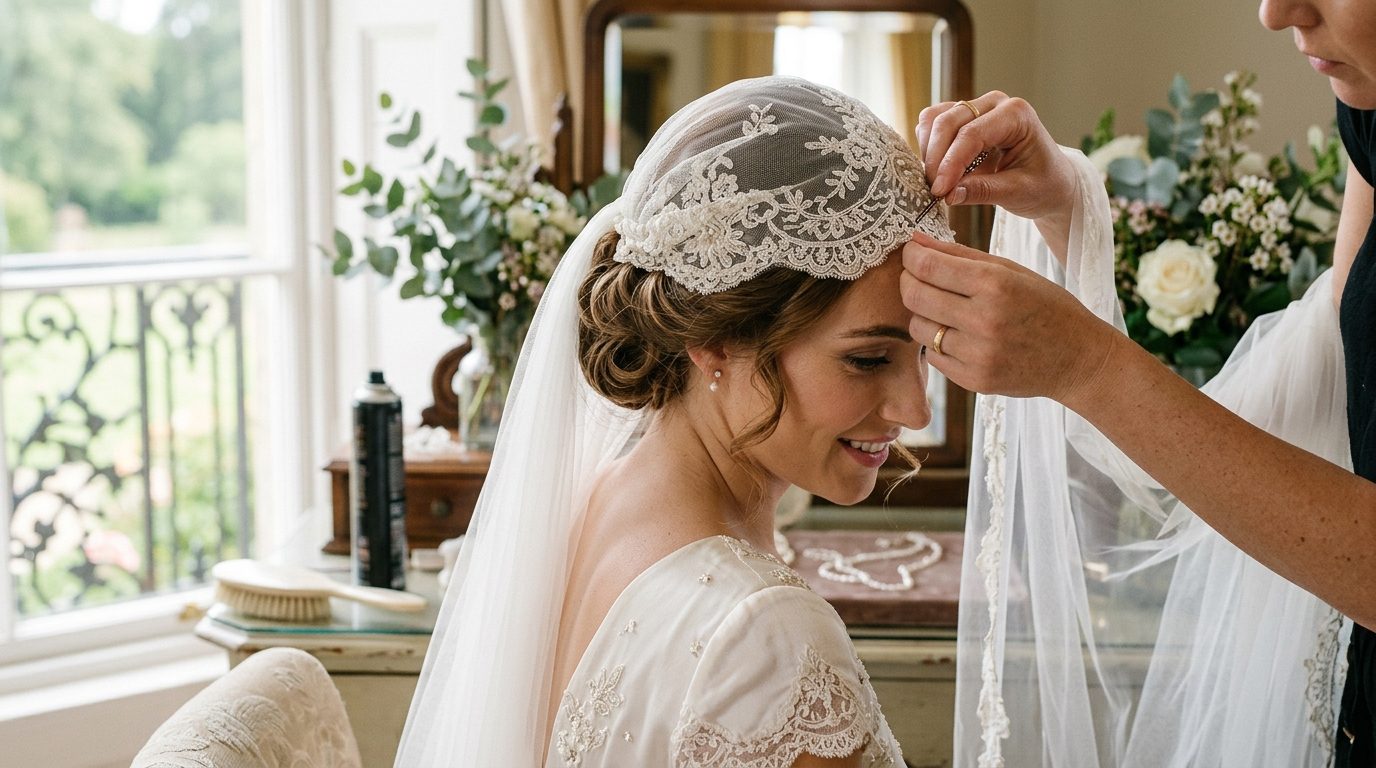
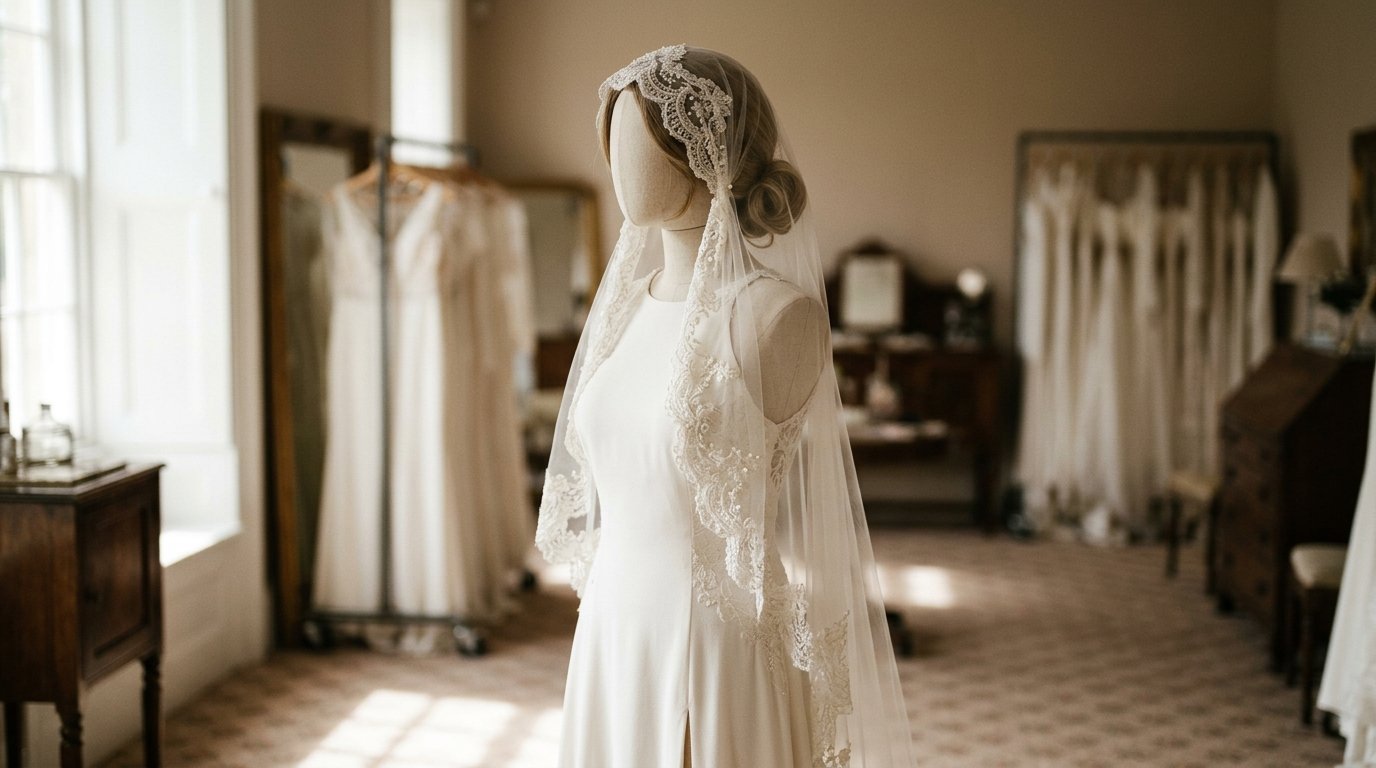
The Juliet cap has one non-negotiable styling requirement: the crown of the head must be visible and clear. The cap sits on the crown and the top of the skull — it cannot sit properly if the hair is piled up there.
Hair down, partially pulled back: The most flexible option. Side-swept or half-up styles that keep the crown clear work well. A loose wave with the front sections pinned back is the most photographed pairing with a Juliet cap in 2026.
Low bun or chignon: The cleanest option for the cap to sit against. A low bun or low chignon at the nape of the neck leaves the entire crown available. The contrast between the ornate cap and the simple, restrained bun is elegant.
Slicked back: A sleek, pulled-back style with hair smooth against the skull is the most deliberately 1920s choice. It pairs with the cap in a way that most directly evokes the original Old Hollywood aesthetic.
What to avoid: High updos, top knots, volumised crown sections, or elaborate braided crowns all prevent the cap from sitting properly. The cap will sit on top of a high bun rather than fitting to the head, which looks unstable and reads poorly in photographs.
For broader guidance on bridal hair and how it interacts with headpieces, see our bridal hair guide.
UK designers and makers
Halfpenny London: The Shoreditch-based atelier that is perhaps most responsible for the Juliet cap’s current UK revival. Their Deco-inspired and 1920s-leaning designs have consistently featured cap veils and are worn by the kind of stylish bride who researches beyond the standard bridal boutique. The Juliet cap appears in their current collection with a range of base fabrics and decoration options. Expect to pay £300-£800 for a Halfpenny piece including veil.
Victoria Fergusson: A London-based bespoke veil maker who has produced Juliet cap commissions since at least 2023. Her work tends towards the decorative end — beaded and embroidered caps rather than minimal pearl-pin styles. Lead time: 8-12 weeks. Prices from £250.
Britten Weddings: Cornwall-based, ships nationally. Offers a range of Juliet cap styles in their stock collection, starting around £120. Also takes bespoke commissions.
Etsy UK: Excellent source for independent makers. Search “Juliet cap veil UK” for country-filtered results. Most UK Etsy makers are working in the £85-£300 range. Read the reviews carefully — some makers are stronger on the cap construction than on the veil drape, and vice versa.
Your bridal boutique: If you are purchasing a gown from a bridal boutique that stocks Halfpenny London, Suzanne Neville, or Jenny Yoo, ask specifically about Juliet cap accessories. Several of these designers include matching cap accessories in their current collections that are not always visible in the showroom.
What dress it works with
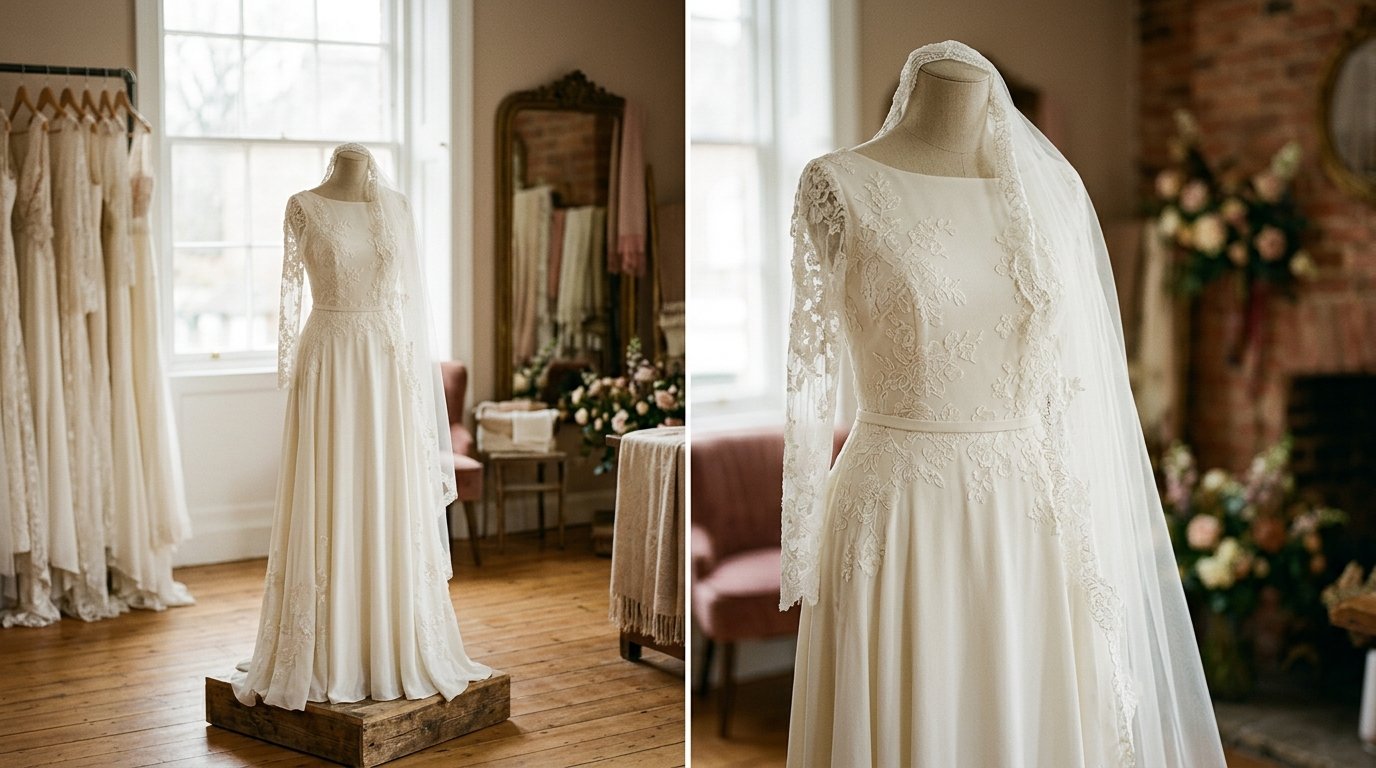
The Juliet cap is a strongly period-coded accessory. It pairs best with gowns that share its aesthetic register.
Bias-cut column gowns: The 1930s bias cut — a fluid, body-skimming silhouette that drapes along the figure — is the natural pairing for a Juliet cap. The combination reads immediately as 1930s Hollywood glamour. The most photographed combination in 2026.
Low-back designs: A gown with a deep-V or open back creates a visual relationship with the veil that hangs from the Juliet cap — the low back and the flowing veil create an elongated silhouette from behind. One of the most frequently requested pairings in UK bespoke veil commissions.
Minimalist long-sleeve gowns: A simple long-sleeve gown with little surface decoration benefits from the decoration of the Juliet cap without creating competing focal points.
What to avoid: Very full ballgowns or heavily structured princess silhouettes sit in visual tension with the delicate Juliet cap. The cap carries a 1930s register; the full ballgown carries a 1950s-1980s register. They do not contradict each other, but they do not reinforce each other either. The combination can look as though the bride has mixed two different aesthetic eras without fully committing to either.
For broader guidance on pairing accessories to gown silhouette, see our wedding dress accessories guide.
What this revival says about bridal in 2026
The Juliet cap is part of a wider pattern in 2026 UK bridal: brides are reaching back to the 1920s and 1930s more than any other decade. The bias-cut gown revival, the interest in vintage jewellery, the Old Mine cushion-cut ring trend, and now the Juliet cap — all draw from the same aesthetic period.
The reasons are partly cultural (the ongoing prestige of 1920s-1930s aesthetics in film and television), partly aesthetic (the decade’s restraint and focus on cut over volume aligns with the contemporary preference for understated luxury), and partly a reaction against the volume-heavy styles of the 2000s-2010s.
A Juliet cap veil is the headpiece version of that broader story. It says the bride knows what she wants and why. That intentionality is precisely what makes it compelling in 2026.
See our 2026 bridal trends overview for the full picture of where UK bridal is heading this year.
Related articles
Frequently asked questions
What is a Juliet cap veil?
A Juliet cap is a fitted bridal cap that sits on the crown of the head, typically decorated with pearls, beading, or lace. A veil is attached at the back. The style originated in 1920s-1930s Hollywood and is experiencing a strong revival in 2026.
How do you wear a Juliet cap veil?
The cap sits on the crown of the head, held in place with hair pins or combs sewn into the base. Hair should be pulled back or worn low to allow the cap to sit properly. A bun, low chignon, or slicked-back style works best.
What is the difference between a Juliet cap and a bridal crown?
A bridal crown or tiara sits higher on the head and is typically rigid. A Juliet cap is softer, more fitted to the skull, and covers more of the crown. The cap is associated with a softer, more romantic aesthetic; the crown with a more formal or regal one.
Where can I buy a Juliet cap veil in the UK?
Halfpenny London, Victoria Fergusson, and Britten Weddings all offer Juliet cap styles or bespoke commissions. Etsy UK has a wide range from independent UK makers at £85-£300. Many bridal boutiques can order from their supplier catalogues on request.
What wedding dress suits a Juliet cap veil?
Juliet caps work best with gowns that have a similar 1920s-1940s aesthetic — low backs, bias cuts, column silhouettes, and minimal surface decoration. They can feel visually jarring with a heavily structured ballgown or a very contemporary minimalist design.
Can I wear a Juliet cap veil with short hair?
Yes, though the styling challenge is greater. Short hair means the cap cannot be anchored with as many pins. A cap with a strong internal comb structure works better. Many short-haired brides wearing Juliet caps use a light hairspray to create grip at the base.