Home / Articles / Celebrity Weddings
Coco Jones & Donovan Mitchell's Wedding Ideas
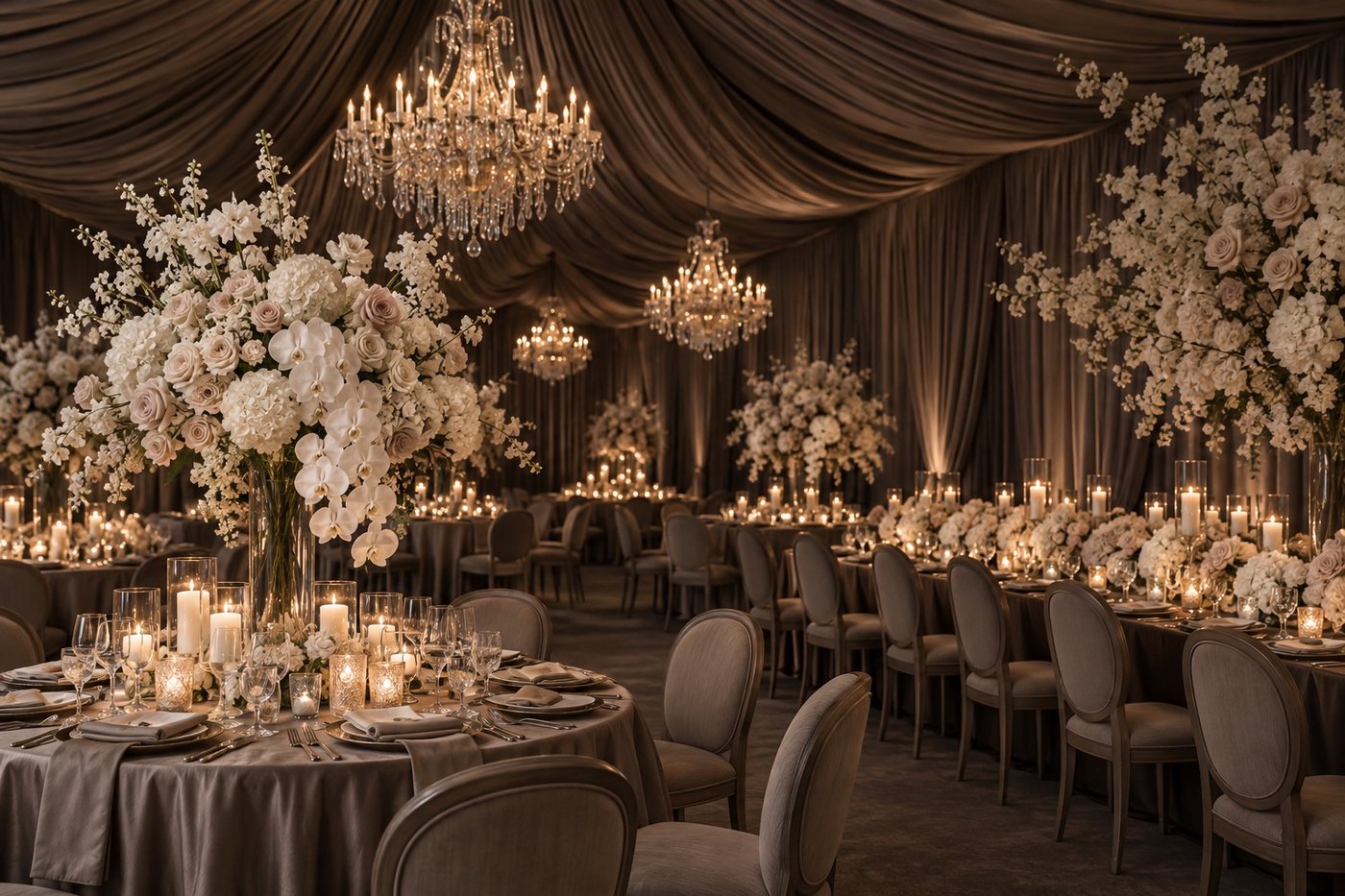
Coco Jones and Donovan Mitchell married on 1 August 2026. Vogue later described the venue as a private New York State residence, while early reports placed the wedding in Greenwich, Connecticut. Their food stations drew on Mitchell's Panamanian family and Jones's Southern upbringing. Family recipes guided the caterer, while Black designers created the couple's wedding wardrobe.
Key Takeaways
- Family recipes shaped food stations based on Panamanian and Southern traditions
- The caterer checked recipe details with the couple rather than guessing
- Black designers created the couple's outfits throughout the wedding weekend
- Similar ceremony fabrics and shared embroidery linked both outfits
- Six bridesmaid dresses were hand-dyed after a colour-matching warning
Coco Jones and Donovan Mitchell did not treat culture as a loose wedding theme.
They started with family food, personal memories and designers who understood their plans.
The result was specific. It also offers better planning lessons than simply copying a celebrity colour palette.
What did the reporting confirm about the wedding?
Jones and Mitchell married at a private residence on 1 August 2026. Vogue places it in New York State, while early reports placed it in Greenwich, Connecticut.
Their published account describes a full weekend. Friday held a rehearsal dinner and welcome party before Saturday’s ceremony and reception.
| Part of the wedding | Confirmed choice |
|---|---|
| Venue | A private residence; public reports disagree between New York State and Greenwich, Connecticut |
| Date | 1 August 2026 |
| Menu | Food stations drawing on Panamanian and Southern family food |
| Recipe development | The caterer checked specific family recipes with the couple |
| Ceremony wardrobe | An Off-White gown and white suit made with similar fabrics |
| Shared detail | Embroidered initials and Song of Solomon 6:3 |
| Bridesmaid dresses | Six dresses hand-dyed by Jones after a colour warning |
| Weekend events | Rehearsal dinner, welcome party, ceremony, reception and after-party |
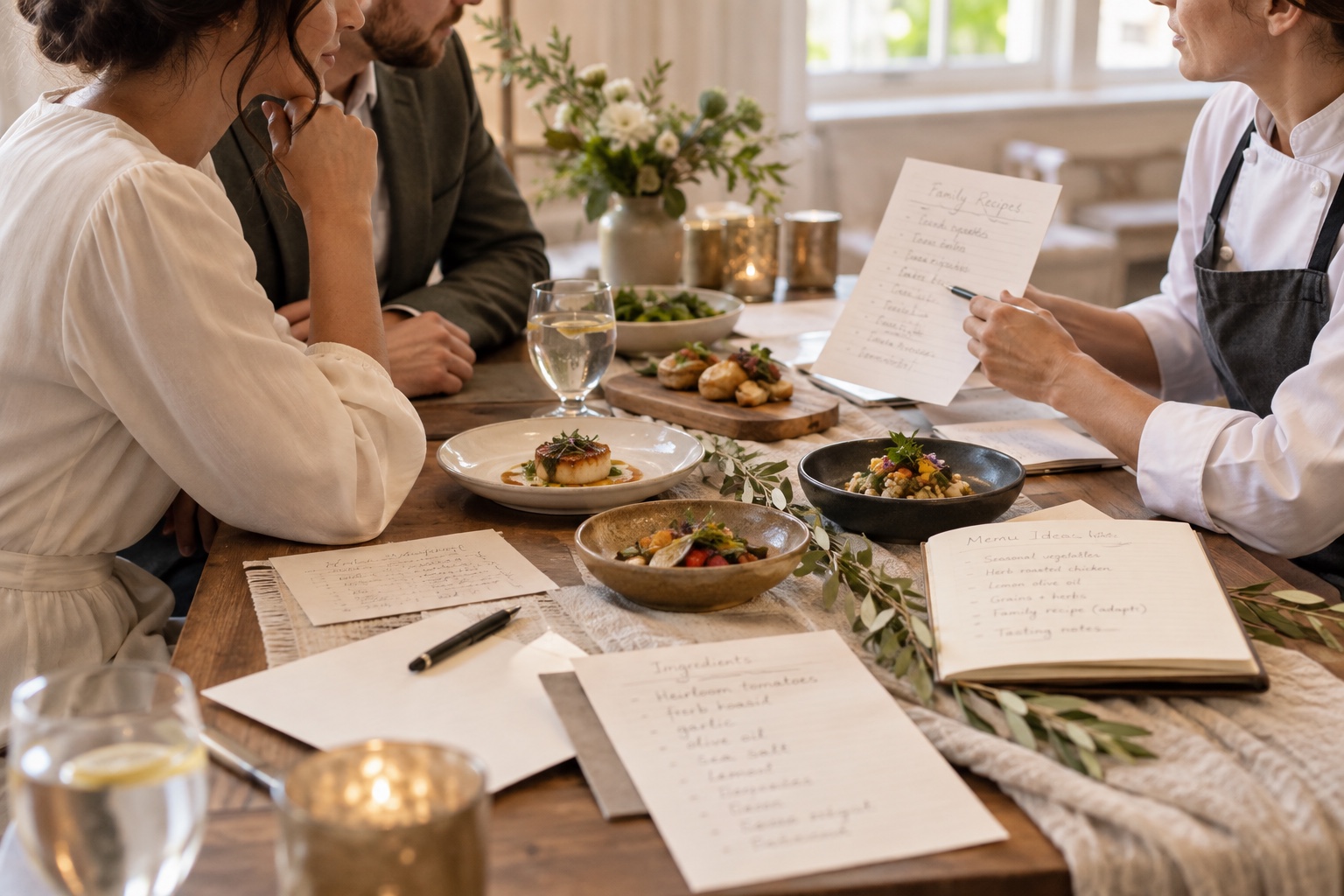
Source-grounded editorial illustration of the reported recipe-checking process. It does not depict the real couple or reproduce a published photograph.
Eight practical ideas UK couples can take from it
1. Interview relatives before briefing the caterer
Mitchell led the menu planning. The couple’s caterer checked the recipes their families remembered.
That detail matters. A dish name rarely tells a chef which version feels like home.
Ask relatives about ingredients, texture, serving style and the occasions connected with each dish. Record their answers with permission.
Choose two or three non-negotiable details. Let the caterer adapt everything else for safe, consistent service.
Our wedding menu ideas guide can help organise the first conversation.
2. Explain every cultural reference clearly
The food stations joined Mitchell’s Panamanian family history with Jones’s Southern upbringing.
Avoid asking one dish to represent a whole country or community. Name the family, region or memory behind it.
Short menu notes can explain that context without turning dinner into a lecture. Check every description with the person represented.
Use the language your family uses. Do not rename a dish because a supplier thinks another label sounds more familiar.
3. Test food stations as a guest route
Stations create choice, but poor placement creates queues. Draw the room and mark how people reach each counter.
Split popular dishes across two points when possible. Keep plates and cutlery where guests first need them.
Ask how older guests, wheelchair users and children will be served. Table service may still be needed for some people.
Time one sample plate during the tasting. Multiply that service time by the likely number of guests.
Compare local options in the Weddings Hub caterer directory.
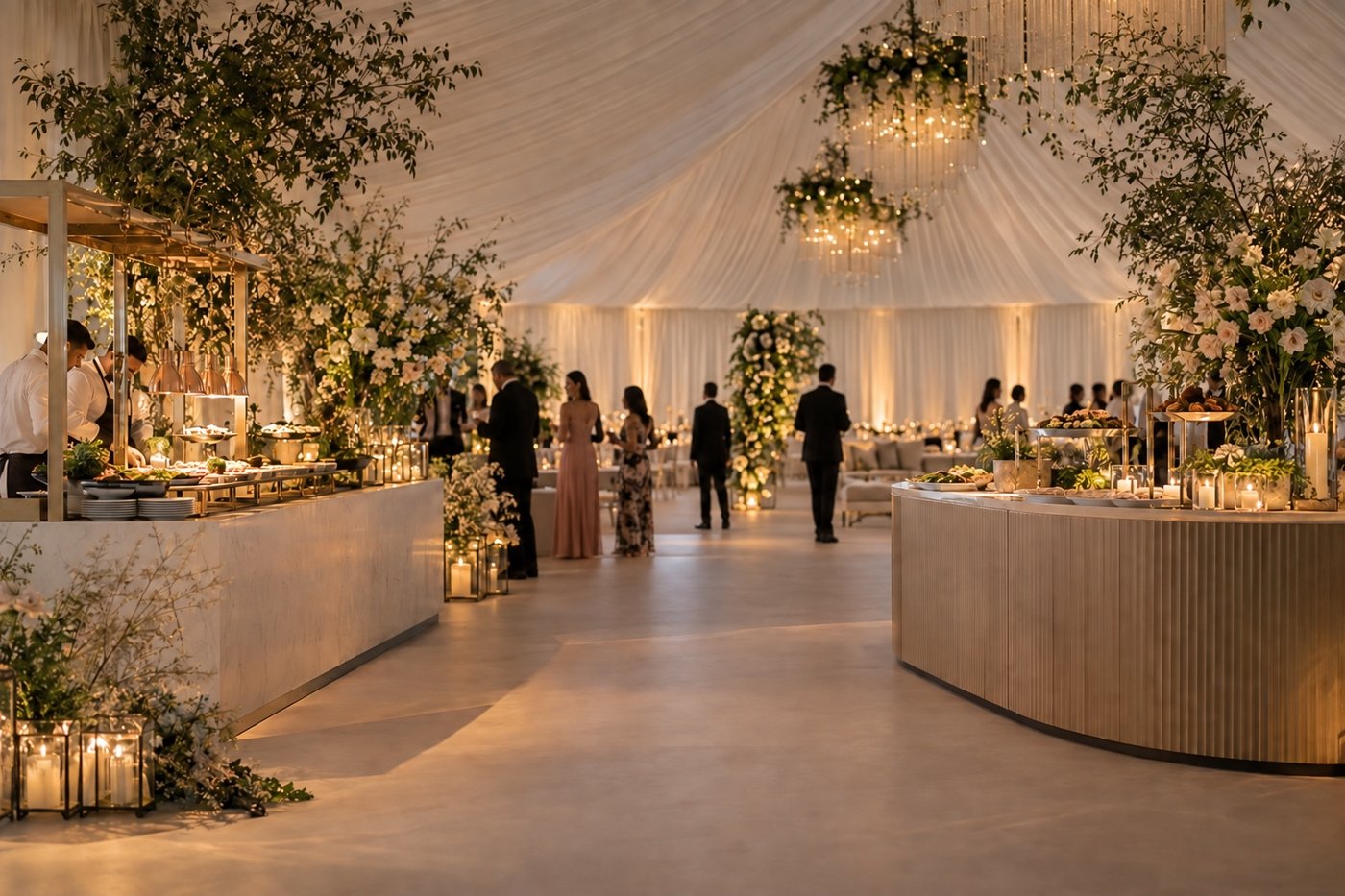
Planning illustration based on the reported food-station format and neutral wedding palette. The closed draping avoids implying an unconfirmed venue view. The source does not show the exact layout or publish a complete menu.
4. Treat allergen information as part of the menu design
Family recipes can change during professional production. Ingredient substitutions must reach the final allergen record.
The Food Standards Agency says food businesses must provide information for the 14 regulated allergens.
Ask for a written dish matrix before final numbers are due. Confirm who updates it after any recipe change.
Cross-contamination also needs a direct conversation. A card saying “gluten-free” does not describe the kitchen controls.
Our questions for wedding caterers cover tastings, staffing and service details.
5. Choose designers through conversation, not labels
Jones chose Black designers across the weekend. She described chemistry and a shared understanding as important parts of the process.
Start with portfolios, construction skill and communication. Then ask how the designer interprets your references.
Take a written brief to the first meeting. Include the event, venue, movement, budget, deadline and details with personal meaning.
Ask who will make the garment and handle fittings. Confirm payment stages and ownership of any custom sketches.
The bridal boutique directory is a useful starting point for UK appointments.
6. Coordinate the couple without matching exactly
Off-White made Jones’s ceremony gown and Mitchell’s white suit. Similar fabrics connected them without producing identical outfits.
Their initials and a shared Bible verse appeared as custom embroidery. The detail was personal rather than decorative filler.
Bring fabric samples to a joint fitting. Compare whites in daylight because ivory and optical white photograph differently.
Agree which details should connect. Texture, lining, embroidery or metal finishes can work better than one flat colour.
UK couples can compare options through our wedding menswear directory.
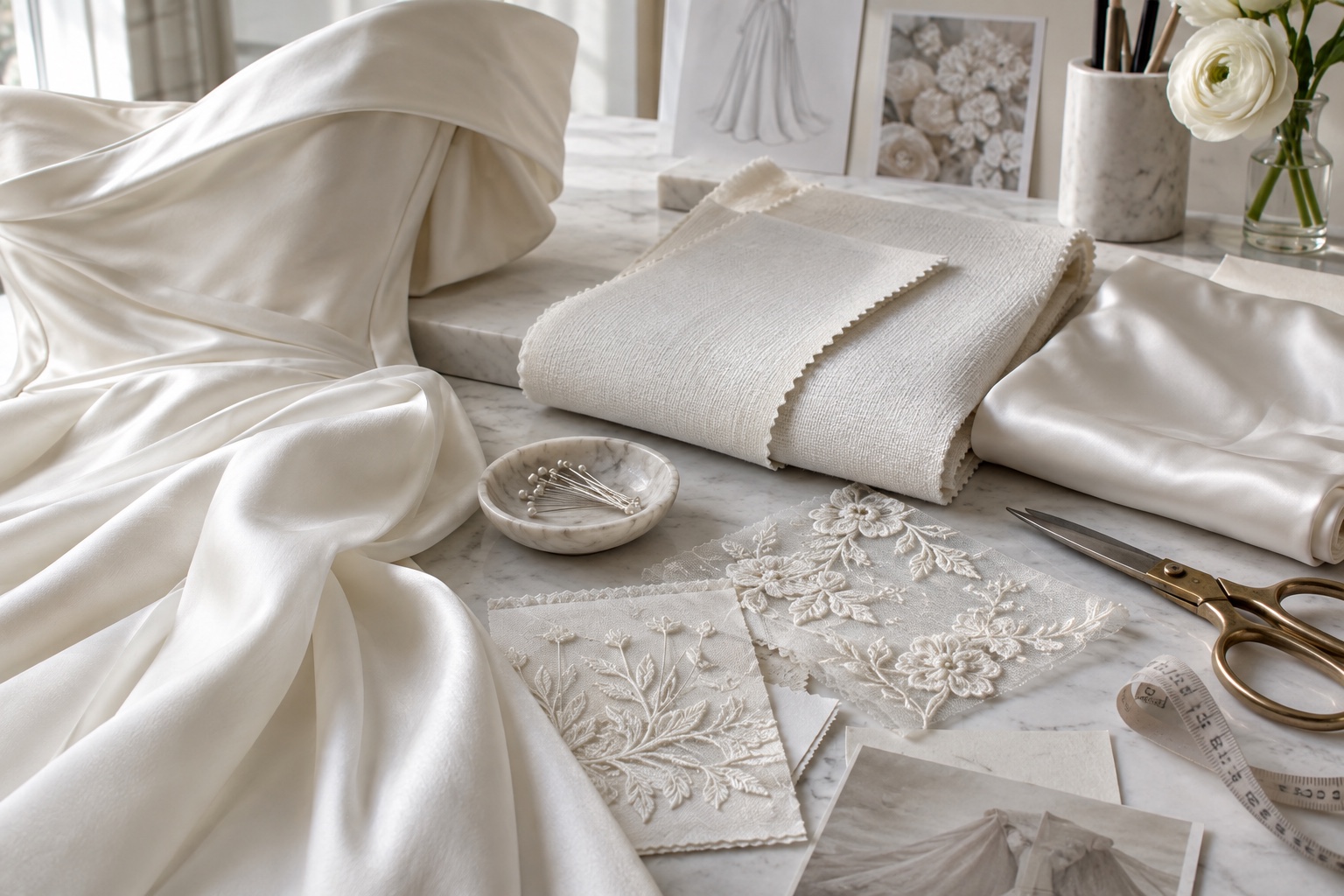
Source-grounded fabric study without brand logos, exact monograms or copies of the real garments.
7. Put every outfit change into the schedule
Jones wore different looks for the reception and after-party. The weekend also included rehearsal and welcome events.
Each change needs a room, helper and fixed time. Jewellery, shoes and underlayers should be packed with the correct outfit.
Ask the photographer which portraits matter before changing. The caterer also needs the couple present for formal dinner moments.
Allow more time for corsets, buttons and fitted sleeves. Ten minutes can disappear quickly when a fastening catches.
Use our wedding day timeline guide to protect those changes.
8. Never dye six dresses without a test
Jones hand-dyed six bridesmaid dresses after the retailer warned that their fabrics might not match.
It worked for her. It is still a risky job when garments use mixed fibres, linings, stitching and trims.
Test an offcut from the exact production batch. Record water temperature, dye quantity and soaking time.
Ask a professional dyer before altering expensive dresses. Dyeing can affect return rights, so check the retailer’s terms before starting.
Judge the result in daylight and at the venue. Our wedding colour guide explains why lighting matters.
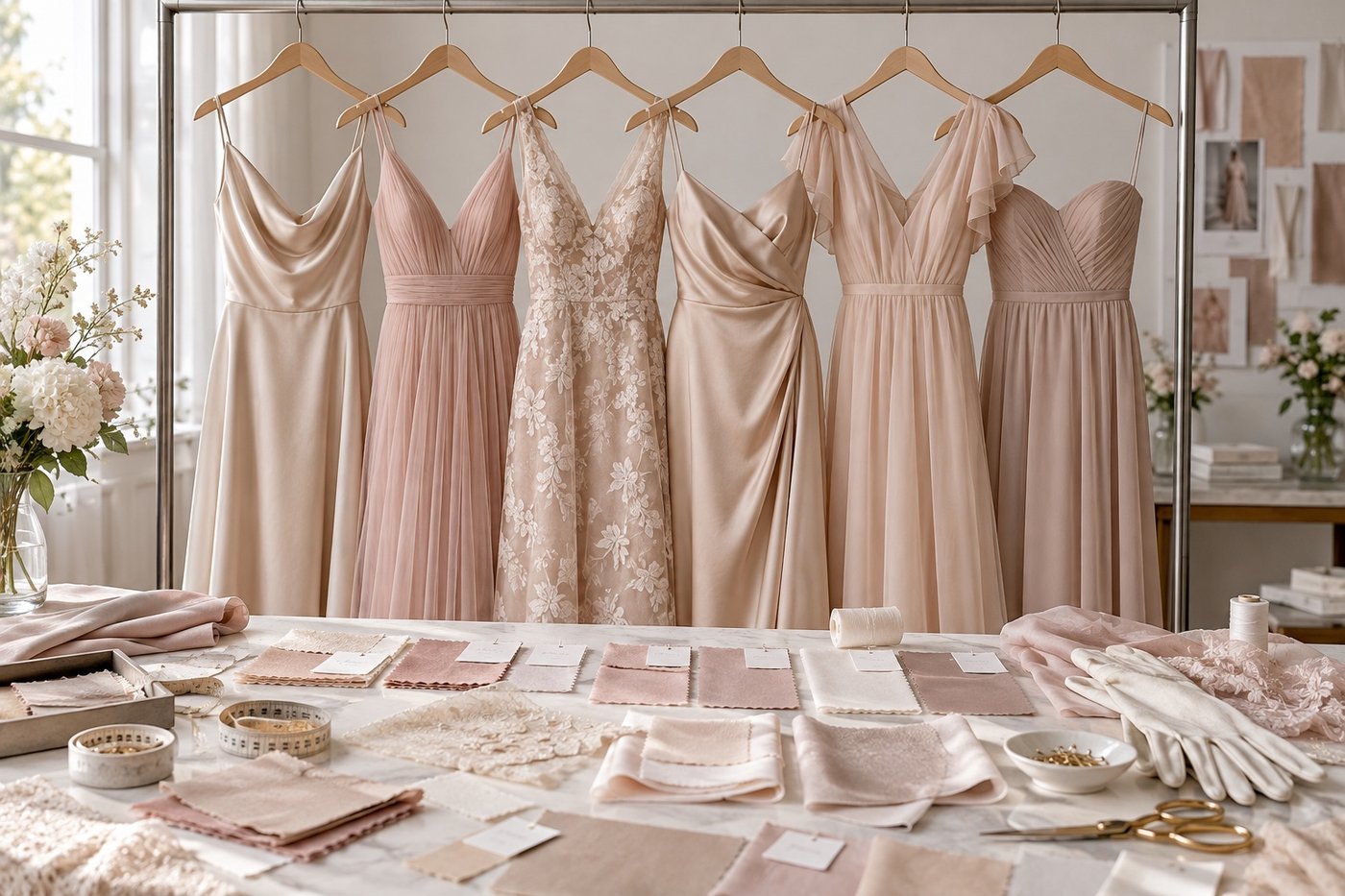
Source-grounded editorial illustration of the reported six-dress dyeing challenge. It does not copy the real garments or depict the wedding party.
A useful cultural menu brief
Give this information to the caterer before the first tasting.
| Brief item | What to record |
|---|---|
| Dish and family name | The wording relatives recognise |
| Place or person | The specific connection behind the recipe |
| Essential details | Ingredients, texture, heat and serving style |
| Flexible details | Elements the chef may adapt for scale or season |
| Allergens | Regulated allergens and cross-contamination controls |
| Service plan | Station, table service, portion size and queue capacity |
| Menu wording | The final guest-facing description and spelling |
Send approved wording to the stationery supplier. Our wedding stationery guide covers menus and guest information.
What remains private or uncertain?
The residence is private. Vogue’s later feature places it in New York State, while earlier reports placed it in Greenwich, Connecticut. No private address is published here, and readers should treat the exact location as unresolved.
The public reporting does not provide the venue’s hire terms or the couple’s total wedding cost.
It also does not publish every recipe. The article confirms the family-led process, not a complete menu for replication.
UK couples should use current supplier contracts and Food Standards Agency guidance. US arrangements do not replace UK requirements.
Sources
We opened these pages when checking the guide. Prices and rules can change, so follow the link before booking.
- Vogue interview with Coco Jones and Donovan Mitchell about their wedding — Published 14 August 2026. It confirms the date, menu, designers, embroidery, bridesmaid dresses and weekend schedule. Checked 22 September 2026
- Food Standards Agency: allergen guidance for food businesses — Current UK guidance on allergen information, menu planning and avoiding cross-contamination. Checked 22 September 2026
- CTPost: early report placing the wedding in Greenwich, Connecticut — Used to disclose the location conflict in public reporting. Vogue's later feature instead says the private residence was in New York State. Checked 22 September 2026
Keep planning
Frequently asked questions
When did Coco Jones and Donovan Mitchell marry?
They married on 1 August 2026. Public reports disagree on whether the private residence was in New York State or Greenwich, Connecticut.
What food did their wedding menu feature?
Food stations reflected Mitchell's Panamanian family and Jones's Southern upbringing.
Who designed Coco Jones's wedding dress?
Off-White made her ceremony gown. The brand also created Mitchell's white ceremony suit.
How did the couple coordinate their ceremony outfits?
They used similar fabrics and shared embroidery. Their initials and a Bible verse appeared on both looks.
Should couples dye bridesmaid dresses themselves?
Only after careful testing. Fabric blends, stitching and trims can absorb dye differently.