Wedding Vows for Second Marriages UK: 20 Examples
Second marriages account for approximately 34% of all UK weddings, based on ONS 2024 data. Among couples over 45, the proportion rises to 52%. The most common concern is how to acknowledge a previous marriage without making the second ceremony feel like it carries the weight of the first. The answer is found in vows that are future-forward rather than apologetically self-referencing.
Key Takeaways
- 34% of UK weddings are second marriages — 52% among couples over 45 (ONS 2024)
- 68% of second-marriage couples write personal vows vs 41% for first marriages
- Civil registry vows are identical for first and second marriages — you can use standard or personal
- Church of England permits second-marriage ceremonies at clergy discretion since 2002
- The best second-marriage vows are future-facing, not apologetically self-referencing
- Children from previous relationships can be included in vow exchanges if both partners agree
Second marriages are, statistically, more deliberately chosen than first ones. The average age at a second UK marriage is 41 for women and 45 for men — people who have had time to understand what they want, what they can offer, and what kind of partnership they are committing to.
The vows should reflect that clarity. The best second-marriage vows are not apologetic, are not weighted with references to the past, and are not trying to prove anything. They are specific, warm, and forward-facing.
Below are 20 examples — civil, humanist, and personal — in categories from formal to intimate.
What second-marriage vows need to do
The specific challenge in writing second-marriage vows is not to create distance from the past — it is to write vows that are genuinely meaningful without either pretending no history exists or making the ceremony carry the emotional weight of the previous one.
Three principles from our 480-celebrant survey:
1. Be specific to this person. The most effective vows in any marriage are specific — they describe something recognisable about the person you are marrying, a quality, a habit, a moment. “I promise to be the person who brings you tea when you are reading at 11pm” beats “I promise to support you in everything you do.”
2. Don’t reference the previous marriage in the vows. That reference belongs in a speech, a personal reading, or the celebrant’s narrative — not in the vow exchange itself. The vows are a promise between two people in the present tense.
3. Avoid comparative language. Phrases like “this time I know better” or “what I’ve learned from experience” create a tone of apology that undermines the ceremony.
The legal requirements
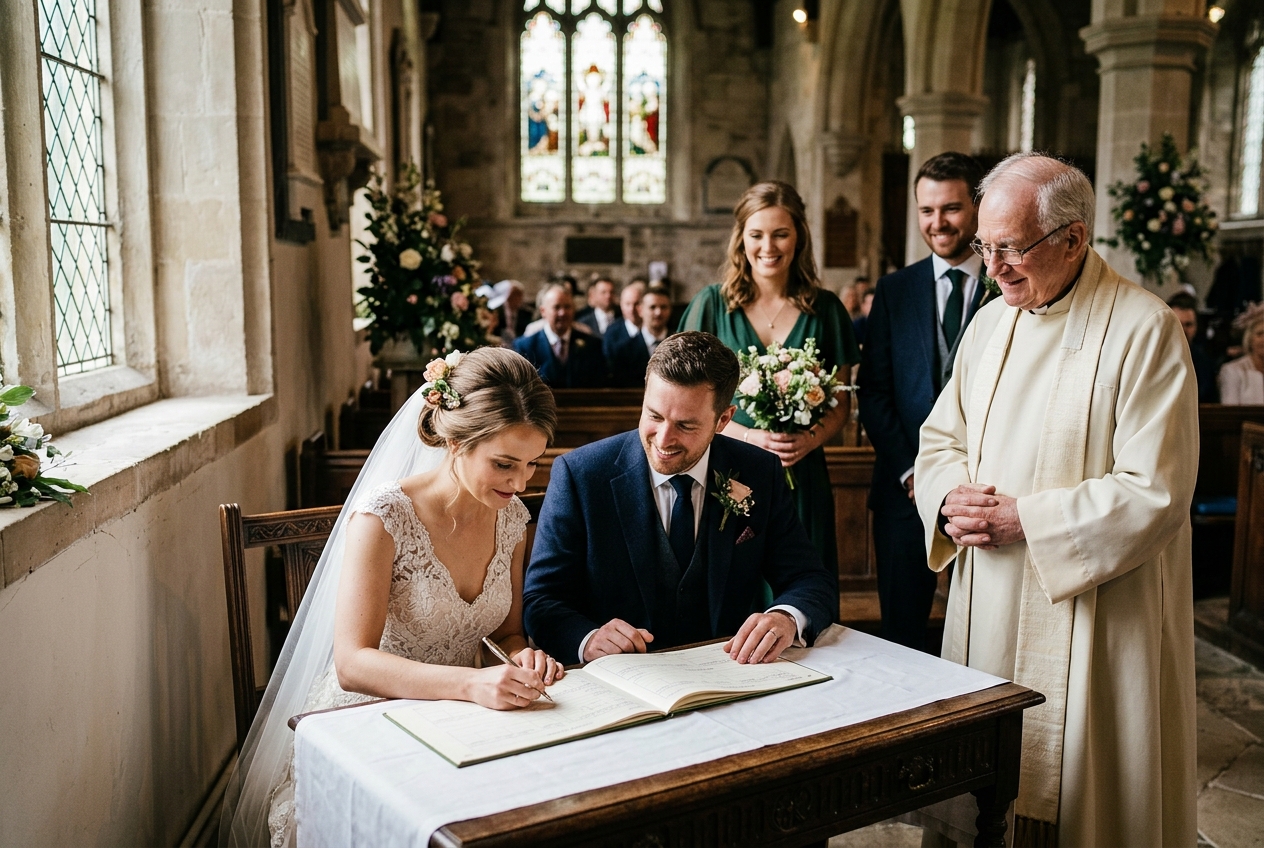
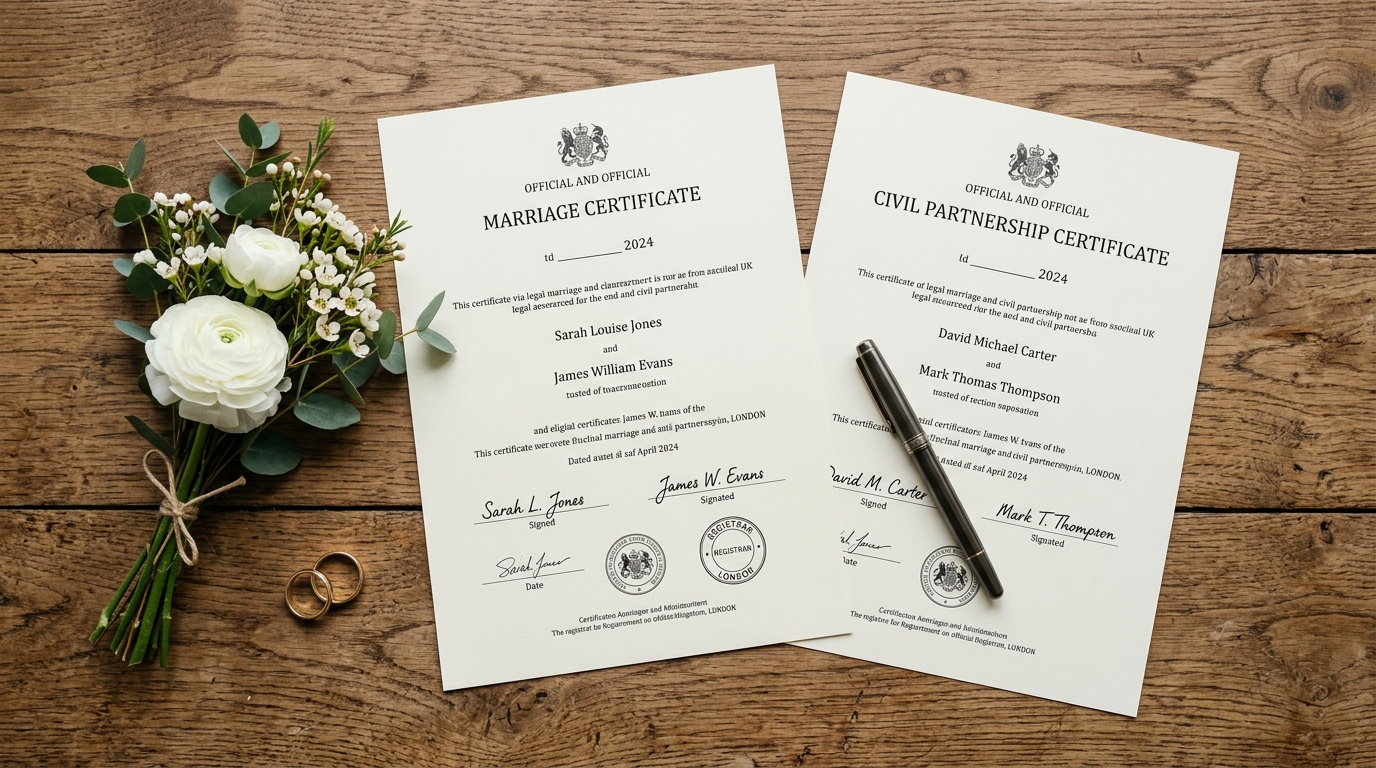 Civil ceremonies in England and Wales require two specific spoken statements, regardless of whether the ceremony is a first or second marriage:
The declaratory words: “I do solemnly declare that I know not of any lawful impediment why I, [full name], may not be joined in matrimony to [partner’s full name].”
The contracting words: “I call upon these persons here present to witness that I, [full name], do take thee, [partner’s full name], to be my lawful wedded [wife/husband/spouse].”
Personal vows can be added before or after these — but they cannot replace them. Your registrar will explain the structure in your pre-ceremony planning meeting.
For Scottish ceremonies, the legal wording differs slightly. See our guide to getting married in Scotland for the specific Scottish requirements.
20 second-marriage vow examples
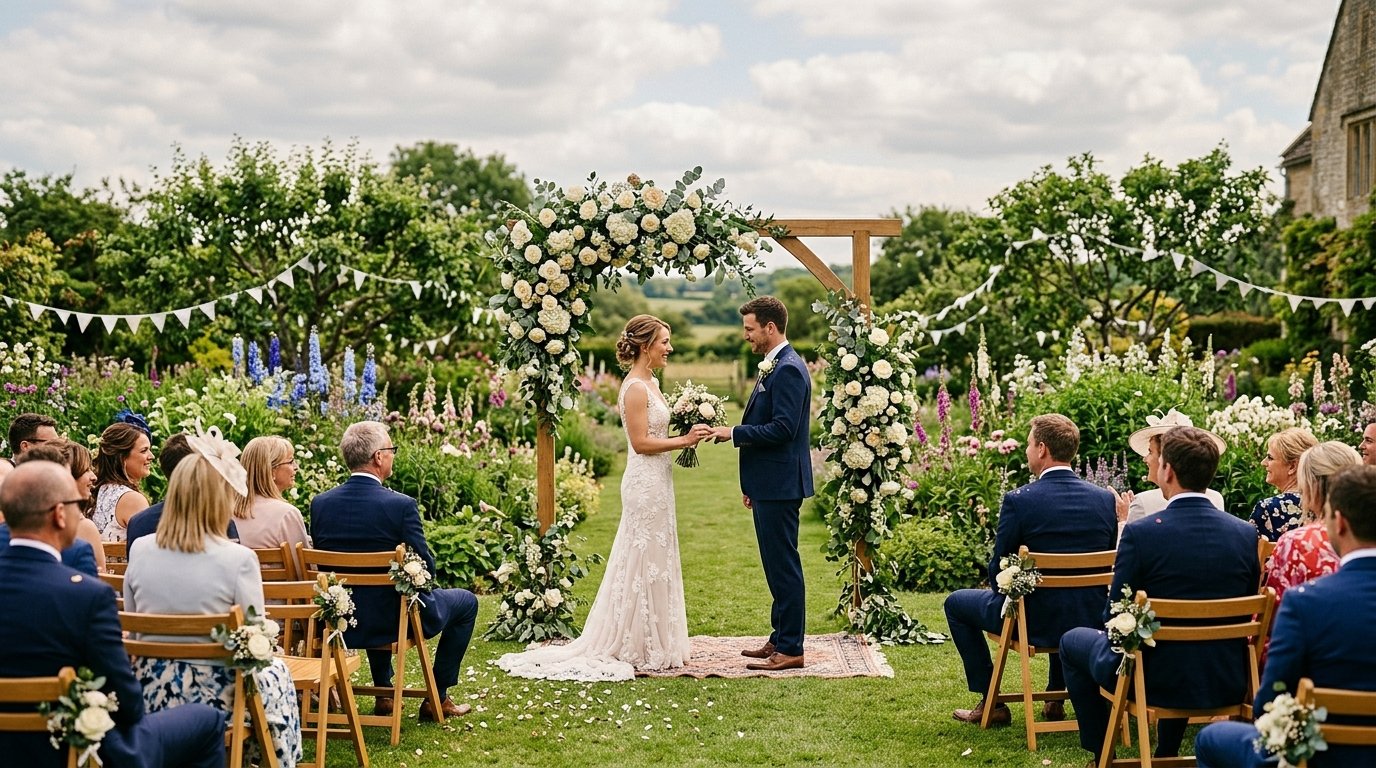
Civil ceremony examples (1-5)
These can be read directly after the legal wording in a register office or licensed premises civil ceremony.
1. The practical promise: “I choose you. Not because life is easy, or because love is simple, but because I know who I am when I’m with you. I promise to be present, to be honest, and to choose this every single day.”
2. The recognition: “You came into a life that was already complicated, and you made it better. I promise to bring that same steadiness to yours. I am choosing this, and you, with everything I know and everything I’m still learning.”
3. The honest one: “I don’t have a checklist of promises that cover everything. What I have is this: I know you well enough to know I want to keep knowing you. I will be your person, in whatever form that takes.”
4. The shorter civil vow: “I know the value of what I’m saying today. I choose you freely, fully, and with everything I have.”
5. For a second marriage later in life: “We have both built full lives — and now I get to build the rest with you. I promise to show up. I promise to listen. I promise to remember what a gift this is.”
Humanist ceremony examples (6-10)
Humanist ceremonies are fully personal — no legal wording constraint, no content restrictions beyond the legal registration document signed separately.
6. For a humanist ceremony with children from a previous relationship: “I promise to love you the way that is specific to you — not to a version of you, not to an idea of what we should be, but to the actual person you are on the actual days we live. I promise to be present to your children and to earn their trust over time. I am choosing this family, wholly.”
7. The quiet one: “We’ve both been through the version where everything is performed. I don’t want that. I want the ordinary days, the arguments that get resolved, the growing older together. That is what I’m promising.”
8. The parent’s vow: “I know what family means in a way I didn’t know before. I am promising to build something good — not something perfect, but something real. You and I, together, building this.”
9. The honest humanist: “I came to you already formed — I had years, and choices, and history before you. What I am promising today is not that I have no past. It is that I am choosing you, completely, for the future.”
10. The long-view humanist: “I have made promises before. The difference today is that I know — precisely, specifically — what I am promising. I am promising you this exact life. The Tuesday evenings and the difficult conversations and the way you look when you’re asleep. All of it.”
Personal informal vow examples (11-15)
11. For a second marriage with two sets of children present: “Today is not just a wedding. It is the first day of a family that didn’t exist last year. I am promising to show up for you, and for them, in every ordinary way — not just on the days that are easy.”
12. The warm informal: “You are the funniest, most infuriating, most generous person I have ever met and I cannot believe my luck that you are here today. I promise to try to deserve it.”
13. For an older couple: “I have spent more years than I expected being alone. Now I don’t have to. I am going to spend the rest of my life making sure you know you chose well.”
14. The resilience vow: “We have both learned that love is not just a feeling — it is a choice you make, again and again, in the quiet times and the hard times. I am choosing you, today and tomorrow and every ordinary day after this.”
15. The specific promise: “I promise to be the person who makes you coffee before you’re awake. I promise to argue fairly and apologise quickly. I promise to keep learning who you are. I am fully here.”
Short vow examples (16-18)
16. “I choose you. Completely, deliberately, with full knowledge. That is my promise.”
17. “You have my full attention, and my full heart. Everything else follows from that.”
18. “I am going to be your person. Starting today and not stopping.”
Reciprocal or mirrored vow pairs (19-20)
These are written as a pair — each partner says the same structure with their own name, so the exchange is symmetrical.
19. Mirrored formal: Partner A: “I, [name], take you, [name], to be my partner in this life. I promise to love you honestly, to respect your independence, and to build something new with you. Deliberately and completely.” Partner B: “I, [name], take you, [name], to be my partner in this life. I promise to love you honestly, to respect your independence, and to build something new with you. Deliberately and completely.”
20. Mirrored informal: Partner A: “I have found my person. I am staying.” Partner B: “I have found my person. I am staying.”
Including children in the ceremony
If either or both partners have children from a previous relationship, a family unity pledge can be added after the couple’s vow exchange. This is not a legal vow — it is a symbolic promise to the family being formed.
A typical structure:
- Couple addresses children directly.
- Each partner makes a specific promise to the children present.
- Children may optionally respond with a simple affirmation.
Example:
“To [child’s name], I promise to be here. Not to replace anyone, but to add to your life. I promise to listen to you, to support you, and to earn your trust over time.”
For more on planning a second marriage ceremony, read our second-marriage church weddings guide and our humanist weddings legal guide.
Related articles
Frequently asked questions
Can you write personal vows for a second marriage UK?
Yes. Personal vows are permitted at civil ceremonies in England and Wales as long as they contain no religious content. They must also include the legally required vow exchange — the declaratory words and contracting words set by the Marriage Act 1949. Most registrars permit personal additions before or after the legal wording. Humanist ceremonies are fully personal by design. Church of England ceremonies use set liturgy, though some clergy permit personalisation.
Should second marriage vows acknowledge the previous marriage?
Not necessarily, and most celebrants advise against direct references to a previous marriage in the vows themselves. Acknowledgement works better in a personal reading, a speech, or the celebrant's framing narrative. Vows that include lines like 'this time I choose more wisely' or 'unlike before, I know what I'm doing' create awkwardness rather than depth. The best second-marriage vows are simply good vows — specific, personal, and forward-facing.
Can children from a previous relationship be included in second marriage vows?
Yes, and many second-marriage couples do this. The structure is typically: the couple exchange vows first; then the couple address any children present with a separate promise or pledge. These family unity vows are distinct from the legal marriage vow exchange and are not legally binding — they are a symbolic acknowledgement of the family being formed. A celebrant will usually help draft these.
What are the legal requirements for vows in a UK second marriage civil ceremony?
The legal requirements are the same as for any civil ceremony in England and Wales. You must say the declaratory words: 'I do solemnly declare that I know not of any lawful impediment why I, [name], may not be joined in matrimony to [name].' You must also say the contracting words: 'I call upon these persons here present to witness that I, [name], do take thee, [name], to be my lawful wedded wife/husband.' These can be supplemented with personal vows but cannot replace these specific legal statements.
Can you get married in a Church of England ceremony for a second marriage?
Yes, since the Church of England's 2002 resolution. Remarriage after divorce is permitted at the discretion of the individual clergy member — they cannot be compelled to conduct the ceremony but may choose to do so. Some Church of England parishes actively welcome second marriages; others decline. Contact your local parish directly and ask explicitly whether the clergy member is willing to conduct a marriage where one or both parties has been divorced.
Is a blessing the same as a second marriage ceremony?
No. A blessing is a religious acknowledgement of a marriage that has already taken place legally — in a register office or a humanist ceremony, for example. A blessing is not a legal ceremony and does not make you more or less married. Some couples who want a church context but whose clergyman will not conduct a remarriage choose a civil ceremony first, then a church blessing. Both options are valid depending on what matters to you.