Wedding Venues with Accommodation: Worth It?
Key Takeaways
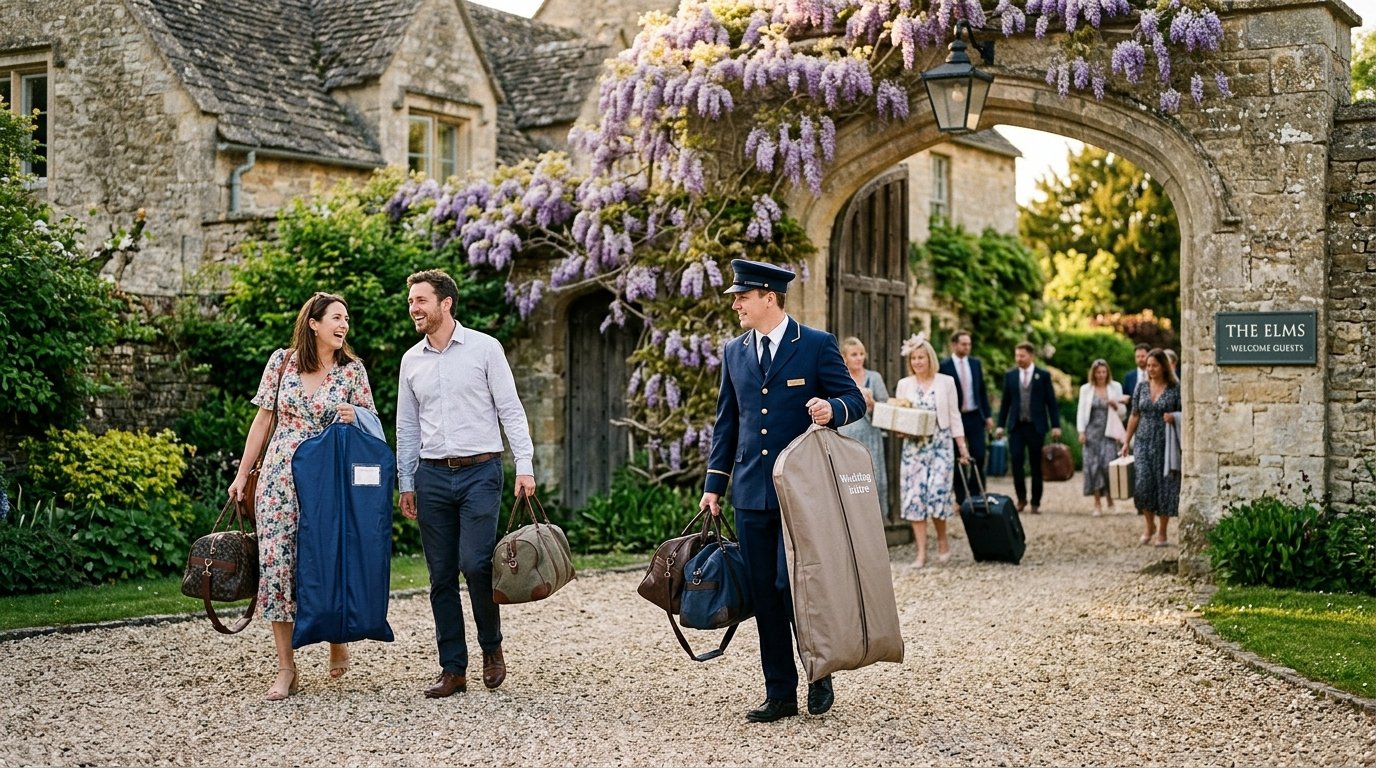
- Venues with accommodation cost £100-£250 per room per night — but save your guests hundreds on taxis, separate hotels, and logistics
- The bridal suite is usually included in the venue hire fee, with additional rooms charged separately
- Block-book all rooms early, then release unbooked ones 6-8 weeks before — most venues offer 10-15% off for block bookings
- The morning-after breakfast is the secret advantage: a relaxed, unrushed gathering that extends the celebration into the next day
- Prioritise rooms for the couple, parents, and wedding party — then offer remaining rooms to guests travelling the furthest
When the last dance ends and the bar closes, two things happen. At a venue without accommodation, you stand in a car park queueing for taxis while your makeup runs in the rain. At a venue with accommodation, you walk upstairs, fall into bed, and wake up to breakfast with the people you love most.
That’s the real case for on-site accommodation. Not the convenience — the continuation. The morning after is the most relaxed, joyful part of a wedding weekend, and it only happens when everyone sleeps under the same roof.
Why accommodation matters
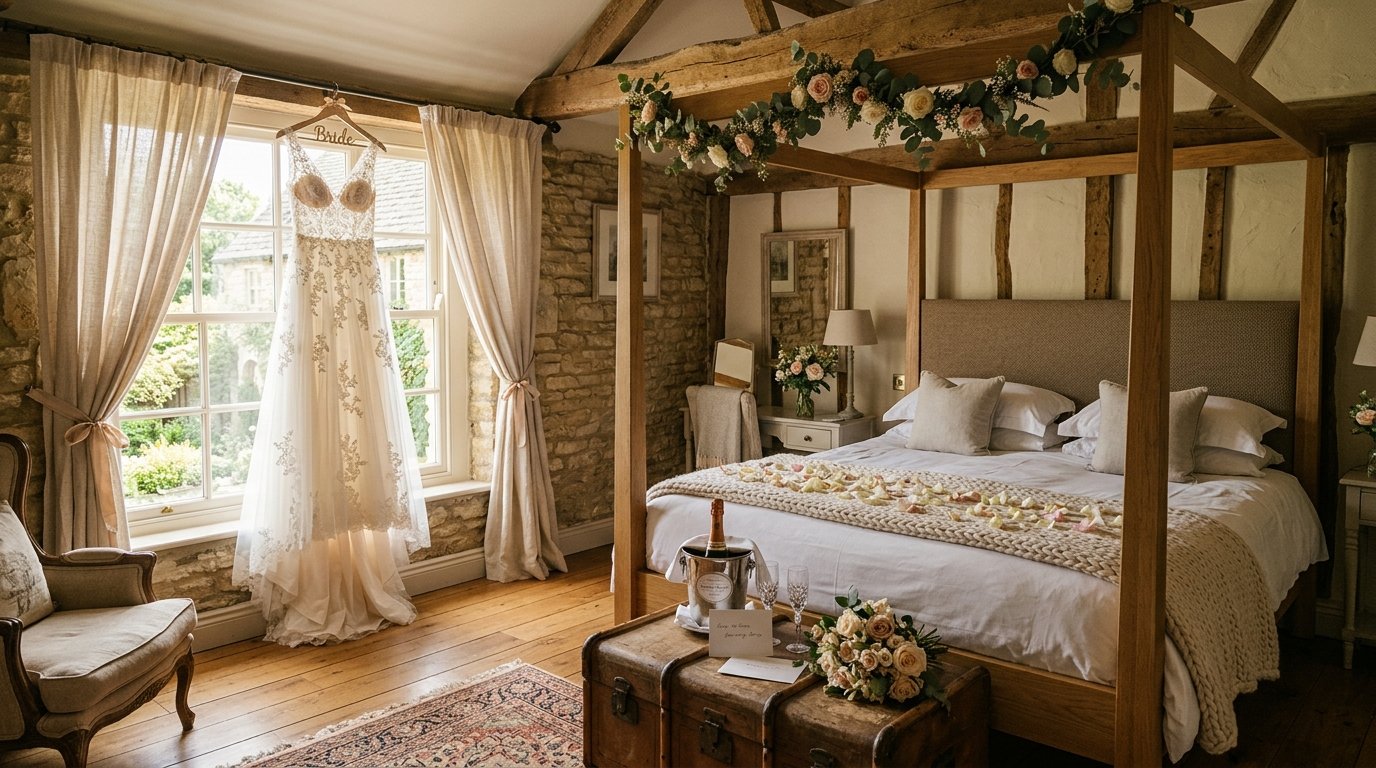
On-site accommodation solves three problems at once:
No taxis, no stress
Rural venues are beautiful but poorly served by transport. At midnight, 80 guests need to get home. That means pre-booked minibuses (£300-£600), a fleet of taxis (unreliable at midnight in the countryside), or guests leaving early to drive. On-site accommodation removes the problem entirely.
Extended celebration
A wedding without accommodation lasts 6-10 hours. A wedding with accommodation lasts the entire weekend. Friday night pre-wedding drinks. Saturday’s main event. Sunday morning breakfast. The extra time is where the best memories happen — not during the speeches, but over bacon sandwiches the next morning when everyone’s guard is down.
Guest experience
Guests who stay on-site relax more, drink without worrying about driving, and engage fully in the celebration. They don’t check their watches at 10pm wondering when the last taxi leaves. They don’t spend £150 on a nearby hotel and drive back and forth. They’re simply there, for the whole thing.
How much does accommodation cost?
Room rates vary by venue type and quality. Here’s what to expect:
| Room Type | Typical Cost per Night | Notes |
|---|---|---|
| Bridal suite | Included in venue hire | Almost always free for the couple |
| Standard double | £100-£150 | Basic but comfortable |
| Superior / four-poster | £150-£250 | Better decor, larger room |
| Family room | £150-£300 | Space for children, extra beds |
| Single / twin | £80-£150 | For solo guests or bridesmaids sharing |
| Cottage / lodge | £200-£400 | Self-contained, great for families |
Block-booking discounts
Most venues offer 10-15% off when you reserve all rooms together. The standard arrangement:
- Block-book every room under your name
- Circulate room details and prices to guests
- Guests book the rooms they want and pay the venue directly
- Release any unbooked rooms back to the venue 6-8 weeks before the wedding
This gives your guests first priority on rooms without committing you to paying for any that go unbooked.
Weekend vs single-night stays
Some venues require a two-night minimum stay (Friday and Saturday). Others allow a single Saturday night. Weekend packages are more expensive upfront but work out cheaper per night and give you the full wedding-weekend experience.
| Stay | Typical Supplement |
|---|---|
| Saturday night only | Standard room rate |
| Friday + Saturday | 1.5-1.8x Saturday rate (not double) |
| Friday + Saturday + Sunday | 2-2.5x Saturday rate |
A two-night stay is worth it if you want a Friday rehearsal dinner or welcome drinks and a relaxed Sunday departure. Check whether the venue’s hire fee changes for a multi-night booking — some include the Friday evening in the package.
Who gets a room?
Room allocation is one of those wedding decisions that sounds simple until you have 30 rooms and 80 guests. Here’s a practical priority system:
Priority order
| Priority | Who | Why |
|---|---|---|
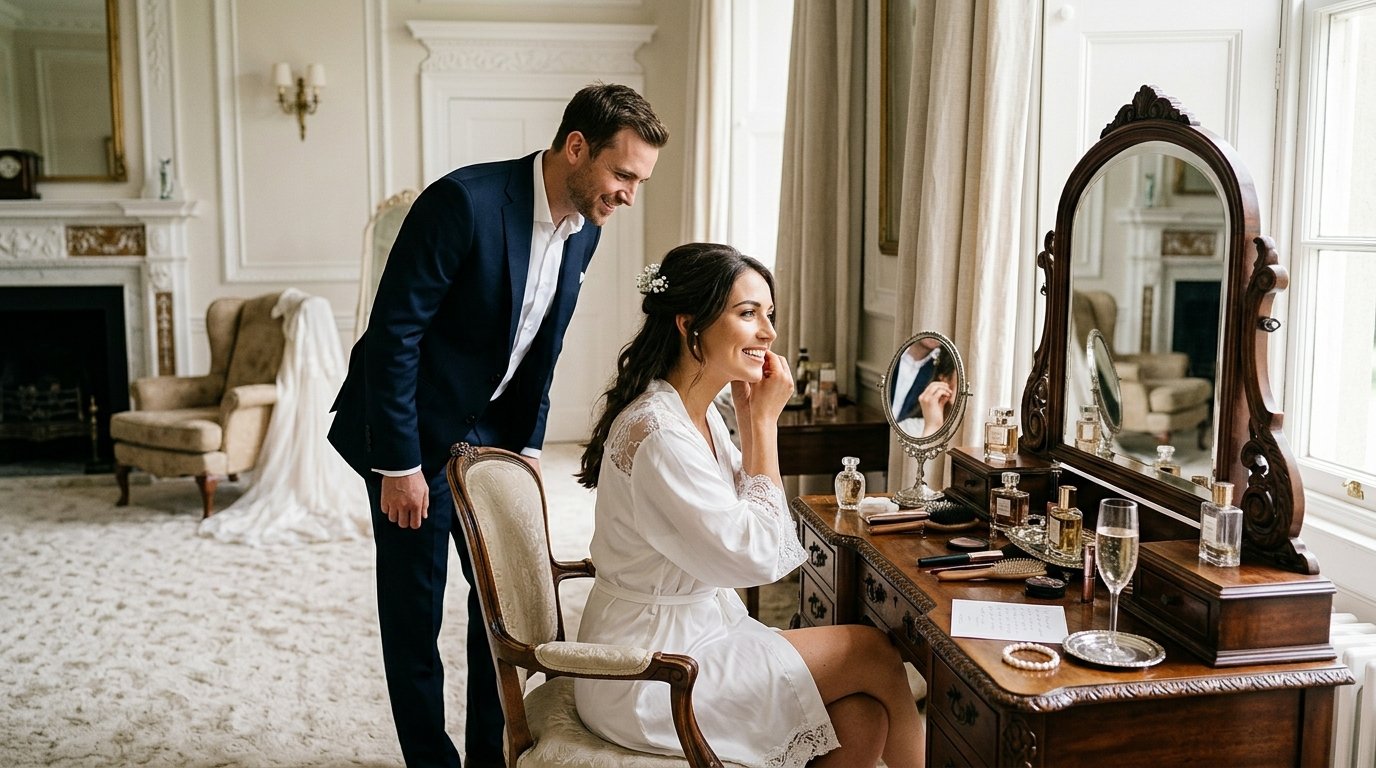
| 1 | The couple | Bridal suite — usually included |
| 2 | Both sets of parents | They’ll want to be there for the morning after |
| 3 | Wedding party | Bridesmaids and groomsmen need to be there early for photos |
| 4 | Elderly or less mobile guests | Saves them a long journey home at midnight |
| 5 | Guests travelling the furthest | Anyone driving 2+ hours or flying in from abroad |
| 6 | Families with young children | Children can go to bed upstairs while parents stay at the party |
| 7 | All other guests | First come, first served |
Who pays for what?
The convention varies, but the most common approach in the UK:
- Couple pays for: Bridal suite (usually included), sometimes parents’ rooms
- Guests pay for: Their own rooms
- Couple may subsidise: Rooms for the wedding party, especially if they’re asked to arrive a day early
Be clear in your invitations. A simple note: “We have reserved rooms at the venue for our guests. Rooms are £150 per night and can be booked directly with the venue. Please book by [date].”
If you’re covering accommodation costs as part of your budget, read our wedding budget breakdown to see where it fits.
What to check before booking
Not all accommodation is equal. A country house with 20 charming period bedrooms is a very different proposition from a hotel with 200 identical corporate rooms. Here’s what to inspect:
Room quality
- Visit the actual rooms — not just the bridal suite. Some venues show you the best room and let you assume the rest are similar. They’re not always.
- Check the bathrooms. En-suite vs shared. Shower pressure. Hot water reliability when 30 rooms run showers at the same time on Saturday morning.
- Ask about heating and cooling. Old country houses can be cold in winter and stifling in summer. Are there radiators, fans, or air conditioning?
Noise between rooms
- How well are the rooms soundproofed? Guests returning at different times can disturb those already sleeping.
- Is there live music or a DJ? Where is the function room relative to the bedrooms? Ground-floor music and first-floor bedrooms with thin floorboards make for a long night for anyone who goes to bed before midnight.
- Ask about music curfew. If music stops at 11pm, noise is less of an issue. If it runs until 1am, check that bedrooms are far enough away.
Practical details
| Question | Why It Matters |
|---|---|
| Checkout time? | 10am checkout kills the morning-after breakfast. Ask for 11am or later. |
| Breakfast included? | Some venues include it, some charge extra (£10-£25 per head). |
| Parking? | Guests staying overnight still need to park. How many spaces? |
| Luggage storage? | Can guests leave bags somewhere secure before check-in and after checkout? |
| Extra beds / cots? | Are they available for children? What’s the cost? |
| Pet policy? | Can guests bring dogs? This matters more than you’d think. |
| Accessibility? | Are there ground-floor rooms for guests with mobility issues? Lifts? |
For a full list of venue questions, read our questions to ask your wedding venue guide.
The morning-after breakfast
This is the hidden advantage of on-site accommodation — and the one thing couples mention most when asked about the best part of their wedding weekend.
Why it matters
The wedding day itself is a blur. You greet 80 people, pose for 200 photos, eat a meal you barely taste, and dance until your feet hurt. The morning after is the opposite: slow, quiet, and full of the conversations you didn’t have time for at the reception.
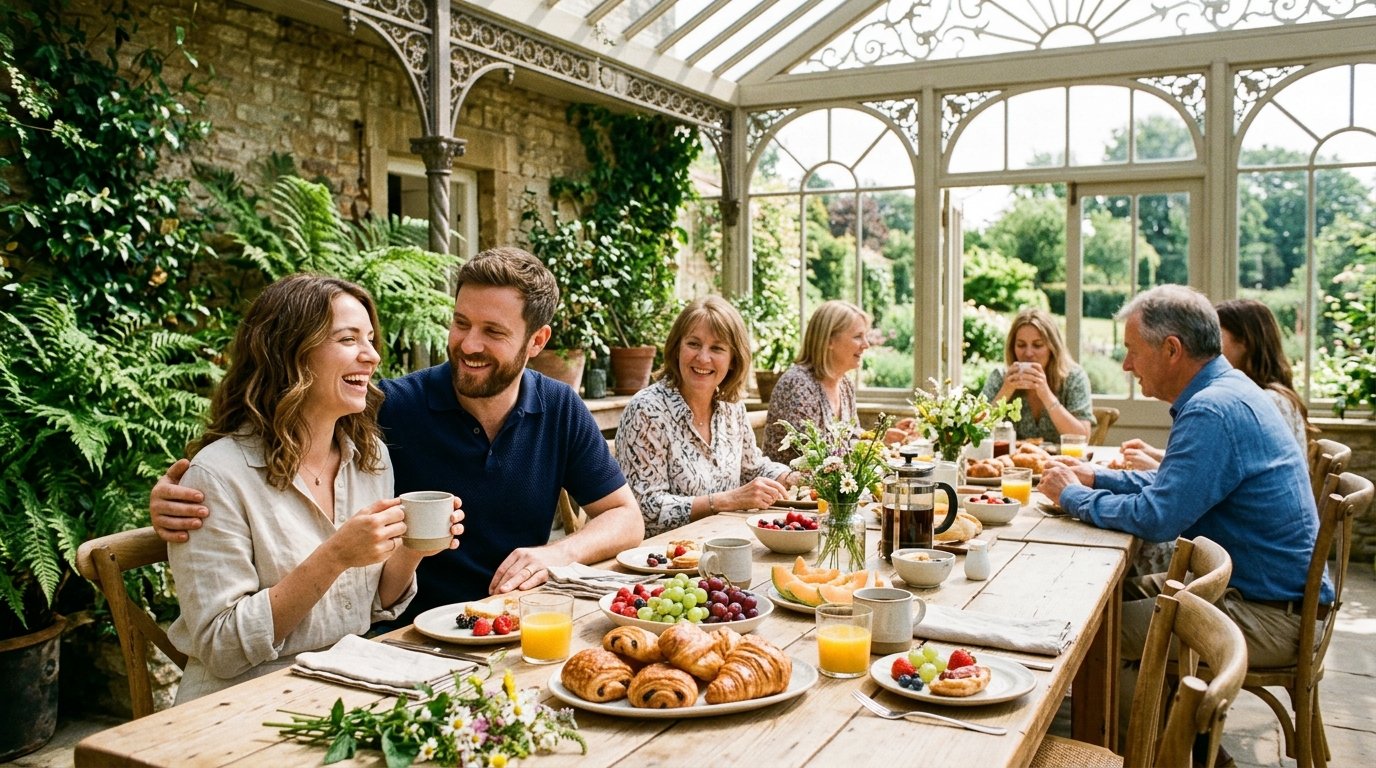
Picture it: a long table in a sunny dining room. The couple in jeans and jumpers. Parents who stayed up until 2am nursing whiskies. Bridesmaids recounting the dance floor disasters. Children running in from the garden. Coffee, pastries, bacon sandwiches, and absolutely nowhere to be.
What to arrange
- Confirm breakfast is included or arrange catering. A full English breakfast, pastries, fruit, and unlimited coffee is the standard. Some venues include this in the accommodation price; others charge £10-£25 per head.
- Set a late checkout. 10am checkout is too early after a wedding. Negotiate 11am or noon.
- Keep it casual. No seating plan, no schedule. People drift in when they wake up. The informality is the point.
- Budget for it. Even if it’s an extra cost, £15 per head for a morning-after breakfast for 30 guests (£450) is one of the best-value spends of the entire wedding.
Venue types and their accommodation
Not all venues handle accommodation the same way. Here’s a comparison:
| Venue Type | Rooms | Quality | Cost | Morning After |
|---|---|---|---|---|
| Country house | 10-30 | Period charm, varied | £100-£250/night | Included, often in-house |
| Boutique hotel | 8-20 | Consistently high | £120-£300/night | Included |
| Large hotel | 50-200+ | Corporate, uniform | £80-£200/night | Included |
| Barn venue | 0 (nearby B&Bs) | Varies | £60-£150/night | Separate arrangement |
| Castle | 5-20 | Dramatic, some basic | £150-£350/night | Often included |
| Pub / restaurant | 0-6 | Simple, comfortable | £80-£150/night | Usually included |
Country houses and boutique hotels are the strongest options for accommodation weddings — they combine quality rooms, character, and a natural morning-after setting. Hotels work for logistics but often lack the charm. Barns rarely have on-site rooms, which means splitting guests across nearby accommodation.
Read our country house wedding venues guide for more on venues that combine ceremony, reception, and accommodation in one property.
Making it work logistically
Communication with guests
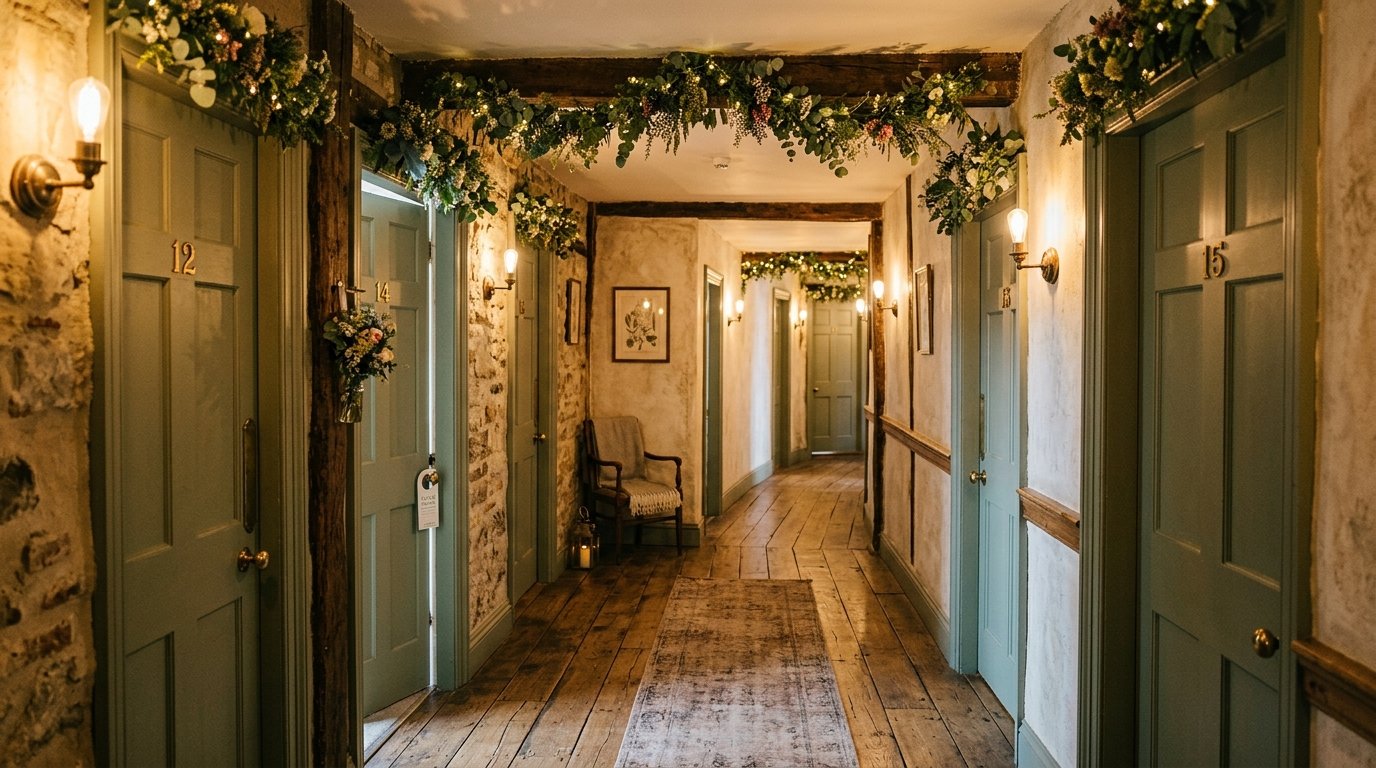
Send accommodation details early — at least 3 months before the wedding. Include:
- Room types and prices
- How to book (directly with venue, or through you)
- Booking deadline (usually 6-8 weeks before)
- Check-in time and checkout time
- Parking information
- What’s included (breakfast, toiletries, towels)
A simple information card with your invitations works well. Or a section on your wedding website if you have one.
Room allocation tips
- Number the rooms on a list rather than letting guests choose. It avoids two families wanting the same four-poster room.
- Pair up single guests who know each other in twin rooms to save costs and reduce room pressure.
- Keep families near each other — children moving between parents’ and grandparents’ rooms at midnight is easier when they’re on the same corridor.
- Put the wedding party near the bridal suite for easy morning-of-the-wedding coordination.
For guests not staying on-site
Even if the venue has accommodation, some guests will stay elsewhere — by choice, budget, or because rooms are full. Help them:
- Provide a list of nearby hotels, B&Bs, and Airbnbs within a 10-15 minute drive
- Arrange a minibus for transport to and from the venue (£300-£600 for the evening)
- Share taxi company numbers and pre-booking information
- Note any ride-sharing options between guests in the same direction
Is it worth the extra cost?
The accommodation itself isn’t cheap. For the couple, the cost of block-booking 20 rooms at £150/night is £3,000 — though guests pay for their own rooms, so the couple’s cost is typically just the bridal suite (included) and perhaps parents’ rooms (£300-£500).
The real calculation is the alternatives: would guests spend £150 on a nearby hotel anyway? Would you spend £500 on taxis and minibuses? Would you lose the morning-after breakfast entirely?
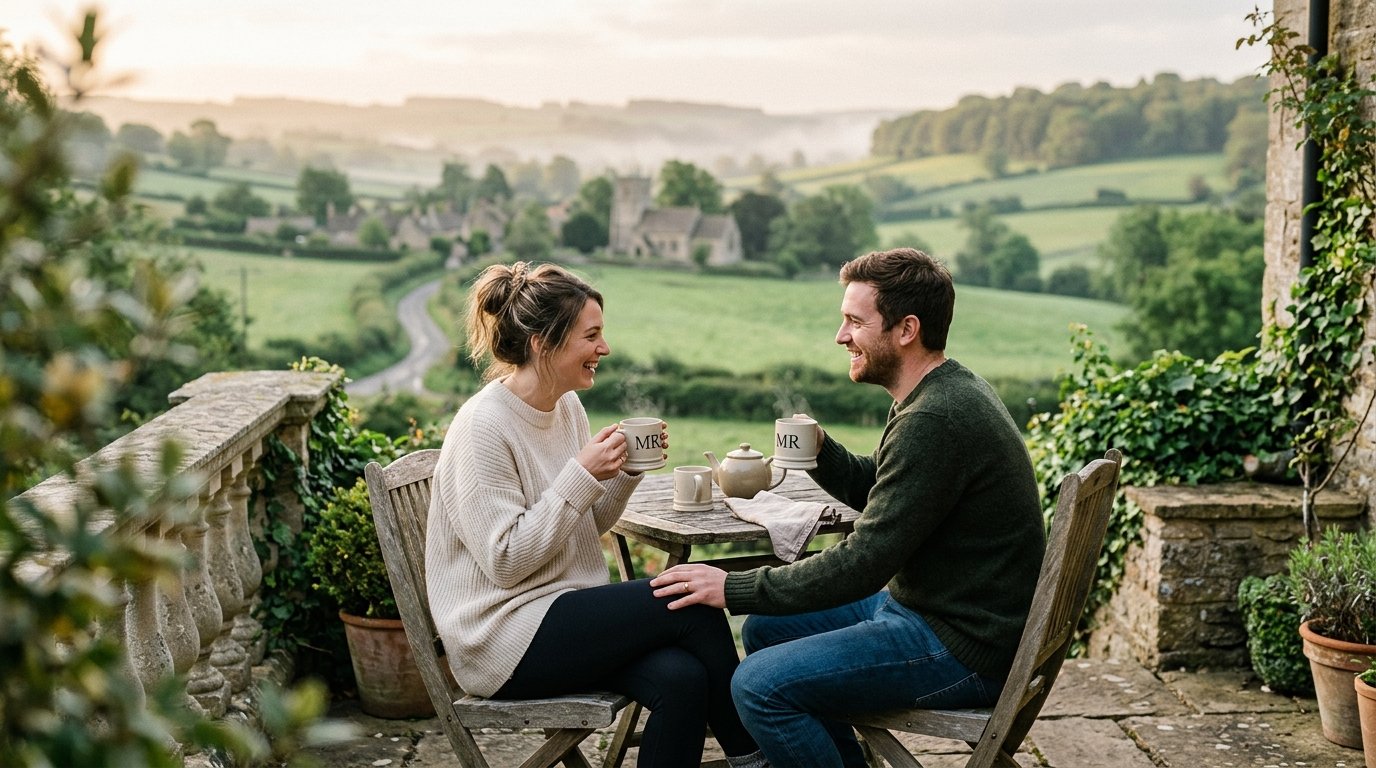
For most couples, the answer is clear. The extra cost of a venue with accommodation is offset by what it gives you: a two-day celebration instead of a single evening, relaxed guests who stay to the end, and a morning after that everyone remembers as the best part of the weekend.
Read our how to choose a wedding venue guide for a full framework on comparing venues, and see our average wedding cost breakdown to understand how accommodation fits into the total budget.
Frequently asked questions
How much do wedding venue rooms cost per night?
Wedding venue rooms cost £100-£250 per night, depending on the venue type and room quality. Standard doubles cost £100-£150. Superior or four-poster rooms cost £150-£250. Family rooms cost £150-£300. The bridal suite is usually included in the venue hire fee. Some venues offer block-booking discounts of 10-15% when you reserve all rooms together.
Who pays for accommodation at a wedding venue?
Guests typically pay for their own rooms. The couple usually covers the bridal suite (often included in hire) and may cover parents' rooms as a gesture. Some couples block-book all rooms and include the cost in their budget, but this is less common. Be clear in your invitations about whether accommodation is provided or at the guest's expense.
How many rooms do wedding venues usually have?
It varies by venue type. Country house estates have 10-30 rooms. Boutique hotels have 8-20 rooms. Hotels have 50-200+ rooms. Barn venues rarely have on-site accommodation and rely on nearby B&Bs or hotels. Converted properties (mills, castles, manor houses) typically have 6-15 rooms.
Should you choose a wedding venue with accommodation?
Yes, if many guests are travelling from far away, if you want a relaxed two-day celebration, or if the venue is rural with limited taxi availability. No, if most guests live locally, if the accommodation quality is poor, or if nearby hotels offer better value. The morning-after breakfast and the lack of taxi logistics are the biggest practical benefits.
Can you block-book rooms at a wedding venue?
Yes, most venues let you reserve all rooms under one booking. Block-booking discounts of 10-15% are common. The standard arrangement is to block-book everything, then release any unbooked rooms back to the venue 6-8 weeks before the wedding. This gives your guests first priority without committing you to paying for empty rooms.