Country House Weddings: Grand Grounds, Real Costs
Key Takeaways
- Country house venue hire costs £3,000-£10,000, but total wedding spend including catering reaches £8,000-£18,000 for 80 guests
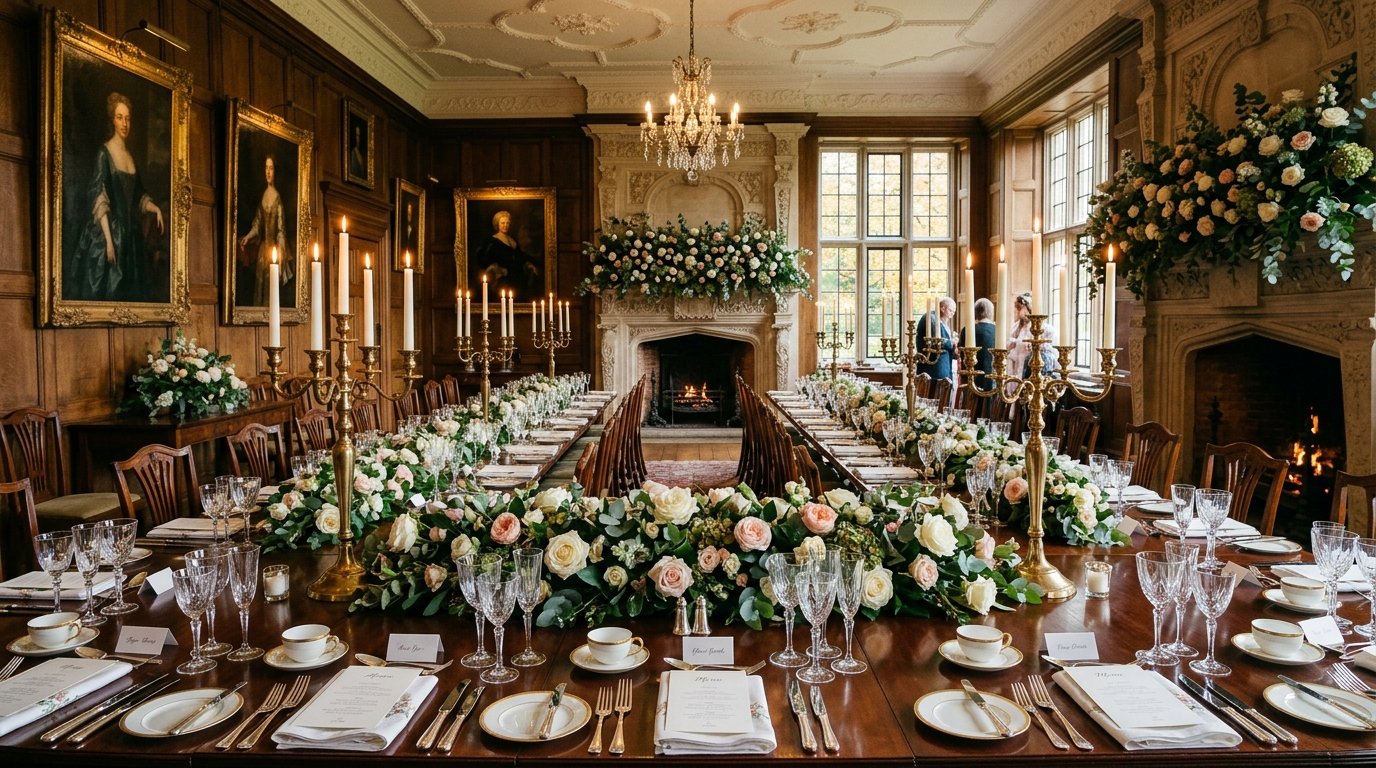
- Exclusive use means you get the entire property — no other events, no shared spaces, no strangers in the background of your photos
- Most country houses include accommodation for 10-30 guests, turning your wedding into a full weekend celebration
- In-house catering is standard at most stately homes — external caterers are rarely permitted, which simplifies planning but limits flexibility
- The grounds are the biggest selling point: walled gardens, parkland, lakes, and formal lawns give you dozens of photo locations without leaving the property
Country house weddings are defined by space — inside and out. A Georgian manor with a drawing room ceremony, a walled garden reception, and 20 bedrooms for guests to stumble into at midnight. No rushing between locations. No taxis. Just one property that handles everything from the first toast to the morning-after breakfast.
This guide covers what country house venues actually include, what they cost, and how to tell whether the grand setting is worth the grand price tag.
What makes a country house wedding venue?
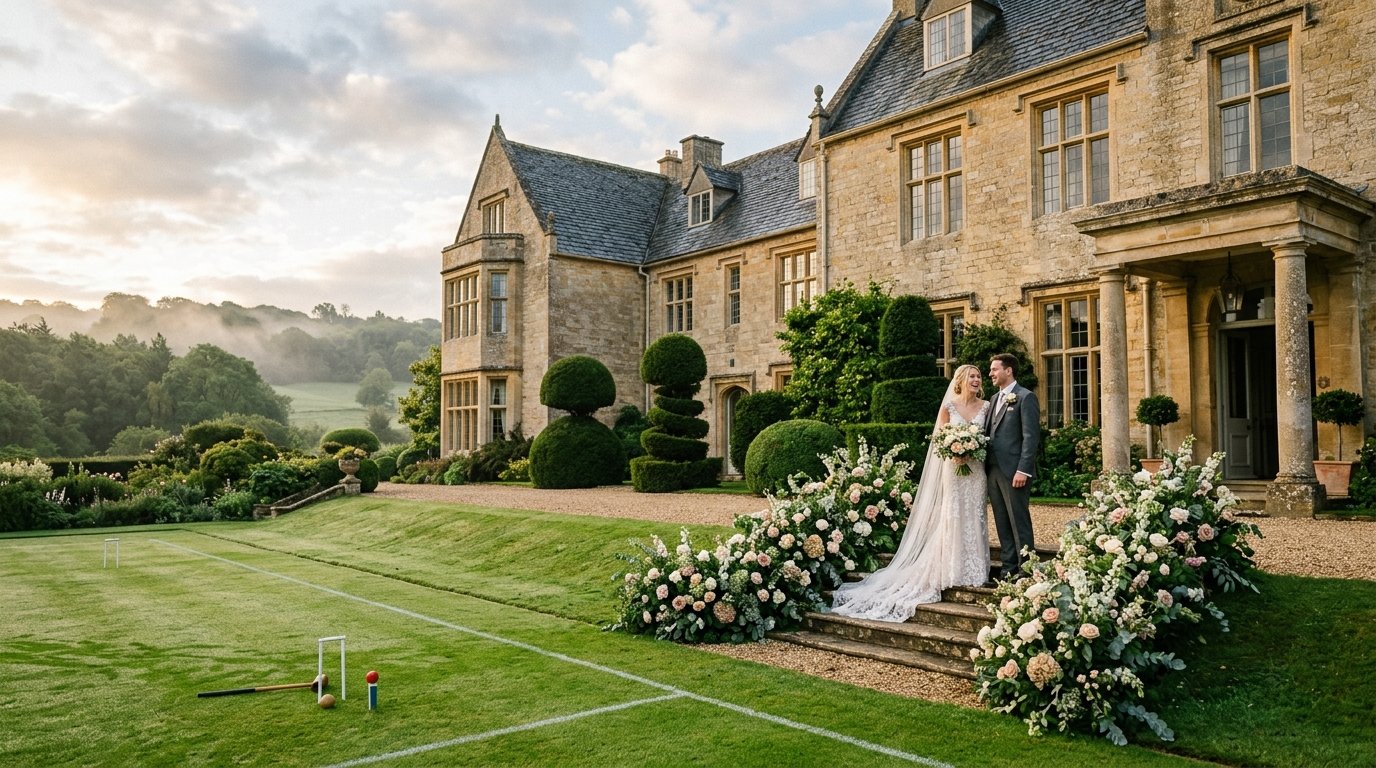
A country house venue is a privately owned estate, manor house, or stately home licensed for civil ceremonies and receptions. They share a few key features:
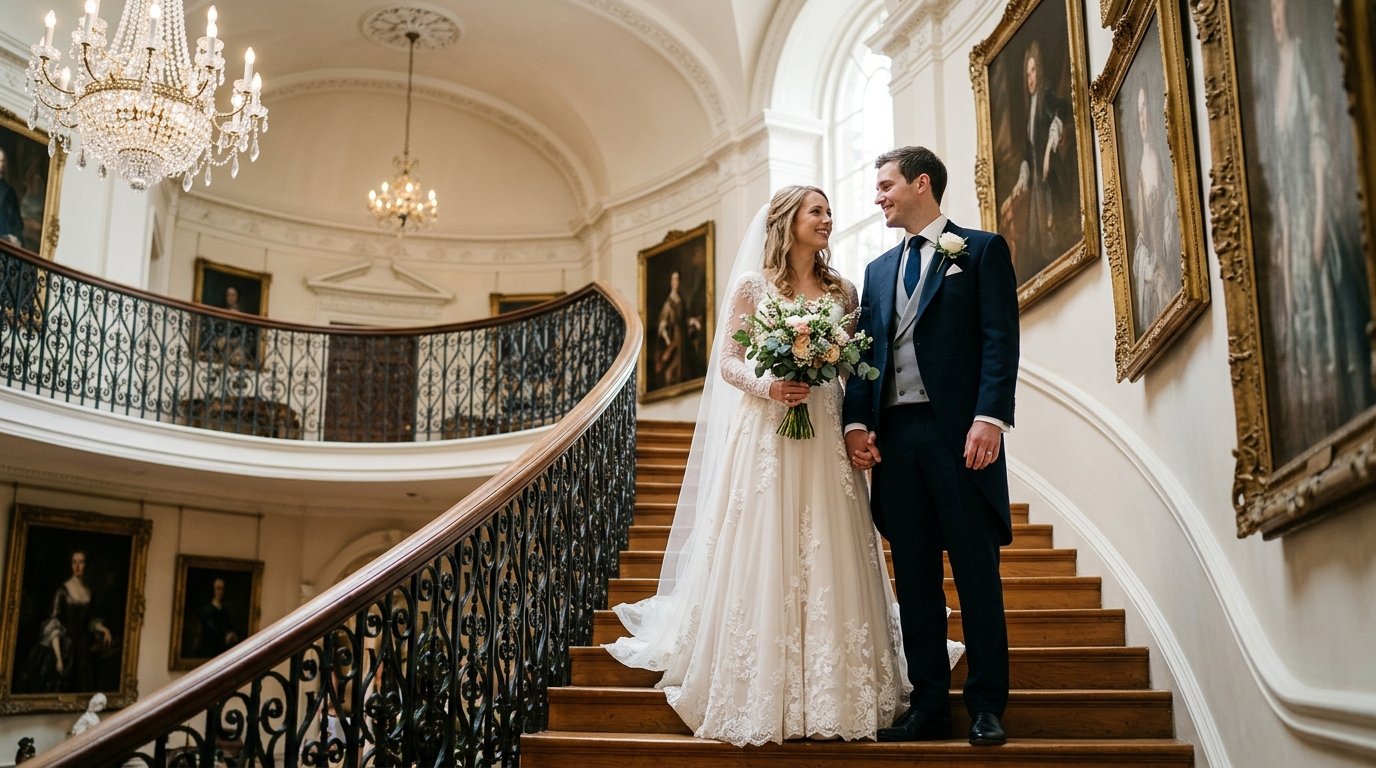
- Historic architecture. Period features, grand staircases, panelled rooms, original fireplaces. The building itself becomes part of the decoration.
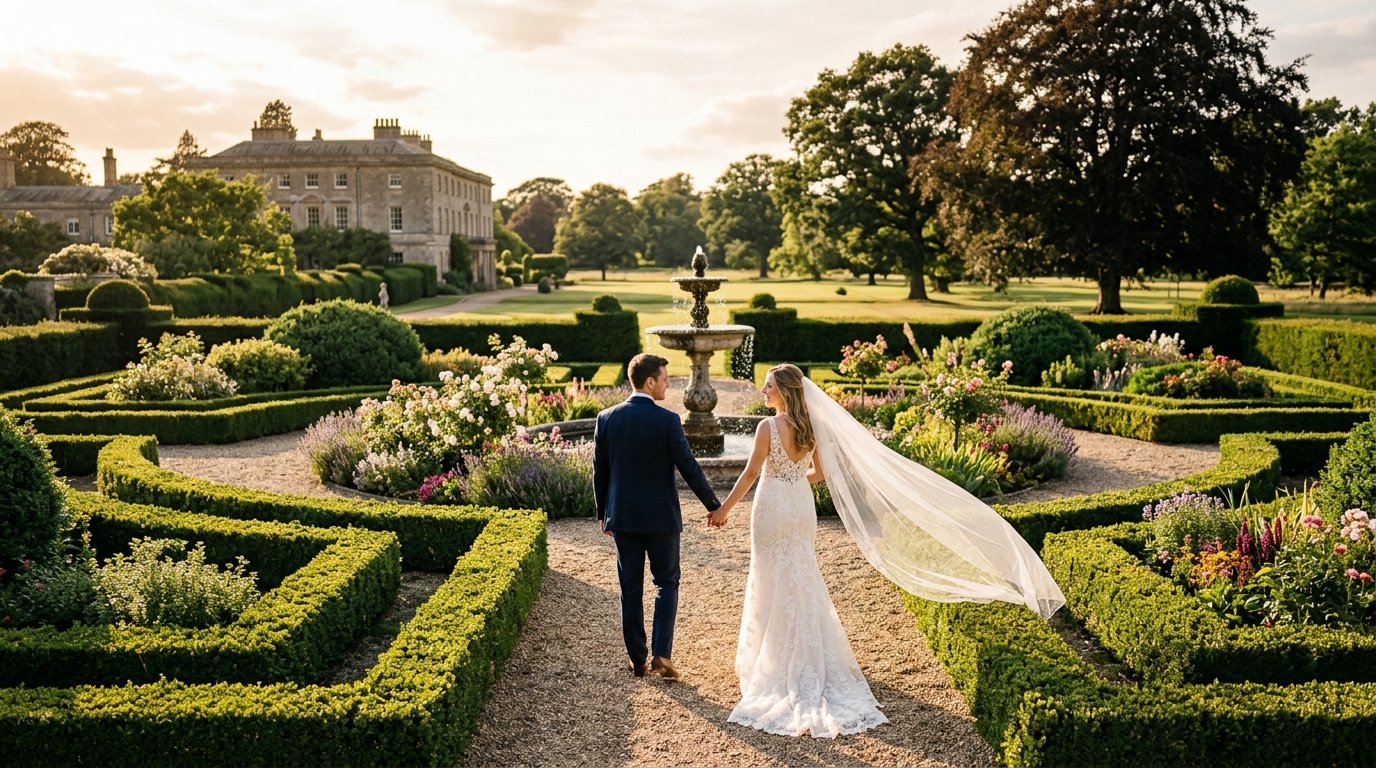
- Grounds. Formal gardens, parkland, lakes, woodland walks. These aren’t just for photos — they give guests space to spread out between the ceremony and dinner.
- On-site accommodation. Most offer 10-30 bedrooms, turning the wedding into a weekend rather than a single evening.
- Capacity for 80-200 guests. Large enough for a full wedding, small enough to feel private.
- Licensed ceremony rooms. Most have at least one room licensed for civil ceremonies, saving you the cost and logistics of a separate ceremony venue.
Who country houses suit best
Country house weddings work for couples who want everything in one place. No convoy of cars between church and reception. No worrying about accommodation for elderly relatives. No venue coordinator telling you to turn the music off at 10pm because there’s a conference in the next room.
They particularly suit:
- Couples who want an overnight celebration (Friday arrival, Saturday wedding, Sunday brunch)
- Families with guests travelling from different parts of the country who need accommodation
- Anyone who values grounds and outdoor space for photos and drinks receptions
- Weddings of 80-150 guests (the sweet spot for most country houses)
How much does a country house wedding cost?
The numbers depend heavily on whether you book exclusive use, the time of year, and the region. Here’s what to expect:
| Cost Element | Budget | Mid-Range | Premium |
|---|---|---|---|
| Venue hire (Saturday, peak) | £3,000-£5,000 | £5,000-£8,000 | £8,000-£15,000 |
| Catering (80 guests) | £4,000-£6,000 | £6,000-£9,000 | £9,000-£14,000 |
| Drinks package (80 guests) | £1,500-£2,500 | £2,500-£4,000 | £4,000-£6,000 |
| Accommodation (per room/night) | £100-£150 | £150-£200 | £200-£350 |
| Exclusive use supplement | Included | £1,500-£3,000 | £3,000-£5,000 |
| Evening food | £800-£1,500 | £1,500-£2,500 | £2,500-£4,000 |
| Total (80 guests, Saturday) | £8,000-£12,000 | £12,000-£18,000 | £18,000-£30,000+ |
A Friday or Sunday wedding at the same venue typically costs 20-30% less. Midweek bookings save 30-50%. Winter dates (November to March) at some properties drop hire fees by 40%.
Read our full wedding venue cost breakdown for pricing across all venue types and regions.
Exclusive use vs shared hire
This is the single biggest decision when booking a country house. It affects your price, your freedom, and your experience.
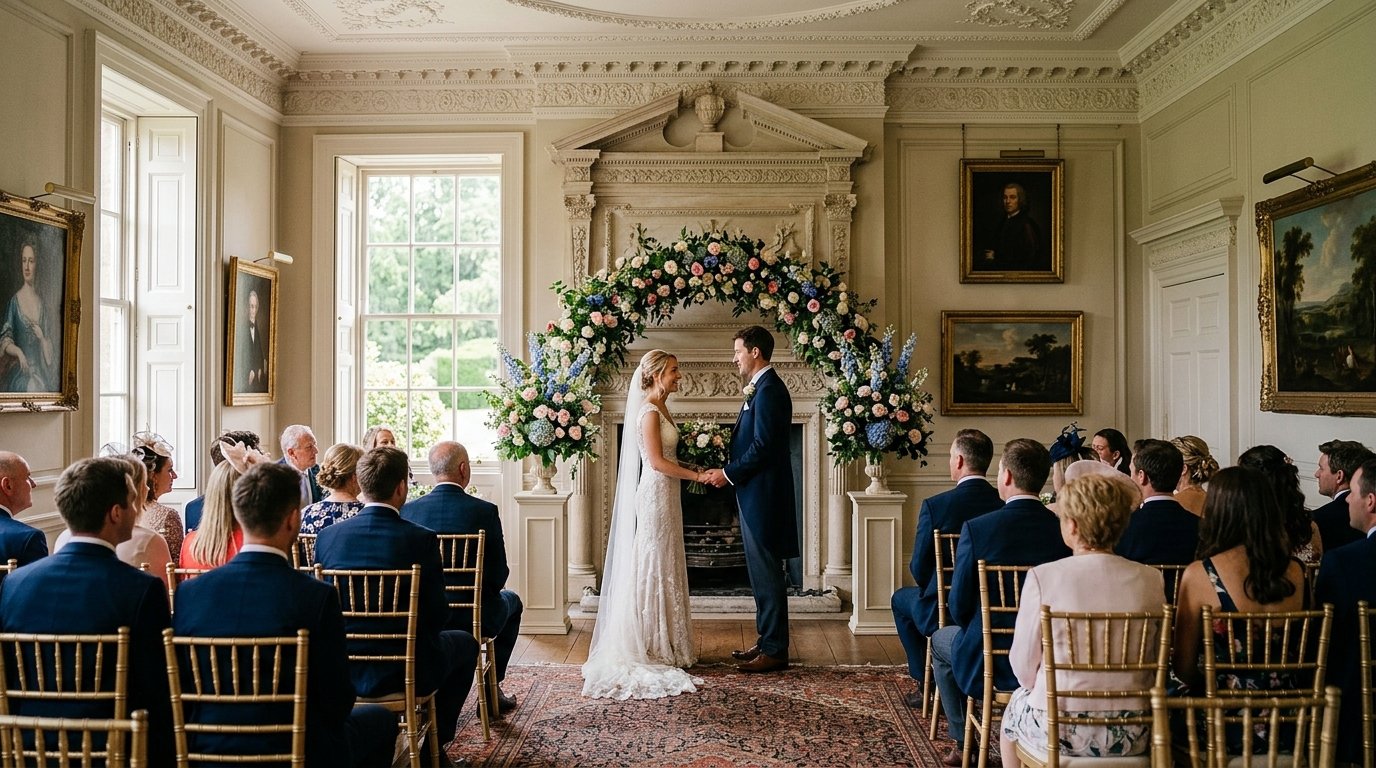
Exclusive use
You hire the entire property. Every room, every corridor, every acre of grounds is yours for the duration of the booking.
What you get:
- Full access to all indoor and outdoor spaces
- No restrictions on noise, music, or timings (within the licence)
- Privacy — no strangers wandering through your photos
- The run of the house for getting ready, pre-drinks, and the morning after
- Usually a two-night stay (Friday to Sunday)
What it costs: £1,500-£5,000 more than shared hire. At premium venues, the exclusive use fee alone can be £5,000-£10,000.
Shared hire
You book specific rooms within the property. Other events or hotel guests may use other parts of the building on the same day.
What you get:
- Lower hire fee
- Access to your designated rooms and ceremony space
- Shared access to grounds and common areas
What you lose:
- Control over noise and timing
- Background noise from other events
- Strangers in shared spaces
- Limited access for getting ready and morning after
For most couples, exclusive use is worth the extra cost. The freedom to use the entire property — to have drinks in the garden, photos on the staircase, and dancing until 1am without worrying about other guests — is what makes a country house wedding feel special.
The grounds: your biggest asset
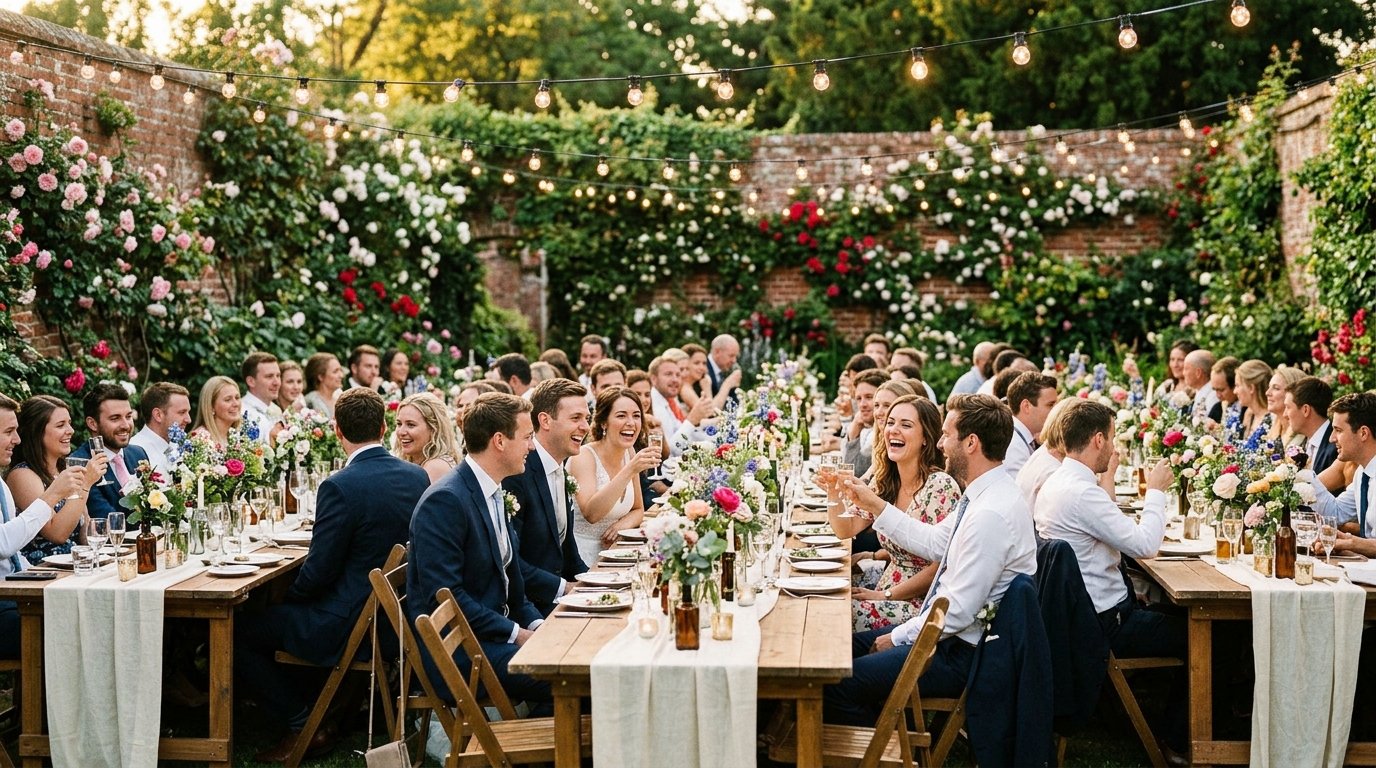
Country house grounds are worth thousands in photography and guest experience. Where else do you get a walled garden for canapes, a lake for sunset photos, and a cedar-lined avenue for the confetti walk?
What to look for in the grounds
| Feature | Why It Matters |
|---|---|
| Walled garden | Sheltered outdoor dining, beautiful backdrop, wind protection |
| Formal lawns | Space for a marquee, garden games, drinks reception |
| Mature trees | Shade in summer, dramatic backdrops, natural framing for photos |
| Lake or water feature | Reflection shots, romantic atmosphere, golden hour potential |
| Terrace or patio | Covered outdoor area for wet-weather backup |
| Woodland walk | Private photo locations away from guests |
| Kitchen garden | Rustic charm, potential for locally-grown table flowers |
Wet weather backup
This is Britain. Rain is not a risk — it’s a certainty at some point during the year. Ask the venue:
- Is there an indoor space large enough for the drinks reception if it rains?
- Can the ceremony move indoors at short notice?
- Are there covered outdoor areas (verandas, orangeries, cloisters)?
- Has the venue handled rainy weddings before, and what did they do?
A good country house has indoor spaces beautiful enough that rain doesn’t feel like a compromise.
Accommodation: turning your wedding into a weekend
On-site accommodation changes the entire dynamic of a wedding. Guests arrive on Friday afternoon, settle in, join a relaxed pre-wedding dinner. Saturday is the main event. Sunday morning, everyone gathers for bacon sandwiches and coffee before heading home.
Typical accommodation options
| Room Type | Cost per Night | Who Gets Priority |
|---|---|---|
| Bridal suite | Usually included in hire | The couple |
| Standard double | £100-£200 | Parents, wedding party |
| Superior / four-poster | £150-£250 | Parents, close family |
| Family room | £150-£300 | Siblings with children |
| Single / twin | £80-£150 | Solo guests, bridesmaids |
How to allocate rooms:
- Couple gets the bridal suite (included)
- Both sets of parents get rooms (offer to cover the cost)
- Wedding party and close family get priority on remaining rooms
- Release any unbooked rooms to other guests
Most venues let you block-book all rooms and release unbooked ones 6-8 weeks before the wedding. Ask for a group rate — many offer 10-15% off for block bookings.
Read our guide to wedding venues with accommodation for more on this topic.
Catering: in-house vs external
Most country house venues have their own kitchen and catering team. This is both an advantage and a limitation.
In-house catering (most common)
- Advantages: One point of contact, the kitchen knows the venue, the team handles everything, tasting sessions included, coordination is simpler
- Limitations: Less menu flexibility, fixed pricing, limited dietary options at some venues, you can’t shop around for a better deal
External catering (dry hire venues)
- Advantages: Full menu freedom, competitive pricing, specialist caterers (vegan, BBQ, street food), you choose the style
- Limitations: You coordinate between venue and caterer, equipment hire may be extra, some venues charge a kitchen hire fee on top
Typical per-head costs:
| Catering Level | Per Head (3 courses + evening) |
|---|---|
| Standard | £60-£80 |
| Mid-range | £80-£110 |
| Premium | £110-£150 |
| Fine dining | £150-£200+ |
Most country house packages include a three-course wedding breakfast, evening food (buffet or barbecue), and a basic drinks package (glass of fizz, half a bottle of wine per head, toast drink). Upgrades to premium wines, cocktails, or champagne add £10-£30 per head.
What to ask before you book
These questions reveal deal-breakers that brochures don’t mention:
- Is the hire fee for exclusive use, or are other events possible on the same day?
- What is the corkage fee if we supply our own wine? (Some charge £10-£20 per bottle)
- Is there a minimum spend? (Common at premium venues — often £10,000-£20,000)
- What time does the music licence run until? (11pm? Midnight? 1am?)
- Is there a noise limiter? (Some listed buildings restrict volume)
- What’s the wet weather backup for the outdoor ceremony/drinks reception?
- How many parking spaces are available?
- Are there any restrictions on confetti, sparklers, or fireworks?
- What’s included in the room hire vs charged as extras?
- Can we access the venue on the Friday for set-up?
For a complete list of questions to ask any venue, read our questions to ask your wedding venue guide.
Choosing between country house venues
When you’re comparing two or three shortlisted properties, use this decision framework:
| Factor | What to Compare |
|---|---|
| Total cost | Not just hire — total for your guest count, date, and package |
| Accommodation | Number of rooms, quality, proximity, cost per night |
| Catering quality | Request a tasting. Judge the food, not the menu description |
| Indoor ceremony | Is the ceremony room beautiful enough, or will you need a church? |
| Grounds | Variety of outdoor spaces, photo potential, wet weather alternatives |
| Coordinator | Does the venue provide a day-of coordinator, or do you need your own? |
| Accessibility | How far will most guests travel? Is there public transport? |
| Restrictions | Music curfew, supplier restrictions, decoration limits |
Visit at the same time of day and season as your wedding. A venue that looks magical at 2pm in June can feel cold and dark at 4pm in December. Take photos of every room — including the toilets, car park, and corridor between the ceremony room and the dining room.
Read our complete how to choose a wedding venue guide for a full decision framework.
Planning your budget
Country house weddings have a reputation for being expensive, but the total cost depends more on your choices than the venue itself.
| Budget Lever | Save | Spend |
|---|---|---|
| Date | Friday, Sunday, midweek, winter | Saturday, peak summer |
| Drinks | Provide your own wine (check corkage) | Venue’s premium drinks package |
| Flowers | Seasonal, locally grown, DIY | Elaborate floral installations |
| Evening food | Pizza van, fish and chips | Full evening buffet |
| Photography | 6-hour coverage | Full day + second shooter |
| Transport | Guests drive (venue has parking) | Vintage car + minibus |
A stunning country house wedding for 80 guests is achievable for £12,000-£15,000 if you choose a Friday or Sunday in autumn, keep the drinks simple, and skip the more expensive extras.
For a detailed budget breakdown, read our wedding budget breakdown guide, and see our budget wedding ideas for practical ways to reduce costs without cutting corners.
Frequently asked questions
How much does a country house wedding cost?
A country house wedding costs £8,000-£18,000 total for 80 guests, including venue hire, catering, and basic extras. Venue hire alone ranges from £3,000 to £10,000 depending on the property, the date, and whether you book exclusive use. London and South East properties charge 30-50% more than equivalent venues in the Midlands, North, or Wales.
What does exclusive use mean at a wedding venue?
Exclusive use means you hire the entire property for your event. No other weddings, conferences, or guests share the building or grounds during your booking. It typically costs £1,500-£5,000 more than shared-day hire but gives you full access to every room, the grounds, and all facilities without restrictions on noise, timings, or access.
Do country house venues include catering?
Most country house venues include in-house catering as part of the package. This typically covers a three-course wedding breakfast, evening food, and a drinks package. Prices range from £80 to £150 per head. A few offer dry hire (venue only, no catering), which gives more flexibility but requires you to source and coordinate an external caterer.
Can you stay overnight at a country house venue?
Yes, most country house venues have on-site accommodation. Typical properties offer 10-30 bedrooms. The bridal suite is usually included in the hire fee. Additional rooms cost £100-£250 per night. Some venues offer the entire property for a two-night stay (Friday to Sunday), which is ideal for a full wedding weekend.
What is the difference between a manor house and a stately home?
A manor house is a smaller country estate, usually privately owned, with 10-20 bedrooms and grounds of 5-50 acres. A stately home is a larger, grander property — often National Trust or English Heritage listed — with 20-50+ rooms, formal gardens, and parkland of 100+ acres. Stately homes cost more to hire but offer more space and grandeur.