Wedding Photography Shot List: 47 Shots to Brief
Key Takeaways
- A shot list helps your photographer identify the group combinations, details and personal moments that matter to you
- The 8 most commonly missed shots: rings on the invitation, getting-ready window light portrait, first look moment, ceremony processional from above, ring exchange close-up, confetti from behind, table plan detail, couple portrait at golden hour
- A shot list of 40-60 images is ideal — under 30 risks missing key moments, over 80 can make the photographer spend the day ticking boxes rather than capturing spontaneous moments
- Group photos take 5-7 minutes each including organising guests — allow 45-60 minutes total for 8-10 group combinations
- Share the shot list with your photographer at least 4 weeks before the wedding, not the morning of
- The UK average wedding photographer documents 400-700 images per event, of which 200-350 are delivered edited
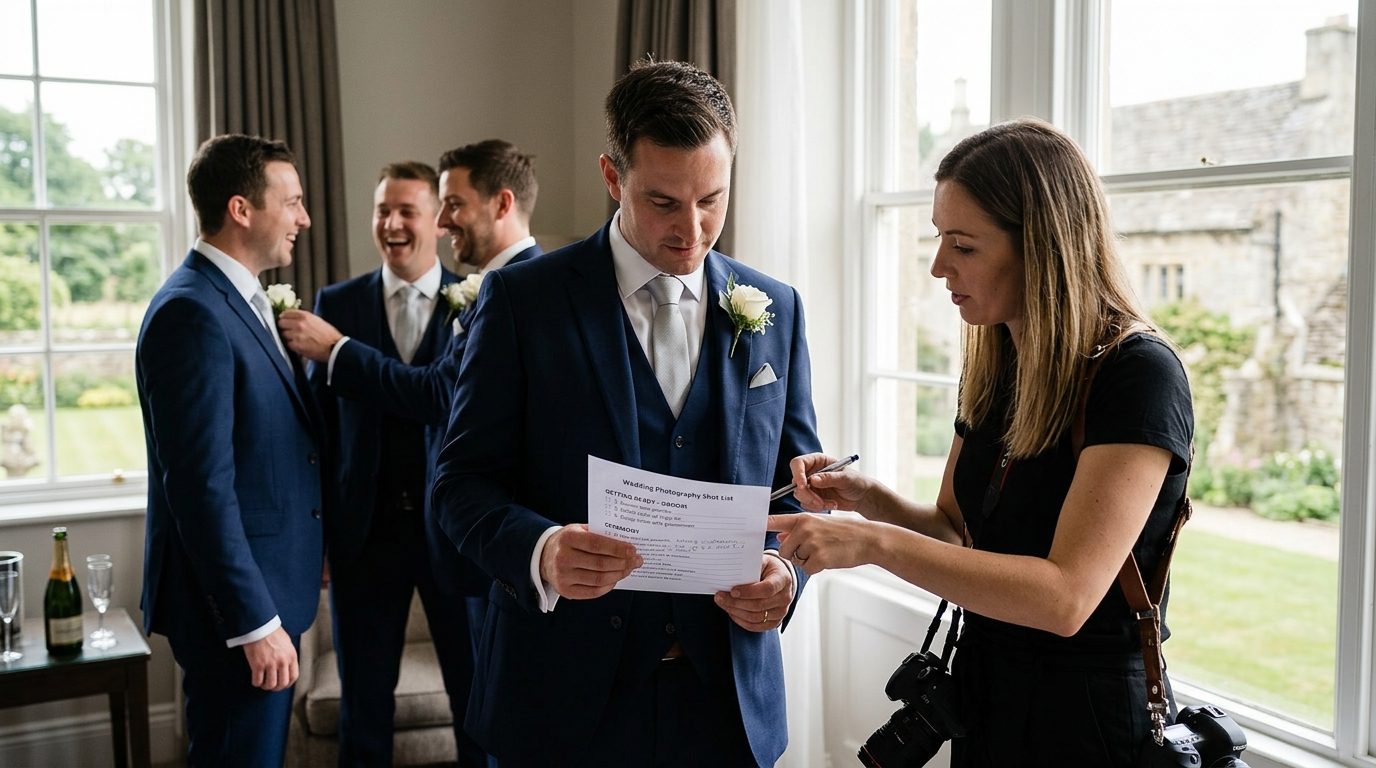
A shot list tells your photographer which people, details and planned moments matter most to you. It is particularly useful for family group combinations and personal items whose significance may not be obvious. The list below covers 47 possible shots, organised by timeline. Treat it as a starting point and agree the final brief with your photographer.
By Matt, Editor at Weddings Hub. Review the final list with your photographer, who can adapt it to your timings, venue and preferred style.
The shot list: all 47 essential shots
Getting ready (10 shots)
These shots are taken before the ceremony, typically at the venue or bride’s home. They set the narrative of the day.
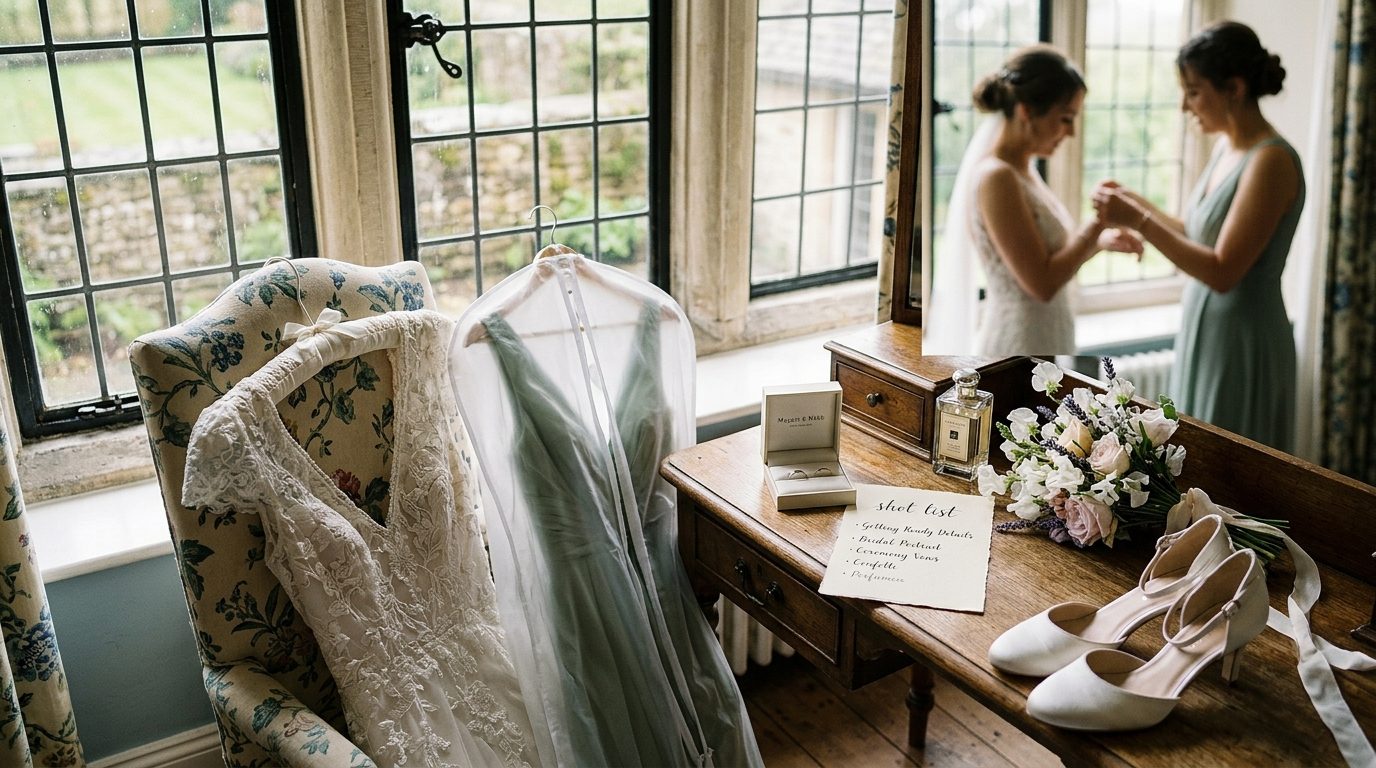
- Dress hanging in window light — the wedding dress on a hanger against a window, before it is worn.
- Invitation and stationery flat lay — the invitation suite, including any envelope liner, wax seal, or menu card, arranged on a flat surface.
- Rings on the invitation — both rings on top of the invitation. A frequently missed shot that becomes the most used for social media.
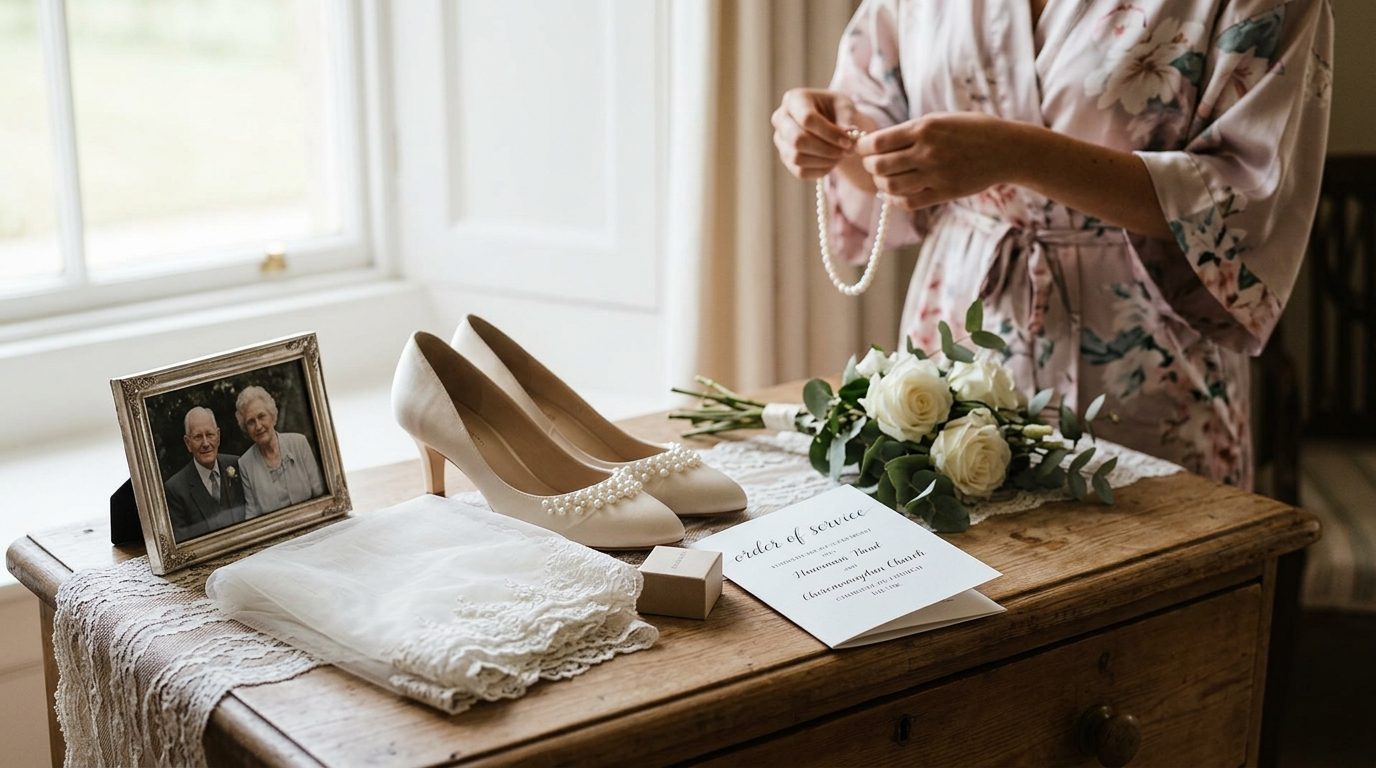
- Bride’s shoes and accessories detail — shoes, perfume, jewellery, and any meaningful objects.
- Groom getting ready — jacket being put on, or a still moment looking in the mirror.
- Bride with mother or key person helping with dress — someone doing up buttons or adjusting the veil.
- Window light portrait — bride/groom alone — a simple portrait in natural light, before the ceremony formalities begin.
- Bridesmaid group looking away from camera — backs to camera, looking at or helping the bride.
- Groom with best man — candid moment, not a posed photograph.
- Something old, something new — if relevant to your family, a composed shot of the four items.
Ceremony arrivals (5 shots)
- Guests arriving at the venue — the exterior of the venue with guests walking in.
- Groom waiting at the altar — the moment before the processional, from the aisle.
- Bridesmaids’ processional — approaching the altar.
- The processional from the front — bride and escort walking towards the altar, from the registrar or officiant’s perspective.
- Father/escort face during processional — an often missed emotional shot.
The ceremony (8 shots)
- Bride and groom at the altar, facing each other — the standard ceremony portrait from the side.
- Wide shot of full ceremony — the couple at the altar with guests in frame, showing the full room or outdoor space.
- Ring exchange close-up — hands only, ring being placed on finger. This requires the photographer to be positioned correctly in advance.
- The kiss — from the front — the formal first-kiss shot.
- The kiss — from the guest’s perspective — guests reacting as the couple kiss.
- Signing the register — if legally required at the venue and permitted to photograph.
- The recessional — the couple walking back up the aisle as a married couple, with guests in background.
- Guests reacting during recessional — emotional reactions from specific people (parents, close friends).
Confetti and post-ceremony (3 shots)
- Confetti thrown from behind — photographer behind the couple shooting back towards the guests throwing confetti. Frequently missed — most confetti shots are taken from the front.
- Confetti close-up — macro or close shot of biodegradable confetti falling on the couple.
- Couple first moment alone — a quiet, candid moment between the couple after the ceremony, before formal photographs begin.
Group photographs (up to 10 combinations)
Allow 5-7 minutes per combination. Standard combinations:
- Bride and groom alone
- Bride with parents
- Groom with parents
- Couple with all four parents
- Bridesmaids with bride
- Groomsmen with groom
- Full wedding party
- Both families combined
- Grandparents (if present and mobile)
- Any specific family or friendship group you request
Note: brief your photographer on names and relationships before the day. A trusted person (best man, planner, or co-ordinator) should be tasked with gathering specific people for group combinations.
Venue details (5 shots)
- Reception room before guests enter — table settings, flowers, stationery, and the room at its most pristine.
- Centrepiece close-up — one table centrepiece in detail.
- Table plan or seating chart — full shot of the table plan, especially if it is bespoke or involves significant design.
- Cake detail — cake alone, before cutting.
- Favours and place settings — if these are meaningful or specifically designed.
Golden hour portrait (2 shots)
This is the most commonly forgotten scheduled moment. Golden hour in the UK in June 2026 falls approximately 45-60 minutes before sunset (around 9pm). It produces the most flattering light of the day.
- Golden hour portrait — couple facing light — warm backlit photograph, typically with the reception venue behind.
- Landscape portrait — couple with venue or countryside — the full environmental context of the wedding day.
Schedule this in advance with your photographer. It requires pulling the couple away from the reception for 15-20 minutes.
Reception (6 shots)
- First dance — wide shot and close-up within the same sequence.
- Speeches — speaker in focus with couple reacting in the background.
- Cake cutting — the couple cutting the cake together.
- End of night — couple together — a quiet, candid end-of-evening portrait. The energy of the end of a wedding day is different from any other moment and captures in photographs.
How to share the shot list with your photographer
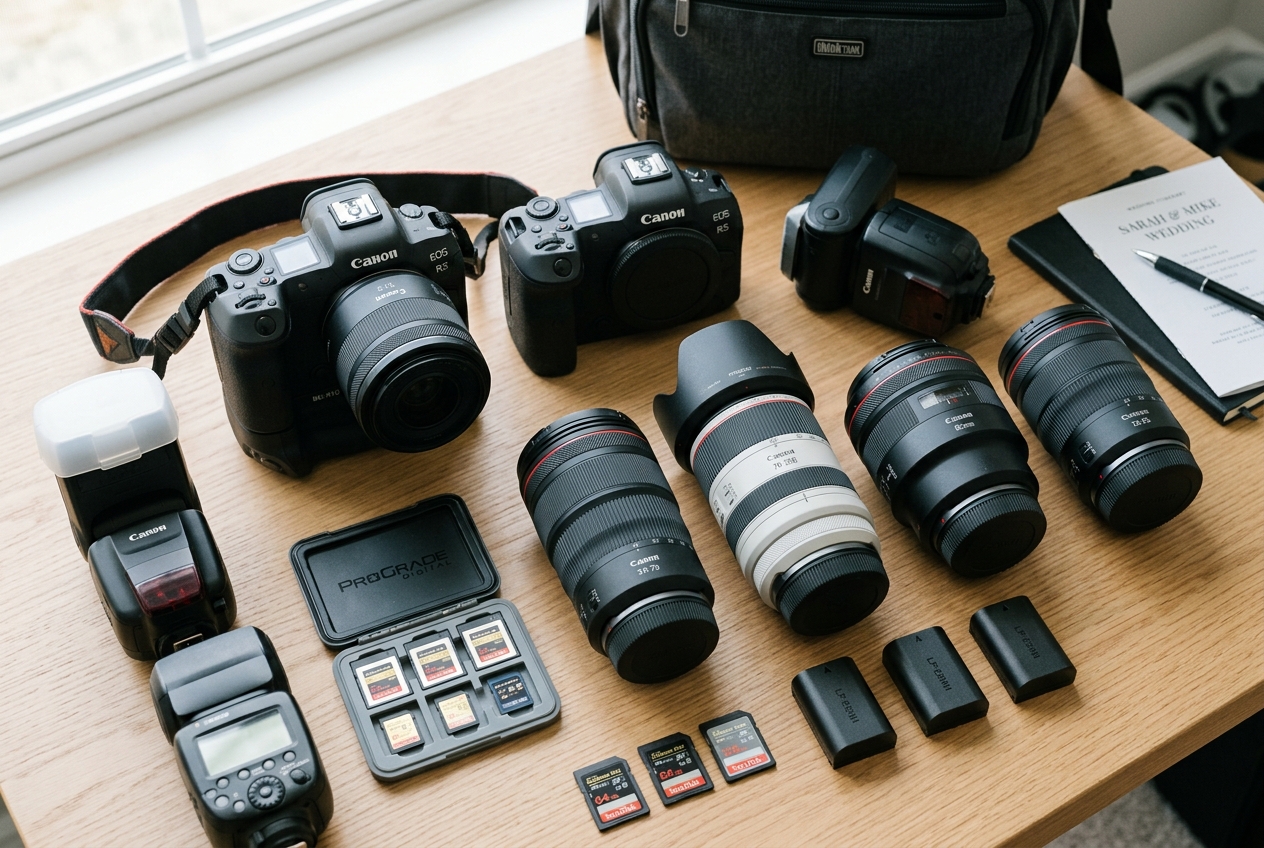
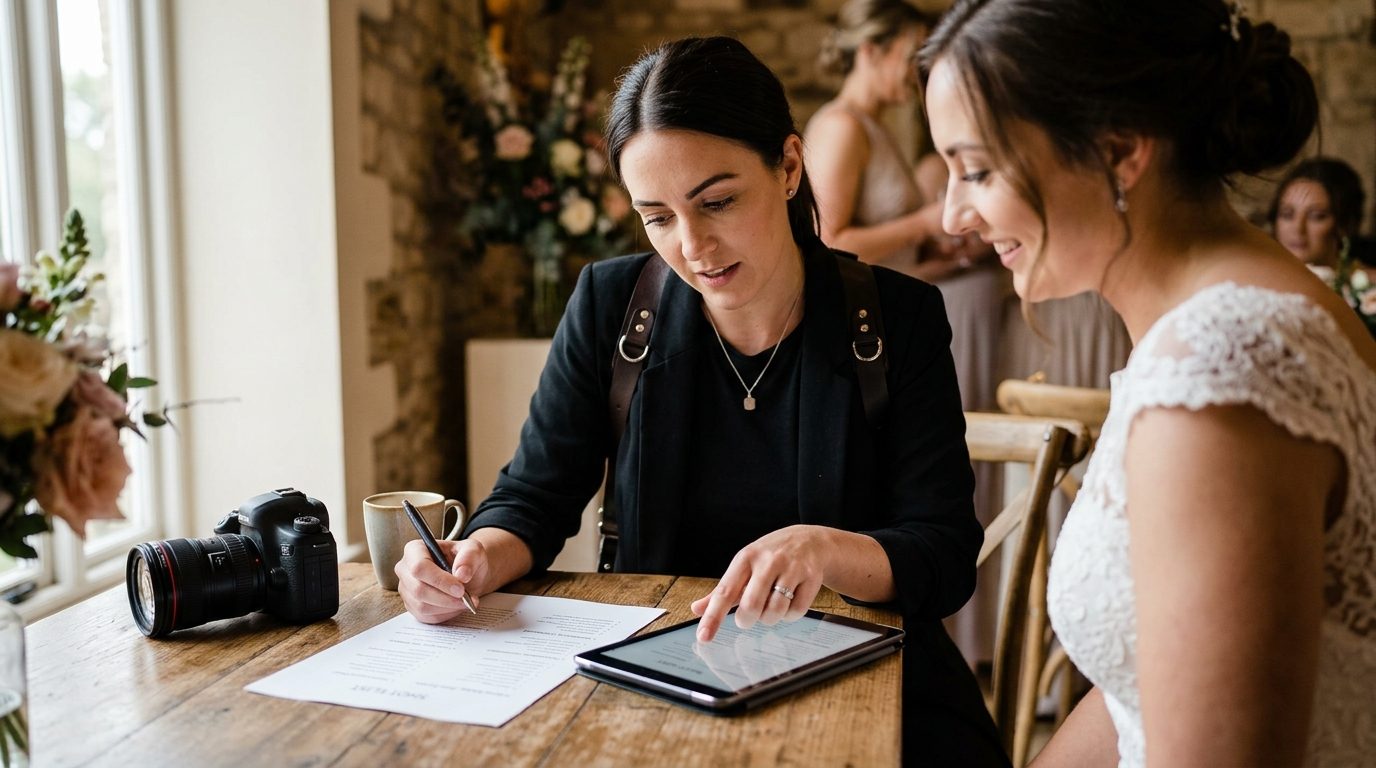 Give the shot list to your photographer at the pre-wedding meeting or at least 4 weeks before the day. Include:
- The list of group photo combinations with full names
- Any specific detail shots that are meaningful (a grandmother’s jewellery item, a specific flower)
- The timing of golden hour and your willingness to leave the reception for 15-20 minutes
- Any shots that are NOT wanted (some couples do not want certain family members photographed together)
UK wedding photography context
 Coverage length, image delivery and package contents vary by photographer. Compare the written package with your timetable before paying a deposit.
The shot list does not constrain a good photographer. It ensures specific moments are prioritised. In the space between shot list items, your photographer will capture the spontaneous, unplanned moments that are often the most meaningful images from the day.
Related articles
Frequently asked questions
Should I give my wedding photographer a shot list?
Yes. Keep it focused on group combinations, meaningful details and moments unique to your wedding. Discuss it before the day so your photographer can plan enough time without turning the schedule into a checklist.
How long do group wedding photos take?
Group photo combinations take 5-7 minutes each to organise and photograph. For 8 group combinations (immediate family, full wedding party, mixed groups), allow 45-60 minutes total. Your photographer will typically suggest conducting all group photos in one block immediately after the ceremony while guests are still gathered.
What are the most commonly missed wedding photos?
The 8 most commonly missed shots are: rings on the wedding invitation, getting-ready window light portrait, first look moment, ceremony processional from above, ring exchange close-up, confetti thrown from behind the couple, table plan detail, and a couple portrait at golden hour. Add these to your shot list explicitly.
When should I share the shot list with my photographer?
Share the shot list at least 4 weeks before the wedding. This gives your photographer time to visit the venue, plan positions for group shots, and identify the best light for specific portraits. Sharing on the wedding morning leaves no time for preparation.
How many photos will my UK wedding photographer deliver?
UK wedding photographers typically deliver 200-350 edited images from an 8-10 hour shoot. They capture 400-700 images during the day and select and edit the best. Delivery timelines vary: 6-10 weeks is standard, some photographers offer 12-16 weeks. Confirm the delivery timeline before booking.
Should I ask for black and white wedding photos?
Yes, if you want them. Most UK photographers shoot in colour and convert selected images to black and white in editing. If you have specific images you want in black and white (often the getting-ready or ceremony shots), include this in your brief. Some photographers include a fixed number of black and white conversions; others will do as many as you request.
What group photo combinations should I request?
Standard group combinations: bride and groom alone, bridal party (all bridesmaids), groom and groomsmen, bride with parents, groom with parents, all four parents with the couple, full wedding party, both families combined. Beyond these, add any specific family combinations that matter to you — godparents, grandparents, siblings, close friends.