Wedding Morning Timeline: A Step-by-Step Bride's Guide
Key Takeaways
- Hair and make-up for a bride takes 90-120 minutes; each bridesmaid adds 45-60 minutes — calculate backwards from the ceremony time
- Build in a 30-minute buffer after getting dressed before you need to leave — this absorbs almost every delay without drama
- The bride's dress should go on last, with 60-90 minutes to spare before the ceremony — not 20 minutes
- Eat breakfast. No exceptions. Fainting during ceremonies is almost always low blood sugar, not nerves
- Assign one person (maid of honour or a family member) to be the morning timekeeper — the bride should not be watching the clock
How to calculate your wedding morning timeline
Start with your ceremony time and work backwards. The formula is:
Ceremony time - 5.5 hours = earliest wake-up time
For a 2pm ceremony: wake up by 8:30am. For a 1pm ceremony: wake up by 7:30am. For a noon ceremony: wake up by 6:30am.
This looks early. It is not. Once you add the components below, the time disappears faster than you expect.
Worked example: 2pm ceremony, 4 bridesmaids
| Time | Activity |
|---|---|
| 8:00am | Wake up. Shower or wash face (depending on hair plan). |
| 8:30am | Breakfast — proper meal, not just coffee. |
| 9:00am | Hair and make-up artist arrives. Bridesmaids start. |
| 9:00-10:00am | Bridesmaid 1 hair + make-up (45-60 min) |
| 10:00-11:00am | Bridesmaid 2 hair + make-up |
| 10:30-11:30am | Bridesmaid 3 (overlap if 2 artists) |
| 11:00-12:00pm | Bridesmaid 4 hair + make-up |
| 12:00-1:30pm | Bride’s hair + make-up (90 minutes) |
| 1:30-1:45pm | Getting-ready photos (nearly dressed, details, shoes) |
| 1:45pm | Bride puts on dress (allow 15-20 minutes for buttons, laces, bustling) |
| 2:05pm | Final checks: veil, jewellery, emergency kit confirmed |
| 2:15pm | Depart for ceremony (arriving 5-10 minutes late is fine for the bride — it’s expected) |
Key observation: With 4 bridesmaids and one artist, the schedule above only works if each bridesmaid keeps to their slot. With 2 artists, you can overlap and compress the schedule by 30-45 minutes.
Adjust for your situation
Fewer bridesmaids
2 bridesmaids: total getting-ready time reduces by 90-120 minutes. You could start at 10am for a 2pm ceremony.
1 bridesmaid or none: Start at 10:30-11am for a 2pm ceremony.
Getting ready away from the venue
If you are getting ready at home, a hotel, or a location separate from the ceremony, add your travel time to the schedule — plus 30 minutes on top of that for departure logistics (bags into cars, final checks, photography).
At-venue getting ready
If your venue has a bridal suite and you are getting ready on-site, you save travel time but often lose the intimacy of a hotel or home getting-ready environment. Ask your photographer if they need a separate getting-ready suite visit for photos.
Who should be in the getting-ready room?
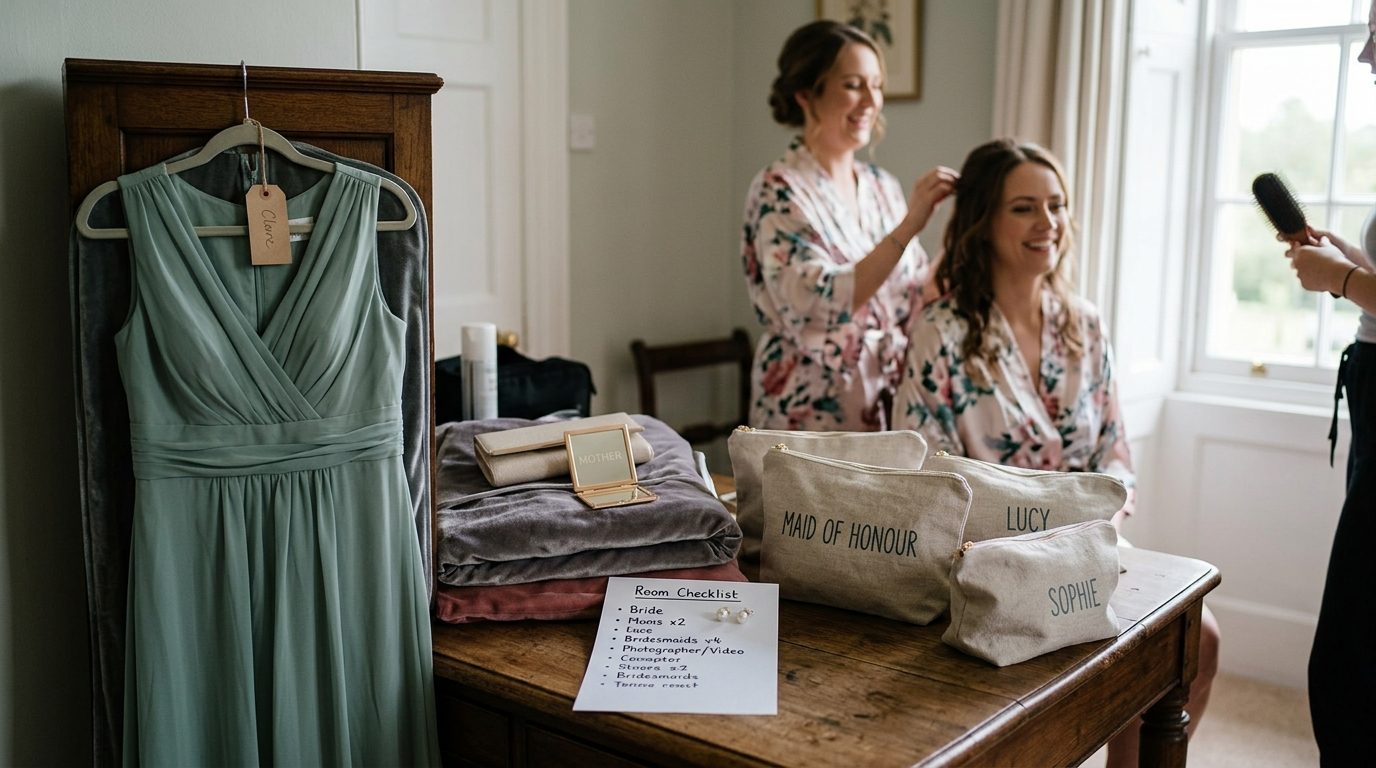
The getting-ready room in photos is one of the most-used images in UK wedding albums. Think carefully about who should be in it.
Core group:
- The bride
- Bridesmaids
- Maid of honour
- Mother of the bride (if she wants to be there)
Optional:
- Flower girls (briefly — they will get bored and fidgety)
- Close female family members
Not in the room:
- The groom or any of the groom’s party
- Children who are not in the wedding party
- Guests who drop by to “wish you luck”
A getting-ready room with 12 people in it is chaotic and poorly photographed. Keep it to 6-8 maximum.
Breakfast on the wedding morning
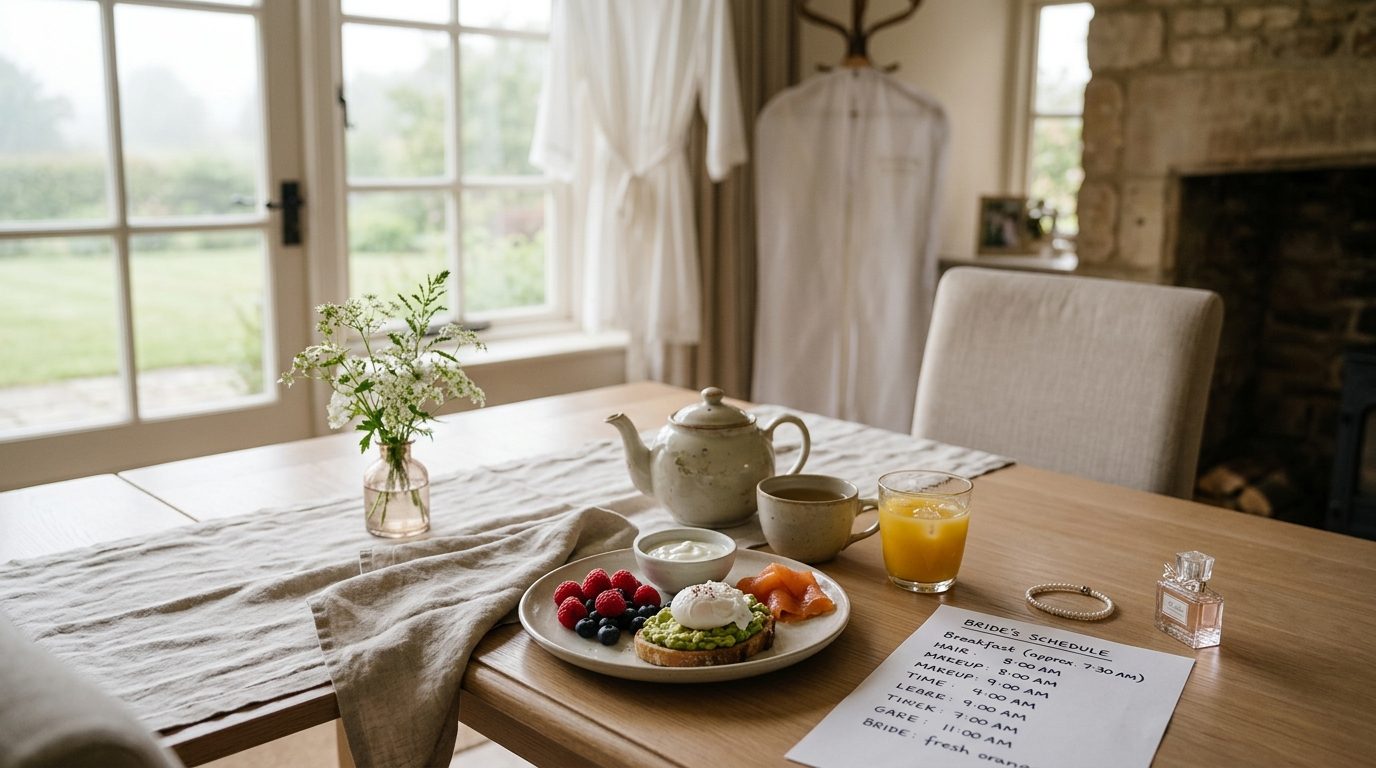 This is the item most brides skip and most regret. Fainting during ceremonies is almost always low blood sugar, not anxiety. A photographer who has shot 200+ UK weddings will have seen at least 2-3 brides or bridesmaids faint — almost always because they skipped breakfast.
Good options:
- Eggs (scrambled, poached) — protein + slow-release energy
- Greek yoghurt with granola
- Avocado on seeded toast
- Smoked salmon with cream cheese on bagel
What to avoid:
- Only coffee and water
- Alcohol before the ceremony (a small glass of prosecco is fine; more than one on an empty stomach is not)
- A large greasy fry-up (feels heavy by mid-morning)
Prepare breakfast in advance or delegate it to a family member. You should not be cooking on your wedding morning.
Snacks to bring: Pack nuts, dried fruit, or a cereal bar in the wedding day emergency kit. For the gap between the ceremony and the wedding breakfast (often 60-90 minutes of photos), having something small to eat keeps energy levels stable.
The dress: when and how
The bride’s dress goes on 60-90 minutes before the ceremony. Not 20 minutes. Not 10.
Why it takes longer than you think:
- Button-back dresses with 40+ buttons take 10-20 minutes with two people
- Corset lacing takes 15 minutes to do properly (and must be done correctly for comfort)
- Petticoats, crinolines, and underskirts add layering time
- The veil needs pinning in the correct position relative to the hair
- Jewellery goes on last
- Shoes go on last of all
Once dressed, there should be 30 minutes before departure. Use this time for:
- Getting-ready photos (full dress, details, the finished look)
- A moment of calm with your bridesmaids or mother
- Reviewing the emergency kit — who is carrying it?
- Final checks: rings (you should not have them; best man has the wedding rings), bouquet (who collected it from the florist?), vows card (if you are using one)
For bridal hair trial planning, always test your full morning routine at the trial — arrival time, process, and how long the finished look takes.
Photography on the wedding morning
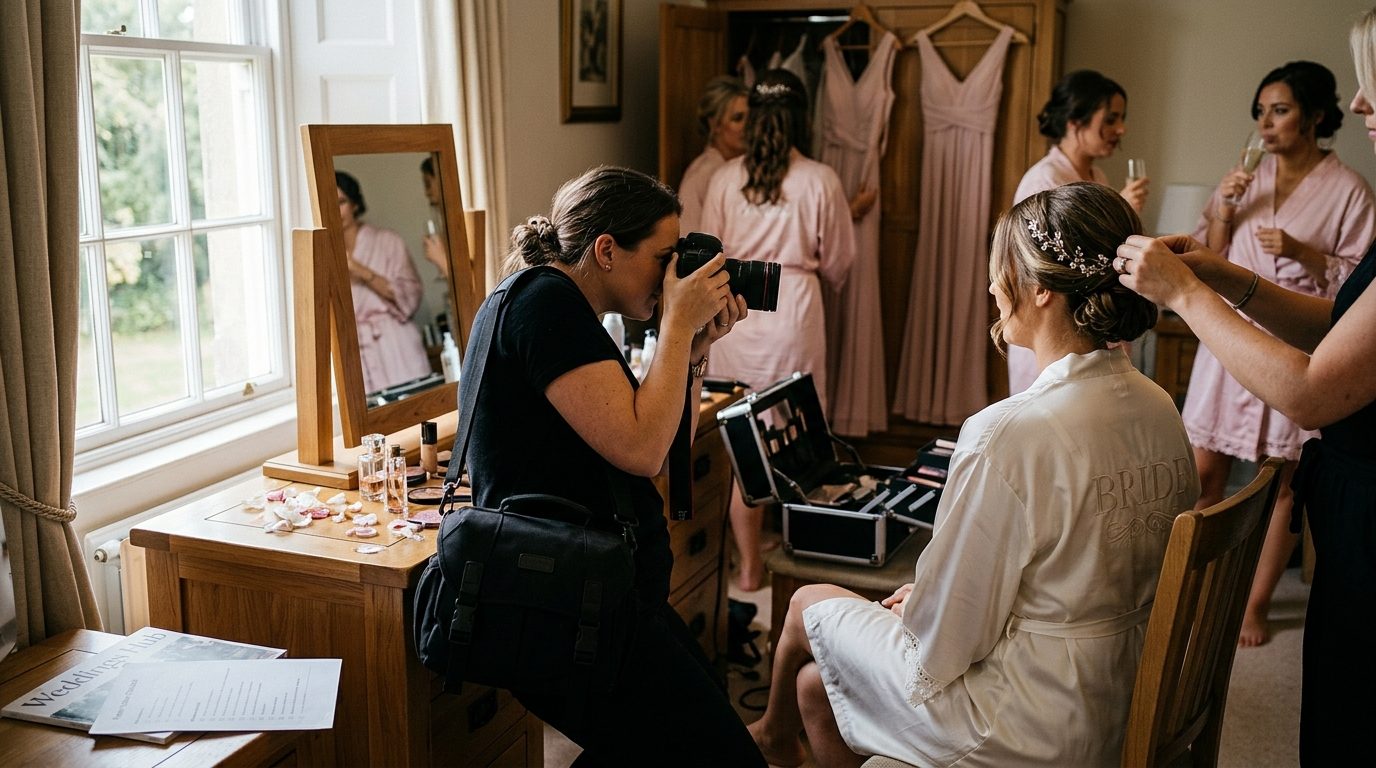
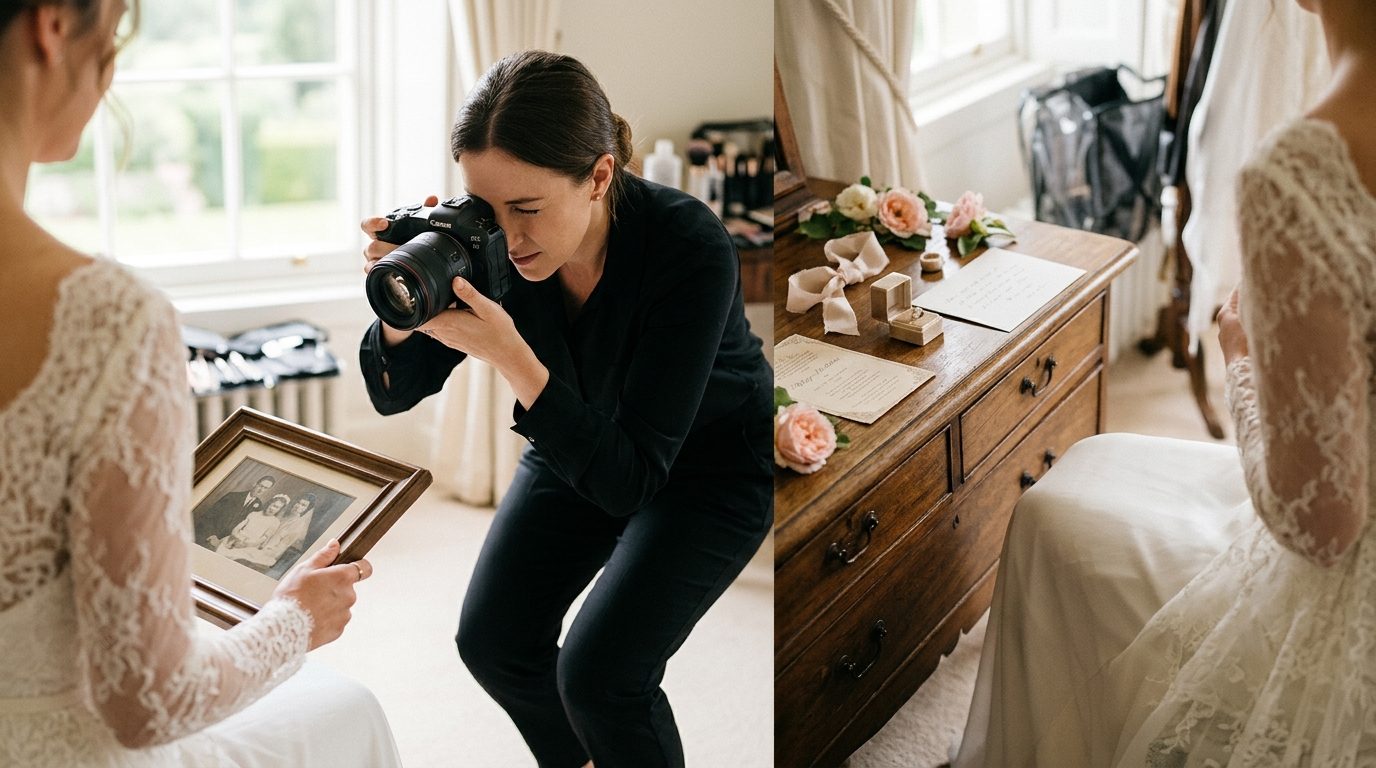 Your photographer or videographer will typically arrive 60-90 minutes before you need to leave for the ceremony — usually when you are in the final stages of getting ready or just putting on the dress.
What they typically shoot:
- Detail shots: rings, shoes, jewellery, invitation, dress hanging
- Bridesmaids getting their final touches
- The bride’s make-up being applied (last look)
- The dress going on
- The first look at the bride fully dressed (often with a parent or maid of honour)
- Departure from the getting-ready location
Tip: Lay out your flat lay items (invitation, rings, perfume, shoes, jewellery) before the photographer arrives. They will photograph these without asking. A tidy layout takes 5 minutes and produces much better detail shots.
For the full wedding photography shot list, share the morning shots you want captured with your photographer in advance.
Common morning-of mistakes
Running two schedules at once: The groom and wedding party getting ready in a separate location often operate on a completely different timeline. Designate someone (best man) to coordinate the groom’s departure so both parties arrive at the venue correctly.
Letting guests into the room: A well-meaning aunt who arrives to “see you in the dress” at 1:30pm when you are still in hair and make-up is a delay. Politely but firmly keep the room guest-free until you are dressed.
Not confirming florist delivery: Bouquets and buttonholes should arrive at the getting-ready location. Confirm the delivery time with your florist 48 hours before and again the morning of the wedding. If they deliver late, this affects the departure and photography.
Skipping the emergency kit check: See wedding day emergency kit for the full 47-item list. The kit should be confirmed and handed to a bridesmaid by 1:30pm at the latest.
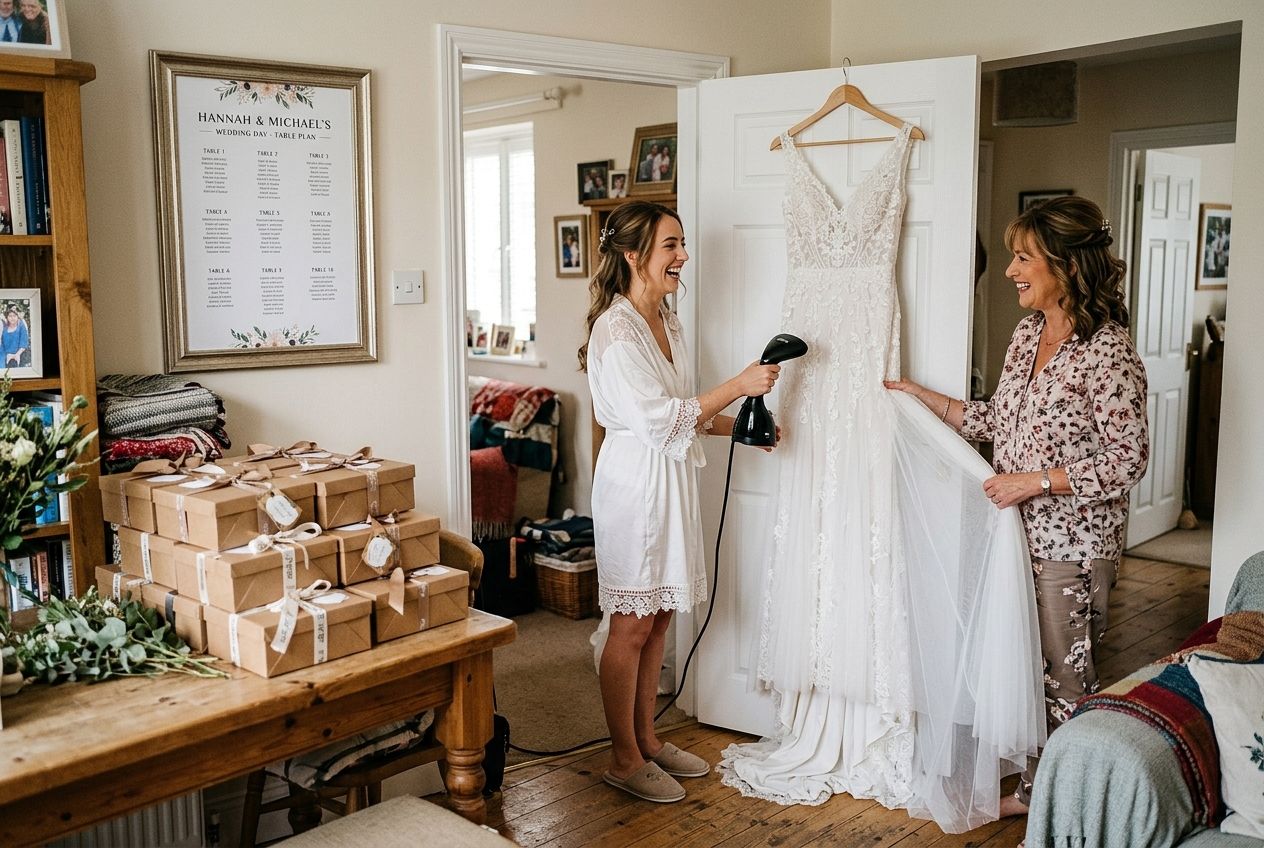
The dress steaming problem: If your dress needs steaming on the morning (wrinkles from transport or storage), this takes 20-40 minutes with a handheld steamer. Build it into the schedule. Do not leave it to the last 10 minutes.
Related articles
- Wedding Day Timeline: Hour-by-Hour Guide
- Bridal Hair Trial UK: What to Expect
- Wedding Day Emergency Kit: 47 Essentials
- Wedding Photography Shot List: 47 Shots to Brief
- Wedding Venue Checklist: 47 Questions to Ask Before Booking
Frequently asked questions
What time should a bride wake up on the morning of the wedding?
Work backwards from your ceremony time. For a 2pm ceremony: wake up by 8am. For a 1pm ceremony: wake up by 7am. The formula is: ceremony time minus 5-6 hours. This accounts for breakfast, getting-ready logistics, travel, and a 30-minute buffer. Earlier is always better than rushing.
How long does bride hair and make-up take on a wedding day?
Bridal hair takes 60-90 minutes. Bridal make-up takes 45-60 minutes. Combined: 90-120 minutes for the bride. Each bridesmaid adds 45-60 minutes depending on complexity. Start with the bridesmaid who needs the most time, end with the bride. Schedule the bride's make-up last so it is freshest for the ceremony and photos.
When should the bride put on her dress?
The bride should put on her dress 60-90 minutes before the ceremony, not 20 minutes. This allows time for the buttons, laces, or zip to be sorted without panic, for photos of the getting-ready process, and for a moment of calm before leaving. Getting into the dress at the last minute creates stress and risks damage.
What should a bride eat on the morning of her wedding?
Eat a proper breakfast: something with protein and slow-release carbohydrates. Eggs on toast, Greek yoghurt with granola, avocado on bread. Avoid only coffee or nothing — low blood sugar is the most common cause of fainting at ceremonies and feeling unwell during photos. Bring a snack (nuts, a banana) for between the ceremony and the wedding breakfast.
How do you keep the getting-ready schedule on track?
Appoint a designated timekeeper — the maid of honour or a trusted family member — whose job is to monitor the schedule and give 15-minute warnings. The bride should not be the one watching the clock. Give the hair and make-up artist a printed schedule when they arrive. Build in a 30-minute buffer after the bride is dressed so that any overruns are absorbed without consequence.
Who helps the bride get dressed on the wedding morning?
The maid of honour traditionally helps the bride into her dress, along with one or two other bridesmaids. For a dress with buttons or a corset, you need at least two people. The mother of the bride typically plays a role if she is present — but confirm in advance who is doing what, so nobody is excluded and nobody is doubling up unhelpfully.
What happens if the getting-ready schedule runs late?
Cut bridesmaid make-up time (go simpler), skip second hair styling attempts, and leave slightly earlier to absorb the delay. Do not rush the bride's make-up or skip important elements of getting dressed. If you are running 30+ minutes late, call ahead to your venue coordinator. Most UK venues and officiants can absorb a 15-20 minute delay without significant knock-on effects.