Wedding Dress Cleaning & Preservation UK Guide
Key Takeaways
- Average cost of professional wedding dress cleaning in the UK: £150-£280 for specialist dry-cleaning; £250-£400 for clean-and-preserve boxing
- Send your dress to a specialist within 2-6 months of the wedding — the longer you wait, the harder stains are to remove
- Preservation boxing in acid-free tissue extends dress life by 20-30 years; ordinary plastic bags cause yellowing within 5 years
- Not all 'dry cleaners' are the same — wedding dress specialists use different solvents and techniques from high-street dry cleaners
- Spot-test any DIY stain removal before attempting it — the wrong solvent can dissolve lace or strip fabric dye permanently
Do you actually need to clean it?
Yes — even if the dress looks clean. Two types of staining are invisible to the naked eye at the time but cause long-term damage if untreated:
Perspiration staining: the salts and oils in sweat do not discolour immediately. Left for 6-12 months, they oxidise and turn yellow or brown — particularly visible on bodice, underarms, and waist areas. The longer the delay, the less reversible this becomes.
Champagne and white wine: clear at the time. As the sugars oxidise over months, they turn yellow or rust-coloured. Almost every wedding dress is splashed with champagne — treat it.
Grass and outdoor hemline dirt: sets into fabric fibres over time. A dress worn outdoors — particularly with a long train — will have hemline soil that becomes progressively harder to remove.
The difference between a specialist and a high-street dry cleaner
This is the most important distinction in the whole guide.
High-street dry cleaners use standard solvent-based processes designed for suits, coats, and everyday garments. They are not equipped to handle:
- Beading, sequins, or heavy embroidery (can loosen or fall off)
- Silk (may water-spot or shrink)
- Structured bodices with boning (solvent can weaken the structure)
- Layered tulle or organza (can crush, crease, or distort)
- Delicate lace (can fray or dissolve)
High-street cleaners may also use packaging that traps moisture and causes yellowing.
Wedding dress specialists use specific solvents and processes matched to bridal fabrics. They hand-finish rather than press-clean. They know how to treat beading, silk, and embroidery. Many offer a pre-clean inspection and flag any areas of concern before starting.
How to find a UK specialist:
- Look for membership of the Guild of Cleaners and Launderers (GCL) or the Drycleaning & Laundry Institute (DLI)
- Ask your bridal boutique for recommendations — they will have established relationships
- Search specifically for “wedding dress cleaning” rather than “dry cleaner”
UK wedding dress cleaning costs 2026
| Service | What’s included | Average cost | Range |
|---|---|---|---|
| Specialist dry-clean (basic) | Clean and return on hanger | £120 | £80-£200 |
| Clean and box (standard) | Clean + acid-free tissue + archival box | £200 | £150-£280 |
| Clean and box (premium) | Above + certificate + viewing window in box | £280 | £200-£400 |
| Stain treatment surcharge | Per difficult stain area | £25 | £15-£50 |
| Rush processing | Within 2 weeks | +£40-£80 | varies |
| Long-distance postal service | National postal wedding dress cleaners | £160 | £100-£250 |
Postal services exist for brides who do not have a local specialist. Companies like Wed2Be, The Wedding Dress Laundry, and Bridal Alterations UK offer postal wedding dress cleaning. You box and post the dress; they clean and return it. Costs are competitive, but there is risk in transit — insure the parcel for full replacement value.
What the cleaning process looks like
A reputable UK wedding dress specialist will:
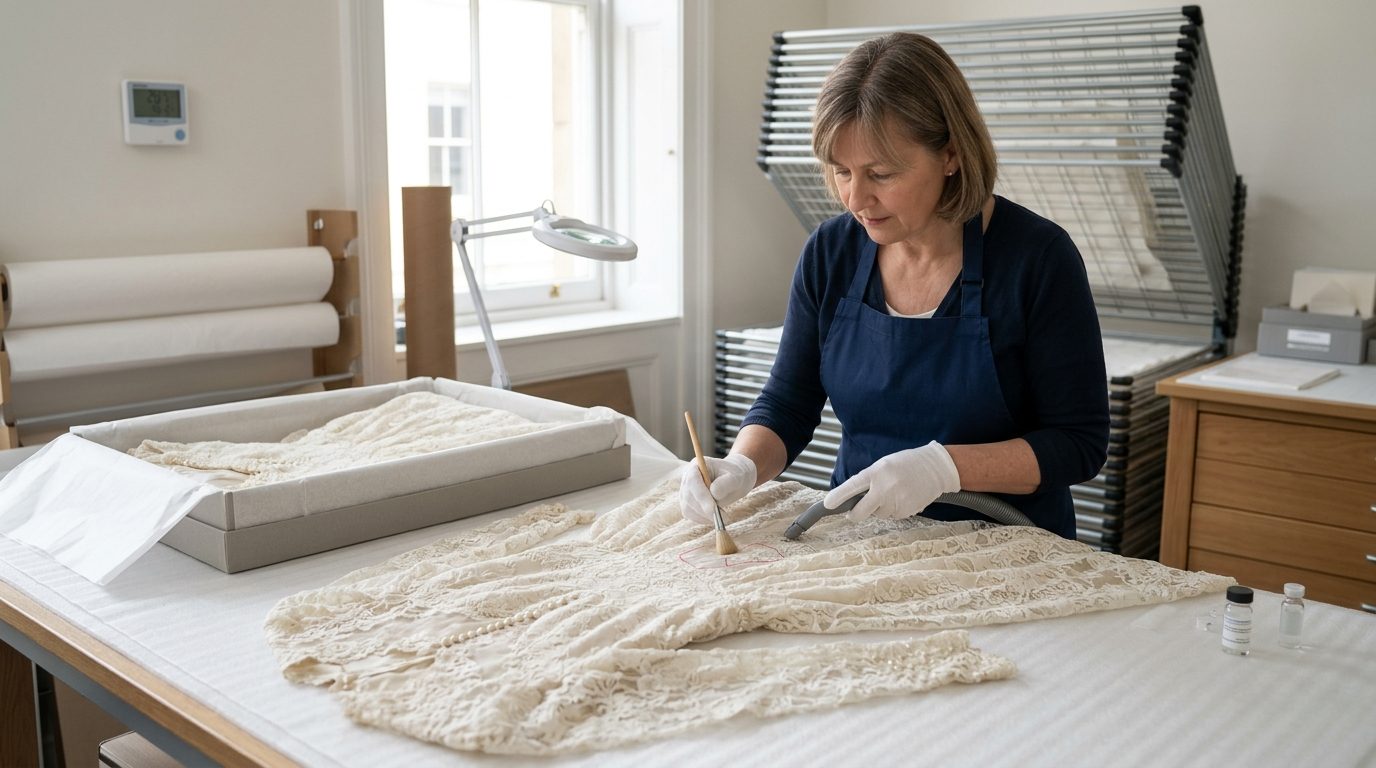
- Pre-inspection: examine the dress under ultraviolet light to reveal invisible stains and assess fabric condition
- Pre-treatment: spot-treat known stains (mud, wine, food) before the main clean
- Main clean: using a solvent appropriate for the fabric (hydrocarbon or perchloroethylene, depending on fabric type)
- Finishing: hand-pressing with a steam iron at low heat, rather than a tunnel press
- Drying: in a controlled-humidity environment, never a tumble dryer
- Inspection: post-clean check for any remaining staining or fabric damage
- Packaging: wrapping in acid-free tissue paper before boxing or hanging
The process takes 2-6 weeks at most UK specialists. Rush turnaround (1-2 weeks) is available at a surcharge.
Preservation and storage
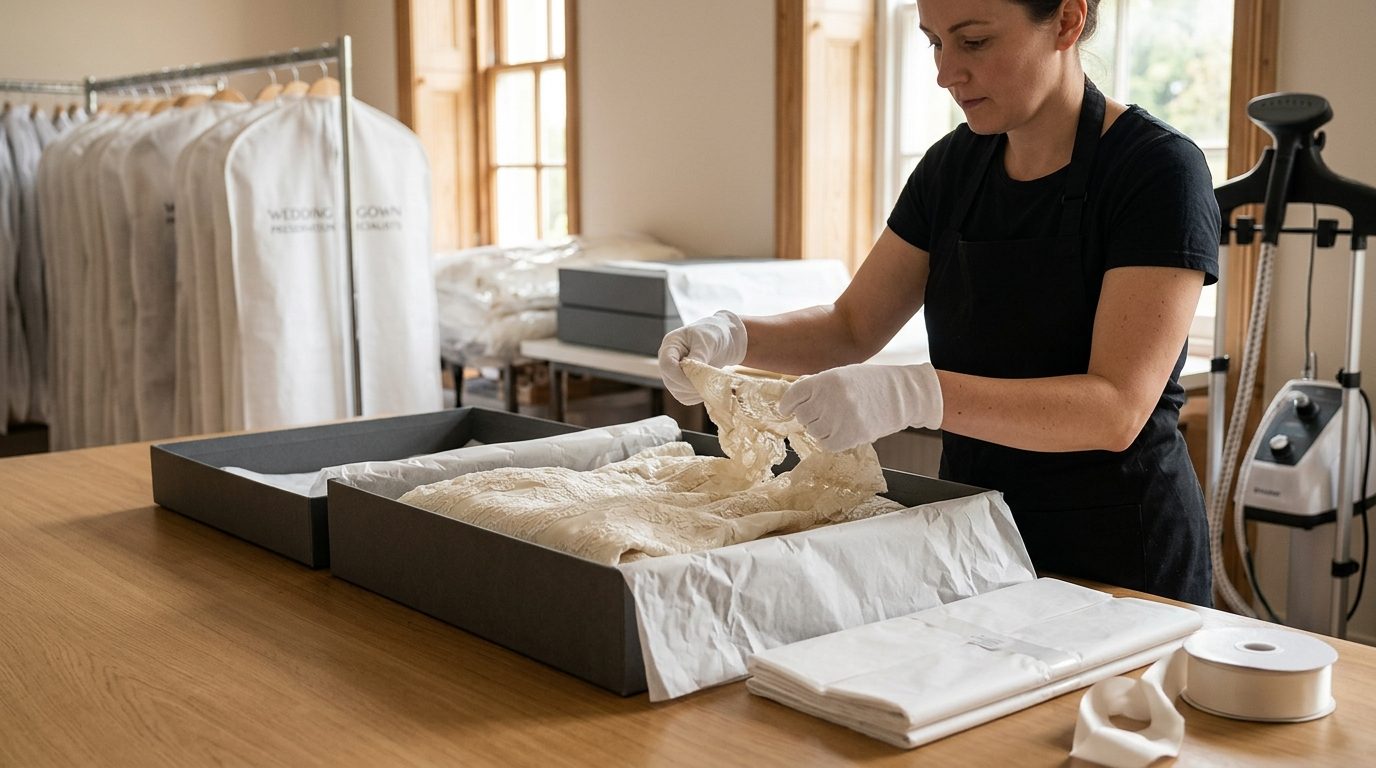
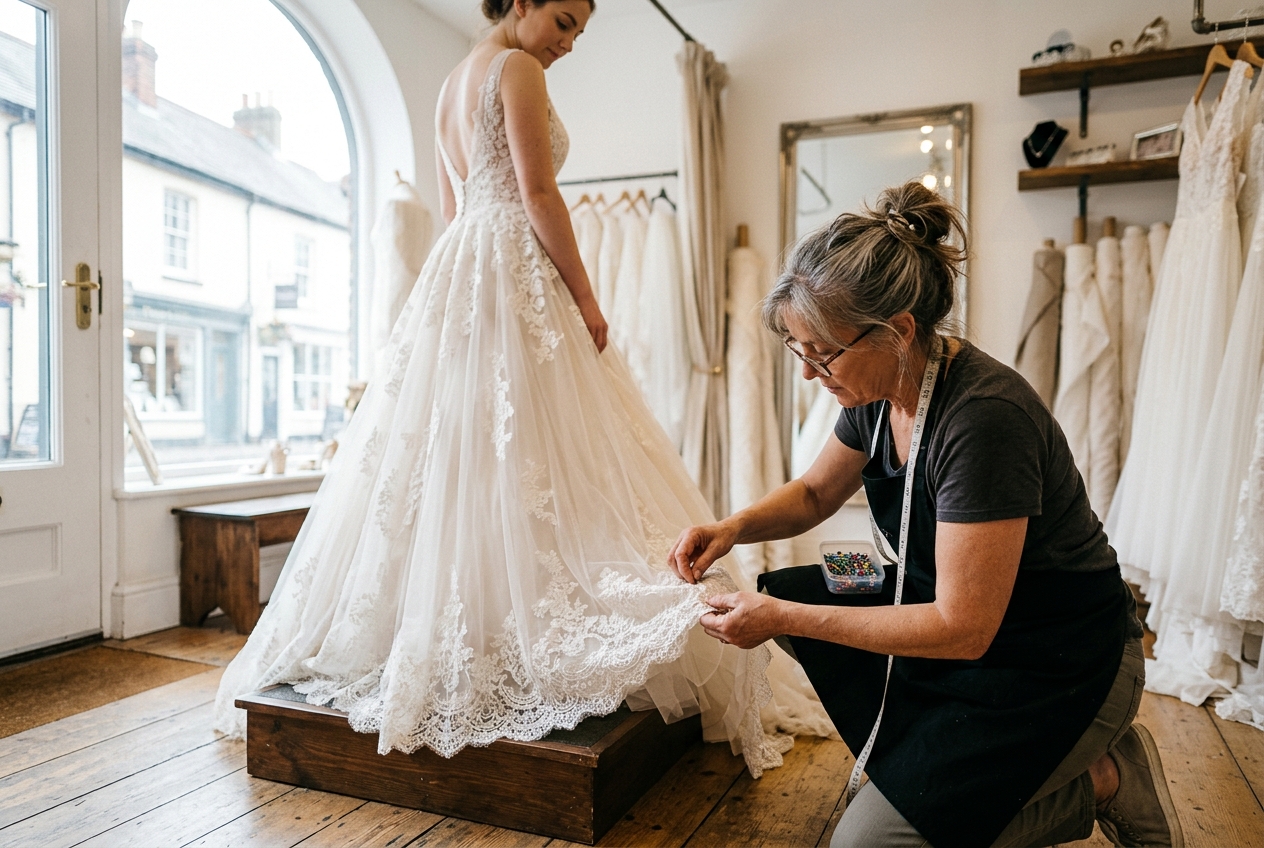 Cleaning is only half the process. How you store the dress determines its condition in 10, 20, or 30 years.
What preservation does
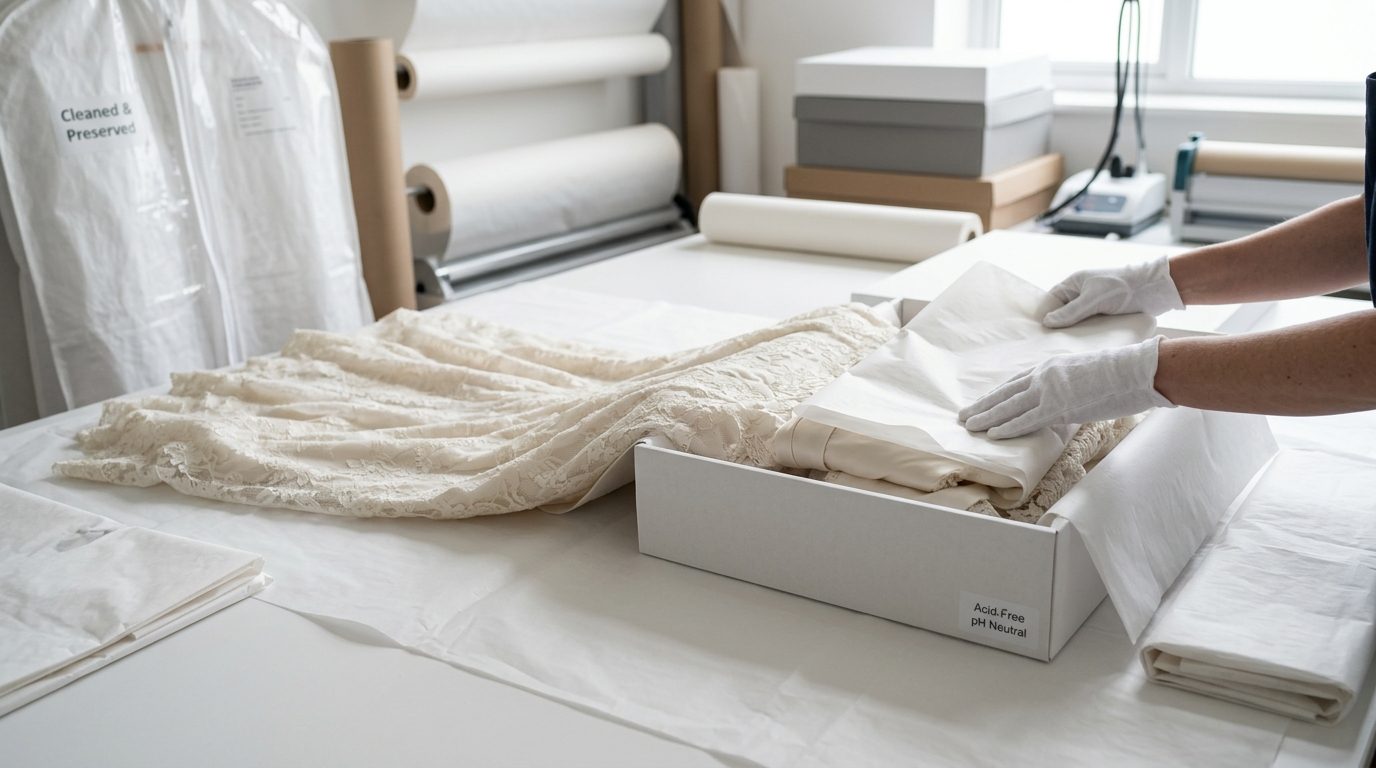
Professional preservation wraps the cleaned dress in acid-free tissue paper — not newspaper or plastic — and stores it in an archival box. The tissue prevents friction damage between fabric layers. The box protects from light and dust. The acid-free materials prevent the yellowing that occurs when fabric contacts regular paper or plastic over time.
DIY storage: what to avoid
Never use plastic garment bags. They trap moisture and create micro-humidity that yellows fabric within 5 years. The bag that came from the dry cleaner is for transport only.
Never store in a loft. Temperature swings and potential moisture cause irreversible damage. A spare bedroom, wardrobe, or climate-controlled storage unit is appropriate.
Never hang long-term. The weight of a full wedding gown pulls on the shoulder seams and bodice structure over years of hanging. Lay the boxed dress flat.
Never store near light. UV light yellows fabric. A wardrobe or box room away from windows is ideal.
DIY preservation steps
If professional preservation is not in your budget, you can do a reasonable version at home after professional cleaning:
- Get the dress professionally cleaned first — do not try to preserve a dirty dress
- Purchase acid-free tissue paper (£5-£15 from craft suppliers)
- Layer tissue between all folds and inside the bodice
- Store in a breathable, acid-free box — specialist boxes cost £25-£60, or use a plain cardboard box lined with tissue
- Place silica gel packets inside to absorb moisture
- Store flat, away from light and heat
What to do if your dress was not cleaned immediately
If 12+ months have passed, do not give up. Contact a specialist and explain the timeline. Perspiration and oxidation stains are harder to remove after a year, but not impossible. Ask the cleaner to inspect under UV light and give an honest assessment before you commit to the full service.
If significant yellowing has already occurred on a white or ivory dress, it may be partially reversible with specialist treatment — but manage your expectations. Very old stains (2+ years) may be permanent.
Selling, donating, or repurposing the dress
If you do not plan to keep the dress long-term, consider:
Reselling: platforms including Still White, Preowned Weddings, and Sell My Wedding Dress UK allow you to sell a cleaned dress for 30-60% of its original price. Vintage wedding dresses and pre-loved buying covers what to look for when buying second-hand.
Donating: Brides Do Good (UK charity) accepts donated wedding dresses in good condition and sells them to fund development projects. Oxfam Bridal accepts some dresses for specialist vintage boutiques.
Repurposing: a skilled alterations specialist can convert wedding dress fabric into a christening gown, cushion, or piece of clothing. This is a meaningful option if you have a strong sentimental attachment to the fabric.
Related articles
- Vintage Wedding Dresses UK: Where to Buy Pre-Loved Bridal in 2026
- Wedding Dress Cost UK: What to Budget in 2026
- Bridal Lingerie UK 2026: What to Wear Under Your Dress
- Detachable Sleeves and Modular Wedding Dresses: One Dress, Three Looks
- The “Warm Ivory” Shift: Why Cool White Wedding Dresses Are Out for 2026
- Wedding Dress Shopping Tips: What Bridal Boutiques Won’t Tell You
Frequently asked questions
How much does it cost to clean a wedding dress in the UK?
Professional wedding dress dry-cleaning costs £80-£200 for a basic clean at a specialist. A full clean-and-preserve service — including acid-free boxing for storage — costs £150-£400. High-street dry cleaners may quote less, but they use techniques unsuitable for delicate bridal fabrics and are not recommended for wedding gowns.
How soon after the wedding should I clean my dress?
Send your dress within 2-6 months of the wedding. Stains from food, wine, mud, and grass set permanently over time. Perspiration stains are particularly damaging — the salt content breaks down fabric fibres if left for more than 6-12 months.
Can I clean my wedding dress myself?
You can attempt spot-cleaning of minor surface dirt with cool water and a tiny amount of pH-neutral detergent, but full home washing is not recommended for structured gowns, dresses with beading or embroidery, silk, or heavy lace. The risk of fabric shrinkage, colour shift, or structural damage is high. Professional cleaning is strongly recommended for anything other than light surface marks.
What is wedding dress preservation?
Wedding dress preservation is a professional process that cleans the gown, treats stains, wraps it in acid-free tissue paper, and boxes it in an archival box designed for long-term storage. A properly preserved dress stored in stable conditions (cool, dry, away from light) can last 30-50 years without significant deterioration. Without preservation, fabric yellows within 5-10 years.
How do I store my wedding dress long-term?
Store in an acid-free preservation box or muslin bag — never in plastic, which traps moisture and causes yellowing. Keep at room temperature (15-20°C), away from direct light, damp, and extremes of heat. Do not store in a loft or basement, where humidity fluctuates. Lay the box flat rather than hanging — hanging puts stress on the seams and bodice over time.
What stains are hardest to remove from a wedding dress?
The hardest stains to remove are champagne and white wine (oxidise over time and show as yellow stains months later), hemline mud (sets into fabric fibres), body oil and perspiration (break down fabric over time), and red wine or berry-based food. These must be treated professionally as soon as possible — within weeks of the wedding for the best outcome.
Should I clean my dress before or after the wedding?
After, always. Have the dress professionally cleaned after the wedding. Pre-wedding alterations may leave chalk marks or pins, but a specialist cleaner will handle those. Cleaning before the wedding risks damage with no time to repair. Your dress will inevitably pick up marks on the day — from hem contact with the ground, grass, champagne — so clean once after.