Home / Articles / Hair & Beauty
Wedding Day Skincare Timeline: 90 Days to Glowing
Key Takeaways
- Start active ingredients (retinol, AHAs) at least 90 days out — using them within 6 weeks of your wedding risks a reaction on the day
- The biggest single mistake: starting a new prescription treatment within 8 weeks of the wedding
- Facials should stop at least 14 days before the wedding — not the week before
- Budget: DIY plan costs £80-£150 in products; a full professional facial course costs £400-£700
- Retinol timing rule: introduce at day 90, stop at 28 days before the wedding
Why 90 days is the right starting point
The number 90 is not arbitrary. Here is the biology.
Your skin renews its surface layer roughly every 28 days. A 90-day timeline gives you three full renewal cycles before the wedding. This means any reaction to a new active ingredient has time to resolve. Visible improvements from those actives have time to materialise. You can adjust or switch products if something does not work. You can have 3-4 professional facials at useful intervals rather than cramming them into the final month.
Starting at 60 days gives you two cycles — workable. Starting at 30 days gives you one — barely enough to recover from a bad reaction, let alone see results.
Days 90-84: baseline assessment
This week is about observation, not intervention.
Take photos of your skin in natural light — front, left profile, right profile. Note your current concerns: breakouts, texture, hyperpigmentation, dehydration, or none. This photo record is useful at 60 and 30 days to assess progress objectively. You will not notice gradual changes without a reference.
If you have not seen a GP or dermatologist about a persistent concern (hormonal acne, rosacea, eczema), book now. Prescription treatments started at day 90 have 8 weeks to work before the wind-down period.
Products to start now:
- A gentle cleanser (no actives)
- SPF 30-50 every morning, without exception
- A basic moisturiser
Do not change your cleanser, SPF, or base moisturiser again. These form your stable foundation.
Days 84-60: introduce one active at a time
This is when you layer in the active ingredients that do the visible work: retinol, vitamin C, or an AHA exfoliant.
The single-active rule: Introduce one new active per two-week period. Adding retinol and vitamin C in the same week means you will not know which caused a reaction if one occurs.
Retinol: Start with the lowest concentration available — 0.025% to 0.1%. Use every third night for the first two weeks, then every other night if tolerated. Expect mild dryness or flaking in the first 2-3 weeks. This is normal. If you experience significant peeling or redness, reduce frequency; do not stop.
Vitamin C: A morning antioxidant serum — 10-20% ascorbic acid, or a stable derivative like ascorbyl glucoside. This addresses hyperpigmentation and brightens overall tone. Apply after cleansing, before SPF.
AHAs: Glycolic or lactic acid exfoliants, used once or twice weekly. These improve texture and smooth the skin surface. Do not use on the same nights as retinol.
Many UK brides working with bridal facialists start their bridal hair consultations at this stage too, using the first skin session as part of a wider beauty-planning appointment.
Days 60-45: first professional facial
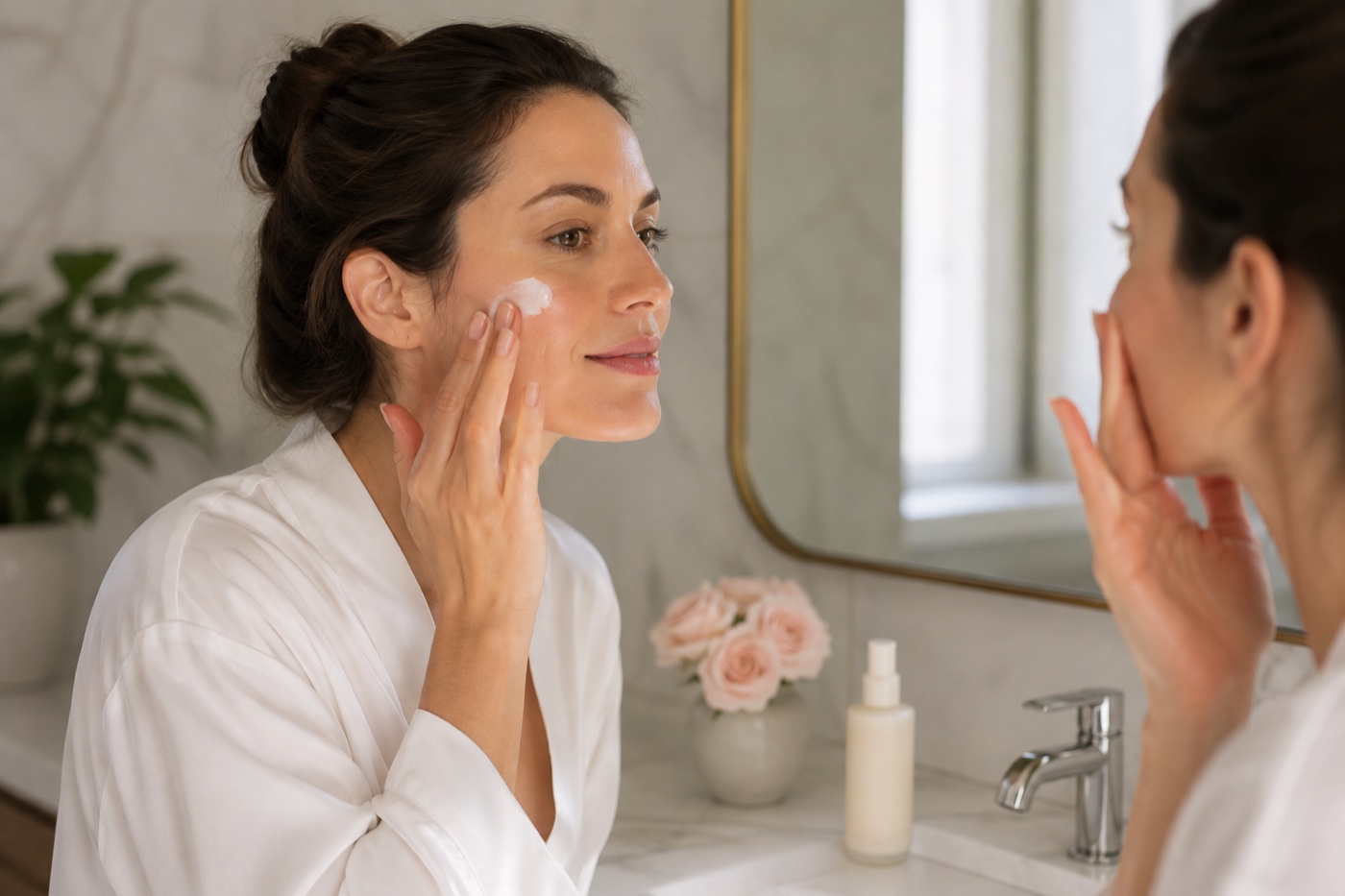
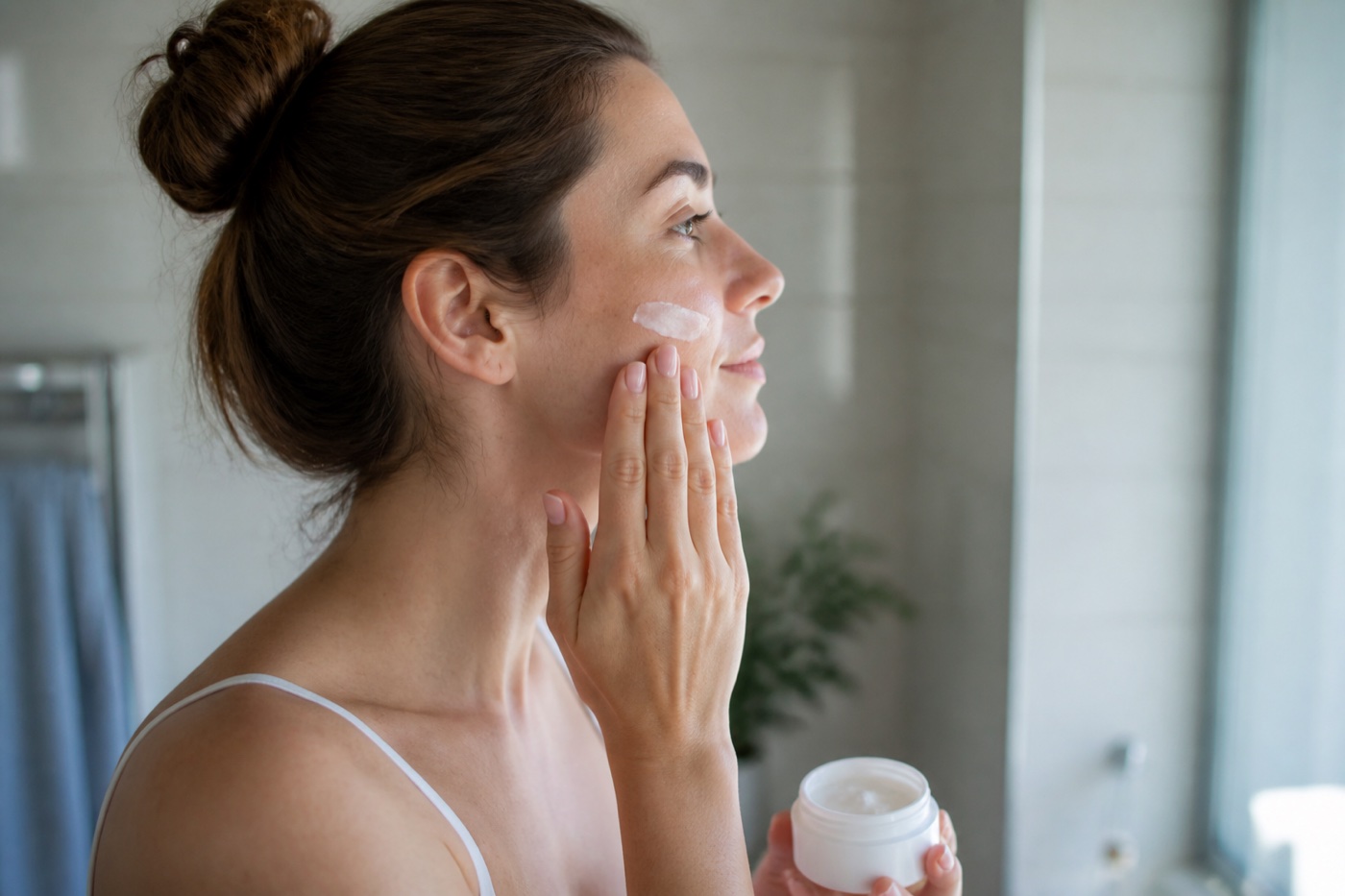 The 60-day facial is your assessment facial. A good facialist will look at your skin’s response to the first month of actives and adjust the plan. This is not a treat-yourself facial — it is diagnostic.
In the UK, a single professional facial from a qualified skin therapist costs £60-£120. For bridal packages, ask about:
- Hydrafacial or medical microdermabrasion (addresses texture and congestion)
- LED light therapy (anti-inflammatory, good for acne-prone skin)
- Chemical peel — medium-depth glycolic or lactic, suitable at 60 days but not within 30 days of the wedding
Bridal skincare packages from UK therapists typically run £280-£450 for three sessions.
Days 45-30: consolidation
By day 45, your skin should be adapting to the actives. The focus now is consistency, not adding new elements.
Continue retinol (increasing to every other night if tolerated), vitamin C every morning, AHA exfoliant twice weekly. Maintain SPF without fail.
At this stage, many brides notice that diet has a visible effect. High-sugar intake and ultra-processed food correlate with inflammatory breakouts. This is the window where consistent nutrition matters — not a dramatic overhaul, which can itself cause stress-related skin responses, but regular sleep, 2 litres of water daily, and reduced processed sugar.
If you are taking a GLP-1 medication for weight loss, discuss with your GP how it may affect your skin’s hydration and healing response during this period.
Days 30-21: the 30-day facial and stopping retinol
The 30-day facial is the last treatment facial of consequence. UK facialists typically do their most results-focused work at this point — a deeper chemical peel or an advanced LED and microcurrent session, depending on your skin type.
At day 28: stop retinol. Four weeks without retinol gives your skin time to return to its normal sensitivity level. This matters for makeup application — sensitised skin from retinol can react to heavy foundation or primer.
Continue vitamin C serum every morning and AHA no more than once weekly.
Book your makeup trial at 28-30 days. Your skin should be in good condition and close to its wedding-day state. A trial at this point also flags any cosmetic product reactions well before the wedding.
Days 21-14: gentle maintenance only
No new products. No new treatments. Your routine now:
- Morning: cleanser, vitamin C serum, SPF
- Evening: cleanser, moisturiser (retinol dropped)
AHA exfoliant: maximum once in this two-week window.
The 21-day facial — if you are having one — should be a gentle hydrating treatment only. No extractions, no peels, no aggressive techniques. The goal is to maximise hydration and luminosity, not to address concerns. Those should already be resolved.
Days 14-7: hydration focus
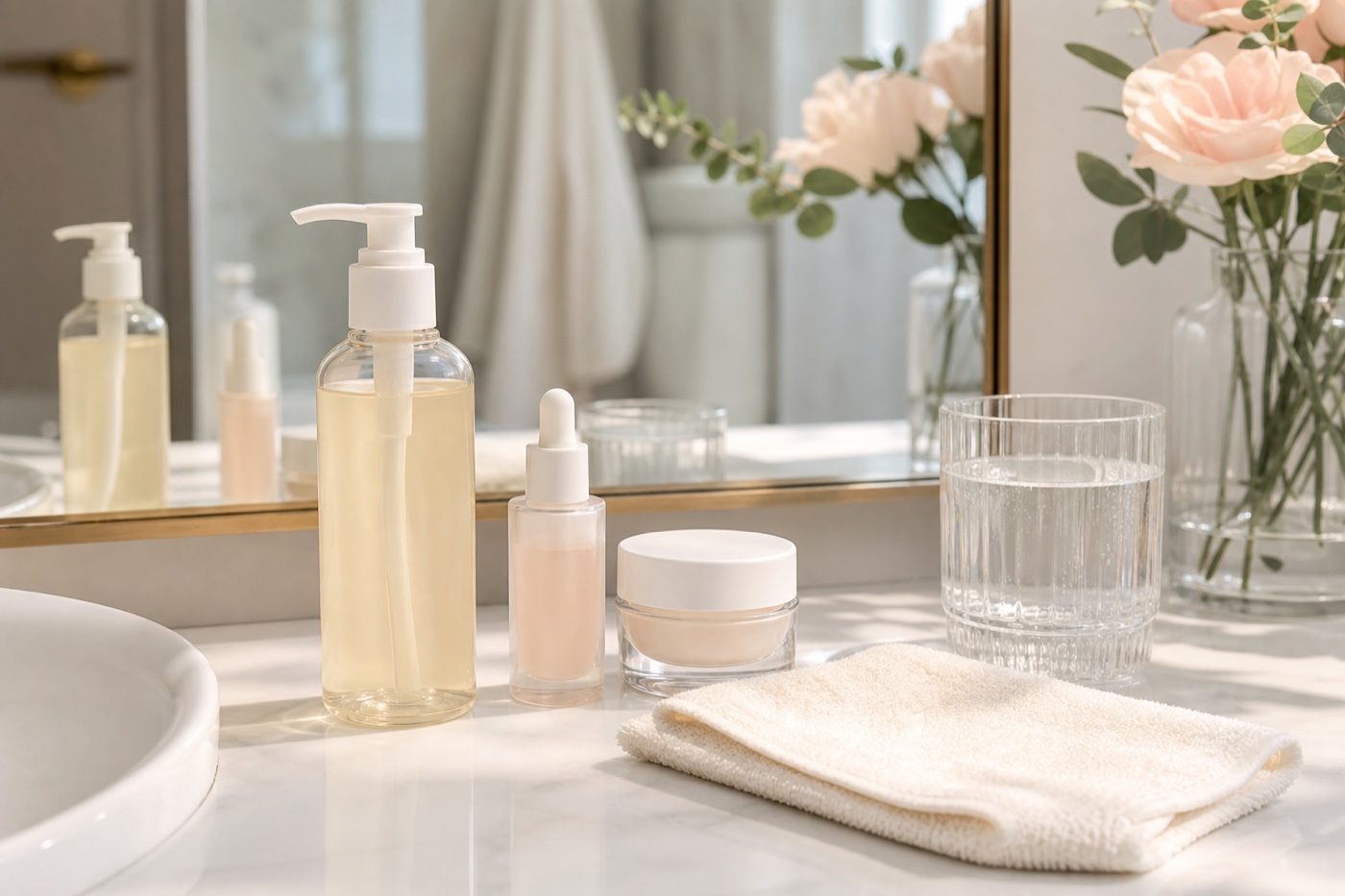
 At two weeks out, the goal is hydration. Deep, sustained hydration is the single factor most visible in wedding photos. Dehydrated skin shows texture, lines, and dullness under flash photography.
Add a hyaluronic acid serum if you are not already using one. Apply to slightly damp skin for best absorption.
Use an overnight hydrating mask twice in this week. The morning after, your skin should look noticeably plumper and more radiant.
Avoid:
- Any new product, including a new SPF or foundation
- Alcohol in skincare (SD Alcohol or Alcohol Denat on the ingredients list)
- Anything with fragrance that you have not used throughout your plan
- Any professional treatment
The morning of the wedding
Your wedding morning routine should be identical to your makeup-trial morning — no surprises:
- Gentle cleanser (no actives)
- Hyaluronic acid serum on damp skin
- Moisturiser — lighter formula than your overnight one
- SPF, even under makeup, even indoors with a photographer’s flash
Do not apply retinol, AHA, or vitamin C on your wedding morning.
Budget guide: 90-day bridal skincare
| Approach | What’s included | Typical cost |
|---|---|---|
| DIY, mid-range UK products | Cleanser, vitamin C, retinol, hyaluronic acid, SPF | £80-£150 |
| DIY + one professional facial | As above, plus one results facial at 30 days | £140-£270 |
| Full bridal facial course | 3-4 sessions with a UK facialist, product guidance between | £400-£700 |
| Medical skin clinic | GP consultation, prescription retinoid or azelaic acid, OTC products | £200-£500 |
Skin type adjustments
Dry or sensitive skin: Introduce retinol later — around day 70 rather than 84. Use the lowest concentration (0.025%). Skip any medium chemical peel at 60 days.
Oily or acne-prone skin: Consider azelaic acid alongside retinol. It has an anti-inflammatory effect and can be used closer to the wedding (stop 14 days out). A dermatologist consultation at day 90 is strongly advised for persistent hormonal acne.
Combination skin: The standard timeline works well. Focus vitamin C on hyperpigmentation areas. Use AHA on the T-zone and a richer moisturiser on drier cheeks.
Your skincare plan and your wedding dress fitting timeline often overlap — if you are losing or gaining weight through this period, flag it to your facialist. Changes in body composition can affect skin texture and congestion.
Many brides also incorporate their neck and chest into the same routine. The detachable bridal layer trend means more bare décolletage from ceremony through to reception — the same 90-day timeline for active ingredients applies.
Related articles
Frequently asked questions
When should I start my wedding skincare routine?
Start a structured skincare routine at least 90 days before your wedding. This gives time to introduce active ingredients, experience any reactions, adjust, and achieve visible improvement. Starting at 90 days gives 60 days of buffer before the 28-day stop window for actives.
Should I get a facial before my wedding?
Yes, but not within 14 days of the wedding. Book 3-4 professional facials at 90, 60, 30, and 21 days out. Many UK facialists recommend a results facial at 30 days and a gentler hydrating treatment at 21 days. Never try a new facial type within 2 weeks of your wedding.
Can I use retinol before my wedding?
Yes, but stop 28 days before your wedding day. Retinol accelerates cell turnover and can cause purging, peeling, and sensitivity. Starting at 90 days gives 8 weeks of use plus a 28-day wind-down window. Never start retinol for the first time within 90 days of your wedding.
What should I do the week before my wedding for skin?
In the 7 days before your wedding, use only your established routine — no new products. Focus on hydration: hyaluronic acid serum morning and evening, a rich overnight mask on days 7 and 3. Avoid exfoliation. Keep SPF on every morning regardless of weather.
How much does a bridal skincare programme cost in the UK?
A DIY 90-day skincare programme using mid-range UK products costs £80-£150. A full professional course with monthly facials costs £400-£700. Many UK facialists offer bridal packages from £280-£450 covering 3-4 sessions with a product plan between appointments.
What should I eat for better skin before my wedding?
The skin-diet link is most visible at 90-60 days out. High-sugar and processed-food diets correlate with inflammatory breakouts. Skin benefits from omega-3 fats (oily fish, flaxseed), vitamin C (citrus, peppers), zinc (pumpkin seeds, lean meat), and consistent hydration. Most UK dermatologists advise against drastic dietary changes in the final 4 weeks.
What is the one skincare mistake most brides make?
Starting a new prescription treatment — tretinoin, antibiotic gel, GP-prescribed retinoid — within 8 weeks of the wedding. Prescription-strength actives can trigger purging, a temporary breakout phase lasting 4-8 weeks. Start prescription treatments at 90+ days out or not at all before the wedding.