Wedding Day Emergency Kit: 47 Essentials to Pack
Key Takeaways
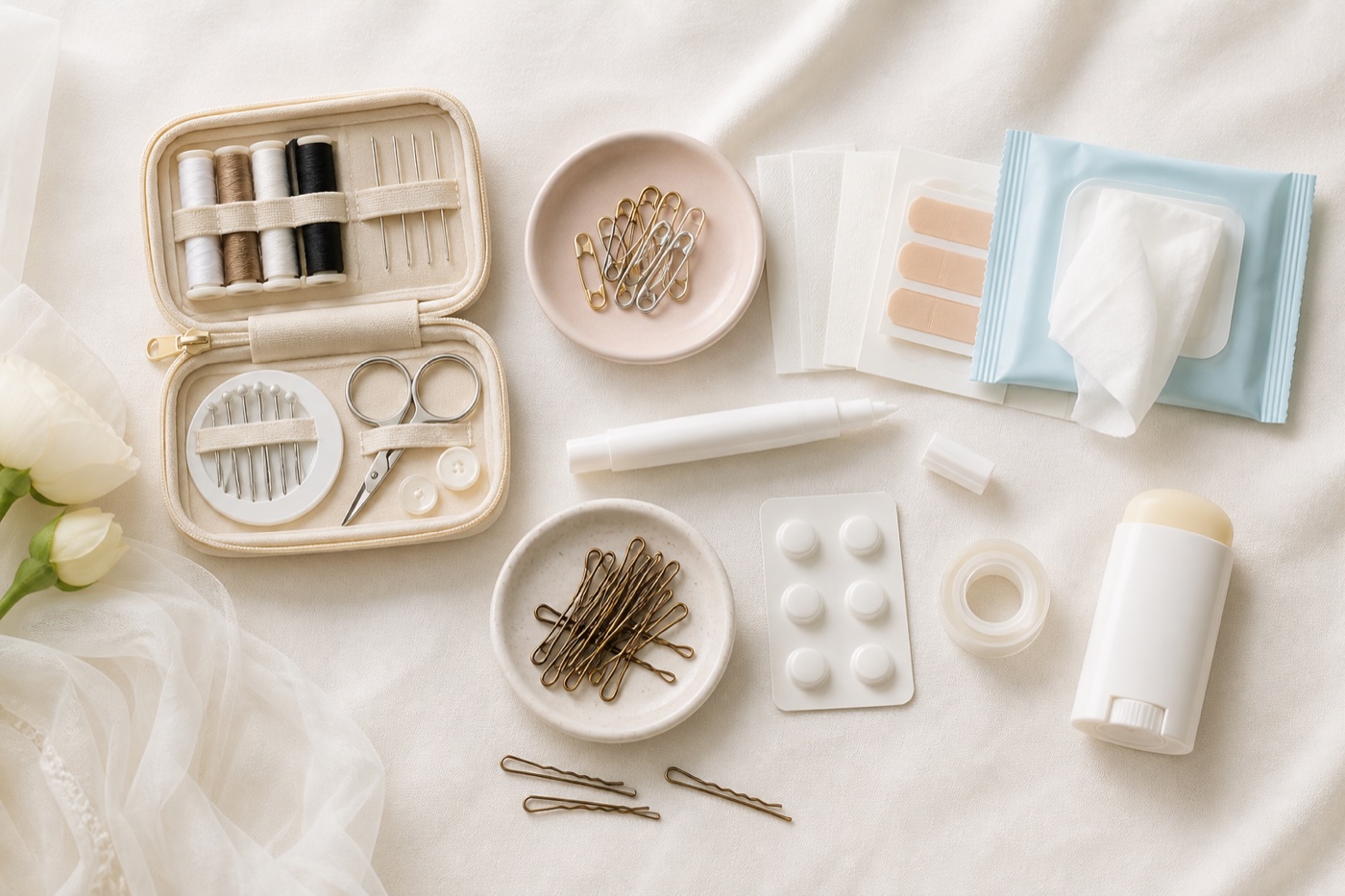
- A wedding day emergency kit should be split across three locations: the bride's bag, the bridesmaid bag, and the venue kit left with the coordinator
- Dental floss works as emergency thread — stronger than most sewing thread for a temporary fix
- Keep a spare pair of flat shoes in the bridal suite: 61% of UK brides change shoes by the reception
- A portable phone charger is the single most-overlooked item — wedding days run 12+ hours and phones die before the first dance
- Bring a lip balm in addition to your lip colour — toasts, cake, and drinks strip lip product every hour
How to organise the kit: three locations
Do not put everything in one bag and hand it to one person. If that person is seated at the wrong end of the venue when you need a safety pin, you are stuck. Divide the kit across three locations:
Location 1 — The bride’s clutch: only absolute essentials. This bag goes with the bride at all times and should be minimal.
Location 2 — The chief bridesmaid’s bag: the main emergency kit. The bridesmaid holds this from morning prep through to the first dance.
Location 3 — The venue kit: a drawstring bag or small box left in the bridal suite or with the venue coordinator. Contains backups of the big items and things you probably won’t need but will be glad are there.
Part 1: The bride’s clutch (8 items)
Keep this small. The bride should not be burdened with a heavy bag during the day.
- Lip colour — your main shade, for touch-ups between toasts and cake
- Blotting papers — mattify without removing powder makeup
- Blister plasters (3-4) — both heels will start aching within 3 hours
- Mints or gum — for speeches, vows, and the first kiss
- Portable phone charger (slim) — the single most overlooked item; buy a 5,000mAh flat version
- Pain relief (2 paracetamol, 2 ibuprofen) — headaches and back pain from standing are common
- A hair grip or two (in your hair colour) — for fly-aways in photos
- A handkerchief or high-quality tissues — not the cheap scratchy type; go soft
Part 2: The bridesmaid bag (21 items)
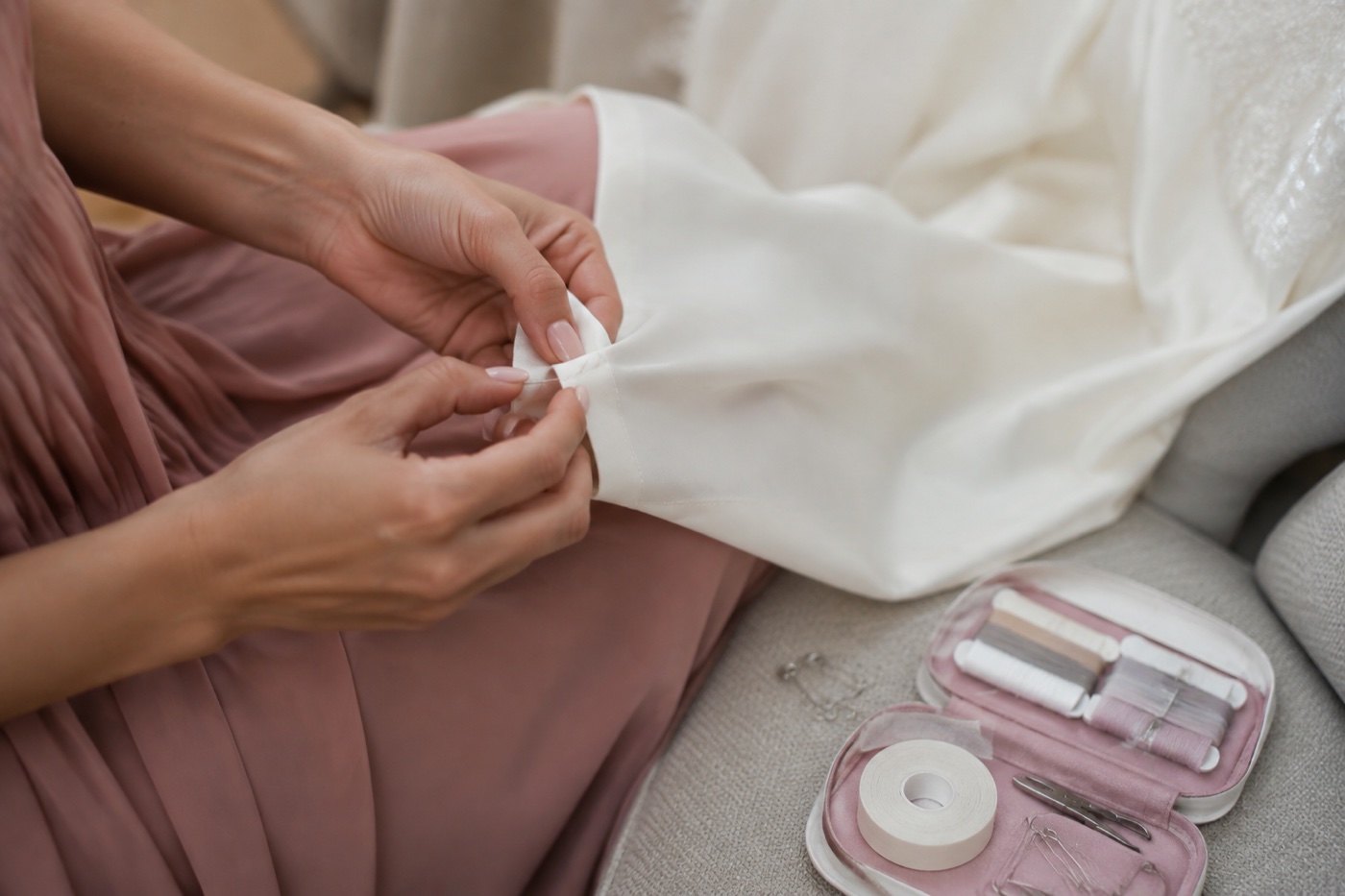
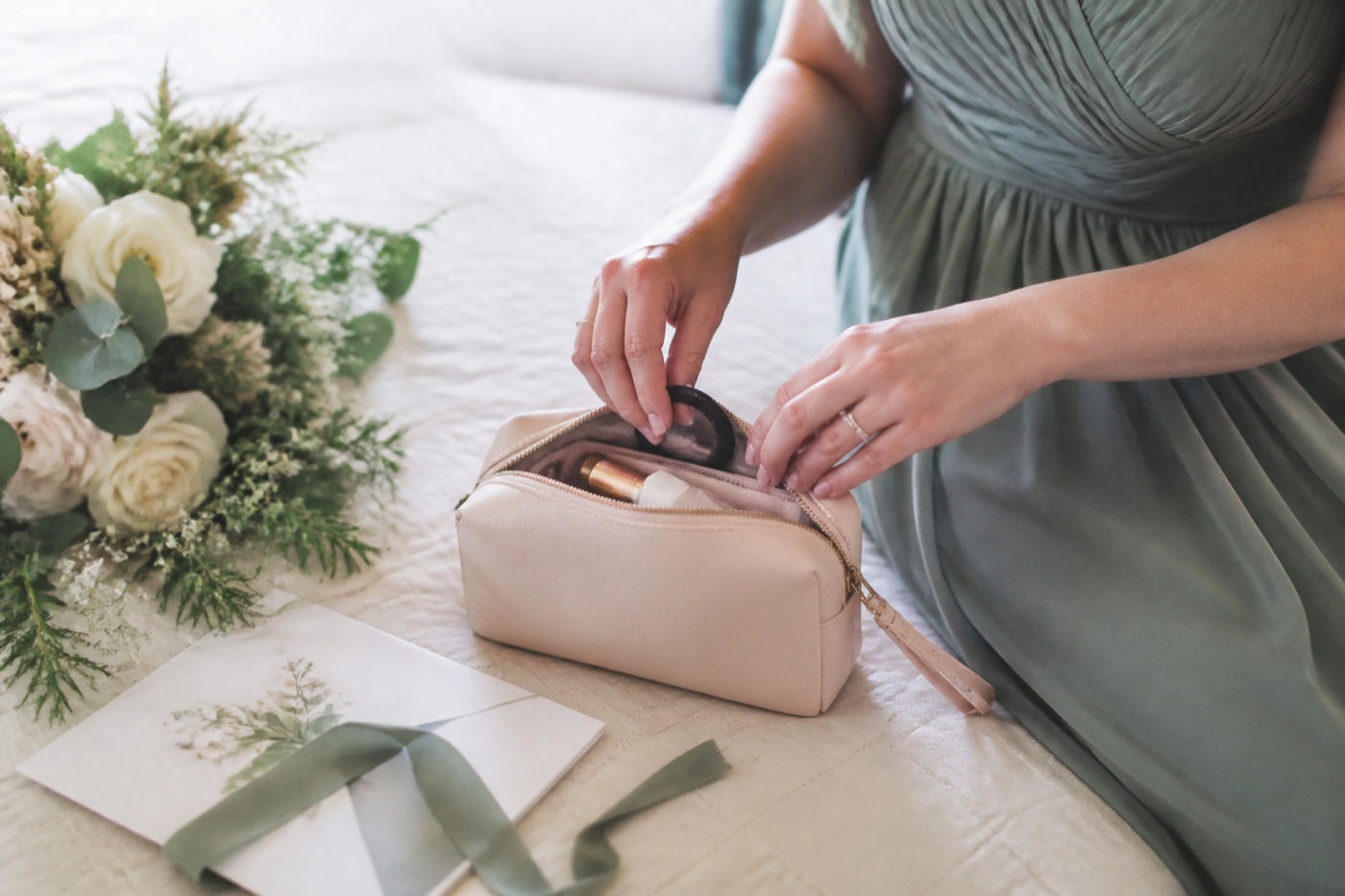
The chief bridesmaid’s bag should be large enough to hold all of these and accessible quickly. A tote bag or structured day bag works better than a tiny clutch.
Makeup and hair
- Touch-up makeup kit — matching the bride’s lip colour, setting powder, and mascara
- Hair grip assortment — a range of sizes in the bride’s hair colour
- Mini hairspray — travel size; one firm-hold for fixing fly-aways
- Bobby pins (50-pack) — for emergency hairstyle repairs
- Clear mascara — tames eyebrows and fixes mascara smudges
- Clear nail varnish — stops stocking runs immediately; also repairs small chips
Dress and clothing
- Safety pins (20 minimum) — the single most-used emergency item; buy a variety pack
- Double-sided dress tape — for gaping necklines, strapless bodices, and hem fixes
- Mini sewing kit — needle, thread (white, black, nude), small scissors
- Dental floss — stronger than sewing thread for emergency repairs on seams
- A spare stocking or tight (in the bride’s shade, if wearing hosiery)
- A fabric lint roller — remove confetti, pet hair, and chair fibres from dark clothing
Shoes and feet
- Gel insoles — one pair sized to the bride’s shoes; reduces fatigue dramatically
- The bride’s flat shoes — in a tote bag, for the reception. 61% of UK brides change shoes
Health and wellbeing
- Paracetamol and ibuprofen — full packs, not just 2 tablets
- Antihistamine tablets — for hay fever (crucial for outdoor summer weddings)
- Anti-nausea tablets — for nerves or travel sickness
- Travel deodorant (bride’s brand or unscented) — for the morning and mid-afternoon
- Lip balm — separate from lip colour; prevents chapping under lipstick
Stain removal
- Stain remover pen (Tide To Go or equivalent) — for fabric stains
- Alcohol-free wet wipes — gentler on delicate fabrics; also useful for cleaning hands
- White chalk — for small marks on white dresses before photos (covers temporarily)
Practical items
- Cash (£20-40) — for tips, parking, or emergencies
- A safety pin strip — these come flat and fold out; more versatile than loose pins
- A pen — for signing the register and the photographer’s paperwork
- Plasters (10 assorted) — for heels and finger cuts
- A phone number list (printed) — photographer, florist, venue, car hire, caterer contact numbers in case of phone failure
Part 3: The venue kit (18 items)
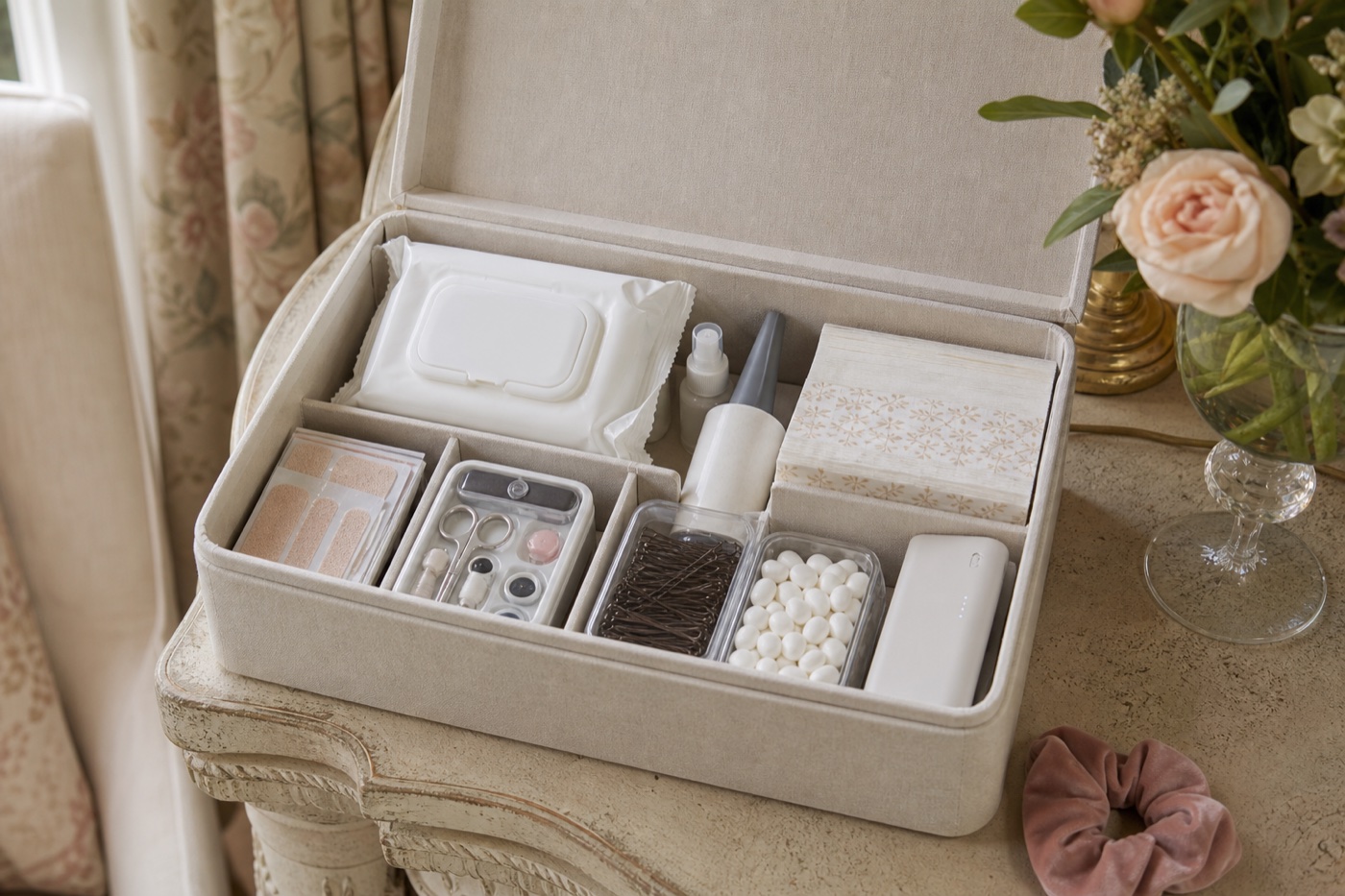
This is a bag or small box left in the bridal suite or with the venue coordinator. It holds backups and larger items that won’t fit in a bag.
- A spare bouquet holder or spare flowers — if the florist delivers an unexpected limp arrangement, your coordinator can call them; in the meantime, a small backup vase arrangement is useful
- Snacks — the bride often doesn’t eat properly during morning prep. Pack high-protein items: nuts, protein bars, crackers with cheese. Not messy foods.
- A bottle of still water — dehydration causes headaches; the first choice of drink all morning
- Straws — for drinking without disturbing lipstick
- A full sewing kit (larger) — with a wider variety of threads and a seam ripper
- A small steamer or wrinkle-release spray — for creased dresses after travel or storage
- A garment bag — to protect the dress during transport
- Baby powder or cornstarch — absorbs grease stains before a stain remover is applied
- Velcro strips (self-adhesive) — emergency attachment for veils, decorations, and accessories
- A power bank (large, 20,000mAh) — for the bridal suite charging station
- Scissors — full-sized, sharp; for threads, tags, and packaging
The groom’s kit: what he should have
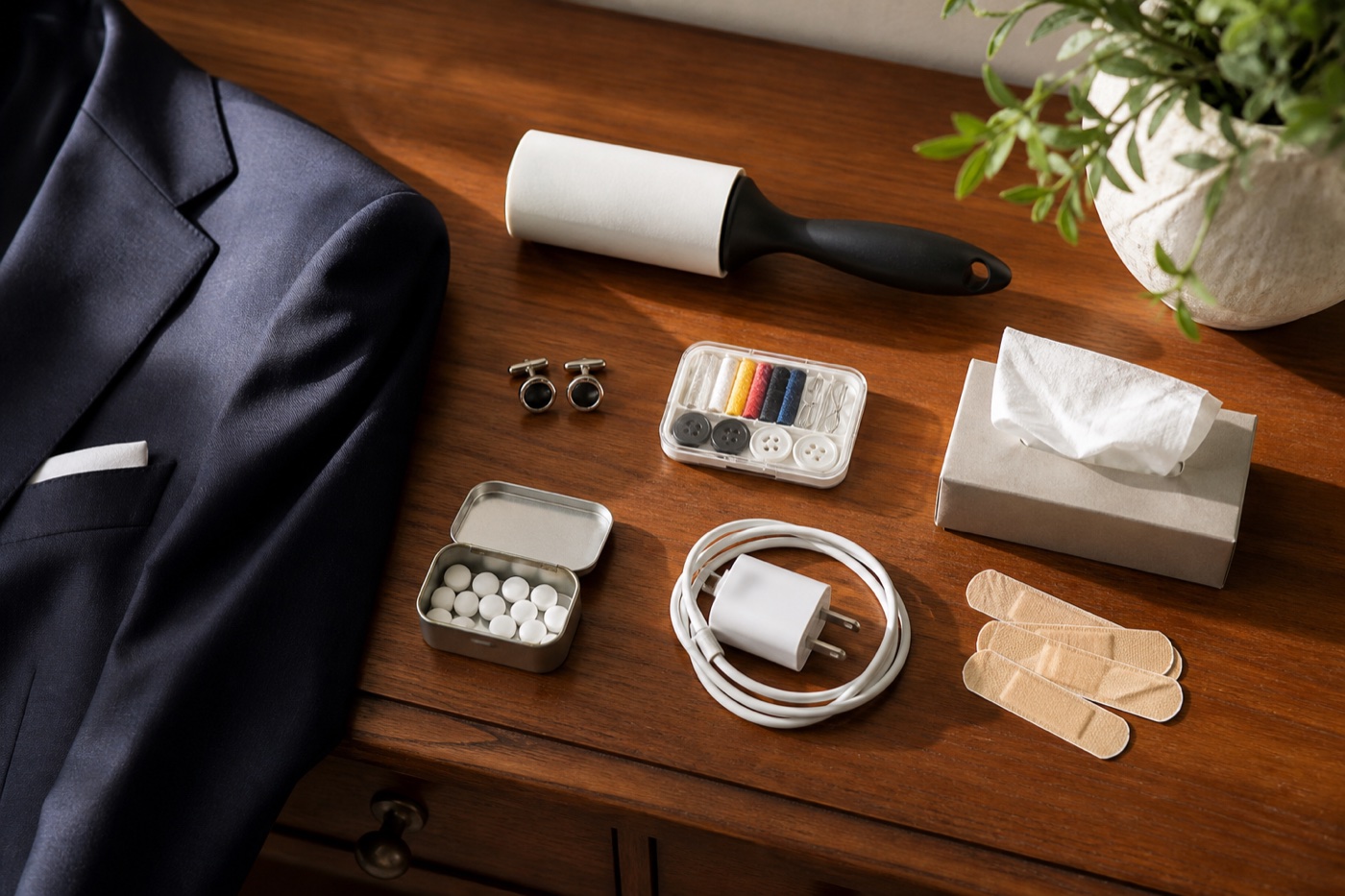 Grooms tend not to think about this and regret it. Ask the best man to hold:
- Paracetamol
- A spare tie or cravat
- Cufflinks (and spare pair if possible)
- A lint roller
- Mints
- The wedding rings (until they are transferred to the ring bearer or kept on the best man)
- Cash (for vendor tips and emergency purchases)
- Spare white shirt if budget allows
Where to buy a pre-assembled wedding kit
Several UK sellers offer pre-assembled bridal emergency kits:
Etsy UK — handmade kits from independent sellers, £25-£80. Vary widely in quality; read reviews carefully.
Not on the High Street — curated kits from vetted UK makers, £35-£75.
Boots — the pharmacy counter stocks most individual items. Building your own kit from Boots takes 30-40 minutes and costs £35-£55 for the full list above. You control quality.
WeddingsHub recommends the DIY route. Pre-assembled kits often include items you don’t need and omit items you do.
Related articles
Frequently asked questions
What should be in a wedding day emergency kit?
A wedding day emergency kit should include safety pins, double-sided dress tape, stain remover wipes, blister plasters, paracetamol and ibuprofen, a mini sewing kit, dental floss (emergency thread), clear nail varnish (stops stocking runs), a portable phone charger, mints, a hair grip assortment, and a travel-size deodorant. Divide items between the bride's bag, the chief bridesmaid's bag, and a venue kit left with the coordinator.
What goes in a bridesmaid emergency bag for a wedding?
The bridesmaid bag should hold: the bride's touch-up makeup (lip colour, setting powder, mascara), pain relief, safety pins, stain remover wipes, hairgrips in the bride's hair colour, clear nail varnish, blister plasters, a portable charger, tissues, and the bride's flat shoes. The chief bridesmaid is the practical point-person — the bag should be with her at all times from ceremony to first dance.
What stain remover works best on wedding dresses?
Tide To Go pens and Carbona Stain Devils (for grease) are the most widely available effective options in the UK. For silk and delicate fabrics, test on a hidden area first — some stain removers damage silk fibres. Blotting with cold water and a white cloth should be the first response; chemicals are a last resort. WeddingsHub recommends packing both a stain pen and alcohol-free wet wipes.
How much does a wedding day emergency kit cost to put together?
A comprehensive DIY wedding emergency kit costs £30-£60 to assemble from Boots, Superdrug, and Amazon. Pre-assembled kits sold as 'bridal emergency kits' on Etsy and Not on the High Street cost £25-£80 depending on content.
Who should carry the wedding day emergency kit?
Split the kit between the chief bridesmaid (carries the main bag at all times), the mother of the bride or a trusted family member (holds the venue kit in the bridal suite), and the bride's personal clutch (only absolute essentials: lip colour, blister plasters, mints). The groom should separately brief a groomsman to hold pain relief and a spare tie.
What should the groom pack for the wedding day?
The groom's essentials: paracetamol, spare tie or cravat, cufflinks (in case of loss), a lint roller, spare white shirt (if the budget allows), wedding rings in a protected case, the officiant's fee in cash (if applicable), a phone charger, mints, and a travel deodorant. A groomsman should hold the wedding rings as backup until needed at the altar.