UK Wedding Catering Trends 2026: What's Changing
Key Takeaways
- Sharing plates have overtaken formal sit-down dining as the most-chosen UK wedding food format: 38% of couples in 2026
- Dietary accommodation now averages 4.2 dietary requirements per 100 guests at UK weddings in 2026
- Street food vans appear in 22% of UK weddings as either primary or late-night catering
- Late-night food has shifted from chips to premium comfort: dirty fries, loaded hot dogs, mini burgers, cheese toasties
The shift from formal to social eating
The dominant shift in UK wedding catering is from formal plated service to social eating formats. The reasons are practical and cultural:
- Sharing plates generate 30% more table conversation than plated individual courses, according to a 2025 survey of UK hospitality caterers
- Sharing formats are 15-20% cheaper per head than full plated service
- Gen Z couples are less attached to the traditional wedding breakfast format
- The casual dining sector has trained guests to prefer sharing — tapas, mezze, and small-plate restaurants have normalised it
The result: sharing plates at 38% of UK weddings in 2026, formal sit-down at 29%, and the remaining 33% split across grazing, buffet, and hybrid formats.
Trend 1: Sharing plates as the new wedding breakfast
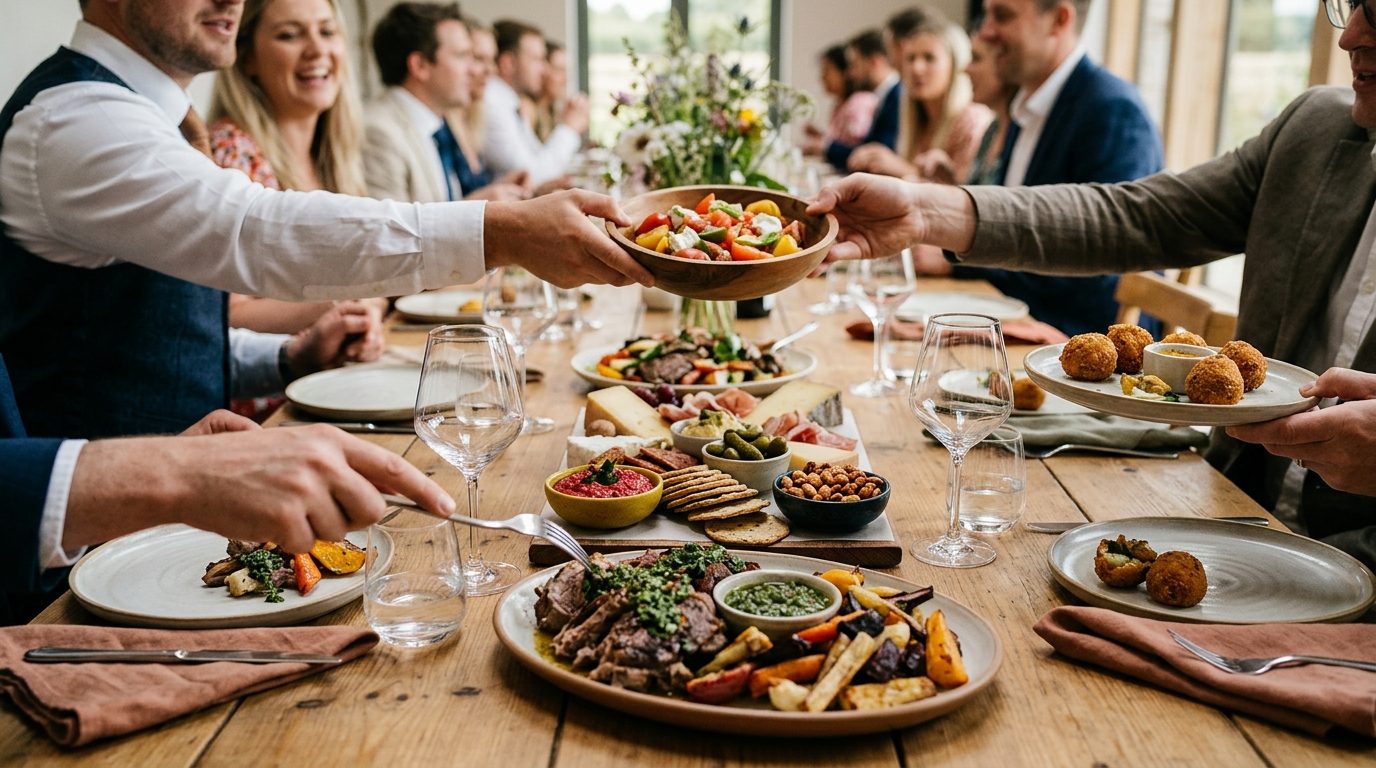
Sharing plates — where dishes are placed in the centre of the table for guests to serve themselves — deliver a restaurant-quality experience with more sociability than individual plating. The table is covered in dishes. Guests serve their own portions. Conversations cross the food.
What sharing plates typically include:
- 2-3 sharing starters per table (burrata and tomato, smoked salmon on blinis, mini cheese soufflés)
- 2-3 main sharing dishes (slow-roasted lamb shoulder, whole roast chicken, baked salmon, vegetarian option)
- 3-4 sides
- Dessert served individually or as sharing platters
Cost per head: £65-£95 including service and staffing. Most caterers include full clearing and a dessert table as part of the package.
The format works best for tables of 8-10 guests. Very long rectangular tables (feasting tables) are the ideal furniture match.
Trend 2: The tasting menu format
A tasting-menu wedding serves 7-10 small courses to all guests simultaneously. The couple typically co-designs the menu with the chef. The meal runs for 2.5-3 hours. It is an event in itself — the food becomes the entertainment.
Why couples choose it:
- Creates a unique, memorable meal that guests remember
- Works particularly well for foodie couples and chef-driven venues
- Generates a natural conversation flow as each course arrives
- Pairs well with a wine flight if budget allows
Cost per head: £95-£160 including kitchen labour and multi-course service. Higher than sharing but comparable to formal plated when the entertainment value is factored in.
For more detail on this format, see tasting-menu wedding receptions: when the food is the event.
Trend 3: Street food as primary catering
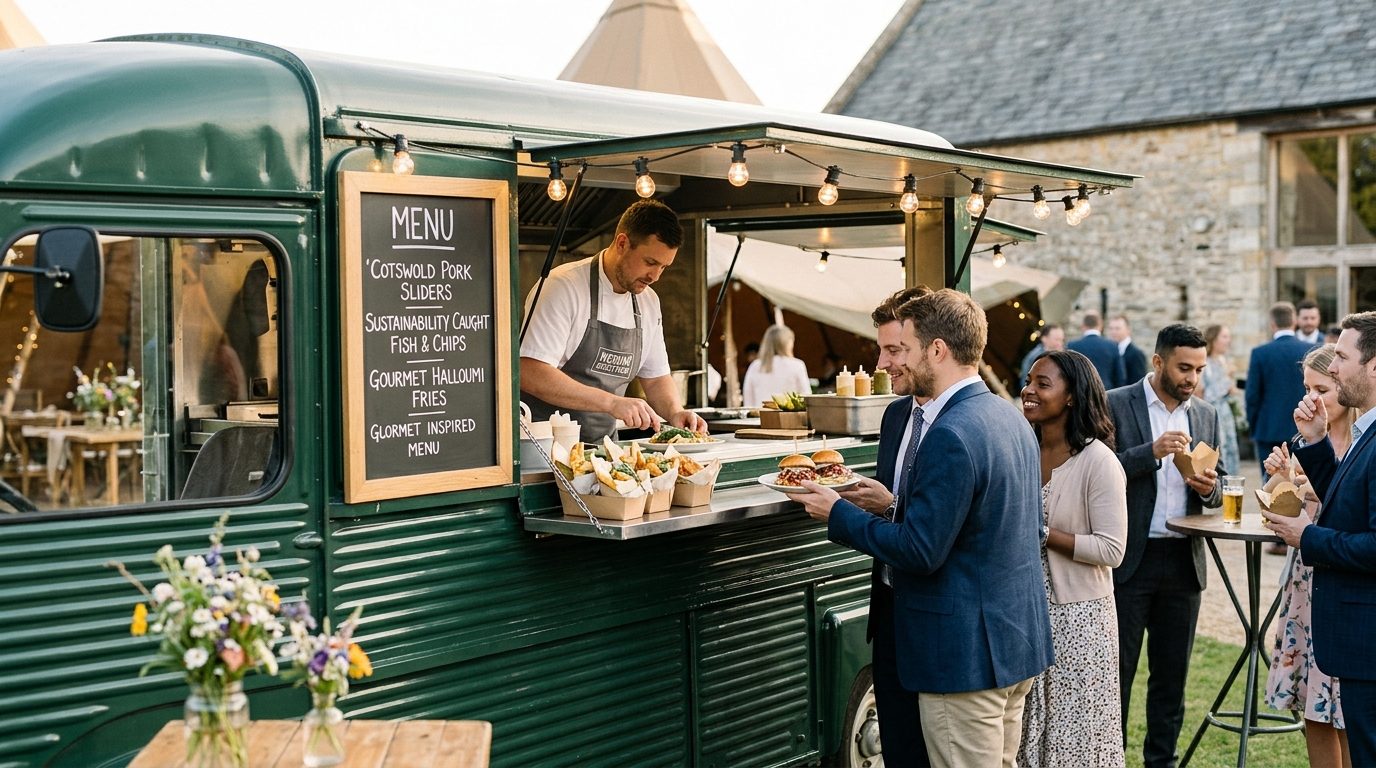 Street food — served from vans, carts, or pop-up kitchens — now appears in 22% of UK weddings either as the primary meal or as late-night addition. The shift is most pronounced at barn, festival, and outdoor weddings where the venue aesthetic supports it.
Common street food formats at UK weddings:
- Wood-fired pizza van (most common: £30-£45 per head)
- Gourmet burger station (£25-£40 per head)
- Taco or burrito bar (£22-£35 per head)
- Indian street food: samosa chaat, curry bowls, dosa station (£28-£40 per head)
- Korean fried chicken or bao buns (£24-£38 per head)
- Fish and chips served in cones (£20-£35 per head)
The street food format works least well for formal church weddings and black-tie events where guest expectations are set by the venue formality. It works best when the rest of the day — the venue, dress code, music — matches the casual character.
For a detailed comparison of sit-down vs buffet vs street food, see wedding catering: sit-down vs buffet vs street food.
Trend 4: Grazing tables as complement, not centrepiece
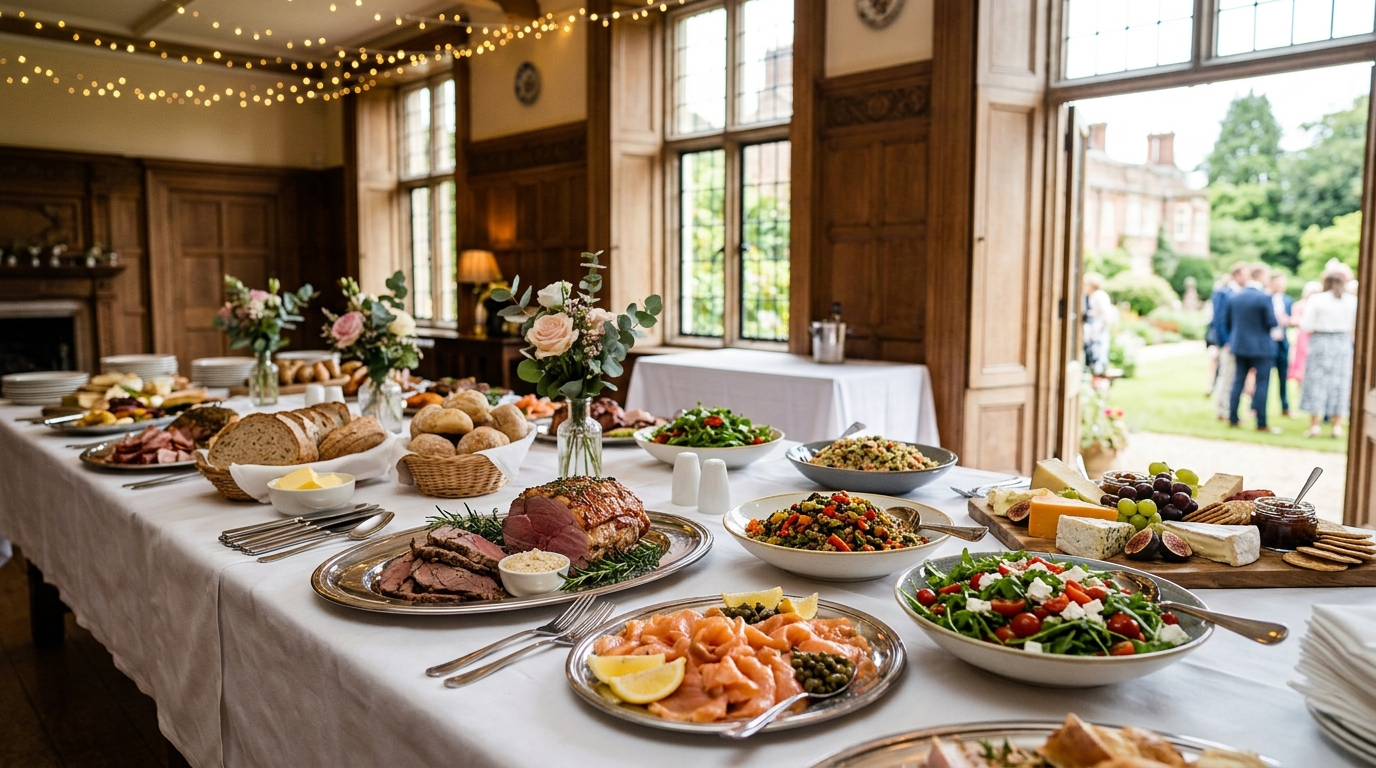
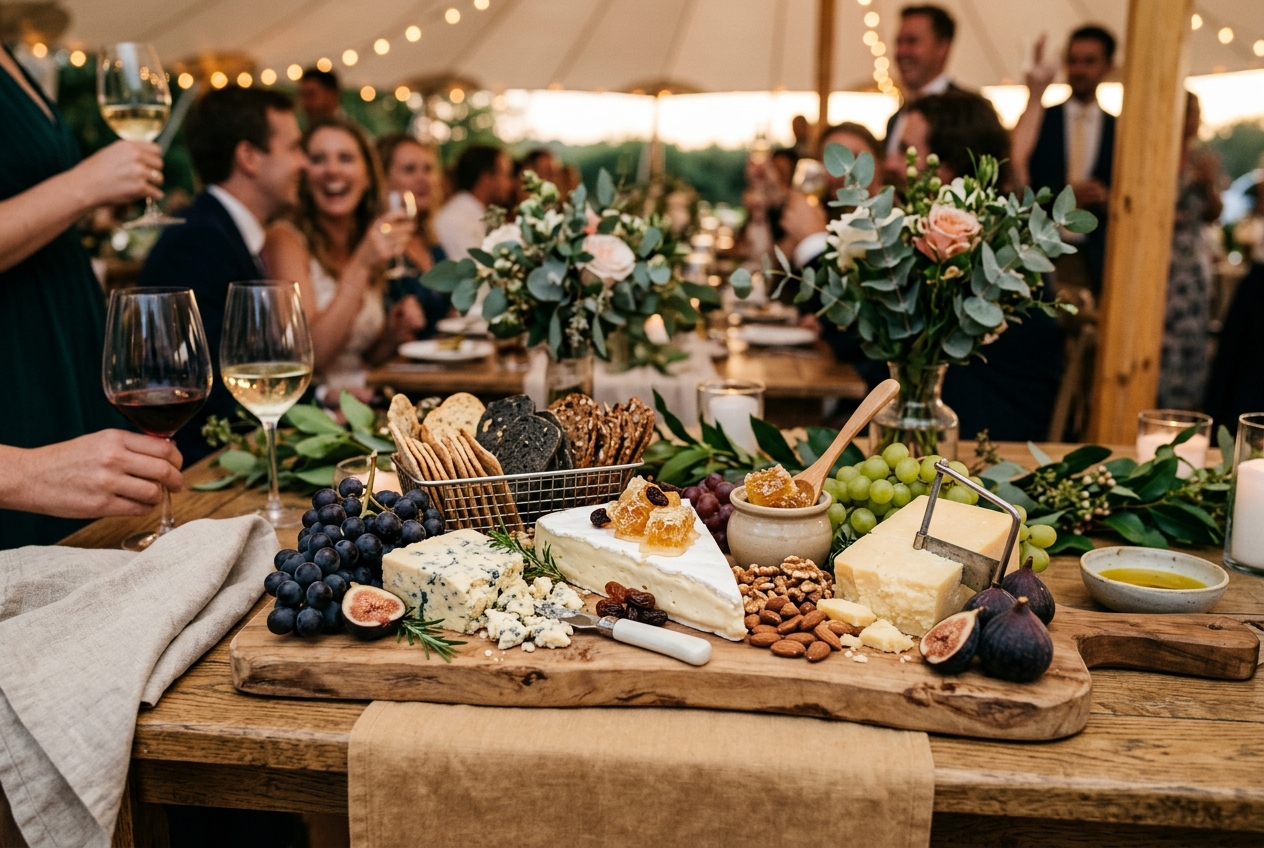
The dedicated wedding grazing table — an Instagram-famous long display of cheese, charcuterie, fruit, bread, and pastries — remains popular but has evolved. In 2026, the grazing table appears most often as:
- Arrival food during the drinks reception (replacing passed canapés)
- Dessert alternative alongside or instead of cake
- Late-night food station replenished after the wedding breakfast
Cost for a grazing arrival table for 100 guests: £600-£1,200 including setup, staffing, and takedown.
Trend 5: Late-night food upgrade
The traditional late-night chip van — a UK wedding institution since the 1990s — has been upgraded. In 2026, the most-booked late-night food options are:
| Late-night option | Cost per head |
|---|---|
| Dirty fries (loaded chips with toppings) | £8-£14 |
| Mini sliders or pulled pork baps | £9-£16 |
| Cheese toasties (with artisan bread and local cheese) | £7-£12 |
| Loaded hot dogs | £8-£13 |
| Wood-fired mini pizzas | £9-£15 |
| Indian street food (samosas, curry cups) | £10-£18 |
The late-night food moment typically runs from 10pm to 11.30pm as the DJ transitions to final-hour party mode. Guests who have been dancing for 2-3 hours are significantly more likely to eat and enjoy substantial late-night food.
Trend 6: Dietary accommodation as standard
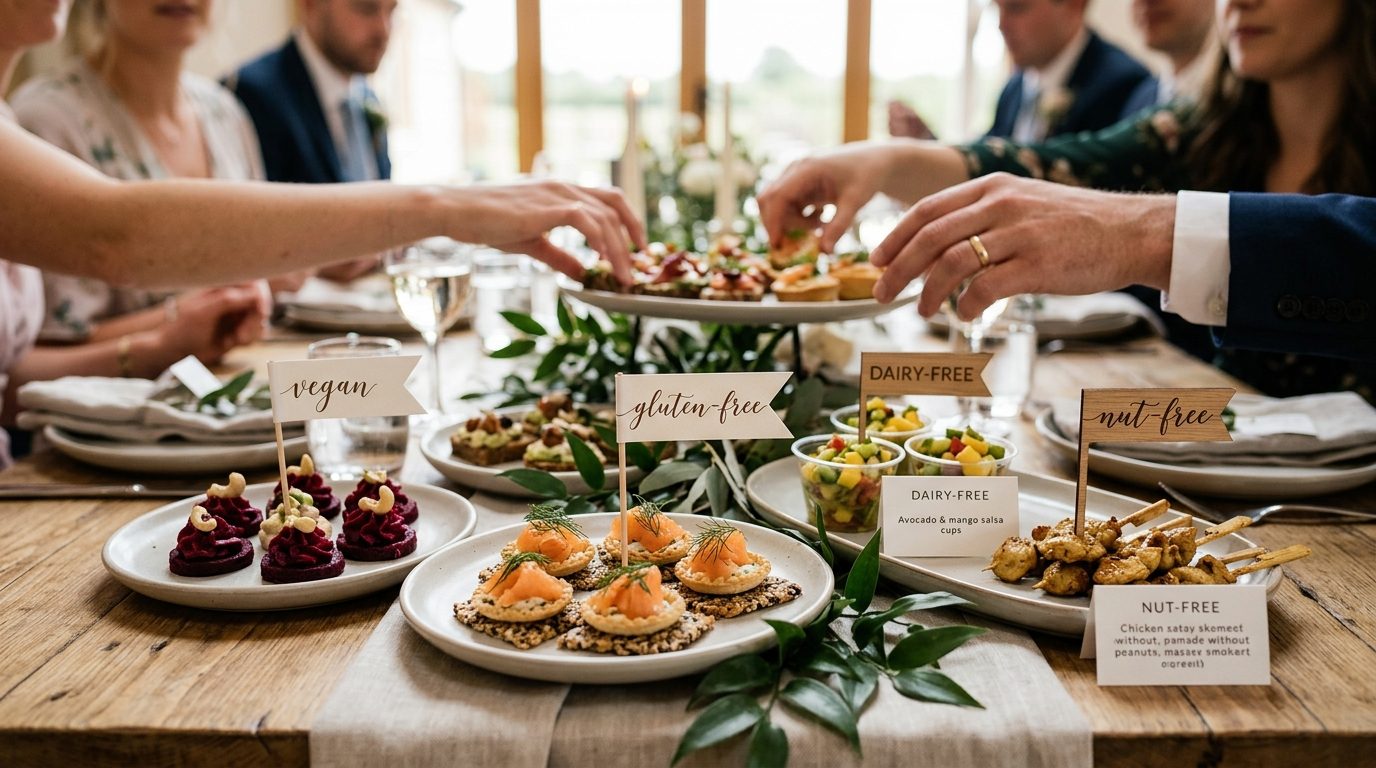
- Vegetarian: 17% of guests on average
- Gluten-free: 8%
- Vegan: 6%
- Dairy-free: 5%
- Nut allergy: 4% (some requiring EpiPen protocol)
- Halal: variable; can be 5-40% depending on guest list
- Keto or low-carb: 3%
- Other (shellfish, soy, egg): 4%
Professional caterers now treat all of these as standard rather than exceptional. The shift from 2020 to 2026 is significant: five years ago, vegetarian and one or two allergies were typical; now the full list above is expected.
What couples should do:
- Include dietary requirement options on the RSVP (tick-box or free text)
- Send the full dietary list to the caterer at least 6 weeks before the wedding
- Confirm table plans include dietary flags for serving staff
- Ensure nut allergy guests are not simply given the vegetarian menu — nut allergies require separate preparation protocols
For the full dietary requirements guide, see dietary requirements at UK weddings: how many are too many?
Trend 7: The drinks revolution
The drinks element of UK wedding catering is changing in parallel with food. Three shifts stand out:
Non-alcoholic options expanding: Following the dry weddings trend, even couples having full bars are now offering extensive non-alcoholic options. Mocktail bars, non-alcoholic wines, and premium soft drinks are no longer an afterthought. Approximately 15% of UK wedding guests choose non-alcoholic options throughout the event when quality alternatives are available.
Wine quality over quantity: Couples are spending more on fewer, better bottles rather than volume buying. A shift from house wine (£8-£12 a bottle) to mid-tier wine (£15-£22 a bottle) at two bottles per table rather than three. Total spend similar; perceived quality significantly higher.
Cocktail reception growth: More couples are serving a signature cocktail (or mocktail) on arrival rather than default prosecco. The personalised cocktail — named after the couple, with a story behind the ingredients — is shared on social media and remembered.
Catering budget benchmarks for 2026
| Wedding size | Sharing format (pp) | Formal sit-down (pp) | Street food (pp) | Late-night add-on |
|---|---|---|---|---|
| 40-60 guests | £65-£85 | £90-£120 | £30-£50 | £8-£14 |
| 80-120 guests | £60-£80 | £80-£110 | £28-£45 | £8-£14 |
| 150-200 guests | £55-£75 | £75-£100 | £25-£40 | £8-£12 |
Region adds 15-25% to London and South East costs. Rural venues outside London are typically at the lower end of the ranges above.
Total catering budget guidance:
- 80-guest sharing format wedding: £5,200-£6,800 (food) + £2,000-£3,500 (drinks) = £7,200-£10,300
- 80-guest formal sit-down: £6,400-£8,800 (food) + £2,000-£3,500 (drinks) = £8,400-£12,300
- 80-guest street food casual: £2,400-£3,800 (food) + £1,500-£2,500 (drinks) = £3,900-£6,300
For a full breakdown of UK wedding costs by category, see average UK wedding cost 2026.
Questions to ask your caterer in 2026
Before signing a catering contract, ask:
- What is included per head — is service staff, linen, crockery, and clearing in the price?
- How do you handle nut allergies — separate preparation or separate menu?
- Can we have a tasting before signing?
- What is your cancellation policy if supplier numbers fall short on the day?
- Do you work with a preferred florist or centrepiece supplier (some caterers include table styling)?
- Is a late-night food add-on available and at what cost?
- What is your approach to leftovers — can we donate remaining food to a local food bank?
Related articles
- Tasting-Menu Wedding Receptions: When the Food IS the Event
- Caviar Carts & Roaming Oyster Shuckers: The Catering Trend From US to UK
- Mocktail Bars at UK Weddings: 30 Recipes & Where to Hire Them
- Dry Weddings UK: Why 1 in 4 Gen Z Couples Are Going Zero-Proof
- Dietary Requirements: How Many Are Too Many? The 2026 Catering Reality
Frequently asked questions
What is the most popular wedding food format in the UK in 2026?
Sharing plates — dishes placed in the centre of the table for guests to serve themselves — overtook formal plated sit-down as the most-chosen format in 2026, at 38% of UK weddings. Sharing plates cost roughly 20% less per head than formal service and generate more natural table conversation.
How much does UK wedding catering cost per head in 2026?
UK wedding catering costs £75-£120 per head for a full sit-down meal with table service. Sharing plate and grazing formats cost £55-£90 per head. Street food and casual formats cost £35-£65 per head. Prices vary significantly by region: London and the South East run 15-25% higher than the Midlands and North.
What dietary requirements are most common at UK weddings in 2026?
The most common: vegetarian (17% of guests on average), gluten-free (8%), vegan (6%), dairy-free (5%), nut allergy (4%), halal (variable by guest list). Most caterers now treat these as standard, not exceptional.
Are grazing tables still popular for UK weddings in 2026?
Yes, but the format has matured. In 2026, grazing tables are less often the only food offering and more commonly used as arrival food, late-night additions, or dessert alternatives. The standalone grazing-only format has declined as couples realise guests need a more substantial centred meal for a full-day wedding.
What are couples serving for late-night food at UK weddings in 2026?
Late-night food at UK weddings in 2026 has upgraded from basic chips to premium comfort food. The most-booked options are: dirty fries (loaded chips with toppings), mini sliders or pulled pork baps, cheese toasties, loaded hot dogs, and wood-fired mini pizzas. Average spend per head for late-night food: £8-£18.
Is a wedding breakfast buffet cheaper than a sit-down meal?
A buffet is typically 15-25% cheaper per head than a formal plated sit-down with table service. However, buffets require more square footage for the serving area and create queuing. Sharing plates — dishes on the table rather than a buffet — deliver a similar cost saving without the queuing problem and are the preferred format in 2026.
How early should you book your UK wedding caterer?
Book your wedding caterer at least 12 months ahead for a Saturday wedding in peak season (May-September). Venue-exclusive caterers are booked as part of the venue agreement. Off-peak dates (weekday, November-March) have better availability at 6-9 months.