Home / Articles / Food & Drink
Wedding Cake Flavours and Designs: UK Guide
Key Takeaways
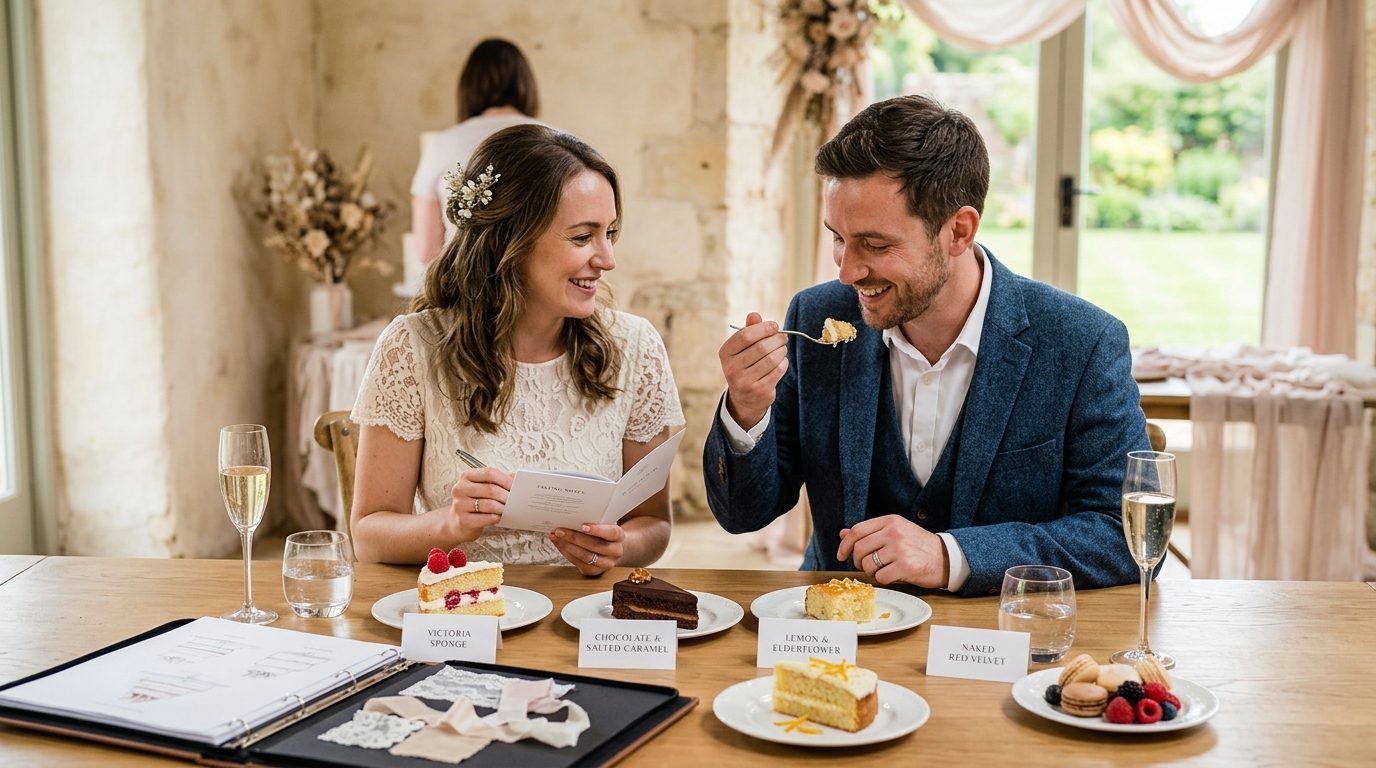
- Victoria sponge and lemon drizzle are the two most requested flavours at UK cake tastings
- Naked and semi-naked cakes cost 15-25% less than fully iced cakes because they need less fondant and labour
- Book your cake tasting 9-12 months before the wedding to secure your preferred baker
- A three-tier cake serves 80-100 guests. Add a sheet cake behind the scenes for larger weddings
- Budget between 350 and 800 pounds for a three-tier wedding cake from a specialist baker in 2026
Wedding cake ideas have changed dramatically in the last five years. The rigid, white-fondant towers of the 2010s have given way to relaxed designs that prioritise flavour over formality. UK couples now want a cake that tastes incredible first and looks beautiful second.
This guide covers the most popular wedding cake flavours in the UK, current design trends from naked cakes to geometric fondant, practical advice on tastings and ordering, and realistic pricing for 2026.
Most popular wedding cake flavours in the UK
The flavour matters more than the decoration. Guests remember a delicious cake long after they forget whether it had fondant roses or buttercream swirls. Here are the flavours UK couples choose most often.
Victoria sponge remains the overwhelming favourite. Light vanilla sponge, strawberry jam filling, and vanilla buttercream. It is the cake everyone grew up eating, and it works at every wedding from a country house to a city loft. About 40% of UK wedding cakes are Victoria sponge.
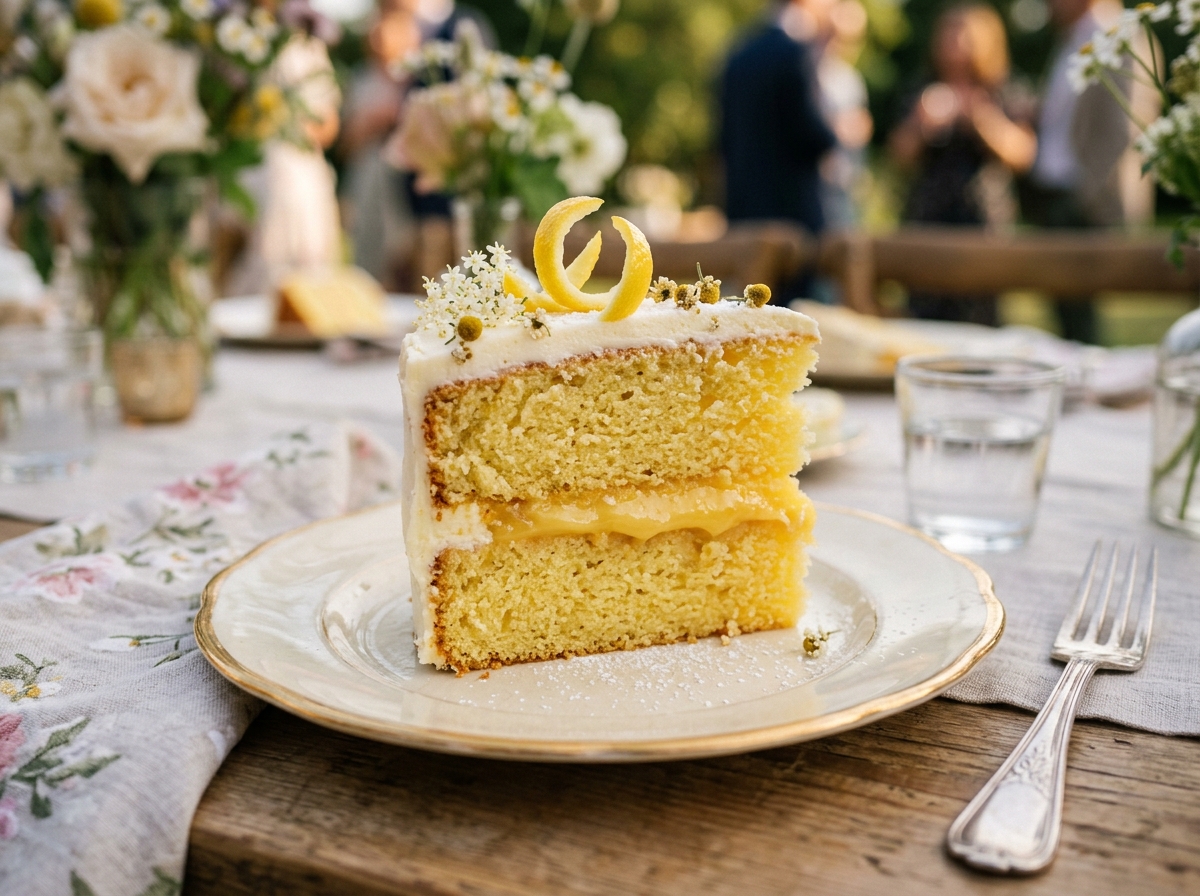
Lemon drizzle is the second most popular. Tangy lemon sponge soaked in lemon syrup, filled with lemon curd, and finished with lemon buttercream. It cuts through rich wedding meals and suits spring and summer celebrations perfectly.
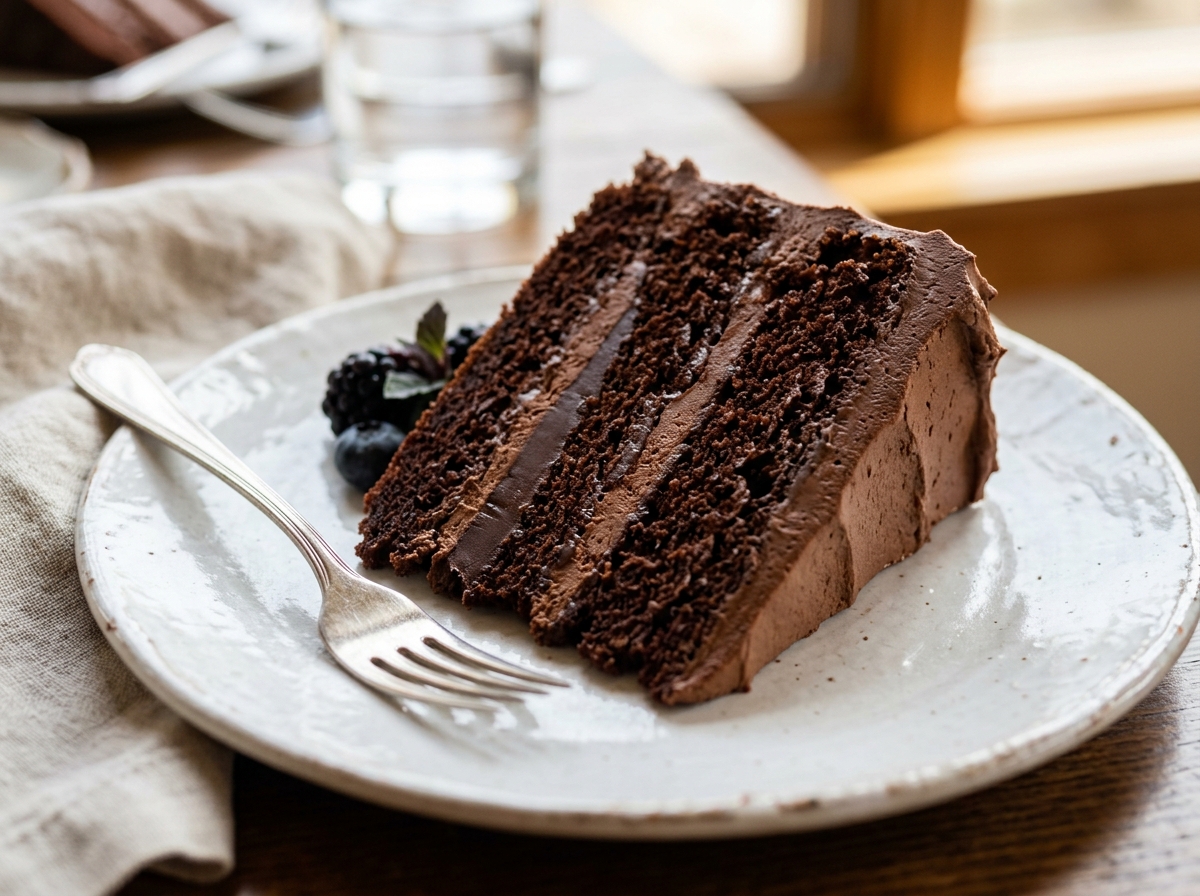
Chocolate takes third place. Options range from a classic chocolate fudge sponge with chocolate ganache to a dark chocolate and salted caramel combination that has surged in popularity since 2024. Chocolate cakes suit autumn and winter weddings.
Red velvet has moved from a trend to a staple. The distinctive red colour makes for a dramatic cake when cut. Paired with cream cheese frosting, it has a subtle cocoa flavour that appeals to both chocolate and vanilla lovers.
Carrot cake works beautifully as a wedding cake. The spiced sponge with walnuts and cream cheese frosting has a warmth that suits rustic and barn weddings. It also stays moist for days, which matters when the top tier is saved for a future celebration.
| Flavour | Popularity | Best Season | Filling | Pairs With |
|---|---|---|---|---|
| Victoria sponge | 40% of orders | All year | Strawberry jam + vanilla buttercream | Any wedding style |
| Lemon drizzle | 20% | Spring/Summer | Lemon curd + lemon buttercream | Garden and outdoor weddings |
| Chocolate fudge | 15% | Autumn/Winter | Chocolate ganache | Evening receptions, formal venues |
| Red velvet | 10% | All year | Cream cheese frosting | Modern, stylish weddings |
| Carrot cake | 8% | Autumn/Winter | Cream cheese frosting | Rustic, barn weddings |
| Salted caramel | 5% | All year | Caramel buttercream | Contemporary venues |
| Coffee and walnut | 2% | All year | Coffee buttercream | Afternoon receptions |
Most bakers offer multiple flavours across tiers. A popular three-tier combination is Victoria sponge on the bottom, lemon on the middle, and chocolate on top. This gives every guest a flavour they enjoy. See our wedding cake prices guide for detailed cost breakdowns by flavour and tier count.
Wedding cake design trends in 2026
Design trends shift every year, but several styles have staying power in the UK market.
Naked and semi-naked cakes
The exposed sponge look remains strong. Naked cakes show the layers and fillings completely, decorated with fresh fruit, edible flowers, or a simple dusting of icing sugar. Semi-naked cakes have a thin scrape of buttercream that lets the sponge peek through.
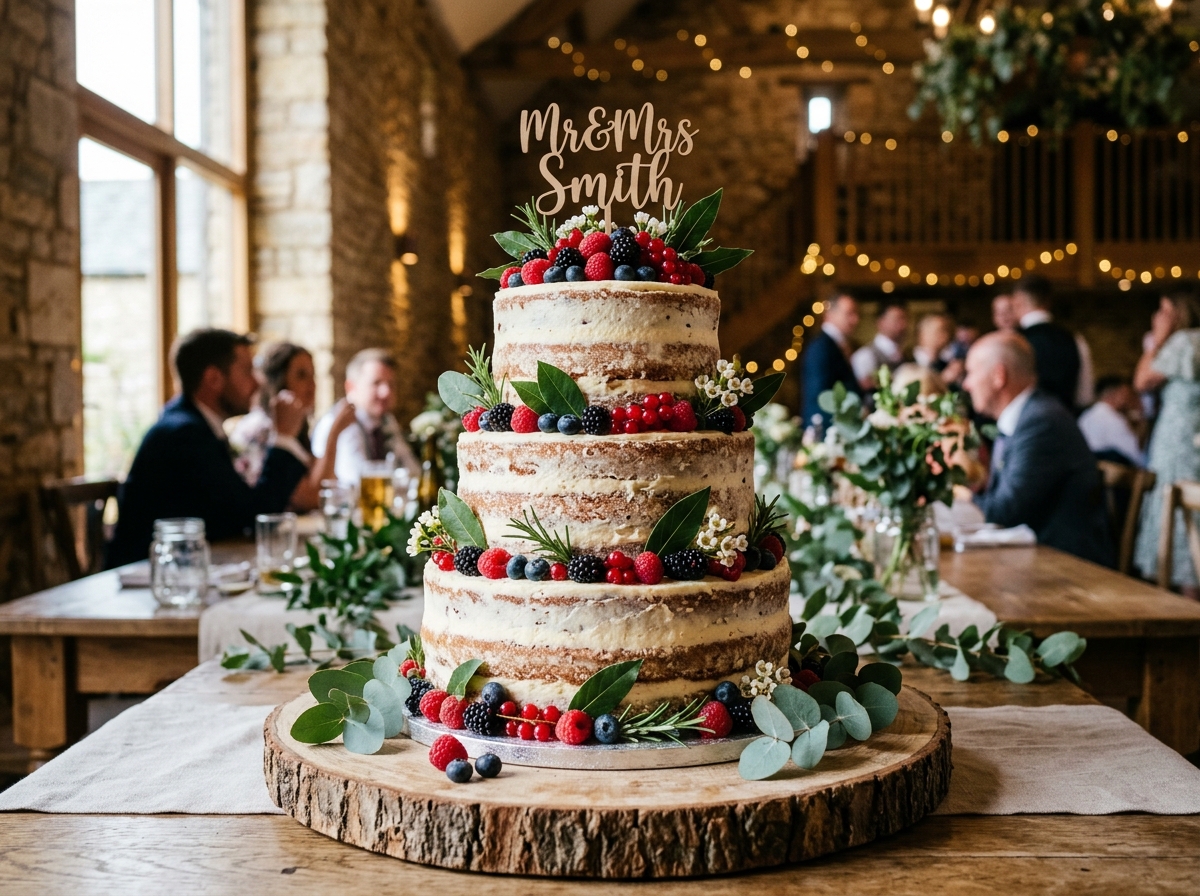
These styles cost 15-25% less than fully iced cakes because they need less fondant and less labour. They suit barn weddings, garden parties, and relaxed celebrations. The trade-off is that they dry out faster, so they need to be assembled on the morning of the wedding.
Buttercream texture
Textured buttercream finishes have replaced smooth fondant as the default for many UK bakers. Palette knife strokes, ombre colour gradients, and watercolour effects all use buttercream as the canvas. This style tastes better than fondant (which most guests peel off and leave) and costs less to execute.
Minimalist modern
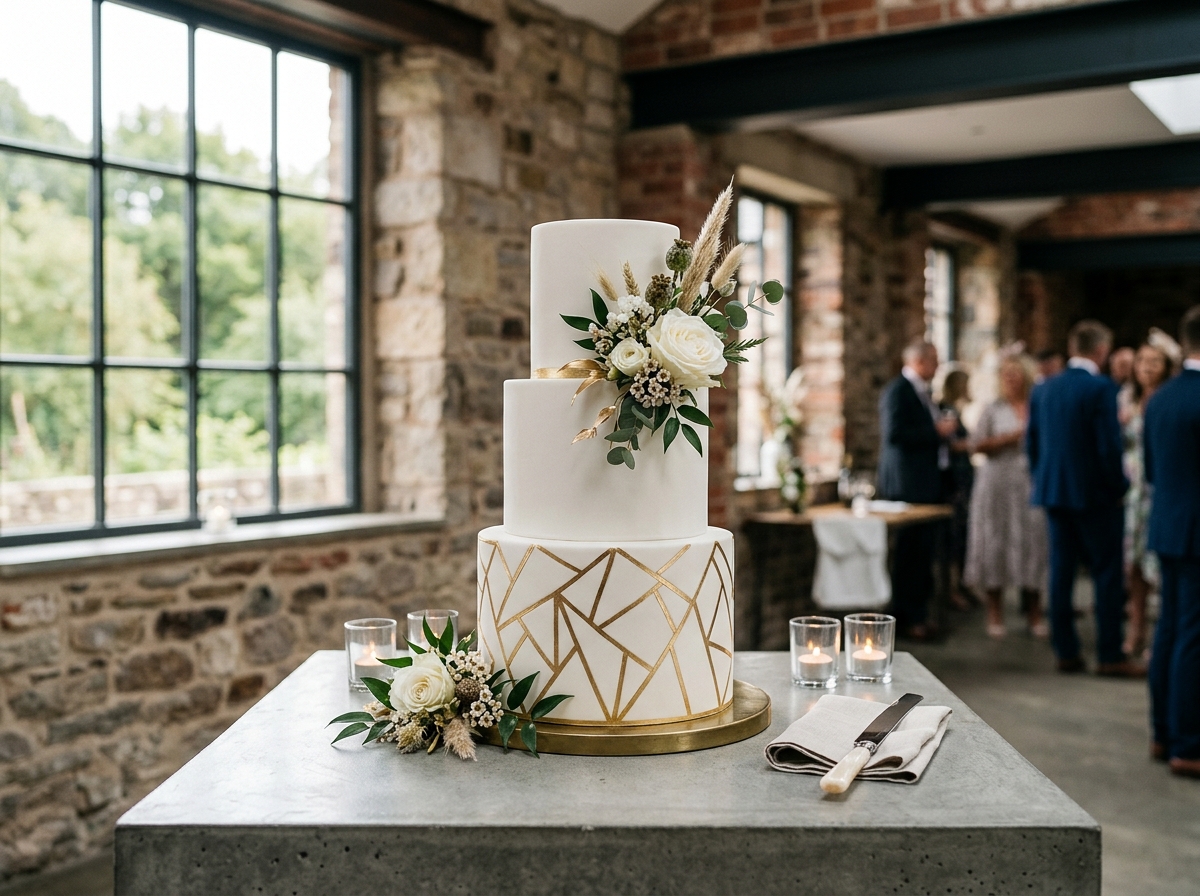
Clean lines, sharp edges, and minimal decoration define the modern look. A two-tier white cake with a single gold line or a geometric pattern suits contemporary venues. These cakes rely on precision rather than decoration. They photograph well and feel current without being trendy.
Drip cakes
Chocolate or caramel ganache dripped over the edges of a buttercream cake. The drip effect adds drama without the cost of sugar flowers. Add macarons, fresh fruit, or meringue kisses on top for colour and texture. Drip cakes have moved from Instagram trend to mainstream wedding choice.
Floral decoration
Fresh flowers on wedding cakes remain the most popular decoration method. Discuss with your florist and baker together because not all flowers are food-safe. Common safe choices include roses, peonies, lavender, and jasmine. Your florist can supply food-safe blooms that match your bouquet.
How to choose your wedding cake
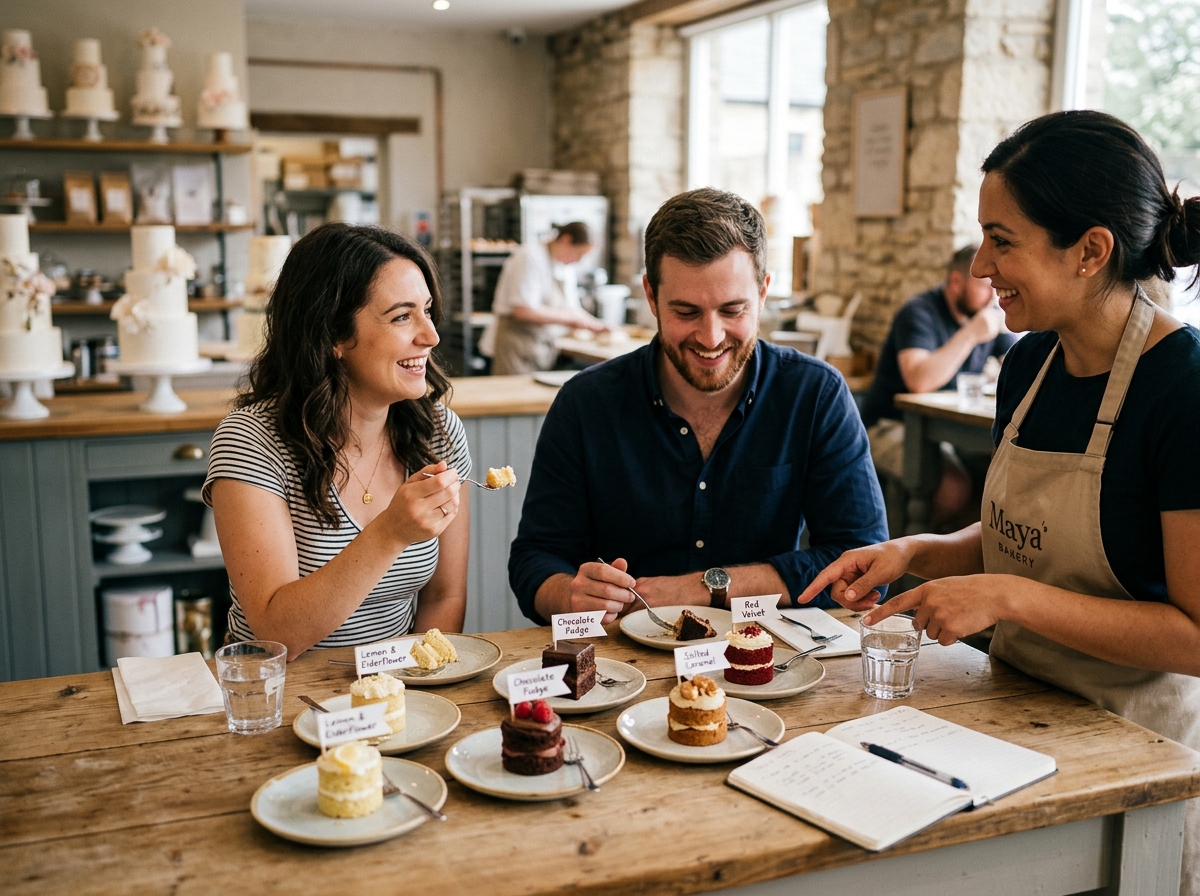
Start with flavour, not design. Book a tasting session with your baker 6-8 months before the wedding. Most bakers offer a tasting box or an in-person session where you try 4-6 flavour combinations.
Guest count determines size. A three-tier cake serves 80-100 guests. Two tiers serve 50-70. For weddings over 100 guests, add a matching sheet cake in the kitchen rather than building a towering five-tier display.
Match the cake to your venue. A naked cake suits a rustic barn. A sleek fondant tower suits a grand hotel. A buttercream floral cake suits a garden party. The cake should feel like part of the wedding, not a separate statement.
Consider dietary needs. Ask your baker about gluten-free, dairy-free, and vegan options. Most specialist wedding bakers now offer at least one allergen-friendly tier. Discuss this at the tasting, not two weeks before the wedding.
Check delivery and setup. Most bakers deliver and assemble the cake at your venue on the morning of the wedding. Confirm delivery access, setup time, and who is responsible for the cake stand and knife. Some venues provide these, others do not.
Budget between 350 and 800 pounds for a three-tier cake from a specialist baker. Read our budget wedding ideas for tips on reducing cake costs without sacrificing quality. You can also explore wedding menu ideas if you are considering a dessert table instead of a traditional cake.
The cake cutting moment
The cake cutting is a photo opportunity and a tradition, not just a practical task. Most couples cut the cake between the main course and dessert, or just before the evening buffet arrives. This gives the kitchen time to slice and plate it.
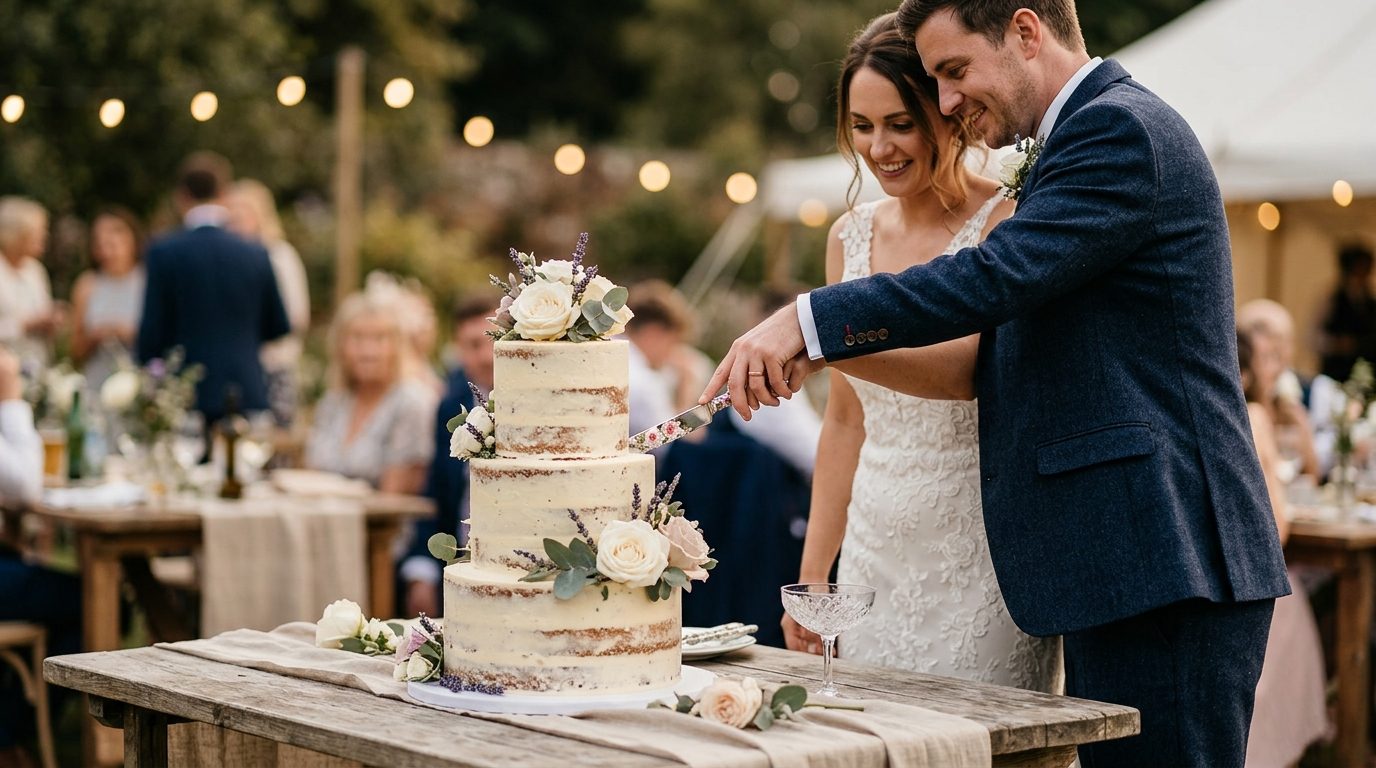
Use a ribbon-wrapped cake knife for the photo. Cut the bottom tier (it is the sturdiest). Your photographer needs about 30 seconds of cutting, a kiss, and a few posed shots. The whole thing takes under five minutes.
Save the top tier if you want to. Traditionally, the top tier is kept for a christening or first anniversary. Fruitcake keeps for months. Sponge cakes freeze for up to three months if wrapped tightly in cling film and foil. Ask your baker for storage advice specific to your flavour choice.
Alternatives to traditional wedding cake
Dessert tables offer variety. A spread of brownies, macarons, cheesecake slices, tarts, and a small cutting cake gives guests choice. This works well at wedding buffets and informal receptions.
Cheese towers stack wheels of cheese into a tiered cake shape. Popular at foodie weddings and autumn celebrations. They double as the cheese course and the cake.
Doughnut walls display doughnuts on a pegboard. Fun, affordable, and guests serve themselves. Pair with a small cutting cake for the traditional photo.
Cupcake towers give each guest their own individual cake. Easier to serve, no slicing needed, and you can offer multiple flavours across the display.
Whatever you choose, check with your wedding caterer about setup, plating, and any corkage or cake-cutting fees your venue charges.
Frequently asked questions
How much does a wedding cake cost in the UK?
A three-tier wedding cake from a specialist baker costs between 350 and 800 pounds in 2026. Simple buttercream designs sit at the lower end. Elaborate fondant work, sugar flowers, and hand-painted details push towards the higher end. Supermarket wedding cakes start from 100 pounds but lack the custom design element. Read our full wedding cake pricing guide for detailed breakdowns by tier count and design complexity.
What is the most popular wedding cake flavour in the UK?
Victoria sponge is the most requested flavour at UK cake tastings. It accounts for roughly 40% of all wedding cake orders. Lemon drizzle is second at around 20%, followed by rich chocolate at 15%. Red velvet and carrot cake have grown in popularity since 2024 but still sit below the traditional top three.
How far in advance should you order a wedding cake?
Book your cake baker 9-12 months before the wedding. Popular bakers take only one or two weddings per weekend and fill up quickly. The cake tasting usually happens 6-8 months before the date. The final design consultation is typically 4-6 weeks out, and the cake is baked and assembled in the final week before delivery.
Can you have different flavours on each tier?
Yes, and most couples do. Having a different flavour on each tier means every guest finds something they like. A common combination is Victoria sponge on the bottom tier, lemon on the middle, and chocolate on the top. Your baker will advise which flavours pair well and which combinations to avoid.
How many people does a three-tier wedding cake serve?
A standard three-tier cake serves 80-100 guests with generous slices. For larger weddings, bakers often provide a matching sheet cake (also called a cutting cake) that stays in the kitchen. The display cake is cut for show, and the sheet cake provides extra portions. This avoids the cost of a massive four or five tier display piece.
What is a naked wedding cake?
A naked cake has no outer icing or fondant. The sponge layers and filling are fully visible from the outside, usually decorated with fresh fruit, flowers, or a light dusting of icing sugar. Semi-naked cakes have a thin scrape of buttercream that lets the sponge show through. Both styles suit rustic, barn, and outdoor weddings.