Vow Renewal UK 2026: How to Plan Yours & What It Costs
Key Takeaways
- A vow renewal is not a legal ceremony in the UK — you are already married, so no registrar, licence, or certificate is required
- An intimate vow renewal for 20-30 guests costs £1,500-£5,000; a full celebration for 80-100 guests costs £8,000-£20,000+
- Humanist officiants are the most popular choice for vow renewals in the UK, costing £400-£900
- Any venue can legally host a vow renewal — there are no licensed premises requirements, unlike a legal marriage
- The most meaningful vow renewals include personalised vows written by both partners, not a repeat of the original ceremony
What a vow renewal actually is
A vow renewal is a ceremony in which a married couple publicly reaffirm their commitment to each other. It has no legal standing: you are already married, and the ceremony does not change anything on paper. No registrar is required. No marriage licence is needed. No certificate is issued.
This absence of legal process is a significant advantage. It means:
- Any venue can host the ceremony (not just licensed premises)
- Anyone can officiate — a friend, a humanist celebrant, a religious leader, or a toastmaster
- The format is entirely up to you
- You can have exactly the ceremony you want rather than working within legal constraints
Who renews their vows and when
- Post-Covid catch-up: Couples who had a small legal ceremony in 2020-2022 wanting a proper celebration. This cohort made up 28% of vow renewal enquiries in 2026.
- 10th anniversary (tin): The first major milestone — long enough that the recommitment feels earned; young enough that children (if any) are at an age where the occasion registers.
- 25th (silver) and 50th (golden) anniversaries: The traditional UK milestones. Often the larger, more elaborate celebrations.
Other occasions that prompt renewals: after overcoming a serious illness or personal crisis; after a significant achievement (completing a house purchase, finishing a major project); or simply because a couple never had the wedding they wanted and now can.
What does a vow renewal cost in the UK?
| Format | Typical cost |
|---|---|
| Intimate ceremony, 10-20 guests, no meal | £800-£2,500 |
| Small celebration, 20-30 guests, afternoon tea | £1,500-£4,000 |
| Full celebration, 60-100 guests, dinner and evening | £8,000-£18,000 |
| Destination renewal, 10-15 guests (e.g. Tuscany, Portugal) | £5,000-£15,000+ |
| Courthouse-style declaration, couple only | £400-£900 (celebrant only) |
Key cost components:
| Item | Typical UK cost |
|---|---|
| Humanist celebrant | £400-£900 |
| Venue hire | £500-£3,000 |
| Catering (per head, sit-down) | £50-£150 |
| Photography | £600-£1,800 |
| Flowers and decor | £300-£1,000 |
| New outfit(s) | £200-£800 |
| Stationery (optional) | £100-£400 |
| Entertainment | £300-£1,200 |
Many couples spend 50-70% less on a renewal than they did on their original wedding by scaling back on elements that felt obligatory the first time — the wedding cake, the centrepieces, the plus-ones for distant relatives.
Choosing an officiant
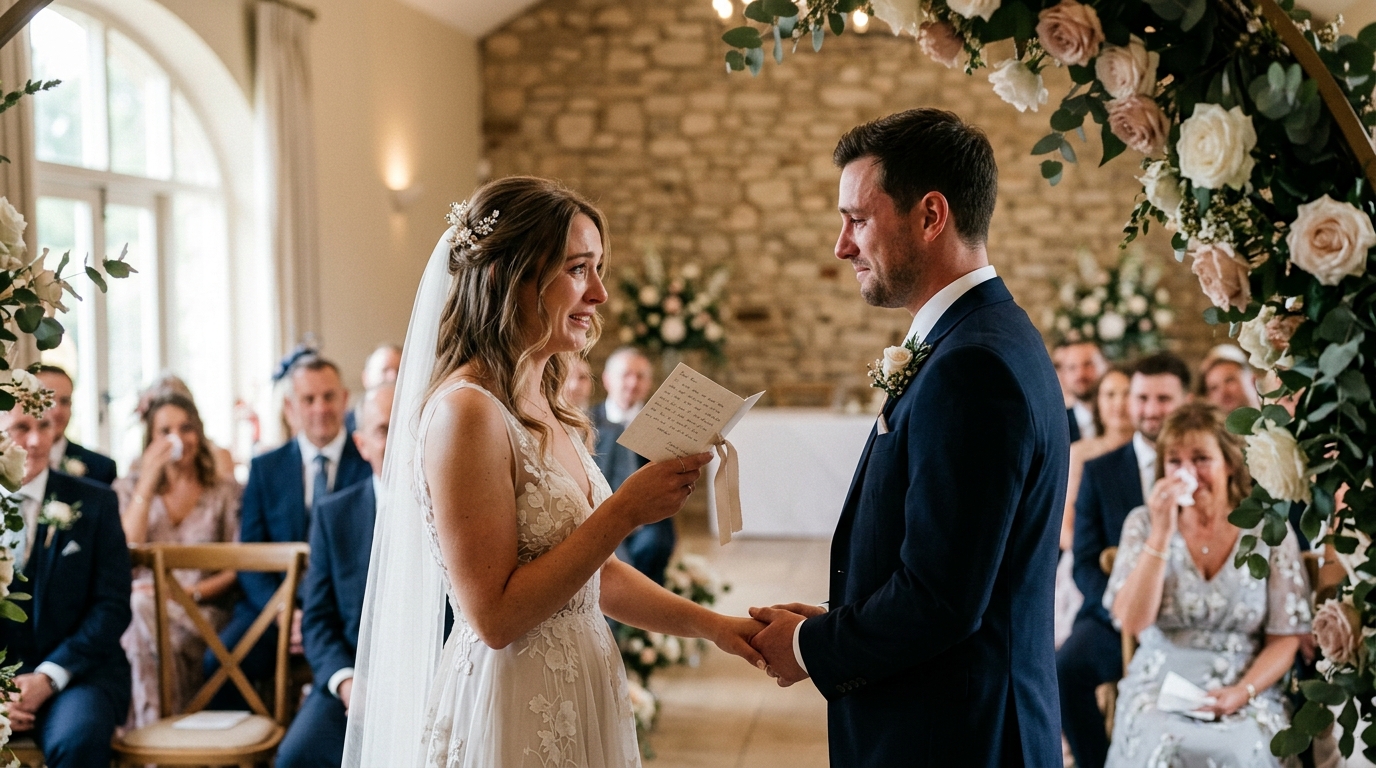
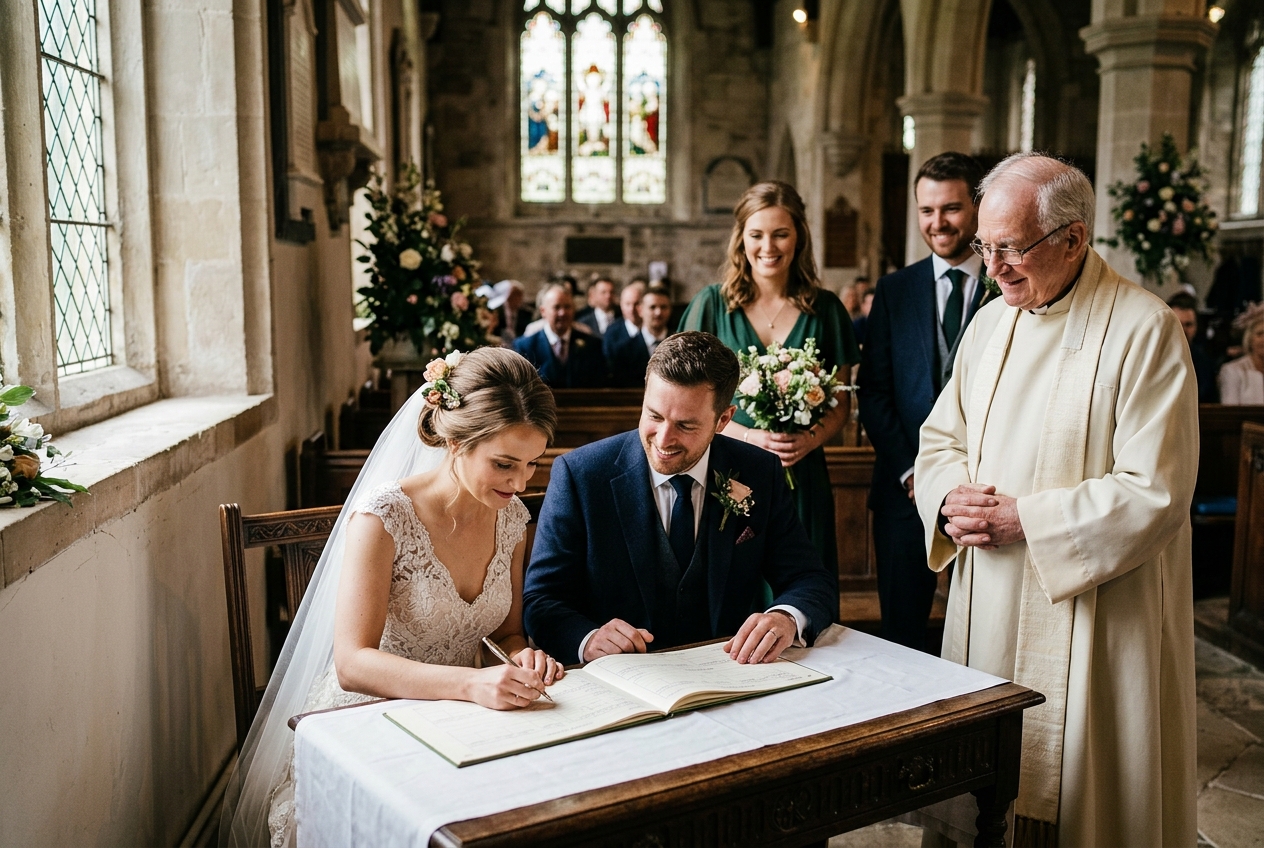 Because a vow renewal is not a legal ceremony, your officiant has no legal function. Their role is to structure the ceremony, create atmosphere, guide the couple and guests through the occasion, and (usually) help write the script.
Humanist celebrants are the most popular choice. They provide a fully personalised ceremony, work closely with you in advance to understand your story, and tailor every word to your relationship. Cost: £400-£900. Find celebrants through Humanists UK (humanists.uk/ceremonies).
Friends or family members offer the most personal option at zero cost. The risk is that they underestimate the preparation required. If a friend is officiating, give them a full written script with clear stage directions, and rehearse the ceremony with them.
Religious ministers: Some churches, particularly Church of England, will conduct vow renewal services. Policies vary by parish. Contact your local vicar directly. Catholic churches do not formally recognise vow renewals as a sacrament, though some priests will conduct an informal ceremony.
Wedding toastmasters: A toastmaster can frame the vow exchange as part of a larger celebration, particularly if you want the renewal embedded in a dinner-style event rather than a standalone ceremony.
Choosing a venue
The absence of licensed premises requirements opens up options unavailable for first weddings:
Return to your original venue: A popular choice for milestone anniversaries. Your original venue may offer returning couples a special arrangement. Many do.
Your home or garden: For an intimate gathering of 10-30 people, your home with a hired celebrant is the simplest and often most emotionally resonant option.
A venue you couldn’t afford first time: Many couples use the renewal as an opportunity to hold the celebration they originally wanted — a country house, a winery, a specific National Trust property — now that financial constraints are different.
Destination renewals: Portugal, Tuscany, the South of France, and Greece are popular destinations for UK couples renewing vows. A small group of 10-15 people sharing the experience is often more intimate than a full destination wedding would have been.
Unusual venues: Canal boats, private dining rooms, woodland clearings, National Park landscapes, rooftop spaces — all are available for vow renewals. Some charge a private hire fee; others simply require a booking for food and drink.
Writing new vows
The single thing that makes a vow renewal feel distinctive rather than repetitive is new vows written specifically for the renewal.
Repeating your original vows works if you remember them, but it can feel like a rehearsal of something that happened rather than a genuine recommitment. New vows allow you to speak to the life you have actually lived together — the challenges overcome, the children raised, the compromises made, the specific moments that you would not swap.
A structure that works for renewal vows:
- One sentence acknowledging the years past — specific, not generic (“Twenty-two years ago in that church in Brighton…”)
- Something specific about the marriage — what you have learned, what surprised you, what you value most
- The commitment forward — what you promise for the next chapter
- One line that echoes your original vows — a callback to the first ceremony
Aim for 2-3 minutes when spoken aloud. Read it to yourself first; it should feel true, not performative.
A real example: a 25th anniversary renewal, Yorkshire, 2026
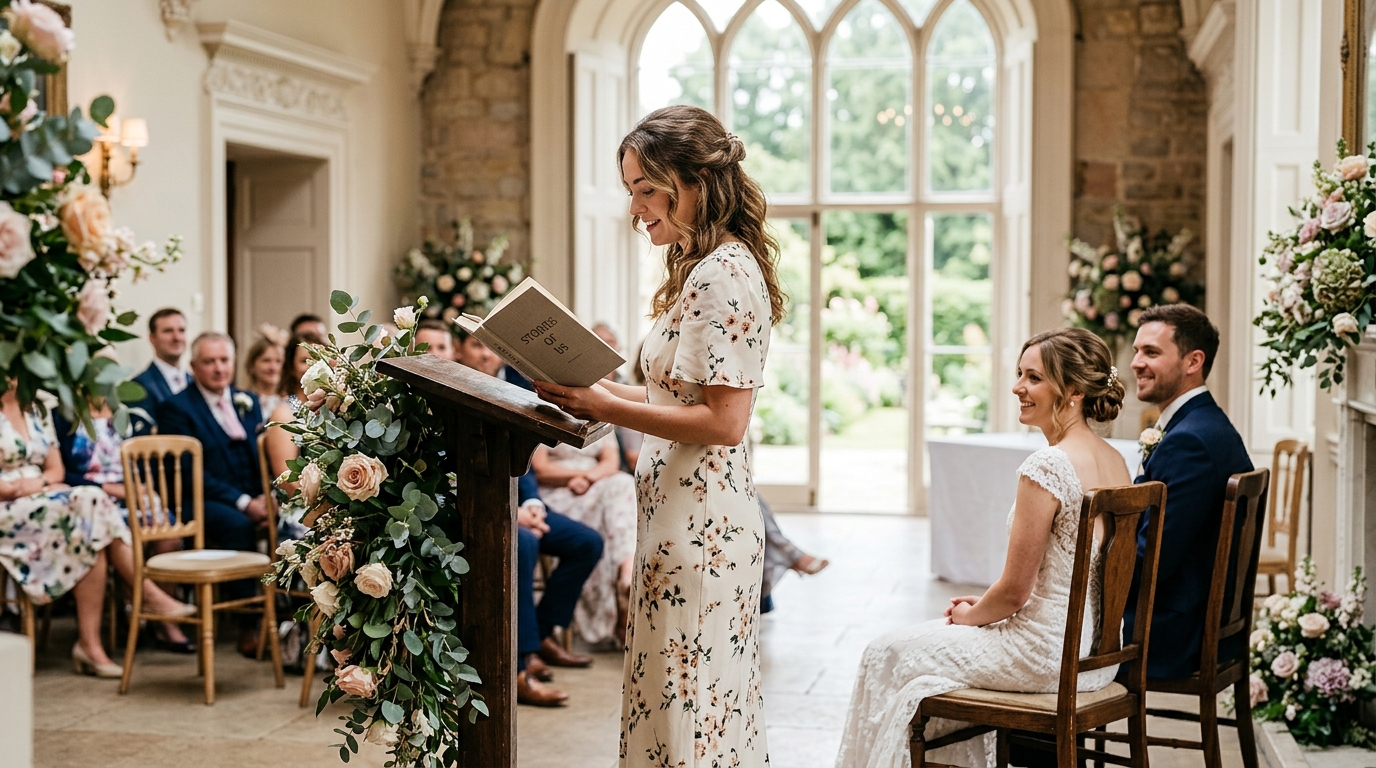
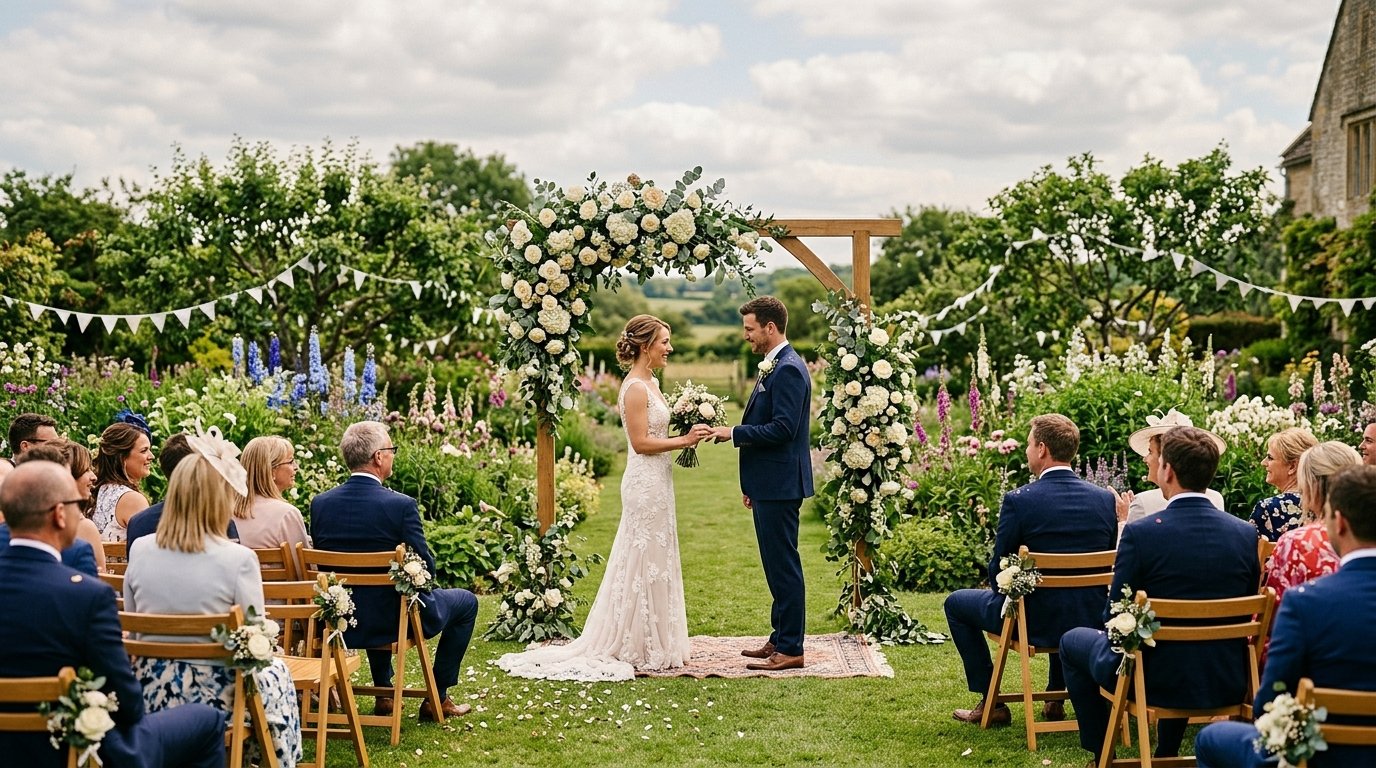 A couple who had married at a Leeds register office in 2001 held their silver anniversary vow renewal at a converted mill near Harrogate. Thirty-two guests — children, siblings, and their closest friends from over the years. A humanist celebrant from Humanists UK conducted a 25-minute ceremony in the mill’s glass extension. Both partners had written new vows; the ceremony included readings from their children, then aged 19 and 22. Cost breakdown: humanist celebrant £650, venue hire £1,400, three-course dinner for 32 at £75 per head (£2,400), photographer £900, flowers £400. Total: approximately £5,750. The couple said it felt more personal than their original register office ceremony.
What guests should know
If you are inviting guests to a vow renewal, include a brief note explaining the nature of the event:
“This is a vow renewal — a celebration of our marriage, not a legal ceremony. There is no formal wedding protocol. Please come as you would to a celebration with people you love.”
Guests sometimes feel uncertain about gifts. If you would prefer no gifts, say so. If you welcome them, a wish list or fund (honeymoon contribution, charity donation) is perfectly appropriate.
Related articles
- Wedding Anniversary Gifts by Year: The Complete UK Guide
- Civil Partnership vs Marriage UK 2026: The Legal & Tax Differences
- Humanist Weddings UK: Are They Legally Recognised in England & Wales?
- Destination Weddings: Portugal, Greece & Italy Compared
- Wedding Budget Breakdown: Where UK Couples Actually Spend
Frequently asked questions
Is a vow renewal legally binding in the UK?
No. A vow renewal ceremony is not a legal process in the UK. You are already married, and the ceremony does not change your legal status, add or remove legal rights, or require registration. No registrar is needed, no certificate is issued, and no legal paperwork is involved. This means you have complete freedom over the format, venue, officiant, and content — you can hold it anywhere and have it conducted by anyone you trust.
How much does a vow renewal cost in the UK?
A vow renewal ceremony with 20-30 guests at a UK venue costs approximately £1,500-£5,000, depending on the venue, catering, and whether you hire a photographer. A larger celebration for 80-100 guests that mirrors a wedding reception in scale costs £8,000-£20,000+. Key costs: humanist officiant (£400-£900), venue hire (£500-£3,000), catering (£50-£150 per head), photography (£600-£1,800), and any flowers or decorations (£300-£1,000). Many couples spend significantly less than their original wedding by keeping the format simple.
Who can officiate a vow renewal in the UK?
Anyone can officiate a vow renewal in the UK because it is not a legal ceremony. The most popular choices are: a humanist celebrant (£400-£900, provides a structured, personalised ceremony); a friend or family member (free, more personal but requires preparation); a religious minister (some churches will host vow renewals, though policies vary by denomination); or a toastmaster or professional MC who creates a framing for the exchange of words. Humanist celebrants from Humanists UK are the most widely used option.
Where can you hold a vow renewal in the UK?
Anywhere. Because a vow renewal is not a legal ceremony, there are no licensed premises restrictions. You can hold it in your home garden, on a beach, in a woodland, at a hotel, at your original wedding venue, at a National Trust property, on a canal boat, or at any venue that will host you. This is one of the significant advantages over a first wedding — you can choose a truly unrestricted location. Many couples return to their original wedding venue for milestone anniversaries; others choose somewhere they could not have afforded or accessed first time.
Do you need to wear wedding attire at a vow renewal?
There are no rules. Some couples choose to wear their original wedding outfits; others choose new formal attire; many wear whatever feels right for the occasion. White is no longer the conventional signal it once was. Popular options in 2026 include a new cocktail dress or trouser suit in a colour chosen to reflect the anniversary, a sustainable or vintage find, or a more relaxed outfit appropriate to the setting. The groom or partner may choose a suit, open-collar shirt, or full morning suit depending on the formality of the event.
Should you invite the same guests as your original wedding?
Not necessarily. A vow renewal guest list is typically smaller and more selective than the original wedding. Common approaches: immediate family and closest friends only (20-40 people); everyone from the original guest list plus new additions (children, new partners of original guests); or a destination renewal with just a handful of people. Many couples find the smaller, more intimate renewal more emotionally significant than the original wedding, which can feel more performative. Your guest list should reflect who you want to share this moment with, not social obligation.
When is the right time to renew your vows?
The most common milestones are the 10th (tin), 25th (silver), and 50th (golden) anniversaries. But there is no rule. Some couples renew after a difficult period in the marriage as a conscious recommitment; others do it when they achieve something they originally wanted for their wedding (a destination, a specific venue, financial comfort). Some couples renew vows 1-2 years after the wedding simply because they want a second celebration without the pressure of the first. The right time is whenever it feels meaningful to both of you.