UK Wedding Weather May-September: When to Hope for Sun
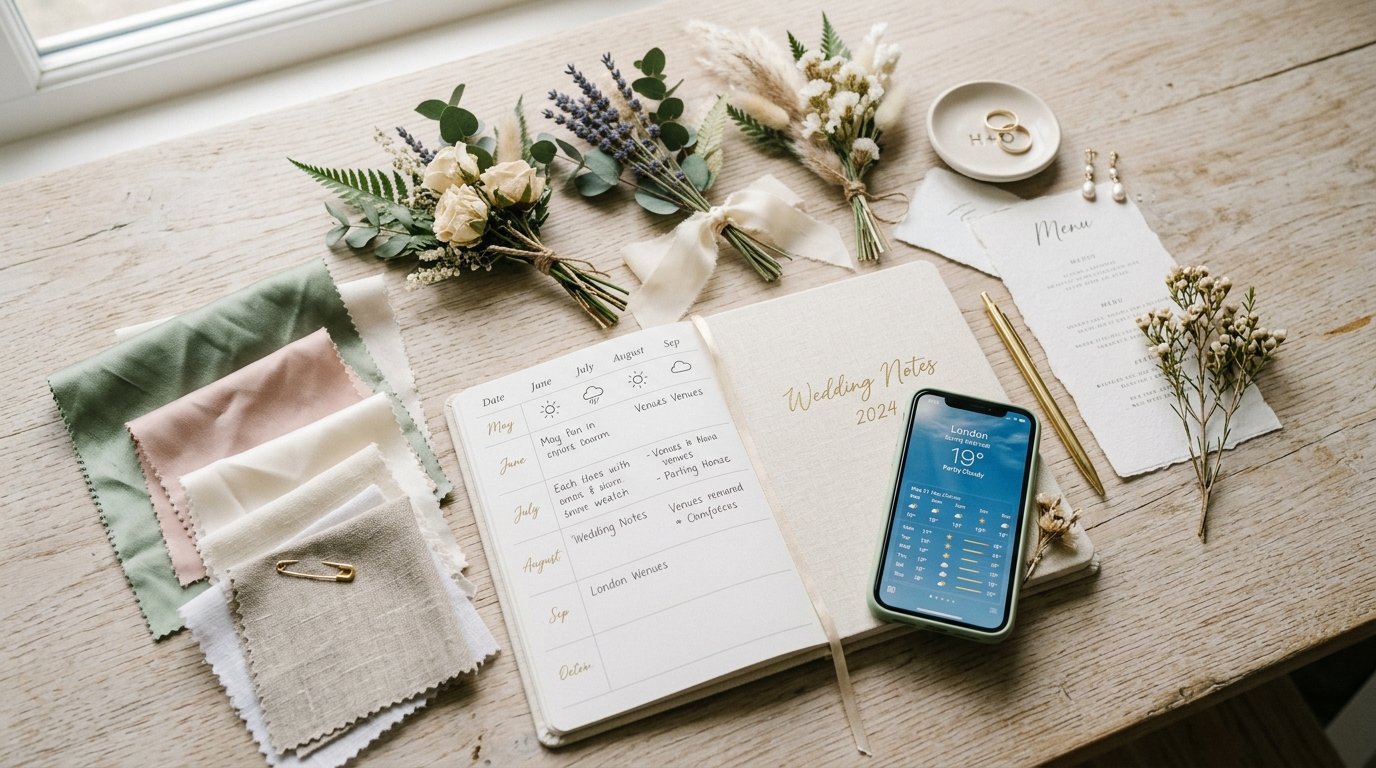
Key Takeaways
- July is the UK's driest and sunniest wedding month on average, with 6.4 hours of sunshine per day nationally
- June gets more rainfall than July in most UK regions despite being the most popular wedding month
- The South East averages 177mm of rain from May to September; Scotland averages 438mm over the same period
- Average UK outdoor wedding temperature in July is 19.2°C — warm enough for an outdoor ceremony without being uncomfortably hot
- The risk of a washout is never zero: the UK has a 100 per cent chance of some rain in any five-month period
- The most rain-safe window for outdoor UK weddings is the last week of July and the first two weeks of August
UK wedding weather varies sharply by month, region and year. July is the driest and sunniest month nationally, with an average 6.4 hours of sunshine per day and 47mm of rainfall. June, the most popular UK wedding month, averages 59mm of rainfall — 26 per cent more than July. The South East of England is the most reliably sunny region, averaging 177mm total rainfall across May to September. Scotland averages 438mm over the same five months. No UK outdoor wedding is ever guaranteed dry weather; the following data helps you make an informed decision about when and where to gamble.
By Matt, Editor at Weddings Hub. I have covered UK weddings since 2018 and have spoken to wedding planners across England, Scotland and Wales about weather contingency planning. Climate data in this guide is drawn from the Met Office UK Climate Averages dataset, which covers 30-year averages from 1991 to 2020. Regional data is sourced from Met Office regional series tables. This guide is updated annually.
UK couples choosing a summer wedding date are making a weather bet. The question is not whether it will rain somewhere in the UK during your wedding month. It will. The question is which month, which region and which week of that month gives you the best statistical odds of a dry ceremony. Below is the full breakdown.
Month-by-month UK wedding weather data
The following data comes from the Met Office 30-year average (1991-2020). Sunshine hours are daily averages over the month. Rainfall is total millimetres for the month, UK national average.
May
- Average temperature: 14.4°C
- Average rainfall: 52mm
- Average sunshine: 5.8 hours per day
- Assessment: Cooler than June and July, but often drier than June. May can deliver extended dry spells. The Chelsea Flower Show (late May) creates a cultural backdrop of garden aesthetics that works well for outdoor wedding photography. Venue availability is stronger in May than June; cost is typically 10 to 15 per cent lower than peak-month Saturday pricing. Bank holidays (early May) book out first.
June
- Average temperature: 17.2°C
- Average rainfall: 59mm
- Average sunshine: 6.2 hours per day
- Assessment: The most popular UK wedding month by booking volume, but statistically wetter than July. June 2025 was the third wettest June on record in England and Wales, with 130 per cent of the long-term average rainfall in the South East. The demand premium on June Saturdays averages £1,200 to £3,500 more than equivalent July Saturdays at mid-market UK venues.
July
- Average temperature: 19.2°C
- Average sunshine: 6.4 hours per day
- Average rainfall: 47mm
- Assessment: July is statistically the best month for outdoor UK weddings. Lower rainfall than June. Highest sunshine hours of the year. Temperature is warm but not the uncomfortable heat that affects some August events. Royal Ascot (mid-June) and Wimbledon (late June to mid-July) affect accommodation pricing in the South East and Home Counties for the surrounding weeks.
August
- Average temperature: 18.8°C
- Average sunshine: 6.0 hours per day
- Average rainfall: 67mm
- Assessment: Warmer than July in terms of perception and evening temperature. But rainfall increases again in August, particularly in western and northern regions. The school-holiday factor raises accommodation costs for guests. Many professional wedding photographers charge a premium in August due to high demand. Shoulder weeks (first and last week of August) offer a partial compromise.
September
- Average temperature: 15.9°C
- Average sunshine: 4.7 hours per day
- Average rainfall: 67mm
- Assessment: September has a reputation for “golden” light and autumnal warmth. Early September can be excellent, particularly in the South East. Rainfall increases significantly from mid-September in Scotland and Wales. Sunset arrives noticeably earlier by late September: civil twilight at 7.40pm by the last week in the South, which limits outdoor photography windows.
Regional breakdown: where UK weather is best for weddings
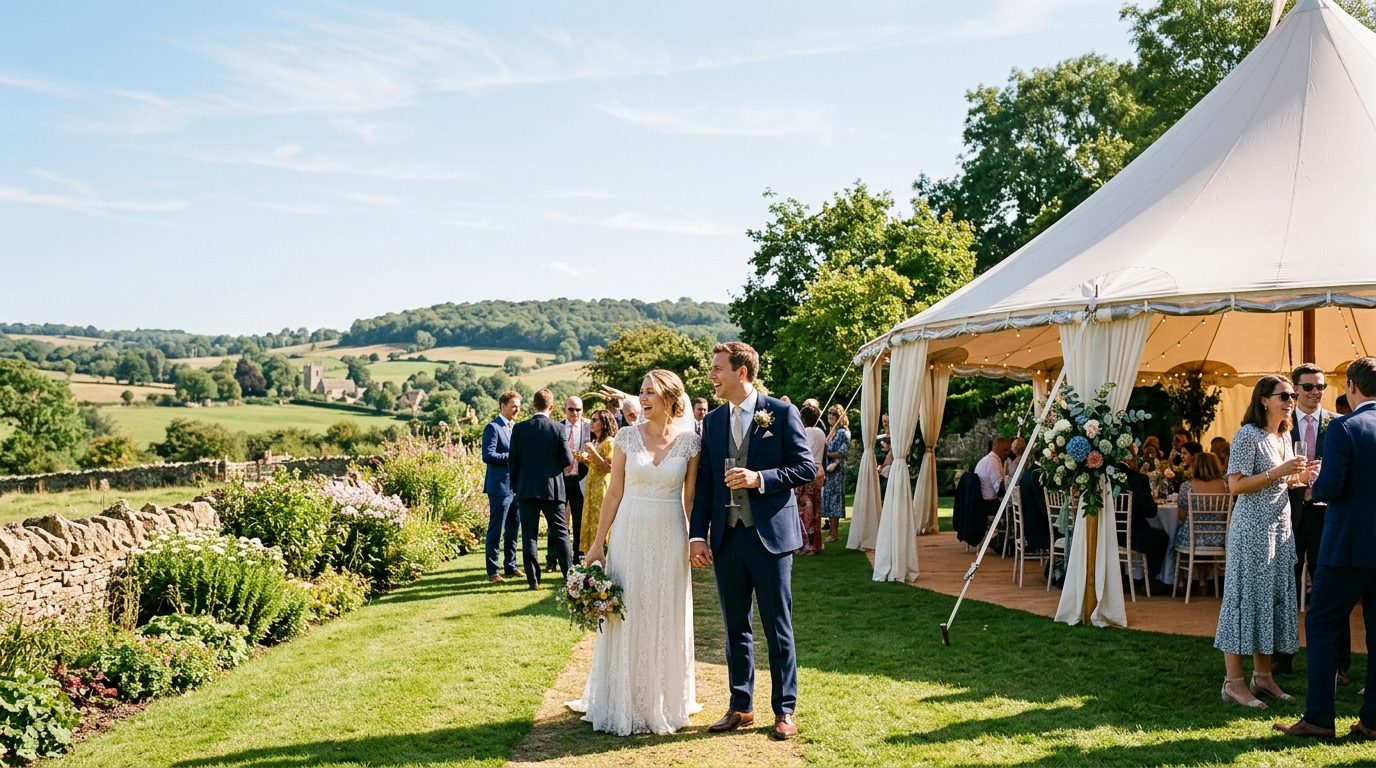
South East England (Kent, Sussex, Surrey, Hampshire)
Best UK region for summer wedding weather. The 1991-2020 average for the South East shows 177mm of rainfall across May to September. June to August sunshine averages 7.2 hours per day in Kent, one of the highest readings in mainland Britain. Coastal venues in East Sussex benefit from sea breezes that keep temperatures comfortable even in heat events.
South West England (Devon, Cornwall, Somerset, Dorset)
Warmer than the national average, but rainfall is higher: 234mm across May to September. The South West has a mild, moist maritime climate. Cornwall in particular is noticeably wetter than Kent despite similar perceived temperatures. Garden venues and outdoor ceremonies in the South West should have a solid marquee contingency.
East Anglia (Norfolk, Suffolk, Cambridgeshire)
England’s driest region after the South East. East Anglia benefits from a sheltered position away from Atlantic weather systems. The Broads area and north Norfolk coast venues offer flat landscapes that tend to drain well and photograph beautifully in low evening light.
Midlands (Warwickshire, Oxfordshire, Northamptonshire)
Middle-ground weather. Rainfall averages 52mm per month in summer. Temperature sits close to the national average. The Cotswolds, technically straddling the Midlands and South West, has become the default choice for UK celebrity weddings partly because of this reliable weather position.
Yorkshire and the North of England
Variable. The east coast (Scarborough, Whitby, North Yorkshire Moors) benefits from a rain shadow from the Pennines and averages 570mm of annual rainfall — lower than the Yorkshire Dales at 1,400mm annual. North Yorkshire barn venues and castle venues on the east side of the Pennines are significantly more reliable for outdoor ceremonies than equivalent venues in the Lake District or Peak District.
Wales
Wet. Cardiff averages 95mm of rainfall in July, which is double the Kent average. Pembrokeshire and mid-Wales are even wetter. Wales offers extraordinary venue settings — castle ruins, coastal cliffs, mountain backdrops — but outdoor ceremony plans need robust contingency. A covered structure at every Wales wedding is not optional; it is insurance.
Scotland
The most variable of all UK regions. The East Coast (Edinburgh, Fife, Aberdeenshire) is considerably drier than the West Coast (Argyll, Loch Lomond, the Highlands). Edinburgh averages 63mm in July. Fort William averages 203mm in July. Glen Coe in July is wetter than Barcelona in January. Scotland’s venue landscape is spectacular for photography. The weather calculus requires honest conversation with any outdoor-ceremony venue about their contingency options.
The truth about the UK’s most popular wedding month
June is chosen by approximately 23 per cent of UK couples as their wedding month, more than any other single month, according to the Bridebook 2026 industry report. The reason is primarily cultural: June is the summer’s beginning, the school year is ending, gardens are in bloom, evenings are long. The Chelsea Flower Show, Royal Ascot and the start of Wimbledon all reinforce a June outdoor garden aesthetic.
But June is not the driest month. The Met Office records show June is wetter than May, July and August in most of England and Wales in the 30-year average. The gap between June’s cultural reputation as a summer-wedding month and its statistical rainfall is one of the most consistent planning misconceptions we encounter at Weddings Hub.
The average UK June Saturday in 2025 had a 34 per cent probability of measurable rainfall (defined as more than 0.2mm in a day) according to Met Office probabilistic forecasting data. That is a roughly 1-in-3 chance of a wet ceremony day. Those odds do not reduce to zero in July, but July’s equivalent figure was 26 per cent.
What to do if it rains on your wedding day
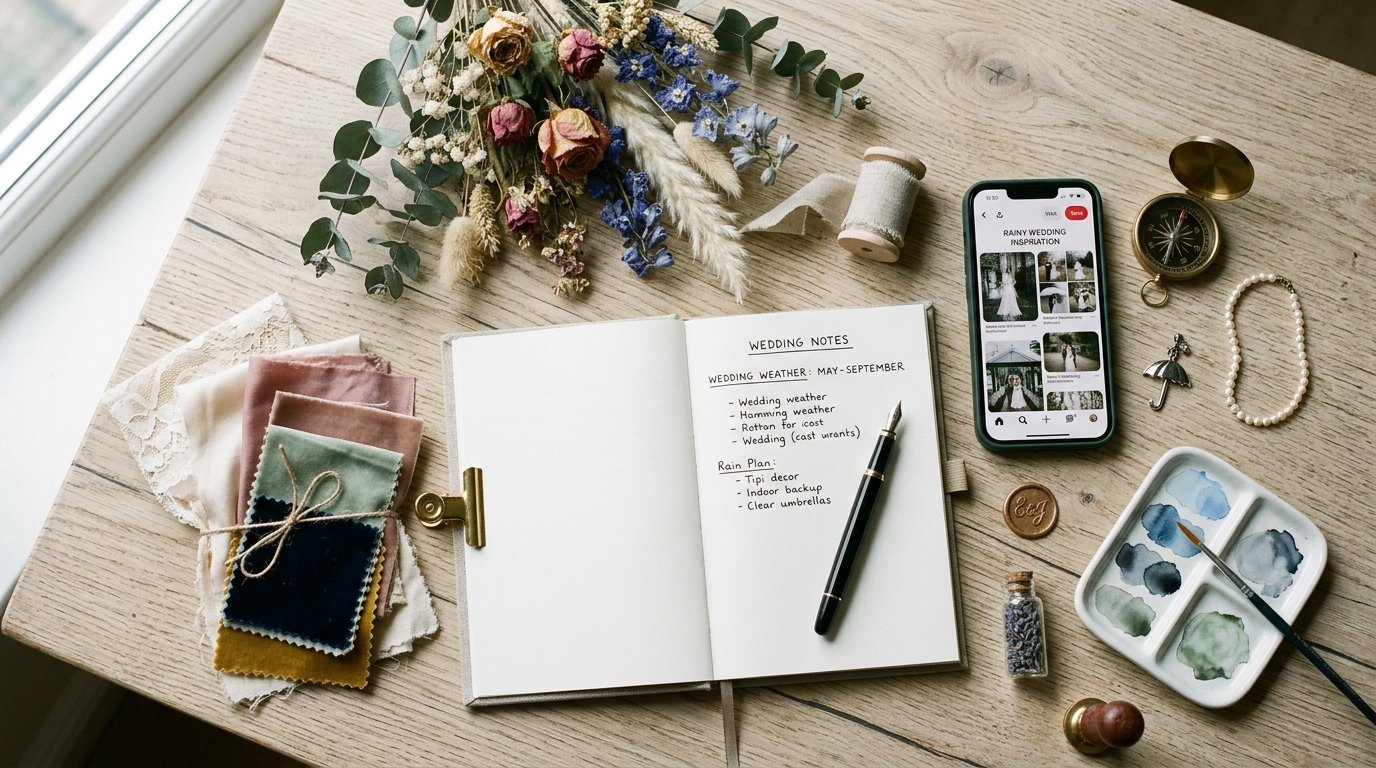
Rain on a wedding day is not a disaster if you have prepared for it. The following contingency measures are standard practice among professional UK wedding planners:
A covered walkway or pergola between buildings. The most common weather problem at outdoor venues is not a full downpour during the ceremony — it is guests getting wet walking between the ceremony space and the reception area. A covered walkway costs £180 to £450 to hire from a local tent or marquee supplier.
A standby marquee or weather tent. A 6m x 12m marquee for 80 guests can be hired from approximately £850 to £1,500 for a weekend, depending on your region and supplier. This is a fraction of the total wedding cost and eliminates the most catastrophic weather outcome.
Umbrellas for every guest. White or clear umbrellas branded with the couple’s initials are available from approximately £3 to £5 each in bulk. They double as a photo prop and solve the coat-and-bag problem in one.
Rescheduling clause in supplier contracts. Not all suppliers offer this, but it is worth asking. A weather-related rescheduling clause on your photographer, florist and caterer, if triggered by a Met Office amber or red weather warning, provides a structured route through the worst-case scenario.
Our wedding insurance guide covers weather-related cancellation and postponement cover in detail. Weather clauses vary significantly between policies.
The 2026 UK summer forecast
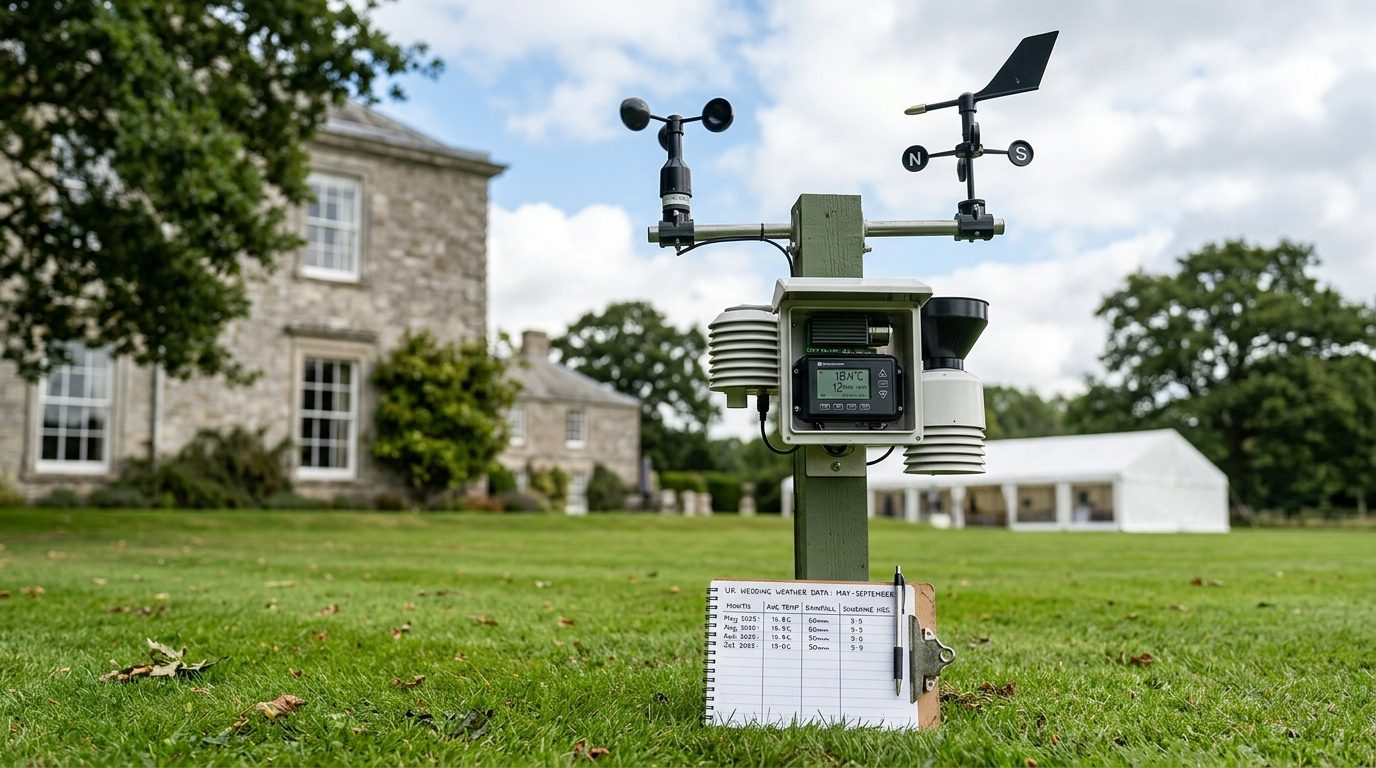
The Met Office long-range forecast for UK summer 2026 (updated monthly) indicates near-normal temperatures for May and June, with a drier-than-average signal for July across England and Wales. Scotland is forecast at above-average rainfall for July and August. August in the South East shows a neutral signal.
Long-range forecasts at 3-month range carry significant uncertainty. They are useful for broad planning signals but should not be used to make specific venue or contingency decisions. The reliable planning window for a specific day’s forecast is 10 days.
Planning your weather contingency
Every outdoor UK wedding needs a written contingency plan shared with all suppliers before the day. It should specify:
- The trigger condition (for example: Met Office amber warning issued by 48 hours before the ceremony)
- The fallback space and its capacity
- Who makes the call (typically the venue coordinator or wedding planner)
- How guests are informed (venue app, wedding website, text message)
- Whether florals and decor are moved inside or substituted
Our wedding day timeline guide includes a weather-contingency section with a template you can adapt.
Related articles
- British wedding flowers in season right now: the monthly guide
- Outdoor wedding venues UK: the best licensed spaces
- Wedding insurance UK: what you need to know
- The definitive UK summer wedding guide: May to September compared
- Wedding day timeline: a real-world running order
Frequently asked questions
What is the best month for a UK outdoor wedding?
July is statistically the best month for a UK outdoor wedding, with the highest average sunshine hours (6.4 per day) and the lowest rainfall nationally.
Does it rain a lot at UK weddings in June?
Yes. June is wetter than July in most of the UK. The national average rainfall in June is 59mm, compared to 47mm in July.
What temperature is a UK outdoor wedding in summer?
UK outdoor temperatures average 17.2°C in June, 19.2°C in July and 18.8°C in August. All three months are warm enough for an outdoor ceremony.
Is May a good month for a UK wedding?
May is the driest spring month and often has more sunshine than June, but it is cooler: an average of 14.4°C nationally. It is a good option for couples who want lower venue costs and fewer competing events.
How do I protect my outdoor wedding from rain?
A contingency marquee, covered walkways and a venue with a secondary indoor option are the three standard protections. The RSVP wording should flag the outdoor plan and its backup.
Which UK region has the best wedding weather?
The South East of England has the best summer wedding weather: highest sunshine hours, lowest rainfall, mildest temperatures. Kent and Sussex venues benefit from a microclimate that averages 2 to 3 degrees warmer than the UK national average.
What should I have in a wet-weather wedding kit?
A wet-weather kit should include: umbrellas for every guest (budget £3 to £5 each), a covered walkway between buildings, a drying station for coats, and a venue with a solid backup indoor space.