Home / Articles / Celebrity Weddings
Tallulah Willis's 712-Hour Wedding Dress Explained
Tallulah Willis and Justin Acee married at her family's home in Hailey, Idaho, on 8 August 2026. Her custom Balenciaga silk-satin gown took 712 hours to create, including individually beaded organza petals. The practical lesson for UK dress shoppers is to prioritise silhouette, fitting time and one labour-intensive detail rather than trying to reproduce couture wholesale.

Key Takeaways
- Tallulah Willis and Justin Acee married in Hailey, Idaho, on 8 August 2026
- The custom silk-satin Balenciaga gown took 712 hours to create
- Construction and atelier alterations accounted for 405 hours
- Organza petals were individually beaded and hand-applied
- UK brides can translate the look by concentrating budget on fit and one focal detail
Tallulah Willis and Justin Acee married at her family’s home in Hailey, Idaho, on 8 August 2026. Her custom Balenciaga silk-satin gown took 712 hours to create, including individually beaded organza petals. The practical lesson for UK dress shoppers is to prioritise silhouette, fitting time and one labour-intensive detail rather than trying to reproduce couture wholesale.
Weddings Hub editorial note: The construction figures and event details are attributed to Vogue’s fitting and wedding reports. The hero is an original illustration of fictional newlyweds and does not depict the couple or copy the dress.
Seven hundred and twelve hours is not a normal dress-shopping benchmark. It is a useful window into why couture looks different, though: many small decisions are developed, fitted and finished by hand.
What did 712 hours include?
Vogue reported that the strapless column gown was made from silk satin backed with silk organza. A draped train skirt and large rear bow gave the otherwise simple shape its volume.
The complete project took 712 hours. Construction and atelier alterations accounted for 405 hours, while the veil took another nine. Artisans individually beaded organza petals and hand-applied them, a process reported to have taken about 60 hours.
The sculptural neckline referred to a black Balenciaga dress worn by the bride’s mother, Demi Moore. Willis also supplied references from Cristóbal Balenciaga’s 1950s work before selecting elements from several sketches.
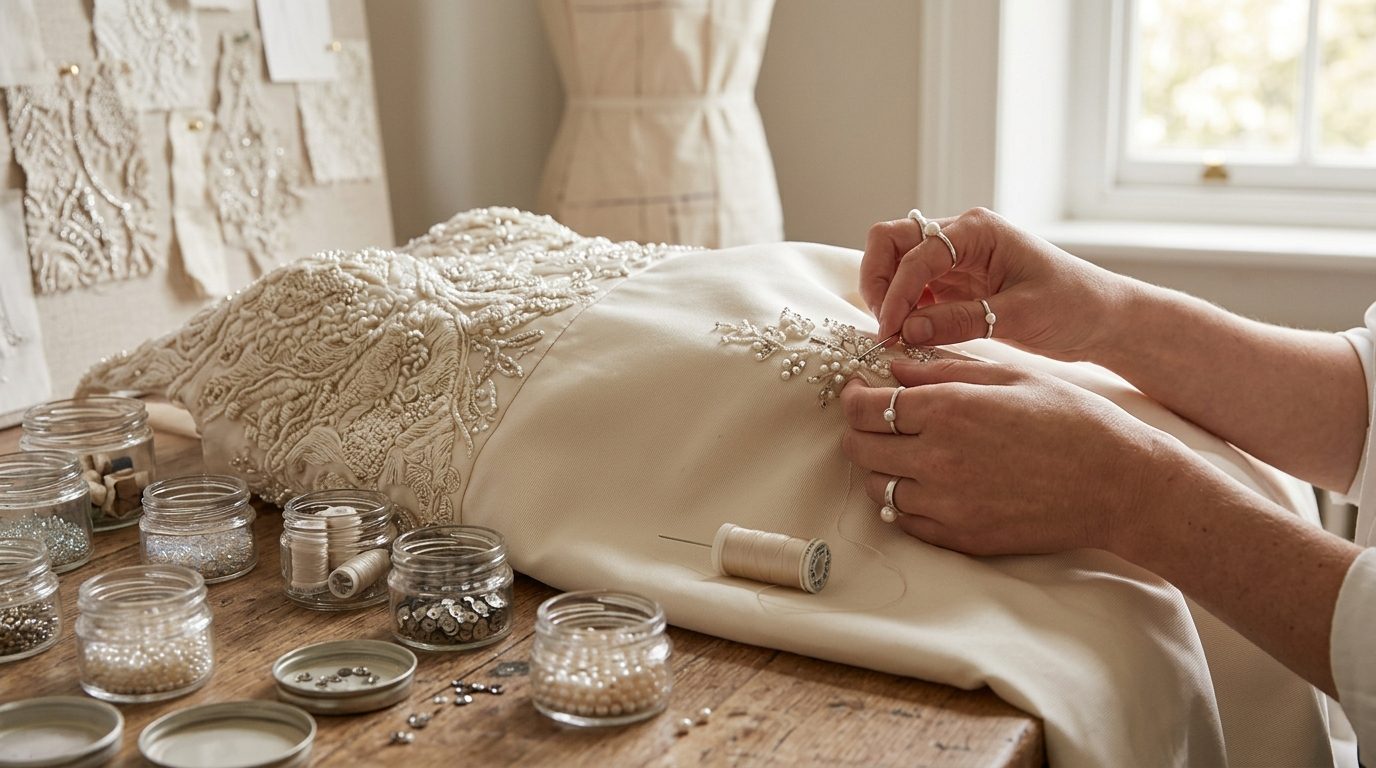
Fittings determine how a structured dress sits in motion, not just how it looks on a hanger.
Five couture lessons that work at ordinary budgets
1. Begin with silhouette
The dress used a relatively clean column shape before adding drape, bow and appliqué. A clear outline gives decorative work somewhere to land.
Try several shapes without accessories. Photograph the front, side and back, then walk and sit before deciding.
2. Spend on alterations
Precise bust support, hem length and waist position often matter more than extra embellishment. Ask the boutique what alterations are included and which specialist will complete them.
Browse bridal boutiques in the Weddings Hub directory and confirm lead times directly.
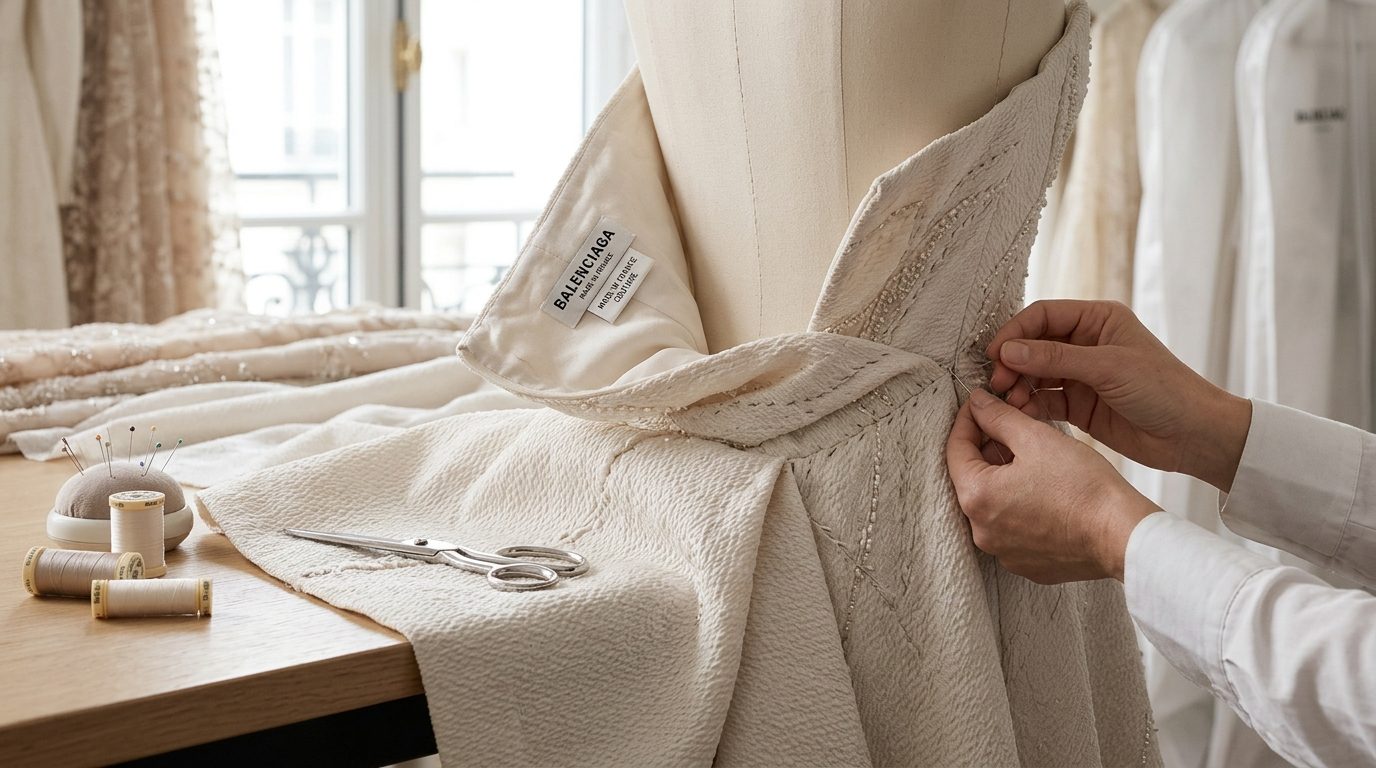
Use each fitting to test posture, walking, sitting and the planned underwear.
3. Commission one focal detail
A detachable bow, appliqué panel, overskirt or distinctive veil can make a simple gown feel individual. One carefully made element is easier to fit and preserve than decoration across the entire dress.
4. Ask how the decoration is attached
Hand-applied petals create depth, but each attachment point can catch or loosen. Request a small repair kit and ask the maker how the dress should be stored and transported.
5. Test the rear view
Guests and photographers see the back of a dress throughout the ceremony. Bows, trains and veils need to work together rather than compete.
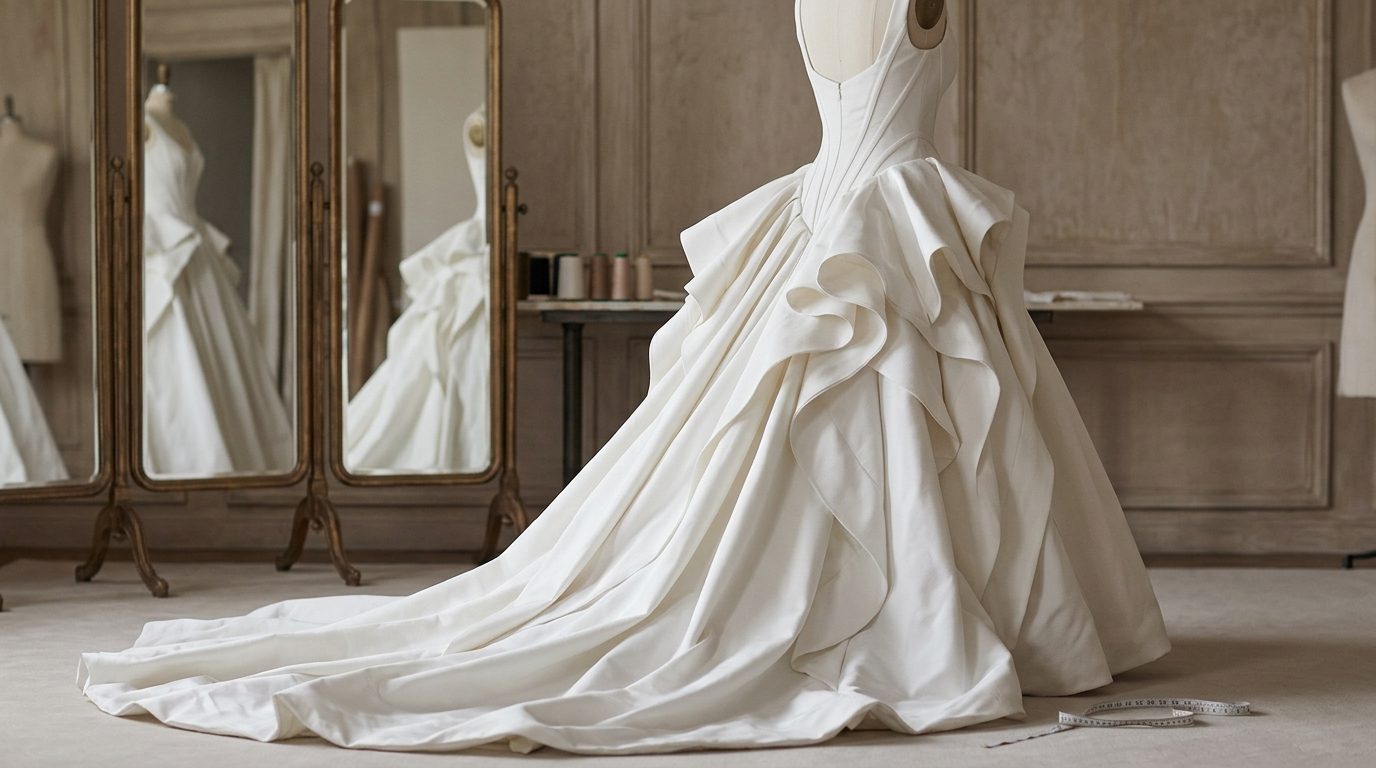
Volume can come from cut and internal structure rather than surface decoration.
Planning the fitting schedule
Made-to-order dresses commonly need months rather than weeks. Couture work can take longer, especially where fabric must be sourced or handwork scheduled.
Before paying a deposit, ask for:
- the estimated delivery month;
- the number and timing of fittings;
- a written list of included alterations;
- responsibility for pressing and final collection;
- the cancellation and delay terms;
- the last safe date for design changes.
Do not plan major body changes around the gown. The boutique should explain its measurement and alteration policy without making prescriptive promises about shape.
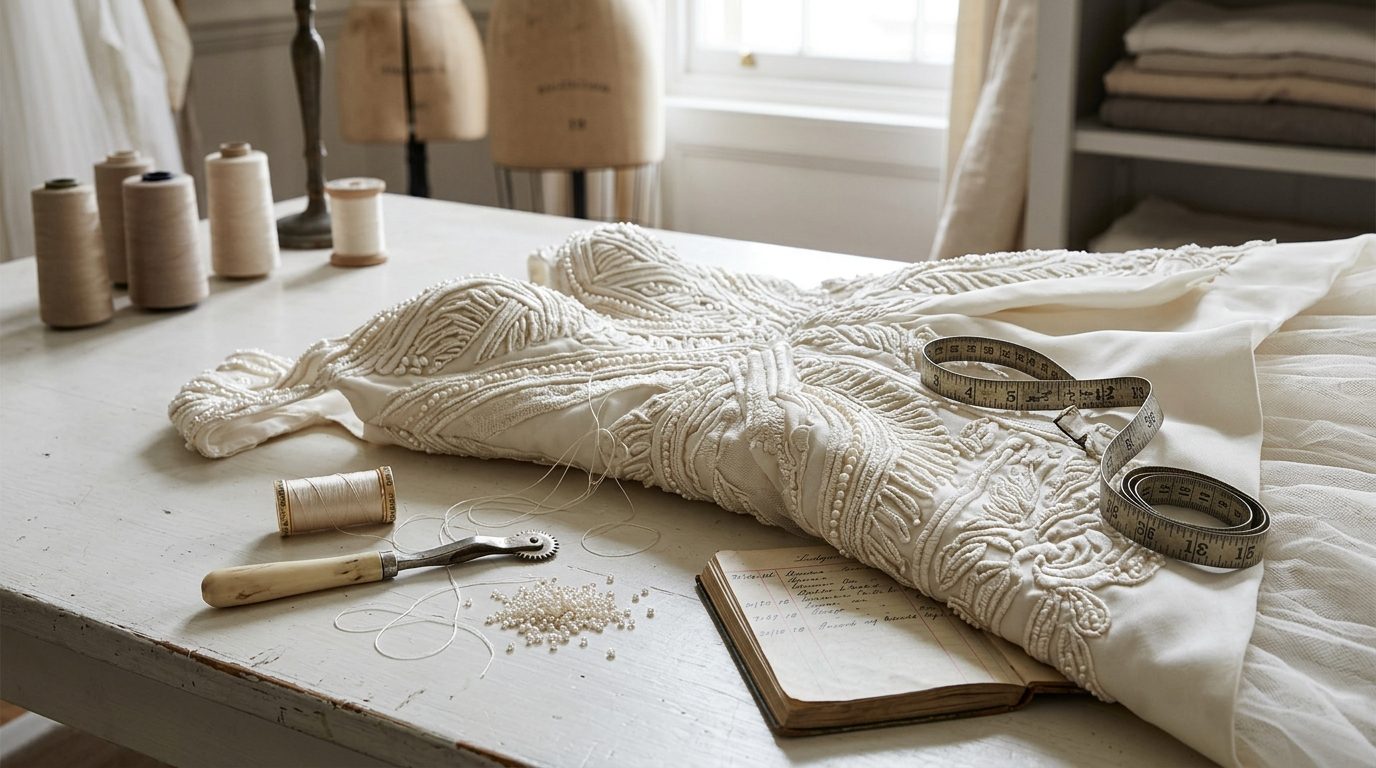
Fabric, internal support and hand finishing all affect price and alteration complexity.
What made the setting personal?
The couple married in the backyard of Willis’s family home in Hailey. Vogue described the place as central to her childhood and also familiar to Acee.
That emotional connection cannot be bought with dressmaking hours. UK couples planning a home or woodland celebration need to solve access, toilets, power, wet-weather shelter and noise limits before styling.
Our woodland wedding guide covers those practical checks. You can also compare marquee suppliers, wedding planners and transport providers for a private-site celebration.
Sources and related guides
- Vogue’s final-fitting report, published 9 August 2026
- Vogue’s account of the woodland wedding, published 14 August 2026
- UK wedding dress costs
- Wedding dress shopping guide
- Woodland wedding venues
Frequently asked questions
When did Tallulah Willis and Justin Acee marry?
They married on 8 August 2026 at the bride's family home in Hailey, Idaho.
How long did Tallulah Willis's wedding dress take to make?
Vogue reported 712 hours of work, including 405 hours of construction and alterations.
What was Tallulah Willis's dress made from?
The strapless column gown used silk satin backed with silk organza, with a draped train and hand-applied organza petals.
Who designed Tallulah Willis's wedding dress?
Balenciaga creative director Pierpaolo Piccioli created the custom gown with the house's couture atelier.
How can a UK bride get a couture look for less?
Choose a strong base gown, budget for expert alterations and commission one focal detail such as a bow, veil or appliqué panel.