Into the Woods: Your Woodland Wedding Guide
Key Takeaways
- You cannot legally marry outdoors in England and Wales — the ceremony needs a licensed structure like a tipi, yurt, or permanent building
- Woodland wedding venue hire typically costs £2,000-£6,000, but total costs rise to £8,000-£18,000 once you add infrastructure
- May to September is the realistic window — ground conditions, daylight, and temperature rule out winter for most couples
- Minimal styling works best in a woodland setting — the trees, light, and natural textures do the heavy lifting
- Access, power, toilets, and parking are the four logistics that catch couples out — check all four before you book
A woodland wedding strips everything back to what matters. No grand ballroom, no gilded ceiling — just trees, dappled light, and the sound of leaves overhead.
It is also one of the most logistically demanding wedding styles you can choose. The setting is beautiful, but the ground is uneven, the power supply is non-existent, and the nearest toilet is a fifteen-minute walk. This guide covers what woodland weddings actually involve, what they cost, and how to avoid the pitfalls that catch couples out every summer.
What a woodland wedding looks like
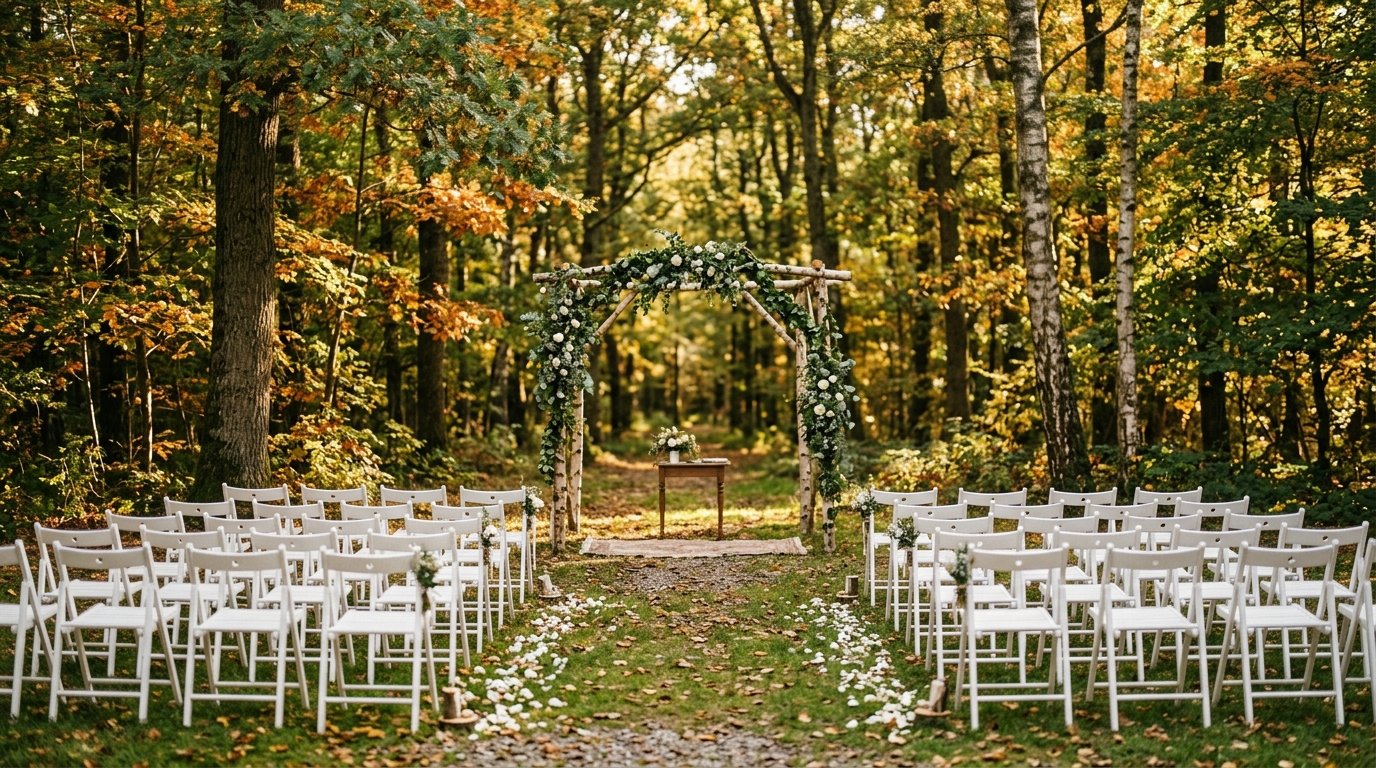
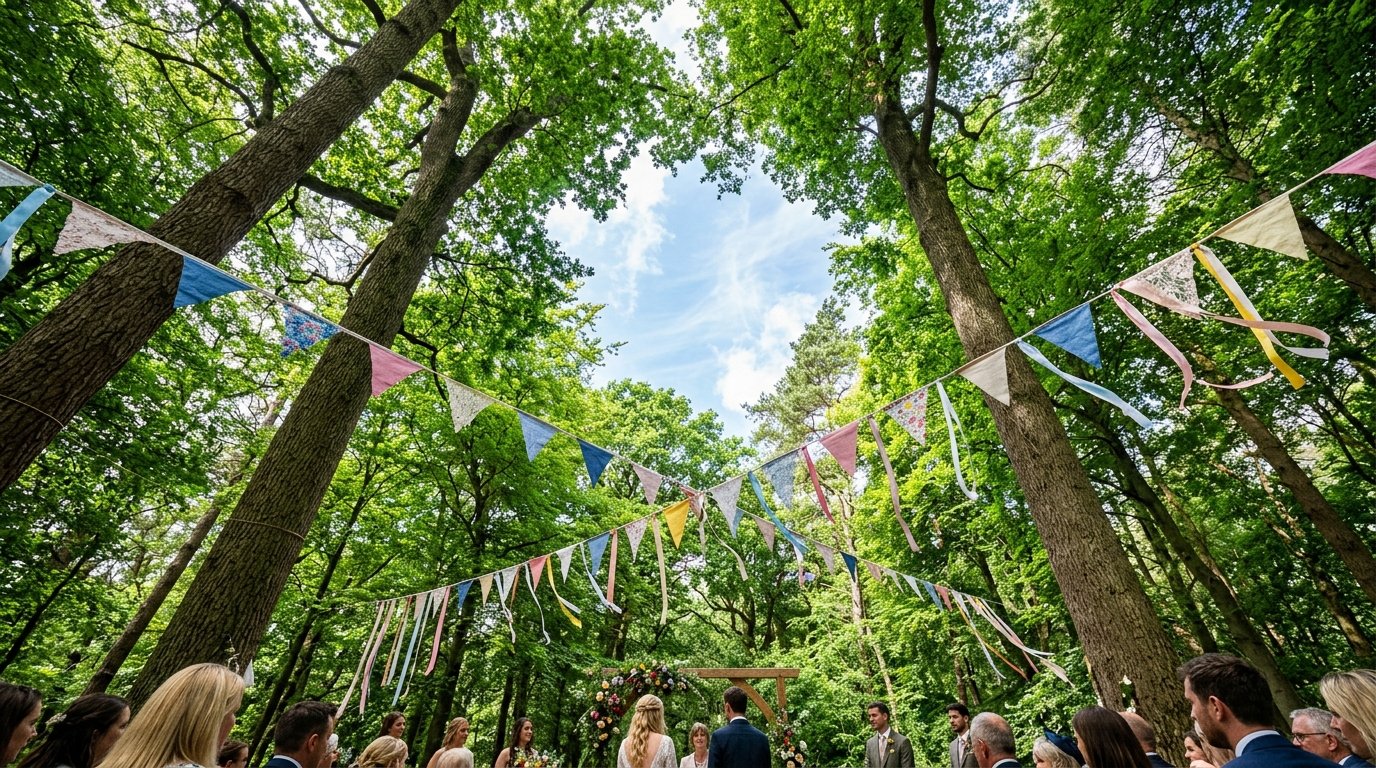
Picture a natural clearing surrounded by mature oaks or birches. Rows of mismatched wooden chairs either side of a grass aisle. A simple arch — branches, ivy, trailing flowers — at the front. The canopy filters the light. The air smells of earth and leaves.
The ceremony happens here (symbolically, at least — more on the legal side below). The reception takes place in a tipi, stretch tent, or marquee nearby. Guests drift between the ceremony space, the eating area, and the woods themselves.
The best woodland weddings lean into the setting rather than fighting it. Wildflower arrangements in jam jars. Hay bale seating for the evening. Festoon lights strung between trunks as the sun drops.
The legal reality
You cannot legally marry outdoors in England or Wales. The ceremony must take place inside a licensed structure — a permanent building, a tipi with a fixed floor, or a yurt that meets licensing requirements.
Scotland is different. Humanist and religious celebrants can conduct legally binding ceremonies anywhere, including open-air woodland clearings.
Most couples in England do one of two things:
- Register office first, woodland ceremony second. Have the legal bit at a register office (£57-£200), then hold a symbolic ceremony in the woods with a celebrant.
- Licensed structure on site. Choose a woodland venue that has a permanently licensed building or a tipi/yurt that holds a temporary licence for ceremonies.
| Option | Legal? | Cost | Best for |
|---|---|---|---|
| Register office + symbolic ceremony | Yes | £57-£200 (legal) + venue | Full control over ceremony content |
| Licensed tipi/yurt on site | Yes | Included in venue hire | All-in-one day, no separate trip |
| Outdoor ceremony (England/Wales) | No | — | Not an option for the legal bit |
| Outdoor ceremony (Scotland) | Yes | Celebrant fee £300-£600 | Couples marrying in Scotland |
Tipi and bell tent options
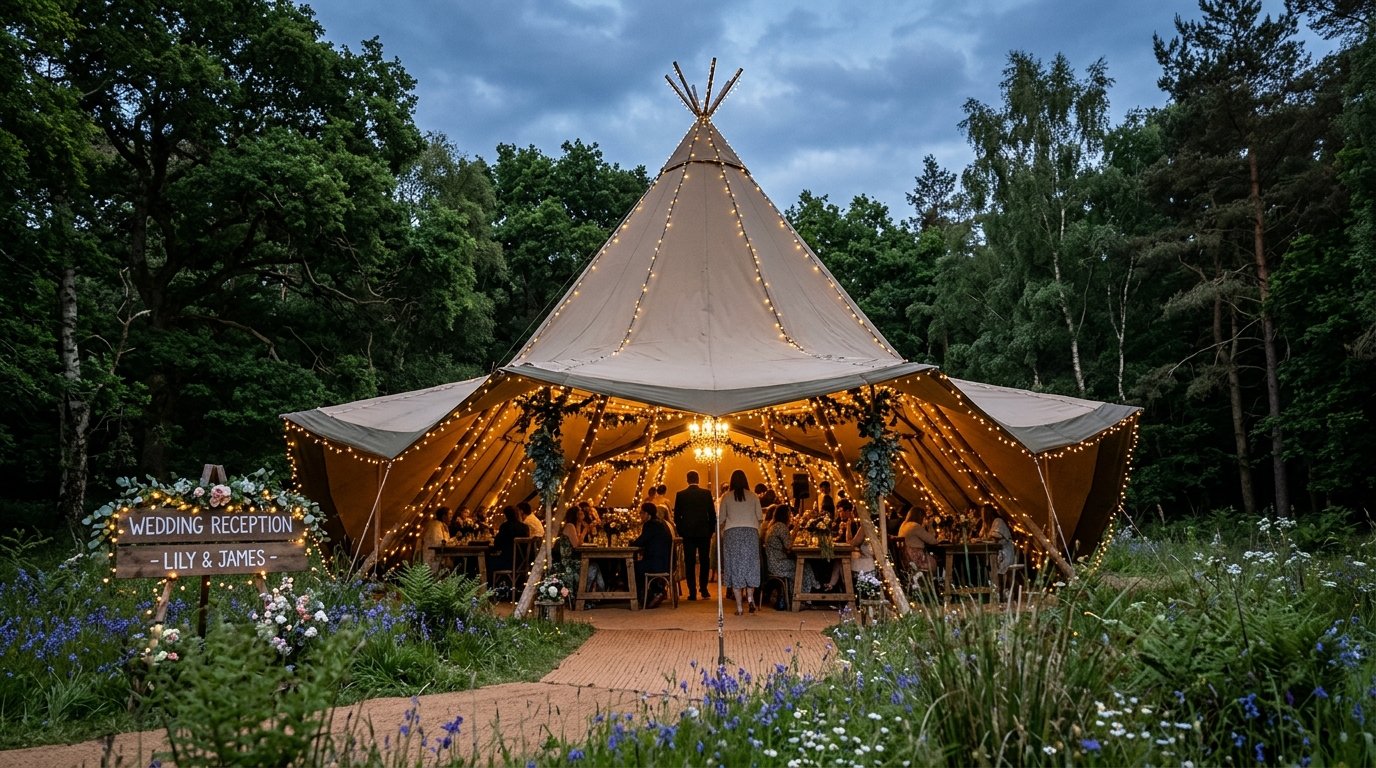
Tipis have become the default structure for woodland weddings. They suit the setting, they can be erected on uneven ground, and they feel like an extension of the forest rather than a box dropped into it.
What you need to know about tipi hire
- Two giant hat tipis (connected) seat 80-100 guests for a sit-down meal. Cost: £2,500-£4,500.
- Three tipis seat 120-150 guests and give you a separate dance floor or bar area. Cost: £3,500-£5,500.
- Setup takes a full day. The supplier arrives the day before and strikes the day after. Budget for two nights of site hire.
- Flooring is optional but recommended. Matting or wooden floors cost £500-£1,500 extra. Without flooring, heels sink into grass and mud tracks across everything.
Bell tents work brilliantly for overnight accommodation. A cluster of 6-10 bell tents gives guests a glamping experience and removes the problem of transport home after a remote woodland reception.
Bell tent hire costs £150-£300 per tent per night, including furnishings (bed, rugs, lantern). For 20 guests staying over, budget £1,500-£3,000.
Season and weather
The realistic season for a woodland wedding in the UK is May to September. Here is what each month offers:
| Month | Temperature | Daylight | Ground | Risk |
|---|---|---|---|---|
| May | 12-18°C | Until 8:30pm | Firm (usually) | Late frost, variable |
| June | 15-22°C | Until 9:15pm | Firm | Best overall month |
| July | 17-25°C | Until 9:00pm | Firm | Thunderstorms possible |
| August | 16-24°C | Until 8:15pm | Can be dry or sodden | School holidays = busier |
| September | 13-20°C | Until 7:15pm | Often soft | Evenings get cold fast |
Always have a wet weather plan. Even in July, a full day of rain turns a woodland floor into a muddied mess. Your tipi or marquee is the backup — make sure it is large enough to hold the entire day indoors if needed.
Bug management
Nobody talks about this, but they should. Midges, mosquitoes, and flies are a fact of life in British woodlands from June onwards.
- Citronella candles around seating areas help but do not eliminate the problem.
- Bug spray stations near the bar and entrance are a thoughtful touch.
- Avoid standing water near the ceremony area — it attracts mosquitoes.
- Time of day matters. Midges are worst at dawn and dusk. A 2pm ceremony avoids the worst of it.
Styling a woodland wedding
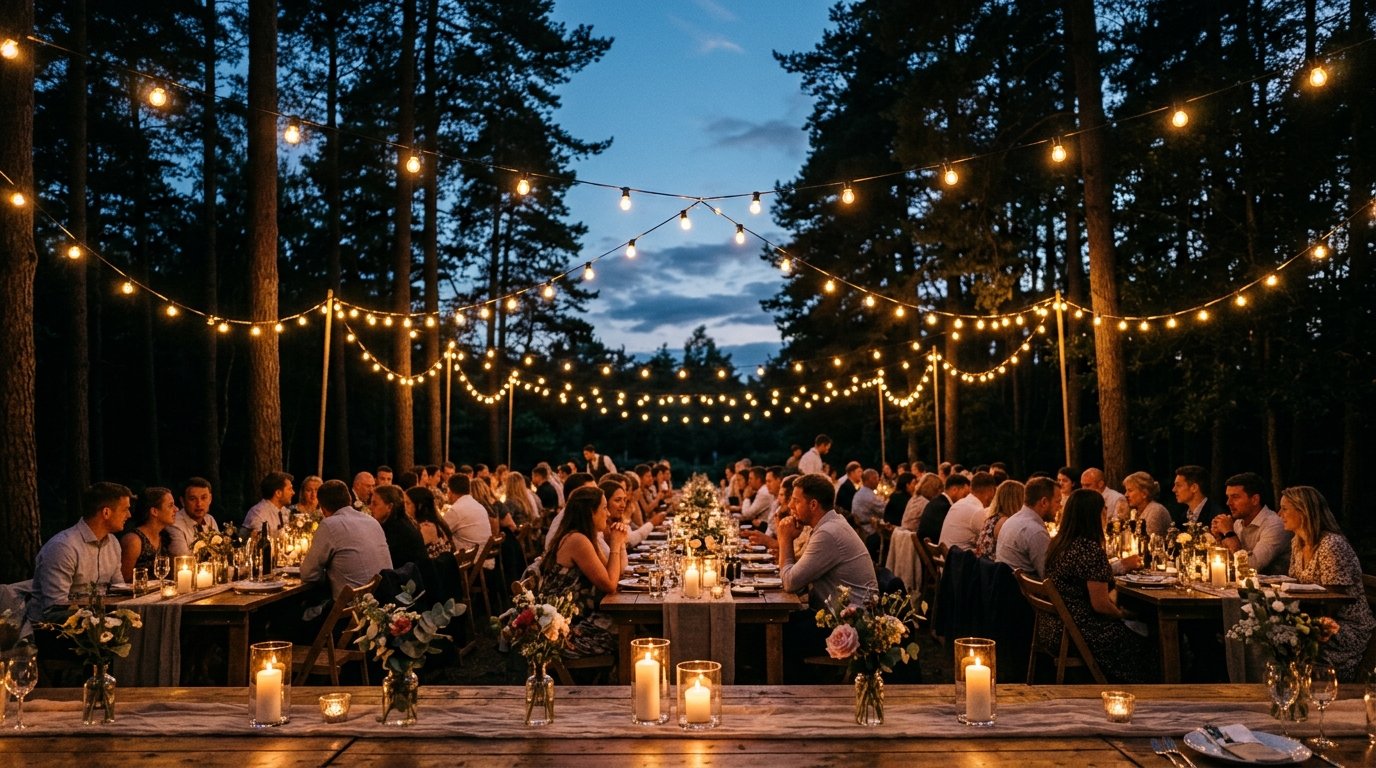
The best advice for styling a woodland wedding: do less. The setting is already extraordinary. Overdecorating a forest is like putting wallpaper on a cathedral.
What works
- Festoon lights strung between trees. The single most effective decoration for a woodland wedding. Cost: £200-£600 to hire.
- Wildflower arrangements in mismatched vessels — jam jars, bottles, small wooden crates.
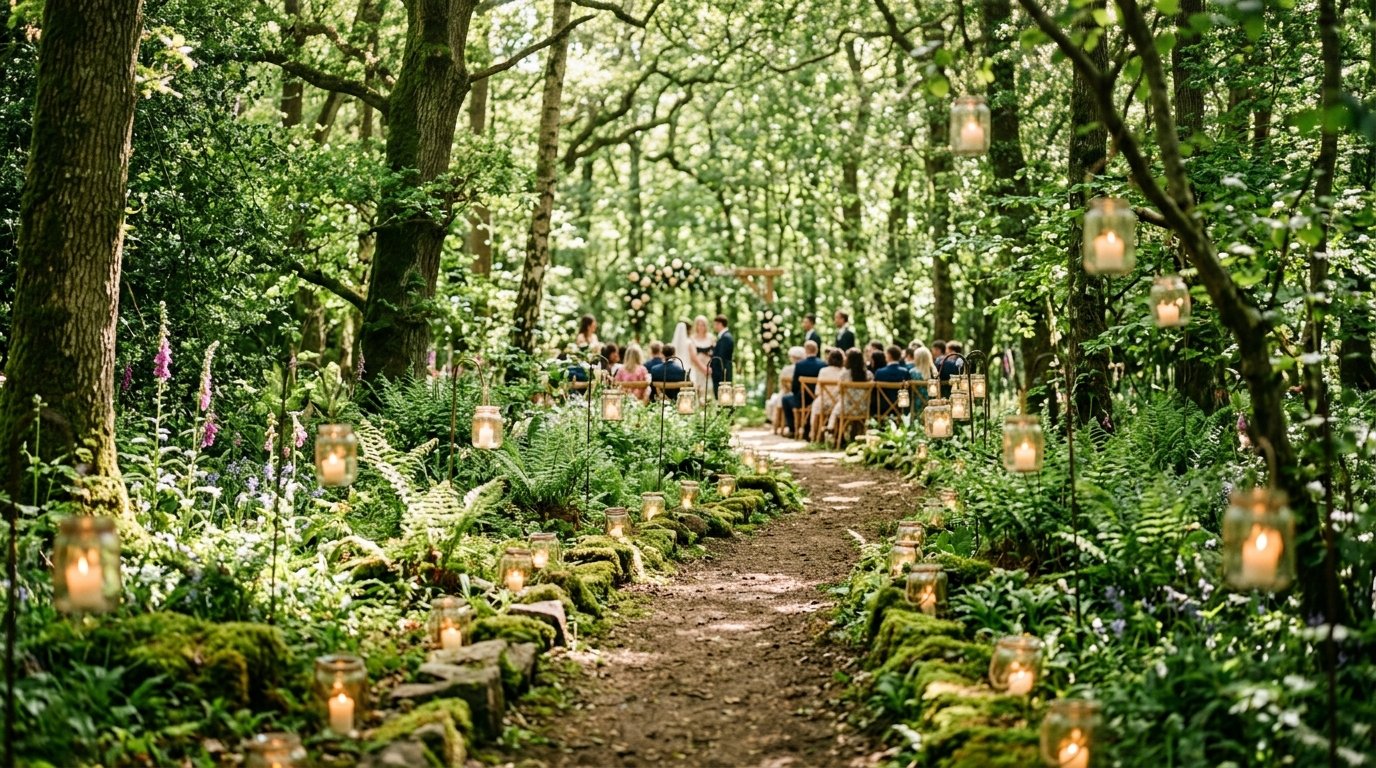
- Lanterns lining the pathway from car park to ceremony area. Glass storm lanterns with LED candles are safest (open flames in a forest are risky).
- Natural materials — log cross-sections as table centrepieces, moss runners, fern fronds in buttonholes.
- Minimal signage — a single hand-painted wooden sign pointing to the ceremony. Less is more.
What does not work
- Heavy floral arrangements. They clash with the natural surroundings and wilt quickly without water in warm weather.
- Anything white and formal. Chair covers, white draping, satin ribbons — they belong in a hotel, not a forest.
- Too many fairy lights. A canopy of lights looks magical. A blinding wall of LEDs looks like a retail park.
The practical logistics
This is where woodland weddings get complicated. A hotel handles all of this for you. A woodland makes you the project manager.
Access and parking
- Can a catering van reach the site? Most caterers need vehicle access to within 50 metres of the serving area.
- Is the access road suitable for a wedding car? Low-slung vintage cars and muddy farm tracks do not mix.
- Where do 80 guests park? A flat field near the entrance works. Signage and possibly a steward are essential.
- Disabled access. Woodland terrain is challenging for wheelchair users, elderly guests, and anyone with mobility issues. Boardwalks or compacted gravel paths may be needed. Discuss this with the venue early.
Power
Most woodland sites have no mains electricity. You need a generator.
| Power need | Generator size | Hire cost |
|---|---|---|
| Lights + PA system | 10-20kVA | £300-£500 |
| Lights + PA + catering | 30-60kVA | £500-£800 |
| Full production (band, lighting rig) | 60kVA+ | £800-£1,200 |
Noise matters. Place the generator at least 30 metres from the ceremony and dining areas. A cheap generator at close range drowns out speeches. Spend more on a silent-running model.
Toilets
Portable toilet hire is non-negotiable unless the venue has permanent facilities.
- Standard portable loos: £200-£400 for 4 units. Functional but not glamorous.
- Luxury trailer units: £500-£1,500. Flushing toilets, mirrors, hand wash. Worth the upgrade for a wedding.
- Compost toilets: £300-£600. Eco-friendly option that suits the woodland vibe.
Budget one toilet unit per 25 guests as a minimum.
Catering in the woods
Not every caterer will work in a woodland setting. You need suppliers experienced with off-grid events.
- Wood-fired pizza works brilliantly — the oven is self-contained and fits the setting.
- BBQ and hog roast are popular and practical. The equipment is mobile and needs minimal infrastructure.
- Formal plated service is possible but requires a solid, level surface in the tipi and close vehicle access for the catering team.
- Budget £40-£80 per head for woodland catering. The lack of a kitchen on site adds cost.
Costs breakdown
| Item | Budget | Mid-range | Premium |
|---|---|---|---|
| Woodland venue hire | £2,000 | £3,500 | £6,000 |
| Tipi hire (2 tipis) | £2,500 | £3,500 | £5,000 |
| Flooring | £0 (grass) | £500 | £1,500 |
| Catering (80 guests) | £3,200 | £4,800 | £6,400 |
| Generator | £300 | £500 | £800 |
| Toilets | £200 | £700 | £1,500 |
| Festoon lights | £200 | £400 | £600 |
| Decoration | £200 | £500 | £1,000 |
| Bell tent glamping (10 tents) | — | £1,500 | £3,000 |
| Total | £8,600 | £15,900 | £25,800 |
These figures are for the venue and infrastructure only. Add photography, music, dress, and other standard costs on top.
Who woodland weddings suit
Woodland weddings are ideal for couples who:
- Love the outdoors and want their wedding to reflect that
- Are happy to project-manage logistics (or hire a planner who will)
- Want a relaxed, informal atmosphere over a structured, formal day
- Have a realistic budget of at least £8,000-£10,000 for the venue and infrastructure
- Are flexible on the weather — genuinely willing to accept some mud and drizzle as part of the experience
They are less suited to couples who:
- Want everything handled by one venue coordinator
- Have many elderly or disabled guests who would struggle with the terrain
- Need a guaranteed dry, warm environment
- Are on a very tight budget (the infrastructure costs make woodland weddings more expensive than they first appear)
Making it accessible
Woodland settings present real challenges for guests with limited mobility. Take these steps:
- Lay compacted gravel or boardwalk paths from the parking area to the ceremony and reception spaces.
- Choose chairs over benches — easier to sit down and stand up.
- Ensure the tipi has level, firm flooring with no trip hazards at the entrance.
- Provide a shuttle from the car park if it is more than 100 metres from the event area.
- Communicate the terrain in your invitations so guests can wear appropriate footwear.
Accessibility is not optional. If you cannot make the site safe and comfortable for all your guests, a woodland may not be the right venue choice for your particular guest list.
Bell tent glamping for guests
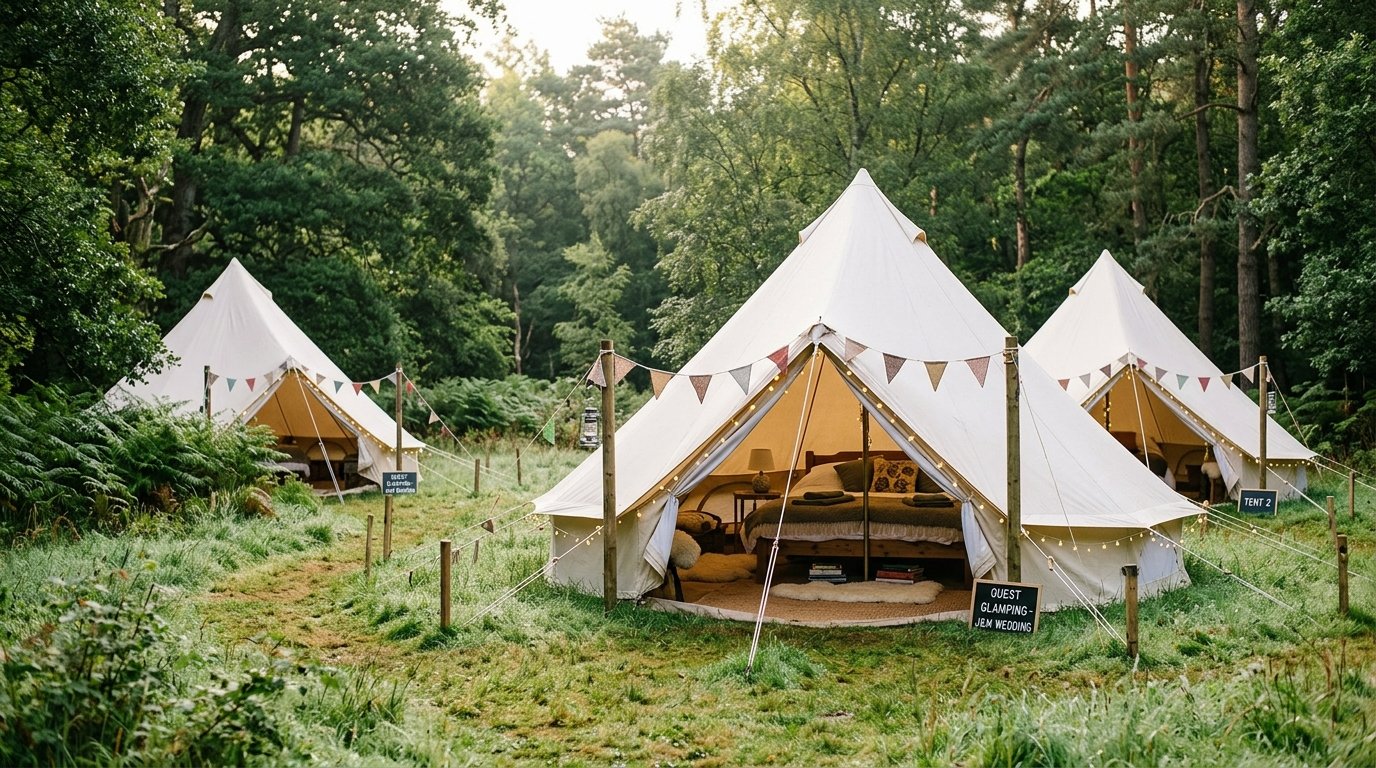
One of the best things about a woodland wedding is turning it into an overnight experience. Guests camp (or glamp) on site, breakfast together the next morning, and the whole event becomes a weekend rather than an evening.
What bell tent packages include
- Standard: Canvas bell tent, camp beds or airbeds, basic bedding, lantern. £150-£200 per tent.
- Luxury: Furnished tent with proper beds, rugs, side tables, bunting, toiletries. £250-£350 per tent.
- Each tent sleeps 2-4 people depending on size (4m or 5m diameter).
Logistics
- Guests need to know in advance so they can bring overnight bags.
- Provide a map showing which tent belongs to whom.
- Arrange breakfast — a simple continental spread or bacon rolls from a mobile caterer.
- Make sure the glamping area has its own lighting and pathway to the toilets.
This is a genuine selling point of a woodland wedding. It creates memories that go beyond the ceremony and speeches. Guests talk about the morning-after breakfast in the woods for years.
Checklist before you book
Use this before signing any contract:
- Is the venue licensed for ceremonies, or will you need a separate legal ceremony?
- What is the vehicle access like? Can caterers, tipi suppliers, and a wedding car reach the site?
- Is there mains power, or do you need a generator?
- Are there permanent toilets, or do you need to hire them?
- What is the ground like in wet weather? Visit after heavy rain to check.
- Is there adequate parking for your guest count?
- Can you accommodate guests with mobility issues?
- What are the noise restrictions? (Many rural woodland sites have curfews — often 11pm.)
- Does your wedding insurance cover outdoor events?
- What is the cancellation policy for extreme weather?
A woodland wedding takes more planning than a traditional venue, but the result is unlike anything a hotel ballroom can offer. Sunlight through leaves, the smell of pine, the warmth of a fire pit as evening comes — it is a setting that no amount of decoration can replicate, because the decoration is already there.
Planning your woodland wedding? Read our guide on how to choose a wedding venue for a complete decision framework, or check the key questions to ask any venue before you book.
Frequently asked questions
Can you legally get married in a woodland in the UK?
Not outdoors in England or Wales. The legal ceremony must take place inside a permanently or temporarily licensed structure — a tipi, yurt, barn, or building on the woodland site. Scotland allows outdoor ceremonies with a humanist or religious celebrant, making it the only part of the UK where a true open-air woodland wedding is legally possible. Many couples in England hold the legal ceremony elsewhere (register office) and have a symbolic ceremony in the woods.
How much does a woodland wedding cost?
Venue hire alone costs £2,000-£6,000. Total costs including tipi hire (£2,000-£5,000), catering (£40-£80 per head), toilets (£500-£1,500), power (£300-£800), and decoration typically bring the full cost to £8,000-£18,000 for 80 guests. Dry hire woodland sites are cheaper but require you to source every supplier independently.
What months are best for a woodland wedding?
May to September works best. June and July give the longest daylight and warmest temperatures. May and September are slightly cheaper but riskier for weather. April and October are possible but cold evenings and wet ground become serious issues. November to March is impractical for most woodland venues.
Do you need a backup plan for a woodland wedding?
Yes, always. Even in summer, British weather is unpredictable. Most woodland venues offer a covered structure (tipi, marquee, barn) as the primary reception space. For the ceremony, have a plan to move under cover within 10 minutes. Some couples accept light rain as part of the atmosphere — but heavy rain on an uncovered ceremony is miserable for everyone.
What about toilets and power at a woodland wedding?
You need to hire both. Luxury portable toilet trailers cost £500-£1,500 for the day. Generator hire runs £300-£800 depending on power requirements. Some woodland venues have mains power and permanent toilet blocks — these cost more to hire but save you the hassle of sourcing infrastructure. Always confirm what the venue provides before booking.