Home / Articles / Wedding Trends
Mixed-Pattern Table Linens: How to Clash Without Chaos
Key Takeaways
- Pinterest UK searches for 'mixed pattern table linens' increased 245% in the 12 months to April 2026
- The trend is driven by the broader botanical maximalism movement away from uniform white tablecloths
- The key principle: unify through colour, not through pattern — choose 2-3 colours and vary the patterns within them
- Mixed-pattern linen hire is available from UK prop hire companies at £8-£25 per piece
- Striped, gingham, and floral are the three patterns most commonly mixed in 2026 UK wedding styling
The rule that makes pattern mixing work
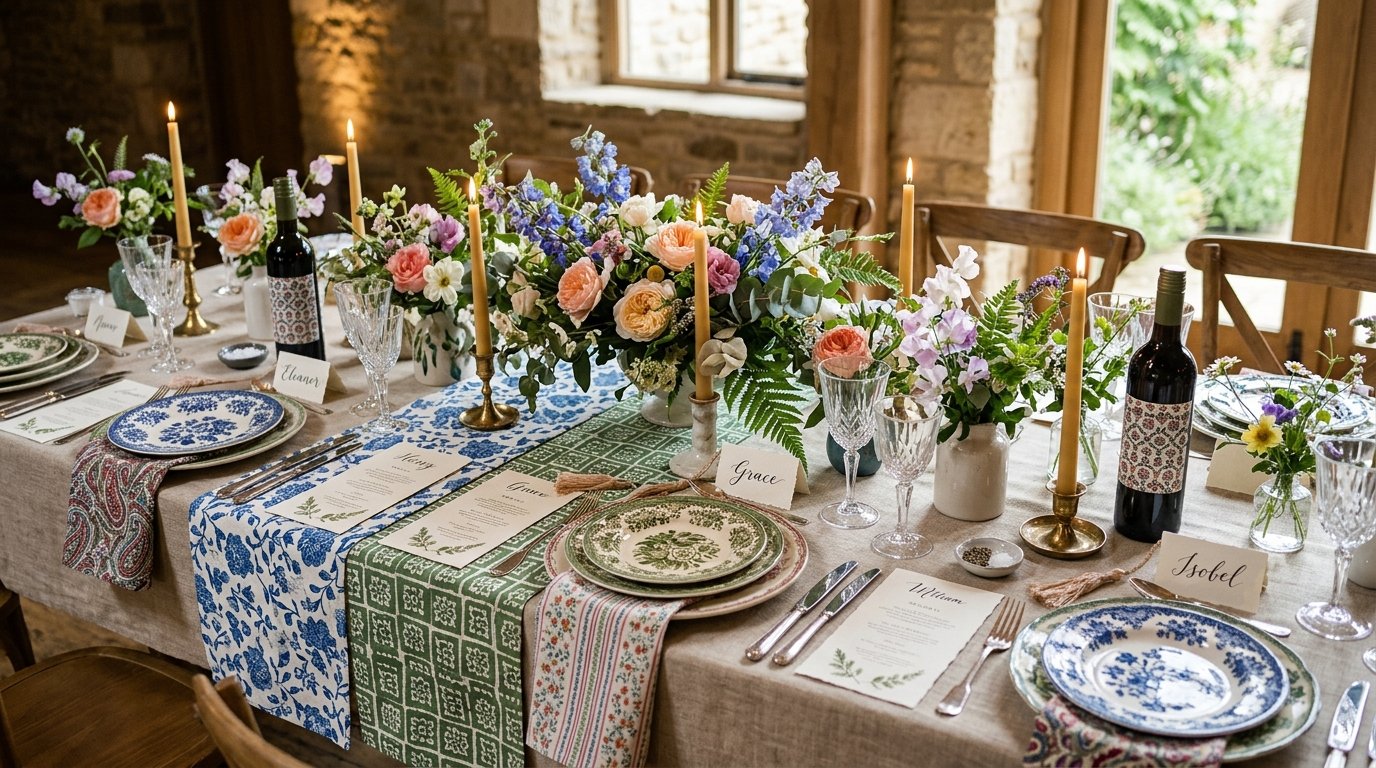
There is one principle that separates a deliberately styled mixed-pattern tablescape from a table that simply looks like the linen was assembled at random: unify through colour, not through pattern.
The underlying principle comes from the same logic as pattern-mixing in fashion. A clashing pattern outfit works when all the patterns share two or three common colours — the patterns themselves vary but the palette is disciplined. The same applies to wedding table linens.
In practice: choose two or three colours for your palette. Then allow the patterns within those colours to be different. A dusty rose stripe, a dusty rose and sage green floral, and a sage green check on the same table will read as an intentional, cohesive decision. The same stripe, a completely different floral in navy and yellow, and a geometric in orange and white on the same table will read as chaos.
The secondary principle: vary the scale of patterns as well as the type. A large-scale floral alongside a small-scale stripe creates more interest than two patterns of the same scale.
Which patterns mix well
Stripe and floral
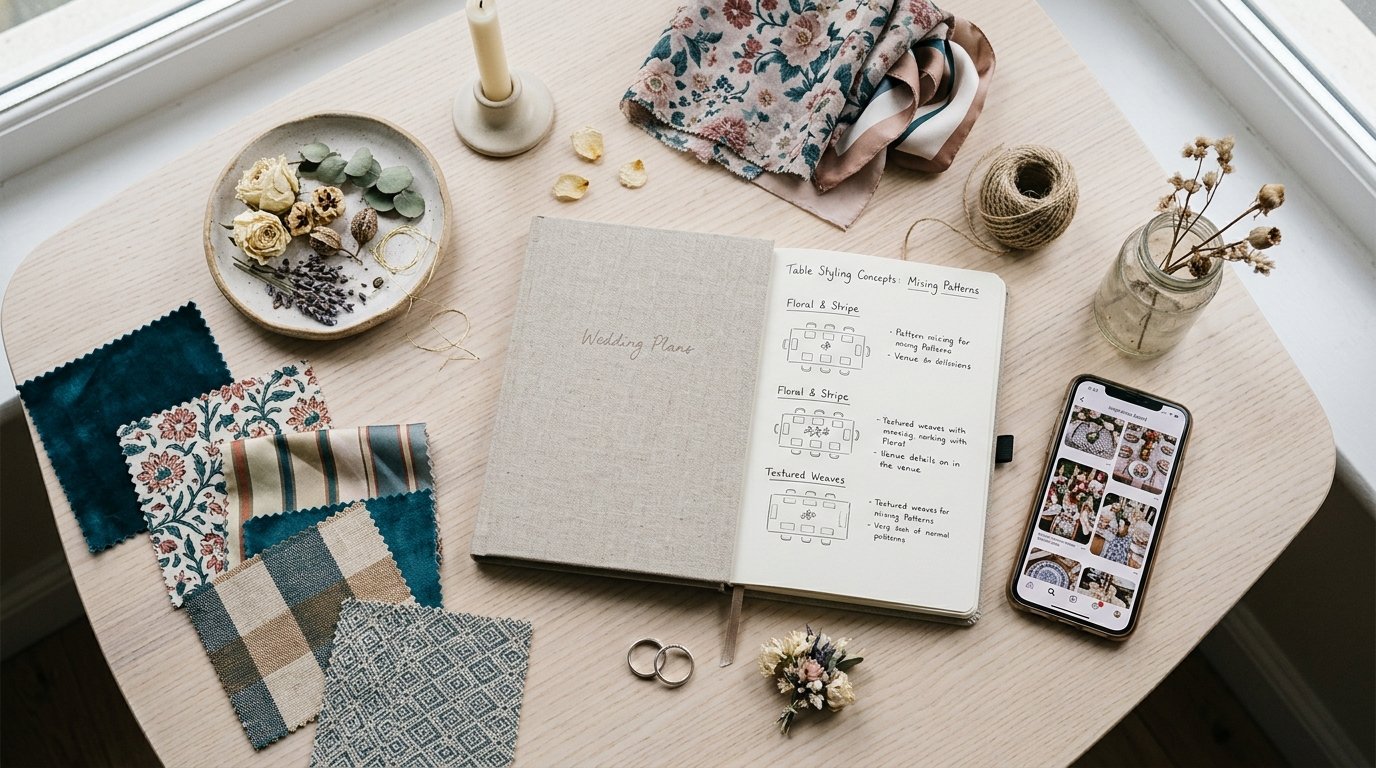
The most reliably successful combination. Stripes are geometric and structured; florals are organic and free. The contrast between the two principles creates tension that resolves into visual interest. In 2026 UK wedding styling, the most commonly seen version is a ticking stripe (narrow blue-and-white or dusty-rose-and-ivory horizontal stripes) alongside a watercolour floral.
Gingham and floral
A more relaxed, Provencal-feeling combination. Gingham is inherently informal and unpretentious; it signals a garden-party or outdoor aesthetic. Paired with a loose floral — particularly in a matching colour — it creates a cohesive botanical-maximalism story.
The standard UK version: sage green gingham check with a sage and ivory botanical print on the same table. Used extensively at barn and garden wedding receptions in the UK since 2024.
Damask and plain
A lower-risk starting point for couples nervous about pattern-mixing. Damask — woven self-patterned fabric in which the design is formed by the weave structure rather than printed colour — creates texture without the visual loudness of a printed pattern. Pairing damask with plain linen in matching tones creates subtle variety that most guests will not consciously register but will feel as a richer, more layered table.
Stripe and check
The technically most risky combination. Both are geometric, and if the scale is too similar they compete rather than complement. The key: use very different scales. A wide bold stripe paired with a small tight check (like a micro gingham) works because the scale difference creates clear hierarchy. Two bold patterns of similar scale fight.
What to avoid
Two large-scale florals on the same table. Two competing floral prints with different character — one English rose, one tropical — is the hardest combination to resolve. If you want florals and more florals, keep one at large scale and one at small scale.
Patterns in conflicting colour families without a mediating neutral. If two patterns share no common colour at all, a plain cloth in a neutral (ivory, linen, sage) between them provides a visual rest.
The napkin strategy
Napkins are the lowest-commitment way to introduce mixed-pattern styling to a wedding table. A wedding using uniform white tablecloths can gain considerable pattern interest through napkins alone.
The approach: alternate two napkin patterns around each table setting. If the tablecloth is plain ivory, use a dusty rose stripe napkin for odd seat numbers and a sage green floral napkin for even seat numbers. The alternating pattern creates rhythm and signals that the styling is intentional.
This approach costs considerably less than investing in multiple different full tablecloths. Napkin hire from UK prop companies typically costs £1.50-£4 per napkin, versus £15-£60 for a full tablecloth. For a 10-table, 80-guest reception, mixed napkins might cost £160-£320 extra. Full mixed tablecloths at the same reception would cost £800-£3,000 extra.
What it costs
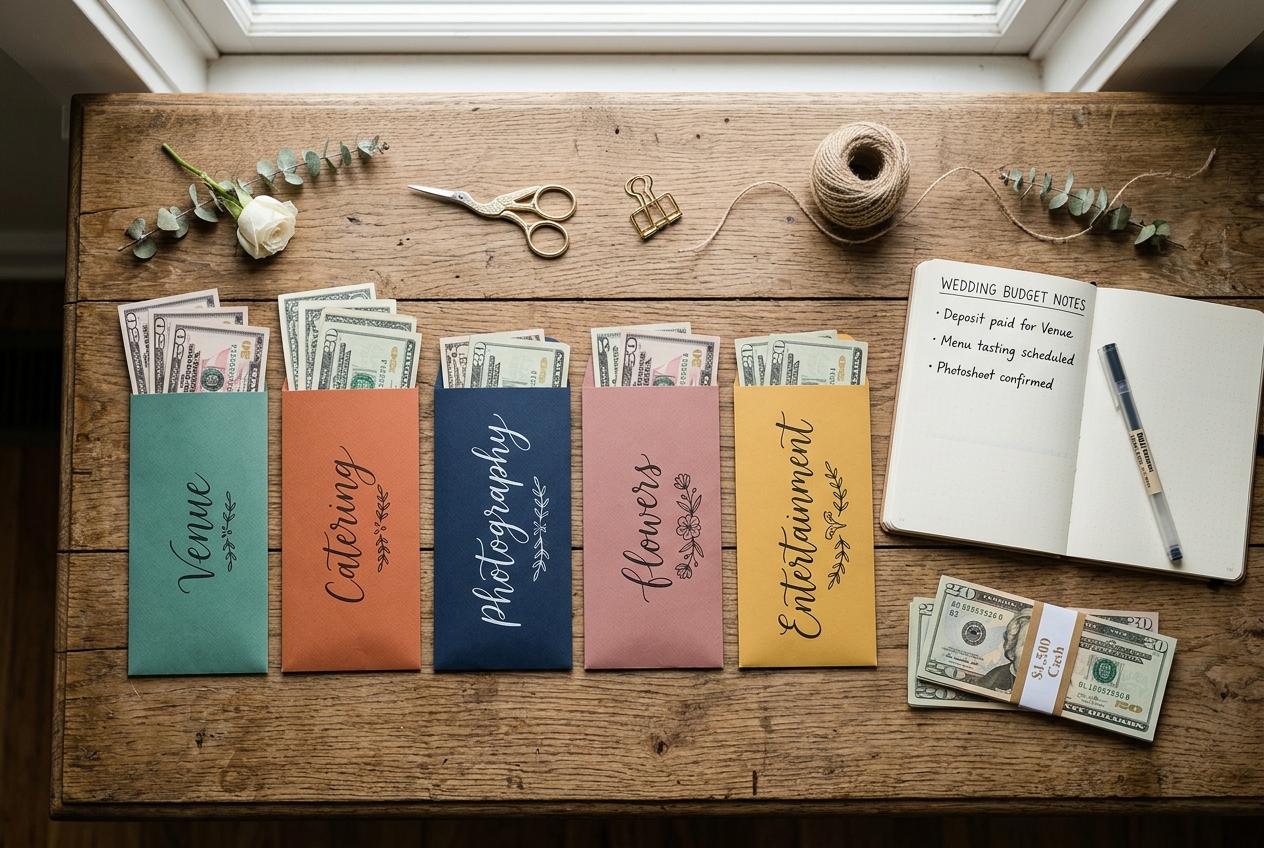
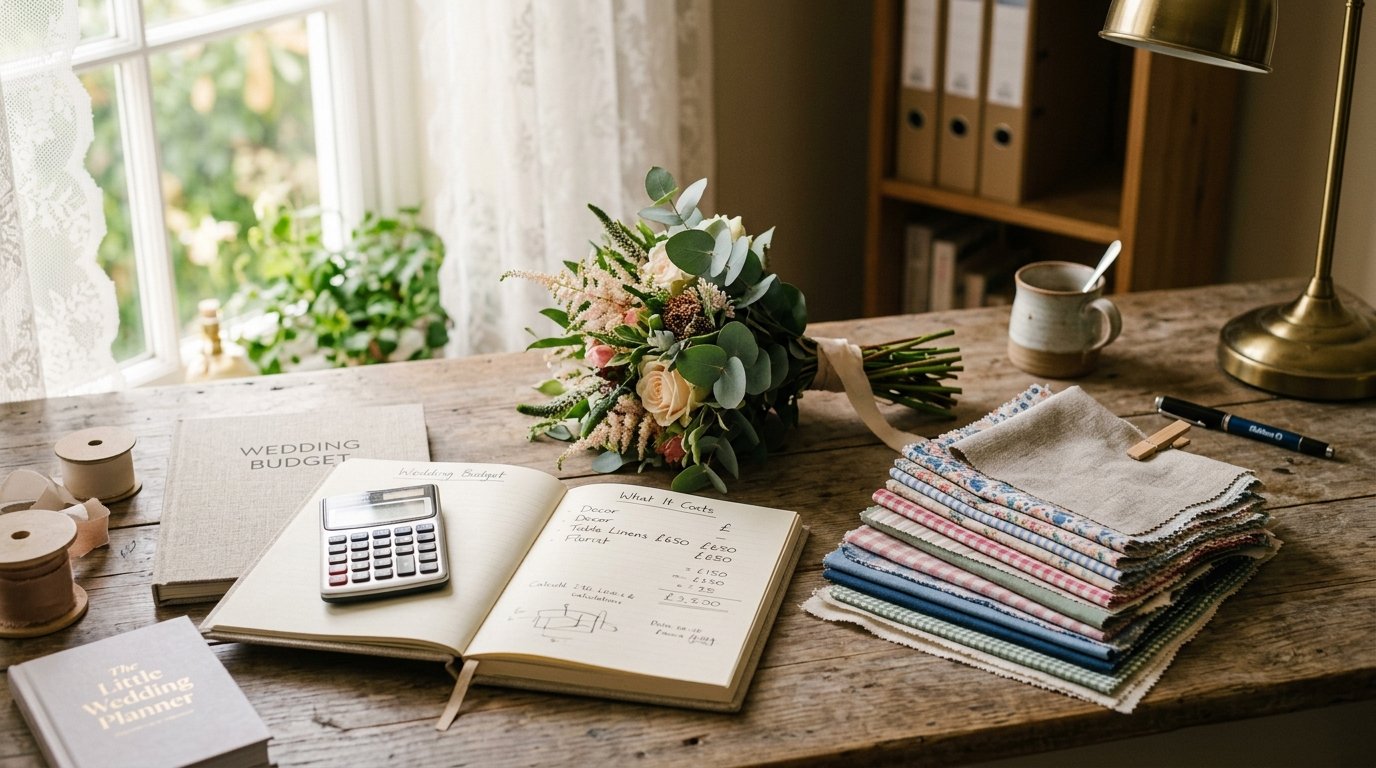
Tablecloth hire (mixed patterns, per piece): £8-£25 depending on fabric quality and provider. Most UK prop hire companies charge per cloth regardless of which tables it covers.
Napkin hire (per napkin): £1.50-£4. Mixed-pattern packs of 8 napkins are commonly available.
Table runner hire (per runner): £5-£15. Often the least expensive way to introduce pattern to a table that already has a plain cloth.
Buying vs hiring: For smaller weddings (under 10 tables), buying a variety of vintage and second-hand table linens from charity shops, eBay, and estate sales can be cheaper than hiring. The resulting collection is genuinely eclectic and can be repurposed at home after the wedding.
Where to hire in the UK
Several UK prop hire companies have curated collections specifically for the mixed-pattern linen trend:
- Rock the Day Styling (nationwide) — carries a large inventory of eclectic table linens including vintage florals, French ticking stripes, and block-print tablecloths.
- Couture Events (Home Counties and London) — mixes vintage French linen with contemporary print options.
- Vintage Rentals (various regional companies) — search “vintage linen hire UK” plus your county for local suppliers.
- eBay and Etsy UK — for buying rather than hiring, search “vintage floral tablecloth” or “vintage stripe tablecloth.”
The Flowers from the Farm network — primarily a cut-flower grower network — also connects with UK prop hire companies that share their sustainability values. Flowers from the Farm member events often use mixed-pattern linen as part of their British-grown aesthetic.
How it fits with botanical maximalism
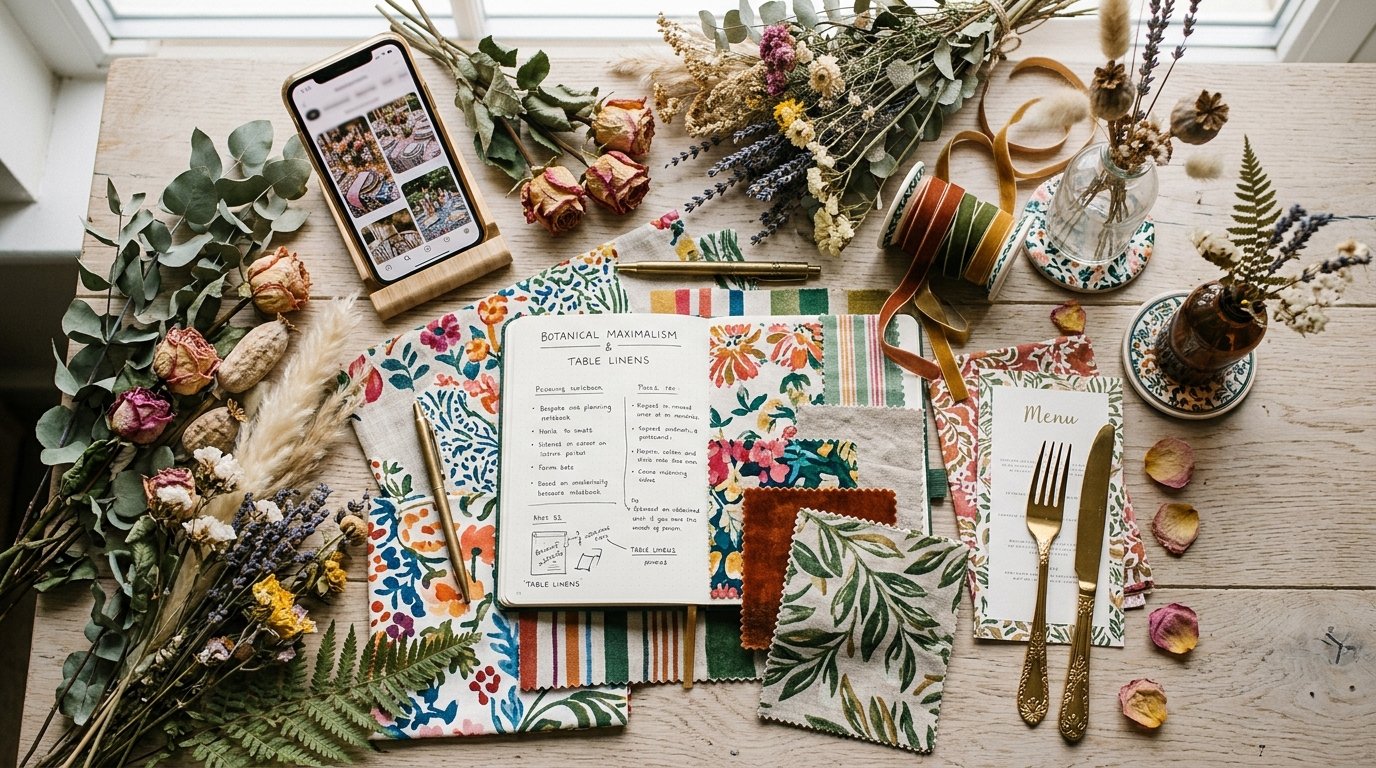
Mixed-pattern table linens are one element in the broader botanical maximalism tablescape rather than a stand-alone decision. They work most effectively when the rest of the table styling matches the principle of abundance and variety:
- Botanical centrepieces with multiple species rather than single-variety arrangements
- Mismatched glassware — vintage wine glasses and champagne coupes rather than matching flutes
- Varied candlestick heights — mixed tapers and votives rather than uniform candle arrangements
- Objects and books integrated into the table rather than just flowers and food
See our botanical maximalism guide for the full styling system of which mixed linens are one part.
Practical considerations
Tablecloth sizes: Confirm the exact table dimensions from your venue before ordering. Drop length — how far the cloth hangs off the table edge — affects the look significantly. A generous drop (30-45cm) creates a more formal, luxurious feel. A short drop (15-20cm) reads as more casual. For floor-length drops, add the table height (typically 75cm) to the table dimensions.
Ironing: Hired linens will typically arrive pressed. If buying vintage linens, plan for a 1-2 hour ironing session the day before the wedding. Deeply wrinkled vintage linen undermines the deliberate aesthetic.
Laying mixed tablecloths: When using different cloths on different tables in the same room, the visual result is most effective if there is visible separation between tables (not pushing tables end-to-end, which creates one continuous surface). Each table reads as its own styled moment.
Related articles
Frequently asked questions
What is the mixed-pattern table linen trend in weddings?
Mixed-pattern table linens is a styling approach where different table-covering patterns — stripes, florals, checks, gingham, damask — are used together on different tables or as different elements on the same table. It contrasts with the traditional approach of uniform white linen across all tables.
How do you mix patterns without it looking messy?
The key principle is to unify through colour rather than through pattern. Choose two or three colours and allow the patterns to vary within those colours. A stripe, a floral, and a check in dusty rose and sage green will read as cohesive. The same patterns in three different colour families will read as chaotic.
What patterns mix well for a wedding table?
Stripes and florals are the most successful pairing — the geometric rigour of stripes grounds the organic character of florals. Gingham and florals work on a similar principle. Damask and plain linen is a less challenging combination that creates subtle texture variety. The hardest combination to make work: two large-scale competing florals.
Where can I hire mixed-pattern table linens in the UK?
UK prop hire companies including Astley Clarke Events, Rock the Day, and Couture Events all carry mixed-pattern linen options. Independent vintage and prop hire companies in most UK regions also stock eclectic table linen collections. Hire typically costs £8-£25 per piece.
Does the mixed-pattern approach work with all venue types?
Best with informal venues: barns, outdoor spaces, garden parties, and rustic reception rooms. The pattern mixing reads as intentionally eclectic in these settings. In highly formal venues — grand hotel dining rooms, classical spaces with chandeliers — it can read as inconsistency rather than style. The aesthetic is more Glastonbury than Blenheim.
What about napkins — should they match or clash too?
Napkins are the easiest place to introduce pattern variety with low risk. A plain-tablecloth table can be given pattern character through mixed napkins alone — alternating a striped napkin and a floral napkin around the table creates rhythm without needing to invest in multiple full tablecloths.