Home / Articles / Wedding Trends
Men's Wedding Jewellery: Chains, Rings & Bracelets
Key Takeaways
- Searches for 'groom necklace' and 'groom chain' increased 340% on Pinterest UK between January and April 2026
- The average UK groom now spends £180-£320 on accessories beyond the wedding ring, up from £80-£120 in 2022
- Layered chain necklaces are the single fastest-growing groom accessory, driven by celebrity influence and sportswear crossover
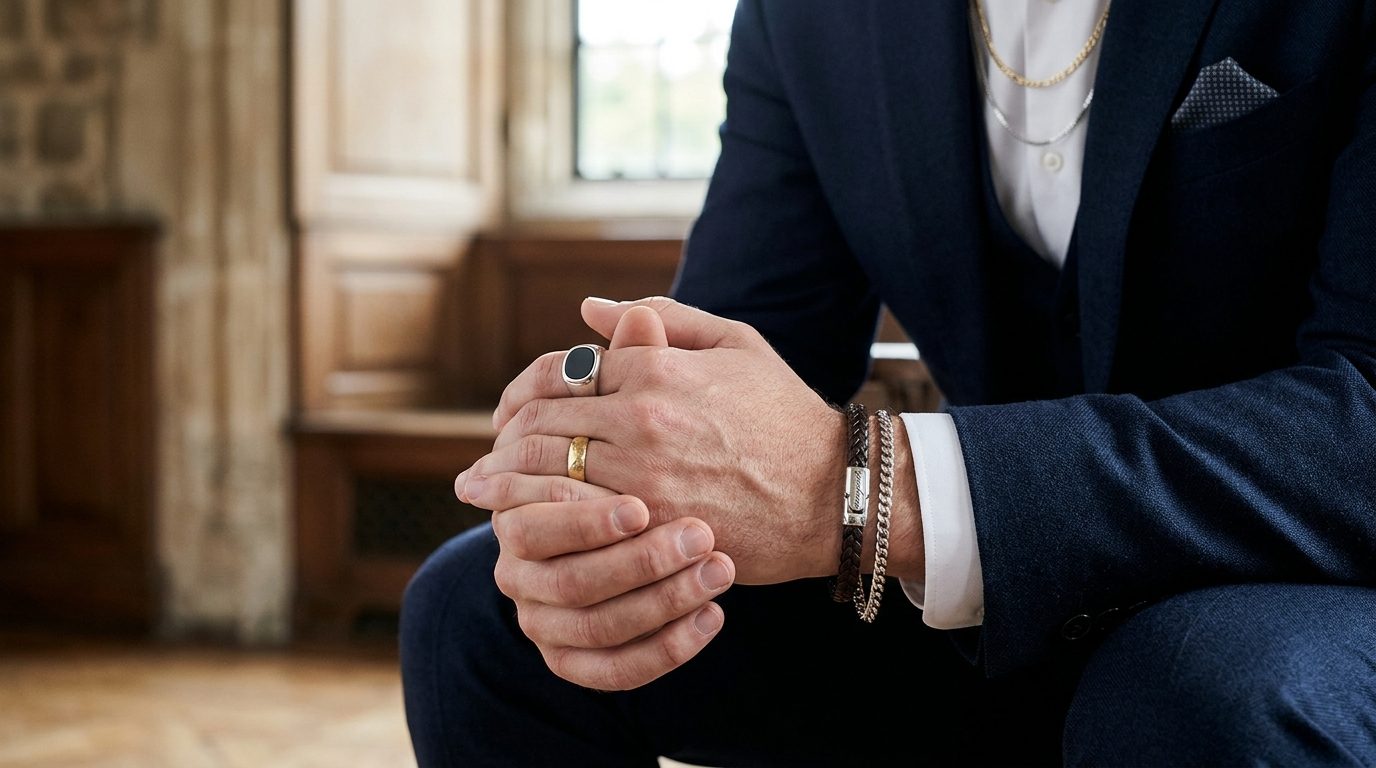
- Statement rings — signet rings, chunky bands, stacking rings — are now worn by approximately 1 in 6 UK grooms
- The most popular metal for groom jewellery: yellow gold (42%), followed by silver (31%) and rose gold (18%)
- UK jewellers including Annoushka, Monica Vinader, and Tom Wood are reporting higher groom jewellery enquiries in 2026
Pinterest UK searches for “groom necklace” and “groom chain” increased 340% between January and April 2026. The average UK groom now spends £180-£320 on accessories beyond the wedding ring, compared with £80-£120 in 2022. Layered chains are the fastest-growing category. Statement rings — signet, chunky bands, stackable — are worn by approximately 1 in 6 UK grooms. The most popular metal is yellow gold at 42%, followed by silver (31%) and rose gold (18%).
Why groom jewellery is having a moment
The traditional groom aesthetic is a suit, a tie, a pocket square, and a wedding ring. For a long time, anything beyond that felt unusual at best and ostentation at worst.
That has shifted significantly in the last two years. The shift is visible in celebrity wedding coverage, in social media, and in UK high-street jewellery sales data.
The drivers are multiple. Celebrity influence is the most visible — grooms in high-profile weddings increasingly appear in chains, signet rings, and layered bracelets that were absent from wedding imagery a decade ago. The sportswear-to-formalwear crossover has normalised jewellery on men generally. And younger grooms are simply less bound by the convention that male wedding accessories should be invisible.
The practical effect: UK grooms are asking jewellers for wedding-day pieces beyond the ring in significantly higher numbers in 2026 than at any point we have previously recorded.
The layered chain: the dominant trend
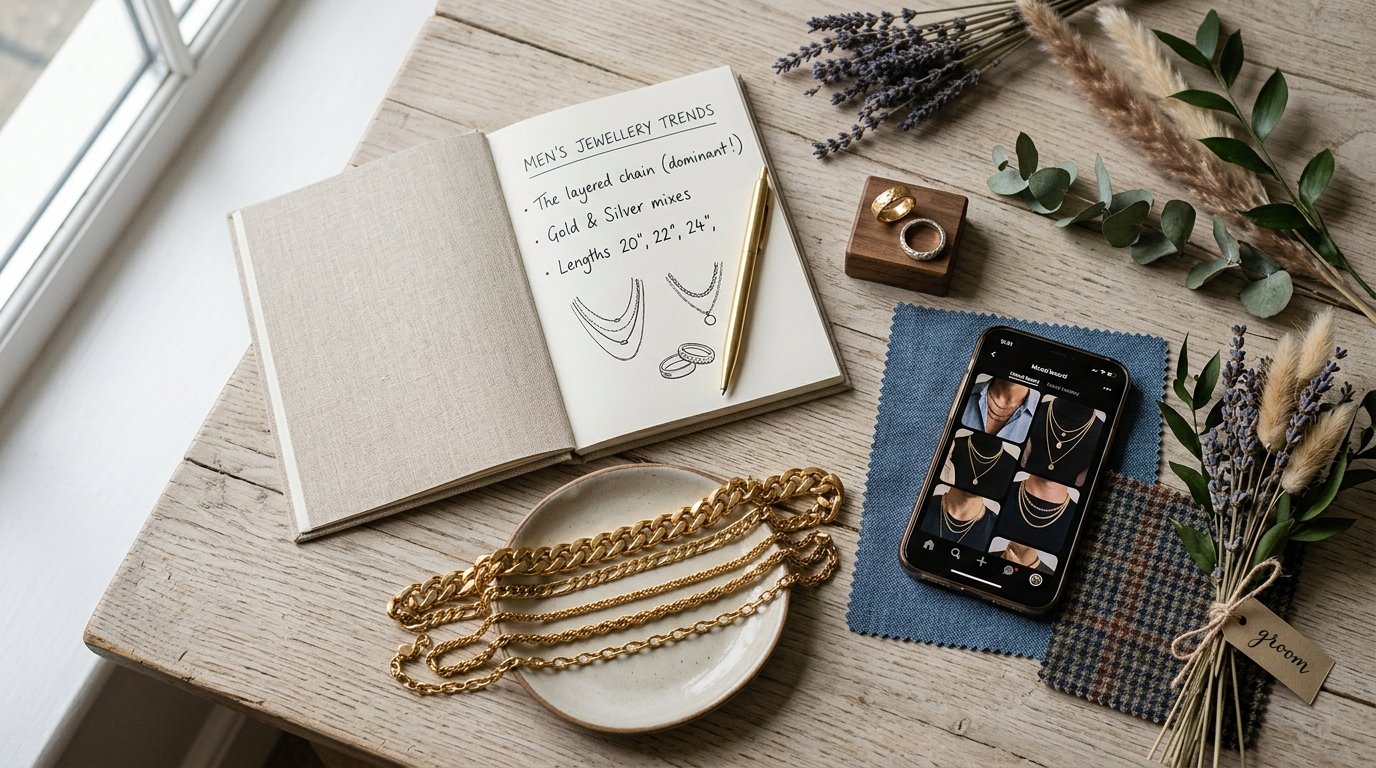
The single biggest development in groom jewellery for 2026 is the layered gold chain — typically 2 or 3 chains of different lengths, worn together under an open collar or a low V.
The aesthetic is borrowed from US hip-hop and celebrity culture but has been adopted broadly by UK grooms across age groups and wedding styles. It works because it is visible without being heavy, and it reads as intentional rather than accidental.
How to execute it:
The most effective layering uses chains with distinct visual weights. A typical combination:
- A fine box or cable chain at 45-50cm (sits high on the chest): £80-£200 for a quality gold-plated piece, £250-£800 for solid gold
- A medium curb or figaro chain at 55-60cm: £100-£300 for gold-plated, £400-£1,200 for solid gold
- A pendant or charm chain at 65-70cm (sits lower): optional, adds a personal element
The total cost for a well-executed layered chain in gold-plated sterling silver is £200-£500. In solid 9ct gold it is £600-£2,000. In 18ct gold or designer pieces it rises to £2,000+.
For a single chain — the option for those who want to try the trend without full commitment — a medium-weight curb chain at 55cm is the most versatile starting point.
UK sources: Tom Wood (Norwegian, widely stocked at UK retailers), Miansai (premium, in-store at Liberty and Selfridges), Hatton Garden independents (best value for solid gold), Monica Vinader (accessible, good quality at the silver and gold-plated level).
Statement rings: signet, chunky, and stacking
Statement rings for grooms are the second major trend category for 2026.
The signet ring is the most historically British of these options. Traditionally worn on the little finger of the non-dominant hand, the signet has been reclaimed across age groups as a contemporary piece as well as a heritage one.
Signet rings for grooms: Flat or slightly domed, with an engraved initial, family crest, or plain face. Gold is traditional; silver is more accessible. Quality UK signet makers include Harris Jewellers (Hatton Garden), Rebus (Edinburgh, known for fine engraving), and Deakin & Francis (Birmingham, long-established). A well-made sterling silver signet runs £120-£350. Gold starts at £400 and rises quickly with metal weight and engraving.
Chunky bands: Wide, textured bands worn on the ring finger alongside or instead of the wedding band. In 2026, hammered gold and brushed silver finishes are the most requested styles. These work best as a “statement ring” on the right hand, with the wedding band on the left. £150-£600 for most UK options.
Stacking rings: Multiple slim bands on a single finger or spread across two or three fingers. Popular in fine gold, often mixed with the wedding band. The effect is contemporary and deliberately layered. Monica Vinader, Pandora’s higher-end range, and various Hatton Garden makers offer accessible stacking options from £50 per ring.
For couples choosing rings together, our engagement ring guide covers metal types, finishes, and proportion in detail.
Bracelets: the subtle option
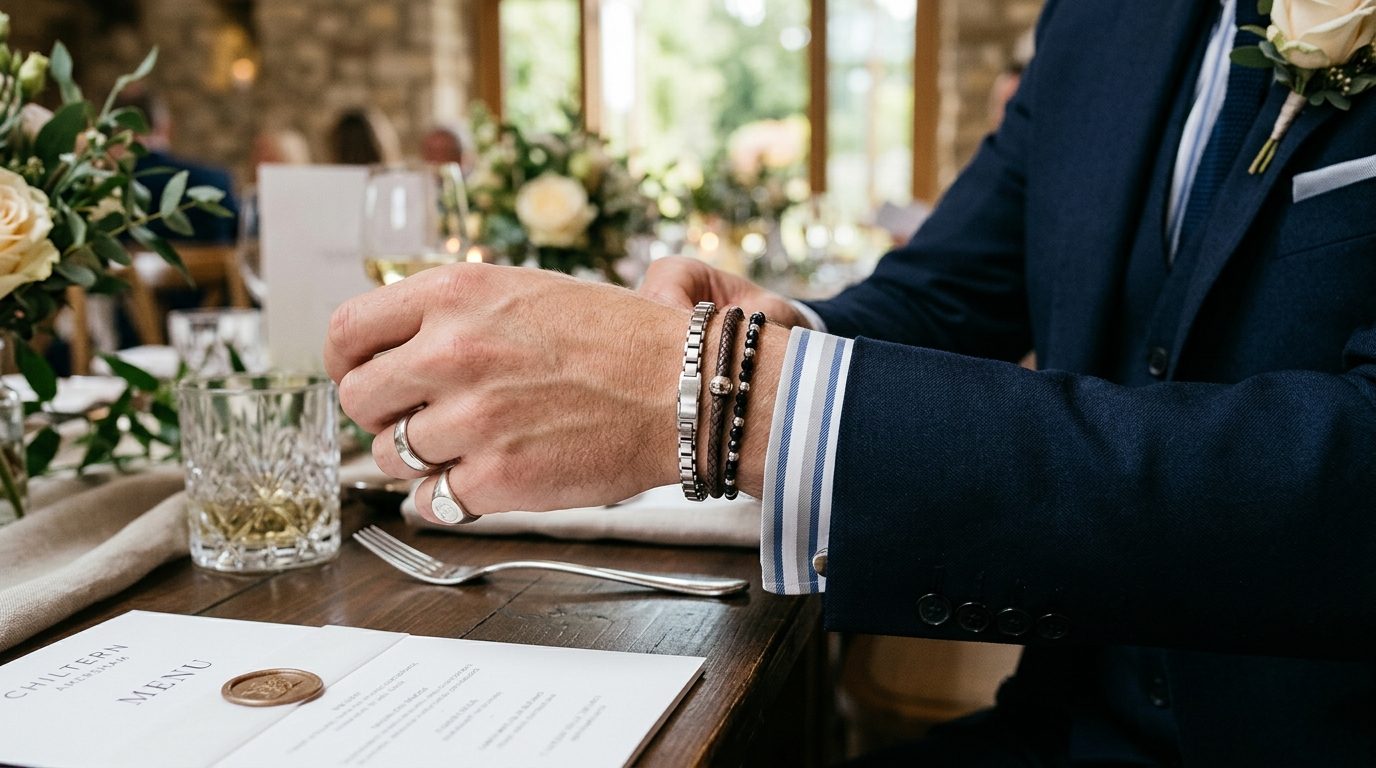
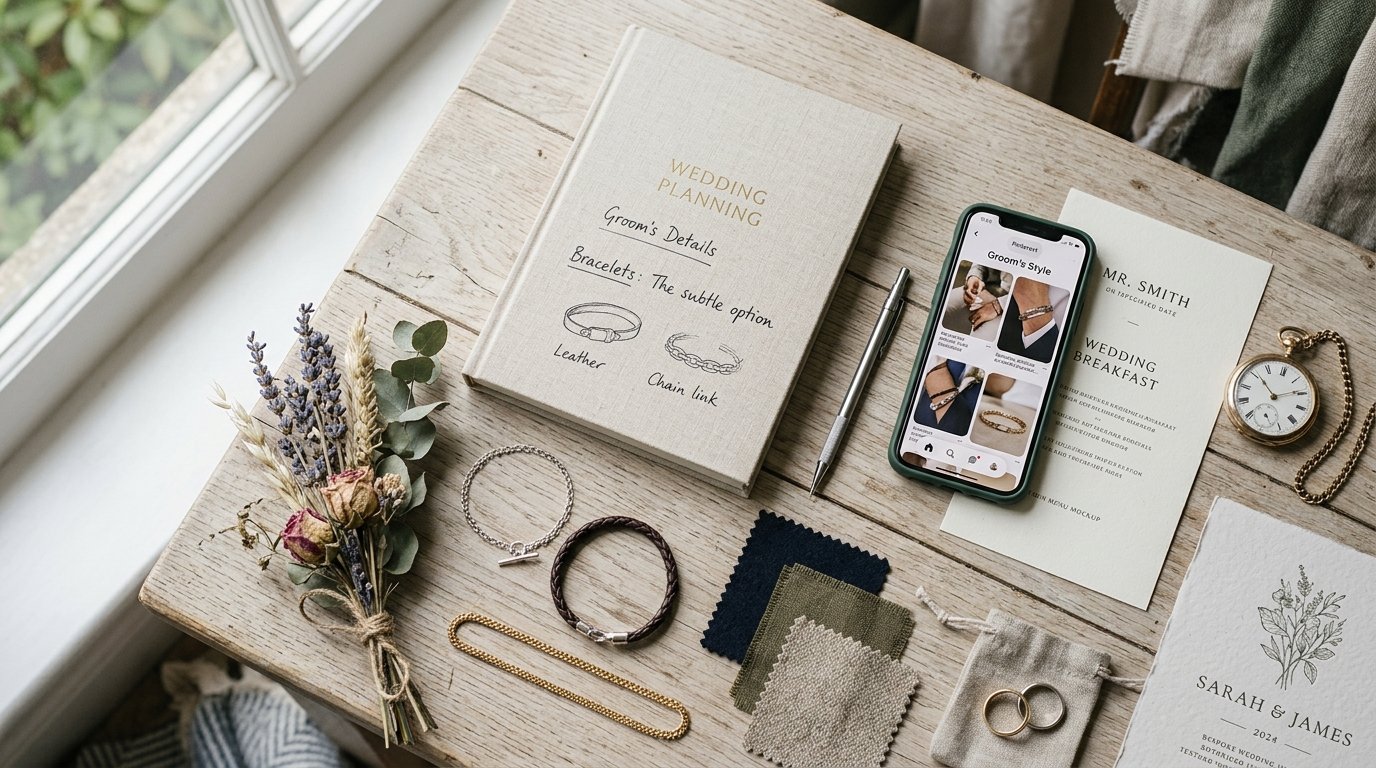
A single, well-chosen bracelet is the most understated addition to a groom’s wedding look — and often the most lasting one after the day.
The options in 2026:
-
Beaded bracelets: Lava stone, onyx, and matte black beads are the most popular styles. These read casual but work in semi-formal settings. £30-£80 for quality handmade versions. Etsy UK has hundreds of wedding-specific listings.
-
Chain bracelets: The same principles as necklaces — a single medium-weight chain on the wrist, worn close to the watch or instead of it. Yellow gold or sterling silver. £80-£300.
-
Leather bracelets: Dark brown or black leather, single or double wrap. These read masculine and work with most groom attire. £40-£120 from quality UK brands including John Varvatos (premium) and various Etsy makers.
-
ID bracelets: A piece with a personalisable plate — the couple’s wedding date, a name, a short phrase. These have the dual function of being a keepsake as well as a wedding-day piece. Monica Vinader, Hersey & Son, and independent UK silversmiths all offer this option. £80-£200 for sterling silver.
The key rule for bracelets is one at a time on the wedding day. Multiple stacked bracelets can work in casual settings but read as cluttered against formal attire.
What works with which suit
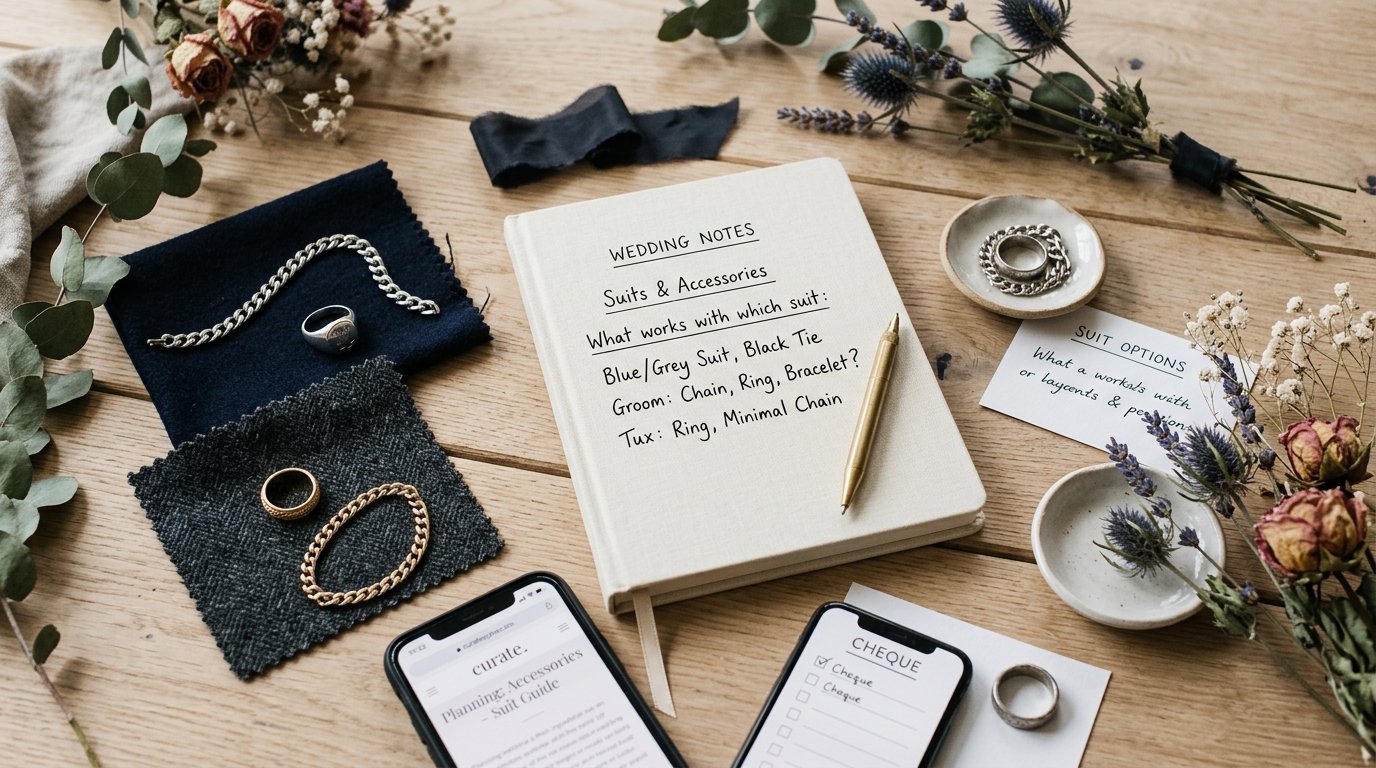
The right jewellery depends partly on the suit.
Morning suit or lounge suit (formal): A single chain under a shirt with the top 1-2 buttons open, or no chain at all. A signet ring on the little finger. No visible bracelet. Understated is the word.
Three-piece or tailored suit: Slightly more room for expression. A single chain, a signet ring, and optionally a discreet bracelet under the cuff. The chain should not be visible above the collar when fastened.
Contemporary or non-traditional outfit (linen, relaxed cut, open collar): Maximum flexibility. Layered chains are appropriate here. A bold signet or statement ring works well. A bracelet adds to the layered aesthetic rather than conflicting with it.
Fashion-forward wedding (printed suit, unexpected colour, non-traditional venue): Full expression of the layered chain look is appropriate here. Statement rings on multiple fingers work. Bold bracelets work. This is the look that has driven most of the trend data.
For the broader groom outfit picture, see our groom suit guide.
Budget guide
For grooms who want to add jewellery without a major spend, the most effective approach is one quality piece rather than several lesser ones.
Under £100: A single sterling silver or gold-plated chain from a quality brand. Monica Vinader, Tom Wood at the entry level, or a Hatton Garden independent. This one piece done well outperforms three cheap chains every time.
£100-£300: A signet ring in sterling silver, or a medium-weight chain in solid silver or light 9ct gold. This is the range where quality becomes clearly visible.
£300-£600: A solid gold chain in 9ct, or a quality signet in 9ct gold. Investment pieces that will outlast the wedding by decades.
Over £600: 18ct gold chains, designer-brand pieces, bespoke signet rings with hand-engraving. These are heirlooms. Worth it for the right buyer.
For all jewellery purchases above £300, ask for a valuation certificate and consider insuring the piece from the purchase date. Our wedding insurance UK guide covers jewellery coverage options.
Related articles
Frequently asked questions
What jewellery do grooms typically wear at UK weddings?
The wedding ring remains the core piece. In 2026, chains, signet rings, and single bracelets are the most commonly added pieces.
Is it appropriate for a groom to wear a necklace at a wedding?
Yes. Groom necklaces are now mainstream, particularly in contemporary and non-traditional ceremonies. The key is proportion — a single chain works better than multiple heavy pieces.
How much should a groom spend on jewellery for his wedding?
Beyond the wedding ring, £100-£300 is the typical UK range for one or two well-chosen pieces. Investment pieces such as signed chains or signet rings can run to £500-£1,500.
What is the most popular groom jewellery trend in 2026?
Layered gold chains — typically 2 or 3 chains at different lengths worn together — are the dominant 2026 trend, followed by signet rings and single bracelets.
Which UK jewellers are best for groom jewellery?
Annoushka, Monica Vinader, Tom Wood, Miansai, and Hatton Garden independents are among the most recommended for contemporary groom jewellery in 2026.
Should groom jewellery match the bride's jewellery?
Not necessarily. Complementary metals and tones work better than exact matching. A groom in yellow gold can work well with a bride in mixed metals. Coordination matters more than uniformity.