Is It Tacky to Wear Black to a UK Wedding?
Key Takeaways
- 78% of UK wedding guests consider black acceptable in 2025/2026 according to Style Council research
- Only 14% of UK adults describe black as 'definitely rude' at a wedding
- Vogue UK listed black in its top five recommended wedding guest colours for 2025-2026
- The old rule against black was based on Victorian mourning customs — largely irrelevant now
- All-black with no accessories still reads as funeral in some traditional or religious contexts
- Metallic accessories, colour-pop shoes or statement jewellery shift black into celebration territory
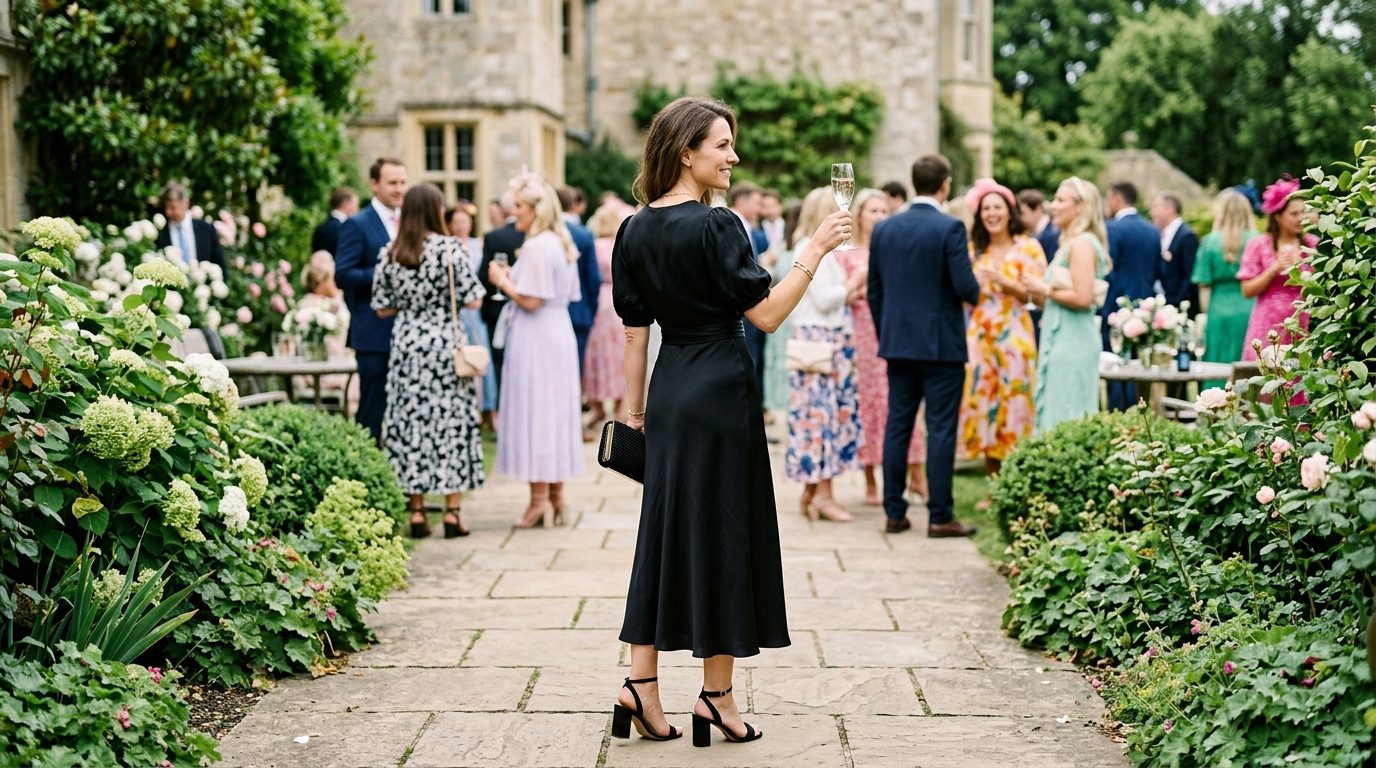
Wearing black to a UK wedding was once considered inappropriate — a colour associated with funerals and Victorian mourning. In 2026, that rule has mostly dissolved. A 2025 survey by The Style Council found 78% of UK wedding guests now consider black an acceptable choice. Only 14% described it as “definitely rude.” Vogue UK’s 2025 wedding guest guide listed black in its top five recommended guest colours. The question in 2026 is not whether you can wear black, but how you wear it.
By Matt, Editor at Weddings Hub. I have written about UK wedding guest etiquette and fashion for eight years. For this piece I drew on The Style Council 2025 UK survey data, Vogue UK’s 2025-2026 wedding guest guides, and input from four UK-based wedding planners who shared their experience of guest outfit choices at events across England and Scotland.
Black is now the default choice for a significant minority of UK wedding guests. Anyone who attends weddings regularly will have seen black outfits at every price point and formality level. The old social pressure against wearing black has weakened enough that the question is largely settled — with some important exceptions.
Where the rule against black came from
The prohibition on black at weddings was not arbitrary. It emerged from Victorian mourning customs, where black dress was strictly reserved for the bereaved. Wearing black to a celebration was a statement of the worst kind: that you were grieving, not rejoicing. Social codes in the 19th and early 20th centuries made this prohibition clear and widely understood.
The 20th century eroded these codes steadily. As formal mourning dress declined, the association between black and grief weakened. By the 1980s, black had become the default colour of evening wear, cocktail dresses and formal fashion. The idea that black was only for funerals became implausible once it was also the colour of every smart restaurant outfit and formal work event.
By 2010, most UK style guides were already softening on the rule. By 2020, the question had largely answered itself. By 2026, only a small and specific set of circumstances make black genuinely inappropriate.
When black works at a wedding
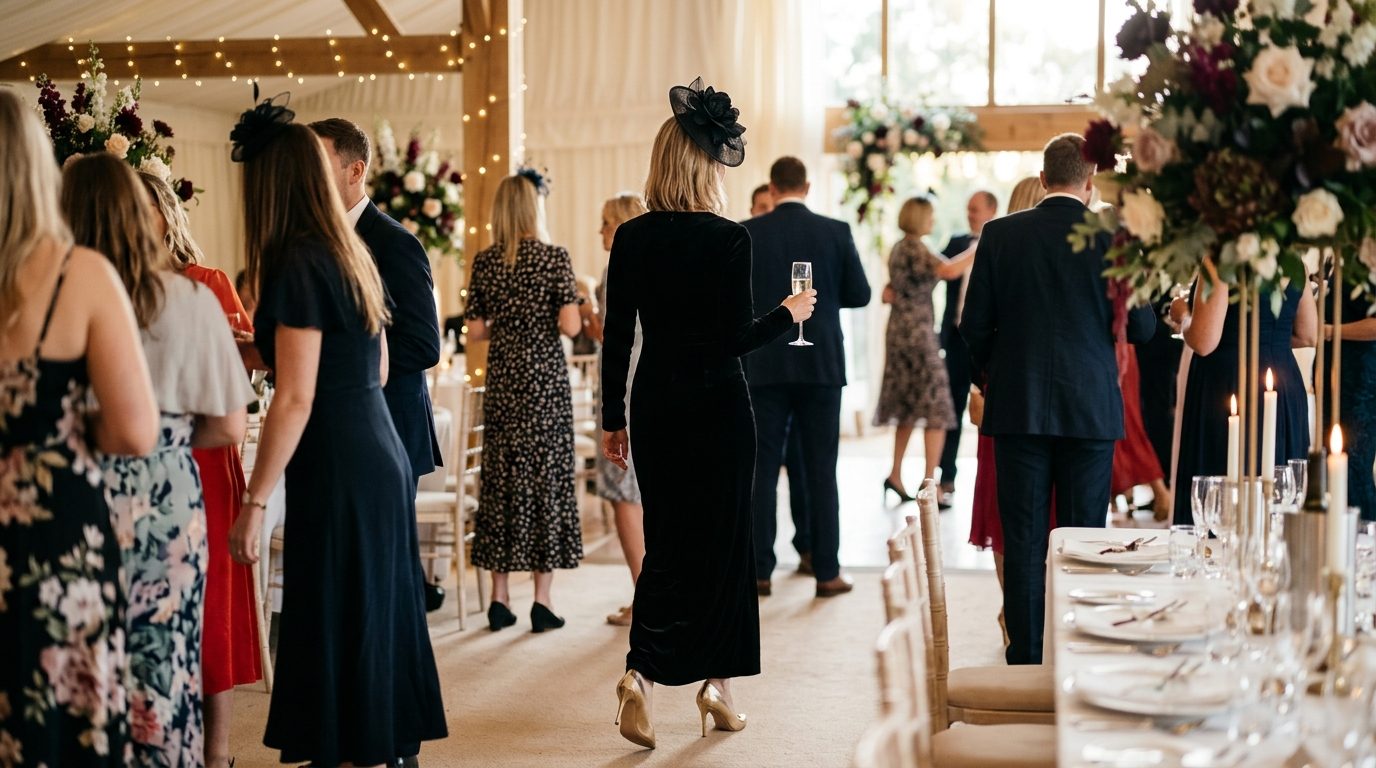
Formal evening receptions. Black tie and cocktail dress codes at evening receptions are exactly where black is correct. A black dress or black trouser suit is entirely appropriate. It is, in many social circles, the expected choice.
City weddings. Urban weddings — particularly in London, Manchester and Edinburgh — tend toward a more fashion-forward guest aesthetic. Black is the anchor of a fashion-forward wardrobe. Wearing black to a city wedding is unremarkable.
Contemporary venues. Loft conversions, art galleries, rooftop venues and contemporary hotel receptions suit black easily. The visual context reinforces rather than undermines the outfit.
Cooler months. A black velvet midi or tailored black trouser suit at an autumn or winter wedding is both practical and aesthetically correct. Black photographs well in low-light indoor settings.
When black needs a rethink
Very traditional or religious ceremonies. Some traditional church weddings, South Asian weddings, and ceremonies with religious colour conventions treat black differently. If you are attending a Hindu wedding, a Sikh ceremony, or an Orthodox Jewish wedding, check before wearing black. Some of these traditions reserve black specifically for mourning. A quick message to the couple or a family member costs nothing and prevents an uncomfortable situation.
Countryside morning-dress weddings. Very formal country house weddings with morning dress specified often expect guests in summery pastels or complementary colour. Black is not wrong, but it may look out of step with a garden-party aesthetic where everyone else is in blush, yellow or navy.
If the dress code says so. Some couples specify “bright colours only” or “no black” in their dress code guidance. This is increasingly common at spring and summer weddings where the couple wants a colourful visual aesthetic in photographs. If the invitation says this, follow it.
How to style black so it reads as festive
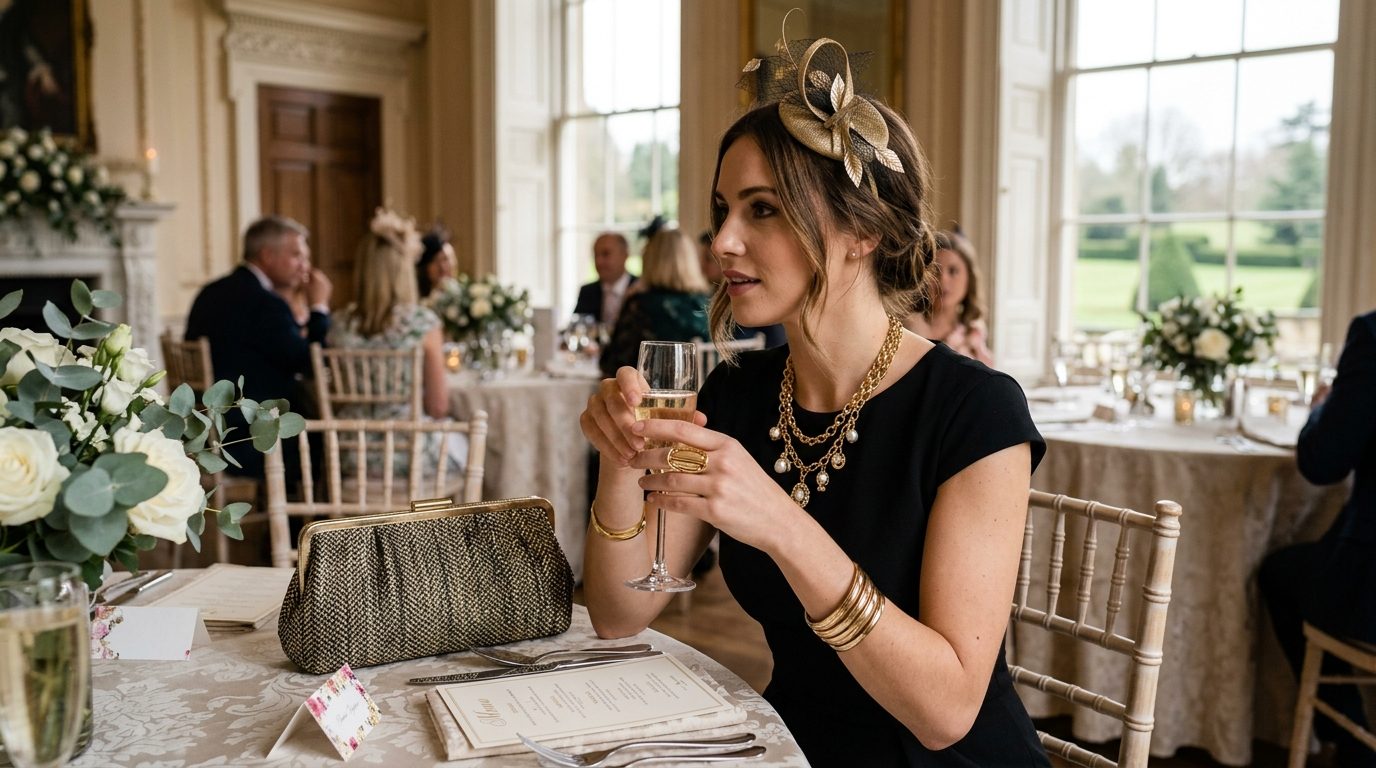
The version of black that still triggers occasional negative comment is unrelieved all-black with no embellishment. A plain black shift dress, no jewellery, dark shoes, minimal makeup. In a traditional context this reads too close to mourning to be comfortable.
The fix is straightforward.
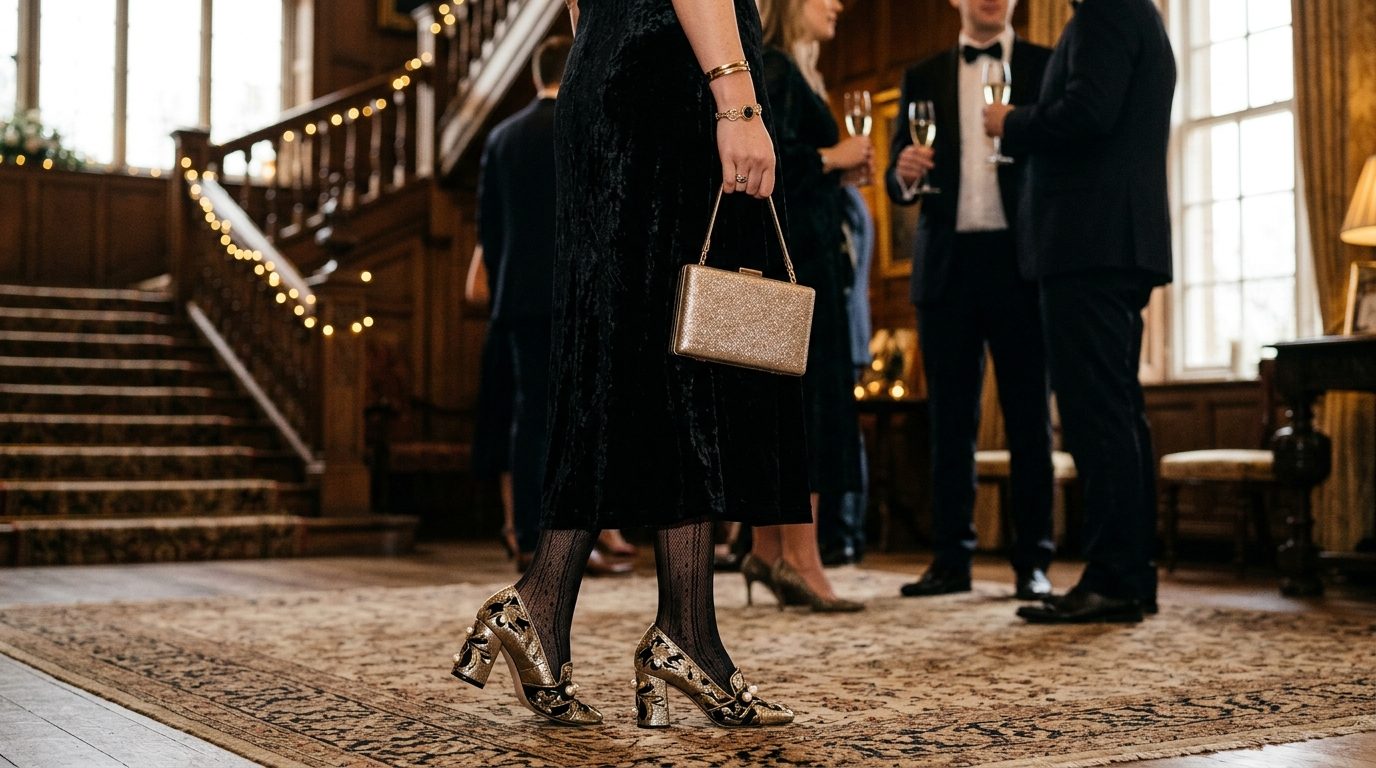
Add metallics. Gold heels, a silver clutch, metallic jewellery. These immediately signal that this is eveningwear, not funeral wear.
Add a colour accent. A coloured fascinator, a blush wrap, a patterned silk scarf. One non-black element is enough.
Add texture. Lace, embroidery, velvet, sequins. Textured or embellished black reads festive rather than austere.
Add statement accessories. Bold earrings, a beaded necklace, a printed bag. Accessories carry register in a way that colour alone sometimes doesn’t.
For more on what to wear to UK weddings across different dress codes, see our complete wedding guest outfit guide and the dress code guide.
The photography consideration
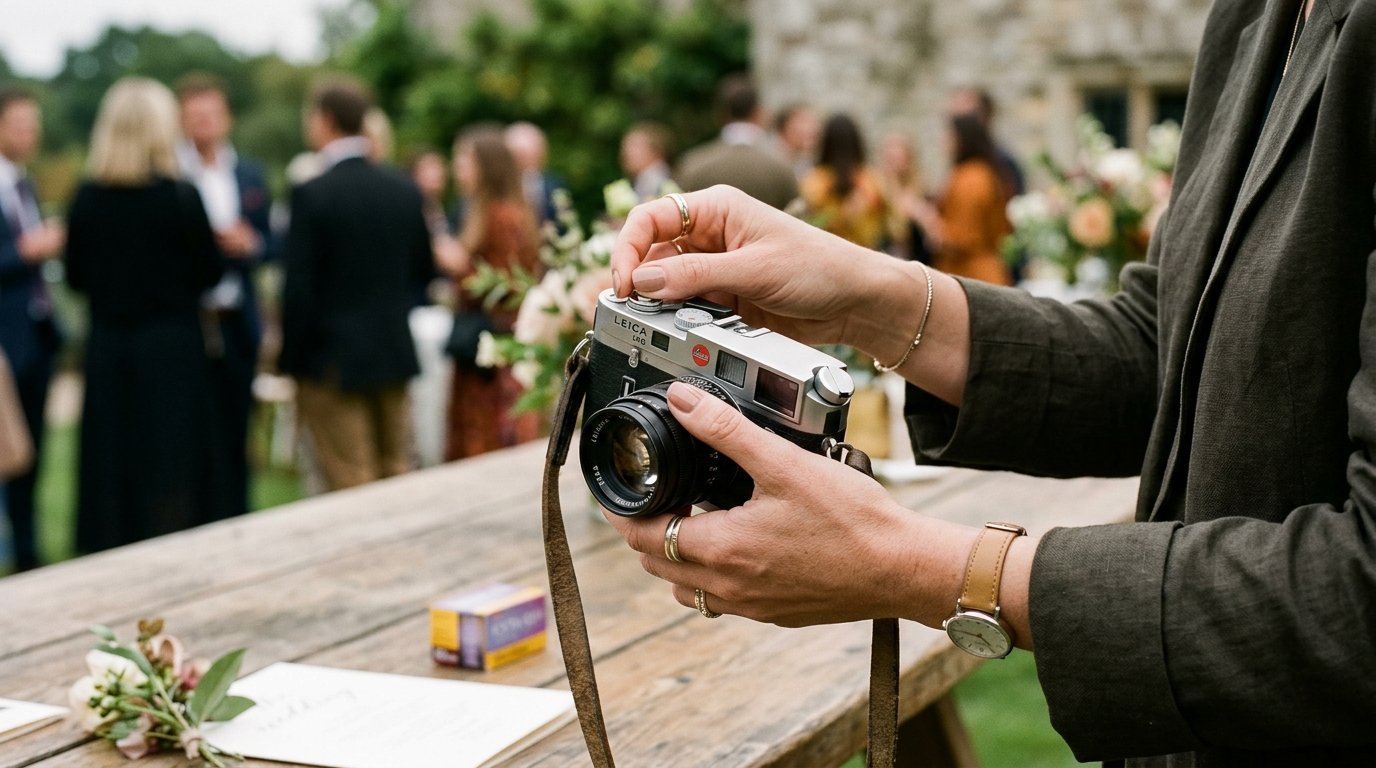
One argument that sometimes appears against black at weddings is that it photographs badly in groups. This is partly true: very dark clothes can create contrast problems in group shots in direct sunlight. But modern photography handles this well. An experienced photographer adjusts exposure for group shots. The idea that you will ruin the wedding photos by wearing black is significantly overstated.
What is more likely to cause a photography issue: wearing a shade of white, cream or ivory that reads as the bride’s colour in photographs. That is the colour concern that still has genuine practical teeth.
The bride’s view
Ultimately, the person whose opinion matters most is the couple getting married. If they have expressed a preference — through a dress code, a style guide, a conversation, or a specific request — that overrides any general guidance.
If they have not expressed a preference, black is safe for the overwhelming majority of UK weddings. The 14% of guests who consider it rude are a minority, and most of them would express discomfort privately rather than create an incident on the day.
If you want to be certain, message the bride or a member of the wedding party with a simple question: “Is black okay for the ceremony?” You will get a direct answer and you will not need to wonder.
Related articles
Frequently asked questions
Is it rude to wear black to a UK wedding in 2026?
No, not for most weddings. A 2025 survey found 78% of UK guests consider black acceptable. The old rule against black was based on Victorian mourning associations that no longer apply in most modern social contexts.
When should I avoid black at a wedding?
Avoid all-black at very traditional morning-dress or white-tie weddings where formal colour is expected. Also check whether the couple has asked guests to avoid black in the dress code. Some religious ceremonies have colour conventions worth checking.
How do I style black so it reads as celebration, not funeral?
Add metallics, colour or statement accessories. Gold or silver heels, a colourful clutch, a patterned scarf, or bold jewellery all shift black into festive territory. An all-black outfit with no embellishment is the version that still reads as funeral in some contexts.
Is a black wedding guest dress acceptable at an evening reception?
Yes, entirely. Evening receptions lean toward formal or cocktail dress codes where black is the conventional choice. A black cocktail dress or black formal trousers are appropriate and common at UK evening receptions.
What does the couple's dress code tell me about wearing black?
If the dress code says 'Black Tie', black is expected for evening wear. If it says 'Smart Casual' or 'Garden Party', black works but benefits from colour accents. If the dress code explicitly says 'bright colours' or 'no black', take that guidance seriously.
Can a man wear a black suit to a UK wedding?
Yes. A black suit is one of the most common and correct choices for a male wedding guest in the UK. It is appropriate for evening receptions, afternoon ceremonies and most dress code levels except morning dress, where morning coat, waistcoat and striped trousers are expected.
What colours should I actually avoid at a UK wedding?
White, cream and ivory remain the shades to avoid — these are the bride's colours in most UK weddings. Very pale gold can also read as ivory in photographs. Some brides and grooms specify additional colours in their dress code; follow what the invitation says.