Is a Wedding Fair Worth It? What to Expect
Key Takeaways
- Wedding fairs are most valuable in the first 3 months of planning, before you've booked most suppliers
- Venue open days are almost always worth attending — they're free, focused, and genuinely useful
- Large exhibitions are good for dress shopping and inspiration but overwhelming for serious supplier research
- The biggest risk is impulse booking — never pay a deposit at the fair itself
- If you've already booked your venue, photographer, and caterer, you probably don't need another fair
You’ve just got engaged. Someone tells you to go to a wedding fair. But is it actually worth giving up a Saturday? Or will you spend four hours being pitched to by 80 suppliers you’ll never book?
The honest answer: it depends on when you go, which fair you choose, and what you need. This guide gives you the unfiltered truth — including when to skip them entirely.
The short answer
Go if: You’re in the first 3 months of planning, you haven’t booked your major suppliers, and you want to compare options face-to-face.
Skip if: You’ve already booked your venue, photographer, caterer, and florist. At that point, you’re better off researching remaining suppliers online.
Always go to: Venue open days for venues you’re seriously considering. They’re free, focused, and the single most useful type of wedding fair.
What actually happens at a wedding fair
If you’ve never been, here’s the reality:
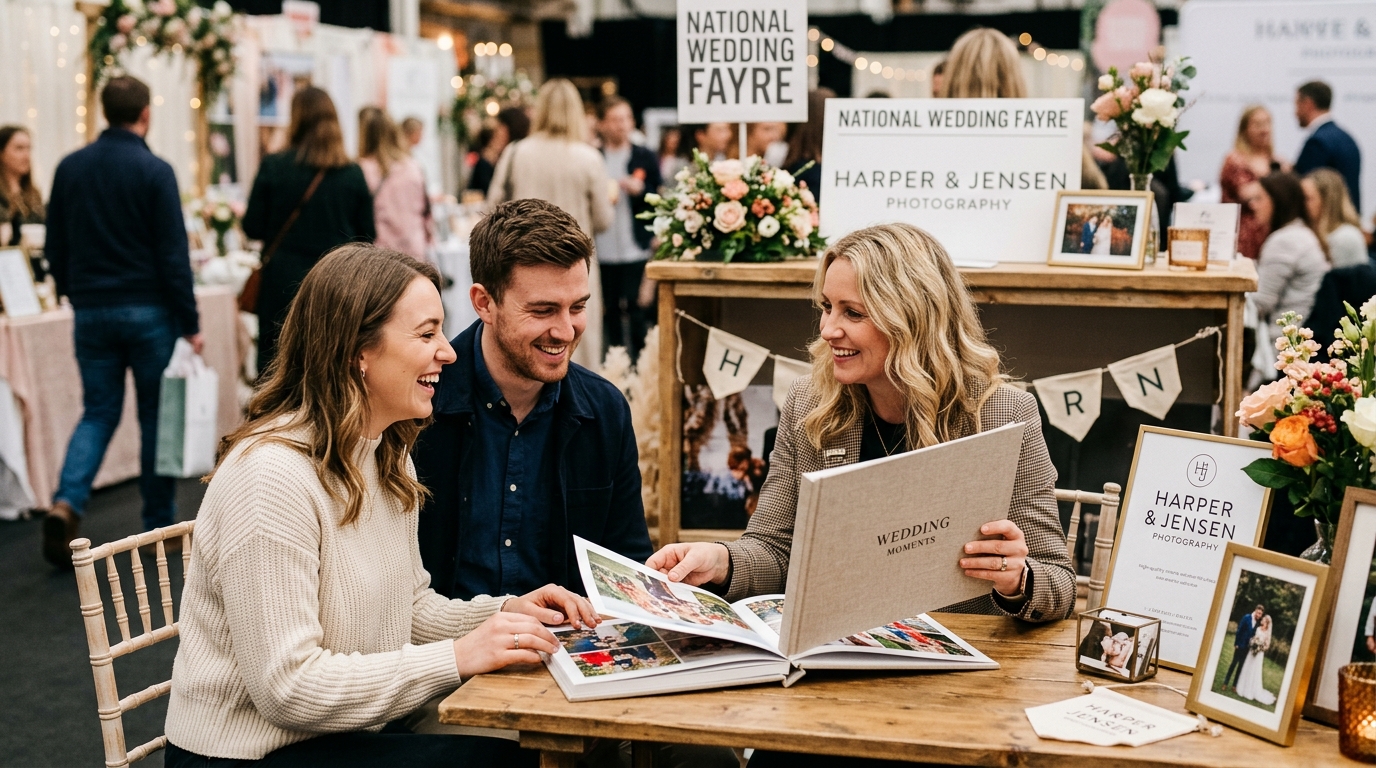
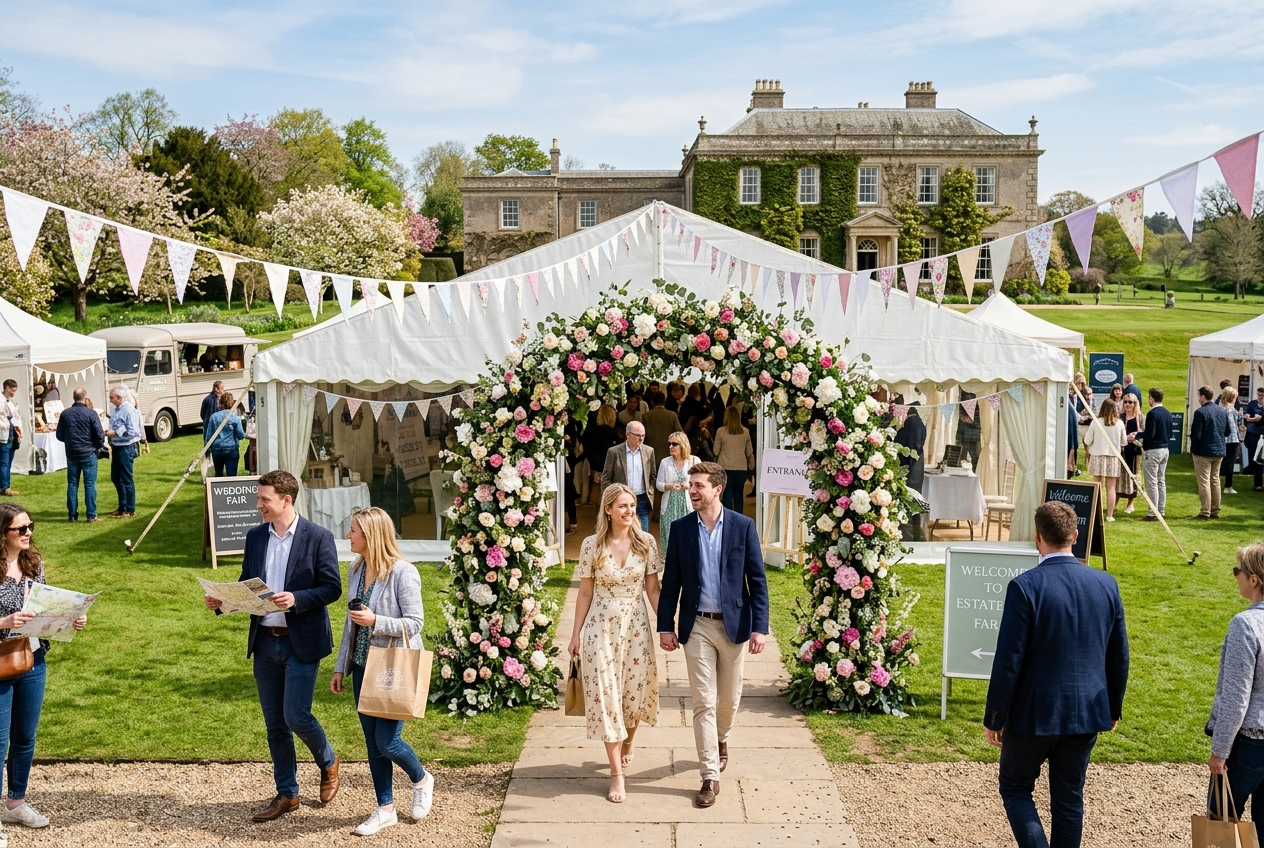
You walk into a room (hotel ballroom, exhibition hall, country house) filled with decorated stands. Each stand is a supplier — photographer, caterer, florist, DJ, dress designer, cake maker, jeweller, stationer, and more.
You browse. Some stands have portfolios to flip through, food to taste, flowers to smell, or dresses to touch. Others have brochures and a price list.
Suppliers talk to you. Some are relaxed and informative. Some are pushy. Most are somewhere in between. They’ll ask about your date, venue, budget, and guest count — these help them give you relevant information.
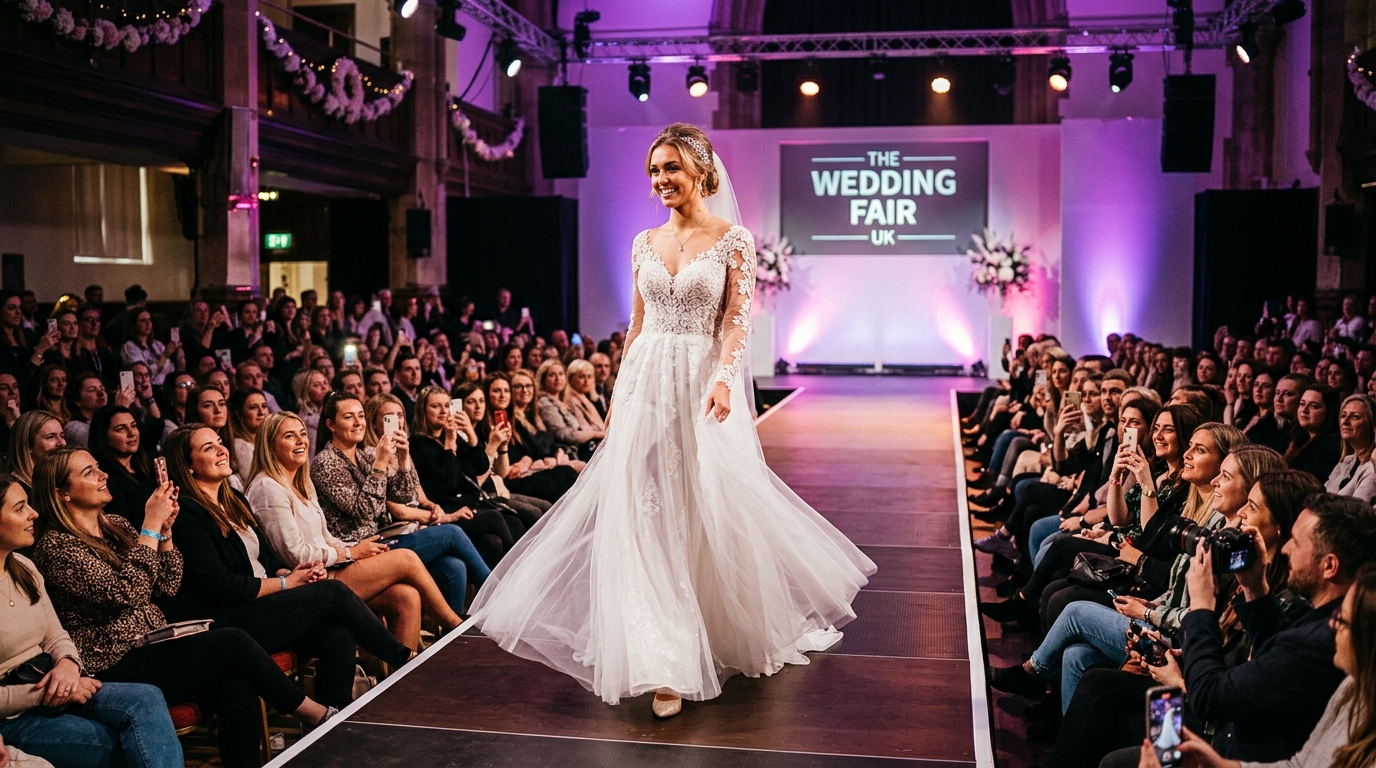
There might be a catwalk show. Models walk in wedding dresses while a DJ plays music. It’s entertaining and gives you a sense of dress styles, but don’t expect to choose your dress from a catwalk — you need to try them on.
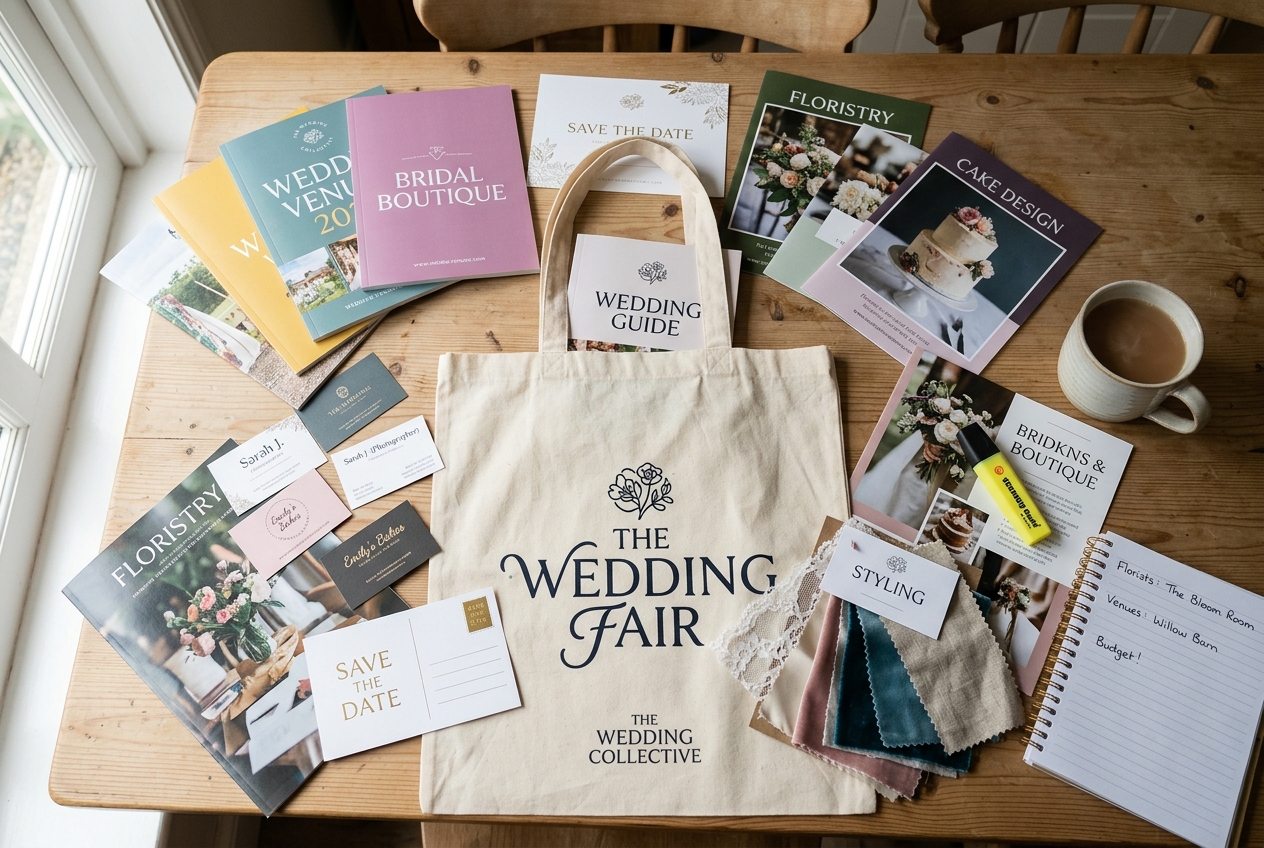
You leave with a bag full of brochures and a head full of ideas. The useful part happens when you get home and sort through it all.
The genuine benefits
Meeting suppliers face-to-face
A website tells you what a supplier says about themselves. Meeting them tells you what they’re actually like — their personality, their enthusiasm, their communication style, and whether you’d want them at your wedding.
This matters more than you’d think. Your photographer spends 10 hours with you. Your DJ controls the atmosphere of your party. Your planner manages the most stressful day of your life. Personality fit is critical, and you can only assess it in person.
Comparing prices on the spot
At a fair, you can visit three photographers in 20 minutes and see how their pricing compares. Online, that same comparison takes 3-4 emails, a week of waiting, and the frustration of non-standardised quotes.
Discovering suppliers you wouldn’t find online
Google shows you whoever’s best at SEO, not whoever’s best at their job. Wedding fairs surface local suppliers — the talented florist who doesn’t have a website, the brilliant DJ who gets all their work through word of mouth, the cake maker who only does 20 weddings a year and doesn’t advertise.
Fair-day discounts
Many suppliers offer 5-15% off their standard price for bookings made at or within a week of the fair. On a £2,000 photographer, that’s a saving of £100-300. It’s not life-changing, but it’s real.
Tastings and samples
Cake tasting stations, canape samples, cocktail demonstrations — you get to try before you buy. This is particularly valuable for caterers and cake makers, where quality varies dramatically and you can’t judge from photos alone.
The honest downsides
Crowds and queues
Saturday afternoons at popular fairs are packed. You’ll queue to enter, queue at popular stands, and struggle to have a proper conversation. Solution: Go Sunday morning or arrive when doors open on Saturday.
High-pressure sales
Some suppliers use fair-day urgency to pressure bookings. “This price is only available today.” “We only have two summer Saturdays left.” “Sign here and I’ll throw in a free engagement shoot.”
Solution: Never book at the fair. Take the information home. A legitimate discount will be honoured for at least a week. If a supplier says otherwise, they’re not someone you want managing part of your wedding.
Information overload
After 3 hours and 40 stands, everything blurs together. You can’t remember which florist quoted £800 and which quoted £1,200. You have 30 brochures and no system for comparing them.
Solution: Take photos of every stand, price list, and business card. Sort everything the same evening while your memory is fresh.
Time cost
A regional fair takes 3-4 hours including travel. A national show takes an entire day. If you’re time-poor, that’s a significant commitment — especially when you could spend the same time emailing 10 suppliers directly.
Repetition
If you attend more than 2-3 fairs, you’ll see the same suppliers at every one. The novelty fades, the pitches repeat, and the value drops sharply.
Who should go
| Situation | Should You Go? |
|---|---|
| Just got engaged, haven’t planned anything | Yes — a large fair for inspiration |
| Booked a venue, need all other suppliers | Yes — a regional fair or your venue’s open day |
| Booked venue + photographer + caterer | Maybe — only if you have specific gaps |
| Nearly everything booked, just need a DJ | No — email 3-4 DJs directly instead |
| Second-time attendee at the same type of fair | Probably not — diminishing returns |
| Venue open day for a venue you’re seriously considering | Always yes |
What to expect by fair type
| Fair Type | Suppliers | Cost | Time | Usefulness |
|---|---|---|---|---|
| Venue open day | 5-15 | Free | 1-2 hours | Very high |
| Local/regional fair | 30-80 | Free-£10 | 2-3 hours | High |
| National exhibition | 100-300 | £10-25 | 3-5 hours | Medium-high |
| Luxury/boutique fair | 15-30 | £10-30 | 2-3 hours | High (if budget matches) |
Making the most of it
If you do go, make the investment count:
Before: Pre-register (save money), check the exhibitor list, make a target list of 5-10 suppliers, know your budget and guest count, charge your phone.
During: Visit your target suppliers first, take photos of everything, ask about fair-day offers, taste the food, watch the catwalk, don’t book on the spot.
After: Sort materials the same evening, create a comparison spreadsheet, follow up with top suppliers within a week, read reviews before paying any deposits.
The bottom line
Wedding fairs are worth it if you go to the right one at the right time. A venue open day for a venue you love is always worth attending. A large regional fair early in your planning is genuinely useful. A national show is fun and inspiring, if slightly overwhelming.
But they’re not compulsory. Plenty of couples plan excellent weddings without ever setting foot in one. If you’re short on time or already deep into planning, your Saturday might be better spent meeting individual suppliers directly.
The question isn’t “should I go to a wedding fair?” It’s “which fair is right for where I am in planning?”
Further reading
- Wedding Fairs 2026: UK Dates & Locations — find events near you
- Wedding Fairs Near Me: How to Find & Prepare — preparation checklist
- Questions to Ask Your Wedding Venue — take this to venue open days
- Questions to Ask Your Wedding Photographer — take this to photographer stands
Browse wedding suppliers on Weddings Hub by category and region.
Frequently asked questions
Are wedding fairs worth going to?
Yes, if you're early in your planning and haven't booked most suppliers yet. A well-chosen fair lets you meet 30-80 suppliers in one day, compare prices face-to-face, and find local businesses you wouldn't discover online. They're less useful once you've booked your major suppliers (venue, photographer, caterer) — at that point, direct supplier research is more efficient.
What's the downside of wedding fairs?
The main downsides are high-pressure sales tactics (some suppliers push for same-day bookings), crowds at popular events (especially Saturday afternoons), information overload (you'll collect 30+ brochures), and time — a full day at a national show is exhausting. None of these are dealbreakers if you prepare properly and don't book on the spot.
Should I go to a wedding fair if I've already booked my venue?
Only if you still have major suppliers to book (photographer, caterer, florist, DJ). If you've booked your venue and most key suppliers, your time is better spent on direct research — reading reviews, requesting quotes, and meeting individual suppliers at their studios or offices.
Are wedding fair discounts genuine?
Most are genuine but modest — typically 5-15% off the standard price, or a free add-on (extra hour of photography, free cake topper, free uplighting). Be cautious of discounts that expire the moment you leave the stand. A legitimate supplier will honour a fair-day offer for at least 7 days. If they won't, that's a red flag.
Can I go to a wedding fair alone?
Yes. Going alone means you move faster, focus better, and aren't distracted by differing opinions. That said, one companion (partner, parent, or maid of honour) can be helpful for discussing options in real time. Avoid groups of three or more — too many voices make decisions harder, not easier.