How to Elope in the UK: The Complete Guide 2026
Key Takeaways
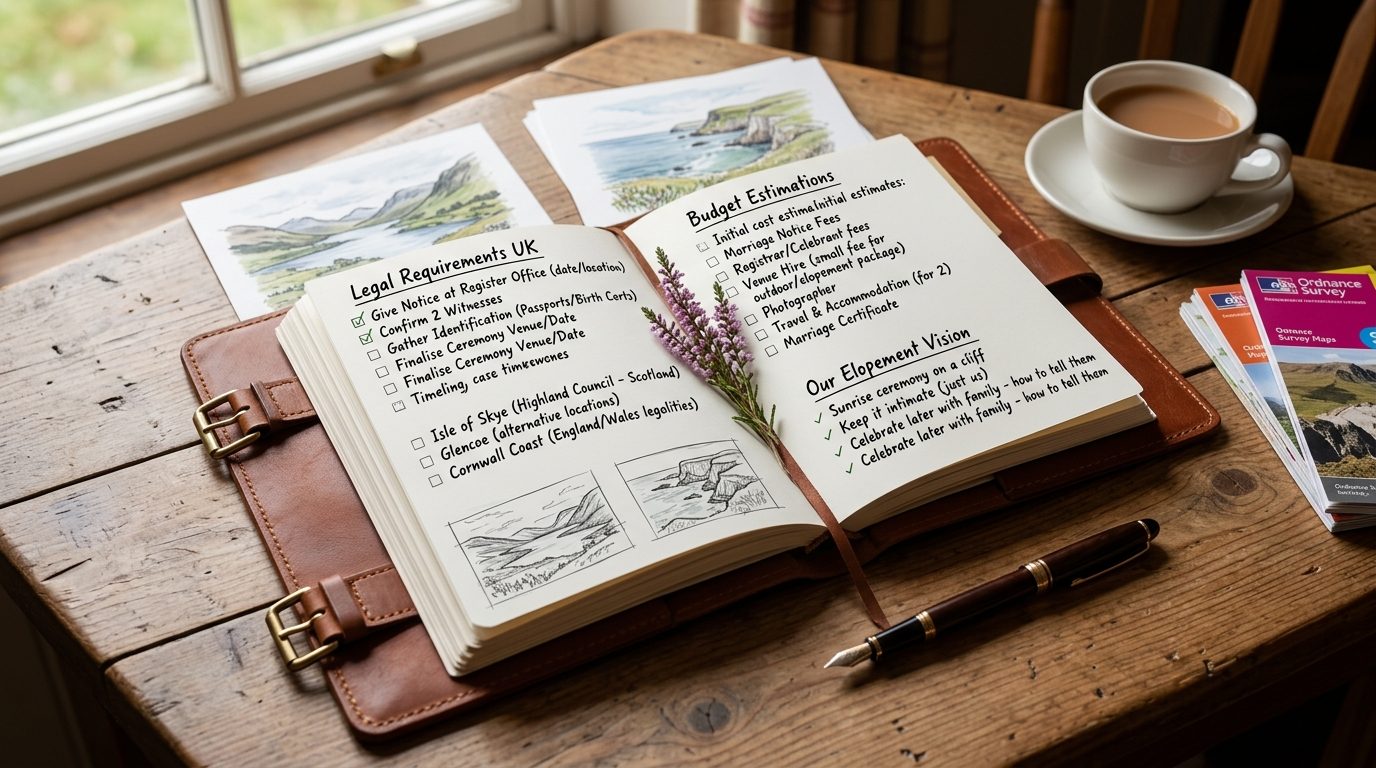
- Eloping in the UK is completely legal — you simply give notice at a register office and choose a licensed venue or register office for the ceremony
- The minimum legal cost of a UK elopement is £287: £57 each to give notice + £173 for a civil ceremony at a register office
- Scotland offers the most romantic elopement conditions — couples can legally marry outdoors in Scotland without a registered venue
- Notice of marriage must be given at least 28 days before the ceremony — this is the one step you cannot rush
- You do not need to tell your family before you elope — but the conversation after typically goes better with a plan
Why couples elope in the UK
- Cost: A traditional UK wedding for 80 guests costs £21,990 on average. An elopement with a photographer and a celebratory dinner costs £3,000-£8,000. The saving — often £15,000-£20,000 — is genuinely life-changing for couples who would rather buy a house, travel, or invest.
- Intimacy: Some couples simply find the idea of performing a ceremony in front of dozens of family members uncomfortable. The most meaningful moments of many weddings happen privately anyway — eloping makes that the entire experience.
- Family dynamics: Divorce, remarriage, estranged parents, second weddings, and family conflict are common reasons couples choose to keep the ceremony private.
- Spontaneity: Some couples want to marry on impulse — or at least without a 14-month planning timeline.
- The Instagram effect (paradoxically): Elopement photography — a couple on a Scottish hillside, mist rising from a loch, two people, one photographer — has become one of the most aspirational wedding aesthetics. The images are often more striking and personal than conventional wedding photographs.
Whatever the reason, eloping is a legitimate choice — and one that deserves proper planning.
The legal process in England and Wales
Marriage law in England and Wales is governed by the Marriage Act 1949 (and subsequent amendments). Eloping within this framework involves four steps:
Step 1: Give notice of marriage
Both you and your partner must give notice of marriage in person at your respective local register offices. If you live in the same registration district, you can both attend the same office.
What you need to bring:
- Valid passport or UK birth certificate
- Proof of address (bank statement, utility bill, or driving licence)
- If previously married: decree absolute (divorce certificate) or death certificate
- The fee: £57 per person
What happens: A registrar will take your details, ask about your relationship status, and record your intention to marry. The notice is publicly displayed (in the register office and on the council’s website) for a mandatory 28 days. This is the legal “cooling-off” period — it exists so anyone with a legal objection (e.g. evidence that one party is already married) can raise it.
How far in advance: Give notice at least 28 days before your intended ceremony date — and book your venue or register office slot before giving notice, as popular dates fill up.
Step 2: Book your ceremony
You have two main options:
Option A: Register office ceremony. The most affordable option. Register office ceremonies in England and Wales cost £173 per couple for a standard slot (typically a weekday at fixed times). The ceremony lasts around 20 minutes and takes place in the registrar’s office or a designated ceremony room. You may be able to bring flowers, personal vows, and choose a reading. Two witnesses are required — if you don’t have any, some register offices can arrange witnesses for you.
Option B: Licensed venue ceremony. Any venue licensed for civil marriages in England and Wales can host your ceremony. This includes stately homes, barns, country houses, hotels, and even some unusual venues (castles, museums, lighthouses). The venue hire cost is on top of the registrar’s attendance fee (typically £400-£600 in addition to the venue fee). The registrar is booked through the local authority, not the venue.
For a true elopement, a small licensed venue — a cottage, a boutique hotel with a licence, or a small barn — is often the most satisfying choice. It is more intimate than a register office but far less expensive than a full wedding venue hire.
Step 3: The ceremony
A civil ceremony in England and Wales must include:
- The legal declaration: “I do solemnly declare that I know not of any lawful impediment why I, [name], may not be joined in matrimony to [name].”
- The contracting words: “I call upon these persons here present to witness that I, [name], do take thee, [name], to be my lawful wedded wife/husband/spouse.”
- Two witnesses who sign the marriage certificate
Beyond these legal requirements, you have significant flexibility. You can add personal vows, readings, music, and any other elements the venue and registrar agree to. Most registrars are experienced in making even brief ceremonies meaningful.
Step 4: Register the marriage
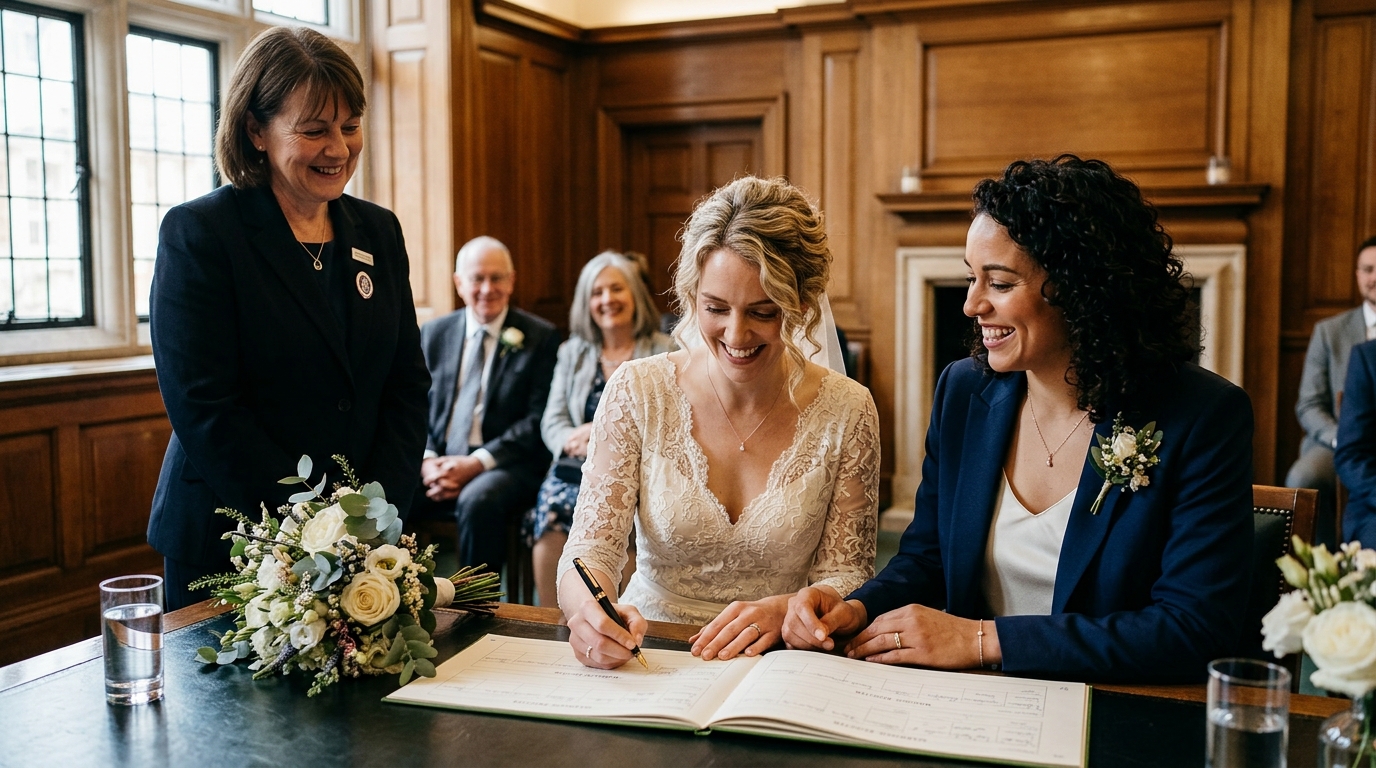
The registrar records the marriage in the register and issues a marriage certificate on the day. Both you and your witnesses sign it. The registrar retains the original; you receive a certified copy. There is no further registration step — you are legally married.
The legal process in Scotland
 Scotland’s marriage law is considerably more romantic — and flexible — than England and Wales. The Marriage (Scotland) Act 1977 allows marriage to take place anywhere in Scotland (indoors or outdoors) as long as the ceremony is conducted by an authorised person. This means you can legally marry on a clifftop, beside a loch, in a forest, or in a historic castle ruin — without the venue needing to be registered.
Authorised persons in Scotland include:
- Civil registrars (for civil ceremonies)
- Ministers and priests of registered denominations
- Humanist celebrants approved by the Registrar General
- Other religious and belief celebrants approved by the Registrar General
The process:
- Both parties complete marriage notice forms M10 and M11 and submit them to the local registrar at least 29 days before the ceremony.
- Pay the fee: £30 per person for the notice, plus the registrar’s fee for the ceremony (approximately £75-£150 for a register office ceremony; more for an outdoor ceremony).
- Obtain a Marriage Schedule from the registrar — this must be collected no more than 7 days before the ceremony and must be present at the ceremony.
- The ceremony takes place (two witnesses required).
- The Marriage Schedule is returned to the registrar within 3 days of the ceremony for registration.
The greater flexibility in Scotland — particularly the ability to marry outdoors — is the reason Scotland is the UK’s premier elopement destination.
The best UK elopement locations
Scotland
Gretna Green, Dumfriesshire: The UK’s most famous elopement destination has been welcoming runaway couples since 1754. Today it hosts more than 5,000 weddings per year — a remarkable volume for a village of 3,000 people. The Famous Blacksmiths Shop is the most iconic venue; it has been licensed for weddings since 1830. Packages including the ceremony, flowers, and a meal start from around £800. Gretna Green is 90 minutes from both Edinburgh and Manchester by car.
Isle of Skye: The dramatic basalt cliffs of Kilt Rock, the fairy pools of Glen Brittle, the ruins of Duntulm Castle, and the volcanic landscapes of the Quiraing make Skye one of the most photogenic elopement backdrops in Europe. Elopement photographers based in Skye report booking out 12-18 months in advance.
Glencoe and the Highlands: The scale and drama of Glencoe — with its steep valley walls and open moorland — makes it a powerful backdrop for elopement photography. Glen Coe itself, the Five Sisters of Kintail, and the Cairngorms all offer spectacular outdoor ceremony options.
Loch Ness and the Great Glen: Atmospheric and accessible. Castle Urquhart above Loch Ness provides an arresting backdrop, though you cannot marry inside the ruin itself. The surrounding loch shores offer excellent outdoor ceremony spots.
Eilean Donan Castle: Scotland’s most photographed castle, at the meeting of three sea lochs near Dornie. The castle itself is not available for weddings, but the surrounding area — with the castle as a backdrop — is a popular elopement photography location.
England
The Lake District: Windermere, Ullswater, and Coniston offer lake-and-fell backdrops that rival Scotland’s lochs. In England, however, outdoor ceremonies require a licensed venue — many Lake District hotels and venues are licensed for outdoor ceremonies on their grounds. Sharrow Bay, Armathwaite Hall, and Holbeck Ghyll are licensed and experienced in small ceremonies.
Cornwall: The clifftop locations at Kynance Cove, Bedruthan Steps, and the Lizard Peninsula are among England’s most dramatic. Again, in England you need a licensed venue — several Cornish venues including Trevenna and Coombeshead Farm hold outdoor licences.
The Cotswolds: For couples who prefer a pastoral English idyll to dramatic Highland scenery, the Cotswolds offers honey-stone villages, ancient parish churches (for couples who want a blessing, though the legal ceremony must be civil or at a registered venue), and boutique licensed venues.
Northumberland: Alnwick Castle, Bamburgh Castle, and the coastal stretches of Northumberland are underused elopement locations. Several castle venues in the county hold marriage licences.
Wales
Snowdonia: The landscapes of Snowdonia — including the summit plateau of Snowdon, the Ogwen Valley, and Cwm Idwal — are as dramatic as anything in Scotland. Outdoor ceremonies in Wales require a licensed venue, as in England — but several farms and barn venues in Snowdonia and the Brecon Beacons hold outdoor licences.
Pembrokeshire: The clifftop paths and sandy coves of the Pembrokeshire Coast National Park, combined with several licensed farmhouse venues, make this a growing elopement destination.
What does a UK elopement cost?
| Element | Budget option | Mid-range | Splurge |
|---|---|---|---|
| Notice of marriage (England/Wales) | £114 | £114 | £114 |
| Ceremony (register office) | £173 | — | — |
| Licensed venue ceremony | — | £800-£2,000 | £2,000-£5,000 |
| Registrar attendance fee | — | £400-£600 | £400-£600 |
| Photographer | £0 (tripod) | £800-£1,500 | £1,500-£3,500 |
| Flowers / bouquet | £0 | £80-£250 | £250-£600 |
| Outfits | Existing wardrobe | £200-£600 | £600-£3,000 |
| Celebratory meal | Picnic | £100-£300 | £300-£1,000 |
| Short honeymoon | — | £500-£1,500 | £1,500-£5,000 |
| Total | ~£287 | £2,800-£6,200 | £6,300-£15,800 |
Elopement photography: making it count
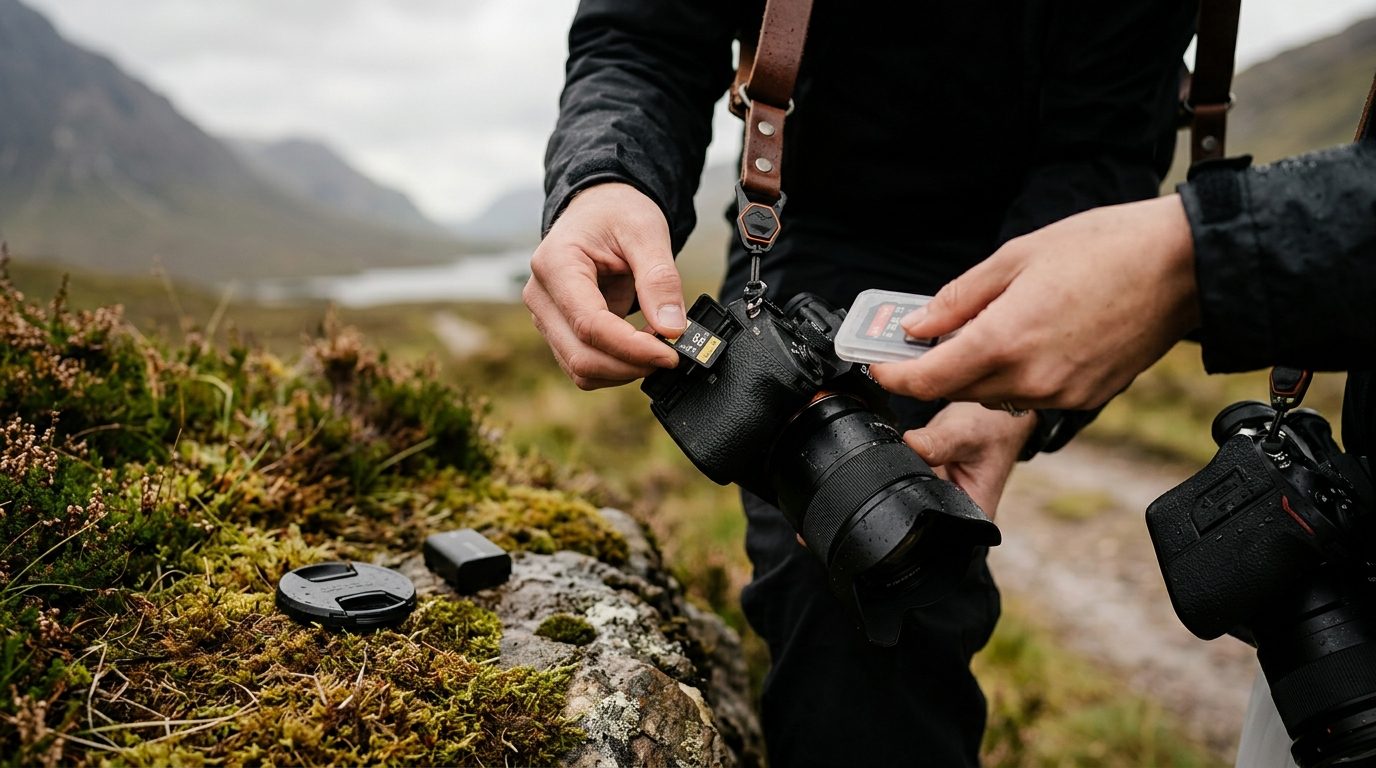
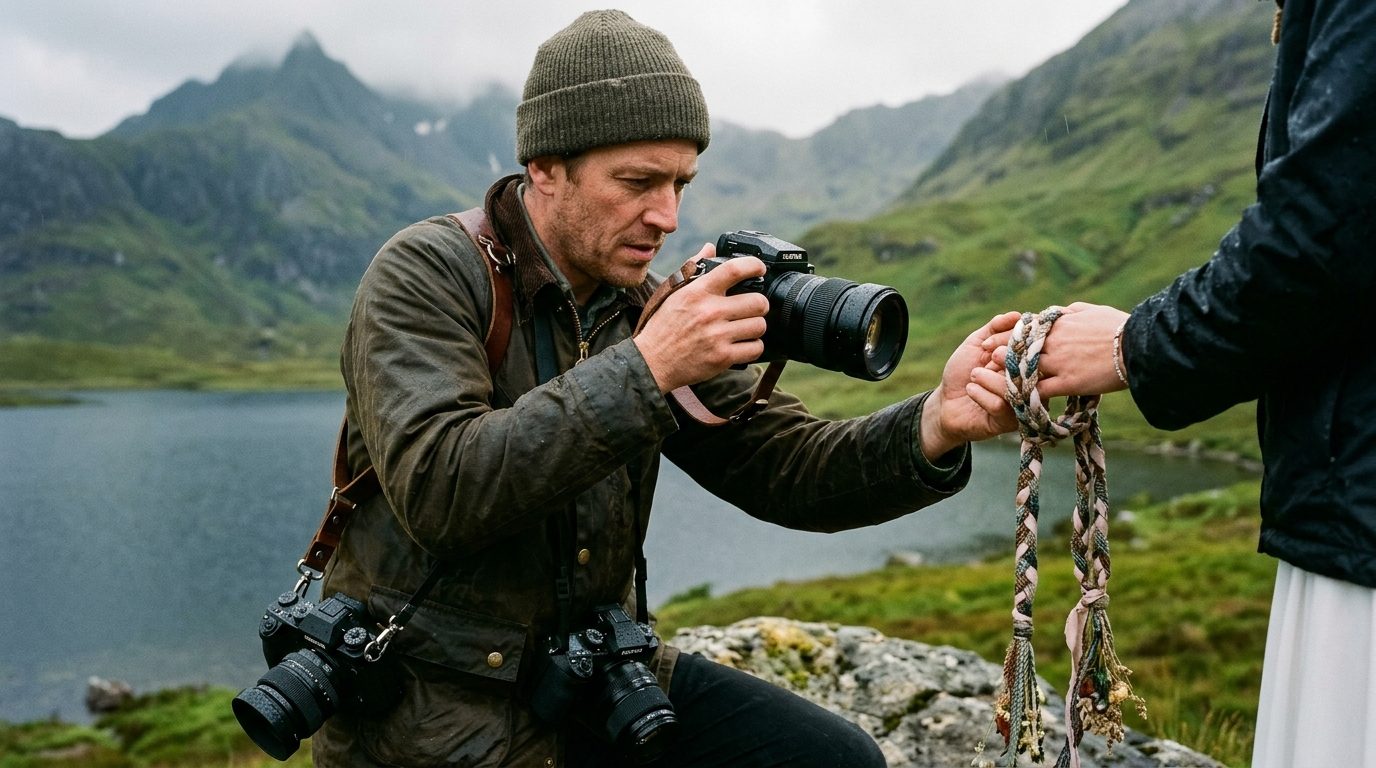 The photographer is arguably the most important investment in an elopement. You will have no florist-decorated church, no tablescape, no 120 guests to fill a frame. What you will have is two people in a landscape — and the quality of the landscape, the light, and the photographer determines whether you treasure the images forever or feel the day was underdocumented.
What to look for in an elopement photographer:
- Experience with natural light in outdoor locations (very different from indoor wedding photography)
- A portfolio of genuine elopements in similar landscapes to your planned location
- Willingness to hike, climb, or wade to reach the best spots
- Experience with the specific location you are considering
Costs: Elopement photographers typically charge £800-£2,000 for 4-6 hours of coverage in England and Wales. In the Scottish Highlands, expect to pay a travel supplement or choose a photographer already based there. Highland elopement photography packages (ceremony + a hike + a sunset session) often cost £1,200-£2,500.
Telling your family
This is often the most challenging part of eloping. There is no single right approach, but here are the patterns that tend to work:
Before the elopement: Some couples tell one or two trusted family members (often parents) in advance, framing it as a decision already made rather than a discussion. This prevents the family from attempting to change the plans while still giving key people prior notice. Others tell no one and prefer to manage the reveal themselves afterwards.
After the elopement: The most successful reveals tend to include three elements:
- A clear, warm explanation of why you chose to elope (focus on your reasons, not on what you were avoiding)
- Beautiful photographs shared promptly — seeing images of a happy, radiant couple often changes the emotional register immediately
- An invitation to a celebration — whether a dinner, a party, or a gathering — to mark the occasion with those you love
Many couples who elope hold a “celebration of marriage” party weeks or months later. This gives family members something to attend, celebrate, and wear a nice outfit to — and often turns out to be a more genuinely joyful event than a conventional wedding, because the legal and emotional pressure has already been resolved.
For more on alternative formats, see our guides to micro-wedding venues UK and weekday weddings UK.
Elopement vs micro-wedding: the difference
Eloping and having a micro-wedding are related but distinct choices:
| Feature | Elopement | Micro-wedding |
|---|---|---|
| Guest count | 0-2 (witnesses only) | 10-30 |
| Planning timeline | Weeks | Months |
| Cost | £287-£8,000 | £5,000-£15,000 |
| Family involvement | Minimal or none before the event | Usually informed and invited |
| Photography | Often the primary investment | Part of a broader budget |
| Venue | Register office, licensed venue, outdoor (Scotland) | Small licensed venue |
| Reception | Dinner for two or small group | Sit-down meal, usually catered |
The choice between the two comes down primarily to how many people you want present — and how much of the planning and cost you want to take on.
Frequently asked questions
Is it legal to elope in the UK?
Yes, eloping is completely legal in the UK. In England and Wales, you give notice of marriage at your local register office (at least 28 days before the ceremony), then marry either at a register office or any licensed venue with an official registrar present. In Scotland, the process is even more flexible — you can marry outdoors in any location with an authorised celebrant. Eloping does not require family attendance, church permission, or any minimum guest number.
How much does it cost to elope in the UK?
The minimum legal cost to elope in England and Wales is approximately £287: £57 per person to give notice of marriage (£114 total), plus £173 for a civil ceremony at a register office. In practice, most couples who elope spend £3,000-£8,000, adding a photographer (£800-£2,000), a celebratory meal (£100-£500), flowers (£50-£300), and a short honeymoon. A full elopement experience at a scenic Highland estate in Scotland with a photographer and dinner typically costs £3,500-£7,000.
Can you elope in Scotland?
Scotland is the most romantic elopement destination in the UK because it offers far greater flexibility than England and Wales. In Scotland, you can marry outdoors — on a clifftop, beside a loch, in a forest — without needing a registered venue. You just need an authorised celebrant (a registrar, minister, or humanist celebrant) and to complete the M10 and M11 marriage notice forms with the local register office at least 28 days before the ceremony. Gretna Green, Glencoe, and the Isle of Skye are the most popular elopement locations.
Do you have to tell your family if you elope?
You have no legal obligation to tell family members before you elope. Many couples choose not to, either to avoid family conflict, keep costs down by not expanding the guest list, or simply because they prefer privacy. Others tell one or two trusted people to act as witnesses (a minimum of two witnesses is required for any UK legal marriage). After eloping, most couples hold a celebration party or 'sip and see' event to share the news and celebrate with wider family and friends.
What are the best elopement locations in the UK?
The best UK elopement locations include: Gretna Green, Scotland (the UK's most famous elopement destination, with 5,000+ weddings per year); the Isle of Skye (dramatic cliffs, lochs, and castles); Glencoe and the Highlands (mountain landscapes); the Lake District (Windermere, Ullswater); Cornwall (clifftop ceremonies at Kynance Cove or Bedruthan Steps); Alnwick Castle, Northumberland; and the Cotswolds (thatched villages, stone churches). In Scotland, you can marry outdoors at almost any of these; in England and Wales, you need a licensed venue or register office.
How do you give notice of marriage in the UK?
To give notice of marriage in England and Wales, both you and your partner attend your respective local register offices (or the same one if you live in the same area) in person. You will need your passport or birth certificate, proof of address, and — if previously married — evidence of divorce or death certificate. You pay £57 per person. The notice is publicly displayed for 28 days. After that, you can proceed with the ceremony. In Scotland, you submit forms M10 and M11 to the local registrar at least 29 days before the ceremony.