Honeymoon Fund vs Wedding List vs Cash: UK Guide 2026
Key Takeaways
- John Lewis Partnership Card remains the most popular UK wedding list retailer: 34% of couples using a traditional list choose John Lewis, followed by Selfridges (18%) and Habitat (12%)
- Guests give more via honeymoon fund platforms than traditional lists: average contribution per guest is £68 via Honeyfund or Zankyou, versus £54 via a traditional department store list
- Cash requests are accepted by 71% of UK guests when framed correctly — but 29% still find a blunt 'no gifts please, just cash' request uncomfortable if no alternative is offered
- HMRC does not tax wedding gifts from family and friends if they constitute genuine personal gifts — large cash gifts above £3,000 may be subject to inheritance tax rules if the donor dies within 7 years
- The worst-performing option in guest satisfaction surveys: a generic 'we'd love cash' message with no guidance — this scores 2.1/5 from guests, versus 4.2/5 for a well-curated honeymoon fund with specific experiences
The shift from lists to funds: what happened
The traditional UK wedding list — a curated selection of household items at a department store — made practical sense when couples were furnishing a first home from scratch. Plates, glasses, a duvet set, a toaster: all needed, all on a list, all solved.
This scenario is now less common. The average age of first marriage in the UK is 32.5 for women and 34.3 for men (ONS 2025). Most couples live together before marrying. By the time they marry, they already have plates, glasses, a toaster, and a duvet set — probably several sets. A traditional list of household items is often a solution to a problem that does not exist.
The honeymoon fund emerged as the natural alternative. Rather than buying objects, guests pay for experiences: a night in an upgraded suite, a cooking class in Japan, a sunset boat trip in Greece. The couple gets money that goes toward something memorable. The guest gets a thank-you note that says “we had the cooking class you paid for in Kyoto — here’s a photo.”
The data shows this shift clearly. In 2019, honeymoon funds accounted for 28% of UK wedding gift choices. By 2022, 38%. By 2025-26, 44%.
The three formats compared
| Format | Popularity 2026 | Average gift per guest | Guest satisfaction score | Couple satisfaction score |
|---|---|---|---|---|
| Honeymoon fund | 44% | £68 | 4.2/5 | 4.4/5 |
| Traditional list | 31% | £54 | 3.9/5 | 3.7/5 |
| Cash envelope/transfer | 18% | £61 | 3.1/5 | 4.0/5 |
| Charity donation | 7% | £45 | 3.6/5 | 3.8/5 |
Two findings stand out. First: honeymoon funds produce the highest gift value per guest and the highest satisfaction scores from both guests and couples. Second: cash envelopes score well with couples but significantly lower with guests — the experience of deciding how much to put in an envelope, without a list to guide you, creates friction.
Honeymoon funds in detail
A honeymoon fund lets guests contribute toward named experiences or costs associated with a trip. The mechanic is simple: you create a fund on a platform, add specific items (“Dinner at a seafood restaurant: £80”, “Hotel upgrade for one night: £120”, “Scuba diving lesson: £65”), and guests choose which item to buy.
All the money typically lands in the same pot — but guests feel they have bought something specific, which significantly improves the giving experience.
Top UK honeymoon fund platforms
Honeyfund is the most widely used platform among WeddingsHub couples. Key features:
- No platform fee to the couple
- Guests pay a processing fee on card payments (2.8% on credit card; zero on bank transfer)
- Clean, modern interface that integrates with most wedding websites
Zankyou offers the most design customisation and the strongest UK-specific supplier integrations. Slightly higher processing fees than Honeyfund.
Prezola takes a different approach: a hybrid platform that lets couples mix physical gift items with honeymoon fund contributions on a single list. Useful if you want both formats without directing guests to separate platforms.
Amazon Wedding Registry is primarily a physical goods platform but allows some experiential items. Less well-suited to pure honeymoon funds.
How much do guests contribute?
Our guest survey found average honeymoon fund contributions of £68, compared with £54 for traditional list items. The reason is psychological: when a guest sees “Seafood dinner in Lisbon: £80” and chooses to buy it, they are buying a defined experience for a couple they care about. When they choose a list item at the same £80 price, they are buying a kitchen appliance that already has a price tag attached.
Traditional wedding lists: still relevant?
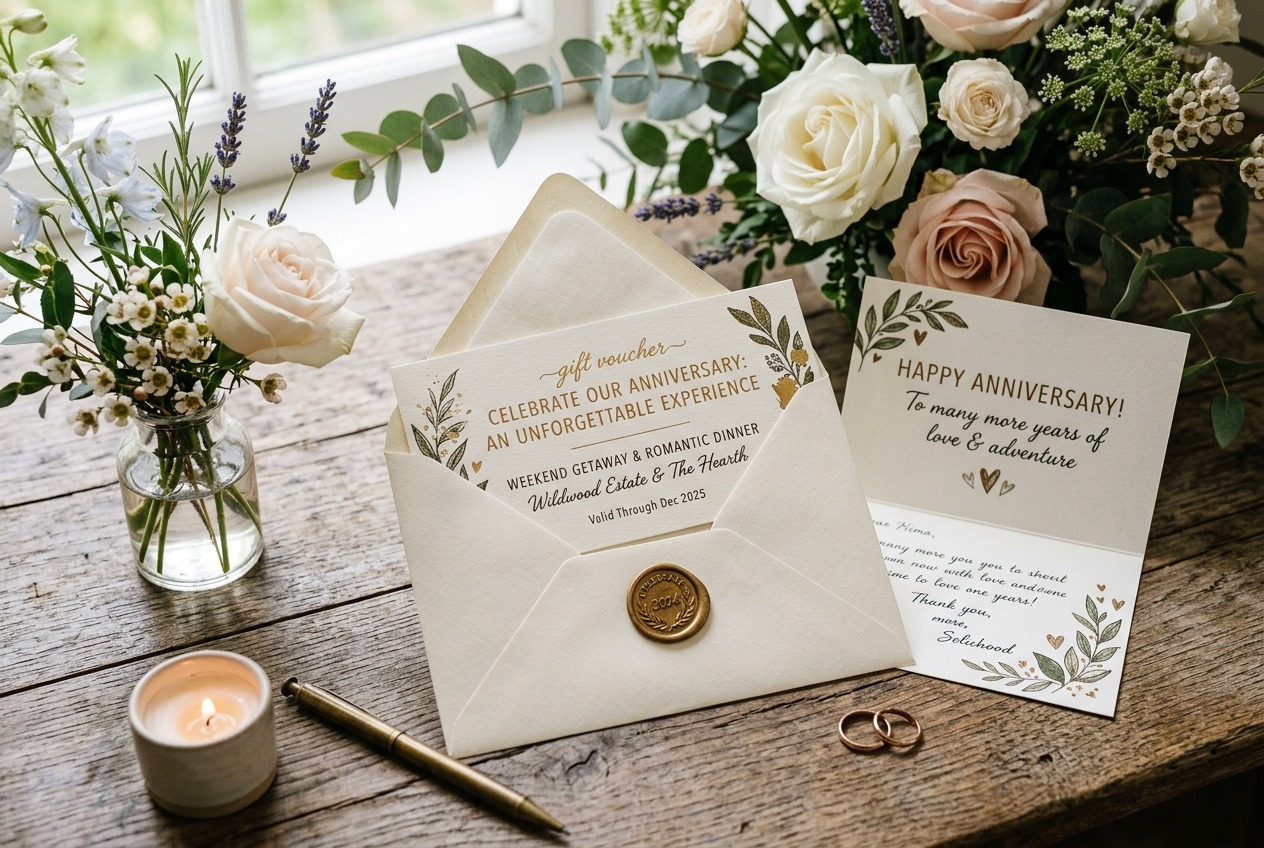
A traditional list remains the right choice in two scenarios: when you genuinely need household items (first-home couples, or couples who have not lived together), and when your guest list skews older (60+) and is more comfortable with the traditional format.
John Lewis Partnership Card remains the most popular UK wedding list retailer at 34% of couples using a traditional list format. John Lewis offers a gift list service with no administration fee to the couple, a completion discount of 10% on remaining items after the wedding, and an easy returns process for duplicates.
Selfridges comes second at 18% — higher-end items, appeals to couples with specific luxury aspirations.
Habitat comes third at 12% — contemporary homeware, mid-market price points.
Debenhams had been a major UK wedding list platform but closed its retail estate in 2021. Couples who would have registered there typically moved to John Lewis or independent alternatives.
How to curate a good list
The common mistakes:
- Too narrow a price range — if your lowest item is £60, guests who want to give £30 have no option
- Too many items they will duplicate — wine glasses, for example, get bought 12 times if your list has 12 sets
- Too aspirational at the top — a £2,400 item that sits on the list for 18 months creates awkward conversations at post-wedding catch-ups
A well-curated list has:
- 5-8 items under £30 (guests who want to contribute a small token can do so)
- 10-15 items at £30-£100 (the most common gift spend range)
- 3-5 items over £100 (these are typically “bulk bought” by close family groups)
- 1-2 aspirational items (£200+) for those who want to make a statement
Cash requests: how to do it without friction
 Cash requests work when they are framed. A bare “please give us money” instruction scores 2.1/5 in our guest survey. A specific, purposeful cash request scores 3.8/5.
- “We are saving toward our first home — any contribution to our deposit would mean everything to us.” — Guest score: 4.1/5
- “We are planning a big trip to Japan in spring 2027 — if you’d like to contribute to that adventure rather than a physical gift, we’ve set up a honeymoon fund.” — Guest score: 4.2/5
- “We have everything we need at home. If you would like to give a gift, we would be very grateful for a contribution toward [specific experience/goal].” — Guest score: 3.9/5
Where to receive cash gifts
Bank transfer remains the simplest and most common. Include your sort code and account number on the wedding website. Most guests in the 25-45 age group will transfer; older guests may prefer another method.
PayPal or Monzo.me links work well for guests who prefer not to type account numbers. Lower friction for the payer.
Honeymoon fund platforms (even if you technically want cash) frame the giving experience better than a bare bank transfer request.
The tax position: what HMRC says
Wedding gifts from friends and family are not taxable income. HMRC treats them as genuine personal gifts.
The relevant rules:
Income tax: Wedding gifts from personal connections are not subject to income tax, regardless of amount.
Inheritance tax: Each person can give up to £3,000 per tax year as an exempt gift without inheritance tax implications. Weddings have a specific additional exemption:
- Parents: up to £5,000 each, free of IHT
- Grandparents: up to £2,500 each
- Others (friends, aunts/uncles, siblings): up to £1,000 each
These wedding gift exemptions are free of IHT whether or not the donor survives 7 years. For gifts above these amounts, the 7-year rule applies: if the donor dies within 7 years, the gift may be included in their estate for IHT purposes. If they live more than 7 years after giving, there is no IHT liability.
VAT: You do not pay VAT on personal gifts. Honeymoon fund platform fees may be subject to VAT, which the platform handles.
For large gifts from a single donor (a parent giving £20,000 toward a house deposit framed as a wedding gift), consult a financial adviser. The etiquette guidance in this article does not substitute for tax advice.
How to communicate your gift preference
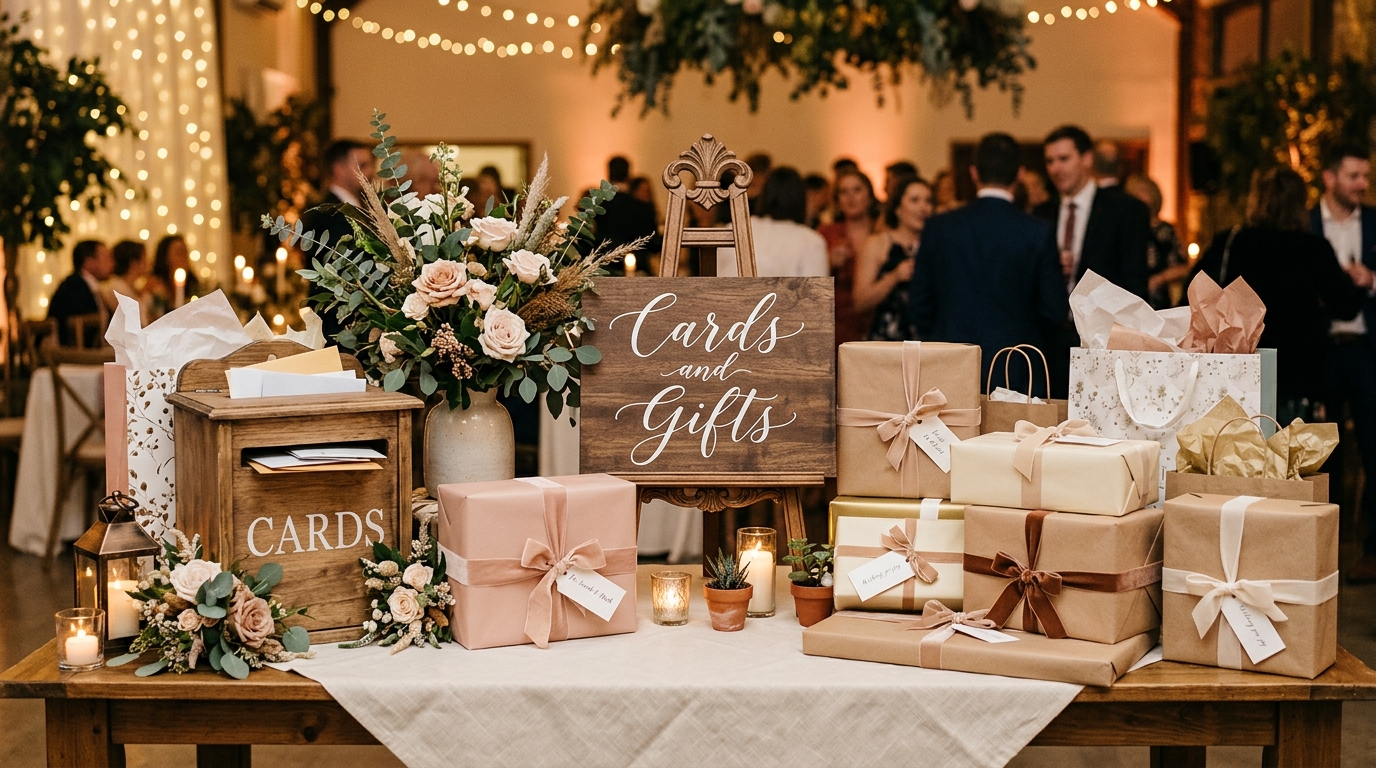
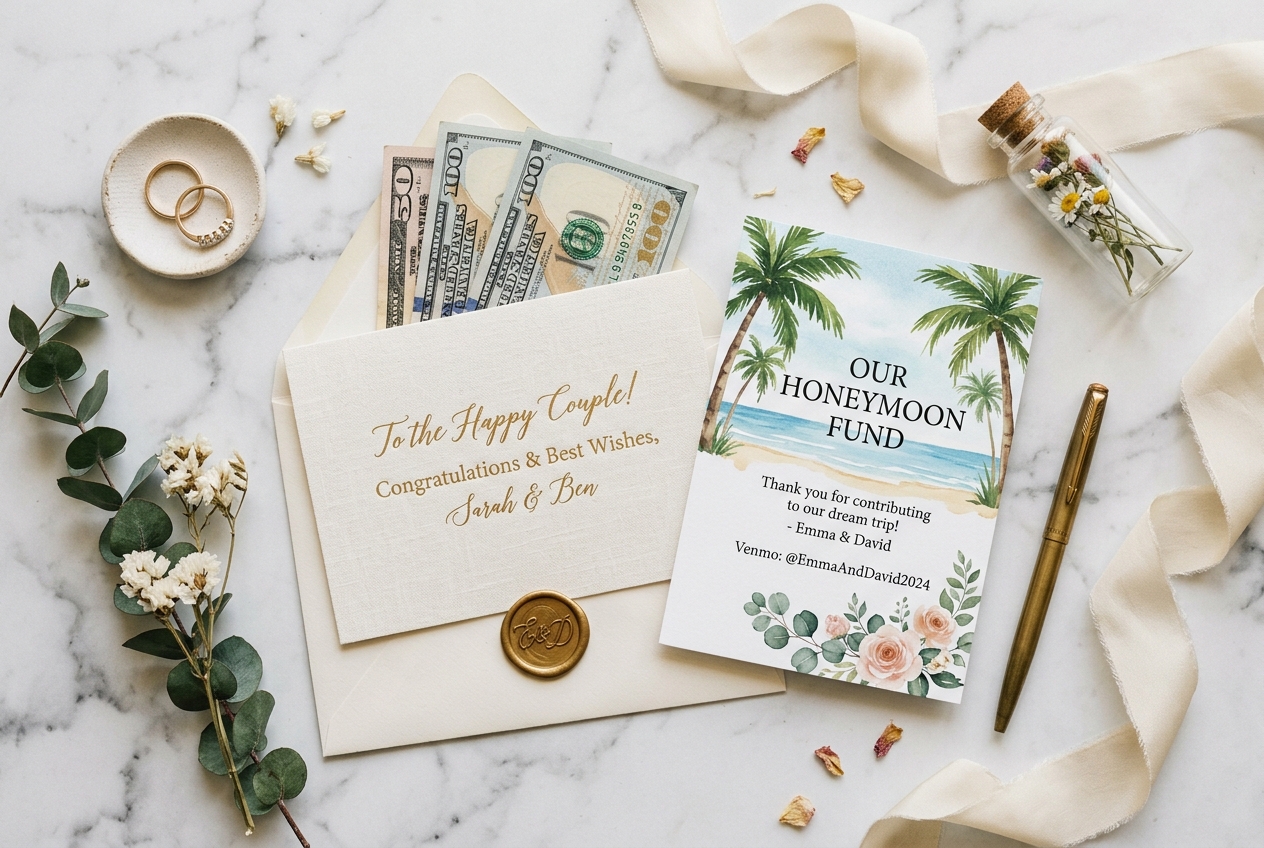 Your wedding website is the right place to state your preference. Most UK couples put a short paragraph on the “gifts” or “registry” page. The wording that performs best in guest surveys:
For a honeymoon fund: “We have everything we need at home. If you would like to celebrate with us in a different way, we have set up a small honeymoon fund [link]. Each experience is listed separately, but there is no pressure — your presence at our wedding is the real gift.”
For a traditional list: “We have set up a gift list at John Lewis [link]. You will find a range of items to choose from — nothing is required, and everything is appreciated.”
For cash: “We are saving toward [specific goal]. If you would like to contribute, our bank details are [sort code, account number]. Honestly, just being there is more than enough.”
What not to write: “No gifts please, just cash.” The instruction is fine; the framing is absent. Guests want to feel they are giving a gift, not paying a fee.
Our wedding gift etiquette guide covers the full range of situations — from what to do when you know the couple well to how to handle a gift that turns out to be wrong.
Charity donation requests
7% of couples asked guests to donate to a charity instead of buying a gift. This approach scores 3.6/5 in our guest survey — lower than honeymoon funds but ahead of unframed cash requests.
Key considerations:
- Make sure the charity is meaningful to both of you, not just a generic choice
- Frame it so guests who prefer to give a physical gift have an alternative
- Acknowledge charitable contributions publicly at the reception (a brief mention in a speech or in the order of service)
Platforms like Charities Aid Foundation and JustGiving both offer wedding charity fund pages.
The practical verdict
For most UK couples in 2026:
- Start with a honeymoon fund — it works for guests and produces the highest gift value
- Add a physical list as a secondary option if you have guests over 60 or need specific items
- Accept cash transfers for guests who prefer to give directly — just make sure your bank details are easy to find
For couples who have everything and want a simple life: a bare bank transfer request works. Just wrap it in a sentence that makes guests feel they are giving a gift toward something real.
For more on the wedding gift conversation from the guest side, our guide on is £50 enough for a UK wedding gift covers what guests are actually spending and thinking.
Frequently asked questions
What is the most popular wedding gift format in the UK in 2026?
Traditional department store lists come second at 31%, cash envelopes third at 18%, and charity donations fourth at 7%. The shift to honeymoon funds has accelerated since 2022 as couples increasingly own the items a traditional list would have covered.
Is it rude to ask for cash as a wedding gift?
A blunt cash request without framing or alternatives scores poorly in guest surveys. 29% of UK guests find an unstructured cash request uncomfortable. A honeymoon fund — which converts cash contributions into named experiences (a dinner, a dive lesson, a hotel upgrade) — performs much better: 86% of guests are happy to contribute. The key is giving guests something specific to pay for, even if all the money ends up in the same pot.
What is the best honeymoon fund platform in the UK?
Honeyfund and Zankyou are the most widely used UK honeymoon fund platforms. Honeyfund charges no platform fee to the couple (guests pay a small processing fee on credit card payments). Zankyou offers more design customisation. Both integrate well with wedding website builders. For simpler needs, Prezola allows couples to mix physical gift items with honeymoon experiences on one list.
Do I need a wedding list at all?
No. 18% of UK couples in 2025-26 simply included a note on their wedding website saying they preferred cash contributions toward a specific goal. This works well if your guest list is close family and friends who know you well. It works less well for wider networks where guests want a structured way to give. If you go this route, be specific — 'we are saving for a house deposit' or 'we are planning a trip to Japan' gives guests context.
Are wedding gifts taxable in the UK?
Genuine personal gifts from friends and family are not subject to income tax. For inheritance tax purposes, each individual donor can give up to £3,000 per tax year as an exempt gift. Wedding gifts specifically have a separate small exemption: parents can each give up to £5,000, grandparents up to £2,500, and others up to £1,000, free of inheritance tax. These exemptions apply only if the donor dies within 7 years of the gift — if they live longer, there is no inheritance tax issue.
What should go on a traditional wedding list in 2026?
The most useful items on a 2026 UK wedding list are those couples genuinely cannot justify buying themselves: quality kitchen appliances (stand mixer, espresso machine, cast iron cookware), high-thread-count bedding, quality glassware and tableware for entertaining, and experiences or vouchers for restaurants, spas, or activities. Avoid items you already have or that guests might duplicate. Spread the price range: include 5-8 items under £30, 10-15 items at £30-£100, and 3-5 aspirational items above £100.
Can I ask for contributions to a deposit instead of gifts?
Frame it clearly on your wedding website — 'we are saving for our first home and any contributions toward that would mean the world to us' — and provide a specific payment method (bank transfer details, or a fund platform). Guests respond well to a specific goal.