Grey Divorce UK 2026: Why Long Marriages Are Ending

Key Takeaways
- Grey divorce (separation after 20+ years) now accounts for 34% of UK divorces in the 50+ age bracket, up from 22% in 2010
- UK grey divorces have increased 56% since 2000, while overall divorce rates have declined
- Caroline Hirons, the UK skincare authority with 1.3 million Instagram followers, publicly discussed her marriage changes in 2025-2026
- Women file for divorce more often than men in grey divorces: 68% of grey divorce petitions are filed by women
- Pension splitting is the most complex financial element of grey divorce — pension sharing orders can transfer decades of pension assets
- The no-fault divorce process (Divorce, Dissolution and Separation Act 2020) has removed a major practical barrier to separation for long-married couples
Grey divorce — separation after 20 or more years together — is the fastest-growing divorce category in the UK. It now accounts for 34% of UK divorces in the 50+ age bracket, up from 22% in 2010. UK grey divorces have increased 56% since 2000, even as overall divorce rates have declined. The 2020 no-fault divorce reform removed a key practical barrier. Women initiate 68% of grey divorce petitions. The average age at second marriage is rising: 42 for women, 46 for men. Caroline Hirons — UK skincare authority, author, and influencer with 1.3 million followers — became an unexpected focal point for this conversation when she publicly discussed relationship changes in 2025-2026. Her openness reflects a wider shift: grey divorce is losing its stigma.
By Matt, Editor at Weddings Hub. Grey divorce statistics from ONS Divorce Registrations 2024. Relate UK data from their 2025 annual report on relationship breakdown patterns. Pension sharing framework from the Pensions Advisory Service (gov.uk). No-fault divorce process from the Ministry of Justice guidance (Divorce, Dissolution and Separation Act 2020). Second marriage statistics from ONS Marriage Statistics 2023.
The numbers behind UK grey divorce
The rise of grey divorce runs counter to the general direction of UK divorce statistics. Total UK divorces fell from approximately 119,000 in 2016 to 80,057 in 2022 (the most recent full-year ONS data). Yet grey divorces — those between couples who have been married 20 years or more — have increased as a proportion of the total and in absolute numbers.
2010: 22% of divorces among 50+ involved marriages of 20+ years. Approximately 18,200 cases. 2024: 34% of divorces among 50+. Approximately 25,300 cases.
That is a 39% absolute increase in grey divorces, even as the total divorce count fell. The demographic is ageing into it: longer life expectancy means couples married in the 1990s who stayed together through their 40s and 50s now face 30-40 more years of shared life. For couples in unsuitable long-term partnerships, this extended horizon makes separation feel more rational — not less.
Who is Caroline Hirons?
Caroline Hirons is one of the UK’s most trusted skincare authorities. Her blog, launched in 2010, became the go-to source for honest skincare information for millions of UK readers. Her books — Skincare (2020), and its successors — have appeared on the Sunday Times bestseller list. Her Instagram following of 1.3 million is unusually loyal for the category: followers trust her advice because she consistently gives it without commercial compromise.
Caroline is married with four children. Her public discussion of relationship changes — the nature and status of which she has addressed with characteristic directness on Instagram and in interviews — placed her at the centre of a wider conversation about what women in their 50s actually want from life, relationships, and identity.
She has not detailed the specifics of her situation in formal press interviews. But her willingness to acknowledge that long marriages evolve and sometimes end — without treating it as a failure or a scandal — has resonated strongly with her audience. Many of her followers are women in their 40s and 50s, which is exactly the grey divorce demographic.
Her public profile illustrates a change in how grey divorce is discussed in the UK. It is no longer the shameful failure framing of previous decades. It is, increasingly, a rational life decision.
Why women initiate most grey divorces
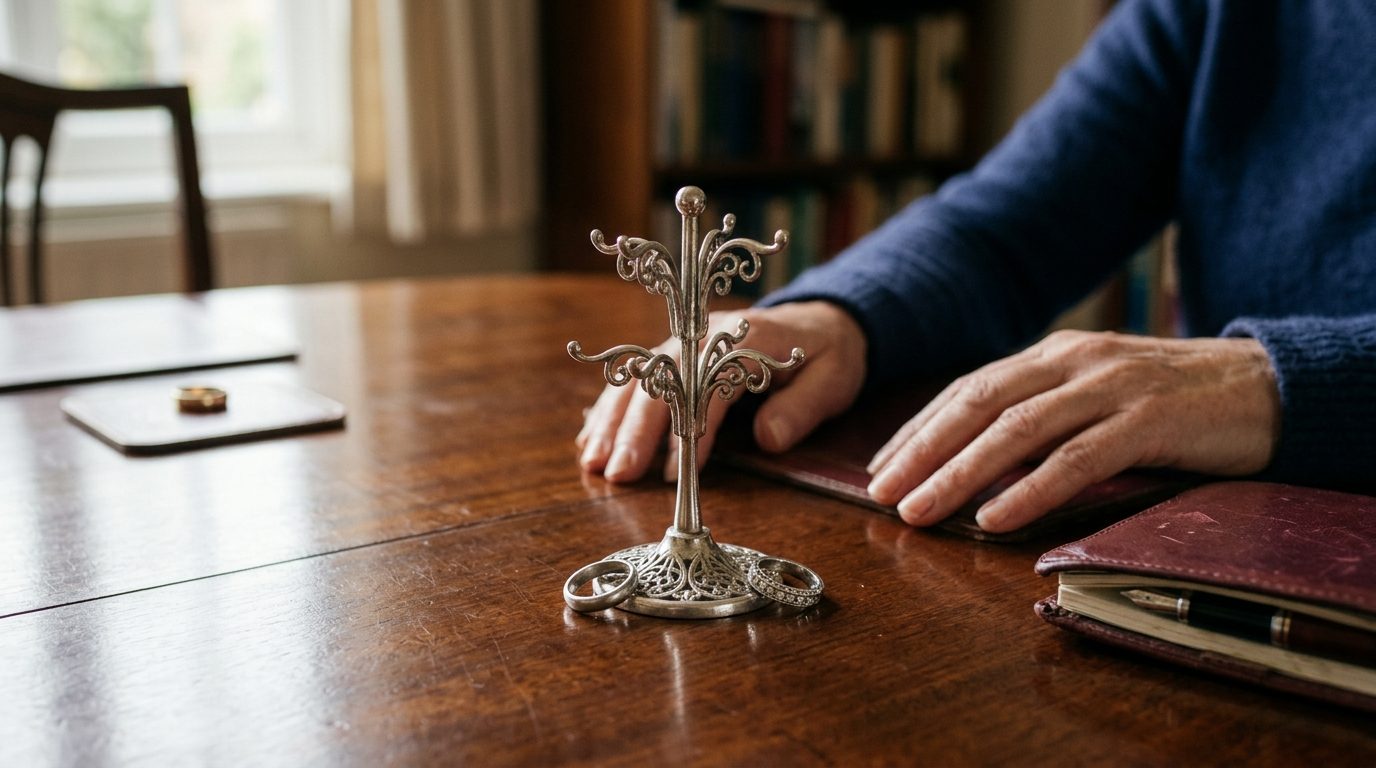
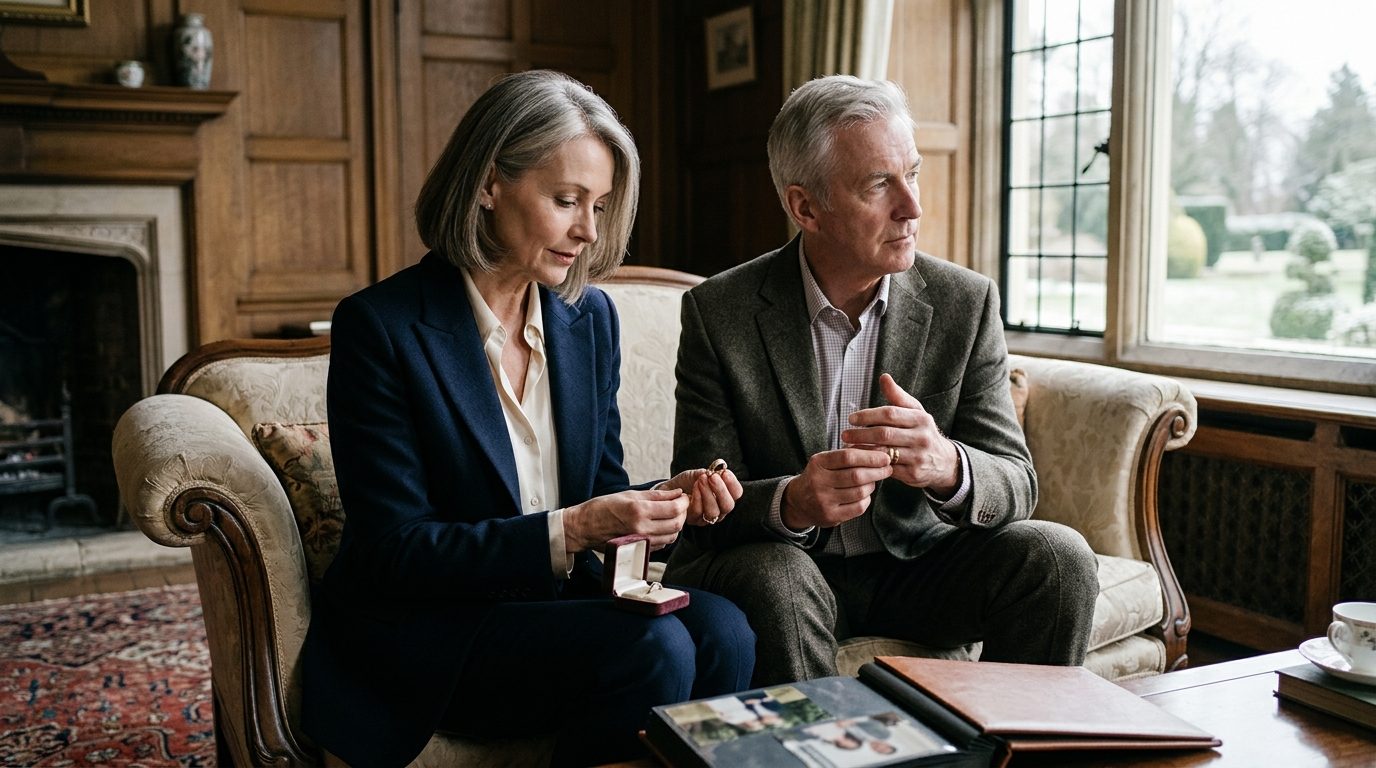 Women file 68% of grey divorce petitions in the UK. This is a significant reversal from the mid-20th century pattern, when social and financial pressures heavily discouraged women from leaving long marriages.
Several factors explain the shift:
Financial independence. More women than men are graduates for the first time in UK history (HESA 2024). Women aged 25-44 now have higher median earnings in many London sectors than men in the same bracket. Financial independence reduces the economic risk of separation.
Longer professional life. The state pension age rising to 67, and the growth of flexible working, means women in their 50s and 60s often have 15-20 more working years ahead. The decision to leave a marriage at 52 is now financially different from the same decision in 1985, when retirement was closer.
Relationship quality expectations. Research from Relate UK (2025) finds that women in grey-divorce-era age groups report higher expectations of emotional reciprocity, shared leisure, and sexual satisfaction from marriage than previous cohorts. When marriages fall short, women are more prepared to act on this.
Social normalisation. The public visibility of figures like Caroline Hirons, and the cultural presence of grey divorce in TV drama (Two Weeks to Live, Marriage, Happy Valley’s family dynamics), has reduced the social stigma.
The five triggers of grey divorce
Relate UK’s 2025 relationship breakdown report identifies five most-common trigger conditions in grey divorces. These are not causes in isolation — they are the final conditions that tip a couple toward formal separation.
1. Empty nest. Children leaving home removes the shared project that organised the couple’s daily life and emotional energy. Couples who related primarily as parents can find they have little left as partners. This is the most statistically consistent trigger across Relate’s data.
2. Career transition. Retirement, redundancy, or career pivot forces a couple to spend significantly more time together. For couples in long-running low-conflict but low-connection marriages, more time together accelerates the recognition of the gap.
3. Health event. A significant illness — the person’s own or a parent’s — often clarifies what matters. Relate’s counsellors report that health events frequently trigger a reassessment of how remaining years should be spent.
4. New relationship. Third-party involvement in grey divorce has decreased as a proportion over time, but remains a factor in approximately 25% of cases. Affairs in long marriages typically begin as emotional connection before physical involvement.
5. Deferred grief. Couples who stayed together “for the children” or “for financial reasons” reach the deferred decision point. Grey divorce often involves formal recognition of a separation that has existed emotionally for years.
Financial complexity: pensions, property, and the grey divorce gap

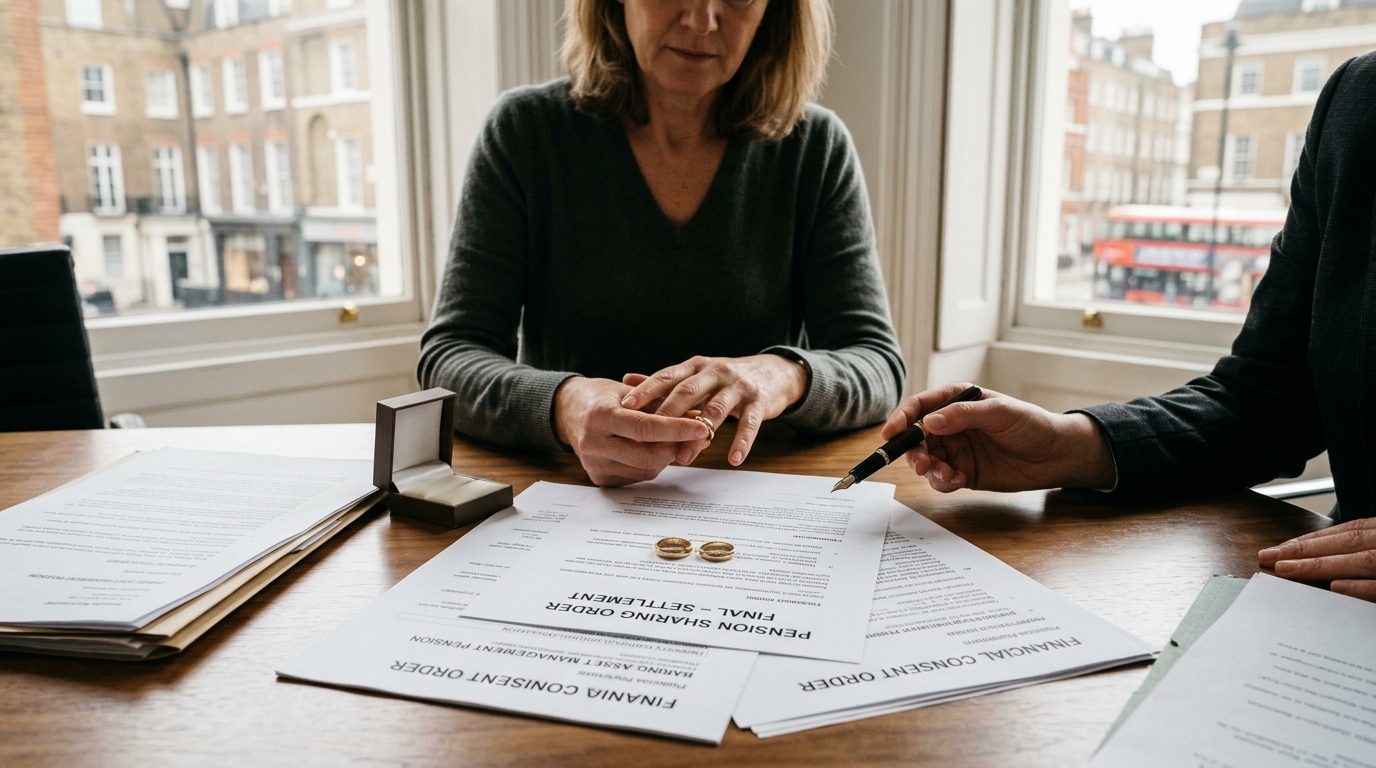 Grey divorce is financially more complex than early-marriage separation. The assets are larger, the financial entanglement is deeper, and the most significant asset — the pension — requires specialist legal and financial handling.
Pension sharing orders
In grey divorces, one or both partners may have significant pension assets accumulated over 30+ years of working life. A pension sharing order allows the court to transfer a proportion of one partner’s pension to the other.
Both defined benefit (final salary, typically public sector) and defined contribution (personal pension) schemes are subject to pension sharing orders. The figure that matters is the CETV: cash equivalent transfer value. This is the lump-sum value of the pension at the point of valuation.
For a couple where one partner has a public-sector defined benefit pension accrued over 30 years, the CETV can easily exceed £500,000. In grey divorces involving one public-sector and one private-sector worker, the pension is often the largest single marital asset.
The family home
The marital home is typically jointly owned. Options at grey divorce include:
- Sale and split of proceeds
- One partner buying out the other’s share (requires a remortgage at late-life income levels, which is increasingly possible as lenders extend maximum mortgage ages)
- Mesher order — delaying the sale until a specific event (a child turning 18, the occupying partner remarrying, or their death)
The income gap
Grey divorce disproportionately affects women financially. Despite the progress in female earnings at younger ages, women in the 55-70 bracket have historically had lower pension accrual due to career breaks for childcare. The pension sharing order framework exists precisely because of this structural imbalance.
For UK couples navigating a grey divorce or planning proactively, the Pensions Advisory Service (gov.uk/the-pensions-advisory-service) provides free specialist guidance on pension sharing.
Second marriages after grey divorce: the growing UK trend
ONS marriage statistics (2023) show that remarriages now account for 33% of all UK marriages, with the rate growing year-on-year. The average age at second marriage has risen to 42 for women and 46 for men. The fastest-growing segment is the 55-70 age group.
This is a positive story. Grey divorce is not the end of relationship life — it is, for many, the beginning of the most satisfying relationship of their life.
Second marriages among people who have navigated the complexity of grey divorce are often reported as more intentional, more equal, and more communicative than first marriages. Couples entering second marriages in their 50s tend to have a clearer idea of what they need and less tolerance for what they don’t.
For UK couples planning a second wedding after grey divorce, the practical considerations are different from a first marriage:
- Church second marriages require a bishop’s dispensation in the Church of England, or a civil ceremony
- Second-marriage church weddings in the UK covers the religious and legal framework
- Guest lists are typically smaller — 40-80 is the modal range for second weddings
- Budget allocation shifts: less on ceremony, more on experience and honeymoon
- Prenuptial agreements are more commonly considered for second marriages (see civil partnership vs marriage UK)
The average UK wedding cost guide covers what couples spend across the range — second wedding budgets typically run £8,000-£18,000 versus £21,990 for first weddings.
Frequently asked questions
What is grey divorce?
Grey divorce is the term for couples separating after 20 or more years of marriage, typically when both are aged 50 or above. UK grey divorces account for 34% of all divorces in the 50+ bracket, rising from 22% in 2010.
Why is grey divorce increasing in the UK?
Five factors drive the increase: longer life expectancy (couples face 30-40 more years together after children leave), the 2020 no-fault divorce reform removing practical barriers, changing expectations of personal fulfilment in midlife, greater financial independence for women, and the normalisation of later-life separation.
Who is Caroline Hirons and why is she relevant?
Caroline Hirons is a UK skincare authority, author, and influencer with over 1.3 million Instagram followers and four bestselling books. Her public discussion of relationship changes in 2025-2026 made her a focal point for conversations about grey divorce and the lives of women in their 50s.
How are pensions split in a grey divorce?
Under a pension sharing order, the court can transfer a proportion of one partner's pension to the other. This is often the largest single asset in a grey divorce. Both defined benefit (final salary) and defined contribution (personal pension) schemes are subject to pension sharing orders.
What financial steps should someone take before a grey divorce?
Key steps: obtain a full financial disclosure from both parties, get a pension valuation (CETV — cash equivalent transfer value), identify all property and investments, and take independent legal advice. Citizens Advice provides free initial guidance; a family solicitor is essential for asset-heavy separations.
Are grey divorced people getting remarried?
Yes. ONS data shows remarriages now account for 33% of all UK marriages, with the average age at second marriage rising to 42 for women and 46 for men. The fastest-growing remarriage segment is the 55-70 age group.
What does the no-fault divorce law mean for grey divorce?
The Divorce, Dissolution and Separation Act 2020 removed the requirement to prove fault or wait two years of separation. Either party can now file for divorce without citing a specific reason. This has significantly reduced the practical and emotional barrier to ending long marriages.