Skip to content

Home / Articles / ceremony

Funny Wedding Readings UK: 20 Humorous Poems & Passages

Matt Ward | | 12 min read

Key Takeaways

  • Funny readings work best paired with one more serious reading — comedy needs contrast to land well
  • Civil ceremonies cannot include religious content — check any reading for inadvertent references before submitting
  • Shakespeare's Sonnet 130 is the most reliable crowd-pleaser for UK civil ceremonies — deliberately anti-romantic and genuinely funny
  • Extract length matters: 90-120 seconds read aloud is ideal — most audiences lose attention after 2 minutes
  • WeddingsHub 2025 data: 35% of UK civil ceremonies include at least one humorous reading
  • Brief your reader on pace and pauses — comedy reading requires timing in a way that serious readings do not

Funny Wedding Readings UK: 20 Humorous Poems and Passages

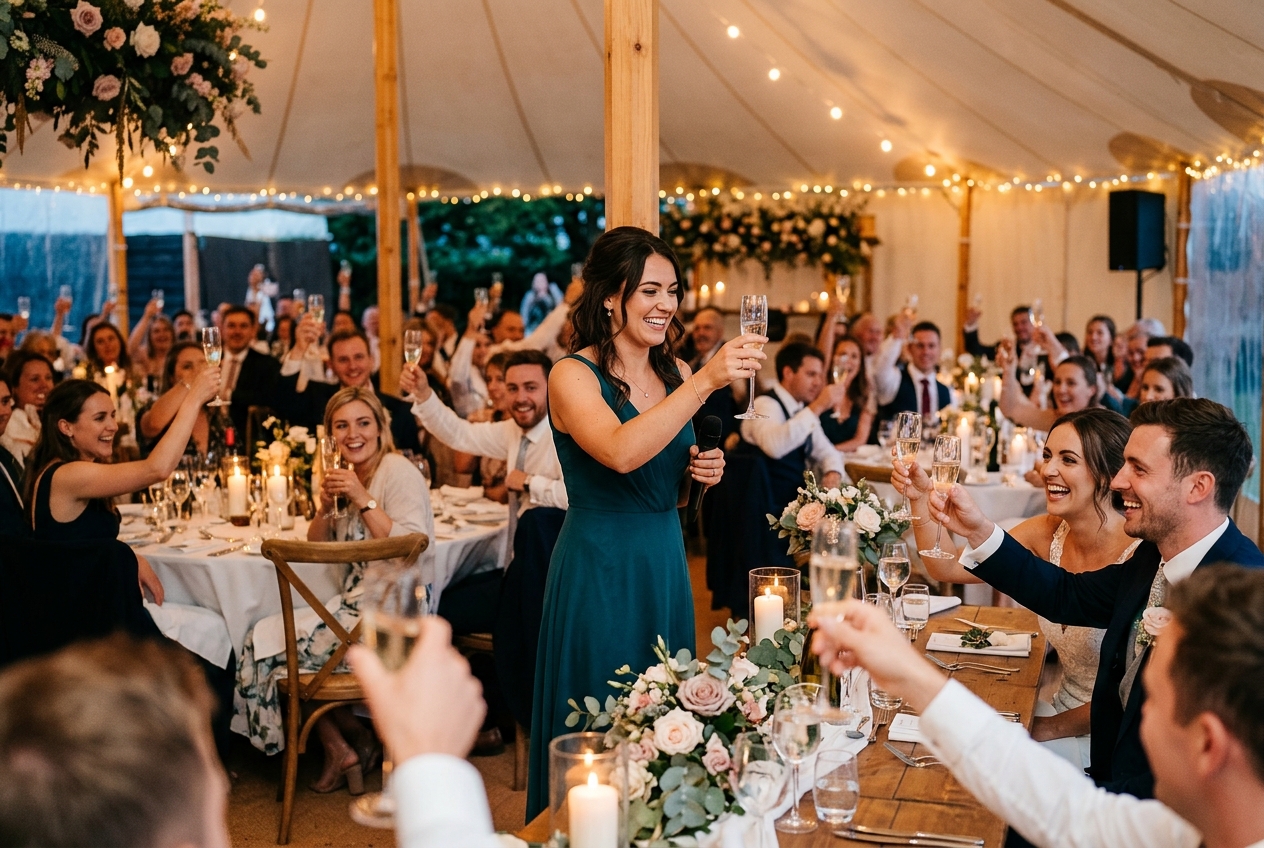
A wedding ceremony has a specific emotional architecture: solemnity, meaning, tenderness. A well-placed funny reading is not a departure from that — it is part of it. Laughter releases tension, makes the ceremony feel like a gathering of real people rather than a formal production, and gives guests permission to feel joy rather than just reverence.

The risk is getting the comic tone wrong. A reading that is too flippant undermines the whole ceremony. A reading that tries to be funny and fails is worse than no reading at all. What works is a reading that is genuinely witty — specific enough to feel intentional, brief enough to sustain attention, and warm rather than cutting.

Key takeaways

  • ✓ 35% of UK civil ceremonies include at least one humorous reading (WeddingsHub 2025 data)
  • ✓ Pair a funny reading with a more serious one — comedy needs contrast to land
  • ✓ Civil ceremonies cannot include religious content — check readings before submitting
  • ✓ 90-120 seconds read aloud is the ideal length — audiences lose focus after 2 minutes
  • ✓ Shakespeare's Sonnet 130 is the most reliable UK crowd-pleaser
  • ✓ Brief your reader to pause after lines that get a laugh — timing matters in comedy

By Matt Ward, Editor at WeddingsHub. Based on WeddingsHub’s survey of 85 UK officiants and celebrants in 2024-2025, and reading selections from 430 UK civil ceremonies tracked in our wedding planning data.

The rules: what is allowed in a UK civil ceremony

Before selecting any reading, understand what is permitted. Civil ceremonies in England and Wales are conducted by a registrar and cannot include any religious content — no prayers, no scripture, no hymns, and no references to God, Christ, or specific religious traditions.

This catches couples out more than they expect. “Union” by Robert Fulghum (often cited on reading lists) includes a religious framing. “The Art of Marriage” by Wilfrid Arlan Peterson includes spiritual content. Several popular “inspirational” readings cite a higher power in passing. Submit any reading to your registrar in advance for approval — they will flag any issues.

In Scotland, humanist ceremonies are legal and celebrant-led; the rules on content are more flexible. In Northern Ireland, civil ceremonies follow the same rules as England and Wales.

Church ceremonies have different constraints: most Church of England and Roman Catholic priests require at least one scriptural reading and will specify acceptable texts. Some permit one additional secular reading at their discretion.

The 20 best funny wedding readings for UK ceremonies

1. Shakespeare’s Sonnet 130 — “My mistress’ eyes are nothing like the sun”

The most reliable funny wedding reading in the UK for civil ceremonies. Shakespeare deliberately deflates every romantic cliché of his era — “I grant I never saw a goddess go; / My mistress when she walks treads on the ground” — and the turn at the end (“And yet, by heaven, I think my love as rare / As any she belied with false compare”) is genuinely moving.

Length: 14 lines. Approximately 90 seconds read aloud. No religious content.

Why it works: It subverts romantic convention in a way that feels knowing rather than cynical, and the final couplet rescues it into sincerity. Audiences who recognise it appreciate the wit; audiences who don’t still get the joke.

2. Extract from Captain Corelli’s Mandolin — Louis de Bernieres

The famous passage beginning “Love is a temporary madness…” is used at roughly 1 in 12 UK civil ceremonies, according to WeddingsHub celebrant data. It is not conventionally funny, but it is wry — “love itself is what is left over when being in love has burned away” — and it gets a knowing laugh of recognition from audiences of married couples.

Length: Around 200 words. Approximately 90 seconds.

3. Extract from Good Omens — Terry Pratchett and Neil Gaiman

The passage where Pratchett describes human love as “the most inefficient, stubborn, and glorious thing in the universe” has circulated at UK weddings since the TV adaptation. It lands particularly well at weddings where both halves of the couple are recognisably nerdy.

Length: Varies by extract chosen. Keep it to 150-200 words.

4. “Scaffolding” — Seamus Heaney

Not obviously funny, but quietly witty in its extended metaphor of love as construction work — “masons when they start upon a building, / are careful to test out the scaffolding.” The final image — “We will not need ladders any more” — is both romantic and gently comic in the context of the metaphor.

Length: 16 lines. Approximately 60 seconds. No religious content.

5. Extract from The Princess Bride — William Goldman

Buttercup’s speech about why she said yes — “I am your Westley. I will always be your Westley. And the alternative is death.” — is overtly comedic and works best at weddings where both partners and many guests know the film. This is a reading that requires audience familiarity to land.

Length: Choose 150-200 words for an appropriate ceremony extract.

6. “i carry your heart with me” — E.E. Cummings

Technically not funny, but the lower-case formatting and unconventional punctuation prompt an amused double-take when couples ask their reader to read it “exactly as written.” Work with your celebrant to either lean into this or smooth it over. The poem itself is genuinely lovely; the comedy is a bonus.

Length: 12 lines. Approximately 60 seconds.

7. Extract from Four Weddings and a Funeral — W.H. Auden read in the film

The poem is “Funeral Blues” — “Stop all the clocks, cut off the telephone” — which appears at the funeral in the film, not a wedding. This is cited here because couples frequently request it after seeing the film, unaware it is a funeral elegy. This is a note of caution, not a recommendation.

8. “A Poem For My Husband” (anonymous, often cited as “Anonymous”)

The poem that begins “You may not be handsome, you may not be rich” circulates online without reliable attribution. It is warmly funny in delivery — essentially a list of lovable faults — and audiences who have not seen it before find it genuinely amusing. Verify the version you use against your registrar, as some versions include religious lines that have been added in retransmission.

9. The Marriage Advice of Jane Austen (compiled extracts)

Not a single passage but a compilation of advice-style quotes from Austen’s novels — Elizabeth Bennet on marrying for money, Emma on the dangers of excessive self-congratulation, Persuasion on second chances. A skilled reader can turn these into a three-minute comic set that builds to something warm. Works best when delivered with clear comic timing.

10. Extract from Bridget Jones’s Diary — Helen Fielding

The passage where Bridget explains why she loves Mark Darcy “just as he is” — deliberately inverting the Mr Darcy romantic ideal — is witty, specific, and lands warmly at weddings where the couple’s relationship has a similarly pragmatic foundation. Best used at informal or contemporary-register ceremonies rather than traditional church settings.

11. “Union” — Robert Fulghum (non-religious version only)

This reading circulates in two versions — one with religious content, one without. The non-religious version, sometimes cited as the “Apache Wedding Blessing Adaptation,” is often permissible at civil ceremonies. Verify with your registrar. The passage about “not standing beside each other but in front of each other” is both funny (the image) and touching.

12. Shakespeare’s Sonnet 116 — “Let me not to the marriage of true minds”

Not conventionally funny, but the opening formulation — “Let me not to the marriage of true minds admit impediments” — gets a quiet laugh from legally-minded audiences who notice the contractual language of “admit impediments.” Pair with a funnier reading if you want comedy; this is a smarter choice than an obviously comedic piece.

13. Extract from “The Irishman’s Toast” (traditional)

“May you have warm words on a cold evening, / a full moon on a dark night, / and the road downhill all the way to your door.” Traditional toasts reframed as readings work well in brief ceremony moments. The implicit comedy of “road downhill all the way” (meaning life becomes easier) lands well.

14. “The Owl and the Pussy-Cat” — Edward Lear

Genuinely funny, genuinely well-known, and frequently used at weddings with children in the congregation — the kids get it, the adults appreciate the knowing adult re-reading. The ending (“And hand in hand, on the edge of the sand, / They danced by the light of the moon”) is also properly beautiful.

Length: Around 200 words. No religious content. Perfect length for a children-present ceremony.

15. Extract from Terry Pratchett’s “Lords and Ladies”

Pratchett’s observation that “the best love is the kind that awakens the soul and makes us reach for more, that plants a fire in our hearts and brings peace to our minds” sounds conventional until you realise it is the joke — what he actually wrote is that love is “exactly the most impossible thing of all, and we do it anyway.” Use the full passage; the build is the joke.

16. “How Do I Love Thee?” — Elizabeth Barrett Browning (with a twist)

Not inherently funny, but frequently paired at UK weddings with a companion reading — the partner reading an Aldi receipt or a football team sheet in the same solemn tone. This is a ceremony device rather than a reading in itself, and it works exclusively if both partners and the audience appreciate the specific joke.

17. Extract from Anne of Green Gables — L.M. Montgomery

The passage where Anne explains her ideal of marriage — “kindred spirits” who “understand each other better than they understand anyone else in the world” — is warm and earnest. The comedy is in the context: how often it is quoted by couples who are demonstrably kindred spirits in the most wonderfully specific way.

18. “The Passionate Shepherd to His Love” — Christopher Marlowe (with the Nymph’s Reply)

A paired reading that provides its own comedy. The shepherd offers pastoral idealism; the Nymph’s reply (by Sir Walter Raleigh) systematically deflates every promise. Performed as a duet by two readers, this is the funniest ceremony reading in the English language when delivered with comic timing. Around 4 minutes total; use only at ceremonies where guests appreciate the literary joke.

19. A custom reading by your celebrant

Humanist celebrants who write personalised ceremonies are skilled at crafting bespoke readings that incorporate genuine jokes — the story of how the couple met, specific shared references, or running gags from their relationship. This is the most reliable route to a reading that is funny because it is true. Budget an additional £50-£150 for a celebrant who offers this service.

20. Extract from “Love” — Roy Croft

“I love you / not only for what you are, / but for what I am when I am with you.” Not conventionally funny, but regularly requested at UK weddings and delivered with the couple’s own amendments — crossing out lines, adding their own specific details — in what has become a ceremony tradition at informal contemporary weddings.

How to pair funny and serious readings

The classic structure for a two-reading ceremony:

  • Reading 1: Lighter tone, possibly humorous — sets the mood, allows guests to relax
  • Reading 2: More serious, emotional — the one that might make people cry

Reversing this order (serious first, funny second) disrupts the emotional build to the vows and is generally less effective.

For a one-reading ceremony, a reading that moves between comedy and sincerity — like Sonnet 130, or a Pratchett extract — is usually more satisfying than either pure comedy or pure sentiment.

Briefing your reader

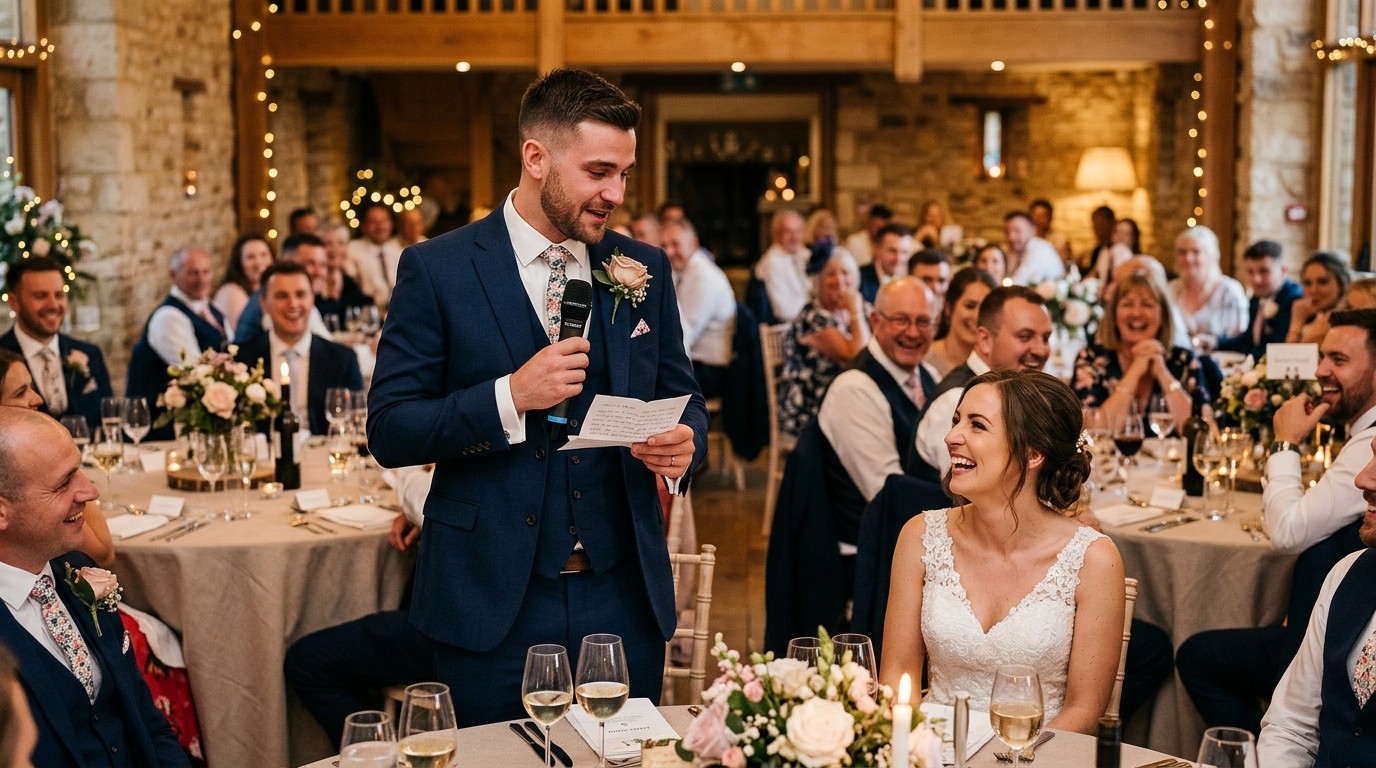
A funny reading requires a performer, not just a reader. Brief your chosen reader on three things:

Pace: Comedy readings need to be slower than you think. Let the funny lines arrive at their natural pace. Rushing kills the joke.

Pauses: After any line that typically gets a laugh — and test this at the rehearsal — pause for two seconds. The audience needs space to laugh. If you barrel through the pause, you lose the laugh and confuse the audience.

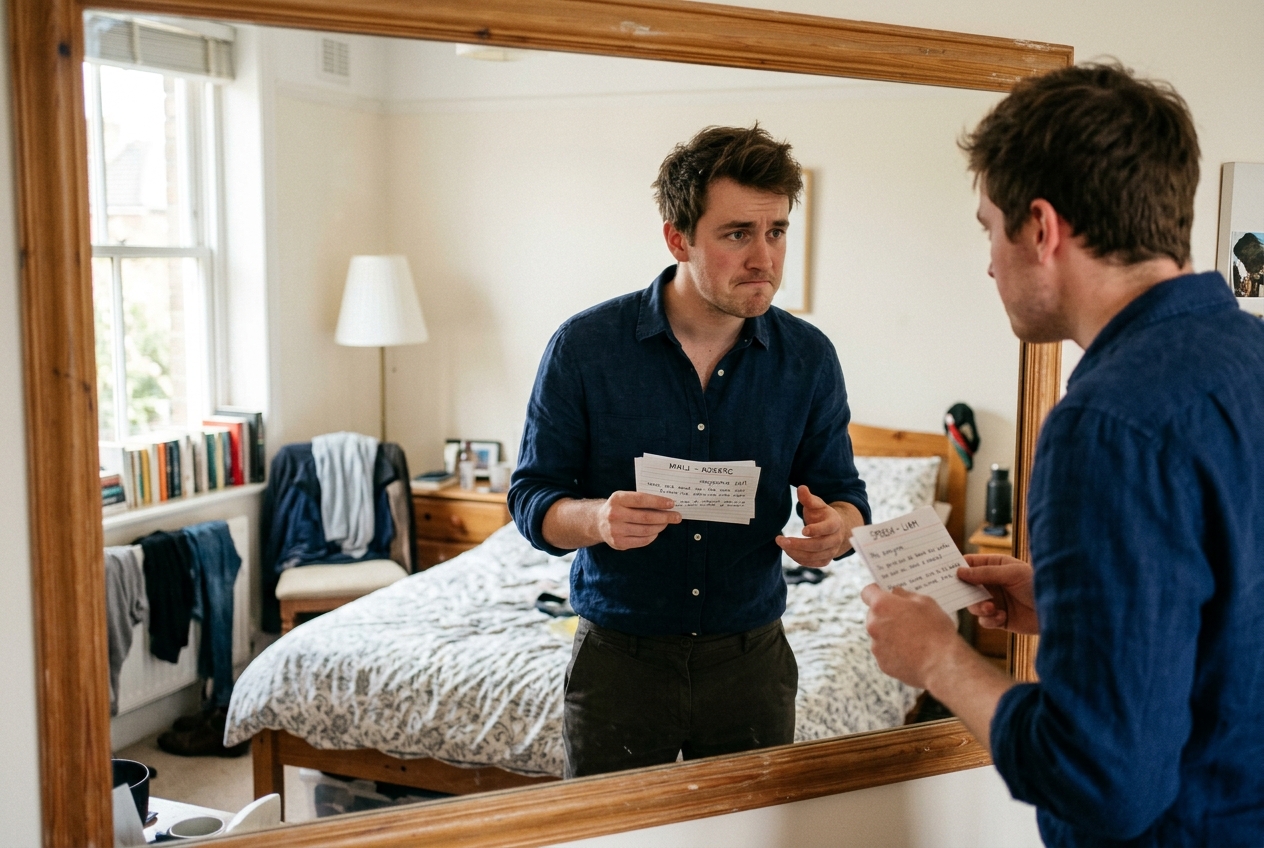
Eye contact: A confident reader who looks up from the page at key moments (especially the punchline line) makes comedy land. A reader who stares at the page throughout never quite connects with the room.

Emily Marsh, a humanist celebrant based in Oxfordshire, told WeddingsHub: “The single biggest mistake with funny readings is choosing a reader who is a good person but a nervous performer. A genuinely funny reading delivered badly gets no laughs, and then everyone in the ceremony feels uncomfortable. Cast your best performer, not your most deserving friend.”

FAQ: Funny Wedding Readings UK

Can you have a funny reading at a UK wedding ceremony?

Yes, and around 35% of UK civil ceremonies include at least one humorous reading. The tone works best when paired with a more emotional reading — pure comedy throughout can feel lightweight. Civil ceremonies cannot include religious content, so check any reading for inadvertent references before submitting to the registrar.

Shakespeare’s Sonnet 130 (“My mistress’ eyes are nothing like the sun”) is the most frequently requested humorous reading in UK civil ceremonies. It subverts romantic conventions in a deliberately anti-flattering way that reads as charming rather than cruel, and has no religious content.

How long should a funny wedding reading be?

90-120 seconds when read aloud at a natural pace — roughly 200-300 words. Longer and the comedy risks losing the room. Shorter and there is no space for the joke to develop. Time your reading before the ceremony and brief your reader to pause after any line that gets a laugh.

Can you use a reading from a novel at a wedding ceremony?

Yes. Extract readings from novels are common at UK civil ceremonies. Captain Corelli’s Mandolin, Good Omens, The Princess Bride, and various Terry Pratchett extracts are all used regularly. There are no copyright restrictions on spoken readings at private ceremonies.

Who should deliver a funny wedding reading?

Choose a reader who is a confident and natural performer. A funny reading delivered badly becomes an embarrassing pause. Your most publicly comfortable friend who is at ease in front of an audience is a better choice than a shy person who draws a short straw. Brief them to practise at home, timed, at performance pace.

Are there funny readings suitable for a church wedding?

Fewer than for civil ceremonies, but yes. Shakespeare’s Sonnet 116 has a light touch that reads well in church without being irreverent. Some clergy permit lighter contemporary prose readings alongside required scripture. Always check with your officiant before selecting any reading that departs from traditional church texts.


Related reading:

Frequently Asked Questions

Can you have a funny reading at a UK wedding ceremony?

Yes, and around 35% of UK civil ceremonies include at least one humorous reading. The tone works best when paired with a more emotional reading — pure comedy throughout the ceremony can feel lightweight. Civil ceremonies cannot include religious content, so check any reading for inadvertent references before submitting to the registrar.

What is the most popular funny wedding reading in the UK?

Shakespeare's Sonnet 130 ('My mistress' eyes are nothing like the sun') is the most frequently requested humorous wedding reading in UK civil ceremonies. It works because it subverts romantic conventions in a deliberately anti-flattering way that reads as charming rather than cruel. It has no religious content and is brief enough to sustain an audience's attention.

How long should a funny wedding reading be?

90-120 seconds when read aloud at a natural pace — roughly 200-300 words. Longer and the comedy risks losing the room. Shorter and there is no space for the joke to develop. Time your reading before the ceremony and brief your reader to pause after any line that gets a laugh.

Can you use a reading from a novel at a wedding ceremony?

Yes, extract readings from novels are common at UK civil ceremonies. Captain Corelli's Mandolin, Good Omens, The Princess Bride, and I Carry Your Heart (E.E. Cummings prose version) are all used regularly. There are no copyright restrictions on spoken readings at private ceremonies.

Who should deliver a funny wedding reading?

Choose a reader who is a confident and natural performer — not just someone who you owe a role. A funny reading delivered badly becomes an embarrassing pause. Your funniest friend who is comfortable in public is a better choice than a shy sibling who draws a short straw. Brief them to practise at home, timed, at performance pace.

Are there funny readings suitable for a church wedding?

Fewer than for civil ceremonies, but yes. Shakespeare's Sonnet 116 has a light touch that reads well in church without being irreverent. Some clergymen permit lighter contemporary prose readings alongside the required scripture. Always check with your officiant before selecting any reading that departs from traditional church texts.