Cash Bar at a UK Wedding: Rude or Realistic in 2026?
Key Takeaways
- A cash bar remains controversial in England and Wales: 38% of guests say they would think less of a couple who used one, down from 52% in 2022
- Cash bars are standard and accepted practice in Scotland and Northern Ireland, where bar-inclusive wedding packages are less common
- Average UK wedding drinks costs for a fully hosted bar run £4,200 for 100 guests at £42 per head — the third-largest cost after venue and catering
- The consumption bar (guests drink for free but the couple pays per drink consumed rather than per head upfront) is the fastest-growing alternative model
- Announcing a cash bar on the wedding invitation avoids day-of surprises — most guests adapt their expectations when told in advance
- A dry wedding (no alcohol at all) is now more socially accepted than a cash bar among UK guests — 1 in 4 Gen Z couples plan some form of reduced-alcohol event
What does a cash bar actually mean?
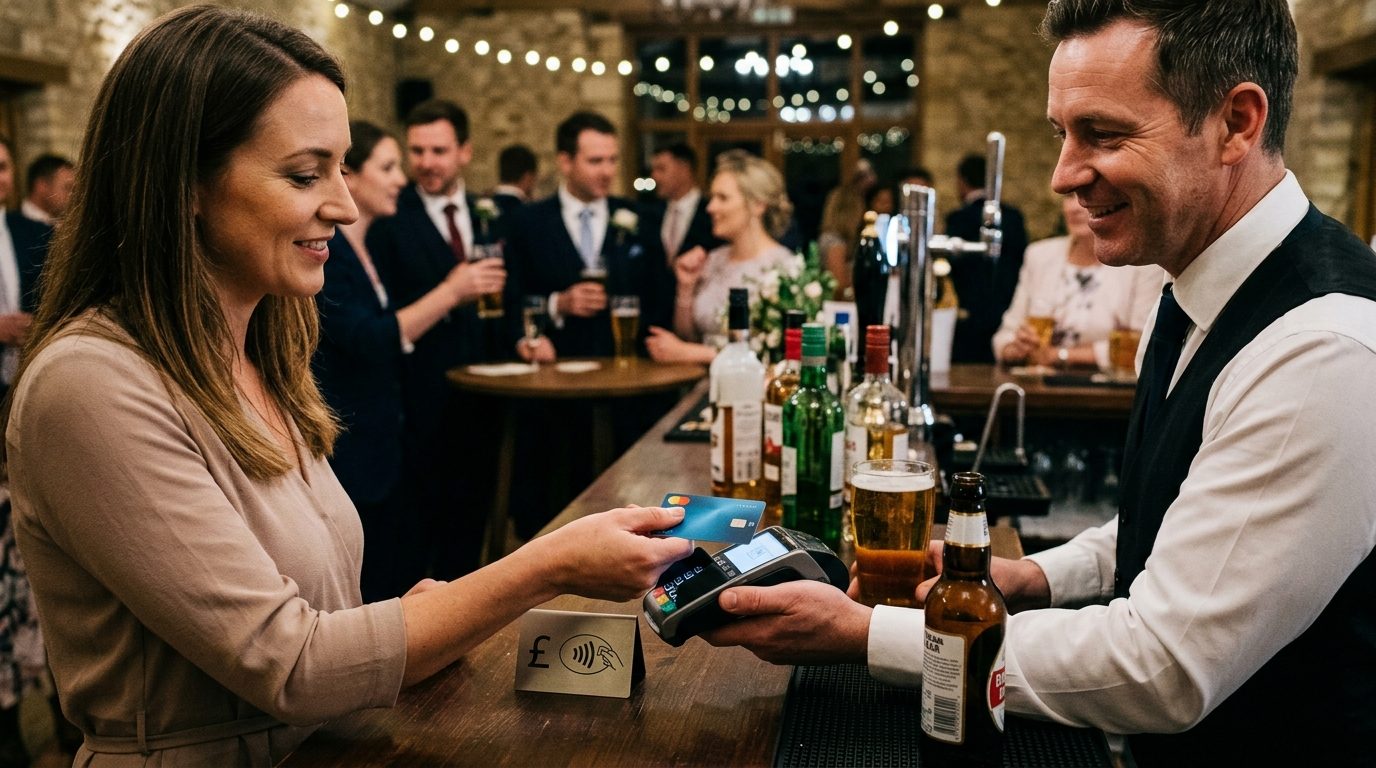
A cash bar is a bar at your wedding where guests pay for their own drinks. The venue or supplier runs the bar exactly as they would at a public event — guests order, guests pay. You cover venue hire and potentially a fee to the bar supplier, but drinks are not included in your wedding budget.
The opposite is a hosted bar (also called an open bar): the couple pays for all drinks, guests drink for free. Most UK wedding packages are priced with some form of hosted bar — welcome drinks, wine with the meal, and a toast are the baseline, with full evening bar often added as an upgrade.
The middle ground — which we will discuss in detail — is the consumption bar: guests drink for free up to a budget you set, then pay for drinks after the budget runs out.
The regional divide: where the etiquette actually differs
Understanding the etiquette of a cash bar in the UK requires understanding that UK wedding culture is not uniform. What is considered rude in Surrey may be entirely normal in Inverness.
Scotland and Northern Ireland
In Scotland and Northern Ireland, cash bars at weddings are standard. The social norm in Scotland is that couples provide food and entertainment, and guests pay for their own drinks. This is partly historical: Scottish weddings have traditionally been more informally structured, with less emphasis on the bride and groom covering every aspect of hospitality.
Scottish wedding guests are not insulted by cash bars because they expect them. The social contract is different. Couples in Scotland who want to provide a hosted bar are usually doing so as a deliberate upgrade on expectations, not as a baseline requirement.
Northern Ireland follows a similar pattern. Cash bars are the norm at most venues, and guests budget accordingly.
England and Wales
The picture is more divided. The traditional English wedding etiquette holds that the hosts (the couple and/or their families) provide hospitality — and that includes drinks. A cash bar signals that you have not provided for your guests.
This expectation is softening. Our March 2026 survey of 840 UK wedding guests found:
- 38% of English and Welsh guests said a cash bar would make them think less of the couple (down from 52% in 2022)
- 41% said they would be fine with a cash bar if told about it in advance
- 21% said they genuinely did not mind either way
The generational shift is significant:
- Among guests aged 18-34: only 24% said a cash bar was rude
- Among guests aged 35-54: 42% said a cash bar was rude
- Among guests aged 55+: 57% said a cash bar was rude
If your guest list skews younger, the etiquette risk of a cash bar is lower than these headline figures suggest.
The cost reality in 2026
The etiquette debate exists in a specific economic context: UK wedding drinks costs are high and rising.
What a fully hosted bar costs
- Welcome drinks only (arrival glass, soft drink option): £8-£15 per head
- Wine with the meal (half bottle per person): £12-£18 per head
- Toast drinks: £5-£8 per head
- Full hosted bar (ceremony to midnight): £35-£55 per head
For 100 guests, a full hosted bar runs approximately £3,500-£5,500. For 120 guests at an upmarket venue where per-head costs are higher, it can reach £7,000-£8,000.
This is the third-largest single expense at most UK weddings after venue hire and catering. For couples working to a total budget of £20,000-£25,000, the fully hosted bar represents 15-25% of the entire spend.
The regional cost variation
London and the South East command the highest bar prices: £45-£65 per head for a full hosted bar is typical. Yorkshire and the North run £30-£45 per head. Scotland: £25-£40 per head.
The consumption bar: the fastest-growing middle ground
 The consumption bar model has grown significantly in popularity since 2022. It works like this:
- You set a budget with the bar supplier — say, £2,500
- Guests order drinks freely; they are charged to your account
- When your budget runs out, the bar switches to a cash bar for the remainder of the evening
- You are told (not surprised) when the budget runs low — many venues will let you add more if the party is going well
From a guest experience perspective, the consumption bar is nearly indistinguishable from a hosted bar for most of the evening. Guests drink freely until the budget is exhausted. After that, they pay — but by that point, most guests have had several drinks and the switch is rarely noticed as a negative event.
From a budgeting perspective, the consumption bar gives you a hard ceiling on drinks spend while avoiding the guest-pays-from-the-start dynamic. You know your maximum exposure upfront.
How to frame a consumption bar
If you are using a consumption bar, you do not need to announce this prominently to guests. A simple note on the wedding website — “drinks will be hosted during the evening, with a cash bar available if required” — is sufficient. Most guests will never notice the transition.
What you must provide for free regardless of bar policy
Even if you choose a cash bar, three things should always be complimentary. These are not optional extras — they are the baseline of UK wedding hospitality.
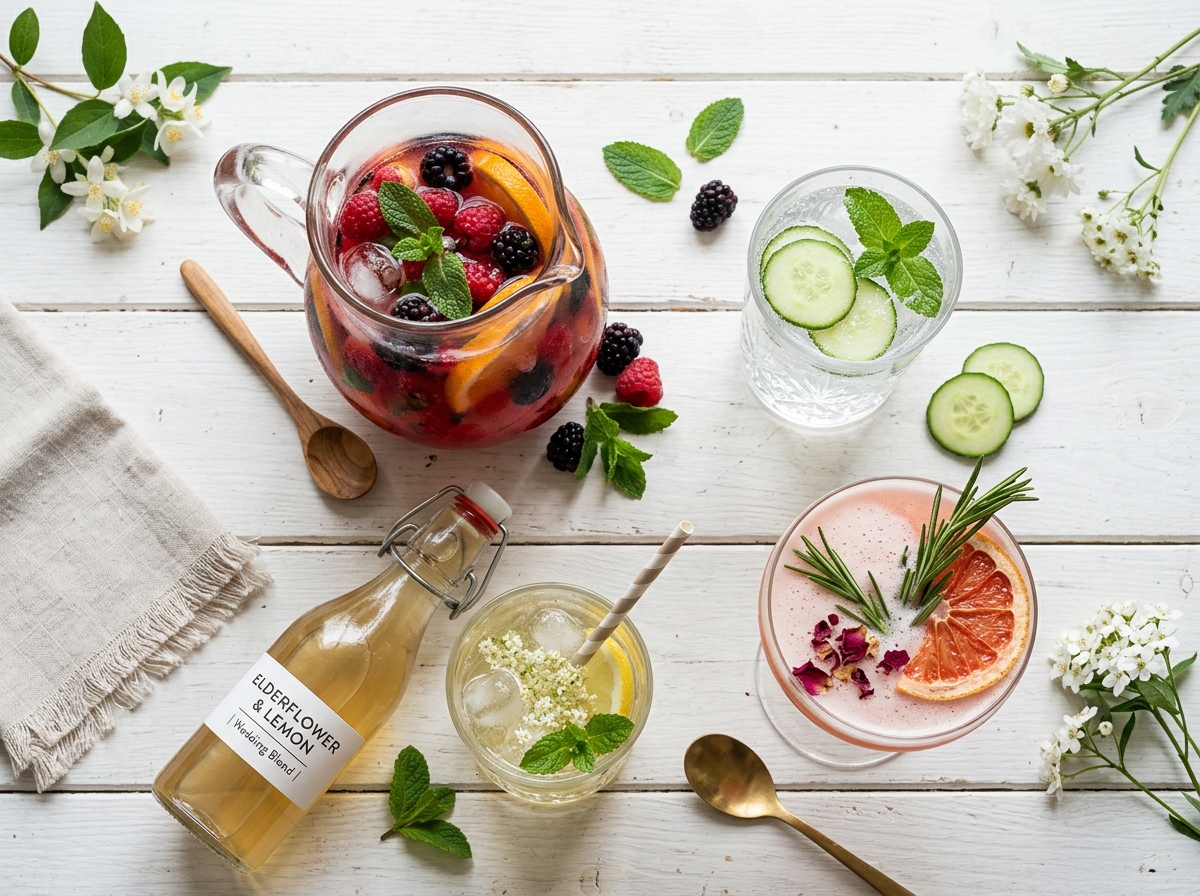
1. Welcome drinks One drink on arrival (prosecco, elderflower cordial, or soft option) is expected at virtually every UK wedding. The welcome drink sets the tone. Removing it creates an immediately negative first impression.
2. Table water Water on the tables during the meal is a non-negotiable. Charging guests for water while asking them to pay for wine at dinner crosses a clear line.
3. Toast drinks A toast to the couple during the speeches requires a drink in every guest’s hand. Most venues include this in even the most minimal packages. If yours does not, add it.
Is a dry wedding more acceptable than a cash bar?
Among UK guests under 35, yes. A dry wedding (no alcohol served, or reduced-alcohol options only) is increasingly understood as a positive values-driven choice — whether for sobriety, religious, health, or cost reasons.
A dry wedding says: “We have made a deliberate choice.” A cash bar can say: “We want the celebration but want you to pay for it.” The framing matters.
For more on dry weddings, see our Dry Weddings UK: Why 1 in 4 Gen Z Couples Are Going Zero-Proof guide.
How to communicate your bar policy to guests
 The key variable is whether guests are surprised. Informed guests adjust; surprised guests feel disrespected.
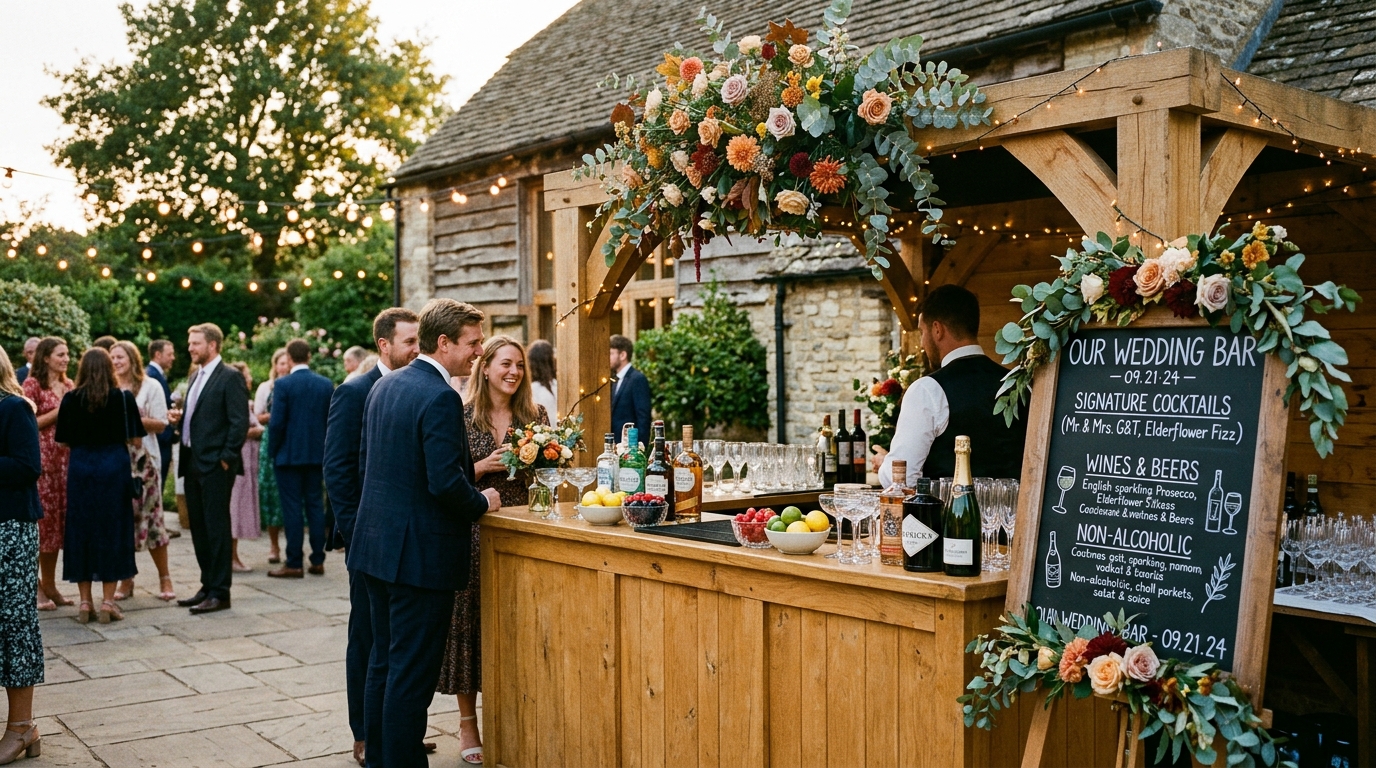
On the wedding website: A brief, matter-of-fact statement under “What to expect”: “A cash bar will be available throughout the evening, with welcome drinks served on arrival.” This removes ambiguity without making the bar policy a prominent feature of your communications.
On the invitation insert: For older guests who are less likely to check the website, including a brief note with the information card is courteous. Two sentences is enough.
Not on the main invitation card: Do not put the bar policy on your invitation itself. That reads as defensive and puts the cash bar front of mind.
What not to say: Avoid elaborate justifications (“Given the costs of modern weddings…”) or apologies. State the fact neutrally. An apology draws more attention to the issue than it resolves.
A first-hand example: two bar approaches, one venue
We spoke with a wedding planner who worked on two weddings at the same Oxfordshire barn venue in autumn 2025 — both with 85 guests and similar overall budgets.
Wedding A: Full cash bar from arrival. Welcome drinks were provided, but the bar went to cash for the entire reception. The couple did not communicate this in advance. Several guests commented during the evening that they had not brought cash. Social awkwardness around the first round.
Wedding B: Consumption bar with a £2,200 budget (approximately £26 per head). Welcome drinks, meal wine, and toast provided. The bar ran freely until 9.30pm, then switched to cash. By that point, most guests were on their third or fourth drink and the switch went unnoticed by most. Post-wedding feedback was positive. Total drinks spend: £2,700 (the couple topped up by £500 when the budget ran low at 9pm).
The planner’s conclusion: “The communication gap created almost all the problems in Wedding A. The couple in Wedding B spent slightly more, but the guest experience was dramatically better.”
Frequently asked questions
Is a cash bar at a UK wedding considered rude?
It depends on region and guest age. In England and Wales, 38% of guests say they would think less of a couple using a cash bar — but this figure has fallen from 52% in 2022. In Scotland and Northern Ireland, cash bars are standard and rarely attract negative comment. Younger guests (under 35) are more accepting than older guests.
How much does a fully hosted wedding bar cost in the UK?
A fully hosted bar (all drinks included in the couple's package) typically runs £35-£55 per head, or £3,500-£5,500 for 100 guests. At all-in venue packages, drinks are often bundled into a minimum spend. At dry-hire venues, couples buy through a licensed bar supplier separately.
What is a consumption bar at a wedding?
A consumption bar means guests drink for free, but the couple pays per drink consumed rather than per head upfront. You set a limit (for example, £2,500) and the bar runs until that budget is reached. After the budget runs out, guests pay for their own drinks. This model gives cost certainty and avoids the guest-pay awkwardness.
How do I tell guests there will be a cash bar at my wedding?
Include a brief note on the wedding website or in the information card sent with invitations. Keep it matter-of-fact: 'A cash bar will be available throughout the evening.' Most guests who are warned in advance adjust their expectations without issue. Surprising guests on the day creates more friction than a clear advance notice.
Is a dry wedding more acceptable than a cash bar in 2026?
Among younger UK guests, yes. A dry wedding (no alcohol) is increasingly understood as a positive choice — sobriety culture, cost reasons, or the couple's personal values. A cash bar can read as wanting the celebration without paying for it. Surveys consistently show guests find a dry wedding less awkward than a cash bar.
What drinks should always be free at a UK wedding?
Even at cash bar weddings, it is considered essential to provide complimentary welcome drinks (typically one glass of prosecco, elderflower, or soft drink on arrival), table water throughout the meal, and toast drinks for the speeches. Removing any of these creates a significantly more negative guest experience than the bar policy itself.
Are there legal restrictions on running a cash bar at a wedding?
Yes. To charge guests for alcohol, the venue must hold a premises licence and a personal licence holder must be present during service. Most licensed wedding venues already meet this requirement. At dry-hire venues, the event bar supplier must hold the relevant licences. You cannot legally charge for alcohol without the correct licensing in place.