Home / Articles / Honeymoons
Canary Islands Honeymoon 2026: Gran Canaria & Lanzarote
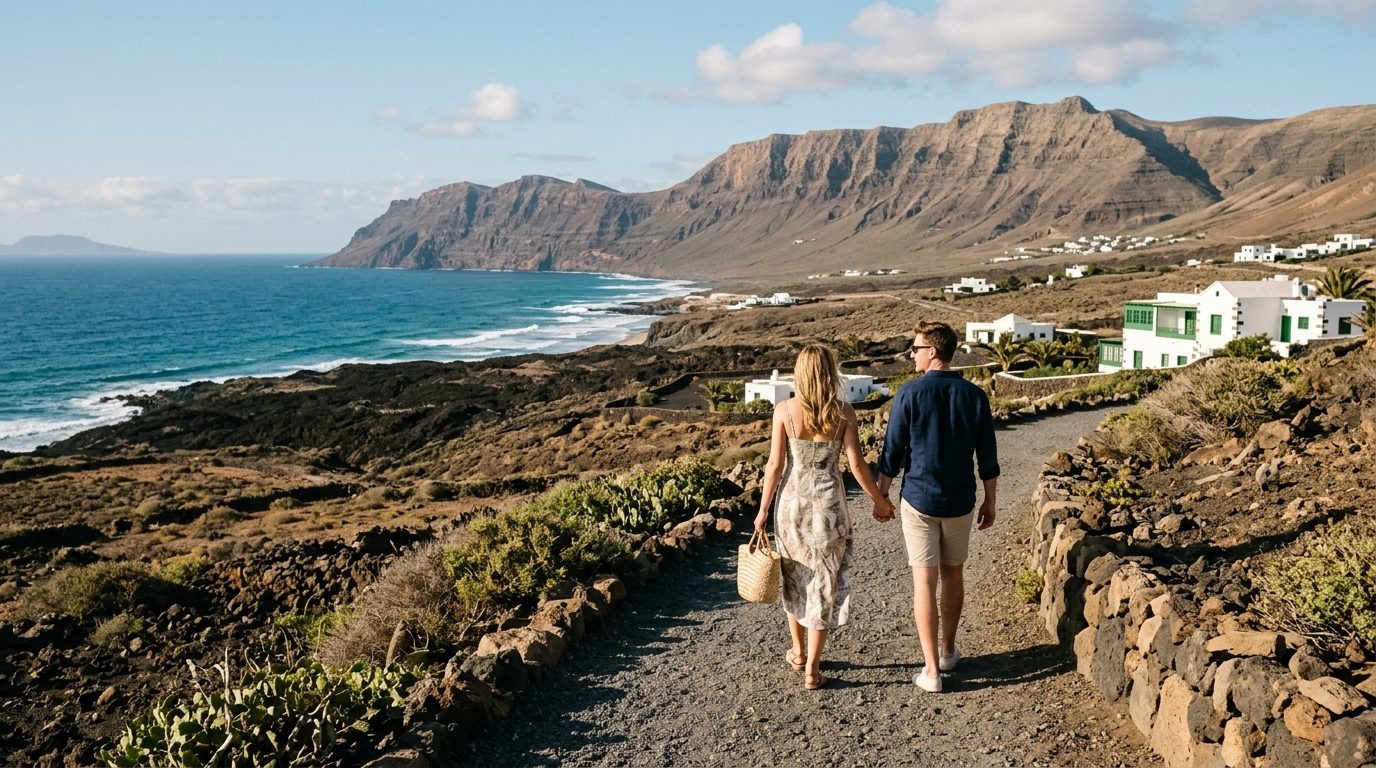
The Canary Islands are the UK's most-booked winter honeymoon destination in 2026, chosen by 16% of WeddingsHub couples for year-round sunshine, direct flights from 15 UK airports, and average costs 35-50% lower than the Maldives or Caribbean. Average spend: £1,200-£2,500 per couple for 7 nights including flights. Gran Canaria offers the island's best beaches (Maspalomas, Puerto Rico); Lanzarote the most dramatic volcanic scenery; Fuerteventura the most consistent surf and longest beaches. All three are under 4.5 hours from London.
Key Takeaways
- Canary Islands are the UK's most-booked winter honeymoon — 16% of WeddingsHub couples in 2026
- Average spend: £1,200-£2,500 per couple for 7 nights including flights
- Year-round average temperature of 22°C — the warmest European-territory destination in winter
- No visa required for UK couples — flights from 15 UK airports on Jet2, easyJet, and TUI
- Gran Canaria: best beaches; Lanzarote: best scenery; Fuerteventura: best for watersports
- Best months for a romantic honeymoon: October to April — warm, uncrowded, cheapest
The Canary Islands are the UK’s most-booked winter honeymoon in 2026 — chosen by 16% of WeddingsHub couples for year-round sunshine (22°C average), no visa requirement, and flights from 15 UK airports. Average cost: £1,200-£2,500 per couple for 7 nights including flights — about half the cost of a comparable Maldives trip.
Why the Canary Islands Work for Honeymoons
The Canary Islands occupy an unusual position in the UK honeymoon market: they are not aspirational in the way the Maldives or Seychelles are, but they are genuinely excellent in ways those destinations are not.
Three advantages that matter for a honeymoon specifically. First, they work year-round. A November honeymoon in the Canaries is 21-23°C and dry. The same trip in Greece or Cyprus is 14-18°C and occasionally rainy. Second, they are under 4.5 hours from London. A couple spending 7 nights away effectively gets 6 full days on a 4-hour flight versus 5 on a 10-hour flight. Third, they are accessible without any planning overhead: no visa, English widely spoken, euro currency, UK plug sockets in most hotels, and familiar pharmacy and medical infrastructure.
WeddingsHub’s 2026 observation: Canary Islands honeymoons rated highest among couples who married between October and March — because the choice is not “Canaries or Maldives” but “Canaries or nowhere warm within a reasonable budget.” For autumn and winter weddings, the Canaries win by default on accessibility and cost.
Which Island to Choose
Gran Canaria: Best Beaches
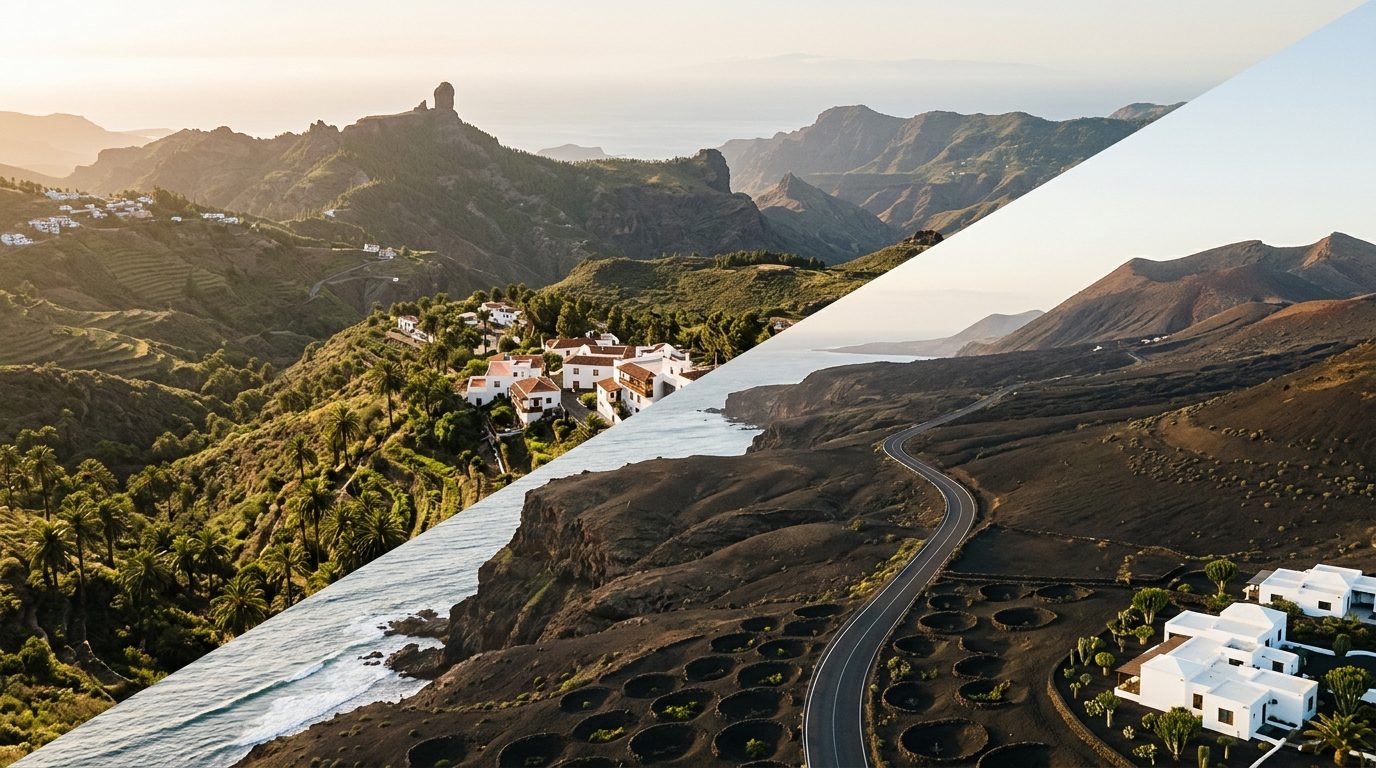
Gran Canaria is the most geographically varied of the Canary Islands — the southern coast is dry, sunny, and beach-resort focused; the interior is mountainous, green, and rural, with 2,000-metre peaks (Roque Nublo, an ancient volcanic plug, visible from the beach resorts on clear days).
Maspalomas: The headline destination. The Maspalomas Dunes — 350 hectares of rolling golden sand dunes, designated a nature reserve, meeting the Atlantic at a wide beach — are unique in Europe. The dune walk from the lighthouse (Faro de Maspalomas) to Playa del Ingles takes 45 minutes and is one of the most extraordinary natural walks available without a long-haul flight.
Puerto Rico: A sheltered bay 25km west of Maspalomas, with protected water ideal for watersports — consistently rated one of the sunniest spots in all of Europe, recording the highest sunshine hours in Gran Canaria due to its sheltered position. The bay has a marina, water-ski school, and multiple diving operators.
Puerto Mogan: The most romantic village on Gran Canaria — small-scale, canal-lined (a grid of small canals gives it its “little Venice” nickname), with excellent fish restaurants, a Friday morning market, and a quiet beach with a breakwater. 30 minutes west of Puerto Rico.
Lanzarote: Best Scenery
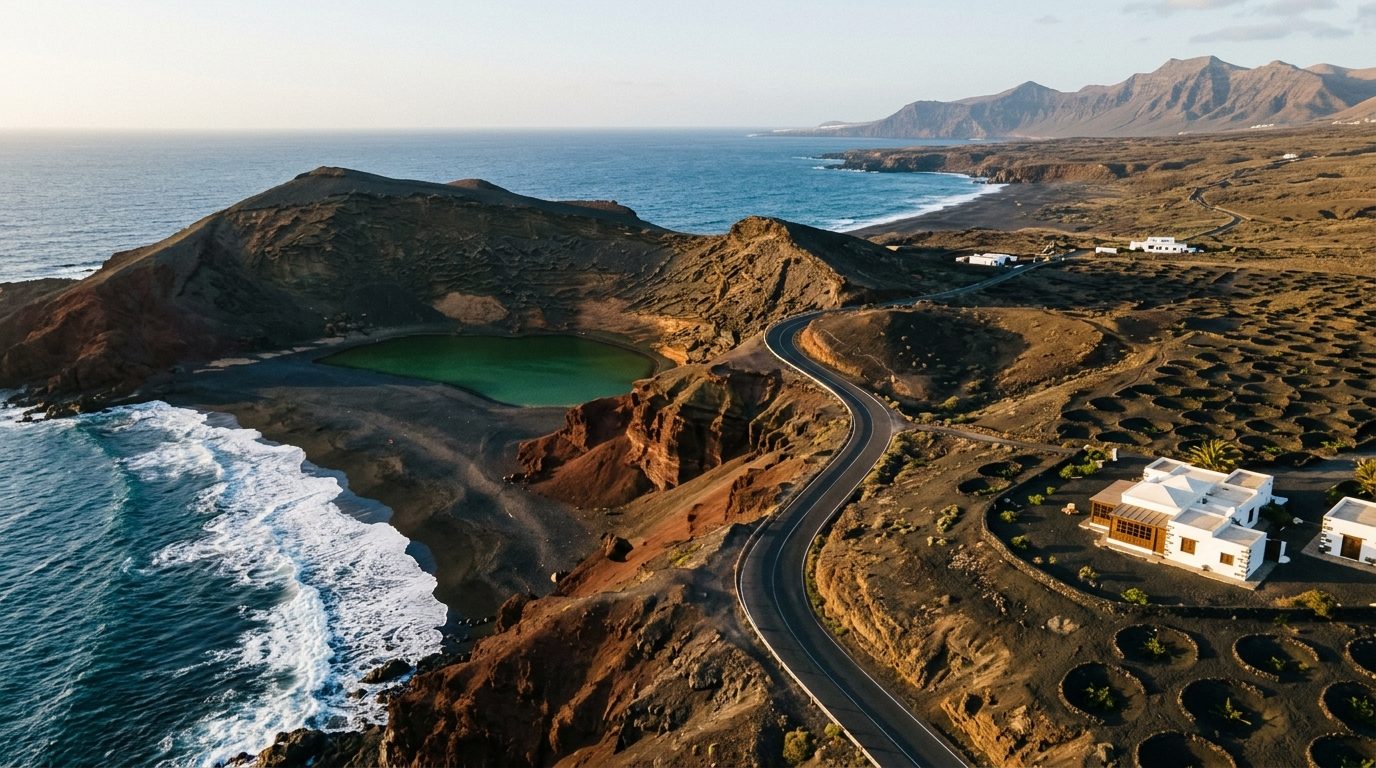
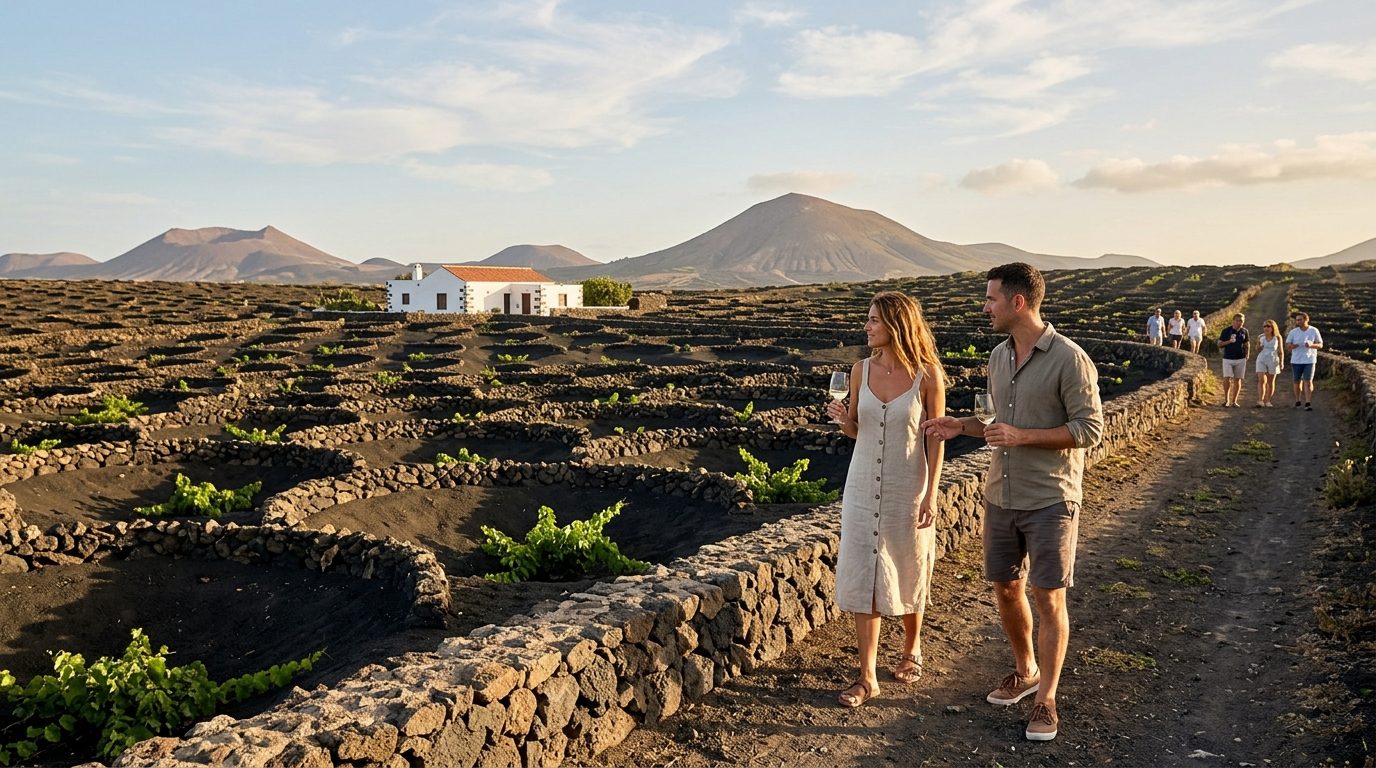
Lanzarote is the most visually extraordinary island in the Canaries. Its landscape — formed by 300 volcanoes erupting between 1730 and 1736, covering a quarter of the island in 1-25 metres of black lava — is unlike anywhere else in Europe. Timanfaya National Park protects the most active volcanic area: geothermal heat at just 10cm below the surface ignites paper; geysers of steam appear from bore holes; the restaurant at El Diablo cooks food using geothermal heat. Admission: £9-£12 per person.
César Manrique’s legacy: Manrique (1919-1992) was a Lanzarote-born artist and architect who convinced the island’s government in the 1960s to ban billboards, limit building heights, and mandate white-painted buildings with green or brown window frames. The result is the most architecturally coherent of the Canary Islands. His major works — Jameos del Agua (an underground concert hall in a volcanic cave with a saline lake containing unique blind crabs), Mirador del Rio (a clifftop viewpoint built into the volcanic rock), and the Cactus Garden (shaped concrete amphitheatre of 10,000 cacti) — are among the most memorable architectural sites in Spain.
Best beaches on Lanzarote: Papagayo Beaches (a set of sheltered coves at the southern tip, the clearest water on the island, accessible by dirt road, entry €3 per car). Famara Beach (north coast, wild Atlantic beach popular with surfers, rugged cliffs backdrop — dramatic but not safe for swimming in most conditions).
Fuerteventura: Best for Watersports
Fuerteventura is the closest island geographically to Africa (100km from the Moroccan coast) and the windiest and driest of the main islands. Its 150km of beaches and consistent Atlantic trade winds make it the best surfing and kitesurfing destination in Europe outside Portugal’s Alentejo coast.
Corralejo Natural Park: 10km of protected white sand dunes and beach in the north of the island, backed by volcanic hills. The village of Corralejo itself — a modest tourist town with a harbour, fish restaurants, and surf shops — is the most appealing base on Fuerteventura.
Jandia: The southern peninsula, one of the longest uninterrupted beaches in the Atlantic — 11km of fine white sand, clear turquoise water, and shallow depth perfect for paddling and swimming. Better for honeymooners who want beach days rather than watersports.
Best Honeymoon Hotels in the Canary Islands
Gran Canaria
Cordial Mogan Playa (Puerto Mogan): A 4-star resort designed around Mogan’s canal system — the most aesthetically distinctive resort in Gran Canaria. Rooms open directly onto the canal walkways or onto a pool. From £120-£180 per room per night. Adults-only pool area in summer. Excellent location for restaurants in the village.
Gloria Palace Royal Hotel and Spa (Arguineguin): 5-star, adults-only, built on a cliff above a small beach. The thalassotherapy spa — seawater-based treatments using the natural mineral content of Atlantic water — is genuinely outstanding. From £160-£250 per room per night.
Lanzarote
Princesa Yaiza Suite Hotel Resort (Playa Blanca): 5-star in the quiet south of Lanzarote — adults-only wings (no children under 16), 6 pools, direct beach access, excellent buffet and a la carte restaurants. From £180-£280 per room. The quietest and most romantic large resort on the island.
Las Terrazas de Abama (Los Valles): A 30-room boutique hotel on the north coast, far from the main tourist areas. Infinity pool appearing to merge with the Atlantic. From £200-£300 per night. The best adults-only boutique option on Lanzarote.
Fuerteventura
Sheraton Fuerteventura Beach Golf and Spa Resort (Caleta de Fuste): 5-star, private beach, golf course, multiple pools, large spa. The best large resort on Fuerteventura. From £180-£260 per room. Well-located for day trips north to Corralejo.
Honeymoon Activities in the Canary Islands
 Whale and dolphin watching: Year-round off the south coast of Gran Canaria and Tenerife. The Canary Islands have resident populations of bottlenose dolphins and pilot whales — not seasonal. A 3-hour catamaran trip from Maspalomas harbour: £35-£55 per person. 90% sighting rate for dolphins; pilot whale sightings common.
Submarine trip: Sub Fun Canaria operates a real submarine off Puerto Rico (Gran Canaria) — descending to 35 metres. 50 minutes underwater. £45-£65 per person. One of the most unusual couple activities available without a long-haul flight.
Timanfaya National Park: The volcanic landscape of Lanzarote, where eruptions from 1730-1736 buried 11 villages under lava. Guided bus tour through the park (El Diablo restaurant, geyser demonstrations): £9-£12 per person. No independent walking inside the park boundary. Combine with Jameos del Agua (£6-£8 per person) and Mirador del Rio (£5 per person) for a full day of César Manrique’s legacy.
Surfing and kitesurfing on Fuerteventura: Corralejo has multiple surf schools. A 2-hour beginner surf lesson: £40-£55 per person. A 3-hour kitesurf introduction lesson: £60-£80 per person. Corralejo’s Flag Beach (north of Corralejo village) is one of Europe’s best kitesurfing beaches — consistent 15-25 knot winds and flat-water conditions in the protected lagoon.
Food and Drink in the Canary Islands
Canarian food is not the same as mainland Spanish food. The Islands have their own distinct cuisine.
Papas arrugadas: Wrinkled boiled potatoes (cooked in heavily salted water until the salt crystallises on the skin), served with mojo rojo (red pepper and chilli sauce) and mojo verde (green coriander sauce). A plate of papas arrugadas costs £3-£5 at any local restaurant.
Grilled fish: The Canaries are directly on the Atlantic fishing route. Fresh grouper (mero), sea bream (dorada), and red scorpionfish (cabracho) are the staples. Grilled whole and served with papas arrugadas and mojo. A whole fish for two: £18-£28 at a local fish restaurant.
Local wines: Lanzarote’s wine (made from Malvasia grapes grown in small hollows in volcanic ash, the malpaís, which retain moisture in near-zero rainfall) is extraordinary — not widely exported, only available on the island. A bottle of Lanzarote white wine at a restaurant: £12-£20. At a bodega: £6-£12.
WeddingsHub tip: Eat one meal at a local Canarian restaurant away from the tourist resort areas for every 2-3 resort restaurant meals. The quality difference is significant and the price difference is even more so.
Internal Links
Compare the Canary Islands with our guides to Cyprus honeymoon, Greece honeymoon, and Maldives honeymoon. For UK-based inspiration, see best honeymoon destinations for UK couples and UK honeymoon destinations. For couples considering a destination wedding, see getting married abroad: the UK legal guide.
Frequently asked questions
Are the Canary Islands good for a honeymoon in 2026?
The Canary Islands are one of the best honeymoon choices for UK couples who want guaranteed warm sunshine without a long-haul flight. All four main islands (Tenerife, Gran Canaria, Lanzarote, Fuerteventura) are under 4.5 hours from London and average 22°C year-round — the warmest European-territory destination in winter. WeddingsHub's 2026 data shows 16% of UK honeymooners chose the Canaries, making them the most popular single cluster of islands. Gran Canaria offers the best beaches (Maspalomas dunes, Puerto Rico bay); Lanzarote the most dramatic scenery (Timanfaya volcanic landscape, César Manrique architecture); Fuerteventura the best watersports (consistent Atlantic waves, 150km of beaches). Each suits a different type of honeymoon.
How much does a Canary Islands honeymoon cost?
A Canary Islands honeymoon costs £1,200-£2,500 per couple for 7 nights including flights in 2026. Breakdown: flights £100-£350 per couple return (Jet2, TUI, easyJet, Ryanair, Vueling), accommodation £80-£200 per room per night (4-5 star resort). Budget options (3-4 star, self-catering): £900-£1,400 per couple. Luxury options (5-star all-inclusive): £2,500-£4,000 per couple. Food costs in the Canary Islands are lower than mainland Spain — a three-course dinner for two with wine at a local restaurant: £25-£40. At a resort hotel restaurant: £50-£80. The price gap between the Canaries and the Maldives is significant: a 7-night Maldives honeymoon costs £4,500-£8,000 per couple — 2-4x more for comparable sunshine.
Which Canary Island is best for a honeymoon?
The best Canary Island for a honeymoon depends on what you want. Gran Canaria: best overall combination of beaches, restaurants, and activities. Maspalomas Dunes (350 hectares of rolling sand dunes with a naturist beach on one side and a gay beach on the other — the most distinctive beach landscape in the Canaries) and Puerto Rico Bay (sheltered, ideal for watersports) are the standout beaches. Lanzarote: best for couples who prioritise scenery and culture over beaches. Timanfaya National Park (volcanic landscape of 300 volcanoes, created in the 1730s eruption) is extraordinary. César Manrique's architectural legacy (Jameos del Agua, Mirador del Rio, Fundación César Manrique) makes Lanzarote the most visually interesting island. Fuerteventura: best for watersports — consistent Atlantic waves for surfing and kitesurfing, longest beaches in the Canaries (Corralejo Natural Park, 10km of white sand dunes). Tenerife: most commercial, highest variety of hotels, Teide National Park (Mount Teide is the highest peak in Spain at 3,718m, viewable from the cable car).
When is the best time for a Canary Islands honeymoon?
October to April is the best time for a Canary Islands honeymoon. The Canaries' unique microclimate means temperatures stay at 20-24°C year-round with minimal rainfall — they are nicknamed the 'Islands of Eternal Spring' by Canarian tourism boards. This makes them particularly valuable for November-February honeymoons when other Mediterranean destinations are cold. October-November: 24-26°C, very quiet (tourist low season), best villa and hotel prices. December-February: 20-22°C, the warmest destination UK couples can reach in under 5 hours without a visa. March-April: 22-24°C, quiet, good value. May-September: 26-30°C, peak season — highest prices and most tourists, but perfectly pleasant if booked early.
What are the best honeymoon hotels in the Canary Islands?
Best Canary Islands honeymoon hotels in 2026 by island: Gran Canaria: Gloria Palace Royal Hotel and Spa (Arguineguin, 5-star, adults-only, thalassotherapy spa, from £160-£250 per room per night). Cordial Mogan Playa (Puerto Mogan, 4-star, the most romantic beach village in Gran Canaria, venetian-style canals, from £120-£180). Lanzarote: Las Terrazas de Abama (adults-only boutique hotel on the north coast, dramatic ocean-view infinity pool, from £200-£300). Princesa Yaiza Suite Hotel (Playa Blanca, 5-star, adults-only wings, multiple pools, from £180-£280). Fuerteventura: Sheraton Fuerteventura Beach Golf and Spa Resort (Caleta de Fuste, 5-star, private beach access, from £180-£260). Tenerife: Royal Hideaway Corales Suites (Adults-only, Adeje, 5-star, sea-view suites, from £280-£420 — the finest resort hotel on Tenerife).
Do UK couples need a visa for the Canary Islands?
No visa is required for UK passport holders visiting the Canary Islands. Despite being geographically off the African coast, the Canary Islands are a part of Spain and therefore part of the European Union. UK citizens can visit for up to 90 days without a visa under the post-Brexit travel rules. The Canary Islands use the euro (EUR). In 2026: £1 = approximately €1.17-€1.22. UK Visa and Mastercard are accepted everywhere. Carry some cash for beach bars and local markets. VAT (IGIC) is charged at 7% rather than mainland Spain's 21% — the Canary Islands have a special EU tax status. As a result, alcohol, tobacco, and electronics are noticeably cheaper than in mainland Europe.
How do I get from the airport to my Canary Islands hotel?
Each Canary Island has its own airport. Gran Canaria Airport (LPA): 18km from Maspalomas, 20km from Puerto Rico. Taxi to Maspalomas: £25-£35. Bus: GlobalBus route 30 (frequent, €1.55 per person, 50 minutes to Maspalomas). Lanzarote Airport (ACE): 5km from Arrecife, 15km from Puerto del Carmen (main tourist resort). Taxi to Puerto del Carmen: £12-£18. Bus: EasyBus network €1.50-€3.50. Fuerteventura Airport (FUE): 5km from Puerto del Rosario (capital). Taxi to Corralejo (main resort): £35-£45. Bus: Tiadhe bus line 3, €4-£5, 50 minutes. Tenerife South Airport (TFS): serves the southern resorts (Playa de las Americas, Los Cristianos, Costa Adeje). Taxi to Adeje: £20-£30. Bus: TITSA line 111 to Playa de las Americas (€2.60, 45 minutes). For couples arriving with luggage, a pre-booked private transfer is typically £20-£35 total per couple and eliminates taxi negotiation.